





Improving Usability of Periodontal Wearables
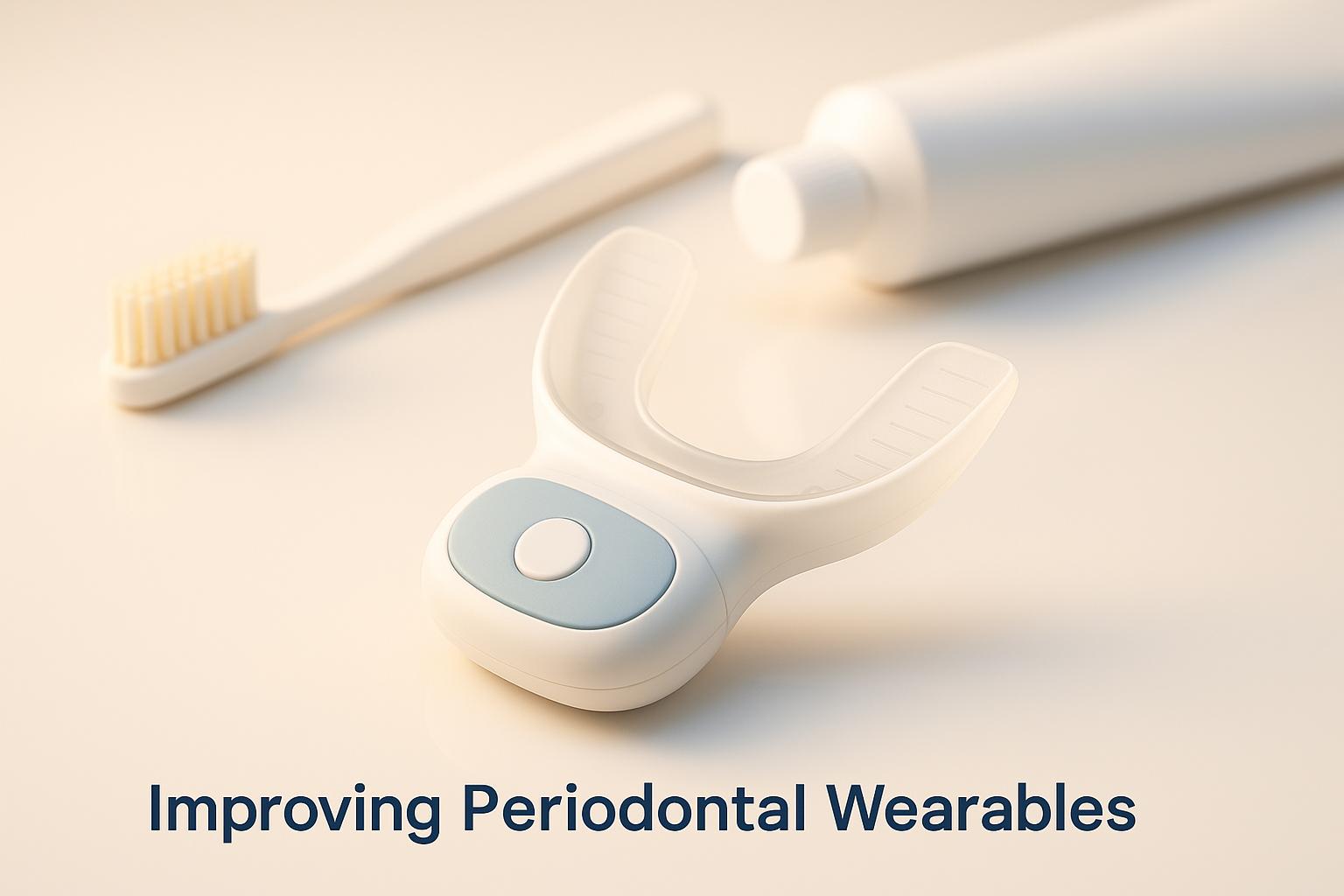
Periodontal wearables are reshaping oral healthcare by offering tools to monitor gum health at home. These devices, ranging from smart retainers to saliva sensors, provide real-time data to detect and manage oral health issues early. However, their success relies on comfort, ease of use, and consistent patient engagement. Here’s what you need to know:
- Smart Retainers and Aligners: Track wear time, monitor progress, and improve orthodontic compliance. Apps provide real-time feedback. Challenges include higher costs and potential discomfort.
- Sensor-Enabled Mouthguards: Measure oral health indicators like pH and glucose levels. Custom-fit designs improve comfort, but maintenance and biofouling can be issues.
- Saliva Sensors: Non-invasive and portable, these detect biomarkers for early disease signs. Sensitivity to saliva variability and durability are concerns.
- Implant-Integrated Sensors: Provide continuous monitoring without daily effort. Risks include biofouling and the need for invasive procedures.
To succeed, these devices must balance advanced features with usability, ensuring patients can easily integrate them into daily life while addressing privacy and cost challenges.
1. Smart Retainers and Aligners
Smart retainers and aligners are transforming orthodontic care by combining traditional tooth-straightening methods with advanced monitoring technology. These devices use embedded sensors and wireless connectivity to track wear time, monitor treatment progress, and provide real-time updates for patients and orthodontists. Here’s a closer look at how these advancements are enhancing usability and improving patient compliance.
In July 2024, NewSmile Canada unveiled smart retainers equipped with sensors that measure temperature, pressure, and wear time, along with Bluetooth connectivity for real-time data sharing and reminders [3]. This innovation allows orthodontists to remotely monitor patient compliance and make adjustments as needed. By offering precise data and interactive feedback, these retainers encourage better adherence to treatment plans.
Comfort has also seen notable improvements. Manufacturers have focused on redesigning materials to minimise discomfort. For instance, new aligner materials have significantly reduced pain and pressure during initial wear. A survey highlighted this progress:
"The new material was favourably rated by the patients and showed significant reductions in pain intensity, pain duration, and pressure upon insertion. Important clinical parameters like overall comfort and impairment also were improved." – Brascher et al. [5]
Data accuracy has reached new heights thanks to AI-powered treatment planning software. These systems analyse patient-specific dental data with incredible precision, predicting tooth movement more effectively than traditional methods. Studies show that AI-assisted planning can cut orthodontic treatment times by an average of 4.3 months, reducing the timeline from 18.9 ± 4.5 months to 14.6 ± 3.2 months [7].
Smart retainers are also changing the game when it comes to compliance monitoring. A study on Hawley retainers revealed that patients aware of monitoring wore their retainers for an average of 16.3 hours per day, compared to just 10.6 hours for those who were unaware [4]. This demonstrates how technology can positively influence patient behaviour.
To make these devices even more user-friendly, smartphone apps have been developed. These apps provide troubleshooting tips, educational resources, and motivational messages to help patients stay on track with their treatment.
Recent advances in materials and manufacturing are pushing boundaries further. Innovations like NiTime Clear Aligners, shape-memory polymers, and direct 3D printing have simplified designs and improved treatment predictability [6]. Direct 3D printing, in particular, has reduced manufacturing errors. For example, Align Technology introduced the Invisalign Palatal Expander System in 2024, the company’s first directly 3D-printed orthodontic device. This system is tailored to each patient’s unique anatomy using iTero digital scans, offering a more comfortable alternative to traditional metal expanders [6].
For Australian patients, especially those in remote areas, these advancements are a game changer. Remote monitoring reduces the need for frequent in-person visits, making treatment more accessible and convenient. Orthodontists can now track progress and make necessary adjustments without requiring patients to travel long distances for routine check-ups.
"Smart retainers are typically no more difficult to use than traditional retainers, with the added benefit of technological integration for better monitoring and compliance." – NewSmile Canada [3]
Additionally, force monitoring in modern smart aligners allows for precise adjustments, reducing risks like root resorption and undesired tooth movements. This real-time feedback system enables orthodontists to make adjustments between regular check-ups, improving overall periodontal health outcomes [8].
2. Sensor-Enabled Mouthguards
Sensor-enabled mouthguards are transforming oral health monitoring by integrating advanced sensors into flexible polymer layers. These devices use electrochemical techniques, like amperometric and potentiometric sensors, to achieve compact designs and precise functionality [9]. Let’s dive into their specific monitoring capabilities and design advancements.
Monitoring Capabilities and Parameters
Today’s sensor-enabled mouthguards can track several key indicators of oral and periodontal health. For instance, glucose sensors monitor salivary glucose levels, which can indicate a higher risk of periodontal disease and elevated lactic acid levels in plaque metabolism [9]. Similarly, lactate sensors provide insights into plaque activity, shedding light on the microbial environment that influences oral health.
Another important feature is pH monitoring. Back in 2010, Farella et al. developed wireless antimony electrodes embedded in oral appliances to track real-time pH changes [9]. This data helps identify temporary shifts in acidity after meals, which are crucial for understanding caries risk and bacterial activity.
Other sensors focus on calcium levels, which signal enamel demineralisation due to acidic conditions, and phosphate levels, measured through enzymatic amperometric biosensors, which help predict dental caries and calculus formation [9]. Additionally, fluoride sensors with LaF3 crystals assess the oral environment’s ability to combat demineralisation, offering another layer of preventive care.
Comfort and Design Innovations
Recent advancements have focused on making these devices more comfortable and practical for daily use. A standout example is the MouthIO device, developed by MIT CSAIL and Aarhus University in October 2024. This 3D-printed mouthguard incorporates temperature, acceleration, and tongue-touch sensors [10].
"Since the tongue can touch the front teeth in our open-bite design, users don’t have a lisp. This made users feel more comfortable wearing the device during extended periods with breaks, similar to how people use retainers." – Yijing Jiang, study lead author and Aarhus University PhD student [10]
The "open-bite" design of MouthIO allows natural speech by exposing the tips of the teeth, making it more user-friendly for prolonged wear [10].
Material innovations have also played a big role. Researchers have developed shear-stiffening materials that offer excellent shock absorption while maintaining a soft, comfortable feel. These materials can absorb over 90% of impact energy, all while being stable, durable, and biocompatible [11]. These advancements make it easier for users to incorporate sensor-enabled mouthguards into their daily routines.
Integration into Daily Routines
Improved designs and features have made these devices more practical for everyday use. For example, wireless monitoring eliminates the need for constant user interaction, simplifying the experience [13]. A system developed by the Georgia Institute of Technology in July 2024 exemplifies this approach, enabling continuous saliva osmolality, skin temperature, and heart function monitoring with over 91% accuracy compared to gold-standard methods [13]. This system can even detect hydration changes for up to 15 minutes after drinking water.
"The trend toward minimising physical obstructions and discomfort necessitates designs that reduce the number of devices attached to the body, even in wireless configurations." – Ka Ram Kim et al., Georgia Institute of Technology [13]
Strategic sensor placement is key to accurate monitoring. For instance, positioning micro-gap electrodes on the chewing surfaces ensures a steady saliva supply from natural processes, improving the reliability of readings [13]. Customising sensor placement based on individual needs further enhances comfort and adherence.
Performance and Patient Adherence
The success of sensor-enabled mouthguards depends on consistent use, which hinges on comfort, ease of integration, and perceived benefits. Custom-fitted designs, created from individual dental impressions or digital scans, offer a much better fit and performance compared to generic options.
"Custom-fitted to an individual’s unique mouth structure, these smart mouthguards provide unparalleled comfort, ensuring a seamless integration with traditional mouthguard usage." – Sarah Overall, Technavio Research Expert [12]
However, challenges remain. Bioadhesion and biofouling can reduce sensor sensitivity as biofilms and pellicles form on surfaces, interfering with enzymatic reactions [9]. Wireless data transmission, while convenient, can also face signal loss issues during extended use. Despite these hurdles, ongoing advancements aim to make these devices more user-friendly and reliable for Australian patients.
The ability to detect health abnormalities early is a compelling reason for both patients and healthcare providers to embrace these devices.
"This method offers a practical solution for real-time, non-invasive assessment of hydration status, highlighting its potential in health monitoring applications." – Ka Ram Kim et al., Georgia Institute of Technology [13]
3. Saliva Sensors
Building on the progress made with sensor-enabled mouthguards, saliva sensors provide another non-invasive option for monitoring periodontal health in real time. These devices analyse biomarkers in saliva to detect periodontal issues early. Using techniques like electrochemical, optical, and nanomaterial-based biosensing, they offer a continuous way to assess oral health.
Detection Methods and Biomarkers
One of the most important biomarkers for periodontal disease is Matrix Metalloproteinase-8 (MMP-8). In 2025, researchers at Pusan National University created a wearable electrochemical biosensor using a molecularly imprinted polymer matrix and graphene oxide interlayer. This was designed to fit into a mouthguard, allowing for precise, real-time monitoring of MMP-8 levels [14][18].
"Elevated salivary and gingival crevicular fluid MMP-8 levels correlate strongly with active periodontal destruction, making it a compelling target for early disease detection." – Advanced Science [18]
Another critical indicator is salivary pH. A study conducted in June 2025 tested an optical fibre pH sensor on 66 participants. It found that healthy individuals typically had a salivary pH between 6.5 and 7.3, while those with chronic periodontitis showed pH levels ranging from 5.5 to 6.4. Impressively, this sensor delivered results in under two seconds [15][17].
Portable biosensors developed in 2024 expanded the scope by targeting additional biomarkers like Human Neutrophil Elastase (HNE) and Cathepsin-G. These sensors could detect HNE at concentrations as low as 1 pg/mL and Cathepsin-G at just 100 fg/mL [16].
Comfort and Usability Advantages
Saliva sensors offer a pain-free alternative to traditional periodontal probing, making continuous monitoring far more comfortable.
"An optimal salivary sensor must fit appropriately to the anatomy of the mouth with minimal inconvenience to the wearer for long-term exposition." – Julia Timpel et al. [9]
Optical fibre sensors stand out for their chemical inertness, which enhances biocompatibility and reduces interference from the complex mix of substances in saliva.
"Unlike the other biomarkers for periodontitis diagnosis, optical fibre sensors are chemically inert. This is because the traditional biomarker-based sensors for diagnosing periodontitis might rely on detecting specific biochemical substances that degrade or are influenced by external factors." – Huda Abdulsahib Sabbar et al. [19]
Additionally, these sensors are portable and miniaturised, allowing them to connect seamlessly to smartphones and other wireless systems. This feature means patients can monitor their oral health independently, reducing the need for frequent dental visits.
Data Collection Accuracy
One challenge with saliva sensors is the low concentration of biomarkers in saliva – often 10 to 1,500 times lower than in plasma. This requires highly sensitive detection methods [22][23]. Recent developments, such as a MEMS-based double-stacked tower biosensor, have improved sensitivity by 31%, with a response time of just five seconds and a repeatability rate of 98.9%, despite issues like biofouling [21].
Integration with Dental Care Systems
Modern saliva sensors are being integrated into digital health platforms and Internet of Things (IoT) systems. For example, an IoT-based aptasensor biochip developed in May 2024 connects wirelessly to smartphones. This system achieved 100% accuracy in distinguishing low-risk from high-risk individuals using saliva samples [20].
"Oral wearable sensors, with portability, universality and easy-to-use, have great potential in monitoring oral health." – ScienceDirect [1]
The ability to transmit real-time data means dental professionals can monitor patients remotely, shifting the focus from reactive treatments to preventive care.
Patient Compliance Challenges
Despite these advancements, patient compliance remains a hurdle. Cost is one factor, as seen with a laser-engraved wooden tongue depressor sensor, which costs under A$0.10 for the base material but A$55 for engraving [24].
Other challenges include privacy concerns and the variability of saliva, which can be influenced by factors like flow rate, time of day, and diet [9].
"For wearables to be effective, patients must wear them regularly. If the device feels bulky, uncomfortable, or difficult to use, compliance may drop." – Smile Invent Dental Clinic [2]
Future Directions
The development of saliva sensors is increasingly guided by the "5I" principles – imperceptibility, intelligence, individualisation, integration, and inexpensiveness. These principles aim to increase patient acceptance and reduce costs [25]. As research continues, these devices are expected to play an even bigger role in preventive periodontal care.
sbb-itb-2be92ed
4. Implant-Integrated Sensors
Implant-integrated sensors are designed to be embedded in dental implants, providing continuous monitoring of periodontal health. These sensors track critical factors like pH levels, temperature, bacterial activity, pressure, and biochemical markers, all of which can signal early signs of inflammation or infection[26]. This real-time monitoring lays the groundwork for detecting complications before they escalate.
Advanced Data Analytics
The data collected by these sensors isn’t just stored – it’s analysed. Using algorithms, including machine learning, patterns can be identified to predict potential issues like infections, inflammation, or even implant failure[52,54]. This predictive approach is transforming dental care, moving it away from reactive treatments and towards preventive care. It’s a shift that’s redefining how periodontal health is managed.
Self-Powering Technology
One standout feature of these sensors is their ability to power themselves. By using piezoelectric nanoparticles, they convert everyday oral motions – like chewing or brushing – into electricity[27]. Some models even include LED phototherapy to help reduce inflammation[27]. While these technological advancements are impressive, they must be balanced with ensuring patient comfort.
Patient Comfort Considerations
Since these sensors are permanently implanted, they eliminate the need for daily compliance. However, the invasive nature of the procedure does come with risks, such as potential tissue or nerve damage and inflammatory responses during the healing process. These factors can impact patient comfort, especially in the initial stages[28].
Monitoring Accuracy and Reliability
One challenge with implant-integrated sensors is maintaining accuracy over time. Biofouling and fibrous encapsulation can reduce their lifespan and reliability, often requiring frequent recalibration to ensure consistent performance[28][29].
Care Routine Compatibility
These sensors fit seamlessly into everyday life. They generate power from regular activities like chewing and brushing, making them an easy addition to existing oral care routines[27].
Compliance and Data Security Challenges
Because the sensors operate continuously without requiring patient input, compliance isn’t an issue. However, the constant data collection raises concerns about privacy and security.
"Implanting electronic devices with radiating signals inside the human body is still a concern for scientists and medical experts. The ongoing collection of sensitive health data underscores the necessity for robust security measures to ensure patient information is handled appropriately." – Elliot Mbunge, Sensors International[29]
Technical Limitations and Solutions
Battery-powered systems face challenges like limited size and the need for replacements. Newer energy-harvesting methods, such as piezoelectric or triboelectric nanogenerators, offer promising solutions by using body movements to generate power[51,59]. Overcoming these limitations is crucial for creating sensors that combine advanced functions with ease of use.
Future Usability Improvements
Researchers are exploring ways to address issues like biofouling and fibrous encapsulation. For instance, anti-biofouling surfaces, such as zwitterionic polymer biocoatings, are being developed to maintain sensor accuracy over time[28]. Another area of interest is designing asymmetric implant components that encourage tissue integration on one side while resisting bacterial build-up on the other[27]. As one study highlighted:
"The main focus of this review is to address the critical challenge of achieving a balance between functionality and safety when integrating implantable electronic devices, their functions, and the associated materials." – Elena Abyzova et al., Tomsk Polytechnic University[28]
Finally, creating comprehensive regulatory frameworks and implementing strong data security measures will be essential for these systems to gain wider acceptance in dental care[29].
Advantages and Disadvantages
Here’s a breakdown of the pros and cons of different periodontal wearable devices, highlighting their strengths and challenges.
| Device Type | Advantages | Disadvantages |
|---|---|---|
| Smart Retainers and Aligners | • Tracks wear-time and provides real-time feedback via apps [2][31][32] • Allows remote monitoring for early orthodontic intervention [31] • Nearly invisible when worn [30][33][35][36] • Removable design supports better oral hygiene compared to fixed appliances [33][34][35][36] • Tracks additional oral health metrics [30] |
• Higher costs due to integrated sensors and connectivity [2][32][35] • Bulkier design may affect comfort [2][32] • Limited battery life, often lasting only a few months [32] • Sensors risk detachment, leading to data loss or device failure [32] • Requires 20–22 hours of daily wear for effectiveness [35][36] |
| Sensor-Enabled Mouthguards | • Custom-fit design using flexible materials like EVA reduces discomfort [37] • High accuracy with minimal variation in measurements [37] • Rapid, portable testing with wireless data transmission [38] • Protective sealing for electronic components [37] |
• May cause discomfort, especially during sports [40] • Needs regular maintenance, including disinfection and battery upkeep [40] • Saliva or removal can interfere with measurements [39] • Primarily focuses on specific conditions like bruxism, rather than broader oral health |
| Saliva Sensors | • Non-invasive and complements traditional diagnostic methods [41] • Quick, portable testing with minimal saliva required [41] • High reusability with reliable measurement accuracy [41] • Affordable screening for conditions like diabetes through salivary conductivity [41] |
• Lower accuracy compared to blood glucose meters and invasive diagnostics [41] • Harsh oral conditions challenge sensor durability [39] • Long-term monitoring issues, especially for biochemical sensors [39] • Limited sensitivity for certain applications [41] |
| Implant-Integrated Sensors | • Self-powering via piezoelectric nanoparticles removes the need for batteries [27] • Continuous monitoring without patient compliance [27] • Reliable measurements [39] • Detects complications early [27] • Antimicrobial properties resist bacterial buildup [27] • Eliminates daily compliance concerns [27] |
• Invasive procedure with risks of tissue damage and inflammation [28] • Biofouling and fibrous encapsulation can reduce lifespan and require recalibration [28][29] |
Selecting the right device depends on individual needs, treatment goals, and comfort preferences. For instance, smart retainers and aligners are excellent for orthodontic compliance but come with added costs. Meanwhile, saliva sensors provide a gentle, non-invasive alternative, although they may lack the precision of traditional methods.
Research from MIT’s Computer Science and Artificial Intelligence Laboratory shows promise for cost-effective options. Their MouthIO device, developed in November 2024, costs around $15 AUD to produce and takes just two hours using a plaster impression, a scanning app, and 3D printing [30]. Associate Professor Michael Wessely from Aarhus University commented:
"With MouthIO, though, we’ve developed a new kind of device that’s comfortable, safe, and almost invisible to others. Dentists and other doctors are eager about MouthIO for its potential to provide new health insights, tracking things like teeth grinding and potentially bacteria in your saliva." [30]
Sensor-enabled mouthguards offer a middle ground, combining functionality with user acceptance, particularly for conditions like bruxism. Yet, the oral cavity presents unique challenges. As Leonardo de Almeida e Bueno from the University of Oxford explains:
"The oral cavity is a harsh environment for sensors. The constant contact with air, matter, metabolites, and enzymes greatly limits the sensor technologies, materials and approaches that can be applied inside the mouth." [39]
For those seeking non-invasive options, saliva sensors stand out despite their limitations. Research from Chang Gung University in Taiwan revealed that individuals with higher salivary conductivity had a 3.82 times greater risk of diabetes, showcasing the potential of these devices for early screening [41].
Battery life remains a critical concern across all these technologies. Studies indicate users rate this feature as the most important, scoring it 6.45 out of 7 [42]. This highlights why self-powering implant-integrated sensors are an attractive long-term option, even with their invasive nature and the challenges of operating in the oral environment.
Conclusion
Advances in device design and monitoring are reshaping how periodontal care is delivered, offering data-driven, personalised solutions. However, their success hinges on addressing key usability challenges that influence whether patients embrace these technologies.
Patient feedback consistently highlights the importance of simple and clear device interfaces in driving compliance. Research shows that individuals with higher levels of education find periodontal applications easier to navigate, emphasising the need for intuitive designs that cater to users of all technical backgrounds [43].
Educating patients and involving them in the process of choosing devices can further improve usability and adherence. Many periodontal patients express a strong preference for shared decision-making with their healthcare providers, paired with detailed information about their treatment options [44]. This underscores the value of combining patient education with professional guidance when introducing wearable technologies.
For dental professionals, seamless integration of these devices into clinical workflows is essential. The data collected must be accurate, easy to interpret, and actionable within existing systems [2][45]. Streamlining this process will help ensure these tools are adopted more widely across Australian dental practices.
Equally important is the secure handling of sensitive health data. Transparent consent processes and robust privacy measures are crucial for maintaining patient trust and encouraging long-term engagement [45].
Ultimately, the future of periodontal wearables lies in balancing advanced technology with ease of use. Devices that focus on comfort, simplicity, and reliable performance while delivering meaningful health insights can redefine oral healthcare for both patients and professionals. The goal is to simplify – not complicate – the patient journey, making better oral health accessible to all.
"Improvements to the user interface and user experience (UI/UX) of the Perio-based mobile application are necessary, as the primary target users are patients with periodontitis." – Usability and Satisfaction Research of the Perio-based Mobile Application in Healthy, Gingivitis, and Periodontitis Subjects: A Preliminary Study [43]
FAQs
How do periodontal wearables combine advanced features with comfort and everyday usability?
Designing periodontal wearables involves striking a balance between cutting-edge features and everyday comfort. To achieve this, these devices are created with ergonomic shapes and flexible materials, ensuring they remain comfortable even during long periods of use. This thoughtful approach makes it easier for users to incorporate them into their daily lives without hassle.
With intuitive interfaces and smooth operation, these devices not only simplify health monitoring but also encourage consistent use. By being easy to wear and operate, they help improve patient adherence while providing accurate health data – without feeling intrusive or cumbersome.
What are the key challenges with sensor-enabled mouthguards, and how are they being improved?
Sensor-enabled mouthguards come with their fair share of challenges. Ensuring a snug fit is crucial because a poor fit can lead to inaccurate readings. On top of that, keeping sensors stable and durable in the constantly moist environment of the mouth is no small task. Saliva exposure, for instance, can gradually wear down the sensors, affecting their performance over time.
To tackle these hurdles, developers are making strides in a few key areas. One approach is creating mouthguards with replaceable sensors, allowing users to swap out worn components without discarding the entire device. Another improvement involves miniaturising sensors, which not only boosts comfort but also helps them stay securely in place. Additionally, efforts to enhance sensor stability are paving the way for more reliable and consistent data collection. These updates are geared towards making oral wearable sensors more precise, long-lasting, and easier to use.
How do saliva sensors compare to traditional methods for diagnosing dental and systemic conditions?
Saliva sensors provide a comfortable and non-intrusive way to diagnose health conditions, standing out as an alternative to traditional methods like blood tests. They’re designed for quick, on-the-spot use, making them especially appealing for patients who prefer less invasive procedures. Studies have highlighted their ability to accurately detect a range of oral and systemic diseases with strong precision.
Although these sensors are portable and relatively affordable, they do face challenges in pinpointing certain disease-specific biomarkers. That said, ongoing technological progress continues to enhance their accuracy and dependability, solidifying their role as a growing asset in modern healthcare.
Related Blog Posts
- How Wearables Help Prevent Dental Issues
- How Wearables Connect with Dental Software
- Advances in Salivary Biosensors for Periodontal Care
- How AI Wearables Detect Early Gum Disease
Important Notice: Any surgical or invasive procedure carries risks. Before proceeding, you should seek a second opinion from an appropriately qualified health practitioner.
Individual results may vary. The information provided in this article is for educational purposes only and does not constitute medical advice.
Checkout Related Blogs




Get in touch with us
For more information, call us now to start feeling better. Or fill the form below to make appointment
The Latest News from Complete Smiles
How to Clean Clear Plastic Retainers
Checklist for Choosing Wearable Dental Devices
Checklist for Choosing Cloud AI Platforms in Dentistry

Complete Smiles Bella VistaAccepts All Major Health Funds, Including





