





How to Compare Invisalign Providers
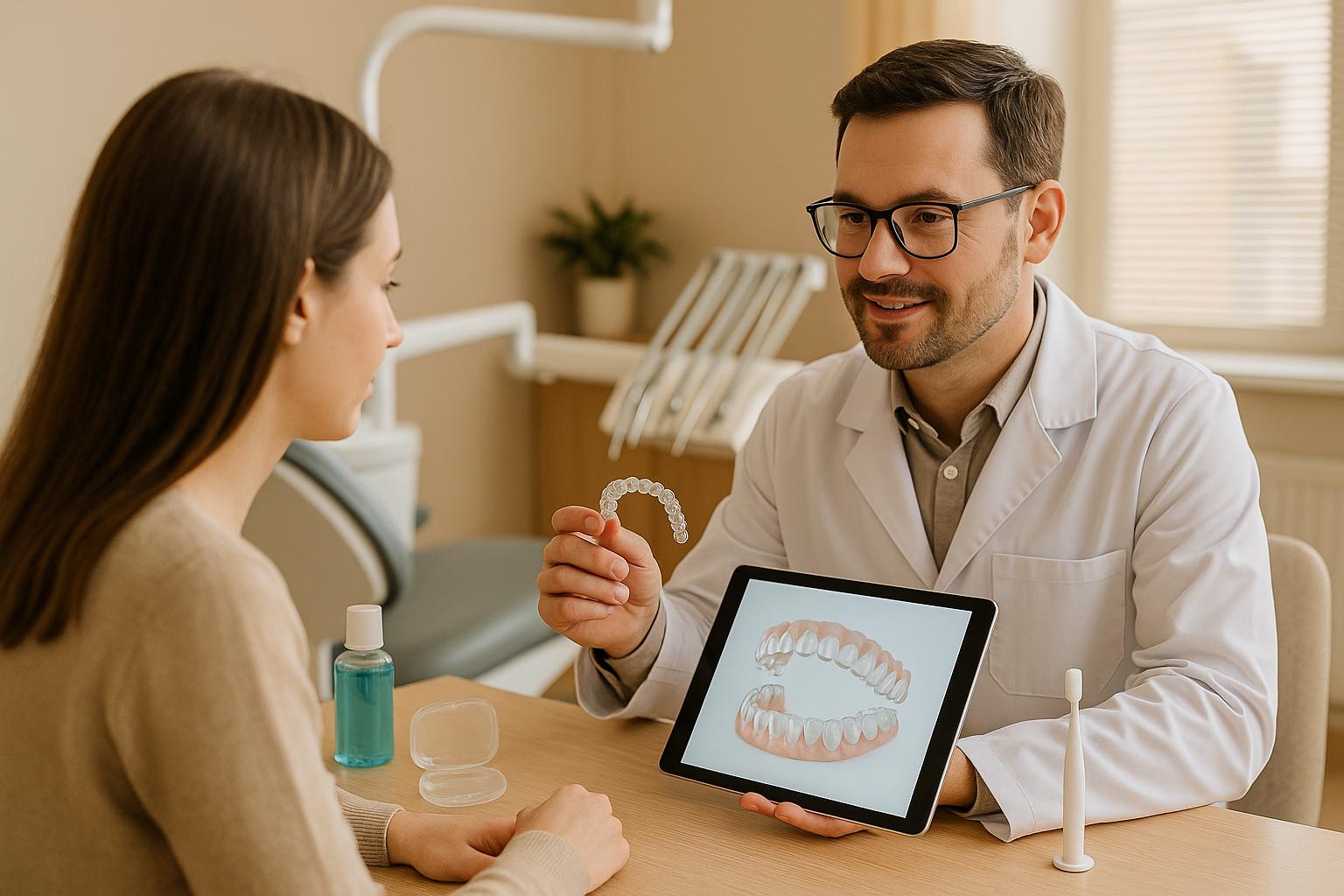
When choosing an Invisalign provider in Australia, your decision can significantly impact your treatment’s success, cost, and overall experience. Here’s what you need to know:
- Experience Matters: Providers are ranked from Bronze to Diamond based on the number of cases they’ve handled. Orthodontists, with specialised training, often deliver better results than general dentists, especially for complex cases.
- Technology Usage: Look for advanced tools like 3D scanners (e.g., iTero), which improve precision and reduce appointment times, and software like ClinCheck Pro for visualising your treatment plan.
- Cost Breakdown: Invisalign treatments range from $3,000 to $9,000, depending on complexity. Additional costs may include consultations, diagnostics, and retainers. Some clinics bundle these, while others charge separately.
- Payment Options: Many providers offer interest-free payment plans or accept private health insurance rebates, potentially covering up to $3,000.
- Patient Support: Regular follow-ups (every 4–6 weeks) and easy access to your provider for emergencies are crucial for a smooth experience.
Quick Comparison
| Factor | Provider A | Provider B | Provider C |
|---|---|---|---|
| Experience Level | Diamond Plus (200+ cases) | Platinum (60–99 cases) | Gold Plus (30–59 cases) |
| Technology Used | iTero, ClinCheck Pro | Basic digital tools | iTero only |
| Cost | $7,000 (all-inclusive) | $6,500 (retainers extra) | $7,500 (all-inclusive) |
| Payment Plans | 24 months interest-free | 18 months interest-free | 12 months interest-free |
| Follow-up Schedule | Every 4 weeks | Every 6 weeks | Every 5 weeks |
| Emergency Access | After-hours hotline | Next-day appointments | Standard hours only |
Choosing the right provider means balancing expertise, technology, cost, and support. Always compare options carefully to ensure your treatment is safe, effective, and tailored to your needs.
Consumer’s Guide to Picking the Right Invisalign or Clear Aligner Dentist
Check Provider Experience and Credentials
When choosing an Invisalign provider, their experience and qualifications play a big role in how successful your treatment will be. Providers with more experience are better equipped to handle complex cases and deliver great results. Here’s what you need to consider when evaluating their expertise.
Review Experience with Invisalign Cases
Invisalign categorises its providers based on how many cases they’ve handled, ranging from Bronze to Diamond, with Diamond being the top tier of expertise [5]. This ranking reflects their hands-on experience. Diamond providers, in particular, are skilled at creating customised treatment plans that can lead to better outcomes. They also tend to have access to the latest Invisalign advancements, such as updated aligner materials, digital scanning technologies, and advanced treatment planning software [5].
When consulting with potential providers, ask how many Invisalign cases they’ve completed. It’s also worth finding out whether they handle complex cases themselves or refer them to specialists [3]. While many general dentists now offer Invisalign, a registered orthodontist has additional years of specialised training in orthodontics, which can be especially helpful for more challenging cases [6].
Verify Qualifications and Memberships
A provider’s formal qualifications are just as important as their experience. Invisalign providers must undergo advanced training to offer the treatment, ensuring they understand the process and can personalise it to suit each patient’s needs [3]. For example, general dentists often start with Invisalign Go Fundamentals, while more experienced providers complete comprehensive Invisalign Fundamentals training [2][3].
To confirm a provider’s certification, you can use Invisalign’s official "Find a Doctor" tool [3]. Additionally, professional memberships provide extra reassurance. In Australia, dentists need to be licensed by AHPRA to practise orthodontics [4]. Membership in the Australian Dental Association (ADA) is another good sign, as it shows the provider meets professional standards and stays up to date with industry advancements [7]. Providers who display their ADA membership signal their commitment to ongoing education and maintaining high standards. Products with the ADA Seal of Approval have also been rigorously tested to ensure their quality [8]. These credentials and affiliations demonstrate a provider’s dedication to delivering quality care.
Review Technology and Treatment Options
The tools and technology your provider uses can significantly impact your Invisalign journey. Advanced digital solutions not only enhance precision but also make the process smoother and more comfortable. When evaluating providers, it’s worth understanding what tools they use and how these can improve your treatment. A provider’s expertise, combined with cutting-edge technology, ensures detailed planning and a more seamless experience.
Check for Digital Tools
Digital advancements have transformed the way Invisalign treatments are designed and delivered. One standout is the Align Digital Platform, a comprehensive suite of tools that simplifies data collection, diagnosis, and treatment planning for both patients and practitioners [9].
A key feature to look for is digital 3D scanning, such as the iTero scanner, which replaces traditional putty impressions. Capturing 6,000 images per second, it makes the process 59% faster while improving efficiency during appointments [15][12].
"The whole idea of developing the iTero scanner was to bring the teeth moulding process into the 21st century, allowing for a modern, digital, and more pleasant method to make plan Invisalign clear aligners treatment." – Invisalign [16]
Another essential tool is ClinCheck Pro, a 3D treatment planning software that allows providers to customise and visualise your treatment plan. With this, you can see how your teeth will move throughout the process and what the final outcome will look like. The Invisalign Outcome Simulator, used with the iTero scanner, is particularly effective – research shows that 60% of patients who see their simulated results choose to start Invisalign treatment [12].
Providers using these tools can also offer virtual care options, enabling remote monitoring and reducing the need for frequent in-person appointments [9]. Additionally, the Invisalign Photo Uploader is a favourite among practitioners, with 75% of orthodontists preferring it over traditional DSLR cameras for case submissions [12].
"We, as a team, finally have the opportunity to work on one, single platform. It totally changed the way we are approaching the treatment planning. It’s a big step up on how to achieve better clinical outcomes as well as restorative and minimally invasive approach on treatments and patient care." – Dr. Luis Ilzarbe Ripoll, Spain [10]
Beyond scanning, the level of customisation in Invisalign treatment plans further highlights the importance of choosing a provider with the right tools and expertise.
Compare Invisalign Treatment Plans
Invisalign offers a variety of treatment packages tailored to different levels of complexity. Choosing the right provider means finding someone experienced in handling the specific package that suits your needs.
Here’s a breakdown of the main Invisalign treatment options:
| Treatment Package | Maximum Stages | Clinical Scope | Additional Aligner Policy |
|---|---|---|---|
| Invisalign Express 5 | 5 | Relapse, minor movement | 1 set for purchase |
| Invisalign Lite | 14 | Class I, mild crowding | 1 set for 1 year |
| Invisalign Moderate | 20 | Class I/II, moderate crowding | 1 set for 2 years |
| Invisalign Comprehensive | Unlimited | Class I/II/III, severe crowding | Unlimited / 5 years |
| Invisalign First | Unlimited | Phase 1 treatment | Unlimited / 18 months |
These packages cater to a range of orthodontic needs, from minor adjustments to complex cases requiring extensive treatment. Providers can also enhance your treatment with features like eruption compensation, molar tabs, precision cuts, bite ramps, and passive aligners [14], ensuring your aligners are tailored to your specific requirements.
Advanced providers may also utilise Invisalign’s Personalised Plan, which automates clinical preferences for consistent and efficient treatment setups. This system speeds up the process, with most initial ClinCheck treatment plans ready for review within six hours – 56% faster than before [13].
"Invisalign Smile Architect™ is my treatment planning and communication partner! With 3D treatment planning, it allows me to see and share the final restorative outcome with my patient and dental team. This for me is co-planning with patients, allowing them to make a well-informed decision." – Dr. Kristina Baumgarten, Germany [10]
When comparing providers, ask about their experience with different treatment packages and how they determine the best option for your case. Those skilled in handling a range of Invisalign treatments, including complex cases, are better equipped to address potential challenges. With over 20.1 million smiles transformed globally – 5.8 million of them teens [11] – Invisalign’s customisable approach continues to deliver impressive results.
Compare Costs and Payment Options
Once you’ve considered a provider’s experience and the technology they use, it’s time to dive into the numbers. Carefully reviewing the costs and payment options for Invisalign treatment ensures you can plan your budget effectively. Since prices vary between providers, getting clear and upfront details is key to avoiding surprises and managing your expenses comfortably.
Get a Detailed Cost Breakdown
When assessing costs, make sure you’re getting a complete breakdown. This should cover the consultation, diagnostics, treatment, and post-treatment retainers. Here’s an overview of typical Invisalign treatment packages:
| Treatment Type | Aligner Count | Price Range |
|---|---|---|
| Invisalign i7 | Up to 7 aligners | $2,800 – $3,500 |
| Invisalign Lite | 8-14 aligners | $4,000 – $6,000 |
| Invisalign Full | 15+ aligners | $6,000 – $9,000 |
On top of these base costs, there are additional expenses to consider. Consultation fees typically range from $150 to $250, although some clinics offer them for free [17]. Diagnostic records, such as 3D scans, impressions, and X-rays, can add another $200 to $500 [23]. After your treatment, retainers are crucial for maintaining your results, and these usually cost $300 to $600 per set [23][24]. Keep in mind that retainers may need replacement over time.
"No two mouths are the same and the number of aligners required will be different; so the Invisalign® cost will vary from person to person. However I believe in keeping things simple and provide complete packages to my client with no hidden surprises mid or at the end of treatment." – Dr. Rama [21]
When comparing quotes, ask if they include follow-up appointments, refinement trays (if needed), or extra services like teeth whitening. Some providers bundle these into their packages, while others charge separately, which can significantly impact your overall cost. Once you have a clear picture of the total expense, it’s time to explore payment options.
Review Payment Plans
With the treatment costs in mind, consider flexible payment options to make it more manageable. Many providers offer plans that break down the expense into monthly instalments. Monthly payments typically range from $99 to $250 with 0% interest financing [22], making it easier to fit the treatment into your budget.
Private health insurance can also help reduce out-of-pocket expenses. Many Australian health funds include orthodontic benefits that apply to Invisalign, with coverage potentially reaching up to $3,000 [19]. Check your policy details and ask providers if they use HICAPS for instant rebate processing during your visits [18].
Most providers offer three main financing options:
- Interest-free financing: Spread your payments over a set period without incurring additional costs.
- In-house payment plans: These are customised by the clinic to match your budget and scheduling needs [20].
- Third-party financing: Options like DentiCare provide various payment solutions with competitive rates and quick approvals. However, review the terms carefully to avoid hidden fees or extra charges [20].
It’s worth comparing the monthly costs and payment durations. While a longer payment period can lower your monthly instalment, it may extend your financial commitment beyond the treatment’s end. Some providers even offer payment calculators to help you weigh your options and choose the best plan for your situation [20].
Finally, ask each provider about their payment policies, including how they handle additional aligners or refinements if needed. Having this information upfront ensures you’re well-prepared and can avoid unexpected costs along the way.
sbb-itb-2be92ed
Check Patient Support and Care
When it comes to Invisalign treatment, it’s not just about technical expertise or cost. Personalised support and care play a huge role in achieving the best results. Great providers know that ongoing communication and regular check-ins are essential for success. So, when you’re comparing providers, take a close look at how they approach patient care and the kind of support they offer.
Review Treatment Plans
A good Invisalign provider will create a treatment plan tailored specifically to your dental needs and lifestyle. During your consultation, pay attention to how they customise the plan to address your goals – whether that’s fixing crowding, closing gaps, or improving your bite.
Ask how many aligners you’ll need, how long the treatment will take, and what challenges they foresee in your case. A clear and detailed explanation shows they’re invested in your success. Providers who take the time to explain their process often use digital simulations to show how your teeth will move at each stage. They’ll also discuss how they’ll monitor your progress and adjust the plan if needed. Regular check-ups ensure your treatment stays on track and any necessary changes are made promptly [25].
A quality provider will also consider how Invisalign fits into your day-to-day life. They’ll address concerns like wearing aligners during special events or travel and set realistic expectations for your results. This kind of personalised approach shows they care about more than just processing another case – they’re focused on helping you achieve the best possible outcome.
Finally, think about how easy it is to access care and get follow-ups as your treatment progresses.
Check Follow-Up and Accessibility
Consistent follow-up is critical for Invisalign success. These appointments allow providers to monitor your progress, make adjustments, and quickly resolve any issues that come up [26]. Most providers schedule check-ups every 4–6 weeks, but the quality of these appointments can vary widely.
During your consultation, ask about the follow-up schedule and what each visit includes. You should also find out what to do if problems arise between appointments.
"Collaboration between the patient and the dental health professional is essential for successful follow-up treatment." – Lapointe Dental Centres [26]
Accessibility is another key factor. Can you easily reach your provider for questions or urgent issues? Some practices use tools like the My Invisalign Mobile App, which can improve communication and help track your treatment. In one study, 69.39% of participants used the app, and 42.86% were satisfied with how it improved communication and care quality [27].
Ask about their emergency protocols too. What happens if you lose an aligner, experience severe discomfort, or face other complications? A reliable provider will have clear procedures for handling such situations, even outside regular hours.
Also, consider how well they educate you about your treatment. You should feel confident about aligner care, what to expect at each stage, and how to maintain your results long-term. Post-treatment care, like wearing retainers, is crucial for keeping your smile intact [28], so choose a provider who emphasises this.
Lastly, think about how comfortable you feel during consultations. A good provider will encourage open communication, making it easy for you to ask questions and share concerns. Feeling supported and informed throughout the process is key to a positive experience [26].
Create a Comparison Table
This section pulls together the key evaluation factors discussed earlier into a clear visual summary. A well-organised comparison table can help simplify your decision-making process by laying out all the essential details side by side.
To create your table, include columns for each provider and rows for the factors you’re evaluating. Important categories to cover are provider experience, technology offerings, cost breakdown, payment options, and patient support quality.
In the experience row, note each provider’s certification level (e.g., Diamond Plus, Platinum, etc.) and their case volume. Highlight whether they offer advanced features like digital scanning, virtual consultations, or remote monitoring.
For the cost section, include the total treatment price, what’s covered in that fee, and any extra charges (e.g., for retainers or follow-up visits). Invisalign treatments in Australia generally range from $3,000 to $8,000, depending on the complexity of the case and location [29].
Under payment options, record whether the provider offers interest-free payment plans, accepts health fund rebates, or has other financing options. This information is vital for planning your budget effectively.
Here’s an example of what your table might look like:
| Factor | Provider A | Provider B | Provider C |
|---|---|---|---|
| Invisalign Level | Diamond Plus (200+ cases) | Platinum (60–99 cases) | Gold Plus (30–59 cases) |
| Digital Technology | 3D scanning, treatment planning | Basic digital tools | 3D scanning only |
| Total Cost | $7,000 (including retainers) | $6,500 (retainers extra) | $7,500 (all inclusive) |
| Payment Plans | 24 months interest-free | 18 months interest-free | 12 months interest-free |
| Follow-up Schedule | Every 4 weeks | Every 6 weeks | Every 5 weeks |
| Emergency Access | After-hours hotline | Next-day appointments | Standard hours only |
You can also include qualitative factors like comfort during consultations and clarity of communication. For patient support, evaluate follow-up schedules, accessibility for questions or emergencies, and guidance on aligner care (e.g., what to do if an aligner is lost or damaged). If location matters, add a row for travel time, parking availability, and appointment flexibility.
To make your table even more useful, assign weights to each factor based on your priorities. For instance, if cost is your main concern, give that column more emphasis. On the other hand, if experience is your top priority, focus on certification levels and case numbers.
Keep in mind that a lower cost doesn’t always mean better value. A more experienced provider might charge slightly more but could deliver better results with fewer complications, potentially saving you time and money in the long term. This comparison table will help you focus on the factors that are most important to your treatment and make an informed decision.
Conclusion: Making an Informed Choice
Picking the right Invisalign provider isn’t just about convenience – it’s about ensuring your long-term dental health. Invisalign treatment influences more than just the alignment of your teeth; it can also impact jaw development, bite alignment, and overall oral health [30]. That’s why this decision carries weight and deserves careful thought.
While factors like technology and costs are important, the expertise of the provider plays a pivotal role. Skilled Invisalign providers can deliver more accurate results and even shorten treatment times [31]. Beyond expertise, the use of advanced tools, straightforward pricing, and strong patient support all contribute to a smoother and more satisfying treatment journey.
"Choosing Invisalign providers can take a bit of time and effort since it is an investment in your dental health and something you are stuck with for the next few months or years. But it’s well worth it once you see the results." – Ahava Orthodontics [1]
To make the best choice, use comparison tools or tables to evaluate your options. Invisalign offers clear benefits – discreet aesthetics, comfort, and easier oral hygiene [30] – but these advantages are only fully realised when paired with the right provider.
Take the time to research reviews, schedule consultations, and gauge each provider’s communication style and treatment philosophy. Think about your specific needs, whether it’s the complexity of your case, your lifestyle, or your budget. Often, spending a bit more on an experienced provider can lead to better results with fewer hiccups, ensuring a stable, functional, and visually appealing outcome [30].
Finally, trust your instincts during consultations. The ideal provider will not only have the necessary expertise but will also make you feel confident and supported, answering your questions and showing genuine dedication to your treatment success.
FAQs
How can I assess if an Invisalign provider is experienced enough to meet my orthodontic needs?
When selecting an Invisalign provider, it’s important to check their certification and training specific to Invisalign treatments. Providers are often ranked based on their experience, with categories like bronze, silver, platinum, or diamond indicating the number of cases they’ve managed. These rankings can give you a sense of their expertise. It’s also a good idea to ask if they’ve treated cases similar to yours, particularly if your orthodontic requirements are more complicated. Opting for someone with a strong history of successful treatments can help ensure you’re in capable hands.
What should I look for when comparing Invisalign costs and payment options to avoid surprises?
When looking at Invisalign costs, it’s crucial to understand the total treatment price and exactly what’s included. Things like how complex your case is, where the clinic is located, and the dentist’s level of expertise can all impact the price. Be sure to ask about payment options – some clinics offer interest-free plans or health fund rebates – and check if the quote includes retainers or follow-up care.
You’ll also want to find out about any extra fees, such as charges for adjustments or replacement aligners, so you’re not caught off guard later. To make a well-informed choice, always ask for a detailed cost breakdown right from the start.
How does an Invisalign provider’s technology influence your treatment experience and results?
The tools an Invisalign provider uses can greatly impact your treatment journey. Modern equipment like digital scanners and 3D outcome simulators help create aligners with a high level of precision, ensuring they fit your teeth perfectly. This often results in more reliable results, shorter treatment durations, and a much more seamless process.
These advanced technologies also enable providers to map out your treatment with impressive accuracy, giving you a clear picture of the expected results before you even get started. Opting for a provider equipped with the latest Invisalign technology can enhance both your comfort throughout the process and the quality of your final smile.
Related Blog Posts
- Invisalign vs Traditional Braces: A Complete Comparison
- Pre-Orthodontic Treatment Checklist: What to Know
- Guide to Choosing the Right Cosmetic Dental Treatment
- Types of Braces and Their Costs Explained
Important Notice: Any surgical or invasive procedure carries risks. Before proceeding, you should seek a second opinion from an appropriately qualified health practitioner.
Individual results may vary. The information provided in this article is for educational purposes only and does not constitute medical advice.
Checkout Related Blogs




Get in touch with us
For more information, call us now to start feeling better. Or fill the form below to make appointment
The Latest News from Complete Smiles
How to Clean Clear Plastic Retainers
Checklist for Choosing Wearable Dental Devices
Checklist for Choosing Cloud AI Platforms in Dentistry

Complete Smiles Bella VistaAccepts All Major Health Funds, Including





