





How Nanostructuring Improves Implant Osseointegration
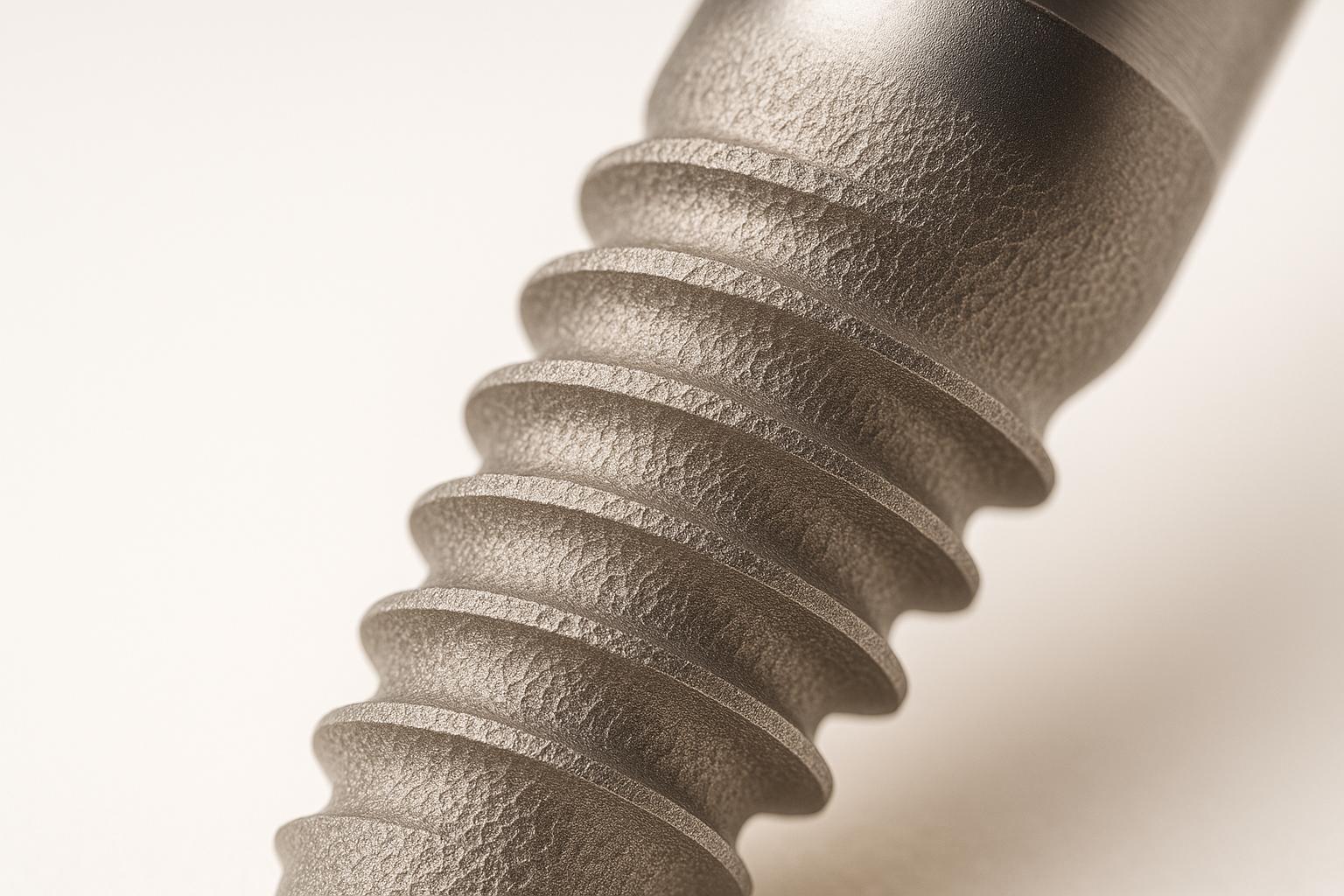
Nanostructured surfaces on titanium dental implants are transforming osseointegration – the process where bone bonds directly with an implant. Here’s what you need to know:
- Titanium’s Role: Titanium is biocompatible and resistant to corrosion. Its surface can be modified to improve bonding with bone.
- Why Surface Matters: Smooth implant surfaces can fail to integrate effectively. Nanostructuring creates textures that mimic natural bone, boosting protein adsorption and cell attachment.
- Key Techniques:
- Physical Methods: Grit blasting and acid etching create micro- and nano-scale patterns.
- Chemical Methods: Anodisation forms titanium dioxide nanotubes, enhancing bone cell activity.
- Advanced Methods: Combining nanostructuring with coatings like hydroxyapatite or graphene improves integration and reduces infection risks.
- Clinical Benefits: Faster healing, reduced fibrous encapsulation, and long-term stability. Studies show higher bone-implant contact and better outcomes compared to conventional implants.
In Australia, dental practices are adopting these technologies under strict Therapeutic Goods Administration (TGA) standards. While upfront costs are higher, the reduced need for revisions and improved results make them a practical choice for patients.
Bottom Line: Nanostructuring is reshaping dental implantology, offering improved integration and durability. The future holds promising advancements like multifunctional coatings and patient-specific designs, ensuring better care and outcomes.
BiomatePDL Osseointegration of Bone Cells (English subtitles)
Nanostructuring Methods for Titanium Implant Surfaces
Titanium implant surfaces are modified at the nanoscale using physical, chemical, and combined methods to improve their integration with bone, a process known as osseointegration.
Physical Methods
Physical techniques create nano-scale textures on titanium surfaces to encourage better cell attachment. For instance, grit blasting uses abrasive particles to roughen the surface, creating micro- and nano-scale patterns that help cells adhere more effectively [1]. Similarly, acid etching introduces tiny pits and grooves by applying acids, which enhances protein adsorption and supports osteoblast adhesion [1]. Another approach involves compacting TiO₂ nanoparticles to form a nanostructured layer that closely resembles the architecture of natural bone [1].
These physical alterations focus on mechanical changes, but chemical methods take a different route by refining the surface through controlled reactions.
Chemical Modification Methods
Chemical techniques adjust both the surface chemistry and its texture. Treatments using acids or alkalis can selectively dissolve or deposit material, creating nanoscale roughness that boosts biological responses [1]. A standout method, anodisation, is an electrochemical process that forms titanium oxide nanotubes (TiO₂ NTAs) with tunable dimensions like length, diameter, and wall thickness. Studies have shown that disordered nanotube arrays under 20 nanometres in height encourage osteogenic differentiation. For example, mesenchymal stem cells cultured on 15-nm nanotube surfaces exhibit peak expression of osteogenic markers [5].
| Method | Process | Key Advantage |
|---|---|---|
| Grit blasting/Acid etching | Mechanical abrasion/Chemical roughening | Increases surface area; enhances cell attachment |
| Anodisation | Electrochemical formation of nanotubes | Produces TiO₂ NTAs; improves protein and cell response |
| Acid/Alkali treatment | Selective dissolution/deposition | Precisely controls surface chemistry |
By combining these approaches with advanced coating technologies, implant performance can be further refined.
Advanced and Combined Methods
Innovative strategies blend traditional methods with cutting-edge technologies. For example, 3D-printed titanium implants can undergo anodisation to create titania nanotubes, followed by a hydroxyapatite (HA) coating. This combination has been found to enhance protein adsorption, cell adhesion, and mineralisation. Laboratory studies show that hydroxyapatite-coated nanostructured implants significantly improve protein adsorption, cell spreading, and the expression of late-stage osteoblast and osteocyte genes [2].
Additionally, incorporating materials like graphene or bioactive glass nanoparticles into coatings can strengthen the implant mechanically, provide antibacterial properties, and further support bone growth [2]. The trend toward combining multiple surface modification techniques reflects a push for synergistic effects, improving both osseointegration and the longevity of implants. Moreover, patient-specific implants, created through 3D printing and enhanced with nanostructuring, are gaining attention for their potential to improve clinical outcomes while reducing costs [2].
In Australia, dental practices are beginning to embrace these advanced technologies. The use of 3D printing combined with nanostructuring and HA coatings allows for the rapid production of personalised implants. These implants not only improve bone integration but also align with Australia’s focus on delivering cost-effective and tailored healthcare solutions.
These advancements in nanostructuring pave the way for enhanced biological responses, as explored in the next section.
How Nanostructured Surfaces Improve Biological Response
The success of dental implants relies heavily on how well they interact with biological tissues right after placement. When a titanium implant is inserted, proteins from blood and nearby tissues quickly attach to its surface. These proteins create a foundation that helps cells adhere to the implant. TiO₂ nanotube arrays enhance this process by increasing protein adsorption, which provides more binding sites and optimises the structure of these proteins. This, in turn, stimulates the activity of osteoblasts and mesenchymal stem cells, paving the way for better bone integration[1][5].
Enhanced Osteoblast and Mesenchymal Stem Cell Activity
Nanostructured surfaces are designed to mimic the natural cues found in bone, encouraging osteoblasts to grow, differentiate, and produce key markers linked to bone formation[1][5]. For example, TiO₂ nanotube arrays with diameters smaller than 20 nanometres have been shown to significantly increase the expression of osteogenic markers like RUNX2 and osteocalcin. Animal studies using Yucatan minipigs further demonstrate that implants with nanostructured surfaces lead to higher bone–implant contact and better biocompatibility at both 4 and 12 weeks after implantation[3][4][5]. These cellular improvements are essential for achieving strong and stable osseointegration.
Minimised Fibrous Encapsulation
Nanostructured surfaces also play a role in reducing fibrous encapsulation, which is a major obstacle to implant success. By influencing the immune response, these surfaces encourage the polarisation of macrophages towards the M2 type, which supports tissue healing and reduces the formation of fibrous tissue[1][8]. This ability to limit fibrous barriers ensures direct contact between bone and the implant, promoting long-term stability and reducing the risk of implant failure.
sbb-itb-2be92ed
Clinical Results and Evidence for Nanostructured Implants
Clinical research consistently shows that nanostructured implant surfaces lead to better osseointegration, which has encouraged their growing use in clinical settings. Below, we explore the clinical findings and contributions from local research that back these advancements.
Evidence from Clinical Studies
Studies have demonstrated that nanostructured implants significantly enhance bone–implant contact (BIC) and accelerate healing. For instance, research involving Yucatan minipigs showed notably higher BIC values in nanostructured implants compared to conventional ones [3][4]. Similarly, titanium implants with micro–nano topography have been linked to denser peri-implant bone formation and increased markers of osteoblast maturation, such as GJA1 and PHEX [2][6]. These features, combined with improved protein adsorption and cell adhesion, contribute to faster healing and greater implant stability [1][6].
| Implant Type | Bone-Implant Contact (BIC) | Healing Time | Biocompatibility | Long-Term Success |
|---|---|---|---|---|
| Conventional (grit-blasted) | Lower | Longer | Good | Standard |
| Nanostructured (TiO₂ NTAs) | Higher | Shorter | Excellent | Improved |
Global and Australian Research Findings
Australian research has played a key role in advancing implant technology, particularly through the development of 3D-printed titanium implants with micro- and nano-structured surfaces [2]. These innovations, often paired with bioactive coatings like hydroxyapatite, have shown enhanced osseointegration and cell adhesion. Globally, similar studies highlight improved BIC values, better osseointegration, and higher long-term success rates for nanostructured implants [1][3][6]. Long-term studies also reveal that these surfaces reduce fibrous encapsulation and encourage stable bone integration, leading to fewer cases of implant failure and peri-implantitis [3][7].
Application in Dental Practices
The integration of research into everyday dental practice is guided by stringent Therapeutic Goods Administration (TGA) standards. Nanostructured implants in Australia must meet rigorous requirements for biocompatibility, mechanical stability, and safety [7]. These standards ensure that patients benefit from improved recovery times and longer-lasting implants. Clinics like Complete Smiles Bella Vista have adopted these cutting-edge approaches, aligning their practices with both the latest research and Australian regulations. Additionally, the cost-efficiency of 3D-printed nanostructured implants – thanks to fewer complications and reduced need for revisions – makes them a practical choice for broader use [2].
Future Developments and Practical Considerations
The world of nanostructured dental implants is advancing at an impressive pace, with new innovations aiming to improve patient care and clinical outcomes. For clinicians, staying informed about these developments and understanding the practicalities of their implementation is key to making well-rounded decisions about adopting these technologies.
New Trends in Implant Nanostructuring
One of the exciting advancements in this field is the rise of multifunctional coatings. These coatings combine several therapeutic properties – such as antibacterial, osteogenic, and anti-inflammatory effects – into a single surface. By integrating bioactive molecules or nanoparticles, these coatings tackle multiple clinical challenges at once, like reducing infection risks while speeding up bone integration.
Another promising area is graphene integration. Studies show that graphene oxide coatings not only enhance cell adhesion and promote bone growth but also offer antimicrobial benefits. Thanks to its strength and compatibility with the body, graphene is becoming an attractive option for implants, although its clinical use is still in its early stages.
The trend towards patient-specific surface modifications is also gaining traction. Through digital planning and additive manufacturing, clinicians can now customise implant surfaces to match individual bone quality and anatomical needs. This personalised approach could lead to better outcomes and shorter recovery times.
Additionally, advancements in TiO₂ nanotube arrays are allowing for precise control over their dimensions to optimise biological responses. Research indicates that disordered nano-topographies with heights under 20 nanometres are particularly effective at promoting bone growth compared to more ordered or larger structures.
These advancements build on existing technologies and aim to address some of the biggest challenges in dental implantology today.
Regulatory and Safety Standards in Australia
With these breakthroughs come the need for strict regulatory oversight. In Australia, dental implants must meet the requirements of the Therapeutic Goods Administration (TGA). This includes proving safety, compatibility with the body, and clinical effectiveness. All implants must be listed on the Australian Register of Therapeutic Goods (ARTG) and comply with standards like AS/NZS ISO 10993 for biological evaluation and AS/NZS ISO 13485 for quality management.
Nanostructured implants, given their novel properties, face additional scrutiny. Manufacturers need to provide extensive safety data to address concerns such as cytotoxicity, potential immune responses, and the long-term durability of nanostructured coatings. By adhering to TGA standards, these technologies aim to ensure improved bone integration without compromising patient safety.
Clinicians must also take responsibility by ensuring that the implants they use are backed by strong clinical evidence and are subject to ongoing monitoring. The TGA requires manufacturers to maintain systems for tracking adverse events, which adds an extra layer of safety for both patients and practitioners. For clinics adopting these advanced implants, staying updated with TGA regulations and investing in staff training is essential.
Cost-Effectiveness and Accessibility
While these technologies offer exciting possibilities, their economic and practical implications cannot be ignored. Nanostructured implants generally come with a higher upfront cost due to the complexity of their production and the investment in research. However, their ability to integrate more effectively with bone can reduce complications, potentially saving costs in the long run by avoiding the need for revision surgeries.
The growing use of 3D printing technology is helping to lower manufacturing expenses – by as much as 30% compared to traditional methods. That said, the final retail price often remains high due to regulatory compliance and research costs.
In Australia, the cost of dental implant procedures typically ranges from AUD $3,000 to $6,500 per tooth, with nanostructured implants sitting at the higher end of this range. Factors such as clinic location, the technology used, and individual patient needs all contribute to pricing variability.
Improving access to these advanced implants involves addressing several barriers. These include the higher costs, the need for more long-term data, and additional training for clinicians. Some clinics are now offering competitive pricing models or payment plans to make these implants more accessible to patients.
For practices, adopting nanostructured implants involves more than just purchasing new products. Clinics must consider supply chain reliability, staff training, and how these technologies integrate with existing digital workflows. Balancing the potential benefits of better patient outcomes against the challenges of implementation is key to ensuring both clinical and financial success.
Conclusion
Nanostructuring titanium surfaces is transforming the way osseointegration is achieved, significantly boosting protein adsorption and speeding up bone formation. By incorporating features like TiO₂ nanotube arrays, these advanced surfaces deliver faster bone integration and better results compared to traditional implants.
Research from animal studies and in vitro experiments highlights the effectiveness of nanostructured implants, showing increased bone–implant contact and higher expression of osteogenic markers such as RUNX2 and osteocalcin. These findings point to quicker healing times, enhanced stability, and fewer complications [3][4][5].
What sets this technology apart is its precision and adaptability. Techniques like anodisation enable fine-tuning of nanotube dimensions and patterns to encourage optimal biological responses. For instance, disordered nanotube arrays under 20 nanometres in height have shown to be particularly effective at supporting bone growth, offering a clear guide for clinicians when selecting implant systems [5].
In Australia, dental practices like Complete Smiles Bella Vista are already incorporating nanostructured implants to deliver faster recovery times and reliable results, all while adhering to strict TGA standards. These regulations ensure that safety and efficacy remain a priority, giving practitioners the confidence to embrace these advancements without compromising patient care.
Looking ahead, the future of nanostructured implants is filled with exciting possibilities. New coatings that combine antibacterial, osteogenic, and anti-inflammatory properties, as well as patient-specific modifications, are on the horizon. While the initial costs might be higher, the potential for fewer complications and better long-term outcomes makes these technologies a worthwhile investment. As manufacturing processes improve and scale, these innovations are likely to become more accessible, paving the way for more personalised and efficient dental care across Australia.
FAQs
What are the benefits of nanostructured titanium implants for healing and long-term stability?
Nanostructured titanium implants bring a host of benefits compared to traditional options, particularly by improving the way implants integrate with bone tissue. The unique surface texture created through nanostructuring encourages stronger interaction between the implant and the surrounding bone, which can speed up healing and provide better long-term stability.
This cutting-edge surface design not only supports the growth of bone cells but also reinforces the connection between the implant and the jawbone. The result? A lower chance of implant failure and a more dependable, long-lasting solution for restoring both dental function and appearance.
What are the risks or side effects of nanostructured dental implants, and how are they regulated in Australia?
Nanostructured dental implants are widely regarded as safe and effective, but like any medical procedure, they come with potential risks. These might include inflammation, infection, or even implant failure – though such complications are uncommon when the procedure is performed by a skilled dental professional. Some people may also notice sensitivity or mild discomfort during the healing period.
In Australia, the safety and quality of dental implants, including those with nanostructured surfaces, are closely monitored by the Therapeutic Goods Administration (TGA). The TGA enforces strict standards, evaluating implants for biocompatibility and performance to safeguard patient health. If you’re thinking about getting dental implants, it’s essential to consult a qualified dentist. They can walk you through the process, address any concerns, and tailor advice to your individual needs.
How do nanostructuring techniques and advanced coatings like hydroxyapatite and graphene improve osseointegration in dental implants?
Nanostructuring techniques play a key role in improving osseointegration by creating nanoscale surface textures that closely resemble the natural structure of bone. This design helps implants integrate more effectively with surrounding bone tissue, offering enhanced stability and quicker healing times.
In addition, advanced coatings like hydroxyapatite and graphene take this process a step further. Hydroxyapatite, a mineral naturally present in bone, promotes a strong bond between bone cells and the implant’s surface. Meanwhile, graphene, valued for its incredible strength and compatibility with biological systems, not only boosts cell attachment but also helps lower the risk of infection. Together, these advancements make dental implants a more dependable and efficient solution for long-term use.
Related Blog Posts
- How Hybrid Coatings Improve Osseointegration
- Osseointegration in Titanium Implants: How It Works
- Surface Modifications for Better Osseointegration
- Titanium Implant Surface Modifications for Osseointegration
Important Notice: Any surgical or invasive procedure carries risks. Before proceeding, you should seek a second opinion from an appropriately qualified health practitioner.
Individual results may vary. The information provided in this article is for educational purposes only and does not constitute medical advice.
Checkout Related Blogs




Get in touch with us
For more information, call us now to start feeling better. Or fill the form below to make appointment
The Latest News from Complete Smiles
How to Clean Clear Plastic Retainers
Checklist for Choosing Wearable Dental Devices
Checklist for Choosing Cloud AI Platforms in Dentistry

Complete Smiles Bella VistaAccepts All Major Health Funds, Including





