





How Intraoral Scanners Improve Orthodontic Workflows

Intraoral scanners are transforming orthodontic workflows in Australia by replacing outdated methods of taking dental impressions. These devices create detailed 3D models of teeth and gums, improving accuracy, reducing errors, and making the process more efficient. Patients benefit from a more comfortable experience, while clinics enjoy faster turnaround times and better communication with dental labs. Here’s what you need to know:
- Accuracy: Scanners achieve precision levels traditional methods can’t match, reducing the need for remakes.
- Efficiency: Digital scans are sent to labs instantly, cutting delays and simplifying workflows.
- Patient Comfort: No more messy or unpleasant impression materials – scanners are quicker and less intrusive.
- Treatment Planning: 3D visuals enhance diagnosis and allow for more precise appliance creation.
- Cost: Initial investment is higher, but long-term savings from reduced errors and faster processes make it worthwhile.
With proper training and integration into existing systems, intraoral scanners are setting a new standard for orthodontic care in Australia.
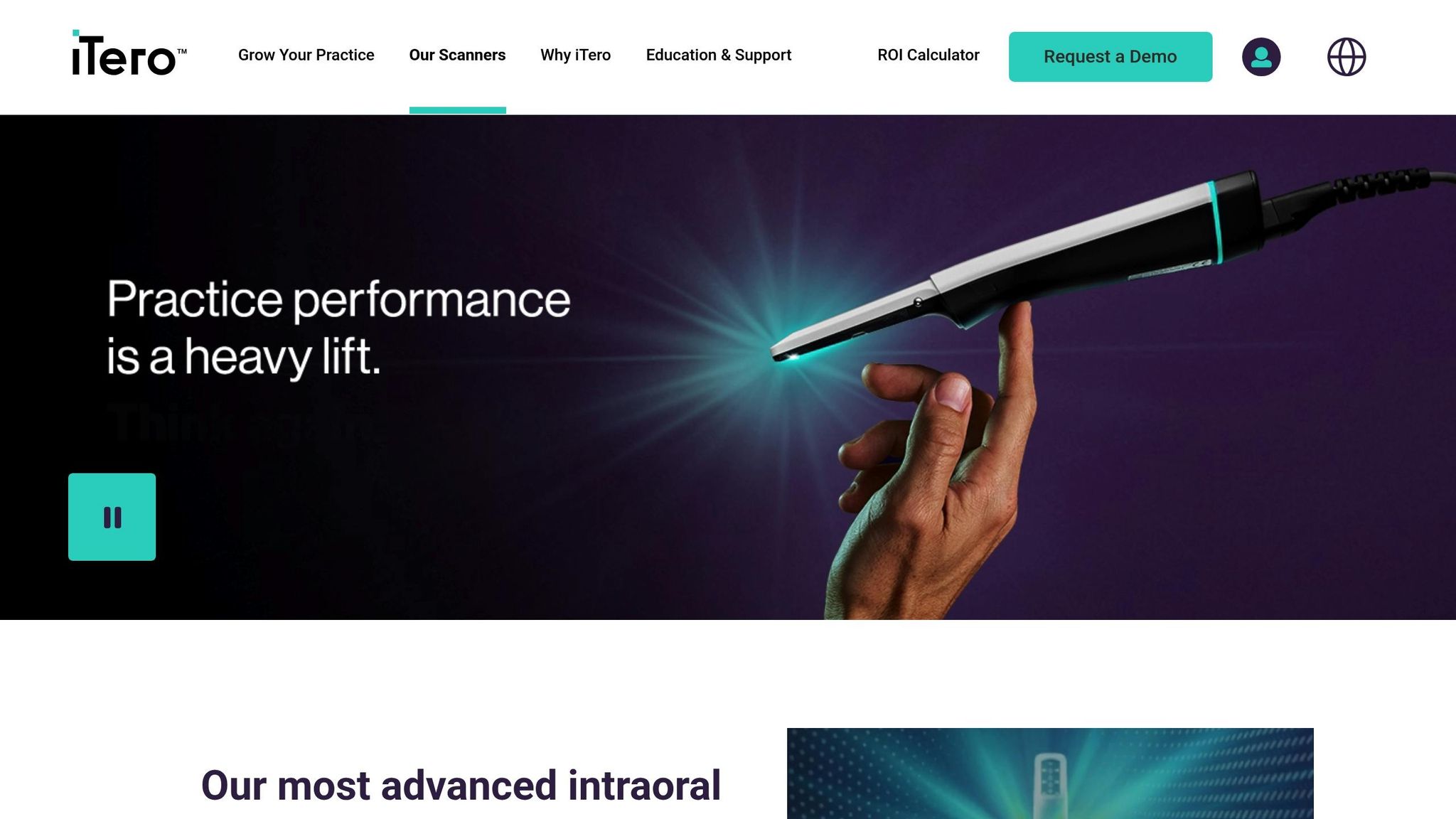
How Dr. Vicky Vlaskalic uses the iTero Lumina™ intraoral scanner to improve patient experience
Benefits of Intraoral Scanners for Orthodontic Workflows
Intraoral scanners have transformed orthodontic workflows, offering a range of advantages that enhance both efficiency and accuracy. Let’s dive into the key benefits they bring to the table.
Improved Accuracy and Reduced Errors
Digital scanning technology provides highly precise measurements. Take the Trios 3 intraoral scanner, for instance – it achieves a scanning accuracy of 6.9 ± 0.9 µm and a precision of 4.5 ± 0.9 µm [2]. This level of detail ensures orthodontic appliances fit correctly on the first try. Compare this to traditional alginate impressions, which are prone to errors caused by material inconsistencies, capture techniques, and even stone expansion during casting [2]. Research shows that 67% of studies favour digital impressions over conventional methods in terms of accuracy [5]. Digital models not only meet clinically acceptable standards but also allow for immediate rescanning if any areas are incomplete, keeping measurement differences within 0.20 mm [2].
Faster Turnaround Times
Switching to a digital workflow cuts down the time between scanning and appliance delivery. Traditional methods involve multiple time-consuming steps, but digital scans can be sent to laboratories in minutes, eliminating shipping delays. This efficiency translates to fewer remakes as well. For instance, crown remakes due to margin issues drop by 40%, fit issues by 33%, and high occlusion problems by 27% [4].
Enhanced Patient Comfort
For patients, intraoral scanning offers a far more comfortable experience. It removes the need for traditional impression materials, which many find unpleasant due to their taste, smell, or texture. Studies confirm that patients prefer digital scanning for its sensory comfort [4, 8, 9]. The smaller, less intrusive scanner tips also help minimise gag reflex issues. While some systems still require a powder coating, ongoing advancements are reducing this inconvenience.
Seamless Laboratory Communication
Intraoral scanners make it easier for dental practices to collaborate with laboratories. Digital impressions can be uploaded to cloud-based platforms and shared instantly, allowing labs to begin work without delay. This streamlined process reduces the likelihood of errors during fabrication, as integrated software verifies scan data before production [13, 15]. Practitioners can also quickly address any scanning errors, ensuring the data sent to the lab is accurate from the start.
Advanced Treatment Planning Capabilities
Intraoral scanners do more than just streamline workflows – they also enhance treatment planning. By integrating with advanced software, these scanners allow for detailed visualisation, measurement, and simulation of treatment outcomes. Practitioners can assess distances, angles, and volumes with a precision that traditional models simply can’t match. Additionally, digital scans can be stored indefinitely without losing quality, providing a reliable record for long-term monitoring. They also support the creation of customised appliances through computer-aided design (CAD) software [3]. These features align perfectly with the growing adoption of digital tools in orthodontic practices across Australia.
How to Integrate Intraoral Scanners into Your Workflow
Incorporating intraoral scanners into your practice can streamline processes and improve patient care. Here’s how to make the transition effectively.
Initial Consultation and Scanning
The first patient visit is your chance to establish a smooth digital workflow. During this session, intraoral scanners are used to capture optical impressions directly, offering a more reliable and accurate alternative to traditional methods [8]. This digital process allows you to present treatment plans in 3D, which not only enhances patient understanding but also increases the likelihood of treatment acceptance [7].
For instance, practices using iTero scanners alongside Invisalign can utilise the Invisalign Practice App to streamline the process. The workflow includes creating a patient profile, performing the scan, selecting auto-uploaded images on the Invisalign Doctor Site, completing the prescription, and submitting – all in a single appointment [6].
"It’s a wow for the patient’s and for the parents who come to our office."
– Dr. Sandra Tai [6]
The immediate 3D visuals generated by these scans engage patients and make consultations more interactive. This real-time feedback also sets the foundation for precise tracking throughout treatment.
Monitoring Treatment Progress
After the initial scan, regular follow-ups with digital captures ensure the treatment stays on course. This is particularly valuable for Invisalign cases, where clinicians can monitor tooth movement and compare it against the planned outcomes [9]. Digital records also provide permanent storage, eliminating issues like model wear and tear, and serve as a comprehensive resource for long-term patient care.
Equipment Compatibility and Staff Training
For a seamless integration, it’s important to ensure your intraoral scanner is compatible with existing CAD/CAM systems, dental lab software, and practice management platforms. This ensures smooth data sharing and efficient workflows [11]. Scanners with open architecture are especially beneficial, as they allow greater flexibility and support a wide range of clinical applications [10].
"With its open architecture, IS ScanFlow lets you work freely among different clinical applications with open workflow capability, expanded processing options, one-click export and touchscreen capabilities."
– DEXIS™ IS ScanFlow [10]
Staff training is equally critical for a successful transition to digital workflows. Local programs, such as those offered by the Institute of Digital Dentistry and TAFE SA Centre for Dental Studies, provide teams with the skills needed to operate scanners effectively. Studies show that integrating scanners efficiently can quickly offset the initial investment.
Training should cover essential areas like sterilisation protocols for scanner tips, strategies to avoid common scanning errors, accurate bite capture techniques, and tailored approaches for different treatments. Ongoing education ensures your team stays updated with the latest advancements in scanning technology [7].
sbb-itb-2be92ed
Intraoral Scanners vs Traditional Impression Methods
The comparison between intraoral scanners and traditional impression techniques highlights a significant evolution in orthodontic workflows. Digital scanning has reshaped the field, offering clear advantages over conventional methods.
Accuracy and Precision
Intraoral scanners deliver exceptional accuracy, eliminating the material distortions often encountered with traditional impressions. Digital impressions also reduce the likelihood of errors commonly associated with older methods [2][1].
Time Efficiency
When it comes to speed, digital impressions are a game changer. Scanning takes approximately 248 seconds, compared to 605 seconds for traditional impressions [12]. Total treatment times are also significantly shorter – just 12 minutes for digital impressions versus 75.5 minutes for conventional methods [2]. This translates to reduced chairside time and a faster overall case turnaround, cutting it by up to 50% [15].
Patient Comfort
Patients also notice the difference. Traditional impressions score a 6.66 on comfort levels, while digital scans rate much higher at 9.03 [2]. The non-invasive nature of digital scanning is particularly helpful for individuals with a sensitive gag reflex or excessive salivation.
Cost Considerations
Though the initial investment for intraoral scanners in Australia ranges between $20,000 and $70,000, with annual maintenance costs of $1,000–$2,500 [14], the long-term savings are compelling. Reduced treatment times and fewer remakes help offset these upfront costs [15].
Key Differences at a Glance
| Aspect | Intraoral Scanners | Traditional Impressions |
|---|---|---|
| Accuracy | 6.9 ± 0.9 µm precision; avoids material distortions | Prone to voids, tears, and dimensional changes |
| Time Required | 248 seconds; 12 minutes total treatment time | 605 seconds; 75.5 minutes total treatment time |
| Patient Comfort | 9.03/10 comfort rating; non-invasive | 6.66/10 comfort rating; potential discomfort |
| Turnaround Time | Instant digital transmission to labs | Physical shipping; 2–5 day delay |
| Storage | Digital/cloud-based; permanent records | Physical models; risk of damage or loss |
| Environmental Impact | Low waste; reusable | Single-use materials; generates packaging waste |
| Initial Investment | $20,000–$70,000 plus annual maintenance | Lower upfront cost; ongoing material expenses |
| Workflow Integration | Easily integrates with CAD/CAM systems | Manual processes; lab-dependent |
| Remake Rate | Lower due to high accuracy | Higher due to material issues |
| Staff Training | Requires digital skills; learning curve | Relies on traditional techniques |
Digital workflows now dominate, with 80% of crown and bridge dental cases using intraoral scanners, leaving traditional methods with just a 20% share [13]. For Australian practices considering this shift, it’s critical to select scanners that comply with Therapeutic Goods Administration (TGA) and ISO 13485 standards. Comparing quotes from multiple suppliers is also a smart move [14]. The numerous advantages of intraoral scanners make them an essential tool for streamlining orthodontic practices.
Considerations for Australian Dental Practices
Incorporating intraoral scanners into Australian dental practices comes with its own set of challenges, including regulatory compliance, system integration, and patient data security. Addressing these considerations is key to ensuring smooth implementation and operation.
Regulations and Patient Privacy
Australian dental practices must navigate a complex regulatory framework when introducing intraoral scanners. For example, in Victoria, dentists are required to obtain a licence for dental X-ray equipment, which includes intraoral scanners that emit radiation[16]. This process mandates AHPRA registration and applies to various imaging devices like intraoral X-ray units, panoramic systems, cephalometric units, and dental 3D volumetric imaging equipment. Dentists must submit an activity plan to radiation.safety@health.vic.gov.au and adhere to strict radiation protection guidelines[16].
Additionally, the Therapeutic Goods Administration (TGA) mandates that all dental devices, whether finished or unfinished, imported from overseas are listed on the Australian Register of Therapeutic Goods (ARTG). This requirement even extends to materials and components used for manufacturing dental devices, including those sourced locally if the supplier has not registered them on the ARTG[17].
When it comes to patient data, compliance with the Privacy Act 1988 and the Australian Privacy Principles (APPs) is non-negotiable. Practices must implement robust risk management strategies to safeguard against data breaches and cyber threats[18]. Some practical measures include using multi-factor authentication, selecting cloud providers that store data within Australia, and conducting cybersecurity training for staff. The Australian Dental Association (ADA) also provides resources to guide practices in managing risks and responding to potential data breaches.
Metric System and Local Integration
For intraoral scanners to function effectively in Australian clinics, they must align with metric measurement standards and integrate seamlessly into local laboratory workflows. It’s essential to ensure that scanners are compatible with existing practice management software and meet Australian standards, including adherence to the Dental Board of Australia‘s infection control guidelines[19].
The adoption of digital dentistry technologies – such as 3D imaging, CAD/CAM systems, and intraoral scanners – has significantly improved the ability to diagnose dental conditions accurately. These tools support better treatment planning and enhance the overall integration of advanced digital systems within Australian clinics[20].
Advanced Digital Systems in Local Clinics
Many Australian dental clinics are now integrating intraoral scanners with other digital technologies, such as digital X-rays, CBCT (cone beam computed tomography), and CAD/CAM systems, to create a seamless and efficient patient experience.
Take Complete Smiles Bella Vista, for example. This clinic uses intraoral scanners within a fully integrated digital system to enhance orthodontic planning, including Invisalign treatments. By leveraging these tools, they provide precise treatment planning and improve communication with patients throughout the process.
In addition to individual procedures, newer advancements like digital impression systems and AI-assisted diagnostics are becoming increasingly common. These technologies enable clinics to deliver more accurate diagnoses and treatment plans, particularly for complex orthodontic cases that require detailed monitoring and precise measurements[19]. Together, these advancements are shaping the future of digital dentistry in Australia.
Conclusion
Intraoral scanners are reshaping orthodontic care across Australia, offering greater precision, efficiency, and a better overall experience for patients. By addressing the limitations of traditional impression methods, this technology equips orthodontists with the accuracy needed for effective treatment planning.
Digital impressions bring a host of advantages: they minimise patient discomfort, speed up processing times, and significantly reduce the need for remakes. As Dr. Vincent Prestipino aptly stated, "the curtain that doctors have been hiding behind: the one that says digital is no good or the quality isn’t there, no longer exists" [21]. This evolution signals more than just a technological upgrade – it marks a transformative shift in how orthodontic care is delivered.
For Australian orthodontic practices, the benefits extend beyond clinical improvements. Digital workflows streamline communication with laboratories, cut down on material waste, and enhance patient understanding with 3D visualisations and seamless CAD/CAM integration.
Meeting patient expectations is another critical aspect. Today’s patients in Australia prioritise comfort, efficiency, and transparency in their treatment journeys. Intraoral scanners deliver on all these fronts, with some practices reporting nearly perfect patient acceptance rates [21].
As advancements in AI and scanning capabilities continue to emerge, Australian orthodontic practices adopting this technology now are setting the stage for the future of patient care. These innovations are not just enhancing current practices but also establishing a new standard in orthodontics, paving the way for a fully digital era.
FAQs
What are the key advantages of using intraoral scanners instead of traditional dental impressions in orthodontics?
Intraoral scanners bring several standout benefits to orthodontic practices, especially when compared to traditional dental impressions. For starters, they offer a much more patient-friendly experience, doing away with the discomfort and mess of traditional impression materials. Plus, their precision helps cut down on errors and the need for remakes. If an area needs a second look, clinicians can simply rescan it – no hassle.
These scanners also boost workflow efficiency, making processes quicker and streamlining communication with dental labs. Another big win? They reduce the risk of cross-contamination by eliminating the need to handle physical impression materials. With these advantages, intraoral scanners have become an essential part of modern orthodontic care, whether for braces or Invisalign.
How do intraoral scanners streamline orthodontic workflows and improve patient care?
Intraoral scanners have transformed orthodontic workflows by offering precise digital impressions. These advanced digital models eliminate the need for traditional moulds, which not only reduces patient discomfort but also minimises the chances of errors. With instant visualisation of dental structures, orthodontists can diagnose problems more accurately and create tailored treatment plans with ease.
Another standout feature of this technology is its ability to provide real-time simulations of treatment outcomes. This improves communication between patients and practitioners, helping patients better understand their treatment options. By boosting precision and predictability, intraoral scanners lead to improved patient satisfaction and more consistent orthodontic results. Plus, the streamlined nature of digital workflows saves time for everyone involved, making treatments faster and more convenient.
What should Australian dental practices consider when adopting intraoral scanners into their workflows?
When introducing intraoral scanners into their operations, Australian dental practices need to prioritise compatibility with their current software, hardware, and CAD/CAM systems. Ensuring the scanners comply with Australia’s regulatory and safety standards is equally crucial.
Key considerations include evaluating the scanner’s ease of use, precision, and the availability of ongoing support services. These elements play a vital role in ensuring seamless integration, enhancing workflow efficiency, and delivering better patient care while maintaining top-tier standards in Australia.
Related Blog Posts
- Wear-Resistant Materials in Dental Restorations
- AI vs. Traditional Methods: Impacted Teeth Detection
- Minimally Invasive Tooth Extraction Techniques
- Intraoral Scanners vs. Impressions: Accuracy Compared
Important Notice: Any surgical or invasive procedure carries risks. Before proceeding, you should seek a second opinion from an appropriately qualified health practitioner.
Individual results may vary. The information provided in this article is for educational purposes only and does not constitute medical advice.
Checkout Related Blogs




Get in touch with us
For more information, call us now to start feeling better. Or fill the form below to make appointment
The Latest News from Complete Smiles
How to Clean Clear Plastic Retainers
Checklist for Choosing Wearable Dental Devices
Checklist for Choosing Cloud AI Platforms in Dentistry

Complete Smiles Bella VistaAccepts All Major Health Funds, Including





