





First Fully Automated Dental Surgery: What It Means

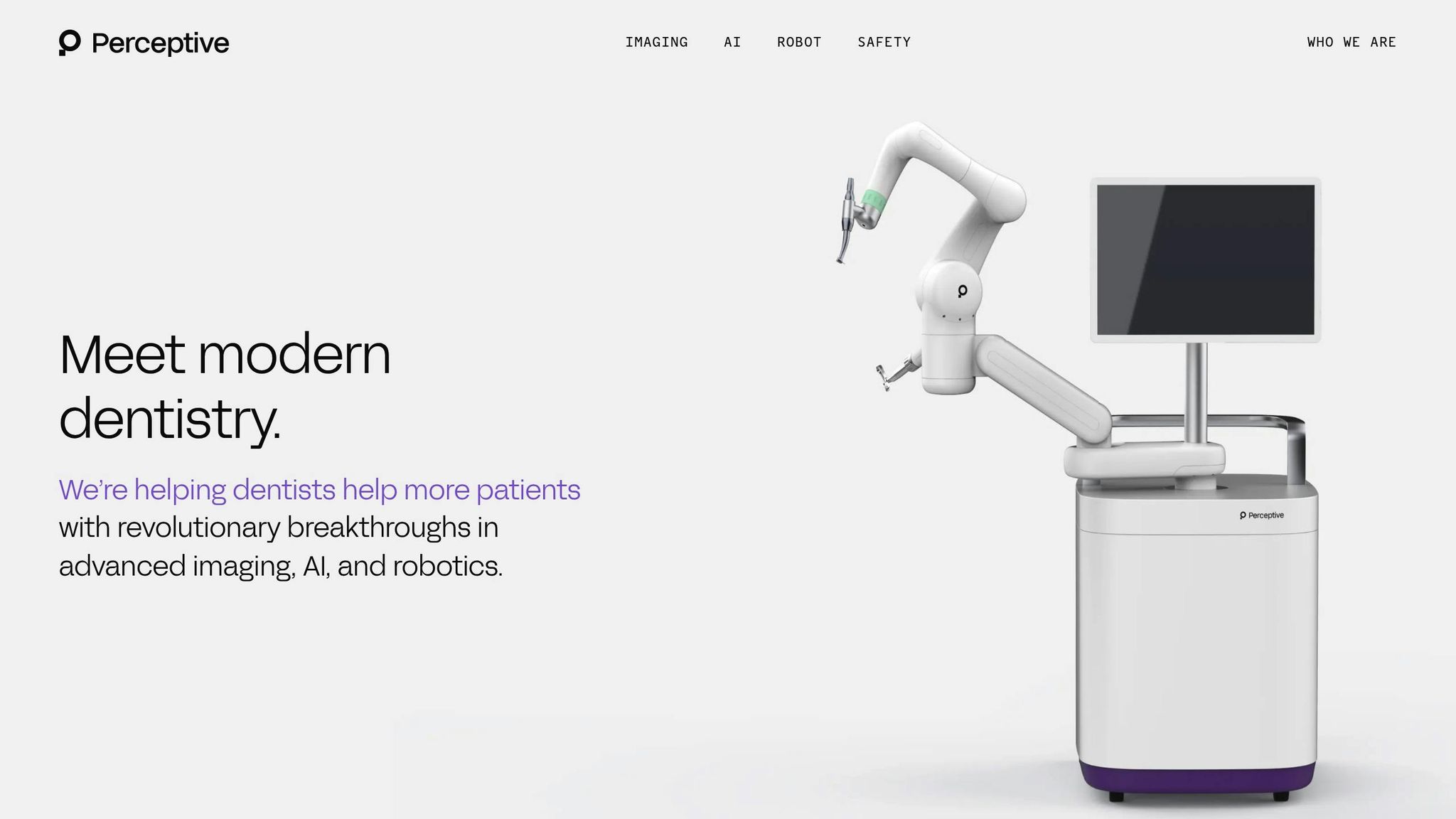
Boston-based company Perceptive has completed the world’s first fully automated dental surgery, using AI-driven robotics to prepare and place a dental crown in just 15 minutes. This system combines advanced 3D imaging, optical coherence tomography (OCT), and robotic precision to reduce treatment time, improve consistency, and minimise errors. Unlike traditional methods that rely on X-rays and multiple appointments, this approach offers faster, radiation-free procedures in a single visit. However, high costs, regulatory hurdles, and limited clinical data remain barriers to widespread adoption, particularly in Australia.
Key Takeaways:
- Procedure Time: 15 minutes (vs. 2–2.5 hours traditionally).
- Imaging: OCT technology eliminates radiation exposure.
- Precision: AI ensures consistency, even with patient movement.
- Challenges: High costs, regulatory delays, and limited procedural scope.
This technology isn’t replacing dentists but aims to assist them by handling routine tasks, allowing practitioners to focus on complex care and patient relationships. While broader use in Australian clinics may take 5–10 years, it signals a shift towards faster, more efficient dental care.
Perceptive Completes World’s First Fully Automated Dental Procedure on a Human Using AI-Driven…
How the First Automated Dental Surgery Worked
In Barranquilla, Colombia, Perceptive’s robotic system successfully performed a crown replacement on a live patient[4]. This milestone demonstrated how AI and robotics can deliver precise dental care. Building on earlier advances, this procedure highlighted the growing potential of robotic dentistry.
The Technology Used in the Surgery
The system relies on an AI-driven robotic arm, guided by a handheld 3D volumetric scanner, to perform dental procedures with mechanical precision. A key feature of this technology is its use of optical coherence tomography (OCT), which creates detailed 3D models of teeth, gums, and nerves without exposing the patient to X-rays. This radiation-free imaging provides high-resolution data, allowing the AI to detect cavities with about 90% accuracy[2][4]. Such advancements could make dental care more accessible while improving outcomes for patients[2][4].
The Procedure: Step-by-Step Process
The process begins with a thorough scan of the patient’s mouth using the 3D scanner and OCT. This generates a complete digital map of the oral cavity. The AI analyses this data to diagnose dental issues and create a treatment plan, which is reviewed and approved by the dentist in collaboration with the patient. Once the plan is agreed upon, the robotic arm autonomously carries out the procedure. In this landmark surgery, it handled both crown preparation and placement. The system’s precision even accounts for minor patient movements, a common challenge in manual dentistry.
Differences from Manual Dentistry
The automated approach introduces several advantages over traditional methods. For instance, a typical crown procedure, which usually requires two visits and takes around two hours, can now be completed in just 15 minutes during a single visit. This eliminates the need for temporary crowns and multiple appointments[1][2][4]. Additionally, while manual techniques depend on the skill level of the individual dentist, the AI-guided robotic system consistently delivers precise results with a lower risk of errors[1][2][5].
| Aspect | Automated Dental Surgery | Manual Dentistry |
|---|---|---|
| Procedure Time | ~15 minutes (single visit) | 2–2.5 hours (two visits) |
| Imaging Method | 3D OCT (no radiation) | X-rays (radiation exposure) |
| Precision Level | AI-guided, consistent | Dependent on clinician skill |
| Error Potential | Lower (automated control) | Higher potential for human error |
| Patient Experience | Faster, less invasive | Longer, multiple appointments |
The automated system also improves patient comfort. Shorter procedures, radiation-free imaging, and enhanced visualisation of dental conditions contribute to a more pleasant experience. Importantly, this technology doesn’t aim to replace dentists but to work alongside them. Dentists still oversee and approve the AI-generated treatment plans, ensuring professional judgment remains central to the process. This collaboration allows dental professionals to focus on personalised patient care and more complex treatment planning, while the robotic system handles routine tasks with unmatched efficiency[7].
Clinical Effects and Patient Benefits
The advent of fully automated dental surgery has the potential to change patient care by delivering greater precision and efficiency, though it does come with notable challenges. These advancements aim to refine clinical accuracy while simplifying the overall patient experience.
Improved Precision and Reduced Errors
Robotic systems excel at minimising human error, offering consistent outcomes even when patients make small movements during procedures. By utilising OCT imaging, these systems create detailed 3D maps without exposing patients to radiation. This allows for early detection of dental problems and reduces the need for invasive treatments. Additionally, pre-programmed pathways ensure mechanical consistency, lowering the risks associated with procedures.
Faster and More Accessible Care
Automated crown replacements now take just 15 minutes, a significant improvement compared to the traditional two-hour process spread over multiple appointments. This not only enhances the patient experience but also boosts clinic efficiency[2].
For Australian dental practices, these time-saving benefits could enable clinics to accommodate more patients within existing schedules. This is particularly crucial in addressing long waiting times and could make a significant difference in rural and remote areas, where access to qualified dentists is often limited.
Current Challenges and Regulatory Hurdles
While the benefits are promising, there are still major regulatory and practical barriers to overcome. Perceptive’s system, for instance, is projected to be about five years away from receiving full FDA approval in the United States[3]. Similar timelines are expected for approval from Australia’s Therapeutic Goods Administration.
Another issue is the lack of peer-reviewed clinical data to evaluate long-term safety, effectiveness, and patient satisfaction. Although robotic systems provide clear advantages, their current capabilities and regulatory status restrict their broader use in clinical settings.
At present, these systems are mainly suited for specific tasks like crown preparation and placement. More complex dental procedures, which require nuanced judgement or the ability to handle unexpected complications, still rely on human expertise. Additionally, the high upfront costs, ongoing maintenance requirements, and unresolved liability concerns could slow widespread adoption in Australia.
sbb-itb-2be92ed
Benefits and Challenges of Automated Dental Surgery
The arrival of fully automated dental surgery is reshaping the field of dentistry, promising exciting advancements while also presenting some hurdles. By building on the technical successes of these systems, the potential benefits extend to improving clinical workflows and enhancing patient care.
Main Benefits of Automation
One of the standout advantages of robotic dental systems is their speed and efficiency. Perceptive’s automated system, for instance, significantly accelerates procedures, which could help streamline patient scheduling and boost overall clinic productivity.
Another key benefit lies in the diagnostic precision these systems offer. Leveraging advanced imaging technology, they achieve higher accuracy compared to traditional 2D X-rays[2][6]. As German Gallucci, Chair of Restorative Dentistry at Harvard School of Dental Medicine, highlights:
This technology ensures safer and more precise diagnoses, enhancing patient care and safety[6].
These systems also excel in treatment consistency. Unlike human practitioners, robotic systems maintain precision even if a patient moves during a procedure. This reliability could help standardise the quality of care across dental practices, potentially addressing disparities in access to dental services, particularly in diverse regions of Australia.
From a patient’s perspective, the benefits include radiation-free imaging and shorter appointment times. These systems also allow patients to better understand their dental conditions through clear visualisation tools.
For dental practitioners, automation offers an opportunity to redefine their roles rather than replace them. By increasing efficiency, dentists can dedicate more time to personalised patient care, reduce chair time, and potentially treat more patients in a day.
Barriers to Wide Adoption
Despite the promise, several challenges stand in the way of widespread adoption.
High costs are a significant hurdle. The technology requires specialised equipment, including handheld 3D volumetric scanners, robotic arms equipped with dental tools, and advanced AI software. With Perceptive raising $30 million in funding so far, the capital investment needed could be prohibitive for many Australian clinics, particularly smaller ones.
Regulatory hurdles also slow progress. In Australia, the Therapeutic Goods Administration (TGA) will likely require extensive testing before granting approval for commercial use. Without this approval, the path to adoption remains uncertain.
Another challenge is the lack of peer-reviewed clinical data. While Perceptive has trialled its system on a patient in Colombia, comprehensive studies that demonstrate long-term safety, effectiveness, and patient satisfaction are still missing. This gap in evidence adds to the uncertainty for both regulators and practitioners.
Beyond the technical and regulatory barriers, acceptance of the technology poses its own challenges. Patients might feel uneasy about undergoing fully autonomous procedures, even with safety features designed to manage movement. Similarly, dental professionals will need to adjust to new workflows and develop confidence in automated systems for tasks they’ve traditionally performed themselves.
The system’s limited procedural scope is another drawback. Currently, it is designed for treatments like crown preparation and placement. More complex procedures, which require nuanced decision-making and the ability to handle unexpected complications, still rely entirely on human expertise. This means clinics may need to maintain traditional tools and skills alongside robotic systems, complicating training and workflows.
Finally, infrastructure and maintenance requirements add to the operational challenges. These sophisticated systems demand ongoing technical support, which may not be readily available in rural or remote areas of Australia where dental services are already limited.
| Aspect | Benefits | Challenges |
|---|---|---|
| Time Efficiency | Faster procedures | Limited to specific treatments |
| Diagnostic Accuracy | Higher precision through advanced imaging | Requires more clinical validation |
| Regulatory Status | Potentially safer and more precise care | Pending approval from regulatory bodies |
| Financial Impact | Increased patient throughput | High upfront investment |
| Patient Experience | Shorter appointments, no radiation | Anxiety around autonomous procedures |
These challenges highlight the complexities of implementing robotic dental systems in Australia. For practices like Complete Smiles Bella Vista to embrace this technology, issues around regulation, clinical validation, and cost must first be addressed. Overcoming these barriers will be key to unlocking the full potential of automation in dentistry.
Future Developments in Robotic Dentistry
Perceptive’s robotic system has marked a turning point in automated dental care, setting the stage for a new era in precision-driven dentistry. As this technology continues to evolve, dental procedures around the world are expected to become more accurate, consistent, and efficient. These early advancements hint at a future filled with transformative possibilities.
Expanding Capabilities of Robotic Systems
At present, robotic dental systems are primarily focused on routine tasks like crown preparation. However, experts predict that future iterations will tackle more intricate procedures, such as multi-tooth restorations, root canal treatments, and even orthodontic adjustments. This leap forward will be powered by advanced AI and adaptive control systems[1][8]. Imagine a future where robots not only perform these treatments but also diagnose issues with pinpoint accuracy, enabling minimally invasive interventions before problems escalate.
Real-time adaptive feedback will play a key role, allowing robots to adjust on the fly when unexpected complications arise. Additionally, the combination of virtual orthodontic simulations with robotic precision could revolutionise teeth straightening, delivering faster and more consistent results through meticulously calculated adjustments.
Integration with Digital Dentistry
The true potential of robotic dentistry lies in its integration with digital dental tools. High-resolution 3D imaging, such as optical coherence tomography (OCT), creates detailed models of a patient’s oral structure. These models, when analysed by AI, can generate highly personalised treatment plans for robotic systems to execute with remarkable precision[2][8].
This seamless digital workflow streamlines every stage of care – from diagnosis to treatment. For instance, AI diagnostic tools could identify early signs of decay in 3D scans, enabling quick, minimally invasive treatments. Moreover, the data collected during each procedure will feed into an ongoing feedback loop, further refining the accuracy and efficiency of robotic systems. Such advancements hold immense promise for dental practices in Australia, where technology-driven care could soon become the norm.
Impacts on Australian Dentistry
In Australia, the widespread adoption of robotic dental technology is likely five to ten years away. Early adopters are expected to be larger, tech-savvy practices with the resources to invest in pilot programs. Clinics like Complete Smiles Bella Vista, known for their cutting-edge techniques, are well-positioned to lead the charge in integrating these systems into their workflows.
The potential benefits for Australians are significant. Robotic systems could reduce procedure times, which might lead to lower costs and improved access to high-quality care, especially in rural or underserved areas. However, there are hurdles to overcome. The Therapeutic Goods Administration (TGA) will require rigorous testing and clinical validation before these systems can be approved for use across the country[1][3][4]. High initial costs, regulatory requirements, and the need for specialised training will likely limit early adoption to well-funded practices. Over time, as the technology becomes more affordable, its reach is expected to expand.
For dental professionals, the shift to robotic systems will require new skills, including managing digital workflows, operating robotic equipment, and interpreting AI-generated insights[2][8]. Rather than replacing dentists, these advancements will redefine their roles, allowing them to focus more on diagnosis, treatment planning, and building stronger patient relationships.
As robotic dentistry continues to develop, it promises to reshape the Australian dental landscape – bringing safer, more precise, and accessible care to patients across the country.
Conclusion: What’s Next for Dentistry
The first fully automated dental surgery represents a major step forward in the field of dentistry. Perceptive’s AI-powered robotic system has shown that intricate procedures like crown replacements can now be completed autonomously in just 15 minutes – about eight times faster than traditional methods [2].
Beyond the speed, the system’s precision is enhanced by technologies like optical coherence tomography and AI-driven planning. These tools not only minimise human error but also contribute to better clinical outcomes.
However, there are hurdles to overcome before this technology becomes widespread. Regulatory approvals in countries like the US and Australia are still pending, requiring rigorous validation processes. Additionally, the high upfront cost and the necessity for specialised training may limit early adoption to larger, well-funded practices.
"Robotic systems will transform dentistry by streamlining procedures, enhancing patient comfort, and enabling earlier, more accurate diagnoses", says Dr Chris Ciriello, CEO of Perceptive [2].
This perspective highlights the growing influence of robotics in dentistry. As regulatory frameworks adapt and costs decrease, robotic dental systems could help expand access to high-quality care, especially in underserved and rural areas.
For Australian dentists, this technology signals a shift in how practices operate. Rather than replacing human expertise, these robotic systems are designed to complement it – freeing up dentists to focus more on diagnosis, treatment planning, and building patient relationships. Practices like Complete Smiles Bella Vista, which already use advanced digital workflows, are well-positioned to adopt these innovations once they gain regulatory approval.
Though widespread adoption will take time, the groundwork is being laid for a future where dental care is more precise, efficient, and accessible. As robotics technology continues to develop, it promises to make dental procedures quicker, more comfortable, and more effective for patients across Australia.
FAQs
What does the rise of AI and robotics in dentistry mean for traditional dentists?
The use of AI and robotics in dentistry is reshaping the field, making procedures faster and more accurate. For instance, fully automated dental surgeries – like the recent case where a robot successfully performed one – highlight how technology can assist with tasks such as dental implants or intricate surgeries. These advancements aim to minimise human error and improve patient care.
That said, robots and AI aren’t here to replace dentists. Instead, they work alongside them, taking over repetitive or highly technical tasks. This frees up dentists to concentrate on diagnosis, treatment planning, and connecting with patients. By combining human expertise with cutting-edge technology, dentistry continues to evolve while staying patient-focused and personalised.
What challenges are slowing the adoption of fully automated dental surgeries in Australia?
The move towards fully automated dental surgeries in Australia isn’t without its hurdles. A significant challenge lies in the rigorous testing and regulatory processes required to ensure robotic systems are both safe and reliable in clinical environments. These systems must meet strict standards before they can be trusted to perform procedures on patients.
Cost is another barrier. Advanced robotics technology comes with a hefty price tag, making it a tough investment for many dental practices, especially smaller ones. This financial hurdle could slow the adoption of such systems across the industry.
Patient trust is also a crucial factor. The idea of receiving treatment from a robot, particularly for intricate or deeply personal dental procedures, can make some people uneasy. Building confidence in these technologies will take time, as well as clear communication about their safety and benefits.
Addressing these challenges will demand ongoing progress in technology, educational efforts to inform both professionals and patients, and close cooperation between dental practitioners and regulatory authorities.
How could fully automated dental surgeries help improve access to dental care in remote or underserved areas?
Fully automated dental surgeries could transform access to dental care in rural and underserved parts of Australia, where finding skilled dental professionals is often a challenge. Robotic systems are capable of performing precise procedures with little need for human involvement, making it possible to provide quality dental care even in areas with limited access to dentists.
On top of that, these automated technologies might help lower the cost of certain treatments over time, making dental care more affordable for communities with fewer resources. As robotics and telehealth continue to advance, they offer a promising way to close the gap in oral health services for Australians living in remote regions.
Related Blog Posts
- Robotic Dental Surgery: Benefits vs. Limitations
- How AI Improves Diagnostic Consistency in Dentistry
- 5 Benefits of AI in Laser Dental Treatments
- AI in Dentistry: Benefits of Personalised Oral Health Insights
Important Notice: Any surgical or invasive procedure carries risks. Before proceeding, you should seek a second opinion from an appropriately qualified health practitioner.
Individual results may vary. The information provided in this article is for educational purposes only and does not constitute medical advice.
Checkout Related Blogs




Get in touch with us
For more information, call us now to start feeling better. Or fill the form below to make appointment
The Latest News from Complete Smiles
How to Clean Clear Plastic Retainers
Checklist for Choosing Wearable Dental Devices
Checklist for Choosing Cloud AI Platforms in Dentistry

Complete Smiles Bella VistaAccepts All Major Health Funds, Including





