





Checklist for Choosing Implant Coatings
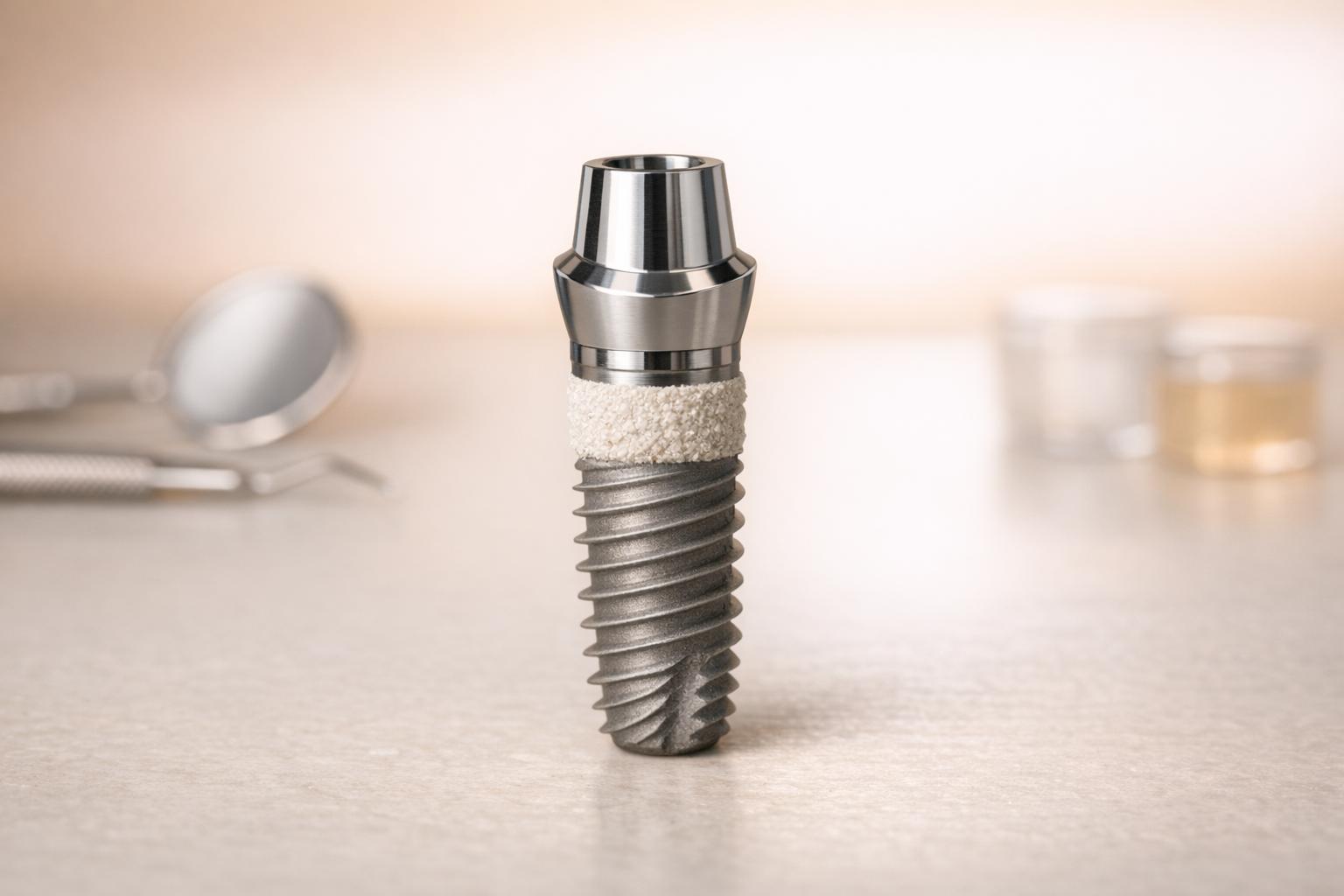
When selecting dental implants, the surface coating plays a key role in how well the implant integrates with the bone. Hydroxyapatite (HA) coatings, made from a mineral similar to natural bone, can improve early stability and healing. However, they come with considerations like coating thickness, adhesion, and long-term performance. This guide outlines practical steps to evaluate HA-coated implants, including patient health checks, material quality, and ongoing care.
Key Points:
- HA Coatings Benefits: Faster bone integration compared to uncoated implants (75.9% vs. 45.7% bone contact in 3 months).
- Challenges: Issues like delamination, coating wear, and limited long-term data.
- Patient Suitability: Medical history, jawbone health, and lifestyle factors must be assessed.
- Material Quality: Verify coating purity, thickness, and adhesion using standard tests.
- Regulatory Compliance: Ensure implants meet Australian standards (TGA certification).
- Maintenance: Regular check-ups and proper hygiene are critical for implant longevity.
This checklist provides a clear framework for making informed decisions about HA-coated implants, balancing benefits with potential risks. Proper evaluation and care ensure better outcomes for both patients and practitioners.
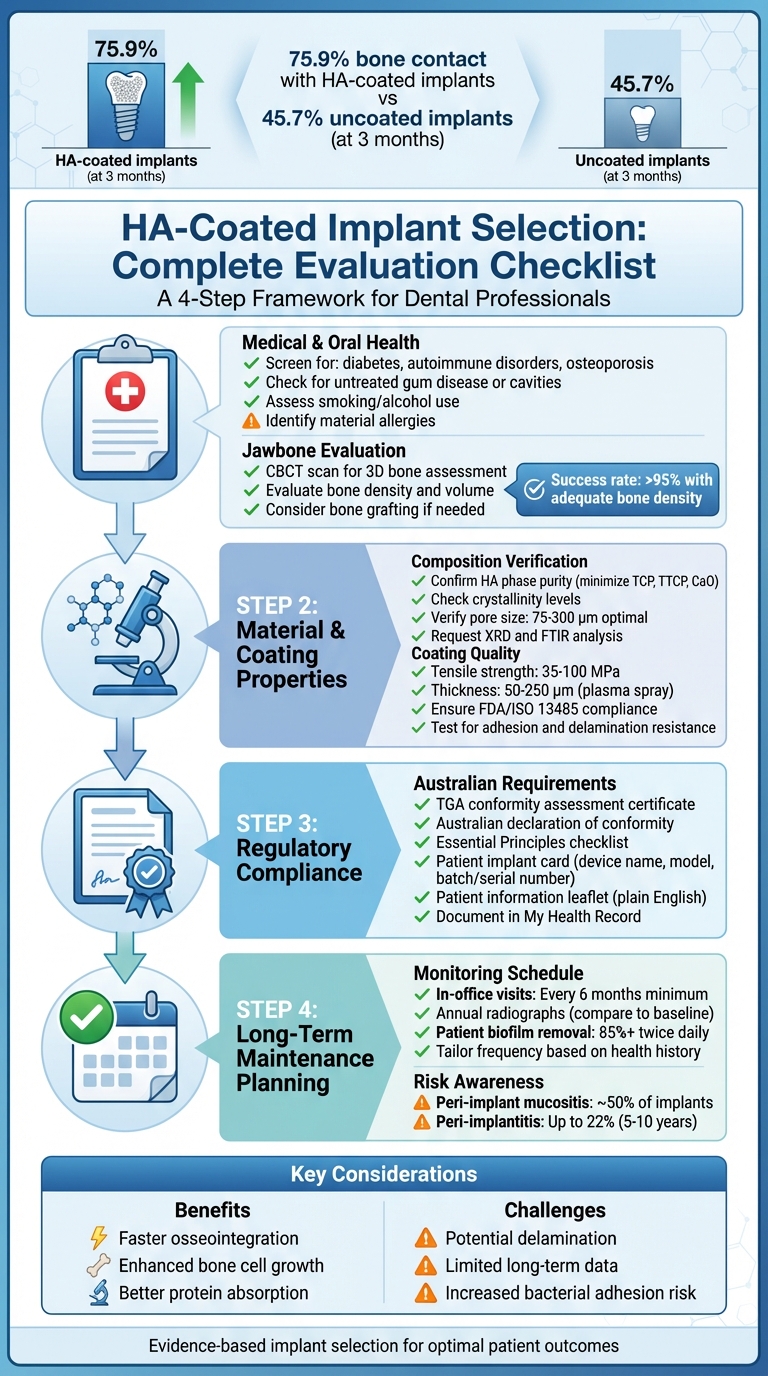
Dental Implant Coating Selection Checklist: 4-Step Evaluation Process
Understanding Hydroxyapatite (HA) Coatings
What Are Hydroxyapatite Coatings?
Hydroxyapatite (HA) is a naturally occurring calcium-phosphate mineral (Ca₁₀(PO₄)₆(OH)₂) that makes up about 70% of human bone and is also found in tooth enamel and dentine. When used as a coating on titanium implants, it creates a surface that closely resembles natural bone, promoting better integration with the body [1][3][5].
HA works through two key mechanisms. First, it supports osteoconductivity, which encourages the growth of bone cells, capillaries, and tissues on the implant surface. Second, it promotes osteoinductivity, which helps stem cells transform into bone-forming cells. On top of that, HA releases calcium and phosphate ions that stimulate the migration, growth, and development of osteoblasts (bone-building cells). This results in a strong and continuous bond between the implant and the bone, with tensile strengths reported to range from 35 to 100 MPa [4][5]. These properties are the foundation of the clinical benefits associated with HA coatings.
How HA Coatings Compare to Other Options
Uncoated metallic implants often develop a layer of connective tissue that can interfere with long-term bone integration [4][5]. While roughened titanium surfaces can improve the mechanical anchoring of implants, HA coatings offer additional benefits. These include a faster reduction in early implant mobility and an enhanced ability to promote bone growth in the short term [6]. Furthermore, HA coatings outperform standard titanium in terms of protein absorption, cell adhesion, and activating osteoblast-related genes [8].
While other calcium phosphate coatings exist, HA remains the most commonly used. However, high-temperature processing can partially convert HA into more soluble forms, such as β-tricalcium phosphate (β-TCP) and tetracalcium phosphate (TTCP), which may impact the coating’s performance [3][4]. Traditional atmospheric plasma spraying methods typically produce coatings between 50 and 250 micrometres thick. In contrast, newer techniques can create much thinner coatings, sometimes less than 20 micrometres [4]. Advances in HA coatings, such as the inclusion of bone growth proteins and antimicrobial agents, have further improved their biological effectiveness while also reducing the risk of infection [5][7]. These developments highlight why HA coatings are often the preferred choice for clinical applications.
When HA-Coated Implants Are Used
HA-coated implants are widely considered the gold standard for applications like dental implants and hip replacements, where strong integration with the surrounding bone is essential [4][5]. In Australia, they are particularly valuable for the ageing population, addressing needs such as dental restoration, artificial dental roots, and spinal implants [4][7]. Clinicians often recommend HA coatings in cases where faster osseointegration is required or when patients have compromised bone quality. Additionally, the coating’s ability to reduce bacterial adhesion makes it especially useful in situations with a higher risk of infection [5]. These factors make HA-coated implants an indispensable tool in modern medical and dental practices.
How Is Hydroxyapatite Used In Implants? – Chemistry For Everyone
Patient Suitability Checklist
Matching the benefits of HA coatings to individual health conditions is key to achieving the best outcomes with dental implants.
Medical and Oral Health Assessment
Before opting for HA-coated implants, it’s essential to evaluate your overall health and oral condition. Certain medical conditions, such as uncontrolled diabetes, autoimmune disorders, heart disease, or osteoporosis, can hinder healing and implant integration. Additionally, implants are typically delayed for patients undergoing head or neck radiation therapy or during pregnancy.
Oral health issues like untreated gum disease, cavities, damaged teeth, or misaligned teeth can undermine implant stability. Poor oral hygiene increases the risk of peri-implantitis, a serious infection that can compromise the implant. If you’ve had gum disease in the past, a detailed periodontal care plan may be necessary. Lifestyle habits also play a significant role – excessive smoking or alcohol use can slow wound healing and raise the risk of infection. Finally, it’s important to identify any allergies or sensitivities to the medications, materials, or metals used in dental implants [9]. These factors collectively impact how well HA coatings support osseointegration.
Jawbone Quality and Quantity Evaluation
A healthy, strong jawbone is the foundation for implant stability and integration. To evaluate this, dentists use imaging techniques like Cone Beam Computed Tomography (CBCT) scans, which provide detailed three-dimensional views, or traditional radiographs, though these may not fully reveal bone quality [9][11].
If your jawbone lacks sufficient density or volume, bone grafting may be recommended to strengthen it before implant placement. Conditions like osteoporosis or prior bone surgeries can further affect bone quality. However, when implants are placed in areas with adequate bone density and proper post-surgery care is followed, success rates often exceed 95% [11].
Patient Preferences and Expectations
Having a clear understanding of what HA-coated implants can and cannot do is essential to making an informed decision. Many patients appreciate HA coatings for their compatibility with the body and their potential to speed up healing [13]. The coating is specifically designed to improve bone-implant stability [2][12].
That said, there are still limitations to consider. Over the past decade, HA-coated implants have been the subject of debate. While they aim to enhance osseointegration and reduce bone loss, the supporting evidence is still limited, and more long-term clinical studies are needed [10][12].
"The strongest argument against the routine use of HA-coated implants is the general lack of long-term documentation on HA-coated implant survival, as well as the lack of well-characterized coating prior to use." – Springer Nature Link [12]
Your dentist should walk you through alternative treatments to help you make a well-informed choice. By understanding both the benefits – like improved corrosion resistance and better bone integration – and the current evidence gaps, you can set realistic expectations [2][10]. The next step is to explore the specific material and coating properties to finalise your decision.
sbb-itb-2be92ed
Material and Coating Properties Checklist
The technical characteristics of HA-coated implants play a pivotal role in their clinical effectiveness and durability. A solid understanding of these properties is crucial when choosing implants to ensure long-term success.
Coating Composition and Quality Verification
The composition and purity of hydroxyapatite (HA) coatings are key to enhancing bone integration. It’s important to confirm that the coatings contain the desired hydroxyapatite phases while minimising harmful by-products. These unwanted substances include tricalcium phosphates (α- and β-TCP), tetracalcium phosphate (TTCP), oxyhydroxylapatite (OHA), oxyapatite (OA), and calcium oxide (CaO), which is particularly cytotoxic [4][5][14][2].
Crystallinity also plays a significant role. While a small amount of amorphous calcium phosphate (ACP) can boost initial bioactivity, excessive ACP may weaken the coating’s adhesion and stability [4][5][14]. Unlike synthetic HA, which is fully crystalline, natural bone mineral is calcium- and hydroxyl-deficient, with a carbonated structure. Coatings that incorporate elemental substitutions like magnesium, strontium, sodium, or potassium better mimic natural bone and improve osteoconductivity [4][5].
To evaluate phase purity and crystallinity, request X-ray diffraction (XRD) and Fourier transformed infrared spectroscopic (FTIR) analysis [14]. Scanning electron microscopy can provide insights into porosity, surface roughness, and morphology [4][5][6]. Pore sizes between 75–300 µm are particularly effective for promoting bone cell ingrowth [4][5][6]. Adherence to quality control standards such as ASTM F 1185-03, ISO 13485, and FDA approval adds an extra layer of assurance [4][5].
Next, examine the coating’s thickness and adhesion to ensure it meets structural durability requirements.
Coating Thickness and Adhesion Assessment
Plasma spraying is the most commonly used and FDA-approved method for applying HA coatings in clinical settings [4][5]. The thickness of the coating and its adhesion to the implant surface are crucial for long-term durability. Coating thickness can be measured from cross-sections, and adhesive bond strength should meet mechanical integrity standards [14].
To prevent delamination, coatings need tensile strengths ranging from 35–100 MPa. It’s also essential to verify that the coatings are free of loosely adhering particles, incompletely melted HA, or nano-sized HA particles that could provoke inflammation [4][5][14][6]. Post-deposition heat treatment can enhance crystallinity and purity, but excessive heating may cause stress or introduce unwanted oxides [14][2]. Supersonic plasma nozzles often yield coatings with higher crystallinity and phase purity compared to standard nozzles, as the shorter exposure time of HA particles in the plasma reduces unwanted changes [14].
Clinical Evidence and Safety Review
Once the physical properties of the coating are confirmed, it’s essential to review clinical evidence to validate its safety and effectiveness. Practitioners should examine peer-reviewed studies on bone integration rates, implant survival data, and long-term performance metrics. Regulatory compliance with recognised guidelines, such as biocompatibility and corrosion resistance, is critical to ensuring safety. Additionally, coatings must be tested to confirm they do not release toxic ions.
The coating’s ability to support bone cell growth (osteoconductivity) and stimulate stem cell differentiation (osteoinductivity) is a key indicator of its reliability. It should also resist dissolution and resorption when exposed to body fluids [4][5][6]. Dense, stoichiometric coatings with high crystallinity often produce different biological responses compared to calcium-deficient, carbonated coatings. Understanding these differences allows practitioners to select the most suitable option for specific clinical needs.
Clinical and Practical Decision-Making
When evaluating hydroxyapatite (HA) coatings, the final step is to align their technical properties with the specific needs of patients while ensuring compliance with Australian standards. This practical approach helps practitioners make decisions that support both immediate and long-term success.
Matching Coating to Clinical Needs
HA coatings are particularly useful in cases where quicker osseointegration is beneficial. These coatings improve protein adsorption, cell adhesion, cell spreading, and mineralisation, ultimately speeding up healing and providing greater implant stability [8][2][7][6][15]. They are especially effective for patients with low-density bone or in situations requiring enhanced primary stability. However, while the rapid osseointegration is an advantage, practitioners must consider the potential risks of long-term coating wear [15]. Additionally, the rough surfaces that promote osseointegration can also create an environment conducive to bacterial colonisation, which may increase the risk of peri-implantitis [6]. Once a coating is selected to meet clinical requirements, it is essential to confirm that the implant system complies with regulatory standards.
Manufacturer and Regulatory Compliance
To ensure safety and efficacy, confirm that the implant system has a conformity assessment certificate issued by the Therapeutic Goods Administration (TGA). Practitioners can verify this using the TGA’s conformity assessment certificate search tool [16]. Manufacturers must provide key documentation, including an Australian declaration of conformity and an Essential Principles checklist [16]. For implantable devices, it is mandatory for manufacturers to supply a patient implant card containing details such as the device name, model, batch or serial number, unique identifier (if applicable), and manufacturer information [17]. A patient information leaflet must also be provided, explaining the device’s intended use, safe handling instructions, potential side effects, residual risks, equipment warnings, precautions, recommended monitoring, expected lifespan, and a list of materials used [17]. These materials should be written in plain English to ensure they are easily understood by patients [17]. Additionally, healthcare providers can document implanted device details in the patient’s My Health Record through an Event Summary, making this information accessible to other healthcare professionals [17].
Long-Term Maintenance and Care Planning
Certification is just the beginning – long-term success depends on proper maintenance. Studies show that peri-implant mucositis affects nearly half of implants, while peri-implantitis occurs in up to 22% of cases within five to ten years. Schedule regular in-office maintenance appointments at least every six months, tailoring the frequency based on factors like the patient’s systemic health, history of periodontal disease, and effectiveness of home care [19]. Radiographs should be taken annually throughout the implant’s lifespan and compared to a baseline radiograph taken one year after restoration [18][6]. Patients should be instructed to remove at least 85% of biofilm twice daily and provided with clear home-care guidance to support implant longevity. Proper education ensures patients understand their role in maintaining the health of their implants.
Conclusion
Selecting the right hydroxyapatite coating involves carefully aligning the patient’s unique needs with the material’s properties. This guide has highlighted key steps, including evaluating jawbone quality, reviewing medical history, confirming coating composition, checking regulatory standards, and planning for ongoing maintenance. Every decision should be grounded in evidence and personalised to suit the individual.
Providing clear documentation is an essential final step in the implant process. Patients should receive detailed records that outline the device’s specifications, proper usage, and maintenance instructions. This not only empowers patients to make informed choices but also ensures they have a lasting reference for their implanted device.
FAQs
What are the advantages of hydroxyapatite coatings on dental implants?
Hydroxyapatite coatings bring a range of advantages to dental implants. They enhance the implant’s compatibility with surrounding bone and tissues, which plays a key role in improving osseointegration – the process where the implant securely bonds with the jawbone.
These coatings also act as a protective layer, boosting the implant’s resistance to corrosion and cutting down on the release of metal ions into the body. On top of that, they encourage quicker bone growth and healing without compromising the implant’s mechanical strength. Altogether, these features contribute to the long-term reliability and durability of dental implants.
How can I confirm that a hydroxyapatite-coated implant complies with Australian regulations?
To meet Australian regulatory standards, a hydroxyapatite-coated implant must be classified as a medical device under the Therapeutic Goods Act. It also needs to comply with the Therapeutic Goods Administration (TGA) Essential Principles. Additionally, the implant must hold a conformity assessment certificate issued by an approved Australian Conformity Assessment Body and be registered with the TGA before it can be supplied.
It’s important to consult your dental practitioner for personalised advice and ensure the implant comes from a reputable provider that strictly follows these regulations.
What medical factors should I discuss with my dentist before choosing a hydroxyapatite-coated implant?
It’s crucial to share your full medical history with your dentist, as certain health conditions can impact the effectiveness of hydroxyapatite-coated implants. Make sure to mention any history of bone diseases, uncontrolled diabetes, bleeding or clotting disorders, cardiovascular or immune system conditions, or mucosal diseases. It’s also important to disclose if you’ve had cancer or radiation therapy, are taking medications like bisphosphonates, or have lifestyle habits such as smoking or regular alcohol consumption.
These factors play a significant role in the healing process and determine whether the implant is the right choice for you. Your dentist will use this information to tailor the treatment to ensure it’s both safe and effective for your situation.
Related Blog Posts
- How Hybrid Coatings Improve Osseointegration
- Hydroxyapatite Coatings via Electrochemical Deposition
- Plasma Sprayed Coatings vs. Other Implant Coatings
- Checklist for Biomimetic Coating Techniques
Important Notice: Any surgical or invasive procedure carries risks. Before proceeding, you should seek a second opinion from an appropriately qualified health practitioner.
Individual results may vary. The information provided in this article is for educational purposes only and does not constitute medical advice.
Checkout Related Blogs




Get in touch with us
For more information, call us now to start feeling better. Or fill the form below to make appointment
The Latest News from Complete Smiles
How to Clean Clear Plastic Retainers
Checklist for Choosing Wearable Dental Devices
Checklist for Choosing Cloud AI Platforms in Dentistry
Complete Smiles Bella VistaAccepts All Major Health Funds, Including





