





Can Gum Disease Patients Use Laser Whitening?
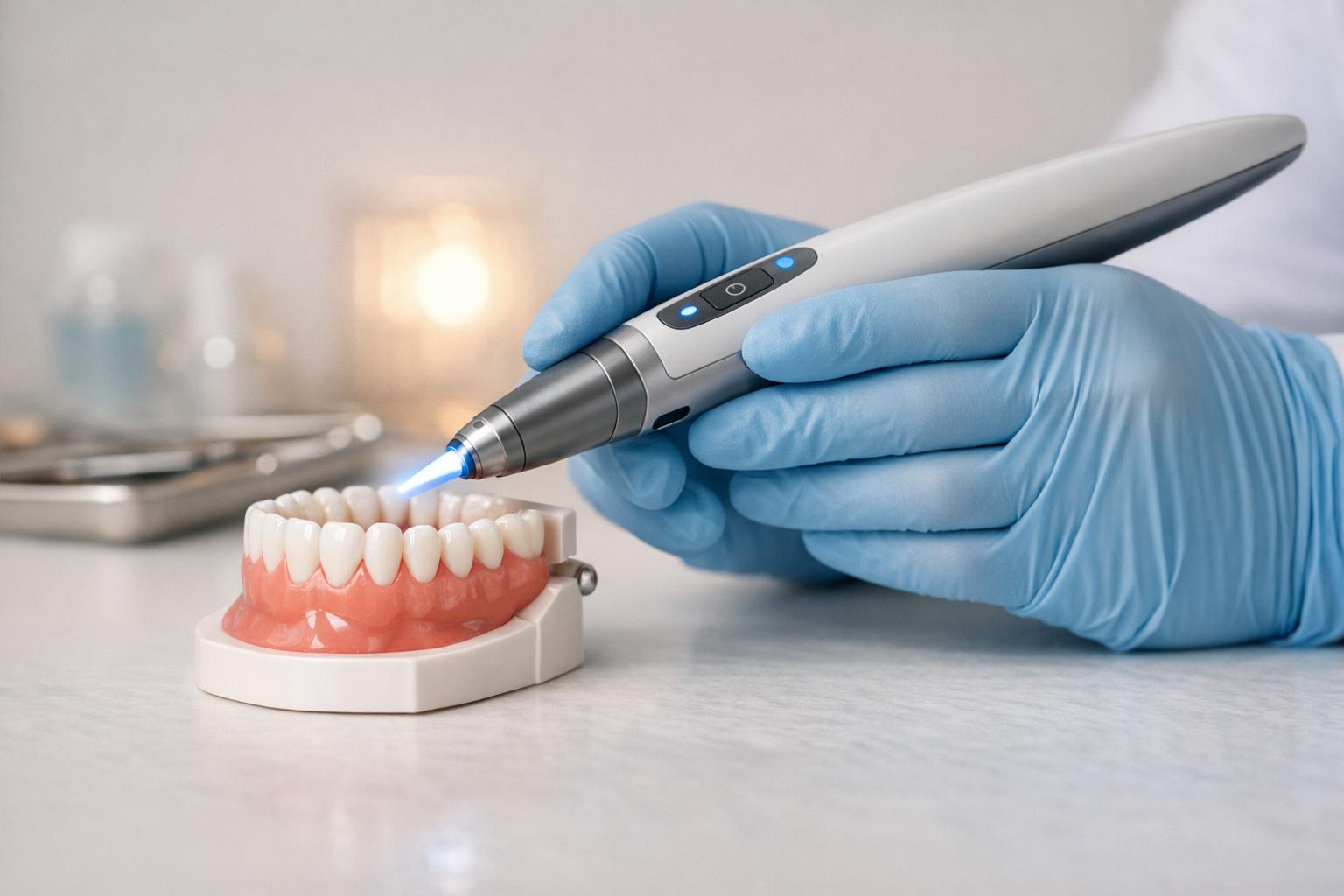
If you have gum disease, laser teeth whitening is generally not recommended. The high concentration of hydrogen peroxide (up to 35%) and heat from the laser can irritate inflamed gums, increase sensitivity, and potentially cause chemical burns or long-term damage. Here’s what you need to know:
- Gum disease stages: Gingivitis (early stage) is reversible, but periodontitis (advanced stage) can lead to permanent gum and bone damage.
- Risks of laser whitening: Increased sensitivity, chemical burns, and irritation are common for patients with gum disease.
- Alternative options: Professional cleaning, whitening toothpastes, or non-bleach products are safer choices for individuals with gum issues.
- Treatment order: Address gum disease first through professional care like scaling and root planing, then reassess for whitening options.
Healthy gums are essential before undergoing any whitening procedure. Consult a dental professional to determine the best course of action for your oral health.
Laser Gum Treatment | LANAP | Laser Teeth Whitening
Gum Disease and Laser Whitening Explained
Understanding gum disease and laser whitening is important when evaluating whether this cosmetic procedure is safe for individuals with gum disease. Let’s break down both topics to provide a clear picture.
What Is Gum Disease?
Gum disease, also called periodontal disease, is an infection and inflammation of the tissues that hold your teeth in place. It’s mainly caused by the buildup of dental plaque – a sticky bacterial film. The condition develops in two stages: gingivitis and periodontitis.
Gingivitis is the early stage and is reversible. Symptoms include red, swollen gums that may bleed when you brush or floss. At this point, there’s no damage to the bone, and with professional cleaning and better oral hygiene, the gums can return to a healthy state. Periodontitis, however, is a more advanced stage. It involves deeper inflammation, affecting the tooth-supporting ligaments and bone. The gums start pulling away from the teeth, creating pockets where bacteria thrive. Over time, this leads to gum recession (making teeth look longer), exposed roots causing sensitivity, loose teeth, and even tooth loss if untreated [2][7].
"Gingivitis is totally reversible with proper treatment. But if you’ve already lost bone around your teeth due to infection, the disease is too advanced to reverse." – Cleveland Clinic [8]
Gum disease is the top cause of tooth loss in adults [7][8]. But it’s not just about oral health – studies show that gum disease can increase the risk of systemic issues like heart disease, diabetes, and stroke, sometimes doubling or tripling the likelihood of these conditions [7][8].
How Laser Whitening Works
Laser teeth whitening is a cosmetic dental procedure designed to brighten teeth quickly and effectively. Here’s how it works: a dentist applies a high-concentration bleaching gel – usually containing hydrogen peroxide – directly to the enamel. A laser or high-intensity light is then used to heat the gel, activating its whitening properties. This process alters the stain molecules in the enamel, making teeth appear whiter [1][3].
To protect the gums and other soft tissues during the procedure, dentists use tools like resin barriers, props, and protective eyewear [3]. The entire process is quick, usually taking less than an hour, and delivers noticeable results in just one visit [1][3].
What sets laser whitening apart from over-the-counter options is its strength and speed. Store-bought whitening strips or toothpastes typically contain 3–6% hydrogen peroxide and take several days or weeks to show results. In contrast, professional laser whitening uses much stronger formulations under closely monitored conditions [1]. The whitening effects can last anywhere from several months to up to three years, depending on habits like diet and smoking [3]. However, due to the high concentration of chemicals and the use of laser heat, this procedure should only be performed by trained dental professionals after a thorough dental examination [1].
Next, we’ll discuss the potential risks of laser whitening for patients with gum disease, shedding light on why this evaluation is critical.
Risks of Laser Whitening for Gum Disease Patients
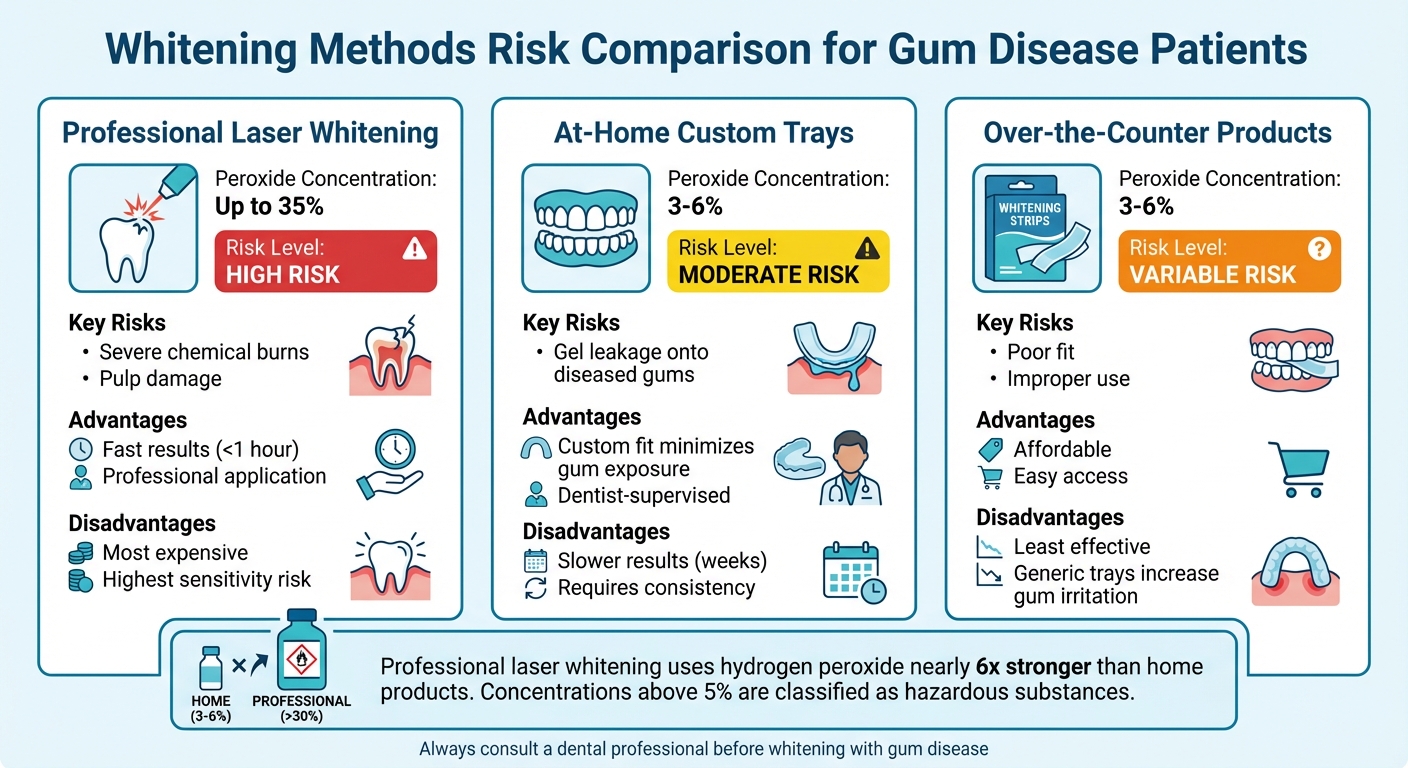
Teeth Whitening Methods Comparison for Gum Disease Patients
Increased Sensitivity and Irritation
When gums are already weakened by gum disease, laser whitening can make things worse by increasing inflammation and bleeding. The hydrogen peroxide concentration in professional laser whitening treatments – up to 35% – is incredibly strong and can cause serious harm if it comes into contact with damaged gum tissue [1][6].
One major concern is chemical burns. If the whitening gel touches inflamed gums or other soft tissues, it can result in painful burns that may turn into ulcers [9]. The Australian Dental Association also warns that hydrogen peroxide can seep through exposed dentine – common in gum disease – into the pulp of the tooth, leading to internal inflammation [6].
"If you have gum disease, your dental professional may advise against professional teeth whitening as the chemicals involved can irritate your gums and increase tooth sensitivity." – Colgate [11]
Sensitivity is a major issue for those with gum disease. Receding gums and exposed roots make teeth particularly vulnerable, and whitening agents can cause severe pain when they penetrate these areas [9][10]. On top of that, the heat from the laser can damage tooth pulp and soft tissues if not applied correctly [1].
Another risk is swallowing the whitening gel during the procedure, which can lead to nausea and stomach irritation [5].
Comparing Whitening Methods and Their Risks
For gum disease patients, assessing the safety of different whitening methods is crucial. Here’s how they stack up:
| Method | Peroxide Concentration | Risk Level for Gum Disease Patients | Advantages | Disadvantages |
|---|---|---|---|---|
| Professional Laser Whitening | Up to 35% [1] | High: Severe risk of chemical burns and pulp damage [1][9] | Fast results in under an hour; professional application [1] | Most expensive; highest risk of sensitivity [1][10] |
| At-Home Custom Trays | 3–6% [1] | Moderate: Risk of gel leakage onto diseased gums [9] | Custom fit minimises gum exposure; dentist-supervised [9] | Slower results over weeks; requires consistency [5] |
| Over-the-Counter Products | 3–6% [1] | Variable: High risk due to poor fit and improper use [5] | Affordable and easy to access [1] | Least effective; generic trays increase gum irritation [1][5] |
The difference in peroxide concentration is striking – professional laser whitening uses hydrogen peroxide at levels nearly six times stronger than typical home products [1]. According to WorkSafe Australia, hydrogen peroxide concentrations above 5% are classified as hazardous substances [6]. This underscores the importance of professional oversight. However, for patients with gum disease, even under professional care, the risks of laser whitening might outweigh the benefits.
sbb-itb-2be92ed
When to Avoid Laser Whitening
If your gums are red, swollen, or show other signs of active gum disease, laser whitening isn’t a safe option. The high-concentration hydrogen peroxide gel used in the procedure – up to 35% – combined with the heat from the laser, can irritate already inflamed tissues, making the condition worse [2].
Symptoms like bleeding gums, receding gum lines, or loose and shifting teeth suggest an active infection and structural issues. In such cases, applying whitening agents could lead to chemical burns, delay healing, and increase sensitivity [1][2]. These signs highlight the importance of addressing gum health before moving forward with any whitening treatments.
"Teeth whitening is not recommended if you… have gum disease." – Healthdirect Australia [5]
This quote reinforces the necessity of treating gum disease before considering cosmetic dental procedures.
Why Gum Disease Must Be Treated First
Laser whitening is designed for healthy mouths. When gum disease is present, the protective barrier applied during the procedure may fail to shield the soft tissues effectively. Inflammation can allow the 35% hydrogen peroxide gel to penetrate deeper into the gum tissue, exposed dentine, and even the tooth pulp [6].
To ensure safety, it’s crucial to treat gum disease first. Professional dental treatments, like scaling and root planing, can remove plaque and tartar, enabling gums to heal completely. Only after a thorough dental examination confirms that your gums and teeth are healthy should you proceed with whitening.
"Teeth whitening is a cosmetic procedure. It is best performed on healthy teeth – once any existing underlying issues, including gum disease, have been taken care of." – Dr Tatiana Tkatchenko, periodontist [12]
The Australian Dental Association stresses that teeth whitening should only be performed by trained dental professionals who can assess your suitability for the procedure [1]. If gum disease is untreated, whitening agents can penetrate inflamed tissues and exposed dentine, potentially causing permanent damage to teeth, nerves, bone, and ligaments. This is a significant concern, especially given that nearly 30% of Australian adults experience moderate to severe gum disease [2][6].
Alternative Options and Treatment Order
Other Whitening Options
For those dealing with gum disease, starting with a professional dental cleaning is essential. This step not only removes surface stains and tartar but also helps improve gum health, setting the stage for further treatments [11]. For minor surface stains, using mild whitening toothpastes can help, though some users might experience slight sensitivity [5].
When it comes to deeper intrinsic stains, veneers or crowns can cover discolouration effectively. However, these options are more invasive and require healthy gums as a foundation [11]. If you’re looking for a gentler alternative, consider non-bleach products like purple-tinted serums. These temporarily neutralise yellow tones without altering the tooth structure, making them a safer choice for those with sensitive gums [11].
These alternatives offer cosmetic improvements while prioritising gum health.
| Alternative Option | Benefits | Requirements |
|---|---|---|
| Professional Cleaning | Removes surface stains and tartar; improves gum health | Dental exam |
| Whitening Toothpaste | Reduces surface stains with mild abrasives | Daily use with a soft toothbrush |
| Veneers/Crowns | Masks deep intrinsic stains; restores tooth shape | Healthy gum foundation |
| Non‐Bleach Products | Temporary colour correction without structural changes | No invasive procedures required |
Recommended Treatment Order for Gum Disease Patients
When it comes to teeth whitening, healthy gums must come first. Here’s a step-by-step approach to ensure your gums are in good condition before pursuing cosmetic treatments:
- Begin with a comprehensive dental examination to evaluate gum health. Follow this with periodontal therapy, such as scaling and root planing, to address gum disease. Allow a healing period of 2–4 weeks for the gums to recover [2][11][12].
- After the healing phase, reassess gum stability to confirm that the tissues are healthy enough for whitening treatments.
- If you have existing restorations like fillings, crowns, or veneers, keep in mind that bleaching agents won’t affect their colour. You might need to plan for replacements after whitening to maintain a uniform appearance [12].
The Australian Dental Association stresses that only registered dental professionals are qualified to determine whether whitening is safe for individuals with a history of gum issues [6].
In Australia, clinics like Complete Smiles Bella Vista (https://completesmilesbv.com.au) combine periodontal care with cosmetic treatments. This ensures your gum health is prioritised while achieving your desired smile.
Conclusion
When it comes to gum disease, prioritising gum health is non-negotiable. Attempting laser whitening on compromised gums can lead to severe irritation, pain, and even permanent damage to weakened tooth structures. This is particularly relevant in Australia, where gum disease is a prevalent concern among adults [4][13][2][12]. That’s why early professional intervention is so important.
Addressing gum disease with professional care – whether through a basic cleaning for gingivitis or more intensive periodontal therapy for periodontitis – lays the groundwork for safe and effective whitening later on. The risks outlined in this article highlight the importance of tackling gum health issues first, ensuring the best possible outcomes.
"Teeth whitening is a cosmetic procedure. It is best performed on healthy teeth – once any existing underlying issues, including gum disease, have been taken care of." – Dr Tatiana Tkatchenko [12]
As the Australian Dental Association advises, only a registered dental professional can assess whether your gums are in the right condition for whitening [1]. This evaluation is crucial, as gum disease often remains undetected without a detailed examination.
FAQs
What are safer teeth whitening options for people with gum disease?
If you have gum disease, it’s wise to hold off on laser teeth whitening until your gums are healthy again. Instead, consider safer options like dentist-supervised at-home whitening kits or custom-fitted trays that use lower-strength peroxide. These methods are much gentler on sensitive gums. Be sure to talk to your dentist to find the best whitening solution for your specific oral health needs.
Can people with gum disease safely undergo laser teeth whitening?
Gum disease leads to inflammation and damage to the gums and surrounding tissues, which can make laser teeth whitening a poor choice. Whitening treatments often rely on bleaching agents, such as hydrogen peroxide, which can irritate gums that are already sensitive or inflamed. Plus, attempting to whiten teeth affected by gum disease may not be effective, especially if there’s a risk of loosening teeth or even tooth loss.
Dentists typically advise treating gum disease first to stabilise your oral health before moving on to cosmetic procedures like teeth whitening. This not only protects your gums but also ensures the results are more effective and longer-lasting.
Can you whiten your teeth if you have gum disease?
Before diving into teeth whitening, it’s crucial to take care of any gum disease. Gum disease leads to inflammation and damages the gums and surrounding bone. If you go ahead with whitening – especially with strong bleaching agents – these treatments can further irritate already sensitive tissues. This can not only make the process uncomfortable but might also impact how well the whitening works.
Taking care of gum disease first ensures your gums are in good shape to handle the whitening process safely, giving you better results in the end. Talk to your dentist to create a treatment plan that suits your oral health needs.
Related Blog Posts
- How Dentists Evaluate Patients For Laser Gum Surgery
- Advances in Laser Whitening Technology 2025
- How Long Does Laser Teeth Whitening Last?
- Is Laser Gum Surgery Worth the Cost?
Important Notice: Any surgical or invasive procedure carries risks. Before proceeding, you should seek a second opinion from an appropriately qualified health practitioner.
Individual results may vary. The information provided in this article is for educational purposes only and does not constitute medical advice.
Checkout Related Blogs




Get in touch with us
For more information, call us now to start feeling better. Or fill the form below to make appointment
The Latest News from Complete Smiles
How to Clean Clear Plastic Retainers
Checklist for Choosing Wearable Dental Devices
Checklist for Choosing Cloud AI Platforms in Dentistry

Complete Smiles Bella VistaAccepts All Major Health Funds, Including





