





Hybrid Implant Coatings: What You Need to Know
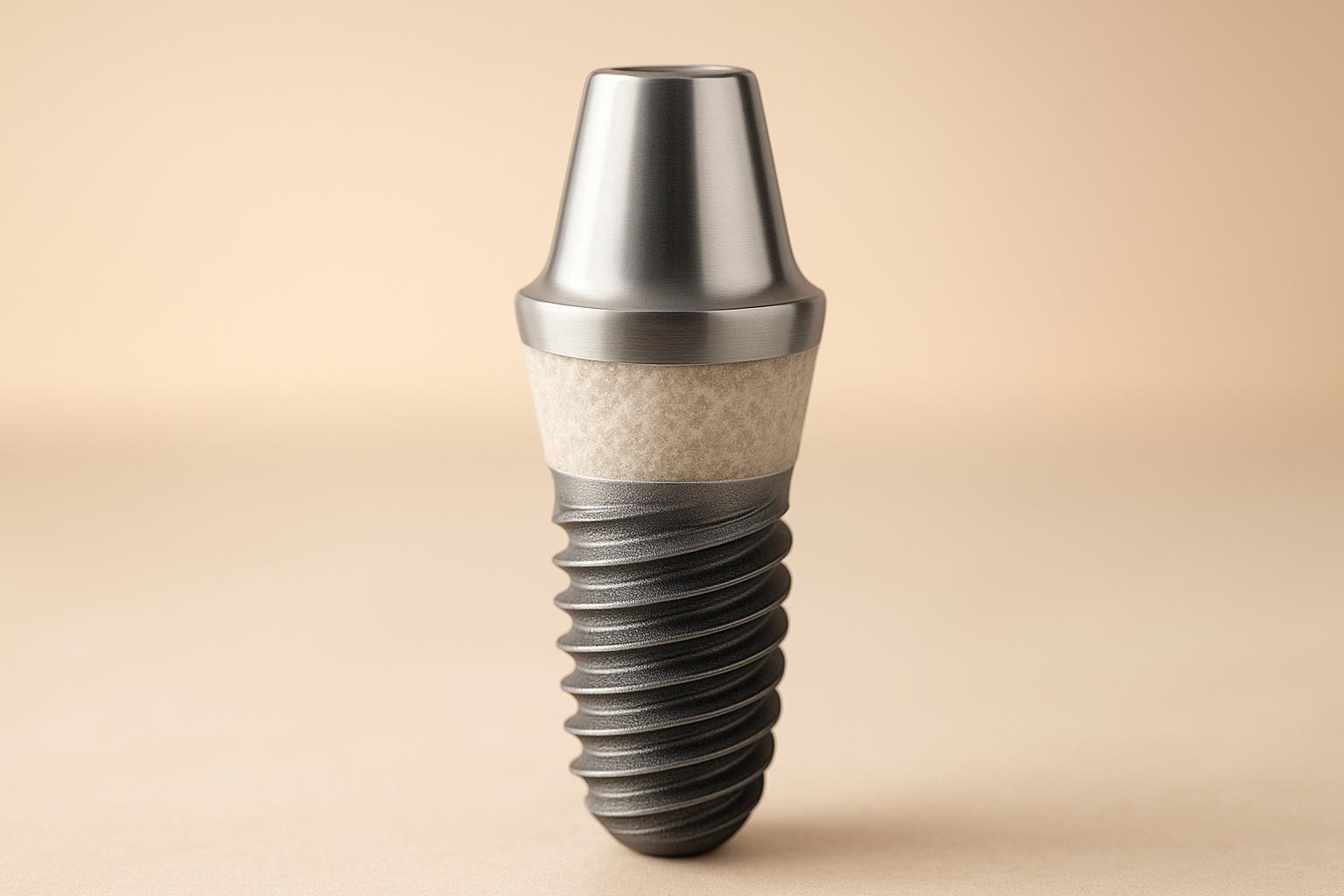
Hybrid implant coatings are transforming dental implants by combining materials like titanium, hydroxyapatite, and polymers to improve durability and performance. These coatings address two major implant challenges: better bone integration (osseointegration) and reduced infection risks. Clinical studies show implants with these coatings achieve survival rates of 97–99% over the long term.
Key takeaways:
- Material Synergy: Organic and inorganic materials are combined for better functionality.
- Advanced Techniques: Methods like ALD, plasma spraying, and nano-engineering create precise, bioactive surfaces.
- Clinical Benefits: Faster healing, improved bone bonding, and antibacterial properties.
- Challenges: Risks include coating delamination and inconsistent manufacturing quality.
- Future: Research is exploring smart coatings and nanotechnology for even better outcomes.
Hybrid coatings are already being used in Australian dental clinics like Complete Smiles Bella Vista, offering new options for patients with complex cases or poor bone quality. However, careful patient selection, strict quality control, and adherence to Australian regulations are essential for successful outcomes.
Dr.Daniel Buser explains why implants with hybrid design surfaces reduce peri-implantitis incidence.
Types of Hybrid Coatings and How They Work
Exploring the various types of hybrid coatings sheds light on how these advanced systems tackle specific challenges in implant dentistry. By combining different materials and surface engineering techniques, each coating type is designed to enhance clinical performance and improve patient outcomes.
Mineral-Organic Hybrid Coatings
These coatings blend hydroxyapatite (HA) with antimicrobial agents like silver or copper nanoparticles. This combination delivers dual benefits: HA mimics the natural mineral composition of bone, encouraging cell attachment and growth, while the antimicrobial agents work to disrupt bacterial membranes and prevent biofilm formation [1].
Clinical studies have shown that implants with HA coatings can achieve survival rates exceeding 95% over five years. This is especially beneficial for patients with osteopenia or those requiring shorter recovery periods. However, ensuring the coating adheres well to the implant surface is crucial, as poor adhesion can lead to delamination and complications [1].
Nanostructured and Biomimetic Coatings
Anodised titanium coated with bioactive layers is designed to replicate the microarchitecture of natural bone. Advanced surface engineering techniques create a larger surface area and favourable textures that encourage osteoblast attachment and differentiation [1].
Moreover, methods like atomic and molecular layer deposition (ALD/MLD) enable nanoscale precision. These approaches ensure uniform, defect-free coatings that enhance cytocompatibility, making them highly effective for promoting bone integration [2].
Multifunctional Coating Systems
These systems combine bone-regenerating and antibacterial properties into a single coating. By integrating bioactive ceramics with antimicrobial nanoparticles, they promote healing while reducing the risk of infection [5]. This targeted antibacterial action supports bone cell growth without disrupting osseointegration.
When paired with surface texturing, these coatings also improve mechanical stability, which is particularly advantageous for patients with poor bone quality or those undergoing complex procedures [9]. While initial lab and animal studies show promise, additional clinical research is needed to confirm their long-term safety and effectiveness.
| Coating Type | Primary Mechanism | Key Benefits | Clinical Applications |
|---|---|---|---|
| HA + Silver | Bone mimicry with antimicrobial action | Improved integration and infection control | Patients with compromised bone quality |
| Nanostructured SLA | Increased surface area for bone ingrowth | Faster and more reliable osseointegration | Standard implant placements |
| Biomimetic Hybrid | Selective biological response | Customised healing and infection prevention | Complex cases and revision surgeries |
Clinical Evidence and Patient Outcomes
The effectiveness of hybrid implant coatings is well-supported by clinical research, consistently showing improved results. These findings have shaped how dental professionals approach implant treatments, particularly in more complex scenarios.
Osseointegration and Implant Survival Rates
Clinical studies reveal that hybrid coatings significantly enhance bone-to-implant contact (BIC) and implant survival rates when compared to uncoated titanium surfaces. Nanostructured surfaces, such as SLA, DAE, and anodised titanium, consistently achieve survival rates between 97% and 99%, highlighting a marked improvement over earlier technologies [1].
Additionally, plasma-applied hydroxyapatite (HA) coatings improve early-stage BIC, offering greater stability during the critical healing phase [1].
In vivo research further shows that mineral-organic hybrid coatings lead to higher BIC rates than uncoated surfaces [1][4][6]. This improved integration supports faster healing and more predictable outcomes, which is particularly beneficial for patients with poor bone quality or those needing shorter recovery periods. These advancements also open the door to exploring the coatings’ antibacterial properties and their application in complex cases.
Antibacterial Properties and Peri-Implantitis Prevention
Beyond improved osseointegration, hybrid coatings have demonstrated antibacterial benefits. Studies indicate that incorporating antibacterial agents like silver (Ag) and copper (Cu) nanoparticles into these coatings reduces bacterial adhesion and lowers infection risks [8][5]. However, while these coatings show promise in controlled environments, their clinical application remains experimental due to limited evidence [1][5].
Outcomes in Aesthetic and Complex Cases
Hybrid coatings have proven especially effective in challenging cases, such as those requiring advanced restorations or involving compromised bone conditions [1][4]. Their enhanced stability and integration allow for ambitious treatment plans in both complex and aesthetic scenarios.
For demanding cases like full-arch restorations or immediate loading protocols, hybrid coatings provide the reliability needed for successful outcomes. Their ability to accelerate healing and improve stability is particularly advantageous for patients with poor bone quality or those requiring multiple implants in aesthetically sensitive areas. This evidence underscores the potential of hybrid coatings to enhance both functional and aesthetic results in dental restorations.
| Coating Performance | Survival Rate | Key Clinical Advantage | Best Application |
|---|---|---|---|
| SLA/DAE/Anodised | 97–99% | Rapid, reliable osseointegration | Standard implant cases |
| Hydroxyapatite | >95% (5 years) | Accelerated integration | Patients with poor bone quality |
| Antibacterial Hybrid | Experimental | Reduces infection risk | High-risk inflammatory cases |
In Australia, dental practices are increasingly adopting these advancements. Clinics like Complete Smiles Bella Vista are exploring the use of hybrid coatings as part of their commitment to evidence-based innovations in implant dentistry. Research consistently shows that patients treated with hybrid-coated implants experience fewer complications, faster recovery times, and improved long-term stability [1][4].
sbb-itb-2be92ed
Limitations, Risks, and Future Developments
Hybrid implant coatings come with challenges that dental professionals need to navigate carefully. Understanding these limitations is crucial for selecting the right patients and setting realistic expectations for treatment outcomes.
Current Limitations and Material Risks
One of the biggest concerns with hybrid implant coatings is coating delamination – when the coating separates from the implant surface. This issue can lead to implant failure. For example, hydroxyapatite coatings, while effective, are prone to delamination in some cases, and poor adhesion has been linked to implant loss [1].
Another challenge is the variability in coating quality and application methods, which can result in unpredictable long-term outcomes. This is especially true for newer hybrid technologies that lack extensive clinical data [1][2].
The risks tied to specific materials also vary. Magnesium-based alloys, for instance, offer good biocompatibility but can struggle with degradation resistance, potentially affecting implant stability if not properly managed [2]. Some coatings may also exhibit cytotoxicity or degrade unpredictably, leading to adverse biological reactions [2].
Experimental antibacterial coatings, such as those incorporating silver or copper, are still in the early stages of testing. Their long-term safety remains uncertain [1][8].
Inconsistent manufacturing processes pose another risk. Issues like poor adhesion, microcracks, or uneven coating distribution can undermine the coating’s performance and lifespan [1][2]. These challenges highlight the importance of stringent quality control, which will be discussed next.
Regulatory and Quality Control Requirements
Australia enforces strict regulatory standards for hybrid implant coatings. The Therapeutic Goods Administration (TGA) requires dental implants with hybrid coatings to undergo rigorous testing for biocompatibility, mechanical stability, and long-term safety before they can be approved for clinical use.
Quality control is essential to ensure consistent coating thickness, strong adhesion, and defect-free manufacturing. Compliance with Australian Standards (AS/NZS) for medical devices is mandatory. Dental clinics must also maintain detailed records for traceability and post-market monitoring to address any potential coating-related issues swiftly [1].
Advanced manufacturing techniques, like atomic or molecular layer deposition (ALD/MLD), can produce highly uniform coatings. However, these methods require precise control over every step of the process. Even minor deviations can lead to coating failure, making manufacturer expertise and consistent quality assurance critical [2].
Clinics adopting hybrid coating technologies should implement robust quality control measures. This includes ongoing staff training, proper storage and handling of materials, and systematic monitoring of patient outcomes to catch any coating-related complications early.
New Technologies and Research Directions
To tackle current challenges, researchers are exploring innovative materials and techniques that could improve manufacturing and safety. Additive manufacturing is a promising development, allowing for the creation of custom implant surfaces with intricate geometries and enhanced biological properties [3][4]. This method offers precise control over surface topography and coating distribution, potentially resolving issues with manufacturing consistency.
Nanotechnology is also advancing the field, enabling the development of multifunctional coatings that promote osseointegration while providing antibacterial protection [4][5]. Biomimetic and organic–inorganic materials are showing promise for their enhanced biocompatibility [5][7].
Other techniques, such as self-assembled nanozyme coatings and advanced plasma spraying, are being studied to address application limitations. These approaches aim to deliver more consistent coating properties and better long-term stability [3][7].
Future research is focusing on antibacterial coatings that can selectively target harmful bacteria without affecting healthy tissue [5]. Long-term clinical trials will be critical to establishing the safety and effectiveness of these emerging systems before they can be widely adopted.
Another exciting frontier is smart coating technologies, which could respond to local tissue conditions or deliver therapeutic agents. These systems may help modulate immune responses and promote tissue regeneration, though they are still in the early stages of research.
Australian dental practices are beginning to explore these advancements within the framework of local regulations. As evidence accumulates, these innovations hold the potential to reshape implant dentistry, addressing current challenges while retaining the benefits of existing hybrid coating systems.
| Technology | Current Status | Key Advantage | Primary Challenge |
|---|---|---|---|
| Additive Manufacturing | Development | Custom surface design | Regulatory approval |
| Nanotechnology | Research phase | Multifunctional properties | Long-term safety data |
| Smart Coatings | Early research | Responsive functionality | Complex manufacturing |
| Biomimetic Materials | Research phase | Natural integration | Consistency control |
Practical Guidelines for Dental Professionals
Bringing hybrid implant coatings into clinical practice involves thoughtful planning, thorough patient evaluation, and strict adherence to Australian regulations. These steps help dental professionals make informed choices about coatings and ensure their smooth integration into treatment plans.
Choosing the Right Coating for Each Patient
The choice of implant coating should always centre on the patient’s specific needs. Key factors include bone quality and infection risk. For instance, patients with compromised bone quality might benefit from mineral-organic hybrid coatings, while those with a history of peri-implantitis could consider antibacterial coatings, though these are still largely experimental [1] [4] [6].
The clinical goals also play a significant role. For cases requiring immediate loading, mineral coatings that encourage rapid bone-implant bonding are particularly helpful. In aesthetically sensitive treatments, nanostructured or biomimetic coatings may improve soft tissue integration, supporting better cosmetic results [1] [4] [6]. However, it’s essential to weigh patient health, expectations, and costs, as hybrid coatings may come with higher expenses. If bone quality is sufficient, conventional surfaces like standard SLA or anodised finishes can often achieve satisfactory results.
Ensuring Quality Control and Meeting Protocols
After selecting the appropriate coating, maintaining strict quality control is vital. Always confirm that the coating has Therapeutic Goods Administration (TGA) certification and review clinical performance data. Hybrid implant coatings must comply with Australian standards, so verifying supplier certification and keeping detailed traceability records is a must [1] [2] [4].
Choose implants from manufacturers that offer robust technical support and ensure quality consistency with regular audits of implant procedures. Staff handling coated implants should be trained to follow proper storage and handling protocols and to identify any coating issues, such as delamination or surface defects, which could affect implant success [1] [2] [4].
Australian dental practices should keep detailed records of coating types, batch numbers, and patient outcomes. This documentation supports post-market monitoring and helps address complications swiftly. Collaboration among oral surgeons, periodontists, prosthodontists, dental technicians, and materials scientists (if needed) ensures a well-rounded approach to patient care [1] [4].
Integrating Coatings into Clinical Practice
To successfully implement hybrid coatings, clinics must combine patient-specific selection with rigorous quality protocols. Advanced tools like CBCT imaging and guided surgery can enhance implant placement accuracy, which is especially important when using coatings that require precise positioning for best results [1] [4] [6]. Clinics such as Complete Smiles Bella Vista (https://completesmilesbv.com.au), known for their expertise in personalised care and advanced techniques, exemplify how hybrid coatings can be effectively integrated into practice.
Clear protocols should be established to cover patient selection, surgical techniques, and post-operative monitoring. Regular reviews of clinical outcomes provide valuable insights for refining these protocols over time.
Informed consent is another critical step when introducing hybrid coatings. Patients must be fully briefed on the benefits, risks, and costs of various coating options. Discussions should also include the experimental nature of certain coatings and potential complications like delamination [1] [4] [6].
Staying current with industry developments is essential. Dental professionals should engage in continuing education courses, attend professional conferences, and stay updated through peer-reviewed journals. Keeping abreast of the latest research and regulatory updates from bodies like the TGA ensures that practitioners remain at the forefront of implant dentistry [1] [4] [6].
| Implementation Factor | Key Consideration | Australian Requirement |
|---|---|---|
| Staff Training | Proper handling and storage of implants | Regular competency updates |
| Documentation | Accurate batch tracking and patient outcomes | TGA compliance records |
| Patient Education | Comprehensive informed consent | Clear communication of risks |
| Quality Assurance | Monitoring clinical outcomes | Adhering to professional standards |
Conclusion
Hybrid implant coatings have brought a new level of progress to dental implantology in Australia, significantly improving both the durability of implants and patient outcomes. Research indicates that modern coating technologies have achieved implant survival rates of 97–99% in long-term studies, a notable leap from earlier, less predictable osseointegration results [1].
Beyond ensuring successful osseointegration, hybrid coatings offer additional benefits. For instance, nanostructured surfaces like SLA and anodised finishes are now widely regarded as the standard for routine cases. Meanwhile, mineral-organic hybrid coatings have proven particularly effective in speeding up healing for patients with compromised bone quality [1][4].
In practical terms, these advancements enable more customised treatment plans. However, challenges such as delamination risks and the use of experimental antibacterial agents highlight the need for stringent manufacturing practices and careful patient assessment. Australian dental practitioners must balance these factors while adhering to regulatory standards and maintaining thorough documentation to ensure patient safety.
Looking ahead, ongoing research is pushing the boundaries of hybrid coating technology. Emerging developments aim to create multifunctional systems that not only combat harmful bacteria but also enhance bone integration [3][5]. These advancements hint at a future where treatments are increasingly tailored to the unique needs of individual patients.
For Australian dental practices, integrating hybrid coatings requires a commitment to evidence-based decision-making and strict compliance with regulatory guidelines. When combined with precise clinical protocols and personalised treatment strategies, these technologies provide a reliable pathway to improved implant success rates.
Hybrid implant coatings represent both the culmination of current advancements and a promising direction for the future of implant dentistry in Australia. As the field continues to evolve, these coatings are poised to play a pivotal role in elevating clinical outcomes and extending the lifespan of dental implants across the country.
FAQs
What advantages do hybrid implant coatings offer compared to traditional dental implant materials?
Hybrid implant coatings offer numerous benefits that boost the effectiveness and durability of dental implants. These coatings are crafted to enhance the bond between the implant and the surrounding bone, encouraging quicker healing and improved stability. They also help lower the risk of complications, such as infections or implant failure, by using materials that inhibit bacterial growth.
What sets hybrid coatings apart is their combination of different materials to balance strength and biocompatibility. This makes them suitable for a broad range of patients and needs. By leveraging this advanced approach, hybrid coatings play a key role in improving patient outcomes and ensuring the long-term success of dental implants.
How do hybrid implant coatings reduce the risk of infection during dental procedures?
Hybrid implant coatings are a game changer for dental implants, significantly reducing the risk of infection and boosting their overall success. These specialised coatings create a surface that not only discourages bacterial growth but also helps the implant bond more effectively with the surrounding bone.
By using materials with antimicrobial properties, these coatings form a protective layer that makes it harder for bacteria to stick to the implant. On top of that, they enhance osseointegration – the crucial process where the implant fuses with the jawbone. This fusion stabilises the implant, leading to better long-term results for patients.
What should patients know about the risks and limitations of hybrid implant coatings?
Hybrid implant coatings are designed to improve the strength and functionality of implants. However, like any medical innovation, they aren’t without their challenges. Some individuals might experience sensitivity or even allergic reactions to the materials used in these coatings. Moreover, while the goal of these coatings is to extend the lifespan of implants, their actual long-term success can depend on several factors, including a person’s overall health, oral care habits, and the skill of the dental procedure itself.
If you have concerns, it’s crucial to speak with your dentist or specialist. They can offer tailored advice that considers your unique needs and medical background. To get the most out of your implant treatment, regular dental check-ups and maintaining excellent oral hygiene are key.
Related Blog Posts
- How Hybrid Coatings Improve Osseointegration
- Surface Modifications for Better Osseointegration
- Advances in Polymeric Coatings for Dental Implants
- Electrochemical Deposition: Key Benefits for Implants
Important Notice: Any surgical or invasive procedure carries risks. Before proceeding, you should seek a second opinion from an appropriately qualified health practitioner.
Individual results may vary. The information provided in this article is for educational purposes only and does not constitute medical advice.
Checkout Related Blogs




Get in touch with us
For more information, call us now to start feeling better. Or fill the form below to make appointment
The Latest News from Complete Smiles
How to Clean Clear Plastic Retainers
Checklist for Choosing Wearable Dental Devices
Checklist for Choosing Cloud AI Platforms in Dentistry

Complete Smiles Bella VistaAccepts All Major Health Funds, Including





