





Electrochemical Deposition: Key Benefits for Implants
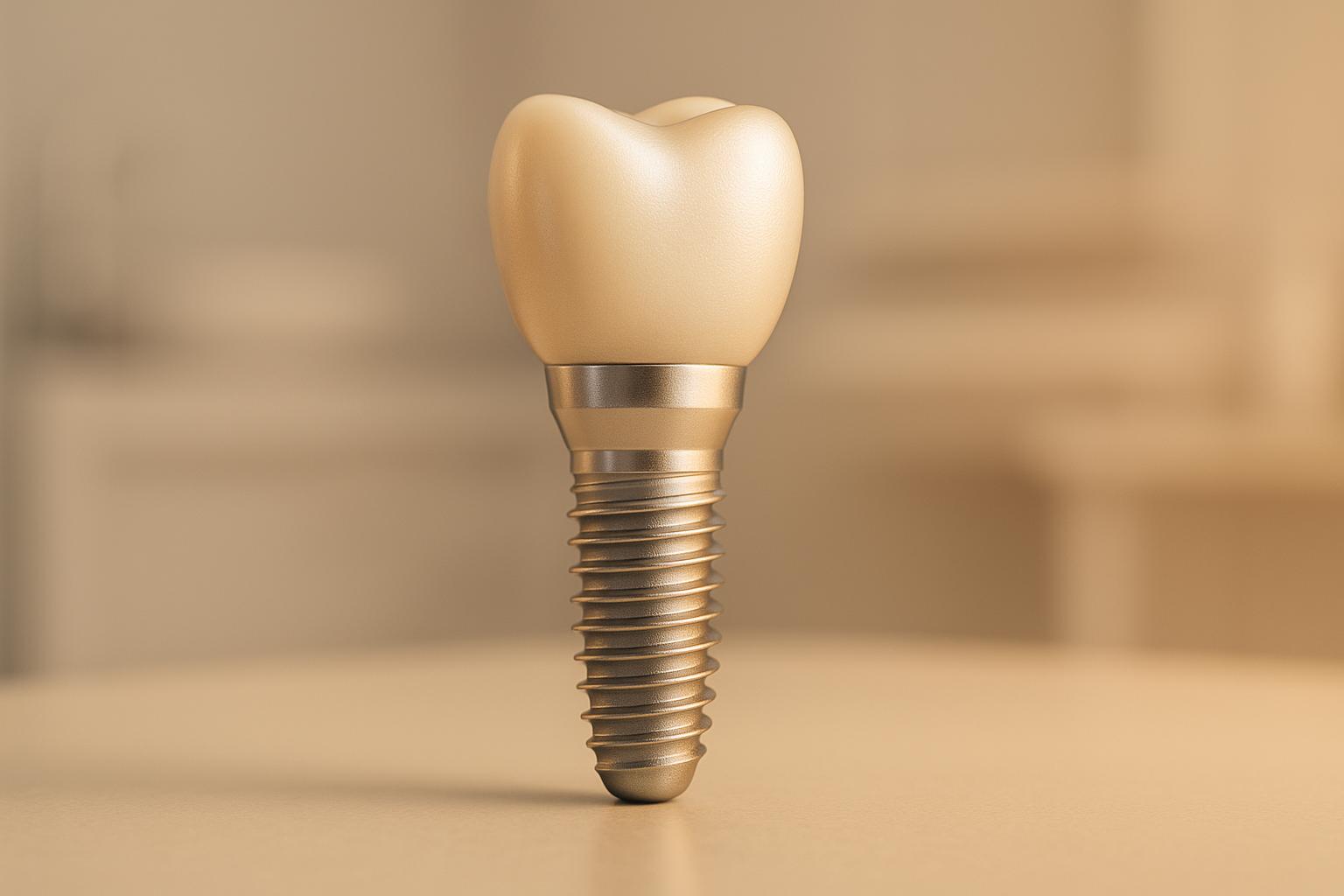
Electrochemical deposition (ECD) is transforming the way dental implants are coated, offering precise, uniform layers that improve implant performance. By using an electric current, ECD applies coatings that enhance corrosion resistance, promote bone integration, and reduce infection risks. This method is cost-effective, scalable, and capable of incorporating antimicrobial and bioactive materials, making it a practical solution for dental practices in Australia, especially with the growing demand for implants among an ageing population.
Key Takeaways:
- Corrosion Resistance: Protects implants from saliva, pH fluctuations, and chewing forces.
- Bone Integration: Improves bonding with surrounding bone using bioactive materials.
- Antimicrobial Coatings: Reduces bacterial growth and lowers infection risks.
- Precision: Allows for customisation of coating thickness, composition, and properties.
- Economic Benefits: Affordable and scalable for both mass production and patient-specific designs.
ECD stands out compared to traditional methods like plasma spraying and magnetron sputtering due to its precision, cost-effectiveness, and ability to create tailored, multi-layer coatings. This technology is particularly suited to addressing Australia’s dental care needs, offering durable and reliable solutions for implants.
How Electrochemical Deposition Works
The Electrochemical Process
Electrochemical deposition (ECD) uses an electric current to coat implants with a layer of material. Here’s how it works: the implant, acting as the cathode, is submerged in an electrolyte solution containing the coating material. When the current flows, positively charged ions in the solution move toward the implant’s surface. These ions are then reduced, forming a solid layer on the implant’s surface[2].
What sets ECD apart from other techniques, like high-temperature or mechanical methods, is the precision it offers. Factors like current density, electrolyte composition, and temperature are carefully controlled to ensure an even and high-quality coating[2]. For example, a 2023 study demonstrated a calcium phosphate coating of 2 ± 1 µm applied in just one minute on titanium implants. Remarkably, these coatings maintained mechanical stability even after repeated screwing into artificial jawbone material[4].
Tuning these parameters allows for incredible precision. Higher current densities can speed up the process, but going too fast risks compromising the coating’s quality. Adjusting the electrolyte composition enables the creation of hybrid coatings that blend multiple materials, while temperature control ensures stable reactions and uniform coatings. Precision like this is essential for meeting the rigorous standards required for implant coatings.
Main Advantages of the Process
One of the standout features of ECD is its adaptability. It can deposit a variety of materials – metals, ceramics, and polymers – designed to mimic the properties of natural tissue and promote better implant integration[2][3]. Another major benefit is its ability to embed functional additives directly into the coating. For instance, ECD can incorporate agents like copper or silver, achieving up to 27% copper in a single step. This not only enhances antibiofilm activity but does so without harming the surrounding tissues[4].
ECD also ensures uniform coatings, even on implants with complex or irregular surfaces – an essential factor for successful bone integration[3]. Its scalability and cost-effectiveness make it suitable for both mass production and customised, patient-specific designs, which is particularly valuable in Australia’s healthcare system.
The method also supports multi-layer coatings. For example, a strong base layer can secure adhesion to the implant, while additional layers may include bioactive agents to encourage tissue growth. This layered approach allows each layer to be tailored for specific functions[2][4]. Recent advancements, such as pulsed electrochemical deposition, offer even greater control over properties like porosity and phase composition, paving the way for implants tailored to precise clinical needs[5].
Electro Deposition.- Bekaert Core Competences – Advanced coating technologies
Main Benefits of Electrochemical Deposition for Dental Implants
These benefits contribute to improved performance and reliability of dental implants, even in the challenging conditions of the oral cavity.
Improved Corrosion Resistance
The oral environment is tough on implants – it’s constantly exposed to saliva, fluctuating pH levels, temperature changes, and mechanical forces. Electrochemical deposition (ECD) creates a protective barrier for implants, shielding them from these harsh conditions[1][2]. Unlike older methods, ECD produces uniform and precisely controlled coatings using materials like noble metals or synthetic polymers. This precision allows the coating’s thickness and composition to be customised, ensuring the implant is well-protected based on its placement and the patient’s unique oral environment[2][3].
Enhanced Bone Integration
For dental implants to succeed, they must achieve osseointegration – a direct connection between the bone and the implant surface. ECD facilitates this by depositing bioactive materials that promote bone growth. For instance, titanium implants enhanced with strontium ions through ECD have shown improved bone growth and excellent biocompatibility[6]. By allowing tailored layering, ECD not only boosts initial osseointegration but also helps maintain it over time.
Antimicrobial and Bioactive Properties
Infections are a major concern for dental implants and can lead to implant failure. ECD tackles this issue by embedding antimicrobial agents directly into the coating during the deposition process. Research has shown that antibacterial coatings, such as copper-doped calcium phosphate, created through ECD are highly effective in reducing bacterial colonisation on implants[4]. Copper-doped coatings exhibit strong antibiofilm properties while remaining safe for surrounding tissues. Additionally, the flexibility of ECD allows for further customisation with bioactive materials, which can support healing around the implant. Beyond these biological advantages, these coatings also provide practical economic benefits.
Economic Efficiency and Scalability
In addition to its biological benefits, ECD stands out for its affordability and scalability. It offers a cost-efficient way to produce consistent, high-quality coatings while reducing the risk of complications and the need for revision procedures. This efficiency makes ECD a practical solution to meet the growing demand for dental implants in Australia.
sbb-itb-2be92ed
Electrochemical Deposition vs Other Coating Methods
Electrochemical deposition (ECD) is gaining traction for dental implant coatings, and comparing it with other techniques like plasma spraying and magnetron sputtering sheds light on why. Each method offers distinct benefits and challenges, but ECD’s unique attributes make it particularly appealing for modern dental applications.
Plasma spraying involves shooting molten particles onto the implant’s surface, resulting in coatings that are 50–200 microns thick. While it works with a wide variety of substrate materials, it often produces coatings that lack uniformity and struggle with adhesion on intricate geometries. Additionally, the high temperatures involved can damage sensitive materials [3].
Magnetron sputtering, on the other hand, uses ionised gas to deposit material onto the surface, creating thin, uniform coatings with strong adhesion. However, this method is expensive and less practical for large or complex implants due to its limited scalability [3].
Comparison Table: ECD vs Other Techniques
| Feature | Electrochemical Deposition (ECD) | Plasma Spraying | Magnetron Sputtering |
|---|---|---|---|
| Coating Quality | High uniformity, thin, precise | Thick, less uniform | Thin, highly uniform |
| Adhesion Strength | Up to 30 MPa | 15–25 MPa | Good |
| Cost | Low to moderate | High | High |
| Precision Control | High (nano/micro-scale) | Low to moderate | High |
| Scalability | High | High | Low to moderate |
| Substrate Requirements | Requires conductive substrates | Broad range | Broad range |
| Bioactive Integration | Easily incorporated | Difficult | Possible, but complex |
| Clinical Outcomes | Enhanced osseointegration, lower infection risk | Good (less bioactive) | Good (thin coatings, less bioactive) |
One standout difference is adhesion strength. ECD-applied hydroxyapatite coatings outperform plasma-sprayed alternatives, as shown in the table [3].
Strengths and Limitations of ECD
Beyond the table, a closer look reveals ECD’s standout features and a few limitations.
ECD allows for precise control over coating thickness and composition, delivering ultra-thin, uniform layers (1–10 microns) [3]. This level of control supports the development of advanced coatings, such as multi-layered or gradient designs that combine materials for better performance [2]. By contrast, plasma spraying creates thicker, less uniform coatings, and its high-temperature process can degrade bioactive or antimicrobial agents. Magnetron sputtering, while capable of thin coatings, makes incorporating such agents a costly and complex endeavour [2][3].
Economically, ECD has advantages in Australia. Its lower processing temperatures reduce energy costs and minimise thermal damage to substrates. Moreover, its scalability means it can meet growing clinical demand without requiring the significant equipment investments associated with magnetron sputtering [3].
That said, ECD does have some limitations. It requires conductive substrates, which restricts its use to metallic implants. Additionally, the process is sensitive to factors like electrolyte composition and operating conditions, requiring careful optimisation to maintain consistent coating quality across different implant designs [3]. These considerations are particularly important in Australia, where balancing cost-efficiency with high material performance is critical for meeting clinical needs.
Future Directions and Clinical Applications for Australia
As dental implant technology continues to evolve, electrochemical deposition (ECD) is poised to play an even greater role in enhancing implant performance across Australia. With its established benefits like corrosion resistance and improved osseointegration, ECD is adapting to meet the demands of advancing research and changing clinical needs.
New Trends in ECD Technology
Hybrid coatings are emerging as a game-changer in ECD technology. These coatings combine multiple functionalities into a single layer, offering bioactivity, antimicrobial properties, and even drug delivery capabilities [3]. By addressing several implant-related challenges at once, hybrid coatings are setting a new standard in implant technology.
One particularly exciting development is the use of copper-doped calcium phosphate coatings. Research shows that ECD can incorporate up to 27% copper into these coatings, providing effective antibiofilm activity without causing cytotoxic effects [4]. This innovation is especially promising in tackling peri-implantitis, a common complication that can lead to implant failure.
Another advantage of ECD is its precision. By fine-tuning coating thickness, composition, and surface properties at the nanoscale, dental implants can be customised to suit individual patient needs. This level of personalisation allows dental practitioners to optimise implants for specific clinical situations, making them more effective and adaptable to unique challenges.
Addressing Australia’s Ageing Population’s Challenges
Australia’s ageing population presents unique challenges for dental care, but ECD-coated implants offer solutions that are particularly suited to older adults.
One key advantage is enhanced osseointegration, which is especially beneficial for patients with compromised bone quality – a common issue among older Australians. With the ability to precisely control the composition of coatings, factors that promote bone growth can be incorporated, improving implant integration even in difficult cases.
The antimicrobial properties of ECD coatings are another critical benefit, offering protection for older patients who may struggle with maintaining optimal oral hygiene. This added layer of defence helps to minimise the risk of peri-implantitis and related complications.
Affordability is also a significant factor. The scalability and relatively low processing costs of ECD technology can help make advanced implant treatments more accessible, particularly for older Australians on fixed incomes.
Finally, the durability of ECD coatings ensures long-term solutions. For older adults who may not be ideal candidates for multiple implant procedures due to health concerns, the extended lifespan of these coatings is an invaluable advantage.
For dental practices like Complete Smiles Bella Vista, ECD technology offers a way to deliver advanced, customised solutions that align with modern implant protocols while addressing the diverse needs of Australia’s ageing population. This integration of cutting-edge technology with practical, patient-focused care highlights the transformative potential of ECD in the years ahead.
Conclusion: The Future of Implant Coatings with ECD
Electrochemical Deposition (ECD) is reshaping the way implant coatings are developed by addressing key challenges like corrosion, integration, and infection. Its ability to produce uniform, tightly controlled coatings ensures better protection against wear. Plus, the incorporation of antimicrobial agents like silver and copper, along with bioactive molecules, helps combat issues like peri-implantitis and promotes more predictable treatment outcomes [1][2][4].
What sets ECD apart is its precision. It allows for exact control over the thickness and composition of coatings, paving the way for advanced multi-layer designs. These coatings can integrate therapeutic agents, support drug delivery, and adapt to the needs of biomaterials [1][2][3].
In Australia, ECD is gaining momentum, particularly in dental and orthopaedic implants, as the industry seeks more dependable, biocompatible, and functional implant surfaces. With an ageing population, ECD provides practical solutions to improve implant durability and ensure successful osseointegration, offering long-term value for patients. Its scalable and cost-efficient manufacturing processes could also make advanced implant treatments more accessible to dental practices across the country.
FAQs
What are the benefits of using electrochemical deposition for dental implant coatings?
Electrochemical deposition stands out as a method for applying coatings to dental implants, offering benefits that traditional techniques often can’t match. One key advantage is the ability to precisely control both the thickness and composition of the coating. This ensures a smooth, consistent layer, which can boost the implant’s durability and compatibility with the body.
This method also creates a surface that encourages better bonding with surrounding bone and tissue. As a result, implants gain improved stability and a longer lifespan. On top of that, electrochemical deposition helps lower the chances of implant failure by reducing wear and corrosion over time.
What materials are commonly used in electrochemical deposition to improve dental implant integration and reduce the risk of infection?
Electrochemical deposition frequently employs materials like calcium phosphate, particularly hydroxyapatite, to improve the bond between implants and bone by imitating the natural structure of bone. On top of that, antimicrobial agents like silver or zinc are often included to reduce the chances of infection around the implant site.
This combination not only strengthens the connection between the implant and the surrounding bone but also creates a barrier against bacteria, contributing to the implant’s durability and maintaining oral health over time.
What are the benefits of electrochemical deposition for dental implants, particularly for Australia’s ageing population?
Electrochemical deposition provides a range of benefits for dental implants, making it an excellent choice for meeting the needs of Australia’s ageing population. This method produces strong, biocompatible coatings that enhance how well implants fuse with bone tissue. The result? Better long-term stability and a lower chance of complications.
For older adults, where healing might take longer or bone density is reduced, these specialised coatings can significantly boost osseointegration – helping implants bond more securely with the surrounding bone. By improving both the performance and durability of implants, electrochemical deposition plays a key role in supporting oral health for ageing individuals, allowing them to maintain comfort and functionality over the years.
Related Blog Posts
- Electrochemical Deposition for Titanium Implants
- Electrochemical Deposition for Implant Coatings
- How Hybrid Coatings Improve Osseointegration
- Surface Modifications for Better Osseointegration
Important Notice: Any surgical or invasive procedure carries risks. Before proceeding, you should seek a second opinion from an appropriately qualified health practitioner.
Individual results may vary. The information provided in this article is for educational purposes only and does not constitute medical advice.
Checkout Related Blogs




Get in touch with us
For more information, call us now to start feeling better. Or fill the form below to make appointment
The Latest News from Complete Smiles
How to Clean Clear Plastic Retainers
Checklist for Choosing Wearable Dental Devices
Checklist for Choosing Cloud AI Platforms in Dentistry

Complete Smiles Bella VistaAccepts All Major Health Funds, Including





