





Electrochemical Deposition for Implant Coatings
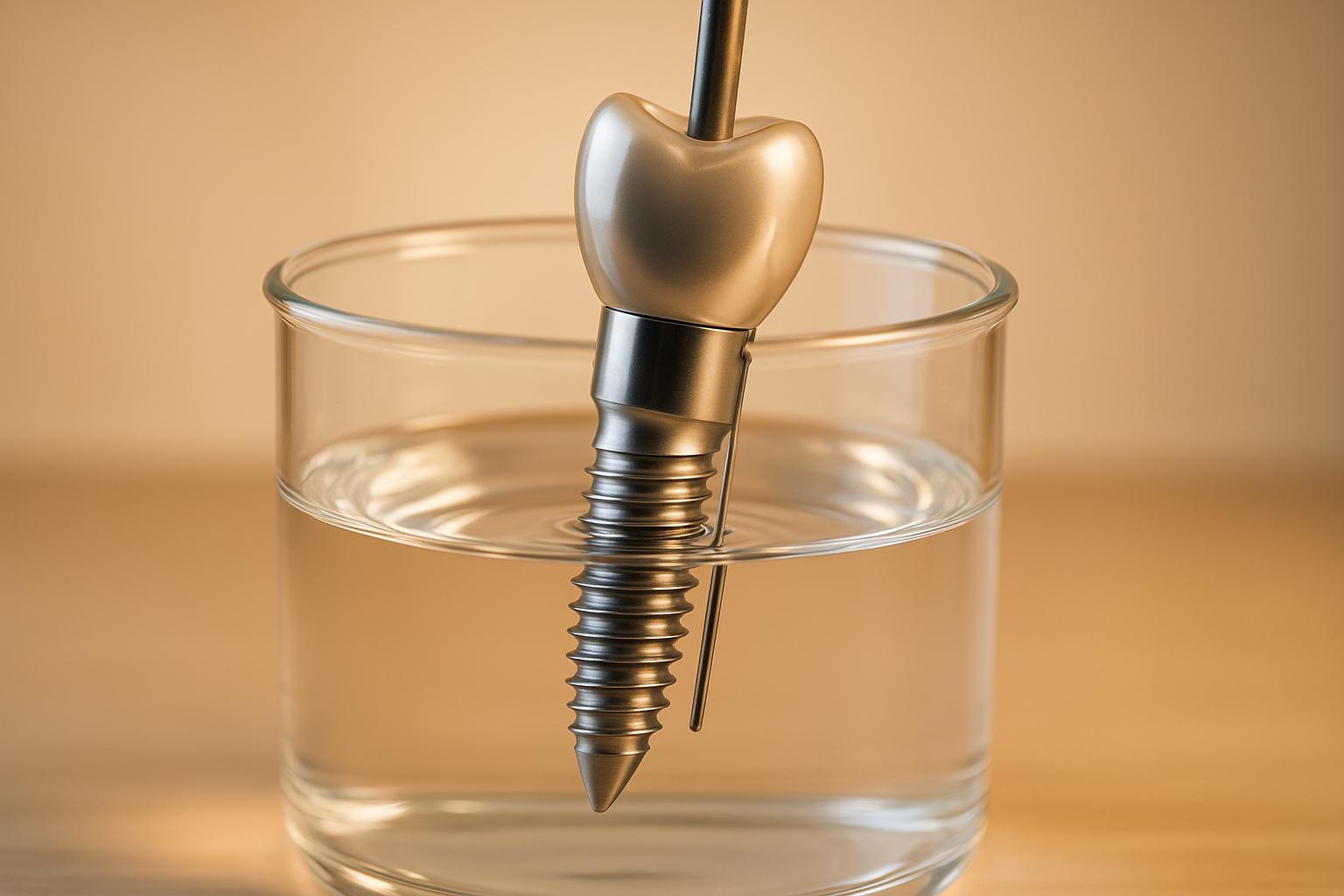
Electrochemical deposition (ED) is a precise method for applying bioactive coatings to dental implants. It uses an electric current to create thin, even layers that improve how implants bond with bone tissue. This process also allows for the integration of materials that can aid healing or reduce infections, such as hydroxyapatite or strontium-based coatings. Unlike high-temperature methods, ED operates at room temperature, preserving the implant’s structure while delivering consistent results.
Key Highlights:
- Improves osseointegration: Promotes better bone growth and implant stability.
- Customisable coatings: Thickness and material composition can be adjusted.
- Room temperature process: Maintains implant integrity and bioactive properties.
- Cost-effective: Requires simple equipment compared to other techniques.
- Versatile materials: Supports coatings like hydroxyapatite, strontium, and proteins.
ED offers a reliable alternative to traditional methods like plasma spraying, with advantages in uniformity, precision, and material versatility. While more research is needed for long-term results, it holds promise for improving implant outcomes in Australian dental practices.
Sol-gel Coating Technology: A Tool for Long-Term Implants Lifetime Improvement
How Electrochemical Deposition Works and Its Benefits
Electrochemical deposition has become a key player in dental implant technology, blending precise scientific principles with practical benefits. This technique addresses many challenges seen in traditional coating methods, making it an increasingly popular choice.
The Electrochemical Deposition Process
The process involves three main components: the implant acts as the working electrode (cathode), a counter electrode (anode) completes the circuit, and both are placed in an electrolyte solution that contains the coating materials.
When an electric current flows, ions from the electrolyte are drawn to the implant surface, where they reduce and form a controlled coating layer. This electric field ensures a uniform coating, which is crucial for improving osseointegration. What’s more, the process allows real-time adjustments to control the coating thickness, adding precision to the technique.
The current density, typically between 1 and 10 milliamperes per square centimetre, plays a critical role in determining the deposition rate and surface characteristics. Low temperatures used during the process help preserve both the implant’s integrity and the bioactive material’s properties, avoiding unwanted chemical reactions that could compromise biocompatibility.
Factors That Affect Coating Quality
The quality of the coating depends on multiple carefully monitored factors. Current density, voltage, and deposition time are key variables that influence the thickness and texture of the coating. For instance, higher current densities speed up the process but may result in rougher surfaces, while lower densities create smoother, more uniform coatings.
The composition of the electrolyte solution also matters. The concentration of materials, pH levels, and additives all influence how ions behave during the process. For example, maintaining the correct calcium-to-phosphate ratio is essential when creating hydroxyapatite coatings to ensure the desired chemical structure.
Deposition time is another important factor, as it directly impacts coating thickness. Coating procedures can last anywhere from 30 minutes to several hours, depending on the material and desired thickness. However, overextending the deposition time can lead to defects or weak adhesion.
Temperature and agitation within the electrolyte solution also play a role. Gentle stirring or circulation ensures even ion distribution, preventing uneven coatings. Maintaining a stable temperature – within ±2°C – helps keep deposition rates consistent.
Finally, surface preparation of the implant is critical. Cleaning, etching, or activating the titanium surface promotes strong adhesion by creating nucleation sites. Even the smallest contaminants can weaken the bond between the coating and the implant.
Advantages of Electrochemical Deposition
When optimised, electrochemical deposition offers several advantages over other coating methods. One of the standout benefits is its ability to provide uniform coverage. The electric field naturally distributes the coating material evenly, even on complex implant designs with threads, grooves, or undercuts – areas that often challenge other techniques.
The process is also straightforward and cost-effective. Unlike plasma spraying or physical vapour deposition, electrochemical deposition requires only basic equipment, such as laboratory power supplies, temperature controllers, and chemical baths. This simplicity makes it accessible for dental practices and laboratories.
Another benefit is the precise control over coating thickness. By adjusting the deposition parameters, coatings can range from ultra-thin layers to several micrometres thick, allowing for customisation to meet specific clinical needs.
The process operates at room temperature, which helps maintain the original properties of titanium implants. High-temperature methods can alter titanium’s microstructure and mechanical properties, potentially affecting its performance.
Electrochemical deposition is also versatile, accommodating a wide range of bioactive materials. From traditional hydroxyapatite to advanced composites with growth factors or antimicrobial agents, the process supports materials that would degrade under high temperatures.
Additionally, this method is environmentally friendly. It produces minimal waste, and many electrolyte solutions can be recycled or safely disposed of, unlike other methods that generate hazardous byproducts.
Finally, the scalability of electrochemical deposition is a major advantage. It works for single implants and batch processing alike, making it suitable for both custom applications and high-volume production.
These benefits highlight why electrochemical deposition is becoming a preferred choice in dental implant technology, setting the stage for further discussion on commonly used coating materials.
Common Materials for Electrochemical Implant Coatings
Choosing the right coating material is essential for improving the integration between implants and surrounding bone tissue. The material not only impacts how well the implant bonds with the bone but also influences its overall durability.
Hydroxyapatite (HA)
Hydroxyapatite (HA) is one of the most commonly used materials for implant coatings because its mineral composition closely resembles that of natural bone. This similarity makes it highly compatible with human tissue, encouraging the integration of bone and connective tissue while also supporting new bone growth[1][2]. With electrochemical deposition, the HA coating can be fine-tuned to achieve the ideal composition and structure needed for successful bone integration. Beyond HA, other materials like strontium are gaining attention for their unique benefits in bone health.
Strontium-Based Coating Options
Strontium-based coatings offer a promising alternative due to the element’s ability to promote bone formation while simultaneously reducing bone breakdown. This dual action – boosting osteoblast activity (bone-building cells) and suppressing osteoclast activity (bone-resorbing cells) – can lead to improved bone density and strength around the implant. Electrochemical deposition ensures these coatings are applied evenly, creating a smooth and consistent layer that can enhance the implant’s connection to the surrounding bone. Another approach involves using protein-based coatings to replicate the natural environment of bone tissue.
Protein-Based Coating Materials
Protein-based coatings are designed to imitate the extracellular matrix, the natural structure that supports cells in the body. Collagen, a key protein found in bone, is commonly used as it provides a natural framework that encourages bone growth. Additionally, peptide-based coatings can be tailored to interact with specific cell receptors, triggering targeted biological responses. These bioactive surfaces not only encourage cell adhesion and growth but also play an active role in the healing process, ultimately improving how well the implant integrates with the body.
sbb-itb-2be92ed
Step-by-Step Guide to Electrochemical Deposition
Following a structured process is key to ensuring reliable and high-quality coatings. This guide walks you through the essential stages, from preparing the surface to post-coating treatments, building on the techniques already outlined.
Preparing the Implant Surface
Getting the surface ready is the foundation of successful electrochemical deposition. Start by thoroughly cleaning the implant in an ultrasonic bath. Use organic solvents like acetone, followed by ethanol, to eliminate manufacturing residues and organic debris. Afterward, rinse with distilled water and dry using compressed air to avoid leaving water spots.
To improve coating adhesion, create a micro-rough surface. You can achieve this with a brief acid etch using hydrochloric acid at room temperature, followed by a thorough rinse with distilled water to remove any acid residues.
For additional roughness, consider grit blasting with aluminium oxide under controlled conditions to ensure an even texture. After blasting, clean the implant again – an ultrasonic rinse works well – to remove any embedded particles.
Finally, activate the surface using a mild alkaline solution to encourage the formation of a bioactive layer. Rinse the implant immediately after activation and move directly to the deposition stage to make the most of the activated surface. Once the surface is ready, you can proceed to prepare the electrolyte solution.
Setting Up the Electrolyte Solution
The electrolyte solution plays a critical role in achieving a quality coating. For hydroxyapatite coatings, use a solution containing calcium and phosphate ions in a ratio similar to that of natural bone (approximately 1.67).
Keep the electrolyte at a steady temperature close to 37°C using a temperature-controlled bath. Adjust the pH to a slightly acidic range, typically between 4 and 5, using an appropriate acid or base.
Set up the electrochemical cell with the implant serving as the cathode and a platinum mesh as the anode. Position the electrodes carefully to ensure uniform current distribution. Maintain a low and stable current density (in the mA/cm² range) throughout the process. Continuously monitor the deposition time to achieve the desired coating thickness.
Post-Coating Treatment Steps
Post-coating treatments are crucial for stabilising the deposited layer and improving its bioactivity. Immediately after deposition, rinse the implant with distilled water to remove any leftover electrolyte and loosely attached particles.
Heat treatment, or annealing, can then be applied to enhance the coating’s crystallinity and adhesion. Use a controlled thermal profile, optimising factors like heating rate, peak temperature, dwell time, and cooling rate. This helps minimise thermal stress and strengthens the bond between the coating and the substrate.
Finally, perform quality checks to ensure the coating meets the required standards. These can include analysing surface morphology with tools like scanning electron microscopy, measuring thickness, and testing adhesion through methods such as scratch or pull-off tests. Once verified, store the finished implants in a sterile, dry environment to maintain their integrity.
Clinical Results and Coating Method Comparisons
Building on the refined deposition process discussed earlier, clinical results highlight how these advancements influence implant integration. Comparing different coating methods helps dental professionals make well-informed choices when selecting implants and planning treatments. While electrochemical deposition (ED) has shown promise in boosting implant success rates, understanding its performance alongside other established methods is crucial.
How ED Coatings Improve Osseointegration
Electrochemical deposition creates a textured, bioactive surface that enhances osteoblast attachment, speeding up bone formation. This coating essentially forms a connection between the implant and the surrounding bone, promoting quicker integration.
The gradual release of calcium, phosphate, and other bioactive agents fosters an environment conducive to rapid and consistent osseointegration. ED coatings also allow for embedding therapeutic compounds directly into the coating structure. This means growth factors, antibiotics, or other agents can be incorporated during the deposition process, enabling a controlled-release system that delivers these substances exactly where they’re needed. This targeted delivery can shorten healing times and improve the long-term stability of implants.
Additionally, ED coatings provide uniform coverage, ensuring consistent performance even in areas with reduced bone density. This uniformity sets ED apart from several other coating techniques, as outlined below.
Comparing Different Coating Methods
Each coating method offers unique benefits and limitations, depending on clinical needs and manufacturing requirements. These differences influence coating properties and clinical outcomes.
| Coating Method | Advantages | Limitations | Best Suited For |
|---|---|---|---|
| Electrochemical Deposition | Uniform thickness, bioactive agent integration, precise control, room temperature process | Requires conductive substrate, slower deposition rates | Complex geometries, drug delivery applications |
| Plasma Spraying | Rapid deposition, thick coatings | High temperature process, potential substrate heating, less uniform on complex shapes | Standard implant designs, high-volume production |
| Sol-Gel Method | Low temperature, strong adhesion, versatile chemistry | Multiple processing steps, requires heat treatment, potential cracking | Research applications, specialised coatings |
| Physical Vapour Deposition | Dense coatings, strong adhesion, clean process | Line-of-sight limitations, expensive equipment, limited thickness | Thin film applications, precision components |
Plasma spraying remains the most commonly used commercial technique due to its well-established history and regulatory approvals. However, its high-temperature process can cause thermal stress, increasing the risk of delamination over time. It also struggles to coat complex implant shapes evenly.
The sol-gel method provides excellent chemical control, but its multiple processing steps can introduce variability. The required heat treatment after application can also limit the inclusion of certain bioactive agents, as some may degrade under high temperatures.
Physical vapour deposition produces highly dense, durable coatings. However, its line-of-sight deposition method makes it difficult to coat intricate implant surfaces, such as threads, uniformly. Additionally, the equipment costs are significantly higher than other methods.
Following Evidence-Based Practice Guidelines
Beyond technical comparisons, adhering to evidence-based guidelines is essential for clinical decisions. Australian dental practitioners must follow evidence-based treatment protocols when choosing implant systems and coating methods. The Dental Board of Australia stresses the importance of using materials and techniques that have been proven safe and effective through peer-reviewed research.
Practitioners should carefully review clinical data to ensure ED-coated implants meet Therapeutic Goods Administration (TGA) standards, including biocompatibility and long-term performance.
Long-term follow-up studies are critical for assessing the true benefits of any coating technology. While short-term improvements in osseointegration may be noticeable within months, the long-term stability and performance of coated implants require years of clinical observation. Practitioners should prioritise coating systems backed by extensive long-term data over newer technologies with limited clinical history.
Integrating new coating technologies into practice should be a gradual, evidence-based process. Monitoring patient outcomes and comparing results to established treatment protocols ensures that patients receive the best possible care. This approach also contributes to a deeper understanding of coating technology effectiveness in Australian dental practices. Staying informed through ongoing professional development helps practitioners keep pace with advancements in coating methods.
Conclusion
As outlined earlier, precise control of coatings plays a critical role in improving osseointegration. Electrochemical deposition (ED) is transforming dental implant coatings by enabling meticulous control over surface properties, leading to enhanced clinical outcomes. This technique is particularly notable for its ability to process at room temperature while incorporating therapeutic compounds directly into the coating.
One of the standout features of electrochemical deposition is its ability to provide a uniform coating, even on implants with complex geometries. It also allows for the integration of drug delivery systems and ensures consistent performance across various bone densities. These technical advantages align with the stringent requirements of clinical standards.
For Australian dental professionals, adopting ED technology means carefully considering evidence-based guidelines and ensuring compliance with Therapeutic Goods Administration (TGA) standards. The method’s ability to enhance osseointegration through the controlled release of calcium, phosphate, and bioactive agents makes it especially useful in cases involving compromised bone quality or immediate loading protocols.
While plasma spraying remains a widely used method, comparative analysis highlights the greater versatility of electrochemical deposition for specialised applications. Its precise control over coating thickness and integration of bioactive agents positions it as an increasingly valuable option in modern implant dentistry.
The long-term success of ED-coated implants will depend on clinical studies over extended periods and adherence to best practice protocols. Australian practitioners who keep up with advancements in coating technologies through professional development will be well-equipped to offer patients the most effective implant solutions.
Incorporating electrochemical deposition into regular practice is more than just a technological step forward – it’s a way to improve patient care by providing implants with better performance and predictable osseointegration. Continued research will further reinforce the clinical benefits of this promising approach.
FAQs
How does electrochemical deposition compare to plasma spraying for dental implant coatings in terms of durability and patient outcomes?
Electrochemical deposition offers a precise and uniform coating for dental implants, maintaining the implant’s surface texture and supporting improved osseointegration. This process not only boosts the implant’s durability but also lowers the chances of failure over time.
On the other hand, plasma spraying relies on high temperatures to achieve strong adhesion. However, it can lead to surface irregularities or porosity, which might affect the implant’s long-term stability. While both techniques have their strengths, electrochemical deposition tends to deliver more consistent and reliable results, making it a compelling choice for improving patient outcomes.
What challenges or risks are associated with using electrochemical deposition for dental implant coatings?
Electrochemical deposition (ECD) for dental implant coatings comes with its share of challenges. One major concern is corrosion, which can compromise the implant’s strength over time. There’s also the risk of wear and corrosion by-products triggering inflammation or even peri-implantitis, a condition that can lead to further complications. On top of that, slow electrochemical reactions might increase the chances of infection or implant failure.
To address these issues, researchers are actively working on improving the strength and compatibility of these coatings, ensuring they function reliably within the body’s complex environment.
Is electrochemical deposition suitable for all dental implants, or are there specific cases where it works best?
Electrochemical deposition is a widely-used method for coating titanium dental implants with bioactive materials such as hydroxyapatite or strontium. These coatings play a key role in improving osseointegration, boosting corrosion resistance, and speeding up healing by creating a surface that bonds effectively with bone tissue.
That said, this technique shines in cases where enhanced surface bioactivity is essential. It might not be the right fit for every implant, particularly those made from different materials or designed with specific surface properties tailored to unique clinical needs. Your dentist will evaluate your individual situation and recommend the most suitable approach for your implant requirements.
Related Blog Posts
- Emerging Electrochemical Technologies for Implants
- Electrochemical Deposition for Titanium Implants
- Osseointegration and Titanium Surface Design
- Preventing Implant Infections with Surface Engineering
Important Notice: Any surgical or invasive procedure carries risks. Before proceeding, you should seek a second opinion from an appropriately qualified health practitioner.
Individual results may vary. The information provided in this article is for educational purposes only and does not constitute medical advice.
Checkout Related Blogs




Get in touch with us
For more information, call us now to start feeling better. Or fill the form below to make appointment
The Latest News from Complete Smiles
How to Clean Clear Plastic Retainers
Checklist for Choosing Wearable Dental Devices
Checklist for Choosing Cloud AI Platforms in Dentistry

Complete Smiles Bella VistaAccepts All Major Health Funds, Including





