




Biomimetic Tooth Restoration: Key Benefits
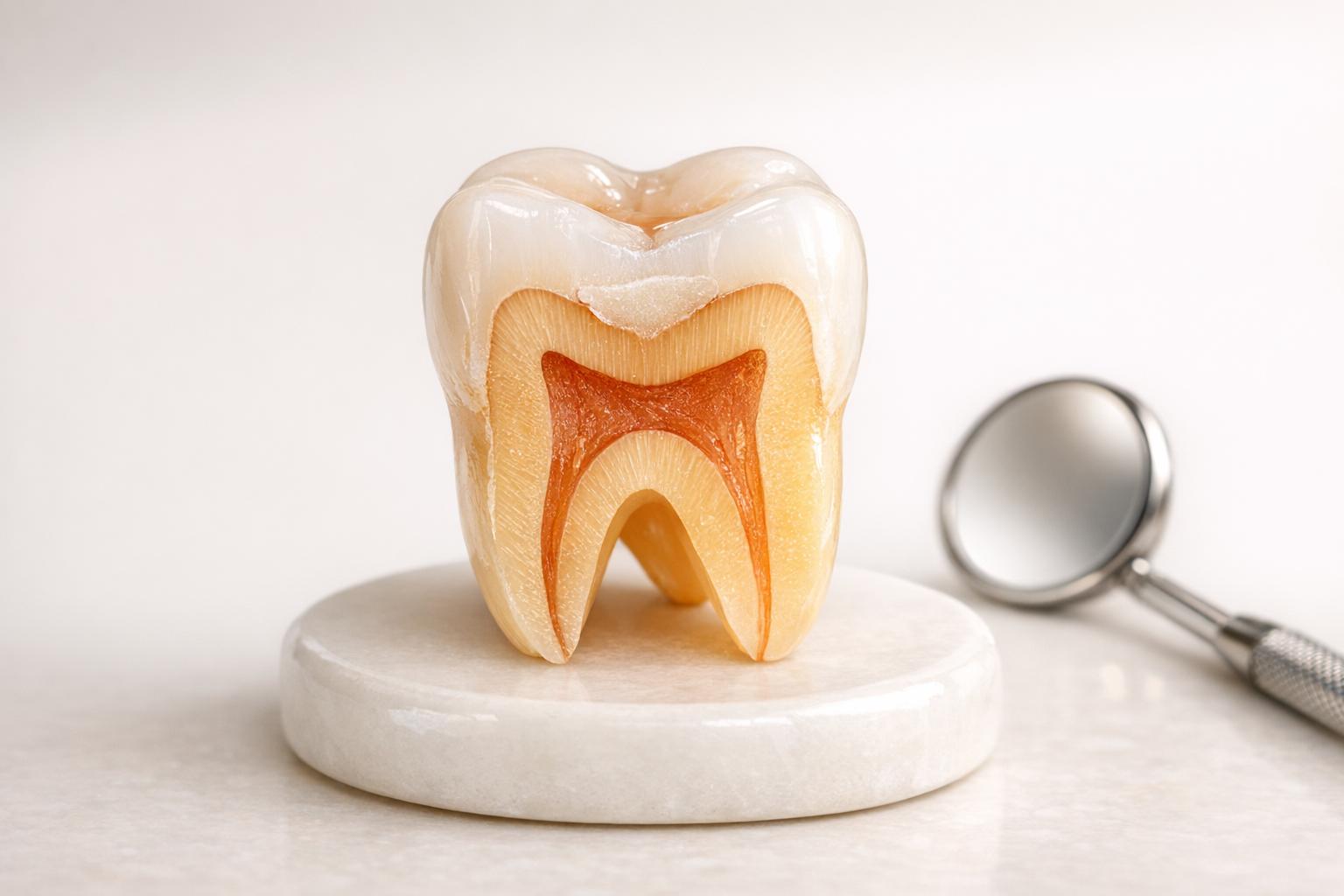
Biomimetic tooth restoration is changing the way we repair damaged teeth. Instead of removing large parts of the tooth, this method focuses on preserving as much of your natural tooth as possible. Using advanced bonding techniques and materials that mimic the flexibility and strength of natural teeth, it offers a more durable, comfortable, and effective alternative to conventional methods. Here’s what you need to know:
- Preserves More Natural Tooth: Removes only the damaged areas, keeping up to 70% of the original tooth intact, compared to just 25% with crowns.
- Reduces Pain and Sensitivity: Techniques like Immediate Dentine Sealing (IDS) protect the tooth and reduce post-treatment discomfort.
- Fewer Root Canals: By maintaining tooth vitality, it lowers the risk of needing root canal treatments.
- Long-Lasting Restorations: Materials mimic natural tooth flexibility, reducing cracks and extending the lifespan of restorations.
- Natural Appearance: Restorations are designed to look and function like real teeth.
- Cost-Effective Over Time: Though initially more expensive, it avoids the need for repeated, invasive treatments.
Biomimetic methods preserve tooth health, reduce complications, and provide a more natural and lasting solution for dental care.
What is Biomimetic Dentistry? Summary & Benefits
1. Keeps More of Your Natural Tooth
Biomimetic dentistry focuses on preserving as much of your natural tooth as possible. Unlike traditional crowns, which require removing around 75% of the tooth structure to reshape it for mechanical retention [5][4], biomimetic techniques take a far less invasive approach.
Using advanced adhesives, biomimetic methods bond restorations directly to the tooth. Only the damaged tissue is removed, leaving healthy enamel and dentine intact. This approach typically results in onlays that remove just 30% of the coronal tissue [4]. The difference is striking and highlights why minimal removal is so important for maintaining long-term tooth health.
"The ABD strongly believes that using biomimetics is the best method for tooth retention, rather than having to amputate the tooth to achieve mechanical retention." – Academy of Biomimetic Dentistry [5]
2. Less Pain and Sensitivity
One of the standout benefits of biomimetic restorations is the noticeable reduction in post-treatment discomfort. This is largely thanks to the Immediate Dentine Sealing (IDS) technique. With IDS, freshly cut dentine is immediately sealed with resin, forming a protective hybrid layer. This layer safeguards the dentinal tubules, significantly decreasing sensitivity after treatment [4].
Traditional methods often leave these tubules exposed, which can lead to discomfort. In contrast, biomimetic materials go a step further by releasing ions that help seal these tubules. This creates an airtight, gap-free barrier that not only blocks bacteria but also ensures the pulp remains healthy and protected [1].
"Biomimetically restored tooth results in deformation and stress concentrations, eliminating sensitivity and postoperative pain and preserving vitality, as bacteria cannot invade and kill the pulp." – Meghna Paryani, Department of Conservative Dentistry and Endodontics [3]
Another key factor is the advanced bonding protocols used in biomimetic dentistry. These protocols can increase bond strength by up to 400% compared to traditional methods [5]. This creates a ‘monoblock’ effect, where the restoration and tooth essentially function as one. By reducing polymerisation shrinkage stress during the curing process, internal tension is kept to a minimum, which helps alleviate both immediate and long-term discomfort [2, 7].
Moreover, because biomimetic techniques are more conservative, they preserve a larger portion of the natural tooth structure. This extra distance from the pulp reduces the risk of inflammation, further protecting the tooth’s vitality and ensuring a more comfortable recovery.
3. Fewer Root Canal Procedures Needed
Biomimetic dentistry offers a major advantage: it can significantly reduce the need for root canal treatments. This is because its techniques focus on preserving the tooth’s vitality by removing only the damaged or decayed portions, sparing as much healthy structure as possible. By being less invasive, these methods maintain the tooth’s integrity and minimise stress on the pulp, which lowers the risk of complications during treatment.
Instead of cutting away large portions of the tooth, biomimetic approaches target the affected areas and bond restorations directly to the healthy structure. This technique allows the tooth to retain its natural strength and flexibility, reducing the likelihood of fractures that could lead to the need for root canal therapy.
"Biomimetic restorative protocols… supports minimally invasive carious lesion management, delaying entry to, and slowing down, the destructive restorative cycle by preserving tooth tissue, maintaining pulp sensibility."
– Deepa N Shah, BDS MFDS RCS MSc [4]
In cases where minor pulp exposure occurs, biomimetic materials play a key role in promoting natural healing. For instance, materials like Bioactive Glass encourage the formation of reparative dentine, which creates a mineralised bridge to protect the pulp. This process, combined with advanced bonding techniques that form a tight, bacteria-resistant seal, helps maintain the pulp’s health and vitality over the long term [1].
4. More Durable Restorations
Biomimetic restorations are designed to mimic the natural flexibility of your teeth, which helps them last longer. Unlike traditional crowns made from rigid materials, biomimetic techniques use composites and ceramics with a modulus of elasticity (12–20 GPa) similar to natural dentine. This allows the restoration and tooth to flex together under chewing forces, reducing the likelihood of cracks forming [9].
This flexibility is paired with advanced bonding methods that make the restorations even more secure. One standout technique is Immediate Dentine Sealing (IDS), which forms a mature hybrid layer before the final restoration is applied. This process increases bond strength by up to 400%, making the restoration more resistant to chipping and fractures over time [5].
Research shows that biomimetic restorations are built to last. Composite restorations can endure for 10–17 years, porcelain veneers up to 16 years, and ceramic inlays or partial crowns for more than 15 years [8]. These options often outperform traditional full-coverage crowns, which are more prone to root fractures [4].
Innovations in materials also play a key role in durability. Fibre-reinforced composites act as barriers to stop cracks from spreading [1]. Additionally, some newer biomimetic materials include microcapsules filled with healing agents. When a crack starts to form, these capsules rupture and automatically repair minor damage, further extending the life of the restoration [2].
sbb-itb-2be92ed
5. Looks and Works Like a Real Tooth
Biomimetic techniques don’t just make teeth stronger – they also ensure they look natural. These restorations are designed to blend seamlessly with your existing teeth. Using layered composite methods and carefully chosen ceramics, they replicate the anatomy, colour, translucency, and strength of natural teeth, creating a result that’s both functional and visually appealing [10].
The materials used in these treatments are engineered to mimic the microstructure of real teeth. Hybrid ceramics, also called polymer-infiltrated ceramic network (PICN) materials, combine ceramics and polymers. This combination achieves properties like the Young’s modulus and hardness of natural enamel and dentine [7]. Some solutions incorporate apatite-leucite glass ceramics, which feature needle-like structures that closely resemble living dental tissues [7]. Modern multilayered zirconia blocks take this even further by combining different types of zirconia. This approach ensures a highly aesthetic surface while maintaining strong mechanical support at the base [7].
"Biomimetic dentistry is the art and science of repairing damaged teeth with restorations that imitate the living tissues (e.g., enamel, dentin, bone, cementum, etc.) in terms of appearance, function, and strength." – Lamia Singer, Ahmed Fouda, and Christoph Bourauel [7]
These restorations don’t just look real – they behave like natural teeth too. The materials are designed to flex and respond to chewing forces in the same way a natural tooth does, allowing the tooth to work as a cohesive unit [7]. This integration restores natural function. Additionally, strong adhesive bonding systems seal the tooth completely, protecting it from future decay while preserving the flexibility and resilience that make natural teeth so durable [11].
To keep your restoration in top shape, brush twice daily with fluoride toothpaste, floss daily, and consider a custom mouthguard if you grind your teeth [10].
6. Better Value Over Time
While biomimetic restorations may come with a higher initial price tag, they often lead to substantial savings in the long run by cutting down on the need for expensive follow-up treatments. Traditional restorative methods can trigger a chain reaction of increasingly invasive procedures – starting with fillings and escalating to crowns, root canals, and eventually tooth extractions and replacements. Biomimetic techniques, by focusing on preserving the natural tooth structure and vitality from the beginning, help to interrupt this costly cycle [6].
One key advantage of biomimetic partial-coverage restorations is that they retain much more of the natural tooth compared to traditional crowns. This approach not only reduces the risk of needing root canals but also lowers the chances of complete restoration failure. Traditional restorations, when they fail, often do so catastrophically – for example, through irreparable root fractures. On the other hand, biomimetic restorations typically experience more manageable issues, such as minor chipping, which can often be repaired without replacing the entire restoration [4].
Research into materials like lithium disilicate and composite resins has shown they can perform successfully for periods ranging from 5 to 15 years [4]. By maintaining the tooth’s natural vitality and structure, biomimetic restorations help patients avoid the steep costs associated with procedures like root canals, extractions, and implants over a lifetime. The ability to repair rather than replace, combined with these long-term savings, underscores the economic benefits of choosing biomimetic restorations. The comparison table below summarises these advantages.
Comparison Table
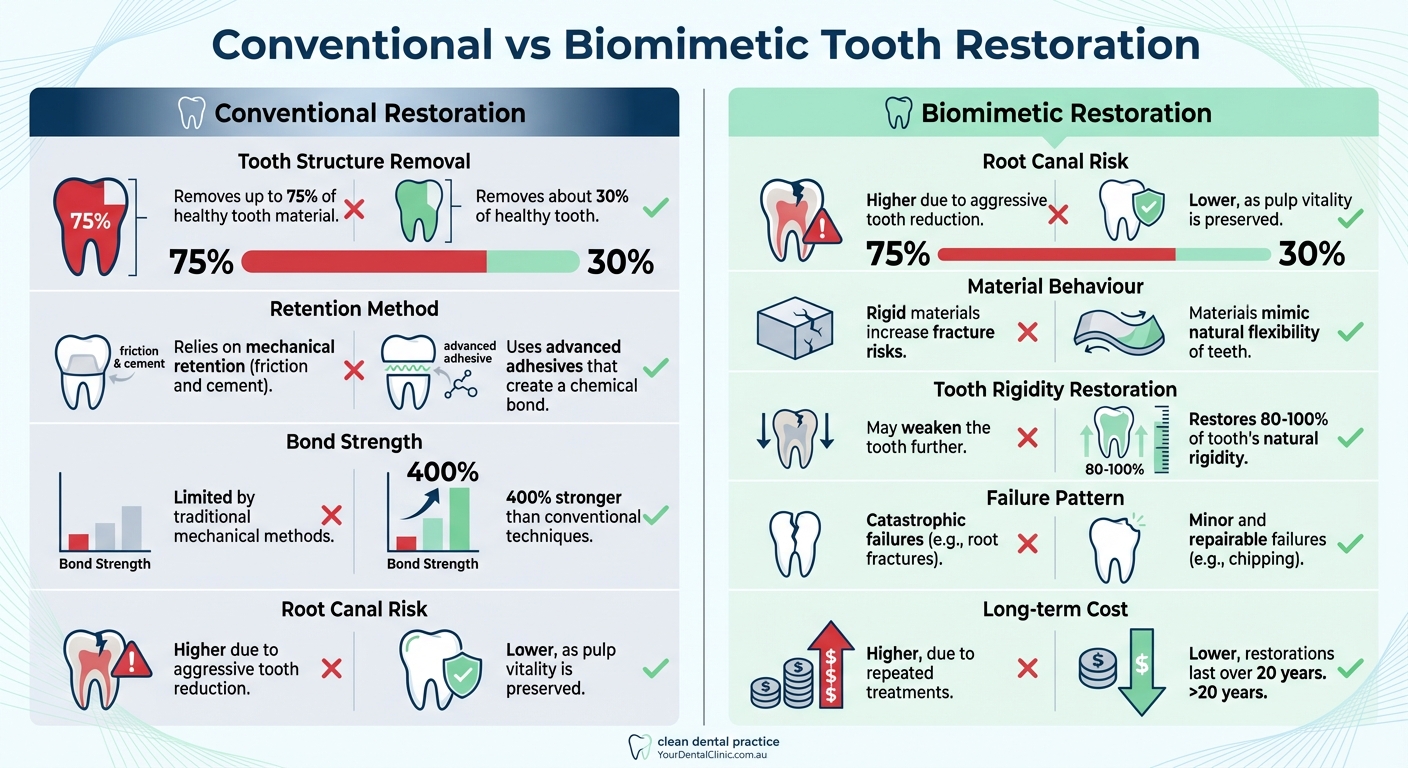
Biomimetic vs Conventional Tooth Restoration: Key Differences Comparison
The key differences between conventional and biomimetic restorations highlight why biomimetic methods are better suited for long-term dental health. Here’s a breakdown of how the two approaches stack up:
| Factor | Conventional Restoration | Biomimetic Restoration |
|---|---|---|
| Tooth Structure Removal | Removes up to 75% of healthy tooth material [5][4] | Removes about 30% of the healthy tooth [4] |
| Retention Method | Relies on mechanical retention (friction and cement) [14] | Uses advanced adhesives that create a chemical bond [5] |
| Bond Strength | Limited by traditional mechanical methods | Delivers a bond 400% stronger than conventional techniques [5] |
| Root Canal Risk | Higher due to aggressive tooth reduction [14] | Lower, as pulp vitality is preserved [13] |
| Material Behaviour | Rigid materials increase fracture risks [13] | Materials mimic the natural flexibility of teeth [12] |
| Tooth Rigidity Restoration | May weaken the tooth further [4] | Restores 80–100% of the tooth’s natural rigidity [4] |
| Failure Pattern | Catastrophic failures, such as root fractures [4] | Failures are often minor and repairable (e.g., chipping) [4] |
| Long-term Cost | Higher, due to repeated treatments in the "cycle of retreatment" [15] | Lower, with restorations designed to last over 20 years [15] |
"The ABD strongly believes that using biomimetics is the best method for tooth retention, rather than having to amputate the tooth to achieve mechanical retention." – Academy of Biomimetic Dentistry [5]
This difference in philosophy – preserving the natural tooth rather than removing it – sets biomimetic dentistry apart. Research shows that biomimetic techniques can prevent 60%–90% of crowns and root canals by maintaining more of the natural tooth structure and leveraging superior adhesive technology [13]. These benefits underline why biomimetic methods are a game-changer for long-term dental care.
Conclusion
Biomimetic tooth restoration is reshaping dental care by focusing on preserving as much of the natural tooth structure as possible. Unlike traditional methods that often involve removing healthy tissue to accommodate rigid restorations, this approach targets only decayed areas, maintaining the tooth’s natural biomechanical properties. This method stands apart from conventional crowns by preserving essential tooth structure and achieving significantly stronger bonds [5][4].
Beyond structural advantages, biomimetic restorations help maintain the vitality of the tooth’s pulp and replicate the natural flexibility of teeth. This reduces the likelihood of severe failures. When problems do occur, they are typically minor and easily repairable, avoiding the cycle of increasingly invasive treatments that can ultimately lead to tooth loss [4][6].
FAQs
What makes biomimetic tooth restoration different from traditional dental crowns?
Biomimetic tooth restoration offers a less invasive and more natural option compared to traditional dental crowns. While crowns often involve removing a considerable amount of healthy tooth structure, biomimetic techniques prioritise preserving as much of the original tooth as possible. This is done by using materials that closely replicate the tooth’s natural characteristics, including its strength, flexibility, and appearance.
Instead of replacing large sections of the tooth, this method focuses on reinforcing the existing structure. By doing so, biomimetic restorations help maintain the tooth’s original function and minimise the risk of future damage. The result? A solution that supports long-term oral health while delivering natural-looking, durable outcomes – without the need for invasive procedures like crowns.
What are the benefits of biomimetic tooth restorations over time?
Biomimetic tooth restorations provide a range of long-term benefits by closely imitating the structure and function of natural teeth. They help reinforce the tooth, lower the chances of fractures, and allow for the preservation of more natural tooth material compared to older methods.
By replicating the elasticity and resilience of natural teeth, these restorations offer improved durability and biomechanical performance. This not only extends the lifespan of the restoration but also supports overall dental health by reducing unnecessary wear and strain on nearby teeth.
Can biomimetic dentistry help prevent the need for a root canal?
Biomimetic dentistry is all about maintaining the natural structure and function of your teeth. By closely replicating the properties of a healthy tooth, this method aims to protect the tooth’s pulp and lower the chances of needing a root canal.
With the help of advanced materials and techniques, biomimetic restorations not only reinforce the tooth but also minimise stress and potential harm to nearby tissues. This approach prioritises long-term tooth health while preserving its natural strength and integrity.
Related Blog Posts
- Wear Resistance of Polymer-Based Restoratives
- What Is Minimally Invasive Cavity Preparation?
- 5 Features of Next-Generation Composite Resins
- Antimicrobial Nanocomposites for Tooth Regeneration
Important Notice: Any surgical or invasive procedure carries risks. Before proceeding, you should seek a second opinion from an appropriately qualified health practitioner.
Individual results may vary. The information provided in this article is for educational purposes only and does not constitute medical advice.
Checkout Related Blogs



Get in touch with us
For more information, call us now to start feeling better. Or fill the form below to make appointment
The Latest News from Complete Smiles
How to Clean Clear Plastic Retainers
Checklist for Choosing Wearable Dental Devices
Checklist for Choosing Cloud AI Platforms in Dentistry
Complete Smiles Bella VistaAccepts All Major Health Funds, Including