





AI vs. Traditional Methods in Pediatric Dental X-Rays
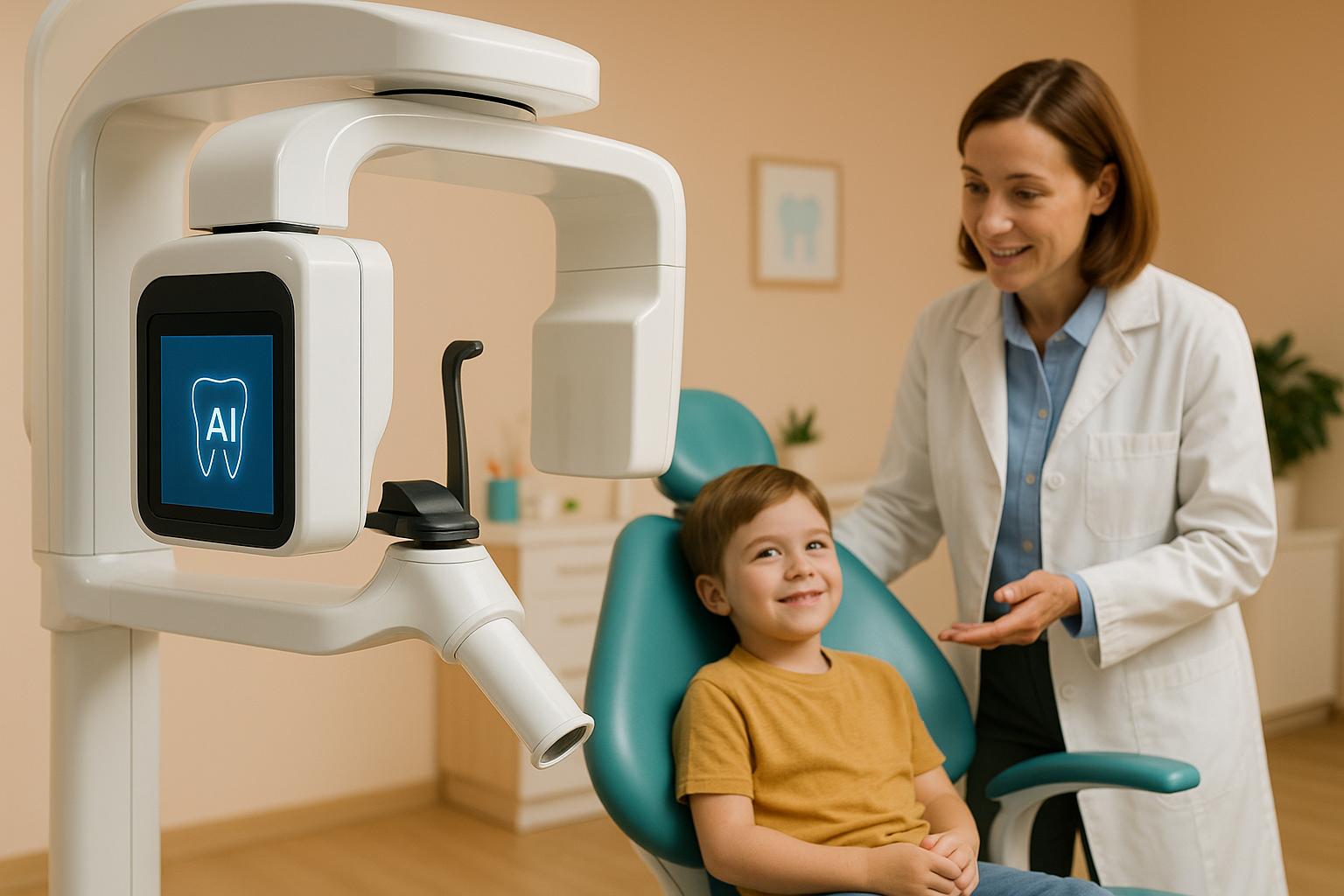
AI is transforming how dental X-rays are analysed for kids, offering faster, more accurate results compared to traditional methods. Here’s what you need to know:
- AI Advantages:
- Detects cavities and infections with up to 92% sensitivity.
- Analyses X-rays in seconds, reducing stress for kids.
- Helps dentists identify subtle issues earlier than traditional methods.
- Traditional Methods:
- Reliable and widely used (digital X-rays now preferred over film).
- Lower radiation exposure compared to older film-based systems.
- Heavily relies on the dentist’s expertise for accurate diagnosis.
- Safety: Both methods are safe, with modern digital X-rays using 80–90% less radiation than film.
- In Australia: AI is being integrated into clinics but must comply with strict regulations on safety, data privacy, and professional oversight.
Quick Comparison
| Factor | AI-Powered Methods | Standard Digital Methods |
|---|---|---|
| Accuracy | High for detecting cavities, infections | Reliable but depends on dentist expertise |
| Speed | Instant analysis | Quick imaging, manual interpretation |
| Radiation Exposure | May reduce unnecessary scans | 80–90% less than film X-rays |
| Patient Comfort | Faster results, less anxiety for kids | Comfortable with modern digital systems |
| Early Detection | Spots subtle issues earlier | Effective for visible conditions |
AI complements traditional methods, not replaces them. Combining both ensures better care for children, faster diagnoses, and improved outcomes.
Same X ray, 50 different diagnoses Why dental AI matters
AI-Powered Dental X-Rays: Technology and Benefits
AI is reshaping paediatric dental X-ray analysis by automating the screening of panoramic images, documenting dental conditions, spotting tooth germs, and identifying extra teeth. These advancements are paving the way for more accurate and efficient diagnostics in paediatric dentistry.
How AI Enhances Diagnostic Accuracy
AI systems have demonstrated over 85% accuracy in identifying caries, fillings, and missing teeth in children [3]. One particular convolutional neural network (CNN) achieved an impressive 94% accuracy in predicting the need for space maintainers, with precision scores of 0.93 and 0.95, a ROC AUC of 0.94, and an MCC of 0.875 [4]. However, diagnosing permanent dentition in paediatric X-rays remains more challenging than in adults. Contributing factors include limited training datasets, motion artefacts, mixed dentition phases, and ongoing tooth development. Despite these hurdles, AI’s ability to pinpoint high-risk groups for early childhood caries offers a proactive approach to prevention [3].
Speed and Efficiency in AI Imaging
AI’s ability to analyse X-rays quickly is a game-changer. For instance, a 2024 study demonstrated that AI could detect supernumerary teeth in just 7.5 seconds [2]. This speed not only reduces the time a child spends in the dental chair but also alleviates anxiety for young patients. By flagging potential dental issues early, AI allows dentists to focus more on treatment planning and patient care. Faster diagnoses also improve cooperation during treatments, leading to better overall outcomes [5]. These time-saving benefits are driving the adoption of AI in dental clinics.
AI Use in Australian Dental Practices
Australian dental clinics are increasingly leveraging AI to boost diagnostic accuracy and streamline processes. The technology’s ability to minimise errors caused by human oversight is particularly valuable in paediatric care, where early detection can prevent the need for more complicated treatments down the line. CNN models are being employed to deliver faster, more precise diagnoses, especially for conditions prevalent during childhood development [5].
Beyond diagnostics, AI is proving to be a powerful training tool. By standardising diagnostic methods, it helps level the playing field across practitioners with varying experience levels. Current applications in Australian practices include automated screening of routine X-rays, identifying developmental abnormalities, and aiding treatment planning. AI is also showing promise in spotting subtle issues that might go unnoticed during traditional visual examinations, making it a key asset in modern dental care.
Standard Methods in Children’s Dental X-Rays
For years, traditional X-rays have been a cornerstone of diagnosing dental issues in children. These methods, whether using film or digital sensors, create detailed images of teeth and surrounding structures by capturing variations in density, which appear as different shades of grey on the image [6]. This foundation helps explain how both film-based and digital systems address specific diagnostic needs.
Film-Based and Digital X-Rays
Traditional X-rays come in several types, each tailored to a particular purpose in paediatric dentistry. For example:
- Bitewing X-rays: Capture the crowns of upper and lower teeth at the same time, making them ideal for spotting cavities between teeth.
- Periapical X-rays: Provide a full view of individual teeth, from crown to root.
- Panoramic X-rays: Use a rotating machine to image all the teeth and jaws together.
- Cephalometric X-rays: Offer a side view of the face, often used in orthodontic planning [6].
The shift from film to digital X-rays in Australian dental clinics has introduced several benefits. Digital systems provide instant image availability, allowing dentists to zoom in or enhance specific areas for better analysis [8]. While traditional methods remain reliable, digital X-rays have become the preferred choice, especially since panoramic X-rays, though comprehensive, are less effective for detecting cavities unless decay has advanced significantly [6].
Patient Experience with Standard Methods
The experience of undergoing an X-ray can differ greatly between film-based and digital systems. Digital X-rays typically use sleeker, more comfortable sensors compared to the bulkier film packets of older methods, which is particularly important for children. Additionally, digital systems allow dentists to review images immediately with children and their parents, reducing the anxiety that can arise from waiting for film development [8].
Another advantage of digital X-rays is their ability to enhance images, reducing the need for retakes. Combined with the emphasis on patient comfort, these systems are designed to minimise stress for young patients while maintaining high-quality care.
Safety and Radiation Exposure
Safety is a top priority when it comes to paediatric imaging, and radiation exposure is a key concern. Traditional film X-rays required higher doses of radiation to produce clear images, but modern digital systems have significantly reduced this need. In fact, digital X-rays use 80% to 90% less radiation than their film-based counterparts [10][12].
To put this into perspective, four routine intraoral X-rays expose a patient to about the same amount of radiation as a two-hour plane flight, while a panoramic X-ray delivers only half the radiation of a seven-hour flight [9]. According to the Australian Dental Association, dental X-rays contribute minimally to overall radiation exposure, which comes from both natural and man-made sources [11].
Standard safety measures, such as lead aprons, further limit unnecessary exposure [6][7]. Modern digital systems are designed to use only the minimal radiation required to produce a clear image [7].
Since children’s mouths grow and change rapidly, they often need X-rays more frequently than adults. This makes the reduced radiation levels of digital systems particularly beneficial, as multiple imaging sessions may be needed to monitor growth and catch potential problems early on.
sbb-itb-2be92ed
Comparing AI and Standard Methods in Children’s Dental X-Rays
Looking at AI-powered and traditional approaches in paediatric dental X-rays reveals key differences in accuracy, speed, and the overall patient experience.
Key Comparison Factors
When comparing these methods, several factors come into play: diagnostic accuracy, processing speed, radiation exposure, patient understanding, and the ability to detect issues early. Research highlights AI’s heightened sensitivity in spotting cavities and infections [1][13].
For instance, studies show that AI software outperforms junior dentists in identifying caries and periapical infections [13]. Specifically, AI achieved 75.56% sensitivity and 91.16% specificity in detecting caries, though its precision was lower at 26.36% [3]. Additionally, it has proven particularly effective in identifying periapical lesions [13].
| Factor | AI-Powered Methods | Standard Digital Methods |
|---|---|---|
| Diagnostic Accuracy | High accuracy in detecting cavities and infections; 90.7% sensitivity for caries [13] | Reliable but depends on practitioner expertise; visual exams cover 60% of tooth surfaces [17] |
| Processing Speed | Instant analysis and diagnosis, easing children’s appointment anxiety [1] | Quick digital imaging, but manual interpretation is required |
| Radiation Exposure | May reduce unnecessary X-rays, minimising exposure [1] | 80–90% less radiation than film X-rays; about 0.004 mSv for four bitewings [15][16] |
| Patient Understanding | AI-annotated visuals improve comprehension; 92% of patients planned treatment [14] | Standard digital images, explained by practitioners |
| Early Detection | Spots subtle abnormalities often missed visually, enabling timely care [1] | Effective for visible conditions but less reliable for early-stage detection |
The table highlights AI’s strengths in faster, more accurate detection and its ability to enhance patient communication. However, AI does have limitations, particularly when interpreting X-rays of developing teeth in children. While it shows high specificity, its precision is lower compared to evaluations of adult or permanent teeth [3]. This challenge stems from the complexities of analysing radiological images of growing dentition.
Both AI and traditional digital methods maintain low radiation exposure levels. Digital systems, for instance, reduce radiation by up to 90% compared to film X-rays [15][16]. It’s worth noting, though, that visual exams typically assess only about 60% of a child’s tooth surfaces [17].
Integrating AI into dental practices marks a major step forward in diagnostics. While standard digital methods remain highly effective, AI’s ability to detect subtle changes and enhance visual communication makes it an increasingly valuable tool in paediatric dental care. Combining AI with traditional methods can elevate early diagnosis and improve patient outcomes across Australia.
Clinical Considerations and Future Directions in Australia
The use of AI in paediatric dental practices across Australia presents a mix of opportunities and challenges. Its success depends on careful planning and strict adherence to regulatory guidelines.
Implementation Challenges and Regulatory Compliance
Adopting AI technology for paediatric X-rays in Australian dental practices isn’t without its hurdles. The Australian Dental Association (ADA) stresses that patient safety, quality care, and data privacy must remain top priorities when implementing such technologies [20].
Dental professionals must also align with the Australian Privacy Principles (APPs) and ensure robust cybersecurity measures are in place [19][22]. Non-compliance with AHPRA’s regulations carries steep penalties – up to $60,000 for individuals and $120,000 for corporations per offence [23].
Training is another critical component. Teams need ongoing education to fully understand AI tools – their strengths and limitations alike [19]. AHPRA also expects practitioners to uphold their professional responsibilities, particularly when incorporating AI into clinical decision-making [22].
To ensure smooth integration, practices should involve IT support early, maintain system compatibility, document AI-assisted consultations thoroughly, and secure informed consent from patients for AI use [22]. These steps help establish AI as a supportive tool that complements, rather than replaces, clinical expertise.
Supporting Clinical Judgement with AI
Australian guidelines are clear: AI should enhance a dentist’s expertise, not replace it [22]. AHPRA emphasises:
AI should be viewed as a supportive tool, not a replacement for professional judgment. Practitioners must ensure that AI-generated insights are critically evaluated before being incorporated into treatment decisions [22].
Given the complexities of paediatric dentistry, it’s vital for practitioners to verify AI-generated findings with traditional diagnostic methods and their own clinical judgment [19][22]. To reduce bias, AI systems must be trained on diverse datasets and regularly reviewed [22]. Educating patients and their families about AI’s role in care not only builds trust but also aligns with AHPRA’s requirement that health information be accessible and easy to understand [23].
Future Research and Developments
With regulatory and clinical frameworks in place, research continues to expand AI applications in paediatric dentistry. Current developments include tools for detecting dental anomalies, categorising fissure sealants, assessing chronological age, and managing patient behaviour [27]. Behavioural management holds particular promise, with AI-driven virtual and augmented reality technologies being explored to make dental visits less intimidating for children. This is especially relevant given that 42% of Australian children aged 5 to 10 suffer from untreated primary dental caries [18].
Emerging AI systems are also targeting preventive care by predicting dental caries in infants, identifying risk patterns, and enabling tailored interventions [26][27]. Personalised treatment planning is another exciting frontier, with AI analysing individual risk factors to provide customised oral health recommendations – especially valuable in paediatric settings [27].
Beyond diagnostics, AI is set to enhance treatment efficiency and surgical planning. New systems aim to detect subtle bone and soft tissue abnormalities, accurately map tooth root angles near critical structures like the sinuses, and reduce production times for trauma cases [24][21]. On a broader scale, AI tools are being developed to identify high-risk groups, helping policymakers design targeted preventive measures [27].
AI’s integration with existing dental technologies is also streamlining administrative tasks, improving scheduling, and enhancing patient access [26]. These advancements not only boost practice efficiency but also improve the overall experience for families seeking paediatric dental care.
Conclusion: Balancing Technology with Patient-Focused Care
The future of paediatric dental X-rays in Australia isn’t about choosing between AI and traditional methods – it’s about merging their strengths to provide better care for young patients. This collaboration could redefine how dental care is delivered, combining innovation with trusted practices.
AI systems bring speed and precision to the table, offering accuracy rates of up to 91–92% with almost immediate analysis [2]. This swift assessment can make appointments quicker and less stressful for children, reducing the anxiety often associated with dental visits.
As Satish Vishwanathaiah and colleagues point out:
"AI may, above all, raise the bar for dental care by optimizing diagnosis efficacy and accuracy, enhancing treatment visualization, simulating results, and forecasting oral health and disorders."
- Satish Vishwanathaiah et al. [5]
Traditional methods, however, remain the backbone of dental care, providing the clinical judgment and experience that AI tools can complement but never replace. Together, they create a robust framework for diagnosis and treatment.
This integrated approach also enhances patient education. AI-generated annotations can help explain treatment plans more clearly, improving understanding and encouraging better compliance.
For successful implementation, keeping patients at the centre is critical. According to the ADA Policy Statement 6.34, AI applications must prioritise safety, quality of care, and data privacy [25]. In practice, this means using AI as a supportive tool to aid clinical decisions, not as a substitute for a dentist’s expertise. By maintaining this balance, the potential for AI in paediatric dentistry becomes a tool for empowerment, not replacement.
FAQs
How does AI make diagnosing dental issues in children faster and more accurate than traditional methods?
AI brings a noticeable edge to diagnosing dental issues in children, offering improvements in both speed and precision. With the help of advanced algorithms, AI can assess dental X-rays with a level of consistency that’s hard to match. It can pick up on subtle signs of issues like cavities or gum disease – things that might slip past even skilled practitioners, especially when fatigue or varying levels of experience come into play. This early detection is key to planning effective treatments.
What’s more, AI processes images far quicker than traditional methods. This frees up dental professionals to concentrate on what matters most: patient care. By blending accuracy with efficiency, AI simplifies workflows in paediatric dentistry, resulting in better care for young patients and a more relaxed, stress-free experience overall.
How does AI improve safety and reduce radiation exposure in children’s dental X-rays?
AI-powered dental X-rays are making dental care much safer for children by significantly reducing radiation exposure. Thanks to modern digital X-ray technology enhanced with AI, radiation levels are cut by an impressive 80–90% compared to older film-based methods. For instance, taking four bitewing X-rays exposes a child to just 0.004 mSv of radiation – an amount far below the natural background radiation we experience every day.
Beyond lowering radiation, AI improves imaging techniques to deliver clear diagnostic results while keeping exposure to a minimum. Additional precautions, like lead aprons, add an extra layer of protection for young patients. These advancements make AI-driven imaging both effective and safer, offering a child-friendly approach to dental diagnostics.
How is AI transforming dental care in Australia, and what safeguards are in place to ensure its safe use?
AI is transforming dental care across Australia by sharpening diagnostics and streamlining treatment planning, especially in the realm of dental X-rays. These advancements not only improve precision but also boost efficiency, making life easier for both dentists and their patients.
However, the integration of AI in dentistry comes with strict responsibilities. Australian dental practices must adhere to guidelines set by the Australian Health Practitioner Regulation Agency (AHPRA). This includes safeguarding patient data in line with the Australian Privacy Principles and obtaining informed consent before using it. On top of that, AI tools like dental radiology software are subject to regulation by the Therapeutic Goods Administration (TGA), ensuring they meet rigorous safety and performance standards. These measures uphold trust and ensure AI-driven tools enhance patient care without compromising ethical practices.
Related Blog Posts
- Digital Dental X-Rays: How They Work
- AI in Dental Implants: Predicting Osseointegration Success
- AI Research in Oral Disease Detection: Key Findings
- How AI Analyses Periodontal Radiographs
Important Notice: Any surgical or invasive procedure carries risks. Before proceeding, you should seek a second opinion from an appropriately qualified health practitioner.
Individual results may vary. The information provided in this article is for educational purposes only and does not constitute medical advice.
Checkout Related Blogs




Get in touch with us
For more information, call us now to start feeling better. Or fill the form below to make appointment
The Latest News from Complete Smiles
How to Clean Clear Plastic Retainers
Checklist for Choosing Wearable Dental Devices
Checklist for Choosing Cloud AI Platforms in Dentistry

Complete Smiles Bella VistaAccepts All Major Health Funds, Including





