




AI in Orthodontics: How Progress Monitoring Works
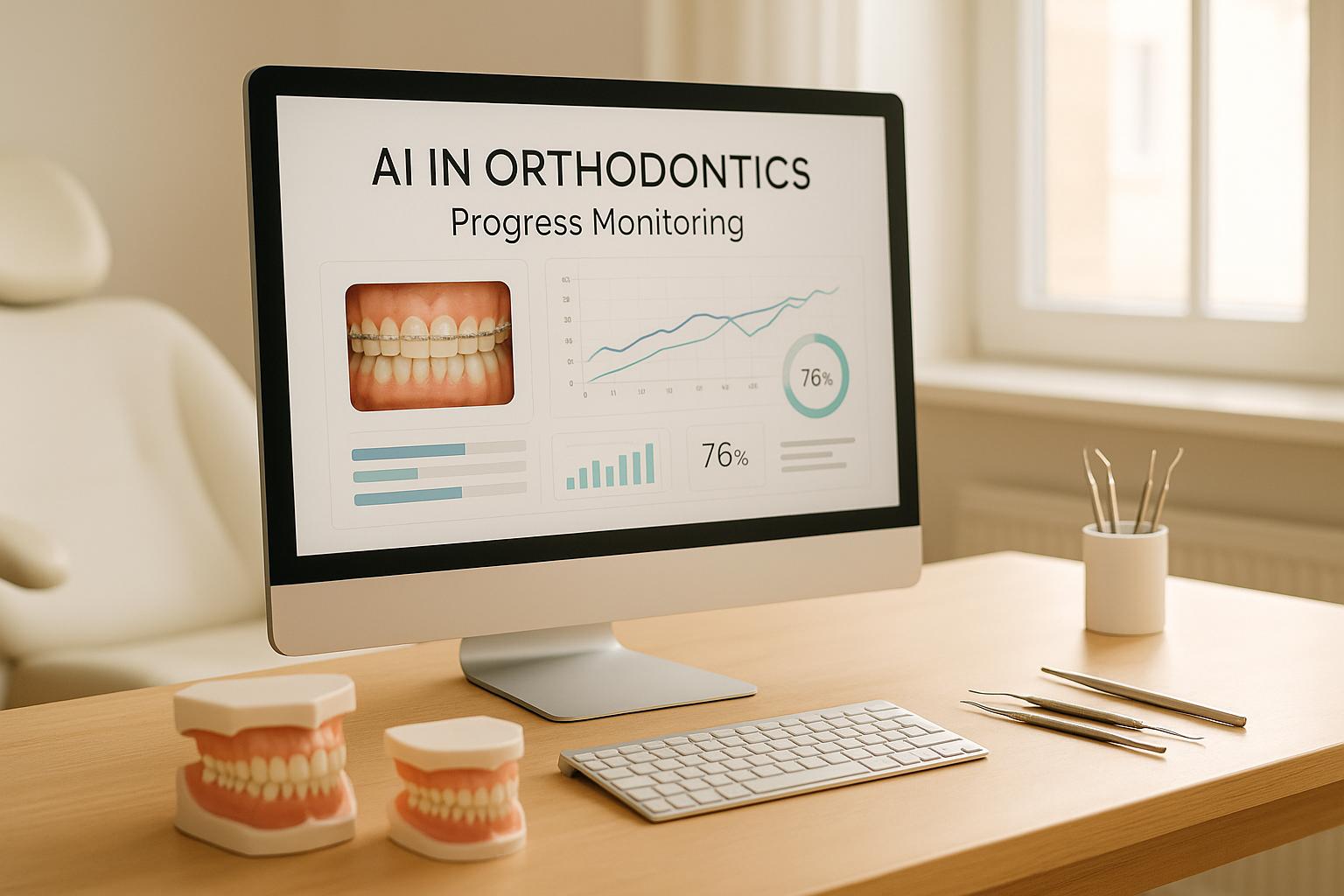
AI is transforming orthodontics by enabling remote progress monitoring. Using smartphone apps or intraoral scans, patients upload images of their teeth, which are analysed by AI to track tooth movement, aligner fit, and oral health. This reduces the need for frequent in-office visits and ensures timely adjustments. Predictive analytics further enhance care by forecasting treatment timelines and identifying potential issues early.
Key Takeaways:
- Remote Monitoring: Patients upload photos from home, reducing clinic visits.
- Real-Time Feedback: AI provides instant alerts on aligner fit, wear time, or issues.
- Predictive Analytics: Helps orthodontists plan adjustments and anticipate challenges.
- Convenience: Ideal for rural patients or those with busy schedules.
- Improved Care: AI detects subtle changes, ensuring precise treatment.
AI in orthodontics combines convenience with precision, creating a more efficient and patient-focused approach to care.
How-To: Dental Monitoring clear aligner treatment progress scan with Scanbox Pro (released 2021)
How AI-Powered Progress Monitoring Works
AI-driven systems analyse real-time patient data to keep track of treatment progress. By combining precise imaging with machine learning algorithms, these systems monitor tooth movements and ensure treatment compliance. This blend of technology enhances both the convenience for patients and the precision of orthodontic care.
Remote Monitoring Technology
Remote monitoring has changed how patients engage with their orthodontic treatments, allowing them to provide progress updates without leaving their homes. Using smartphone cameras or specialised scanning devices, patients capture images of their teeth and upload them through secure apps or web portals.
These images are taken from multiple angles – typically including a front view, left side, right side, and sometimes a bite view. To ensure accurate AI analysis, the photos must meet specific standards for lighting, positioning, and clarity. Many systems even guide patients in real-time to help them capture suitable images.
Once uploaded, AI algorithms assess these images for signs of treatment progress, such as tooth alignment and aligner fit. For example, Image Orthodontics has used AI-assisted home scans to evaluate aligner fit and tooth movement, improving precision and minimising the need for adjustments[2].
This technology relies on a stable internet connection and adheres to Australia’s privacy laws, such as the Privacy Act 1988, to ensure secure data handling[3]. Patient data is protected through encrypted transmission and strict access controls. This continuous data flow allows for immediate feedback and well-informed treatment decisions.
Real-Time Feedback and Alerts
Real-time feedback is a key feature of AI-powered orthodontic monitoring. These systems quickly process uploaded data and provide immediate responses. For patients, this could mean confirmation that their aligners fit correctly, reminders about wear time, or alerts about potential issues.
For orthodontists, the system offers detailed notifications, including clinical assessments and suggestions for treatment adjustments. For instance, alerts might indicate when a patient needs to schedule an appointment or when aligner changes should be delayed. Notifications are often prioritised by urgency – high-priority alerts for serious concerns, medium-priority for minor adjustments, and low-priority for routine updates.
This instant feedback reduces the waiting time between identifying an issue and addressing it, allowing timely interventions instead of relying solely on scheduled appointments. While real-time alerts handle immediate concerns, predictive analytics play a role in shaping longer-term treatment strategies.
Predictive Analytics in Orthodontics
Predictive analytics adds another layer of sophistication to AI-powered monitoring. By comparing a patient’s current data with historical cases, AI can forecast treatment timelines and flag potential issues. These models take into account factors like initial tooth positioning, age, treatment type, and compliance habits.
This technology also enables tailored treatment adjustments by identifying individual response patterns. For example, if a patient’s teeth are predicted to move more slowly in certain areas, the system might recommend alternative techniques or extended timelines for specific phases of treatment.
Moreover, predictive systems can identify patients who may face higher risks, such as root resorption or inconsistent compliance. This allows orthodontists to take preventive action or modify treatment plans as needed. These systems can also suggest the best timing for progressing to the next aligner, scheduling refinements, or introducing additional appliances, ensuring a proactive approach to care.
Key Benefits of AI in Orthodontic Monitoring
AI-powered orthodontic monitoring is changing the game for both patients and orthodontists, offering greater convenience, precision, and tailored care.
Greater Accessibility and Convenience for Patients
Remote monitoring means fewer trips to the orthodontist’s office, which is a game-changer for those living in regional or rural Australia. Instead of travelling long distances for routine check-ups, patients can simply upload progress photos using their smartphones. This approach is especially useful for clear aligner treatments, where regular monitoring is essential but doesn’t always require in-person visits [1]. It also works well for busy individuals – whether they’re professionals, students, or parents – who can stay on track with their treatment without disrupting their daily lives.
Increased Accuracy and Efficiency in Treatment
AI-powered tools analyse patient-submitted images to spot even the smallest changes in tooth movement or aligner fit – details that might be easy to miss during a quick in-person review. This early detection allows both patients and practitioners to act quickly, ensuring timely adjustments [1]. Additionally, AI can recommend real-time changes, such as tweaking aligner designs or repositioning brackets, to prevent potential complications before they arise [2]. These precise interventions not only improve results but also complement the broader benefits of integrating AI into orthodontic care.
Fewer In-Office Appointments
With AI-driven remote monitoring, orthodontic practices can streamline their schedules, reduce routine appointments, and focus their resources on more complex cases. This efficiency also allows them to accommodate more patients without compromising the quality of care.
Tailored Treatments with Predictive Analytics
AI takes personalisation to the next level by using data from thousands of cases to predict potential challenges and recommend the best strategies. It can also set realistic expectations for treatment outcomes and timelines [2]. By tailoring recommendations to each patient’s unique needs – accounting for factors like age, compliance, and individual response patterns – AI helps create more effective and efficient treatment plans.
More Efficient Practice Management
AI doesn’t just enhance clinical care; it also simplifies practice management. Features like automated reminders, optimised scheduling, and streamlined billing free up staff to focus on patient care rather than administrative tasks [2]. Additionally, AI’s advanced diagnostic tools provide a more comprehensive view of oral health, helping orthodontists plan complex cases with greater precision.
Better Patient Engagement and Compliance
AI systems keep patients engaged with real-time feedback and regular updates. When patients see that their treatment is on track, they’re more likely to stick to wear schedules and care instructions. This ongoing interaction motivates them to stay committed to their treatment plan, resulting in better overall compliance. Together, these advancements highlight how AI is reshaping orthodontic care, making it more patient-centred and efficient.
| Traditional Monitoring | AI-Powered Monitoring |
|---|---|
| Periodic in-office visits | Continuous, remote monitoring |
| Manual assessment | Automated, real-time analysis |
| Reactive adjustments | Proactive, predictive interventions |
| Limited personalisation | Tailored treatment plans |
| Longer treatment times | Shortened treatment duration |
sbb-itb-2be92ed
Steps to Implement AI in Orthodontic Practices
AI can greatly improve orthodontic care, but successfully integrating it into your practice requires careful planning. To implement AI-powered progress monitoring, you’ll need to focus on three key areas: assessing technical needs, training your team, and educating patients.
Software Compatibility Requirements
Before diving into AI, take a close look at your existing technology setup. The AI platform you choose should work seamlessly with your practice management software, imaging systems, and patient record databases. This ensures smooth workflows without disruptions.
A reliable, high-speed internet connection is essential for quick image uploads and processing. You’ll also need compatible devices for capturing images. Check that your current intraoral scanners and 3D imaging equipment can connect to the AI platform without any issues.
Compliance with Australian data security regulations is non-negotiable. Make sure the platform uses encrypted transmissions, secure cloud storage, and audit trails to protect patient information.
Most AI platforms allow you to adjust settings like alert thresholds, reporting frequency, and device integration. This flexibility means you can tailor the system to fit your practice’s unique workflow and the needs of your patients[2][4].
Staff Training on AI Tools
Once the technical setup is sorted, it’s time to prepare your team. Train your staff to use the AI platform effectively, including uploading images and interpreting automated reports. They’ll also need to understand how to respond to AI alerts, when manual intervention is necessary, and where the system’s limitations lie.
Since AI technology is constantly evolving, ongoing professional development is crucial. Regular training sessions can keep your team up to date on new features, troubleshooting techniques, and best practices. Staff must also learn to combine AI-generated insights with their clinical expertise to make well-rounded decisions.
Patient Education on AI Systems
Educating your patients is a vital step in making AI monitoring systems work smoothly. Start by explaining how the technology functions, the benefits it offers, and what they’ll need to do during the process. For example, show patients how to take clear progress photos using their smartphones or other devices, and clarify how often they should upload these images. Also, outline how they should respond to system notifications.
Providing written guides or video tutorials can help reinforce these instructions. It’s also important to emphasise that AI is a tool to complement in-person care, not replace it.
After implementation, track key metrics to evaluate the system’s success. These might include fewer in-office visits, shorter treatment durations, higher patient satisfaction, more timely interventions, and improved overall outcomes[1][6]. By addressing the technical setup, staff training, and patient education, your practice can fully utilise AI to deliver better orthodontic care.
Future Developments in AI-Driven Orthodontics
The future of orthodontics is poised for exciting changes as AI continues to refine how care is delivered. With advancements promising more precise, personalised treatment and improved monitoring, the integration of AI into orthodontics is set to transform the patient experience.
Advances in Predictive Technology
AI is already being used to provide real-time feedback during treatments, analysing intraoral scans, photos, and treatment history to track progress effectively [1][7]. Looking ahead, these systems will incorporate even more diagnostic tools, such as breath analysis for early detection of gum disease and advanced 3D CBCT imaging for detailed anatomical evaluations. These additions will help orthodontists refine treatment plans and improve predictions of outcomes [2].
Breath analysis, in particular, is gaining attention for its potential to identify early signs of gum disease and even some broader health issues. Meanwhile, 3D CBCT imaging is expected to provide unparalleled insights into complex tooth movements and anatomical factors that could affect treatment duration or success [2].
Cross-Discipline Integration
Another exciting development lies in the seamless integration of AI across dental specialties. Future systems will unify data from orthodontists, general dentists, and oral surgeons, creating a more holistic approach to oral health care [7]. For instance, an AI platform could analyse a patient’s dental history, treatment records, and lifestyle habits to guide decisions in complex cases, such as those involving jaw misalignment or TMJ disorders [2][7].
These unified platforms won’t just stop at dental care. They’re expected to extend into broader health monitoring, flagging potential complications and ensuring that all aspects of a patient’s oral and systemic health are considered during treatment [2].
| Technology Integration | Clinical Application | Expected Benefit |
|---|---|---|
| Breath Analysis AI | Early gum disease detection | Prevents treatment delays |
| Advanced CBCT Integration | Detailed anatomical assessment | Improved treatment precision |
| Cross-Specialty Data Sharing | Unified treatment planning | Holistic patient care |
Beyond clinical improvements, AI is also set to streamline practice management. Automating routine tasks could free up valuable time for orthodontists, allowing them to focus more on patient care [2].
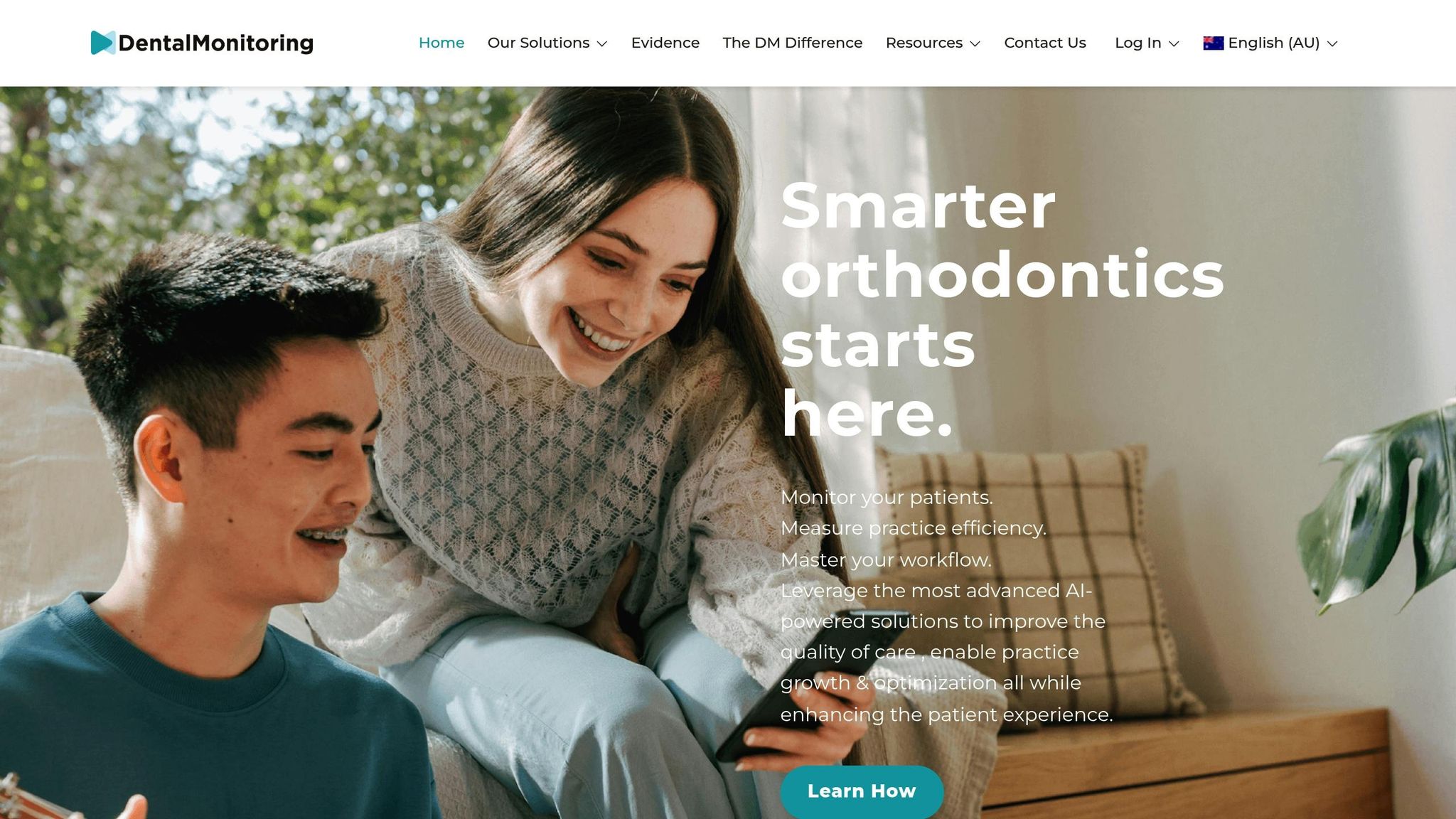
The regulatory environment is keeping pace with these advancements. For example, the FDA’s approval of DentalMonitoring’s software highlights the growing trust in AI-powered tools. Staying informed about such regulatory updates is essential for Australian orthodontic practices, ensuring they can adopt these technologies safely and effectively to enhance patient outcomes [5].
Conclusion: AI’s Impact on Orthodontic Care
AI is reshaping orthodontic care in ways that are making life easier for both patients and practitioners. With AI-powered progress monitoring, patients can securely upload images and receive real-time feedback, cutting down on the need for frequent in-office visits. This is particularly beneficial in regional and rural areas of Australia, where access to orthodontic clinics can often be limited.
For orthodontists, AI’s predictive analytics offer a new level of precision in treatment planning and adjustments. Patients, in turn, enjoy fewer trips to the clinic without any compromise in the quality of care[2][6]. Studies have shown that AI-driven remote monitoring reduces in-office visits while maintaining high treatment standards[1]. This approach not only improves clinical accuracy but also boosts patient engagement. Routine monitoring is handled digitally, freeing up practitioners to focus on more complex cases.
The role of AI in orthodontics is set to expand further, integrating knowledge from various dental disciplines and enhancing predictive capabilities. The increasing adoption of AI reflects a strong commitment within the profession to deliver more efficient and personalised care. With regulatory frameworks for digital health tools continuing to evolve, orthodontic practices in Australia are well placed to embrace these advancements safely and effectively.
AI has become an essential part of modern orthodontics, transforming how care is delivered and experienced across the country.
FAQs
How does AI protect the privacy and security of my dental images during remote monitoring?
AI-powered remote monitoring systems are designed with robust security measures to protect your dental images and personal details. A key feature of these systems is the use of encryption technologies, which secure data during transmission and storage, effectively blocking unauthorised access.
Moreover, trusted providers adhere to stringent privacy regulations like the Australian Privacy Principles (APPs). These guidelines are in place to ensure your sensitive information remains protected. It’s important to confirm that your orthodontic provider uses systems that comply with local privacy laws, ensuring top-tier security and confidentiality for your data.
Can AI-powered orthodontic tools replace in-person visits, or are there times when seeing an orthodontist is still necessary?
AI-powered orthodontic monitoring makes it easier to keep tabs on your treatment progress from the comfort of your home. However, it’s important to remember that these tools are not a complete replacement for in-person visits. While they can offer helpful insights and assist in staying on track, some situations still call for a face-to-face assessment by your orthodontist.
For instance, making adjustments to braces or aligners, addressing unexpected problems like discomfort or damage, or performing thorough evaluations are tasks that are best handled during an in-office appointment. Think of AI tools as a helpful companion to your orthodontist’s personalised care, rather than a replacement.
What challenges might arise with using AI in orthodontics, and how are they being managed?
AI has introduced exciting advancements in orthodontics, but it’s not without its hurdles. A major concern lies in the dependence on high-quality data to deliver accurate predictions and monitor treatment progress. If the data used to train these systems is incomplete or skewed, the results may fall short of expectations. To counter this, developers are constantly refining algorithms and incorporating diverse datasets to boost reliability.
Another challenge is ensuring that practitioners feel confident in using and trusting AI tools. Proper training and education play a crucial role in helping orthodontists seamlessly integrate these technologies into their daily work. When AI is paired with the expertise of professionals, it opens the door to outstanding outcomes for both patients and practitioners.
Related Blog Posts
- Benefits of AI in Orthodontic Progress Tracking
- AI in Orthodontics: Risk Assessment Explained
- AI in Orthodontics: Diagnosis and Treatment Planning
- How AI Predicts Orthodontic Treatment Outcomes
Important Notice: Any surgical or invasive procedure carries risks. Before proceeding, you should seek a second opinion from an appropriately qualified health practitioner.
Individual results may vary. The information provided in this article is for educational purposes only and does not constitute medical advice.
Checkout Related Blogs



Get in touch with us
For more information, call us now to start feeling better. Or fill the form below to make appointment
The Latest News from Complete Smiles
How to Clean Clear Plastic Retainers
Checklist for Choosing Wearable Dental Devices
Checklist for Choosing Cloud AI Platforms in Dentistry
Complete Smiles Bella VistaAccepts All Major Health Funds, Including