





Benefits of AI in Orthodontic Progress Tracking

AI is transforming orthodontics in Australia by improving treatment accuracy, shortening durations, and reducing clinic visits. Traditional methods often miss early issues and rely heavily on manual checks, leading to delays and errors. AI addresses these challenges with continuous monitoring, remote capabilities, and advanced data analysis. Here’s how:
- Accuracy: AI detects tooth movements as small as 0.1 mm and achieves 95.47% planning accuracy.
- Efficiency: Treatment durations are reduced by an average of 4.3 months, with analysis time cut by up to 80 times.
- Convenience: Remote monitoring tools minimise clinic visits by up to 33.1%.
- Customisation: AI refines aligner designs and treatment strategies for better outcomes.
These advancements enhance patient care, especially in regional areas, while adhering to strict privacy laws. AI-powered orthodontics is reshaping the industry, making treatments faster, more precise, and accessible.
Artificial Intelligence in Orthodontics. Present and Potential Future in 12 minutes.
Problems with Current Orthodontic Monitoring
Orthodontic monitoring in Australia still heavily relies on traditional methods. These approaches, which depend on scheduled appointments, manual checks, and visual assessments, often fall short in catching treatment developments early. The result? Delayed issue detection, unnecessary clinic visits, and errors in manual evaluations.
Late Detection of Treatment Issues
One of the biggest drawbacks of traditional monitoring is how often problems are identified too late. This can stretch out treatment times and lead to complications. For instance, about 82% of adolescent orthodontic patients face some form of treatment delay [4]. Minor alignment issues, if missed, can spiral into major jaw problems that might even require surgery down the track. On average, missed appointments and inefficiencies can add up to an extra 2.3 months of treatment time [5]. These delays aren’t just about teeth – they can impact adolescents’ mental health too, creating a vicious cycle where emotional stress affects compliance, which in turn affects outcomes.
Too Many Required Clinic Visits
Frequent in-person appointments are another pain point. They’re time-consuming, disruptive, and often unnecessary. In fact, 88% of patients say they’d prefer fewer office visits [2]. Research backs this up, showing that traditional monitoring requires an average of 9.82 appointments, compared to 7.56 with digital monitoring systems – a 23% reduction [2]. This time saved can make a big difference for busy families. Recent global events have also exposed the fragility of systems that rely so heavily on in-person visits [3]. On top of this, manual assessments bring their own challenges, often introducing inaccuracies that further complicate the process.
Mistakes in Manual Progress Assessment
Manual assessments are prone to errors, leading to inconsistencies in treatment planning. These evaluations are subjective and often more complicated than they seem [6]. For example, measurements on plaster models tend to produce greater errors compared to digital models, often showing inflated values that can misguide treatment strategies [6]. Common mistakes include over-proclination of mandibular incisors, excessive widening of intercanine spaces, and incorrect vertical mechanics [7]. Such errors not only compromise treatment outcomes but can also require corrective steps that prolong the entire process. On the other hand, digital cast analysis offers a faster and more reliable alternative, with automated systems proving to be the quickest and most accurate [6].
How AI Improves Orthodontic Progress Tracking
AI is reshaping orthodontic care by addressing the limitations of traditional monitoring methods. With continuous oversight, remote capabilities, and advanced data analysis, it’s transforming how orthodontists track and adjust treatment progress. These tools enable more precise, real-time adjustments, making the process both efficient and accurate.
Continuous Monitoring with AI
Traditional orthodontic check-ups rely on periodic visits, but AI changes the game with continuous monitoring. By comparing real-time tooth movement to predicted patterns, AI systems can spot potential issues early – sometimes before they become significant.
The level of precision AI offers is impressive. For instance, its algorithms can detect tooth movements as small as 0.1 mm, allowing orthodontists to address deviations immediately. If a tooth isn’t shifting as planned, the system flags the issue, prompting adjustments like modifying aligner designs or repositioning brackets.
As David B Olawade from the Department of Allied and Public Health at the University of East London explains, "AI enables continuous monitoring of a patient’s progress throughout the treatment journey."[1]
AI can even predict when a patient’s treatment is nearly complete, suggesting early removal of braces or aligners when appropriate[1].
Remote Monitoring for Patient Convenience
Beyond continuous oversight, AI-powered remote monitoring brings orthodontic care into patients’ homes. Smartphone applications equipped with AI allow patients to take and upload images of their teeth for analysis. These apps generate detailed progress reports, cutting down on unnecessary in-office visits and saving time for both patients and orthodontists[8].
Once images are uploaded, the system evaluates progress instantly. If any deviations are detected, both the patient and orthodontist are alerted, enabling quick corrective action. This approach not only enhances convenience but also keeps treatment on track.
Data Analysis for Better Treatment Planning
AI doesn’t just monitor progress – it also improves treatment planning through its ability to analyse vast amounts of data. By identifying patterns across numerous cases, AI helps orthodontists refine strategies and predict treatment outcomes more accurately. This leads to more personalised care tailored to each patient’s needs.
Moreover, AI significantly reduces the time required for analysis, allowing orthodontists to make quicker adjustments to treatment plans[8].
Together, these AI-driven advancements create a more responsive and streamlined orthodontic experience, benefiting both patients and practitioners.
Advantages of AI-Driven Orthodontic Tracking
Incorporating AI into orthodontic progress tracking has reshaped the landscape of patient care and practice operations. Beyond just automating tasks, AI brings measurable improvements in treatment quality, efficiency, and patient satisfaction.
Improved Accuracy and Precision
AI takes orthodontic treatment precision to a new level, eliminating many of the inconsistencies tied to traditional methods. While manual measurements and physical models often vary, AI processes vast datasets with remarkable accuracy[10].
This precision isn’t just theoretical – it’s backed by real-world results. For instance, Invisalign’s AI-driven system achieved a 50% mean accuracy in overall tooth movements, with specific movements like buccal-lingual crown tips reaching up to 56% accuracy[1]. Additionally, AI systems can adjust in real time, addressing deviations from expected outcomes as they occur[10].
"Orthodontics resembles chess in many ways. The best players think multiple moves ahead. In orthodontics, we visualise the final smile outcome and then work backward, planning the most efficient way to get from point A to point B in as few steps as possible."
– Dr. Yan Kalika, Founder of Image Orthodontics[12]
This level of precision not only enhances treatment outcomes but also speeds up the process, allowing for quicker and more efficient adjustments.
Shorter Treatment Durations
With its ability to fine-tune treatments, AI significantly reduces the time patients spend undergoing orthodontic care. Research shows that AI-assisted planning can cut treatment durations by an average of 4.3 months compared to traditional methods. On average, AI-driven treatments last about 14.6 ± 3.2 months, compared to 18.9 ± 4.5 months for conventional approaches. Additionally, analysis time can be reduced by as much as 80-fold[1].
AI achieves this by simulating tooth movement and optimising force application[1][14]. When unexpected issues arise, AI systems can quickly recommend adjustments to treatment plans, preventing delays.
Aligner treatments also benefit from AI’s efficiency. Studies reveal that AI-generated aligners reduce the number of aligners needed by 20%, thanks to fewer mid-course corrections[1].
Enhanced Patient Experience
AI doesn’t just make treatments faster and more accurate – it also improves the overall patient experience. By reducing clinic visits and enhancing predictability, AI introduces a new level of convenience.
Remote monitoring tools, like the Dental Monitoring app, have been shown to cut the number of required appointments by 33.1%. Meanwhile, AI-enhanced aligners are designed for a more precise fit, closely matching the natural contours of teeth and gums. This not only improves treatment outcomes but also reduces discomfort for patients[11][13].
The combination of faster, more accurate treatments and improved comfort makes AI an appealing addition to orthodontic practices – for both patients seeking convenient care and practitioners aiming to achieve superior results.
sbb-itb-2be92ed
AI Use in Australian Orthodontics
Australian orthodontic practices are embracing AI to improve treatment outcomes and make patient care more efficient. From digital scanning to remote monitoring, AI is reshaping how orthodontists across the country plan and track treatments. This adoption highlights the transformative role AI is playing in orthodontic care in Australia.
AI Integration in Invisalign and Other Systems
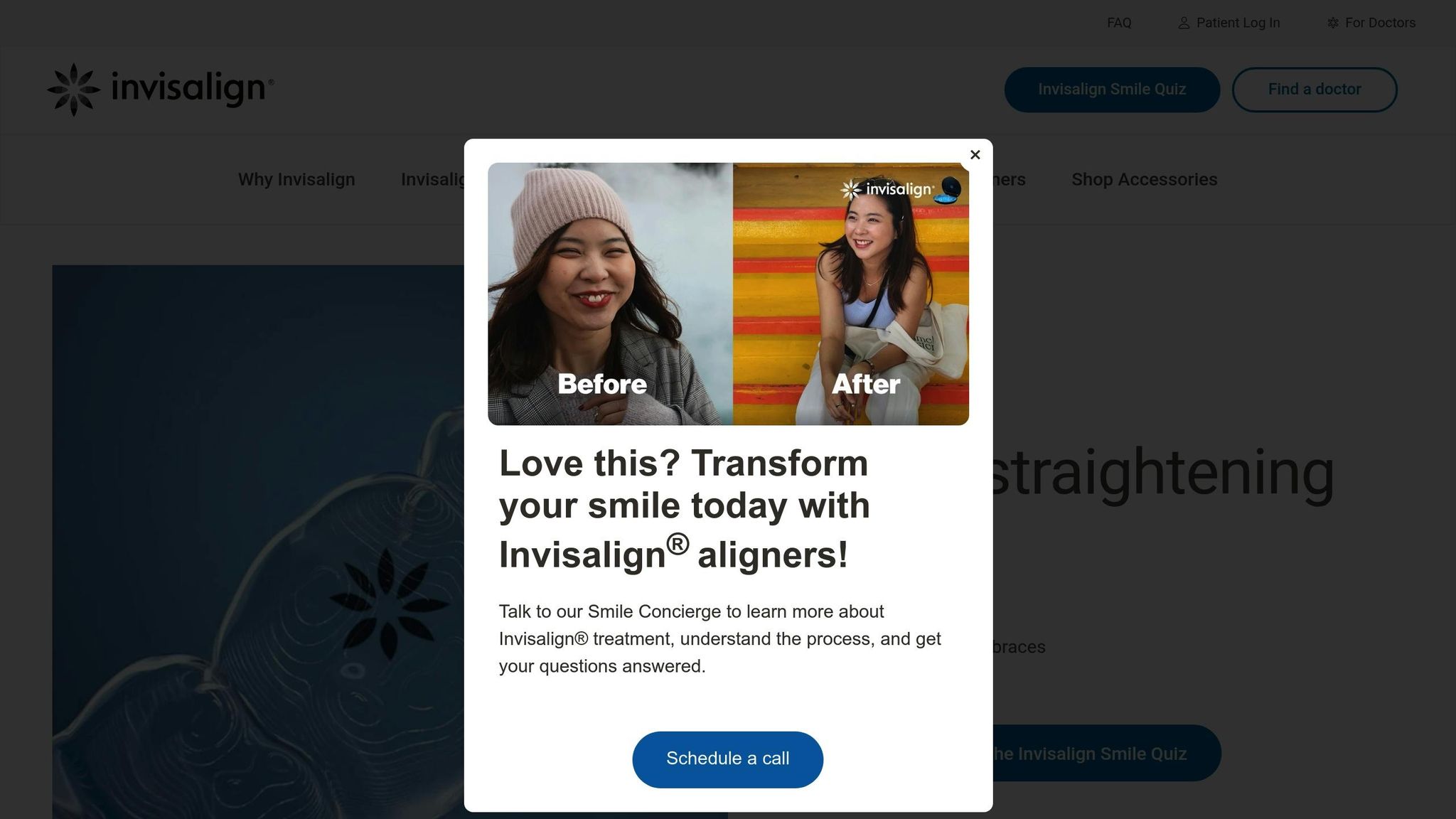
AI has become a key component in systems like Invisalign and other clear aligner technologies. These systems use AI-driven algorithms to analyse extensive datasets, enabling highly accurate treatment predictions and tailored care. By calculating the best sequence for tooth movement, AI helps minimise discomfort while boosting treatment efficiency. Real-time feedback and case comparisons also allow orthodontists to make precise adjustments throughout the treatment process.
Digital scanning has dramatically changed the way initial assessments are conducted. For instance, iTero scanners have significantly sped up the process of creating digital impressions. In Q4 2021, 85.4% of Invisalign case submissions in Australia used digital scans, an increase from 79.3% the previous year[16]. AI-based tools like tooth segmentation now achieve 98% accuracy, while linear dental arch measurements can reach 99% accuracy[15]. However, as these technologies advance, ensuring the protection of patient data becomes increasingly important.
Patient Privacy and Data Security Requirements
With AI systems handling sensitive dental and personal data, Australian orthodontic practices are bound by strict privacy laws. The Privacy Act 1988 (Cth) and the Australian Privacy Principles (APPs) require organisations to implement robust measures to protect patient information.
The Office of the Australian Information Commissioner (OAIC) has made it clear:
"Privacy obligations will apply to any personal information input into an AI system, as well as the output data generated by AI (where it contains personal information)"[17].
To comply, practices often conduct Privacy Impact Assessments (PIAs) to identify risks and establish safeguards. Adopting a ‘privacy by design’ approach ensures that managing privacy risks is built into AI systems from the ground up.
Example: Complete Smiles Bella Vista

Complete Smiles Bella Vista, led by Dr James Hanna, provides a great example of AI in action. They use AI technology to refine Invisalign treatments and improve planning precision. This reflects a growing trend in Australian orthodontics, where AI is helping deliver more personalised care and efficient results nationwide.
Conclusion
AI technology has reshaped how orthodontic progress is tracked, replacing manual, often delayed assessments with real-time monitoring capable of detecting even the smallest tooth movements – down to 0.1 mm[9].
On average, incorporating AI into treatment planning has reduced orthodontic treatment times by 4.3 months while achieving an impressive 95.47% accuracy rate in planning[1]. For Australian patients, particularly those in regional and rural areas, remote monitoring powered by AI has made orthodontic care far more accessible. As Professor Ali Darendeliler notes, "This is an efficient way to provide comprehensive orthodontic care to patients, especially those in regional and rural areas. It has the capacity to revolutionise the provision of public orthodontic care not only in NSW but in Australia"[9].
AI doesn’t just make orthodontics faster and more precise – it also enhances the patient experience. With its ability to predict and address potential issues early, rather than relying on reactive fixes, patients benefit from a more seamless treatment journey. In fact, 90% of surveyed patients reported that AI-powered apps helped them stay on track with their treatment, showing how this technology fosters better compliance and engagement[1].
FAQs
How does AI improve orthodontic progress tracking and treatment outcomes?
How AI is Transforming Orthodontic Care
AI is reshaping orthodontic treatment by bringing a new level of precision and efficiency to monitoring progress. With advanced imaging and data analysis, it can track tooth movement with incredible accuracy, helping orthodontists fine-tune treatments as needed. This not only minimises errors but also keeps treatments on track, ensuring patients get the best results within the expected timeframe.
AI tools also simplify routine tasks by automating assessments, freeing up time for both orthodontists and patients. Plus, it enhances communication by offering clear, visual updates on progress, making it easier for patients to understand their treatment journey. The result? Smoother processes, better outcomes, and a more satisfying experience for everyone involved.
How is patient privacy protected in AI-based orthodontic monitoring systems in Australia?
In Australia, AI-powered orthodontic monitoring systems must adhere to stringent privacy and data protection laws, particularly the Privacy Act 1988, which regulates the handling of personal health information. These laws are in place to ensure that patient data is managed securely and responsibly.
Healthcare organisations utilising AI are required to establish strong safeguards to protect sensitive information and maintain confidentiality. Additionally, the Australian AI Ethics Principles highlight the importance of transparency, accountability, and privacy throughout the development and use of AI technologies, promoting ethical practices in orthodontic care.
Such regulations give patients peace of mind, knowing their personal data is handled in line with national standards.
How does AI-powered remote monitoring improve orthodontic treatment and reduce clinic visits?
AI-Powered Remote Monitoring in Orthodontics
AI-powered remote monitoring lets orthodontic patients keep an eye on their treatment progress without leaving home. This technology cuts down on the need for frequent in-person visits, which is a game-changer for people with packed schedules or mobility issues.
This approach improves the patient experience by offering timely updates, encouraging better engagement, and delivering tailored care throughout the treatment process. For orthodontists, it provides an efficient way to track progress, helping ensure the best results while saving time for everyone involved.
Related Blog Posts
- AI Tools for Periodontal Disease Diagnosis
- AI in Dental Implants: Predicting Osseointegration Success
- AI Research in Oral Disease Detection: Key Findings
- AI vs. Traditional Methods: Impacted Teeth Detection
Important Notice: Any surgical or invasive procedure carries risks. Before proceeding, you should seek a second opinion from an appropriately qualified health practitioner.
Individual results may vary. The information provided in this article is for educational purposes only and does not constitute medical advice.
Checkout Related Blogs




Get in touch with us
For more information, call us now to start feeling better. Or fill the form below to make appointment
The Latest News from Complete Smiles
How to Clean Clear Plastic Retainers
Checklist for Choosing Wearable Dental Devices
Checklist for Choosing Cloud AI Platforms in Dentistry

Complete Smiles Bella VistaAccepts All Major Health Funds, Including





