





Advances in Periodontal Antimicrobial Therapy
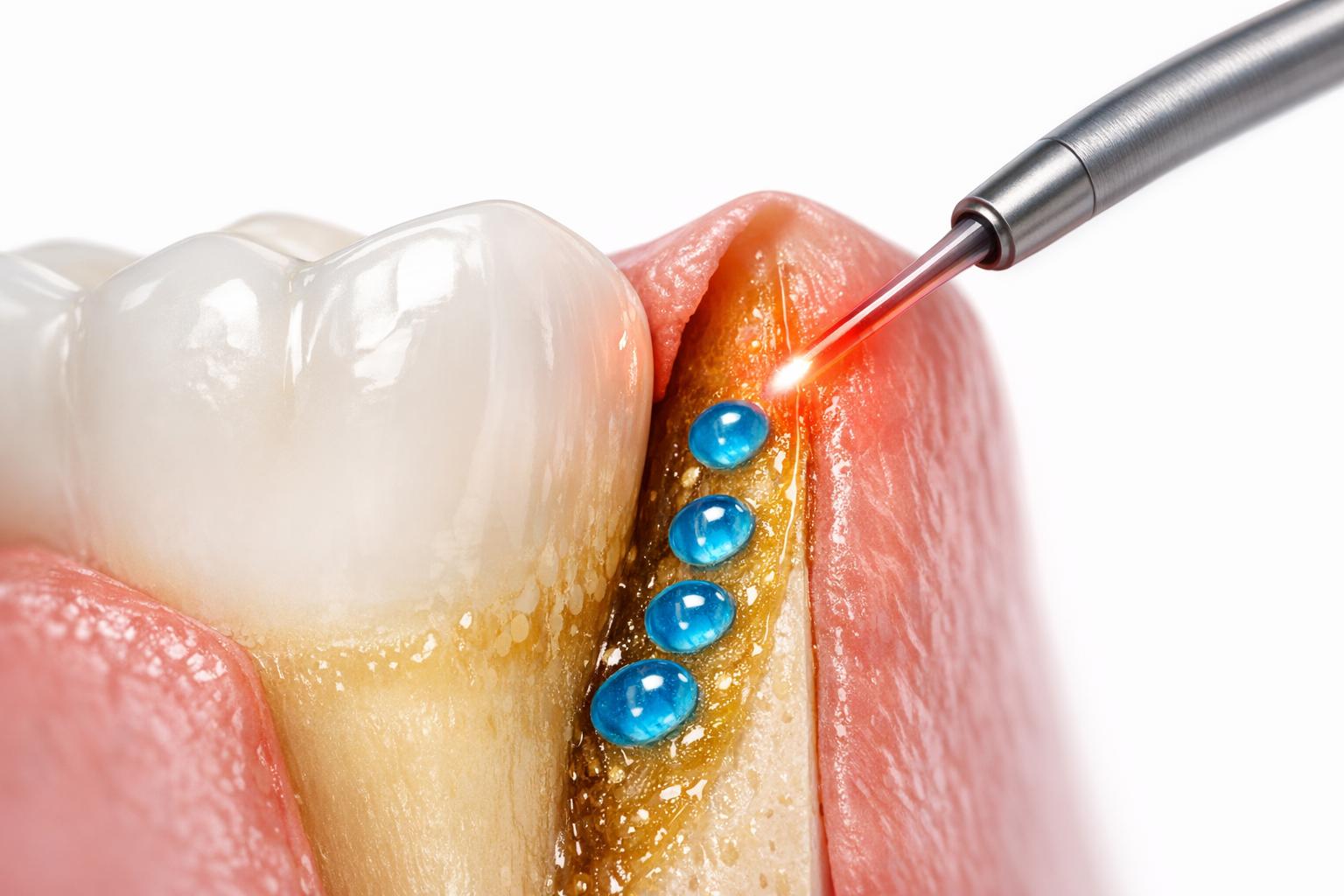
Periodontitis affects nearly 19% of adults globally, with over 1.1 billion cases. Traditional treatments like scaling and root planing (SRP) often struggle to fully address deep periodontal pockets and biofilms. New antimicrobial therapies are improving outcomes by targeting bacteria more effectively and reducing inflammation. These include:
- Ozone Therapy: Uses ozone gas to kill bacteria without staining teeth or irritating tissues. Clinical trials show significant improvements in gum health.
- ICG-Mediated Therapy: Combines indocyanine green dye and laser light to destroy bacteria in oxygen-deprived pockets. Studies report reduced probing depths and bacterial counts.
- Local Antibiotics: Delivery systems like gels and microspheres provide targeted, long-lasting treatment directly in gum pockets, avoiding systemic side effects.
- Laser-Based Therapies: Lasers eliminate bacteria while promoting healing, especially in areas unreachable by traditional tools.
- Nanotechnology & Gene Therapy: Emerging options focus on precise drug delivery and reducing inflammation while encouraging tissue repair.
These advancements not only improve oral health but also reduce risks of systemic conditions like diabetes and cardiovascular disease. However, incorporating them into routine dental care requires better access to diagnostic tools and practitioner training in Australia.
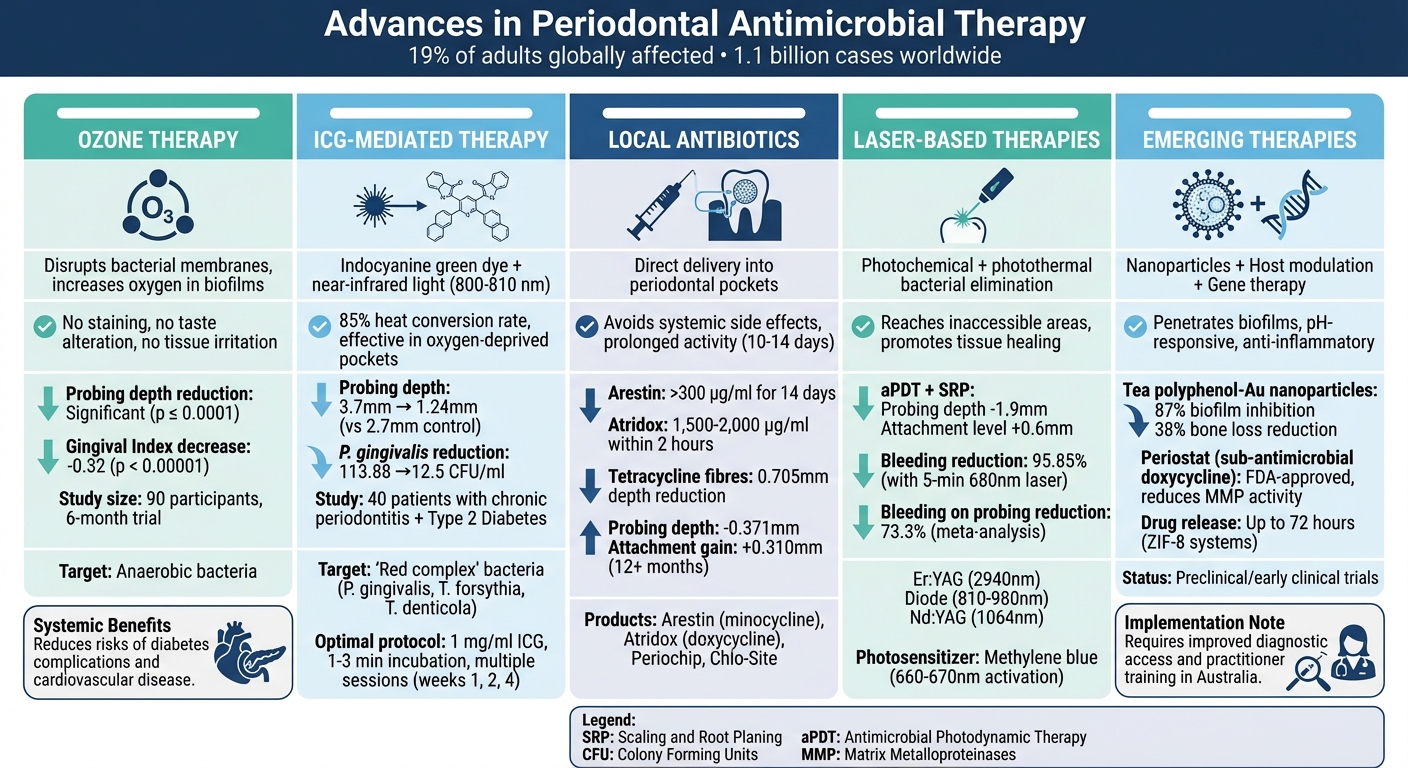
Comparison of Advanced Periodontal Antimicrobial Therapies: Effectiveness and Clinical Outcomes
Pharmacologic adjuncts to conventional periodontal therapy
sbb-itb-2be92ed
New Antimicrobial Techniques for Periodontal Treatment
Dentistry is making strides with new antimicrobial methods that target biofilms lurking deep in periodontal pockets – areas often out of reach for traditional mechanical tools. Techniques like ozone therapy and ICG-mediated approaches are expanding the arsenal against these stubborn biofilms.
Ozone Therapy as a Treatment Adjunct
Ozone therapy uses ozone gas to disrupt bacterial membranes, offering a gentler alternative to chemical agents like chlorhexidine. Unlike chlorhexidine, ozone doesn’t stain teeth, alter taste, or irritate oral tissues. It also increases oxygen levels in subgingival biofilms, effectively suppressing the growth of anaerobic bacteria – key contributors to periodontal bone loss.
In a randomised controlled trial with 90 participants, those treated with both scaling and root planing alongside gaseous ozone experienced marked improvements in clinical attachment levels, probing pocket depths, and bleeding on probing (p ≤ 0.0001) compared to scaling alone after six months [6]. A meta-analysis of 13 studies further validated ozone’s benefits, showing significant reductions in probing depths and gingival inflammation (p < 0.05) [7]. Additionally, the Gingival Index decreased by -0.32 (p < 0.00001), reflecting reduced inflammation [8].
Ozone therapy is a promising step forward, paving the way for advanced methods like ICG-mediated treatments.
Indocyanine Green-Mediated Antimicrobial Photodynamic Therapy
ICG-mediated antimicrobial photodynamic therapy (ICG-aPDT) takes a targeted approach to periodontal pathogens. It involves activating indocyanine green dye with near-infrared light (800–810 nm), producing both photodynamic and photothermal effects to eliminate bacteria. With an impressive heat conversion rate of roughly 85%, ICG proves effective even in oxygen-deprived pockets [10].
"ICG is unique because it can contribute to both photodynamic (PDT) and photothermal (PTT – photothermal therapy) effects." – Raimonda Šilė, Clinic of Dental and Oral Pathology, Lithuanian University of Health Sciences [10]
A study conducted at JSS Dental College and Hospital in India between March 2021 and March 2022 evaluated ICG-aPDT in 40 patients with chronic periodontitis and Type 2 Diabetes. The test group underwent scaling combined with ICG-aPDT (1 mg/ml ICG irrigated for one minute, followed by an 808 nm diode laser at 0.8W for 60 seconds). After three months, probing depths in the test group decreased from 3.7 mm to 1.24 mm, compared to 2.7 mm in the control group. Additionally, Porphyromonas gingivalis colony counts dropped from 113.88 to 12.5 CFU/ml [9]. This therapy is particularly effective against "red complex" bacteria like Porphyromonas gingivalis, Tannerella forsythia, and Treponema denticola [9] [11].
Optimal results are achieved with ICG concentrations of around 1 mg/ml and 1–3 minutes of incubation before laser activation. This approach balances maximum bacterial elimination with minimal toxicity to host cells [9] [10] [11]. Current findings suggest that multiple sessions – spaced across weeks one, two, and four – are more effective at preventing bacterial recolonisation than a single treatment [10] [11].
Localised Antibiotic Delivery Systems
Building on advancements like ozone and photodynamic therapies, localised antibiotic delivery offers a focused and efficient way to combat infection. Unlike systemic treatments, these systems deliver antimicrobial agents directly into periodontal pockets, ensuring prolonged activity. By bypassing the bloodstream, they achieve drug concentrations well above the minimum needed to eliminate pathogens, all while avoiding systemic side effects [3] [15].
For example, sustained-release formulations such as Arestin (minocycline microspheres) maintain concentrations exceeding 300 µg/ml in gingival fluid for 14 days, while Atridox (doxycycline gel) reaches 1,500–2,000 µg/ml within just two hours [15]. These formulations take advantage of tetracyclines’ ability to remain active over time, extending drug release for 10–14 days [3]. This precise, targeted approach complements earlier strategies aimed at overcoming biofilm resilience.
Antibiotic Fibres and Microspheres
Tetracycline fibres have shown measurable benefits, reducing medium-term probing depths by 0.705 mm compared to 0.580 mm achieved with minocycline ointment [3]. These delivery systems, whether non-resorbable threads or bioresorbable microspheres, are applied by professionals, eliminating the need for patients to adhere to multi-day dosing regimens [15].
The field is also seeing exciting advancements. Injectable thermosensitive hydrogels, for instance, transition from a liquid to a gel at body temperature (37°C), filling complex spaces like furcations and deep periodontal pockets. Even more sophisticated systems, such as MH@ZIF-8/CS/β-GP, utilise pH-sensitive triggers and ZIF-8 nanoparticles to release minocycline while delivering zinc ions for both antimicrobial and anti-inflammatory effects [12].
Subgingival Antimicrobial Irrigation
Subgingival irrigation is another localised approach, delivering agents like chlorhexidine directly below the gumline. Products such as Periochip and Chlo-Site provide sustained release over 6–9 days [15]. Additionally, research into locally delivered piperacillin combined with tazobactam (e.g., Gelcide) has shown clinical, microbiological, and immunological improvements comparable to systemic amoxicillin and metronidazole. Importantly, this method reduces the risk of systemic antibiotic resistance [13].
"These locally delivered antibiotics might be a promising alternative to the standard use of systemic amoxicillin and metronidazol combination during initial therapy of stage III periodontitis." – PLoS One [13]
While the limited volume of periodontal pockets can restrict the total drug dose [15], localised delivery remains an excellent option for patients who cannot undergo surgery or gum contouring or have persistent deep pockets that require ongoing care.
Laser-Based Periodontal Antimicrobial Therapy
Laser-based therapies are making waves in periodontal care, offering a precise, dual-action approach: targeting harmful bacteria while promoting tissue healing. Unlike traditional methods, lasers use photochemical and photothermal effects to eliminate pathogens and aid recovery. This technique can reach areas that conventional treatments might miss, making it a valuable addition to the periodontal toolkit.
Photodynamic Therapy with Methylene Blue
Antimicrobial photodynamic therapy (aPDT) combines a photosensitiser, laser light at a specific wavelength, and oxygen to fight bacteria effectively [16][18]. Here’s how it works: methylene blue, a cationic hydrophilic dye, binds to negatively charged microbial surfaces and penetrates their cell walls. When exposed to laser light (660–670 nm), it reacts with oxygen to create reactive oxygen species, which then destroy bacterial structures [16][18].
Methylene blue pairs perfectly with red diode lasers, thanks to its absorption peak aligning with their wavelength [16][18]. Clinical studies back up its effectiveness – one involving 30 patients showed that adding aPDT to scaling and root planing reduced probing depth by 1.9 mm and improved clinical attachment levels by 0.6 mm [4]. These measurements are typically captured using manual or digital periodontal probes. When combined with five minutes of diode laser irradiation at 680 nm, gingival bleeding was reduced by an impressive 95.85% [17].
"Antimicrobial photodynamic therapy may hold promise as a substitute for currently available chemotherapy in the treatment of periodontal and peri-implant disease." – Soundarya Singh, Subharti Dental College and Hospital [17]
Laser Applications for Bacterial Elimination
Lasers bring more to the table than just photodynamic therapy. Different types of lasers offer unique benefits for periodontal treatment. For example, Er:YAG lasers (2940 nm) excel at decontaminating tissues with high water absorption, ensuring minimal thermal damage [19]. Meanwhile, diode lasers (810–980 nm) and Nd:YAG lasers (1064 nm) are highly effective for deep pocket cleaning and bacterial reduction through photothermal effects [19]. Beyond bacterial elimination, these lasers also stimulate healing by boosting ATP production and lowering inflammatory mediators [16].
High-intensity diode lasers, in particular, show better short-term results for improving clinical attachment levels and controlling inflammation compared to their low-intensity counterparts [5].
Laser technology continues to refine periodontal treatment, offering a targeted and efficient approach to managing bacterial infections and promoting oral health.
Future Developments in Periodontal Antimicrobial Therapy
Cutting-edge research is reshaping periodontal treatments, with nanotechnology and biological therapies at the forefront. These advancements aim to address the shortcomings of current methods by precisely targeting harmful bacteria while encouraging tissue repair. By combining precision and healing, these new approaches could transform periodontal care.
Nanoparticle-Based Antimicrobial Treatments
Nanoparticles are emerging as a promising tool in periodontal therapy, offering capabilities far beyond those of traditional antibiotics. Unlike conventional treatments that often fail to penetrate biofilms, nanoparticles can navigate through the biofilm’s water-filled channels (up to 1,000 nm in diameter), reaching bacteria hidden in deeper layers [14].
One of the standout features of nanoparticles is their ability to release drugs in response to specific conditions within periodontal pockets, such as acidic pH, low oxygen levels, or the presence of bacterial enzymes [14][12]. For example, in rat models, tea polyphenol-modified gold nanoparticle hydrogels were shown to inhibit 87% of plaque biofilms and reduce alveolar bone loss by 38% [20].
"Nanoparticles possess distinct therapeutic qualities, including exceptional antibacterial, anti-inflammatory, and antioxidant properties, immunomodulatory capacities, and the promotion of bone regeneration ability." – Wang D., International Journal of Nanomedicine [20]
Advanced delivery systems, like Metal-Organic Frameworks (e.g., ZIF-8) and thermosensitive hydrogels, address common issues such as "burst release", maintaining effective drug concentrations for up to 72 hours [12]. Beyond eliminating bacteria, these nanoparticles also reduce inflammation and encourage bone regeneration – offering benefits that go beyond traditional mechanical cleaning methods [20][12].
However, there are still challenges to overcome before these technologies can be widely used in clinical settings. Di Wang from Jilin University highlights concerns such as toxic accumulation in cells, discrepancies between in vitro and in vivo results, and the difficulty of translating findings from animals to humans [24]. Researchers are tackling these issues by exploring green synthesis methods using plant extracts and developing biomimetic nanogels coated with macrophage membranes to enhance biocompatibility [24][1].
While nanoparticle strategies focus on directly targeting bacteria, other approaches like host modulation and gene therapy aim to address the underlying inflammatory processes of periodontal disease.
Host Modulation and Gene Therapy Approaches
Host modulation therapy (HMT) takes a different approach by targeting the inflammatory response that drives most periodontal tissue destruction [21]. This represents a shift from the traditional focus on bacterial plaque.
"Conventional anti-infective periodontal treatments that target bacterial plaque have shown limited effectiveness. Therefore, a paradigm shift toward host modulation therapies is necessary." – Abdulaziz Alsakr, Journal of Pharmacy and Bioallied Sciences [22]
Currently, sub-antimicrobial dose doxycycline (sold as Periostat) is the only FDA-approved systemic HMT for periodontitis. It works by inhibiting matrix metalloproteinases (MMPs), enzymes that break down periodontal tissues [23]. Clinical data from early 2024 showed that in approximately 800 patients, Periostat significantly reduced the severity of periodontitis and peri-implantitis when combined with scaling and root planing [23].
Other promising treatments are under investigation. For instance, NSAIDs like flurbiprofen have shown potential in reducing alveolar bone loss. In studies by Jeffcoat et al., patients with moderate-to-severe periodontitis who took 50 mg twice daily experienced less bone loss compared to placebo groups [22]. Additionally, bisphosphonates, specialised pro-resolving mediators (SPMs) such as Resolvins, and stem cell therapies are being explored for their ability to resolve inflammation and encourage tissue regeneration [22][23].
Gene therapy, though still in experimental stages, offers exciting possibilities. Researchers are investigating cationic peptides and nanoparticles to influence gene expression related to oxidative stress and bone loss. Other techniques aim to shift macrophages from a pro-inflammatory to a pro-healing state [1][23]. While nucleic acid-based therapies show promise in preclinical studies, they require further validation before they can be introduced into clinical practice [25].
Conclusion
Periodontal antimicrobial therapy is advancing quickly, providing dental practitioners with more precise and effective options for managing periodontal disease. Recent innovations include narrow-spectrum antibiotics like FP 100, which specifically target Fusobacterium nucleatum while preserving the helpful oral microbiota [26]. Additionally, pH-responsive hydrogels offer a targeted approach by delivering medication directly into periodontal pockets, activated by the acidic environment [12]. These breakthroughs address some of the long-standing challenges of traditional treatments.
The supporting evidence is strong. For example, locally delivered tetracycline-class antimicrobials have shown sustained clinical benefits for 12 months or more. Meta-analyses reveal reductions in probing pocket depth by 0.371 mm and gains in clinical attachment levels of 0.310 mm [3]. Furthermore, combining adjunctive photodynamic therapy with conventional scaling and root planing has been shown to reduce bleeding on probing by an impressive 73.3% [4].
"Locally delivered tetracycline-class antimicrobials significantly improve periodontal outcomes, with minocycline showing the most consistent benefits." – Niroshani S. Soysa, Department of Oral Medicine and Periodontology, University of Peradeniya [3]
However, challenges persist in incorporating these advancements into everyday Australian dental practice. Many practitioners still rely on empiric treatments due to gaps between clinical guidelines and prescribing habits, as well as limited access to diagnostic tools [27][28]. Addressing these barriers through enhanced training aligned with the Australian Therapeutic Guidelines and introducing diagnostic hubs in dental practices could help close this gap.
As these technologies become more widely available, they offer the potential to not only improve oral health but also reduce the systemic inflammation linked to periodontal disease. For patients managing conditions like diabetes or cardiovascular disease, these advanced therapies could deliver benefits that extend far beyond oral health [2][4].
FAQs
Are these antimicrobial therapies a replacement for scaling and root planing?
Antimicrobial therapies are viewed as supplements to scaling and root planing, not as substitutes. Recent developments focus on boosting their effectiveness when combined with mechanical debridement, aiming to improve overall periodontal treatment outcomes.
What is the best option for deep pockets or persistent gum infection?
Advanced treatments for periodontal issues – like targeted laser therapy, regenerative medicine, and antimicrobial options such as photodynamic therapy – can often achieve better results compared to traditional scaling and root planing alone. These approaches are designed to reduce harmful bacteria while encouraging gum tissue to heal, making them particularly effective for addressing deep pockets or persistent gum infections.
Are local antibiotics and laser therapies safe if I have diabetes?
Evidence shows that local antibiotics and laser therapies, like antimicrobial photodynamic therapy (aPDT) and diode lasers, are safe options for people with type 2 diabetes. When carried out by qualified professionals, these treatments can help improve gum health and minimise inflammation. Antibiotics, when prescribed correctly, are also regarded as safe, though it’s important to keep an eye on possible side effects and the risk of antibiotic resistance. Always consult a healthcare professional for tailored advice.
Related Blog Posts
- Advances in Gum Grafting Materials and Techniques
- Types of Antibiotics for Gum Disease
- Recent Advances in Biomaterials for Periodontal Regeneration
- Advances in Gum Disease Diagnosis Tools
Important Notice: Any surgical or invasive procedure carries risks. Before proceeding, you should seek a second opinion from an appropriately qualified health practitioner.
Individual results may vary. The information provided in this article is for educational purposes only and does not constitute medical advice.
Checkout Related Blogs




Get in touch with us
For more information, call us now to start feeling better. Or fill the form below to make appointment
The Latest News from Complete Smiles
How to Clean Clear Plastic Retainers
Checklist for Choosing Wearable Dental Devices
Checklist for Choosing Cloud AI Platforms in Dentistry

Complete Smiles Bella VistaAccepts All Major Health Funds, Including





