





Advances in Short Implant Techniques
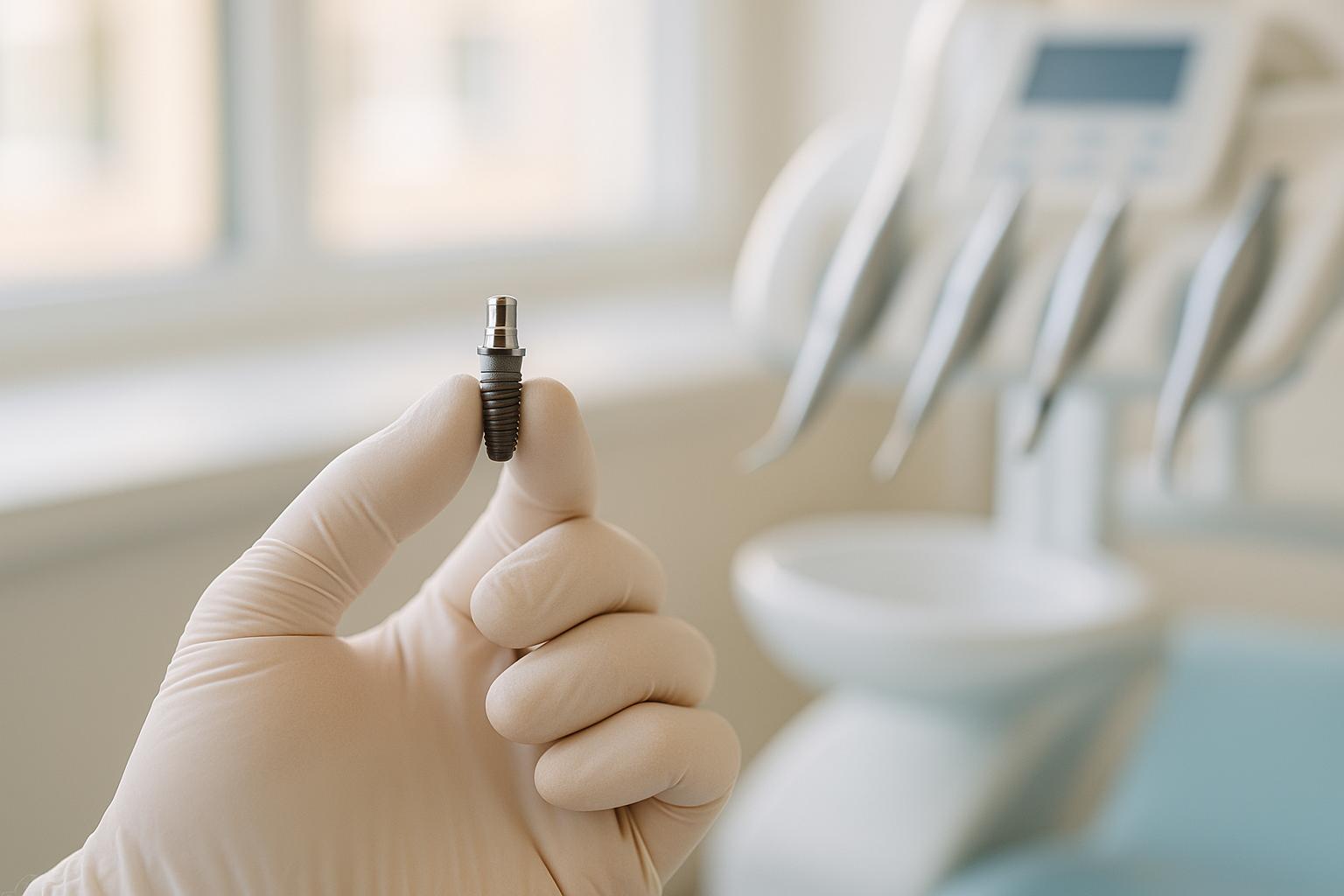
Short dental implants are transforming dental care by offering less complex procedures, particularly for patients with limited jawbone. These implants, typically under 10 mm in length, reduce the need for bone grafting and simplify recovery. Enhanced designs and materials have improved their stability and success rates, making them a viable alternative to traditional implants.
Key Highlights:
- Short Implants Defined: Less than 10 mm, often used in areas with bone loss.
- Advantages: Skip bone grafting, faster recovery, reduced costs, and high success rates (up to 93.3% over 15 years for 6 mm implants).
- Challenges: Higher stress loads and crown-to-implant ratio issues, mitigated by advanced designs and materials.
- Digital Tools: CBCT and planning software ensure precise placement, improving outcomes.
- New Techniques: Flapless surgery and 3D-printed custom implants minimise trauma and enhance fit.
- Materials and Coatings: Titanium remains the standard, while zirconia offers aesthetic alternatives. Surface treatments and PRF accelerate healing and improve integration.
With survival rates comparable to traditional implants, these advancements are reshaping dental implantology, making treatments more accessible and effective for a broader range of patients.
Shorter dental implants: A viable alternative to sinus grafting
Digital Planning and Guided Surgery for Short Implants
When dealing with the unique challenges of short implants, precise digital planning becomes essential. Cone-beam computed tomography (CBCT) has become the go-to tool for pre-surgical evaluations, offering 3D imaging of oral structures. This technology allows dentists to assess jawbone thickness, height, and density with high accuracy, ensuring that implants are placed in stable positions [2]. CBCT not only identifies anatomical challenges that could affect implant stability but also generates digital models to simulate the procedure [1]. These 3D images are invaluable for communicating treatment plans and expected outcomes to patients [1]. Adding to the benefits of CBCT, advanced software tools now simplify and enhance the entire treatment process.
Digital Treatment Planning Software
Modern software solutions play a pivotal role in implant planning:
- Planmeca Romexis: This software captures detailed radiographic images and enables virtual crown design using an extensive implant library featuring models from over 130 manufacturers [7].
"The Romexis® 3D Implant Guide software module allows me to create a virtual implant design and then produce a surgical guide in-house. I use this workflow for every implant I do, and I am constantly amazed at the quality of the outcomes. It is the one tool I use on a daily basis and could not live without."
– Dr Zachary Evans [7] - coDiagnostiX: Known for its AI-powered data preparation, this tool significantly speeds up the planning process.
"The AI Assistant makes manual data preparation a procedure of the past and helps to save a lot of time."
– Implantologist Giuliano Fragola [6] - Blue Sky Plan: Offers a free-to-download option, with fees only for exporting printable files [8].
- SICAT Implant 2.0: Features a comprehensive database of implants and abutments from leading manufacturers and integrates seamlessly with existing systems [9].
These tools allow clinicians to create digital plans that are later converted into surgical guides for precise implant placement.
Computer-Guided Surgical Guides
Computer-guided surgical guides transform digital treatment plans into physical tools, ensuring accurate implant placement. By determining precise entry points and angulations, these guides minimise surgical time and improve clinical efficiency [3][4]. They also enhance safety by protecting vital anatomical structures, reducing the risk of complications during surgery [3].
"Using a surgical guide can help to reduce the possibility of surgical complications, which is important for all implant procedures."
– Conescan [4]
For short implants, where precision is critical, these guides – based on CBCT data – offer significant advantages over freehand techniques. They allow for smaller incisions, faster recovery times, and less post-operative discomfort [2]. However, clinicians are encouraged to undergo specialised training before adopting these advanced methods [5].
New Short Implant Placement Techniques
With advancements in digital planning, surgical methods have evolved to embrace techniques that make short implant placement less invasive. These new approaches focus on precision and aim to minimise patient trauma during the procedure.
Flapless Surgical Techniques
Flapless surgery has become a game-changer in short implant placement, offering an alternative to traditional methods. Unlike conventional surgeries that involve incisions and tissue reflection, this technique avoids lifting the mucoperiosteal flap, helping to preserve both bone structure and blood supply[10].
Research backs up the benefits of flapless surgery. A meta-analysis and a prospective cohort study found that it reduced horizontal buccal bone alteration by 0.48 mm and led to lower postoperative pain scores – 3.1 ± 0.74 on day 3 and 0.5 ± 0.71 on day 7 – compared to flap-based procedures[10][11]. Additionally, patients undergoing flapless surgery showed better soft tissue healing, with reduced probing depths six months after functional loading[11]. However, success with this approach requires careful patient selection and skilled execution.
To enhance the advantages of flapless techniques, specialised tools have been developed to further improve precision and conserve tissue.
Specialised Tools for Tissue-Conserving Placement
Modern implantology has introduced instruments specifically designed for minimally invasive short implant placement. Among these:
- Soft tissue punches: These create precise openings in the gum, promoting faster healing and reducing discomfort after surgery[12].
- Bone expanders: Used to gently widen the implant site, they eliminate the need for more invasive bone grafting procedures, reducing trauma[12].
In addition, systems like the Neodent® Helix Short feature drill stops for exact depth control, which is critical when working with limited vertical bone height[14]. Improvements in surgical handpieces and motors have also enhanced control over drilling speed and torque, reducing the risk of overheating and helping ensure successful osseointegration[12].
Another innovation is the BioHorizons Tapered Short Guided kit, which incorporates updated instrument designs to streamline workflows and minimise stack height during surgeries[13].
3D-Printed Custom Implants for Complex Cases
3D printing has opened up new possibilities for addressing complex anatomical challenges in implantology. This technology allows the creation of custom implants tailored to the patient’s unique anatomy, particularly in cases where traditional short implants might not be effective. Using CBCT scans, clinicians can design implants that fit precisely, reducing the need for additional surgical interventions and minimising patient trauma[15].
"Digital technology significantly enhances subperiosteal implantology by enabling precise presurgical planning based on CBCT scans. This technology reduces patient trauma and ensures optimal implant fit, presenting a promising alternative to traditional analogue methods."[15]
Studies highlight a 95.8% survival rate over two years for custom titanium implants manufactured through direct metal laser sintering[15]. One innovative design, a custom short implant with a wing retention structure, eliminates the need for maxillary sinus lateral antrostomy while providing long-term stability[16].
3D-printed implants also offer biological benefits. By incorporating gradients of porosity, they mimic natural stress distribution, and their rough surfaces may encourage bone growth and osseointegration[17]. Moreover, these implants can be customised to match the exact shape of the patient’s tooth roots, a feature unavailable with standard implants[17]. Research even suggests that such implants may promote faster bone mineralisation near their surfaces[17].
A compelling example comes from a 44-year-old male patient with congenital dental agenesis. After previous implant-based treatments failed due to peri-implantitis, he received custom-made subperiosteal implants. These implants, designed to combine subperiosteal and endosseous support, successfully addressed his complex dental needs[15].
This case underscores the potential of 3D printing to transform implantology, offering tailored solutions for even the most challenging scenarios.
sbb-itb-2be92ed
Material and Biological Developments for Short Implants
Advancements in materials and biological approaches are transforming short implant procedures, ensuring better integration and long-term stability, even in cases where bone availability is limited.
New Implant Surface Treatments
Precise digital planning and guided surgery are now paired with cutting-edge material advancements to enhance osseointegration. By modifying implant surfaces, researchers have developed ways to actively encourage bone growth and improve durability[18].
Topographical treatments like grit blasting and Titanium Plasma Surface (TPS) techniques have significantly increased the bone-to-implant contact, leading to high survival rates over the long term[18][20]. For instance, grit-blasted surfaces deliver better outcomes, while TPS treatments boost the Bone-to-Implant Contact (BIC) coefficient by up to six times compared to traditional machined surfaces[20].
The Osseotite system, with its double-etched surface, takes this further by enhancing clot attachment, achieving success rates as high as 98%[20]. Compared to other rough surfaces like hydroxyapatite or sandblasted options, the double-etched surface demonstrates superior BIC coefficients, making it a standout choice for implant stability[20].
Bioactive coatings are the next step forward. These coatings chemically bond with bone tissue, improving osseointegration, stability, and reducing healing times[21]. Meanwhile, nanotechnology is revolutionising surface treatments by creating nanoscale modifications. These mimic cellular environments, encouraging rapid bone growth and even introducing antibacterial properties to the implant surface, which helps prevent infections while promoting cell adhesion[18][19].
The confidence in these advancements is reflected in market trends, with the dental implant industry projected to grow at a compound annual growth rate (CAGR) of 9.8%, reaching an estimated A$9.62 billion by 2030[20].
Use of Bone Substitutes and PRF
Platelet-Rich Fibrin (PRF) has gained traction as a vital biological tool in short implant procedures, especially in cases of low bone density. PRF is rich in growth factors – such as PDGFs, TGF-β, BMPs, and VEGFs – that aid osteogenic differentiation, angiogenesis, and early bone healing, creating a stable foundation for implants[22][23]. Its fibrin matrix serves as a natural scaffold, supporting cell growth, migration, and differentiation[22].
Studies show PRF promotes the proliferation and migration of human bone marrow mesenchymal stem cells (hBMSCs) and activates MAPK/ERK signalling, which enhances osteogenic differentiation[22]. This cellular activity translates into better implant stability.
When combined with other materials, PRF’s performance is even more impressive. Research by Su-Mi Woo and colleagues demonstrated that PRF, when paired with mineral trioxide aggregate (MTA), activates the BMP/Smad signalling pathway, accelerating odontoblast maturation[22]. Similarly, rabbit studies revealed that PRF enhances bone marrow stromal cell differentiation via the Wnt/β-catenin signalling pathway[22].
PRF also offers practical benefits over alternatives like platelet-rich plasma (PRP). Unlike PRP, PRF preparation does not require anticoagulants, reducing contamination risks[23]. It also maintains a more stable biological structure and composition[23].
Different PRF preparation methods – such as L-PRF, A-PRF, A-PRF+, I-PRF, T-PRF, and H-PRF – allow clinicians to tailor the treatment to specific needs[23]. The choice of centrifugation protocol plays a crucial role in determining PRF’s effectiveness in promoting bone formation[23].
Together with advanced surface treatments, PRF and similar biological enhancements maximise implant performance.
Comparison of Implant Materials and Techniques
Material selection and modifications are critical to achieving reliable outcomes in short implant procedures. Titanium and zirconia remain the two leading options, each with distinct advantages and limitations.
| Material | Advantages | Disadvantages | Success Rate |
|---|---|---|---|
| Titanium | Strong, corrosion-resistant, excellent osseointegration | May show through thin gums (grey colour); rare metallic taste or allergic reactions (0.6% of patients) | 90-95% at 10 years[26] |
| Zirconia | Aesthetic (white colour blends with gums), biocompatible, good for metal sensitivities, resists plaque | Higher cost, less long-term data, potential for fractures under extreme forces | Comparable to titanium in short-term studies |
| Surface Treatments | Improved osseointegration, faster healing, better stability | Higher processing costs, technique-sensitive | Up to 98% with advanced surfaces[20] |
Titanium remains the gold standard due to its proven durability and ability to integrate with bone, achieving survival rates between 90% and 95% over ten years[26]. This makes it particularly valuable for short implants, where maximising bone contact is crucial[25].
Zirconia, on the other hand, is ideal for patients prioritising aesthetics or those with sensitivities to metals. While rare, titanium allergies can affect about 0.6% of patients, with more than half of these cases leading to implant failure[25]. For such patients, zirconia offers a reliable alternative, blending aesthetics with functionality.
The choice between titanium and zirconia often depends on clinical needs. Titanium’s strength suits areas with high biting forces, while zirconia’s aesthetic appeal makes it a better choice for visible areas with thin gums[24][25].
Biological enhancements like PRF complement both materials, offering added benefits regardless of the base material. Research suggests PRF alone can deliver results comparable to other biomaterials, making it a cost-effective option for improving implant success rates[22].
Clinical Outcomes and Practical Considerations
Recent advancements in techniques and materials have significantly shaped the clinical performance of short implants. Achieving successful outcomes requires not only an understanding of these developments but also careful patient selection and adherence to post-operative care protocols.
Success Rates and Longevity
Short implants, defined as those measuring 6 mm or less, have shown survival rates comparable to traditional longer implants. For instance, a 5-year randomised controlled trial (RCT) found no notable differences between 6 mm and 11 mm implants in terms of marginal bone levels, survival rates, or complications[27]. In one study, 6 mm implants achieved a 5-year survival rate of 96.0%, while 11 mm implants reached 98.9%. Similarly, a retrospective cohort study reported an 89% survival rate for extra-short implants over five years[27]. A meta-analysis further supported these findings, revealing survival rates of 96% for short implants compared to 98% for longer ones. Success rates reported in systematic reviews range from 86.7% to 100% over one to five years[27].
"Within its limitations, this study showed that extra-short implants under immediate loading conditions can be a reliable solution. The application of horizontal and vertical platform switching with the use of intermediate abutments seems to be able to contribute to the reduction of MBL." – Stefano Sivolella[27]
Minimising marginal bone loss (MBL) is particularly important for short implants due to their reduced length. Digital planning and guided surgery techniques have played a key role in achieving this. Recent umbrella reviews with meta-analyses suggest that short implants can reduce implant failure, MBL, and biological complications while enhancing patient satisfaction[27]. Additionally, 6 mm implants provide a less invasive alternative to sinus lift procedures, and immediate loading protocols have been successfully applied to both single- and multiple-unit fixed dental prostheses[27].
Patient Selection and Risk Assessment
The success of short implants hinges on selecting the right patients and conducting thorough risk assessments. Factors such as female gender have been associated with improved outcomes, while smoking and a history of periodontitis significantly increase the risk of complications[28]. In fact, peri-implantitis has emerged as the leading cause of short implant failure, accounting for 73.91% of failures in one study[28]. Addressing periodontitis with proper treatment and a strict maintenance program is essential for long-term success.
Clinicians must also focus on accurate prosthodontic planning to prevent occlusal overload and maintain a suitable crown-to-implant ratio. These measures are critical in ensuring the longevity of the implant. By assessing risks comprehensively, clinicians can tailor post-operative protocols to maximise the chances of success.
Post-Operative Care and Recovery
The minimally invasive nature of short implant procedures often translates to reduced post-operative discomfort. However, proper care during the recovery phase is crucial for both patient comfort and implant success.
Patients should avoid disturbing the surgical site, whether by spitting or touching the area. Applying ice packs to the face in 20-minute intervals during the first 24 hours can help manage swelling[29][30]. Dietary adjustments are also essential – patients should avoid chewing on the implant site for the first four weeks and stick to soft foods like soups and mashed potatoes. Hard or chewy foods should be avoided for the entire healing period, which typically lasts around eight weeks[29][30].
Oral hygiene requires a delicate balance between cleanliness and protecting the surgical site. Starting on the second day post-surgery, patients can gently brush with a soft manual toothbrush, avoiding direct contact with the surgical area. Electronic toothbrushes should be avoided for the first two weeks[29][30]. Additionally, rinsing with a prescribed antibacterial solution twice daily for 7–10 days is recommended, alongside warm saltwater rinses for extra care[29].
Patients should limit strenuous physical activity for at least one week post-surgery, as vigorous exercise can hinder healing[29][30]. Pain management and infection prevention are also critical – this includes taking pain relievers before the anaesthesia wears off, completing prescribed antibiotic courses, and avoiding smoking during the four-month healing phase, as smoking significantly impacts implant success[30].
Recovery generally involves a soft diet for 7–10 days, with a gradual return to regular foods over eight weeks. Regular follow-up appointments allow clinicians to monitor progress and address any issues promptly, ensuring a smooth recovery process.
Conclusion
Short implant techniques have opened up less invasive avenues for dental treatment, offering success rates on par with traditional implants. These advancements make it possible for clinicians to treat patients with limited bone volume without resorting to extensive grafting procedures.
The integration of digital planning and guided surgery, powered by 3D imaging and computer-aided design, has revolutionised precision in implant placement. This not only boosts accuracy but also reduces surgical time and minimises patient discomfort. Innovations in implant materials have also played a major role – new surface treatments now allow osseointegration in as little as 8-12 weeks, compared to the traditional 3-6 months. Additionally, zirconia implants provide a metal-free alternative to titanium, combining excellent biocompatibility with improved aesthetics.
Immediate loading protocols further enhance patient convenience, enabling same-day temporary restorations. This approach significantly shortens treatment timelines and improves overall patient satisfaction[31].
"The field of dental implantology continues to evolve at an impressive pace, with each innovation focused on making treatment more comfortable, successful, and accessible." – Dr. James Blank, D.D.S., Blank Dental[31]
Australian clinics, adhering to ASID guidelines and evidence-based standards, are at the forefront of these advancements. The Australian Society of Implant Dentistry (ASID) highlights the growing popularity of minimally invasive techniques, stating:
"The trend towards minimally invasive dental implant surgery is gaining momentum in Australia. These techniques, which include flapless surgery and the use of smaller implants, have been shown to reduce post-operative discomfort and speed up recovery times"[32].
Evidence-based practices remain central to achieving the best outcomes. With modern implants boasting success rates above 95% under optimal conditions[33], clinics that adopt these innovations while maintaining strict clinical protocols can deliver exceptional care. For example, Complete Smiles Bella Vista combines advanced techniques with tailored patient care to achieve outstanding results.
Looking ahead, ongoing research into surface modifications, biomaterials, and surgical methods promises even greater progress in short implant dentistry. These developments will continue to make dental implants a viable solution for a broader range of patients, including those with complex anatomical challenges.
FAQs
What are the advantages of short dental implants compared to traditional ones?
Short dental implants bring a range of benefits, especially for patients with limited bone height. One major advantage is that they often remove the need for bone grafting. This makes the procedure less invasive, simplifies the process, and can result in quicker recovery times and a more comfortable experience overall.
Another perk is that short implants are generally more affordable. Despite their smaller size, they deliver success rates comparable to traditional implants when used in the right cases. For anyone looking to restore their smile with a dependable and efficient option, short implants could be an excellent choice.
How do digital tools and guided surgery enhance the success of short dental implants?
Digital tools and guided surgery have transformed the way short dental implants are placed, offering a new level of precision through 3D imaging and computer-aided design. These technologies allow for highly accurate implant positioning, which helps minimise errors and improves the long-term stability of the implants.
What’s more, these tools support minimally invasive procedures, leading to less surgical trauma, shorter operation times, and greater comfort for patients. By combining precision with patient-friendly techniques, these advancements play a key role in achieving higher success rates and improved outcomes for short implant treatments.
What challenges can arise with short dental implants, and how are they managed?
Short dental implants, while useful in certain situations, come with their own set of challenges. They may carry a higher risk of failure, particularly in patients with poor bone quality or insufficient bone volume. Additionally, complications like peri-implantitis or loosening of the implant can occur.
However, these risks can be effectively managed. Careful patient evaluation is key – this includes assessing bone health and determining if short implants are the right choice. Using minimally invasive surgical techniques can help limit trauma during the procedure, promoting better healing. On top of that, maintaining consistent oral hygiene and scheduling regular dental check-ups are essential for the long-term success of these implants. When advanced methods are paired with tailored patient care, the likelihood of complications can be greatly reduced.
Related Blog Posts
- Flapless Implant Surgery: Benefits and Process
- Smoking and Dental Implants: Impact on Healing
- Advances in Gum Grafting Materials and Techniques
- Recent Advances in Titanium Implant Surface Design
Important Notice: Any surgical or invasive procedure carries risks. Before proceeding, you should seek a second opinion from an appropriately qualified health practitioner.
Individual results may vary. The information provided in this article is for educational purposes only and does not constitute medical advice.
Checkout Related Blogs




Get in touch with us
For more information, call us now to start feeling better. Or fill the form below to make appointment
The Latest News from Complete Smiles
How to Clean Clear Plastic Retainers
Checklist for Choosing Wearable Dental Devices
Checklist for Choosing Cloud AI Platforms in Dentistry

Complete Smiles Bella VistaAccepts All Major Health Funds, Including





