





Ultimate Guide to Alcohol-Free Retainer Cleaning
Keeping your retainer clean is crucial for your oral health and its longevity. Alcohol-based cleaning products can damage retainers by drying out the material, causing brittleness, and leaving harmful residues. Instead, alcohol-free cleaning methods are safer and more effective. Here’s what you need to know:
- Safe Cleaning Options: Use baking soda, diluted white vinegar, mild dish soap, or diluted hydrogen peroxide for gentle cleaning.
- Avoid These: Alcohol, abrasive substances (like toothpaste), and hot water can damage retainers.
- Daily Care: Rinse with lukewarm water, brush with a soft toothbrush using mild soap, and store in a ventilated case.
- Deep Cleaning: Weekly soaks in white vinegar or baking soda solutions help remove buildup and odours.
- Commercial Products: Alcohol-free dissolvable tablets or ultrasonic cleaners are great for thorough cleaning without damage.
- Retainer Types: Care varies by type – Hawley retainers, clear plastic retainers, and fixed retainers each require specific cleaning routines.
How To Clean Retainers and Night Guards
Types of Alcohol-Free Cleaning Products for Retainers
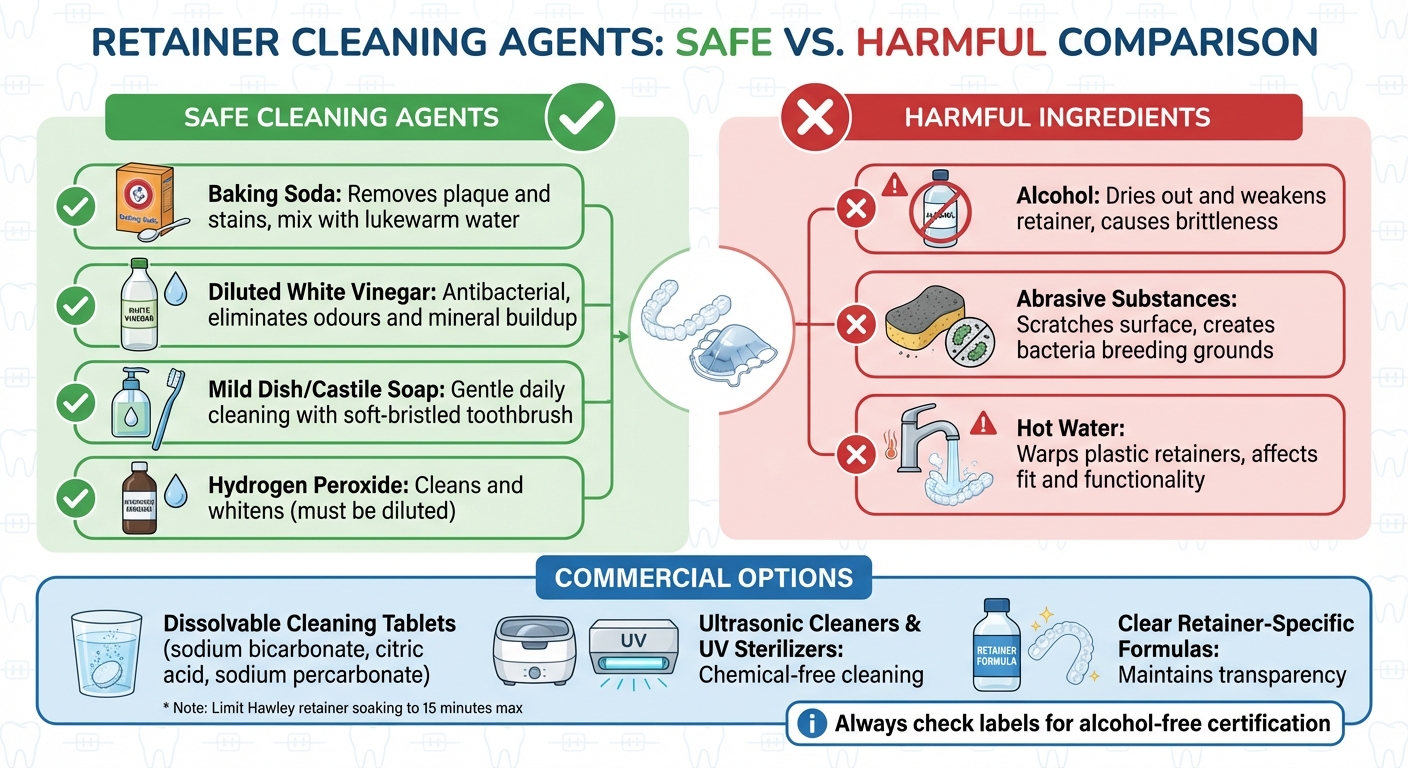
Alcohol-Free Retainer Cleaning Methods: Safe vs Harmful Agents
Keeping your retainer clean doesn’t have to involve alcohol-based products. You can achieve great results using simple household items or specialised commercial cleaners. Below, we’ll explore safe cleaning agents, ingredients to avoid, and some effective commercial options.
Safe Cleaning Agents You Can Use
Everyday items can work wonders for cleaning your retainer. For instance:
- Baking soda: This gentle yet effective cleaner removes plaque and stains. Mix it with lukewarm water to create a paste that disinfects without harming your retainer.
- Diluted white vinegar: Known for its antibacterial properties, vinegar can eliminate odours and mineral buildup when diluted properly.
- Mild dish or castile soap: When used with a soft-bristled toothbrush, these soaps provide a daily cleaning solution that’s gentle but effective.
- Hydrogen peroxide: Commonly found in some commercial products, it helps clean and whiten retainers, but it must always be diluted to avoid damage.
Ingredients That Damage Retainers
Not all cleaning agents are retainer-friendly. Be cautious of the following:
- Alcohol: It can dry out and weaken your retainer, leading to brittleness.
- Abrasive substances: Harsh toothpastes or scouring powders can scratch the surface, creating areas where bacteria can thrive.
- Hot water: High temperatures can warp plastic retainers, affecting their fit and functionality.
Always read product labels carefully to ensure they are alcohol-free and specifically designed for dental appliances. Avoid anything that contains these harmful ingredients.
Commercial Alcohol-Free Retainer Cleaners
If you prefer commercial solutions, there are plenty of alcohol-free options tailored for retainers. These include:
- Dissolvable cleaning tablets: Products like Retainer Brite use ingredients such as sodium bicarbonate, citric acid, and sodium percarbonate to clean effectively. However, limit soaking Hawley retainers to no more than 15 minutes to prevent damage [3].
- Ultrasonic cleaners and UV sterilisers: These devices clean and disinfect retainers without relying on chemicals, making them a convenient option.
- Clear retainer-specific formulas: These are ideal for maintaining the transparency of clear plastic retainers.
When selecting a commercial cleaner, check that it is explicitly designed for retainers or removable dental appliances and clearly states it is alcohol-free. This ensures your retainer stays clean without risking damage.
How to Clean Your Retainer Without Alcohol
Keeping your retainer clean is key to maintaining hygiene and ensuring it lasts. A combination of daily care and a weekly deep clean can help keep it in top condition.
Daily Cleaning Steps
Right after removing your retainer, rinse it with lukewarm water to wash away saliva and debris. Use a soft-bristled toothbrush specifically for your retainer and gently scrub all surfaces – inside, outside, and the parts that touch your gums. Add a tiny amount of mild, clear antibacterial soap, castile soap, or a specialised non-abrasive retainer cleaner to the brush, and then rinse thoroughly to remove any leftover residue. Always store your retainer in a ventilated case, and clean the case itself with soap and water every few days to prevent bacteria from building up.
To maintain thorough hygiene, pair this daily routine with a weekly deep cleaning.
Deep Cleaning Your Retainer
Once a week, give your retainer a more intensive clean. Soak it in a mixture of equal parts white vinegar and water for 10–20 minutes to disinfect and reduce plaque. After soaking, gently brush and rinse it. Another option is to use a solution of baking soda and distilled water, soaking the retainer for 10–30 minutes to balance pH levels, fight bacteria, and minimise odours. Specialised persulfate-free cleaning tablets are also a good choice. If your retainer develops heavy buildup, you can have it professionally cleaned with an ultrasonic cleaner.
After cleaning, proper drying and storage are just as important.
How to Dry and Store Your Retainer
Shake off any excess water and let your retainer air-dry briefly before storing it in a ventilated case. Placing it upside down in the case can help ensure it dries completely. Make sure the case is kept away from heat sources like heaters or hot cars, as high temperatures can warp the plastic and ruin the fit. Proper storage not only helps your retainer stay in good shape but also prevents accidental loss or damage.
Cleaning Methods for Different Retainer Types
Each type of retainer needs specific care to keep it in good shape and free from damage.
Hawley Retainers
Hawley retainers are made of acrylic plastic and thin metal wire, which means they can lose their shape if exposed to hot water. Stick to cool or lukewarm water when cleaning. For daily cleaning, use a baking soda paste made by mixing baking soda with lukewarm water – this helps remove plaque and bacteria. For a deeper clean, soak the retainer once a week in a mixture of equal parts white vinegar and water for 15–20 minutes, then rinse thoroughly. Commercial cleaning tablets designed for retainers can also be a convenient option, as long as you follow the instructions. Avoid regular toothpaste since its abrasive texture can scratch the surface, creating areas where bacteria can build up.
Clear Plastic Retainers
Clear plastic retainers, like Essix or Vivera, are prone to trapping debris in their narrow grooves and can scratch or warp easily. Rinse them according to general guidelines and pay particular attention to cleaning the grooves. For weekly deep cleaning, soak the retainer in a solution of equal parts white vinegar and water for 15–20 minutes to tackle odours and mineral build-up. Occasionally, about once a week, you can use a baking soda paste for cleaning, but don’t overdo it because it’s slightly abrasive. Alcohol-free retainer cleaning tablets, such as Retainer Brite or CariPRO, are another effective option and usually require just 5–15 minutes of soaking. Ultrasonic cleaners, like the Zima Dental Pod, offer a gentle, non-abrasive way to clean without brushing. Steer clear of coloured mouthwash, hot water, or dishwashers, as these can discolour or warp the retainer. By following these steps, you can help maintain the retainer’s clarity and fit.
Fixed Retainers
Fixed retainers, which are bonded to the back of your teeth, need a different approach since they can’t be removed for cleaning. Focus on cleaning around the wire by angling your toothbrush at about 45 degrees to the gumline and gently brushing around the bonded area. Daily flossing is crucial – use a floss threader to clean underneath the wire. Interdental brushes are also helpful for reaching tight spaces between your teeth and the retainer. Regular dental visits, ideally twice a year, are essential for a thorough cleaning and to ensure the bonded wire stays secure.
Using the right cleaning method for your retainer not only keeps it in good shape but also helps maintain your oral health over time.
sbb-itb-2be92ed
Solving Common Retainer Problems Without Alcohol
Even with consistent cleaning, retainers can sometimes develop stains, odours, or mineral deposits. To handle these occasional issues, you can build on your regular cleaning routine with a few targeted techniques. Below are some simple, alcohol-free methods to address these common problems.
Removing Stains and Discolouration
Baking soda works well for tackling stains on both clear plastic and Hawley retainers. To use it, mix equal parts baking soda and water to form a thick paste. Gently apply the paste with a soft toothbrush, then rinse thoroughly with cool water. Since baking soda is mildly abrasive, limit this method to once a week to avoid wearing down your retainer.
Getting Rid of Bad Odours
Bad odours often stem from bacteria, plaque, or tartar buildup. To keep things fresh, rinse your retainer every time you remove it and clean it at least once a day. For more stubborn smells, try soaking your retainer in a white vinegar solution. Combine equal parts white vinegar and lukewarm water, and let your retainer soak for 15–20 minutes. After soaking, brush it gently with a soft toothbrush and rinse thoroughly. Avoid alcohol-based mouthwashes, as they can dry out and discolour the plastic.
Removing Buildup and Mineral Deposits
If you notice white spots or a cloudy appearance, it’s likely due to calcium deposits from saliva and plaque. A white vinegar solution can help here as well. Soak your retainer in a mixture of equal parts white vinegar and warm water for 15–30 minutes. For tougher deposits, you may need to extend the soak slightly. Once finished, brush your retainer with a soft toothbrush to remove any remaining buildup, then rinse well. Alternatively, a baking soda paste can also break down deposits while neutralising odours. Regular cleaning is key to preventing these deposits in the first place.
Maintaining Your Retainer Over Time
Taking care of your retainer goes beyond just daily cleaning. With the right approach, you can keep it effective and comfortable for years – potentially lasting five years or more with proper care and regular professional check-ups [4].
Regular Dental Check-Ups
Routine dental visits play a big role in keeping your retainer in good shape. Dentists use specialised tools, like ultrasonic baths, to remove stubborn mineral deposits [5]. For fixed retainers, they can also clean hard-to-reach areas where plaque tends to build up. During these visits, your dentist will ensure the retainer fits well and continues to support your teeth alignment [1] [5] [4].
When to Replace Your Retainer
Knowing when to replace your retainer is key to avoiding unwanted teeth movement [1] [4]. If your retainer feels loose, becomes uncomfortable, looks warped, develops visible cracks or worn spots, or stays cloudy even after thorough cleaning, it’s time for a replacement. If you notice any of these issues, reach out to your dentist as soon as possible.
Handling and Care Tips
Daily care matters just as much as knowing when to replace your retainer. Always handle it with two hands to avoid bending or damaging it. Store it in a protective case when not in use, and keep it away from heat sources like hot water, direct sunlight, or car dashboards to prevent warping. After removing it, rinse with cool water to keep it clean and fresh.
Conclusion
Taking care of your retainer without alcohol-based products is a smart move for both its longevity and your oral health. Studies highlight that alcohol can dry out retainers, leaving them brittle and more likely to warp. This can shift your teeth out of alignment, potentially undoing all the hard work of your orthodontic treatment [2]. Sticking to alcohol-free cleaning methods helps keep your retainer in good shape, ensuring it fits correctly for years to come.
The good news? Cleaning your retainer without alcohol is both easy and effective. These gentler approaches not only remove plaque and odours but also prevent mineral buildup – all without compromising the material of your retainer.
Caring for your retainer goes beyond cleaning. Handle it with care, store it in a protective case, avoid exposing it to high temperatures, and don’t skip those regular dental check-ups. With consistent alcohol-free cleaning and proper maintenance, your retainer can last upwards of five years, all while keeping your smile intact [4]. By combining these simple habits with professional oversight, you’ll get the most out of your retainer and maintain a healthy, confident smile.
FAQs
Why is it better to clean retainers with alcohol-free solutions?
Keeping your retainer clean with alcohol-free solutions is a smart move. Alcohol can dry out the material, making it weaker or even causing it to warp over time. This can affect how well your retainer fits and might lead to discolouration or brittleness, cutting its lifespan short.
Alcohol-free cleaners, on the other hand, are gentle but still get the job done. They keep your retainer clean without damaging its structure or comfort. Using the right products regularly helps ensure your retainer stays hygienic and lasts longer.
How do I get rid of bad smells from my retainer?
Bad smells from retainers often come from bacteria or trapped food particles in tiny crevices. To tackle this, start by rinsing your retainer under lukewarm water – avoid hot water, as it can warp the material. Next, soak it in an alcohol-free cleaning solution for 10–15 minutes. A handy homemade option is mixing ½ teaspoon of baking soda with a cup of water to help neutralise odours. Another effective method is a solution of 1 part white vinegar to 3 parts water; soak your retainer in this for 5–10 minutes to help break down plaque.
Once soaked, use a soft-bristle toothbrush and a few drops of non-abrasive soap, like castile soap, to gently scrub your retainer. Rinse thoroughly with lukewarm water to remove any residue. Steer clear of toothpaste, bleach, or hot water, as these can damage the retainer and potentially worsen odours.
If the smell doesn’t go away, consider using an alcohol-free effervescent cleaning tablet specifically designed for retainers. To maintain freshness, clean your retainer daily and soak it in a cleaning solution weekly. However, if odours persist or you notice damage, it’s best to consult your dentist for professional cleaning or advice.
What should I do if my retainer gets damaged while cleaning it?
If your retainer gets bent, cracked, or damaged while cleaning, stop using it right away to prevent any additional problems. To keep it from drying out, place it in water and reach out to your orthodontist or dentist as soon as possible. They’ll assess the situation and let you know if it can be fixed or if you’ll need a replacement.
To minimise the risk of damage down the line, stick to the cleaning methods recommended for your specific type of retainer. Proper care can go a long way in keeping it in good shape.
Related Blog Posts
- Natural Retainer Cleaning: Myths vs. Facts
- Deep Cleaning Retainers: Vinegar and Water Tips
- Ultimate Guide To Retainer Cleaning
- Step-by-Step Guide: Cleaning Retainers with Ultrasonic Cleaners
Important Notice: Any surgical or invasive procedure carries risks. Before proceeding, you should seek a second opinion from an appropriately qualified health practitioner.
Individual results may vary. The information provided in this article is for educational purposes only and does not constitute medical advice.
Checkout Related Blogs




Get in touch with us
For more information, call us now to start feeling better. Or fill the form below to make appointment
The Latest News from Complete Smiles
How to Clean Clear Plastic Retainers
Checklist for Choosing Wearable Dental Devices
Checklist for Choosing Cloud AI Platforms in Dentistry

Complete Smiles Bella VistaAccepts All Major Health Funds, Including





