





How Material Degradation Impacts Implant Longevity
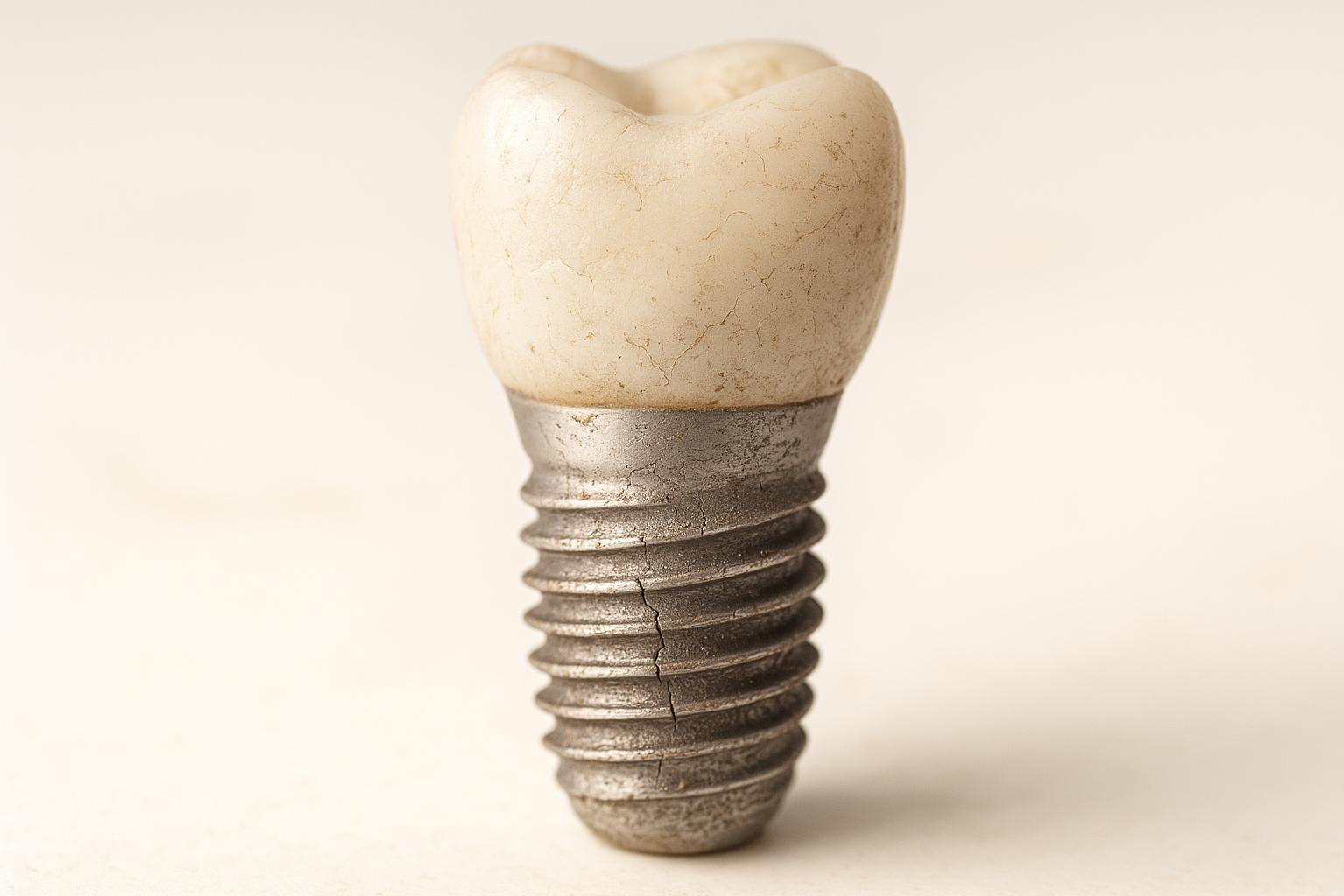
Dental implants can last decades, but their lifespan depends on factors like material degradation, patient habits, and maintenance. Titanium and zirconia are commonly used, with titanium offering durability and corrosion resistance. However, wear, corrosion, and coating breakdown can weaken implants over time, releasing particles that may cause inflammation and bone loss. Key factors affecting longevity include:
- Material degradation: Corrosion, mechanical wear, and surface changes.
- Patient habits: Smoking, bruxism, poor hygiene, and acidic diets.
- Maintenance: Regular dental check-ups and proper cleaning techniques.
To extend implant life, high-quality materials, precise placement, and good oral care are essential. Regular check-ups, avoiding risk factors, and using protective tools like night guards can help implants remain functional for 20–30 years or more.
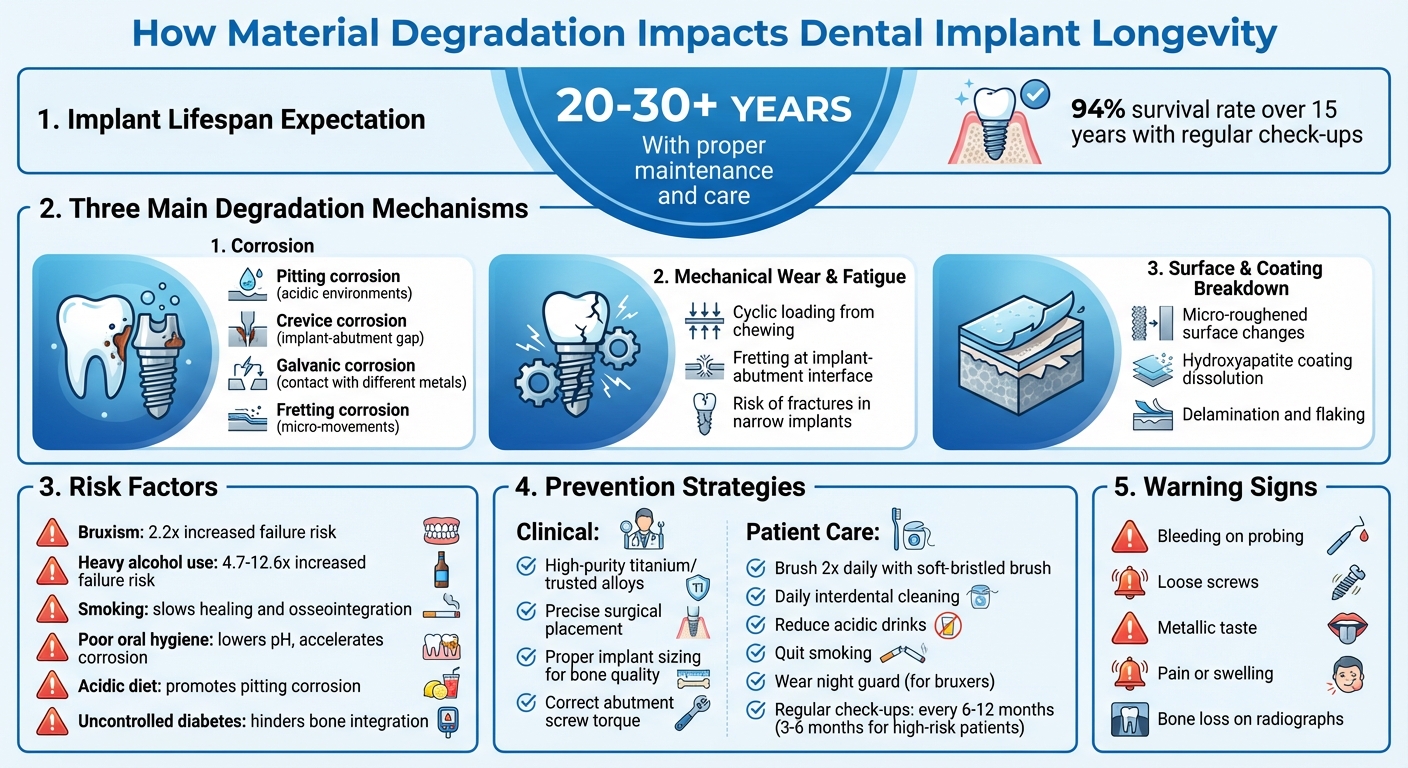
How Material Degradation Affects Dental Implant Longevity: Key Factors and Prevention
Corrosion of Dental Implants – Forms of Corrosion
How Implant Materials Degrade
The oral environment is a challenging one for implant materials. Factors like fluctuating pH levels, varying temperatures, saliva, biofilm, and the constant forces from chewing all contribute to the degradation of dental implants. While materials like titanium and zirconia are known for their durability, they are not immune to wear and tear. The main culprits behind this degradation are corrosion, mechanical wear and fatigue, and surface or coating breakdown.
These processes often work together, leading to faster material breakdown and potentially impacting the surrounding tissues. Let’s take a closer look at how each of these mechanisms undermines implant integrity.
Corrosion in Titanium Implants
Titanium’s ability to resist corrosion comes from a thin, naturally forming oxide layer on its surface. But this protective layer isn’t invincible – it can fail under physical or chemical stress, leading to different types of corrosion.
- Pitting corrosion: When the oxide layer breaks down in acidic environments, such as those caused by frequent consumption of soft drinks, gastric reflux, or plaque buildup, tiny, localised holes can form [1].
- Crevice corrosion: This occurs in tight spaces with limited oxygen, like the microgap between the implant and abutment. Stagnant saliva and plaque can alter the chemistry in these confined areas, triggering corrosion [1].
- Galvanic corrosion: When titanium comes into contact with a different metal – such as a gold crown or cobalt-chromium restoration – it can create an electrochemical reaction that speeds up metal dissolution [1].
- Fretting corrosion: Also known as tribocorrosion, this happens due to tiny movements at screw joints or internal connections, which repeatedly disrupt the oxide layer, exposing fresh metal [9].
Corrosion can present clinically as discomfort, bone loss around the implant, peri-implant inflammation, or even a metallic taste. On a microscopic level, affected implants may show pits, roughened surfaces, or areas where the oxide layer has been compromised [3]. Left unchecked, these issues can reduce the lifespan of the implant.
Mechanical Wear and Fatigue
Chewing exerts cyclic loads on implants, and habits like grinding or clenching amplify this stress [7]. These forces cause tiny movements at the implant–abutment interface, leading to friction and gradual material loss – a phenomenon known as fretting or abrasive wear.
Parts most vulnerable to this wear include abutment screws, prosthetic abutments, and the neck of the implant near the prosthetic platform [2]. Over time, these movements can loosen screws, destabilising the joint and accelerating wear. If fatigue persists, microscopic cracks may develop and spread, potentially causing fractures in the implant fixture or abutment. This is especially common in narrow-diameter implants or those placed in high-stress areas like the back teeth [7][10].
In Australian practices, measures to reduce these risks include careful implant planning with CBCT imaging, using splinted restorations in high-stress zones, and providing night guards for patients who grind their teeth.
Surface Changes and Coating Breakdown
Modern implants often have micro-roughened or chemically treated surfaces to enhance integration with bone. Techniques like sand-blasting, acid-etching, or anodising are used to create these surfaces [7]. However, over time, factors like saliva, biofilm, and cleaning can alter the implant’s surface micro-topography [3].
Additionally, some implants are coated with hydroxyapatite (HA), a calcium phosphate material that mimics natural bone and encourages bonding [7]. While effective, HA coatings can slowly dissolve in the oral environment, especially if they are porous or unevenly applied. Mechanical stresses and minor movements may also cause microcracks, delamination, or flaking of the coating. Although the exposed titanium can still integrate with bone, these irregularities may lead to inflammation and complicate ongoing maintenance [7].
To protect implant surfaces during professional cleanings, Australian clinicians often use specialised instruments, such as plastic or titanium-tipped tools, instead of steel curettes, which can cause unnecessary damage [3].
How Degradation Affects Tissues and Implant Stability
When implant materials degrade, the consequences go far beyond surface wear. The release of metal ions and particles can set off biological reactions that jeopardise both the surrounding tissues and the stability of the implant over time. This explains why complications can arise even in cases where oral hygiene is meticulously maintained.
Release of Metal Ions and Particles
Corrosion or wear that compromises the oxide layer on titanium implants can lead to the release of ions and particles [1]. These particles are often generated at points of friction, like the implant–abutment interface, and can accumulate in nearby soft tissue and bone. Titanium alloys, such as Ti–6Al–4V, may also release alloying elements like aluminium and vanadium, further complicating the biological response.
Tissue Reactions to Degradation
The presence of these metal particles frequently triggers a chronic inflammatory response in the peri-implant tissues [3]. Immune cells, such as macrophages and neutrophils, engulf the titanium particles, releasing pro-inflammatory cytokines that sustain inflammation and damage surrounding tissues. This prolonged inflammatory state disrupts normal bone remodelling by suppressing osteoblast activity while promoting osteoclast-driven bone resorption. The result? A shift toward net bone loss, which weakens osseointegration. On radiographs, this often appears as marginal bone loss, radiolucencies near implant threads, and a widening of the peri-implant gap. Clinically, these changes are often accompanied by signs like bleeding on probing and suppuration. These cellular and tissue-level reactions lay the groundwork for the clinical issues discussed below.
Clinical Problems Caused by Degradation
Material degradation can lead to a host of clinical complications. Inflammation around the implant may manifest as peri-implant mucositis or progress to peri-implantitis, marked by symptoms like bleeding, swelling, pocket formation, and, in the case of peri-implantitis, ongoing bone loss [4][5][7]. Corrosion and wear at the implant–abutment interface can also result in mechanical problems, such as loose screws, micro-movements, or even fractures caused by material fatigue under repeated stress.
Patients may also experience soft-tissue irritation, reporting symptoms like pain, swelling, or a metallic taste. In clinical practice, unexplained screw loosening, noticeable marginal bone loss on radiographs, or persistent inflammation unresponsive to routine debridement should raise red flags. Patients should be encouraged to report discomfort during chewing, unusual sensitivity, or a metallic taste promptly. Detecting these issues early allows for timely interventions that can help preserve the implant’s stability and functionality. Without proper management, these complications can undermine both the biological integration and mechanical durability of the implant, reducing its long-term success.
sbb-itb-2be92ed
What Affects Degradation and Implant Lifespan
The lifespan of dental implants depends on a mix of patient habits, material properties, and environmental factors. Understanding these elements sheds light on why some implants last for decades, while others encounter problems much earlier.
Patient Factors
A patient’s health and daily habits play a major role in how long an implant will last. Poor oral hygiene can lower the pH in the mouth, weakening titanium’s protective oxide layer and speeding up corrosion [1]. Bruxism (teeth grinding) increases the risk of implant failure by 2.2 times, as the repeated stress can cause mechanical fatigue, fractures, or loosening [4]. Smoking adds to these risks by slowing healing and interfering with osseointegration, while heavy alcohol use raises failure rates significantly – by 4.7 to 12.6 times – due to reduced blood flow and oxygen supply to the bone [4]. Systemic conditions, such as uncontrolled diabetes, can also hinder bone integration and increase the likelihood of peri-implantitis [4]. Even dietary habits matter; acidic foods and drinks can lower oral pH further, promoting pitting corrosion that destabilises the titanium surface [1].
Implant Design and Material Choice
The materials and design of the implant itself are equally critical. Titanium and its alloys are highly resistant to corrosion due to their stable oxide layer and excellent fatigue strength. With proper care, these implants can last 20 to 30 years or even longer [2][6][8]. Titanium alloys, like Ti-6Al-4V, offer added strength while maintaining biocompatibility, though they may release small amounts of alloying elements like aluminium and vanadium [2]. Zirconia implants, on the other hand, resist plaque build-up and have aesthetic benefits, but their brittleness makes them less suitable for patients with heavy bite forces or bruxism [2].
Precision in implant design is key. A snug implant–abutment fit reduces the risk of crevice and galvanic corrosion, while a poor fit can lead to micro-movements, inflammation, and even fractures [2][7]. Surface treatments and coatings can enhance the natural corrosion resistance of titanium, while the implant’s shape helps distribute stress evenly in the bone [1][7]. These design decisions play a pivotal role in how well the implant withstands environmental challenges.
Maintenance and Environmental Factors
Beyond patient habits and design, the oral environment significantly impacts implant durability. Acidic conditions can erode titanium’s oxide layer, and high fluoride levels may contribute to corrosion under certain circumstances [1]. Temperature changes, oxygen-deficient crevices, and contact with different metals can also lead to corrosion, particularly at the implant–abutment junction [1].
Routine maintenance is vital for long-term success. Regular dental check-ups can help maintain implant survival rates of 94% over 15 years [5]. Patients who practise good oral hygiene, attend regular dental appointments, avoid smoking, and limit acidic foods and drinks create the best conditions for their implants to thrive [1][4]. For those with bruxism, wearing a custom night guard can reduce mechanical stress and extend the implant’s lifespan [4][7]. Together, these factors determine how well an implant will perform over time.
How to Reduce Degradation and Extend Implant Life
Clinical Best Practices
Choosing high-purity titanium or trusted titanium alloys, along with precise implant systems, helps minimise micro-gaps and reduce the risk of load-induced fatigue [2][6]. It’s also important to match the implant’s diameter and length to the patient’s bone quality to ensure even load distribution and prevent overloading issues [7].
Surgical technique plays a crucial role in implant longevity. Using an atraumatic approach and ensuring proper irrigation during placement can help avoid microfractures and micromotion, which are detrimental to early integration [7][8]. Correct implant positioning – both three-dimensionally and with adequate surrounding bone – reduces bending forces on the implant fixture [7]. On the prosthetic side, achieving a passive fit for restorations, applying the correct torque to abutment screws, and optimising occlusion to prevent heavy lateral contacts are all key factors in limiting micro-movement and preventing screw loosening [2][7][8]. For patients who grind their teeth, providing a night guard can protect implants from overload-related wear [4][7].
It’s worth noting that titanium surfaces can deteriorate over time. For example, osteoblast attachment can decrease by 30–70% within just four weeks [11]. To counter this, always use fresh or properly stored implants to ensure optimal integration.
While advanced clinical techniques are essential, day-to-day care is equally crucial for maintaining implant longevity.
Patient Care Guidelines
Patient self-care is a cornerstone of implant maintenance. Daily habits, like brushing twice a day with a soft-bristled toothbrush and low-abrasive fluoride toothpaste, help preserve implant surfaces by preventing scratches that can trap plaque and cause wear [8]. Interdental cleaning – whether with implant-specific floss, interdental brushes, or water flossers – further aids in controlling plaque and reducing peri-implant inflammation, both of which are linked to corrosion and particle release [3][8].
Dietary adjustments can also make a difference. Cutting back on acidic drinks and avoiding frequent snacking, which lowers oral pH, helps minimise the risk of pitting corrosion [1]. Staying hydrated and maintaining saliva flow naturally buffers the mouth’s environment [1]. Additionally, quitting smoking and moderating alcohol consumption have been shown to significantly improve implant outcomes [4][7]. For those who grind their teeth, wearing a custom night guard reduces mechanical stress and helps extend the implant’s lifespan [4][7].
Regular professional check-ups are just as important. Most patients benefit from reviews every six to twelve months, though higher-risk individuals – such as smokers, diabetics, bruxers, or those with a history of peri-implantitis – may need to be seen every three to six months [7][8]. These appointments should include peri-implant probing, bleeding assessments, and, when necessary, radiographs to monitor bone levels [4][5][7]. Professional cleaning should always involve implant-safe instruments, such as plastic, carbon fibre, or specially coated scalers, to avoid scratching titanium or zirconia surfaces [3][7].
Long-Term Implant Support
Beyond clinical techniques and daily care, a structured long-term support system is essential for maintaining implant health. Practices like Complete Smiles Bella Vista (https://completesmilesbv.com.au) offer personalised maintenance programs that categorise patients based on risk factors such as smoking, systemic health, and occlusion, tailoring recall intervals accordingly [7][8]. Using advanced diagnostic tools and imaging, these programs monitor marginal bone levels and component integrity over time, allowing for early detection of wear, potential fracture risks, or peri-implantitis before they escalate into major problems [4][5][7].
Conclusion
Corrosion, mechanical fatigue, and coating failure can weaken implants and trigger local inflammation, posing significant risks to their longevity and functionality [1][2][7]. By understanding these challenges, patients and clinicians can make informed decisions to safeguard implant health. Using high-quality titanium or titanium alloys, ensuring precise surgical placement, and applying protective coatings are key steps toward achieving long-term success from the very beginning [1][2][7].
Studies show that implants, when properly cared for, can last for decades. In fact, many patients enjoy 20–30 years – or even a lifetime – of reliable performance with consistent maintenance [2][6][8]. These impressive outcomes are a testament to advancements in implant design, combined with good oral hygiene practices. Simple daily habits like using a soft-bristled toothbrush, cleaning between teeth, and steering clear of acidic foods can significantly reduce corrosion and minimise the release of harmful particles [1][8].
Certain lifestyle factors, however, can increase the risk of implant failure. Excessive alcohol consumption, smoking, and teeth grinding (bruxism) are major contributors to degradation [4]. Addressing these issues – such as using a night guard to manage grinding or quitting smoking – can create a healthier oral environment that better resists wear and tear [1][4][7].
Regular dental check-ups are equally important. Visiting your dentist every six to twelve months, or more frequently if you’re at higher risk, ensures early detection of potential issues like wear, bone loss, or peri-implantitis [7][8]. These proactive measures reinforce the longevity and success of dental implants.
FAQs
What steps can I take to protect my dental implants from material wear and tear?
To keep your dental implants in great shape and make them last longer, maintaining good oral hygiene is key. This means brushing and flossing every day to keep your mouth clean and healthy. It’s also important to steer clear of habits like smoking, as it can damage the implant and the surrounding tissues. If you have conditions like diabetes, work closely with your healthcare provider to manage them, as they can affect your oral health.
Don’t skip your regular dental check-ups. These appointments help your dentist keep an eye on your implants and catch any problems early on. By following your dentist’s advice and care instructions, you can help ensure your implants stay strong and functional for many years.
What are the warning signs of a failing dental implant?
If you suspect your dental implant isn’t functioning as it should, keep an eye out for a few key warning signs. These include ongoing pain or discomfort, redness or swelling around the implant site, or a feeling that the implant is loose or unstable. You might also notice visible cracks or damage to the implant or changes in your bite that make your teeth feel misaligned.
Should any of these symptoms arise, don’t delay – schedule a visit with your dentist straight away. Acting quickly can help resolve the issue and safeguard your oral health.
What habits can reduce the lifespan of dental implants?
Certain habits can drastically affect how long dental implants last. Neglecting oral hygiene – like skipping regular brushing and flossing – can lead to plaque buildup. This, in turn, may cause gum disease, which weakens the support structure around the implant. Smoking is another culprit, as it slows down healing and raises the likelihood of implant failure. On top of that, drinking too much alcohol can harm bone health, making it harder for your body to maintain the implant over time.
If you want your dental implants to last, stick to a thorough oral hygiene routine, steer clear of smoking, and keep alcohol consumption in check. Regular visits to your dentist are equally important to keep an eye on the condition of your implants and the surrounding tissues.
Related Blog Posts
- Impact of Implantoplasty on Implant Fatigue Resistance
- Hybrid Implant Materials: Durability Explained
- How Hybrid Coatings Improve Osseointegration
- Studies on Implant Longevity: Key Findings
Important Notice: Any surgical or invasive procedure carries risks. Before proceeding, you should seek a second opinion from an appropriately qualified health practitioner.
Individual results may vary. The information provided in this article is for educational purposes only and does not constitute medical advice.
Checkout Related Blogs




Get in touch with us
For more information, call us now to start feeling better. Or fill the form below to make appointment
The Latest News from Complete Smiles
How to Clean Clear Plastic Retainers
Checklist for Choosing Wearable Dental Devices
Checklist for Choosing Cloud AI Platforms in Dentistry

Complete Smiles Bella VistaAccepts All Major Health Funds, Including





