





Impact of Implantoplasty on Implant Fatigue Resistance
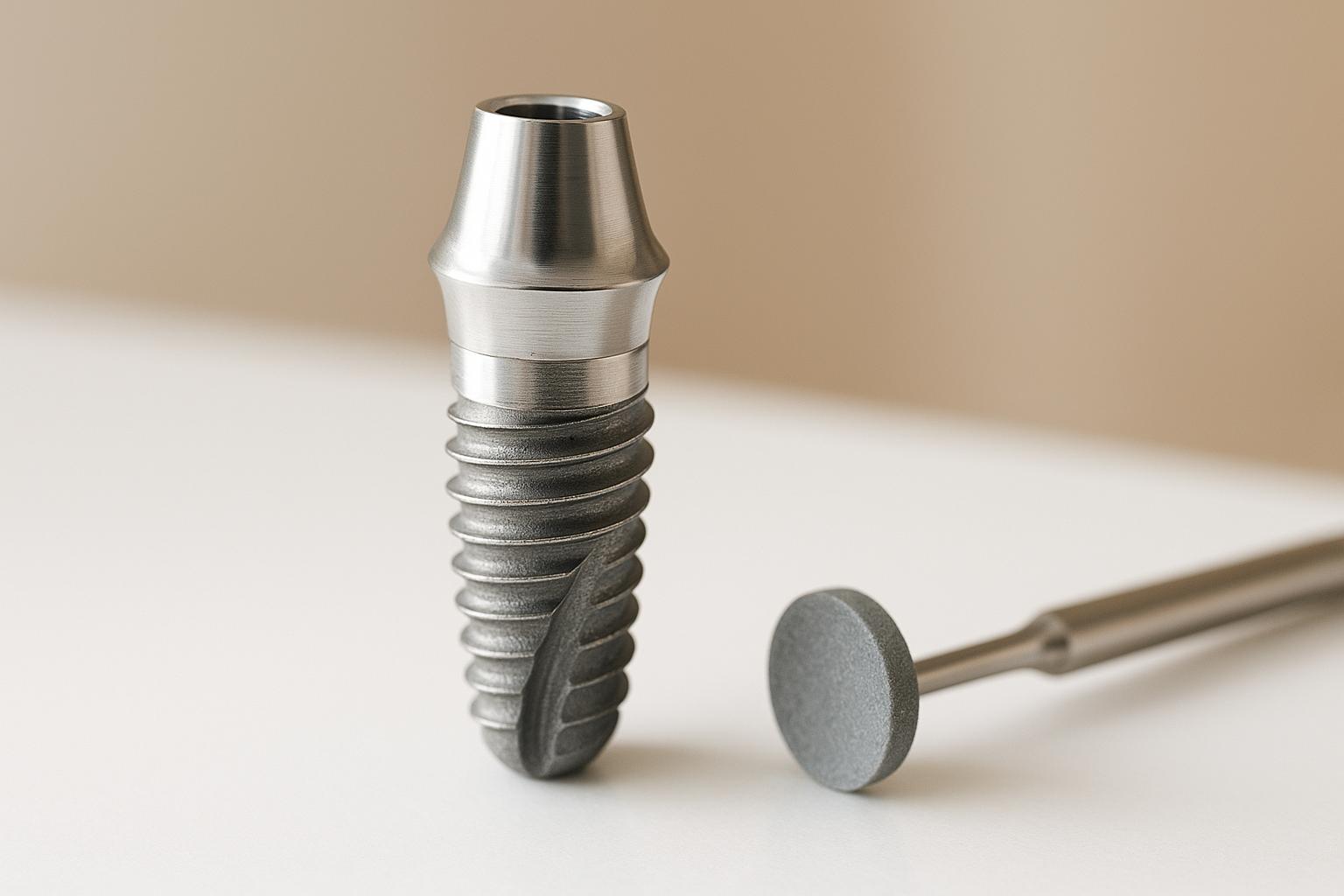
Implantoplasty helps manage peri-implantitis by smoothing implant surfaces to reduce bacterial growth. However, it weakens the implant’s fatigue resistance, making it less durable under repeated chewing forces. Key findings include:
- Material Removal Weakens Implants: Thinner walls and altered surfaces reduce the ability to endure stress.
- Chewing Forces Affect Durability: Standard implants handle regular forces, but narrow implants are at higher risk of failure.
- Fracture Risks Increase: Treated implants are prone to sudden, brittle fractures compared to gradual failure in untreated ones.
- Corrosion Concerns: Smoother surfaces may increase susceptibility to corrosion over time.
While implantoplasty can improve infection control, it requires careful consideration of implant location, patient habits (e.g., bruxism), and stress levels. Regular monitoring and tailored treatment plans are essential for long-term success.
Nobel Biocare Biomechanics: Fatigue testing according to ISO 14801

Research Results on Fatigue Resistance After Implantoplasty
Laboratory studies have revealed that implantoplasty – commonly used to address peri-implant complications – can reduce an implant’s fatigue resistance. While this technique is effective for treatment, the reduction in fatigue resistance underscores the need for careful clinical judgement. These findings provide a foundation for understanding how material changes during implantoplasty may influence outcomes.
Impact on Implant Strength
When implant threads are removed during implantoplasty, the wall thickness and overall diameter of the implant are altered. Tools used for smoothing not only eliminate contaminants but also reduce the material’s volume. The greater the material removed, the more significantly the implant’s ability to endure repeated loading forces is compromised.
Chewing Force and Implant Durability
Although fatigue resistance decreases, research indicates that standard-diameter implants (around 4 mm or larger) can typically handle regular chewing forces. However, the safety margin may shrink after implantoplasty, particularly for patients with habits like bruxism. Narrow-diameter implants, on the other hand, show a more substantial drop in fatigue resistance, making them less suitable for high-stress conditions. This is especially important to consider in areas that bear heavy loads, such as the posterior regions.
Challenges in High-Stress Areas
In posterior regions, where molars and premolars endure greater occlusal forces, the combination of reduced fatigue resistance and functional demands heightens the risk of implant failure. To mitigate these risks, clinicians can implement strategies like occlusal adjustments and redistributing loads. Given the limited retreatment options in these high-stress areas, a thorough risk assessment is essential before proceeding with implantoplasty.
Material and Surface Changes from Implantoplasty
Implantoplasty involves removing material from implants, which not only changes their surface microstructure but also affects their biocompatibility and mechanical durability.
Surface Smoothness vs Corrosion Risk
One of the key outcomes of implantoplasty is a smoother surface, which can help limit bacterial growth. However, the machining process creates transition zones on the implant. These zones are more vulnerable to pitting corrosion and can act as stress concentrators, especially under repeated loading.
How Fracture Patterns Change
The way implants respond to stress changes significantly after implantoplasty. Treated implants tend to exhibit brittle, intergranular fractures, unlike the ductile failures typically observed in untreated implants. This shift is linked to microstructural changes caused by machining, as well as the stress concentrations introduced. These factors can speed up crack formation and growth, ultimately lowering the implant’s resistance to long-term fatigue.
Given these changes, clinicians need to carefully evaluate the modifications, particularly for implants placed in areas that experience high stress. Comparing the performance of treated implants with untreated ones is essential to fully understand their mechanical and functional differences.
sbb-itb-2be92ed
Before and After Implantoplasty: Property Comparison
Implantoplasty changes the physical properties of dental implants, balancing improved cleanability against reduced mechanical strength. These changes can influence both clinical performance and the long-term durability of the implant.
By removing material, implantoplasty decreases the implant’s fatigue resistance, making it less capable of withstanding repeated stress over time. While the smoother surface created during the process can help reduce bacterial adhesion, this improvement comes with the downside of weakened mechanical durability.
The procedure also modifies the rough, osseointegrated surface, making it easier to clean. However, it may introduce micro-irregularities, which could increase the risk of corrosion and cracking. Another critical difference is how the implant fails under stress. Untreated implants typically fail gradually, offering warning signs, while those treated with implantoplasty are more prone to sudden, brittle fractures.
Here’s a breakdown of how implant properties change after implantoplasty:
Implant Property Comparison Table
| Property | Before Implantoplasty | After Implantoplasty | Clinical Impact |
|---|---|---|---|
| Fatigue Resistance | High resistance to cyclic loading | Reduced resistance due to material removal | Increased risk under repetitive stress |
| Surface Roughness | Rough, textured surface | Smooth, polished surface | Easier cleaning but with potential mechanical trade-offs |
| Corrosion Resistance | Protective oxide layer present | Possible compromise at machined areas | Greater susceptibility to corrosion |
| Fracture Pattern | Ductile failure with gradual warning | Brittle failure pattern | Less predictable failure mode |
| Stress Distribution | Even load distribution | Concentrated stress at transition zones | Localised stress may increase failure risk |
| Biocompatibility | Supports effective osseointegration | Maintained overall, but surface changes | Potential minor effects on tissue response |
These changes highlight the need for careful decision-making when considering implantoplasty. The process concentrates stress at the junctions between machined and unmachined areas, creating weak points. This is particularly concerning for narrow-diameter implants, where material thickness is already limited.
Additionally, the reduction in material thickness can compromise the implant’s ability to withstand bending forces. Ultimately, implantoplasty requires clinicians to weigh the benefits of improved cleanability and reduced inflammation against the risks of decreased fatigue resistance and altered fracture behaviour. Long-term monitoring and adjusted loading protocols may be necessary to maximise implant longevity and performance.
Clinical Considerations and Local Practice Applications
Recent findings on implantoplasty and its impact on fatigue resistance highlight the need for thoughtful decision-making in managing peri-implantitis in Australia. Below, we explore key aspects like risk assessment, benefit evaluation, and the role of specialists in ensuring optimal outcomes.
Risk Assessment Before Implantoplasty
Before considering implantoplasty, it’s crucial to evaluate each patient and their specific implant situation. Factors like implant diameter, location, and the patient’s habits (e.g., smoking or bruxism) play a significant role in determining suitability. A thorough assessment should also include the implant’s condition – checking for contamination, bone loss, and exploring alternative treatment options.
Documenting these evaluations is not just good practice; it’s essential for informed consent and effective treatment planning. This ensures patients are fully aware of the potential risks and benefits before proceeding.
Balancing Benefits and Risks
While implantoplasty can enhance cleanability and reduce bacterial load, it comes with trade-offs, particularly a reduction in fatigue resistance. These risks must be carefully weighed against the benefits, especially since non-surgical options exist that don’t alter the implant’s structure.
One critical consideration is the potential for implantoplasty to change fracture patterns, which could result in more abrupt failures. To mitigate these risks, long-term monitoring through regular clinical checks and radiographic evaluations is indispensable. These discussions are especially important for younger patients, who may depend on their implants for decades to come.
Specialist Support in Implant Care
Complex cases of peri-implantitis often require the expertise of specialists. Advanced knowledge and evidence-based protocols are vital for ensuring that procedures like implantoplasty are performed only when absolutely necessary and with appropriate safeguards. This includes comprehensive pre-treatment assessments, careful patient selection, and robust follow-up protocols.
A collaborative, multidisciplinary approach – bringing together general dentists, periodontists, and prosthodontists – offers the best outcomes. This team-based care is particularly valuable after implantoplasty, where coordinated efforts are essential for managing potential complications and ensuring long-term success.
Modern diagnostic tools, such as cone beam computed tomography, are indispensable in this context. These technologies provide detailed insights into implant positioning, bone quality, and the extent of any pathology, helping clinicians determine whether implantoplasty is the right course of action or if alternative treatments should be pursued.
Clinics like Complete Smiles Bella Vista exemplify this comprehensive approach, offering advanced diagnostic capabilities and personalised care plans. Their focus on evidence-based practices ensures that procedures like implantoplasty are integrated into a broader strategy aimed at preserving oral health over the long term.
Finally, staying informed through continuing education is critical. As research evolves and our understanding of implantoplasty’s effects on fatigue resistance deepens, ongoing professional development ensures that clinicians make treatment decisions based on the latest scientific evidence. This commitment to learning ultimately benefits both practitioners and patients alike.
Conclusion
Research highlights that implantoplasty enhances the cleanability of implant surfaces, aiding in the management of peri-implantitis. However, it also compromises the implant’s ability to withstand cyclic loading and changes its fracture behaviour. These findings emphasise the need for a carefully tailored approach when considering implantoplasty as a treatment option.
Main Findings
Studies consistently show that implantoplasty reduces the fatigue resistance of dental implants. This occurs because material removal during the procedure creates stress concentration points, weakening the implant’s structural integrity. While the smoother surface achieved can help minimise plaque accumulation and improve oral hygiene, it can also lead to brittle fractures rather than gradual wear over time.
The research also suggests that the location of the implant and the loading conditions play a critical role in treatment outcomes. Implants placed in high-stress regions, particularly in patients with habits like bruxism or those supporting multiple restorations, face a heightened risk of complications.
Several factors should influence the decision to proceed with implantoplasty, including the patient’s age, the diameter of the implant, bone quality, and the severity of peri-implantitis. These considerations are crucial to determine whether this procedure is the most suitable option for the patient.
Given the structural changes caused by implantoplasty, comprehensive pre-treatment assessments are vital. Regular clinical and radiographic follow-ups are equally important to monitor for complications and ensure long-term success.
In practice, implantoplasty should not be seen as a standard treatment but rather as a specialised intervention for specific cases. Clinicians must balance the immediate benefit of improved surface cleanability with the long-term risks to structural integrity, ensuring patient care remains both effective and safe.
FAQs
What impact does implantoplasty have on the durability of dental implants, especially in high-stress areas like the back teeth?
Implantoplasty is a procedure that smooths out the surface of dental implants, but it comes with some trade-offs. By reducing the thickness and diameter of the implant walls, this process can slightly weaken the implant’s mechanical strength and its ability to resist fatigue. This is particularly important in the posterior regions of the mouth, where chewing forces are naturally stronger, making implants in these areas more prone to fractures under heavy loads.
On the upside, the smoother surface created by implantoplasty can help reduce the risk of cracks forming and spreading, which somewhat offsets the impact on fatigue resistance. That said, extra caution is needed when working with narrower implants in the back teeth, as these are more susceptible to weakening and potential failure. To ensure the best results, it’s essential to consult a dental professional with expertise in implant procedures who can tailor the approach to your specific needs.
What should I know about implantoplasty and its impact on dental implant durability?
Implantoplasty, a procedure commonly used to address peri-implantitis, involves smoothing the surface of a dental implant to reduce bacterial build-up. While it can be effective in managing this condition, it’s crucial to consider how it might impact the implant’s durability.
One concern is that implantoplasty can weaken the implant structure. By reducing the implant’s diameter and wall thickness, there’s a greater risk of fractures. In fact, the procedure can lower the implant’s fatigue resistance by as much as 30%, making it more susceptible to corrosion and cracking. This is particularly concerning for implants with a narrow diameter, as they are already more vulnerable to structural issues. For these reasons, a thorough assessment of the implant’s design and overall condition is key to minimising such risks and ensuring its longevity.
If implantoplasty is being considered, it’s essential to discuss the potential benefits and risks with your dental professional. They can help determine the best course of action based on your individual needs and circumstances.
What steps can clinicians take to reduce the risk of fractures in implants following implantoplasty?
When performing implantoplasty, reducing the risk of fractures in dental implants requires gentler instrumentation techniques. Research suggests using tungsten carbide drills over diamond burs, as they are less abrasive and better at preserving the implant’s structural strength.
Another key factor is controlling surface roughness while removing as little implant material as possible. By doing so, clinicians can lower the chance of cracks forming, which enhances the implant’s fatigue resistance and extends its lifespan.
Related Blog Posts
- ISO 14801: Fatigue Testing for Dental Implants
- Factors Affecting Long-Term Implant Success
- Surface Roughness and Osseointegration: Key Insights
- Osseointegration and Titanium Surface Design
Important Notice: Any surgical or invasive procedure carries risks. Before proceeding, you should seek a second opinion from an appropriately qualified health practitioner.
Individual results may vary. The information provided in this article is for educational purposes only and does not constitute medical advice.
Checkout Related Blogs




Get in touch with us
For more information, call us now to start feeling better. Or fill the form below to make appointment
The Latest News from Complete Smiles
How to Clean Clear Plastic Retainers
Checklist for Choosing Wearable Dental Devices
Checklist for Choosing Cloud AI Platforms in Dentistry

Complete Smiles Bella VistaAccepts All Major Health Funds, Including





