




ISO 14801: Fatigue Testing for Dental Implants

Dental implants face daily wear and tear, and ISO 14801 is the global standard for testing their durability.
This standard ensures implants can handle repetitive chewing forces, simulating years of use under controlled conditions. It tests complete implant systems with cyclic loads at a 30° angle, replicating real-life stress. Key highlights:
- Fatigue Testing Parameters: Implants are tested for up to 5 million cycles, mimicking 5 years of chewing.
- Testing Setup: Includes a 30° tilt, specific torque requirements, and environmental conditions like body temperature (37°C).
- Benefits: Manufacturers improve designs, clinicians get reliable data, and patients receive safer, long-lasting implants.
- Limitations: Excludes implants under 8 mm and doesn’t fully replicate real-world chewing forces.
ISO 14801 helps standardise implant quality worldwide, though lab tests differ from clinical performance. It remains a critical tool in improving dental implant safety and reliability.
Main Components of ISO 14801
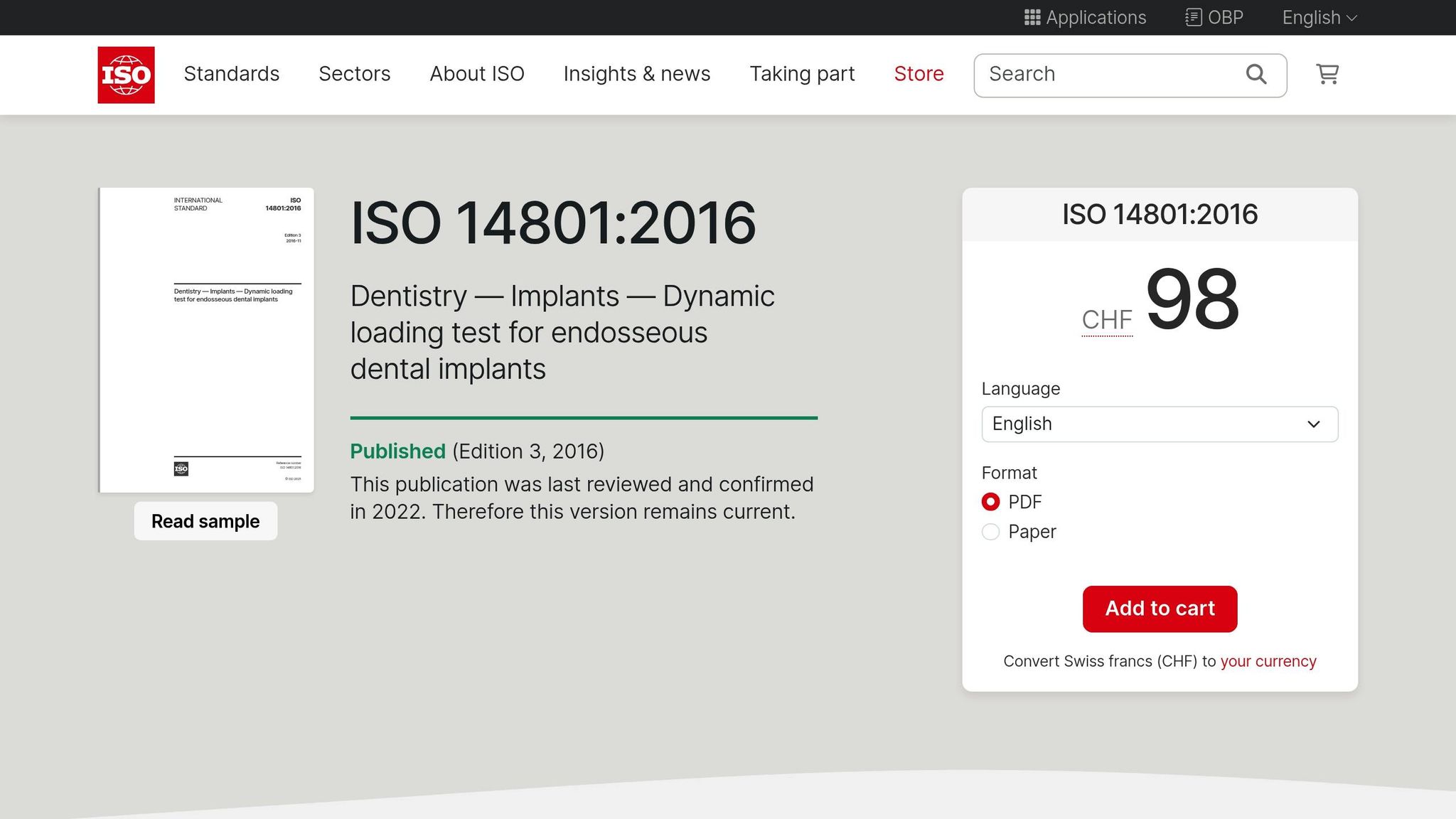
Testing Setup Requirements
A reliable fatigue test begins with a setup that mirrors clinical conditions as closely as possible. ISO 14801 outlines clear specifications for the test machine, geometry, sample holder, load application, and procedure to ensure uniformity across tests [7].
The testing system must deliver the specified load with an accuracy of ±5% at maximum load, as per ISO 7500-1 [7]. Additionally, the equipment should include instruments to monitor maximum and minimum loads, loading frequency, and detect any failures during testing [7].
To simulate worst-case scenarios, ISO 14801 requires tilting the implant at a 30° angle while exposing part of its thread to mimic bone loss, which increases the bending forces [4]. For pre-angled dental implants, the loading angle must exceed the angle between the implant’s axis and its angled section by 10° [6].
When assembling components with screw joints, technicians must follow the manufacturer’s torque recommendations, using tools that provide torque with an accuracy of ±5%. Following the prescribed tightening sequence is equally important for consistent outcomes [7].
These detailed setup requirements form the basis for dynamic loading, which replicates the repetitive forces experienced by dental implants.
Dynamic Loading Parameters
Once the setup is in place, ISO 14801 uses dynamic loading to mimic the forces generated by chewing. The standard employs sinusoidal waveforms to replicate the cyclical nature of mastication [1].
Testing frequencies are tightly regulated: up to 15 Hz for standard conditions or 2 Hz when testing in fluid environments [1]. The applied forces typically range in the hundreds of Newtons, reflecting the significant stress implants endure during normal chewing [8]. Two main protocols are outlined: 5 million cycles at frequencies between 2 Hz and 15 Hz, or 2 million cycles for lower frequencies [1]. These cycles are designed to represent years of functional use, with 5 million cycles approximating five years of clinical performance.
For instance, advanced equipment like the Amsler HC Compact showcases how these protocols are applied [1]. The device subjects implants to oscillating loads that vary during each cycle, ensuring the implants experience the full range of forces seen in real-life use.
Testing Environment Conditions
Beyond mechanical loading, ISO 14801 also considers the environmental conditions to ensure realistic testing. Simulating the oral environment is crucial for assessing how implants perform under real-world conditions [5].
The standard allows for testing in physiological conditions using a temperature-controlled saline solution at 37°C, alongside ambient testing at 20°C [1]. This is particularly important as dental implants operate in a wet environment with sudden temperature changes ranging from 0°C to 60°C [5].
Testing at body temperature (37°C) is especially relevant, as it influences the mechanical properties of the implant materials and the corrosion processes that occur in biological systems. These conditions provide a more accurate representation of how implants perform over time compared to testing at room temperature alone. By accounting for the interplay between mechanical forces, temperature fluctuations, and the oral environment’s corrosive nature, ISO 14801 ensures a thorough evaluation of long-term implant durability.
Limitations of ISO 14801 Standards
Scope and Coverage Limits
ISO 14801 has notable gaps in its coverage, as it doesn’t account for all dental implant types or clinical scenarios. For instance, implants with endosseous lengths shorter than 8 mm are excluded, as are magnetic attachments [11]. This is a key limitation, especially when shorter implants are necessary due to restricted bone height.
The standard also focuses solely on vertical loading using a round jig, which doesn’t replicate the concave occlusal surfaces of natural teeth. This approach overlooks the multi-directional forces and complex load patterns that occur during chewing [10]. In real life, mastication involves intricate movements influenced by the temporomandibular joint, with forces acting in oblique and horizontal directions across six degrees of freedom [10]. These omissions highlight how the standard’s scope diverges from the realities of oral biomechanics.
Laboratory vs Clinical Performance
Beyond its limited scope, the testing conditions in laboratories differ significantly from what occurs in clinical settings. Laboratory tests fail to replicate in vivo conditions, where patient-specific factors introduce variability in loading and boundary conditions [2].
One glaring issue is the frequency mismatch between testing and real-world scenarios. Laboratory tests are conducted at 15 Hz, whereas in vivo chewing operates at around 1–1.58 Hz [10]. This tenfold difference in frequency creates a disconnect in understanding fatigue mechanisms.
Studies have shown that under multi-directional loading – better reflecting real-world chewing – the fatigue cycle is significantly reduced. One study found that implants subjected to multi-directional forces had fatigue cycles approximately five times lower than those under single-direction loading [10]. This suggests that the simplified loading conditions in ISO 14801 might overestimate an implant’s durability.
Other variables, such as bone quality, implant positioning, and leverage effects, further complicate the translation of lab results to clinical outcomes [12][9]. For instance, implants placed in dense, healthy bone perform better mechanically compared to those in resorbed bone, which has lower density and quality [12].
While ISO 14801 is useful for comparing implant systems, clinicians should approach its results with caution. The standard may not fully capture the fatigue properties of implants in real-world conditions, making it less reliable for design decisions [4].
Nobel Biocare Biomechanics: Fatigue testing according to ISO 14801
sbb-itb-2be92ed
How ISO 14801 Improves Dental Implant Development
ISO 14801 plays a key role in advancing dental implant technology by offering a structured framework to refine designs and enhance quality. By simulating real-world conditions, it provides critical insights that influence both the development and quality assurance of dental implants.
Improving Implant Design
Manufacturers rely on ISO 14801 to pinpoint potential design flaws and refine aspects like implant geometry, material choices, and connection designs. One of the most practical applications of this standard is generating load-life curves, which compare the fatigue performance of various designs. This is especially useful during the early design stages, as it allows manufacturers to evaluate multiple options without incurring excessive costs. For instance, research shows that taper implant systems often outperform external connection systems in fatigue resistance when tested using ISO 14801 protocols combined with finite element analysis [2].
The data derived from these tests helps manufacturers make smarter choices about materials, thread patterns, and connection geometries. By understanding how these factors influence fatigue resistance, engineers can design implants capable of withstanding the repetitive forces they face in clinical settings.
To achieve a more thorough evaluation, manufacturers often pair ISO 14801 testing with finite element analysis and fatigue modelling. This combination provides a comprehensive look at different design alternatives, reducing the dependency on extensive physical prototypes [2]. Beyond aiding in design improvements, ISO 14801 also plays a pivotal role in maintaining consistent quality through its standardised testing protocols.
Quality Control and Reliability
ISO 14801 sets the benchmark for standardised testing in the dental implant industry, ensuring uniform quality assessments. It outlines precise requirements for testing systems, including accurate load application, frequency control, and methods for verifying both loading parameters and specimen failure [13].
These protocols allow manufacturers to test implant durability under controlled conditions that mimic aspects of the oral environment, such as temperature and humidity. This ensures a more realistic evaluation of an implant’s fatigue performance [13].
The standardised approach also means that results are comparable across different implant systems. This consistency not only benefits manufacturers but also helps clinicians choose the most suitable implant systems for their patients [5].
By adhering to ISO 14801, manufacturers commit to a process of continuous improvement. The standard’s fatigue testing protocols – ranging from 2 million cycles at up to 2 Hz to 5 million cycles at frequencies between 2 Hz and 15 Hz – set clear performance benchmarks [3]. These benchmarks enable manufacturers to track design progress over time and demonstrate improved reliability to the dental community.
The importance of ISO 14801 in quality control is highlighted by the impressive survival rates of implant-supported rehabilitations, which reach 97–98% at the 5-year mark [5]. By ensuring implants meet stringent fatigue resistance standards before they reach clinical use, ISO 14801 testing significantly contributes to the long-term success of dental implant systems.
Conclusion: ISO 14801’s Role in Dental Care
ISO 14801 has established itself as a critical benchmark in the development of modern dental implants, bridging the gap between laboratory testing and real-world clinical success. Regulatory bodies around the globe rely on this standard to define minimum performance requirements, making it an essential step for manufacturers aiming to bring their implants to market [4].
For manufacturers, ISO 14801 offers a structured approach to evaluating implant designs, sizes, and assembly conditions. It sets clear performance benchmarks, which not only ensure compliance but also encourage advancements in implant technology [11]. By replicating repetitive loading scenarios in controlled lab conditions, this standard helps identify potential failure points before implants are used in patients. This proactive testing contributes significantly to the dependable outcomes seen in dental implant treatments.
The benefits of ISO 14801 extend far beyond manufacturers. It instils confidence across the dental care ecosystem – from patients to healthcare providers. Products tested under this standard align with expectations set by trusted regulatory agencies like ISO, giving both consumers and medical professionals greater peace of mind [11]. Patients receiving implants that meet ISO 14801 standards benefit from years of rigorous testing and ongoing design refinement.
Another key advantage of ISO 14801 is its role in unifying dental implant quality across borders. By providing consistent testing protocols, it ensures that implants meet the same high standards, regardless of where they are manufactured or used. This global consistency combines technical innovation, regulatory adherence, and clinical relevance – addressing factors like dynamic loading and controlled testing conditions – to reinforce the safety and performance of dental implants.
While ISO 14801 testing cannot fully replicate the complexities of the oral environment, it remains a cornerstone in advancing dental care. It provides the scientific foundation manufacturers need to create reliable implants, supports regulators in upholding safety standards, and equips dental professionals with the confidence to deliver durable tooth replacement solutions. By standardising fatigue testing, ISO 14801 not only drives improvements in implant design but also strengthens the delivery of consistent, evidence-based dental care across Australia.
FAQs
What is ISO 14801 testing, and how does it improve the safety of dental implants?
ISO 14801 testing is a standardised approach to assess the durability and reliability of dental implants under simulated conditions. Essentially, it mimics the kinds of pressures implants endure during daily activities, like chewing, by applying repeated stress. This allows manufacturers to see how various designs and materials hold up over time, ensuring the implants remain strong and reliable.
By adhering to ISO 14801 standards, manufacturers can significantly reduce the likelihood of mechanical failures, enhancing both the safety and trust patients place in these products. This thorough testing process ensures dental implants are built to handle everyday use and deliver consistent, dependable performance in clinical settings.
Why aren’t dental implants shorter than 8 mm included in ISO 14801 testing, and what are the options for patients with limited bone height?
Dental implants shorter than 8 mm are not covered by ISO 14801 testing. This is because the standard primarily evaluates the fatigue performance of longer implants, which are more widely used and better understood in terms of their mechanical strength. Shorter implants, on the other hand, may respond differently to stress, and their fatigue resistance isn’t assessed under this guideline.
For individuals with limited bone height, shorter implants can still be a practical and effective option. Thanks to advances in implant design and supporting clinical studies, these implants have been shown to deliver reliable results without requiring extensive bone grafting procedures. If this seems like a potential solution for you, it’s important to discuss it with your dentist, who can recommend the best course of action based on your specific oral health needs.
How does ISO 14801 testing ensure dental implants are durable in real-life conditions, despite not fully replicating the oral environment?
ISO 14801: Fatigue Testing for Dental Implants
ISO 14801 establishes guidelines for testing the durability of dental implants under intense stress. By simulating forces like tilting and bending, it provides insights into how implants hold up in challenging conditions. These tests are designed to replicate the kinds of pressures implants face during everyday activities, such as chewing, using specific angles and frequencies to mimic real-life scenarios.
However, while ISO 14801 offers a useful framework for assessing implant strength, it has its limits. The test doesn’t fully capture the complexity of the oral environment, such as the interaction of multiple implants or variations in individual anatomy. Because of this, clinical trials and additional testing in real-world settings are essential to ensure implants meet the highest standards of safety and performance.
Related Blog Posts
- Dental Implants: Your Top 8 Questions Answered
- What Are Biocompatible Dental Materials?
- 3D Bioprinting in Dental Implants: How It Works
- Titanium vs. Biodegradable Implants: Comparison
Important Notice: Any surgical or invasive procedure carries risks. Before proceeding, you should seek a second opinion from an appropriately qualified health practitioner.
Individual results may vary. The information provided in this article is for educational purposes only and does not constitute medical advice.
Checkout Related Blogs



Get in touch with us
For more information, call us now to start feeling better. Or fill the form below to make appointment
The Latest News from Complete Smiles
How to Clean Clear Plastic Retainers
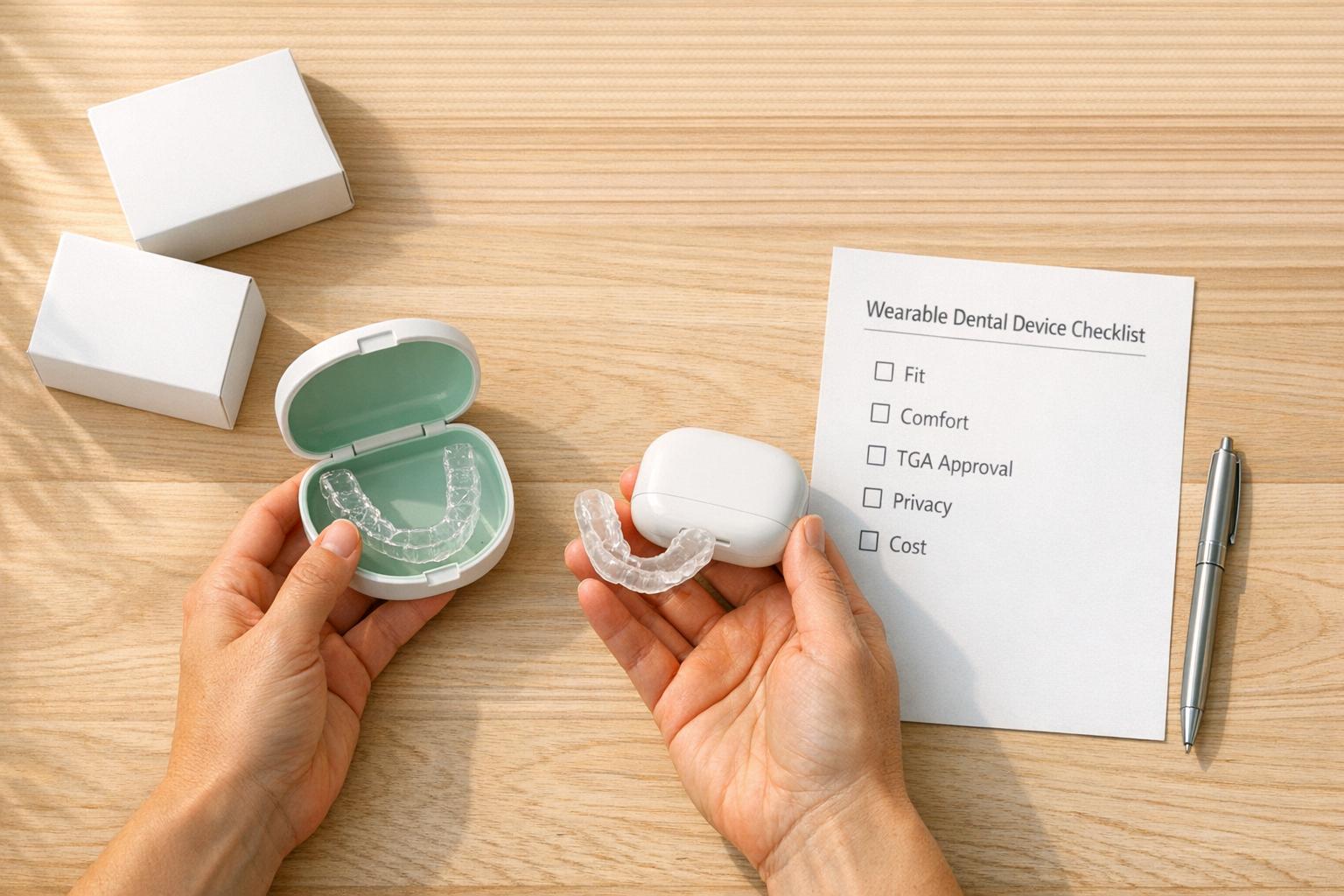
Checklist for Choosing Wearable Dental Devices
Checklist for Choosing Cloud AI Platforms in Dentistry

Complete Smiles Bella VistaAccepts All Major Health Funds, Including