




5 Factors to Consider: Invisalign or Braces?
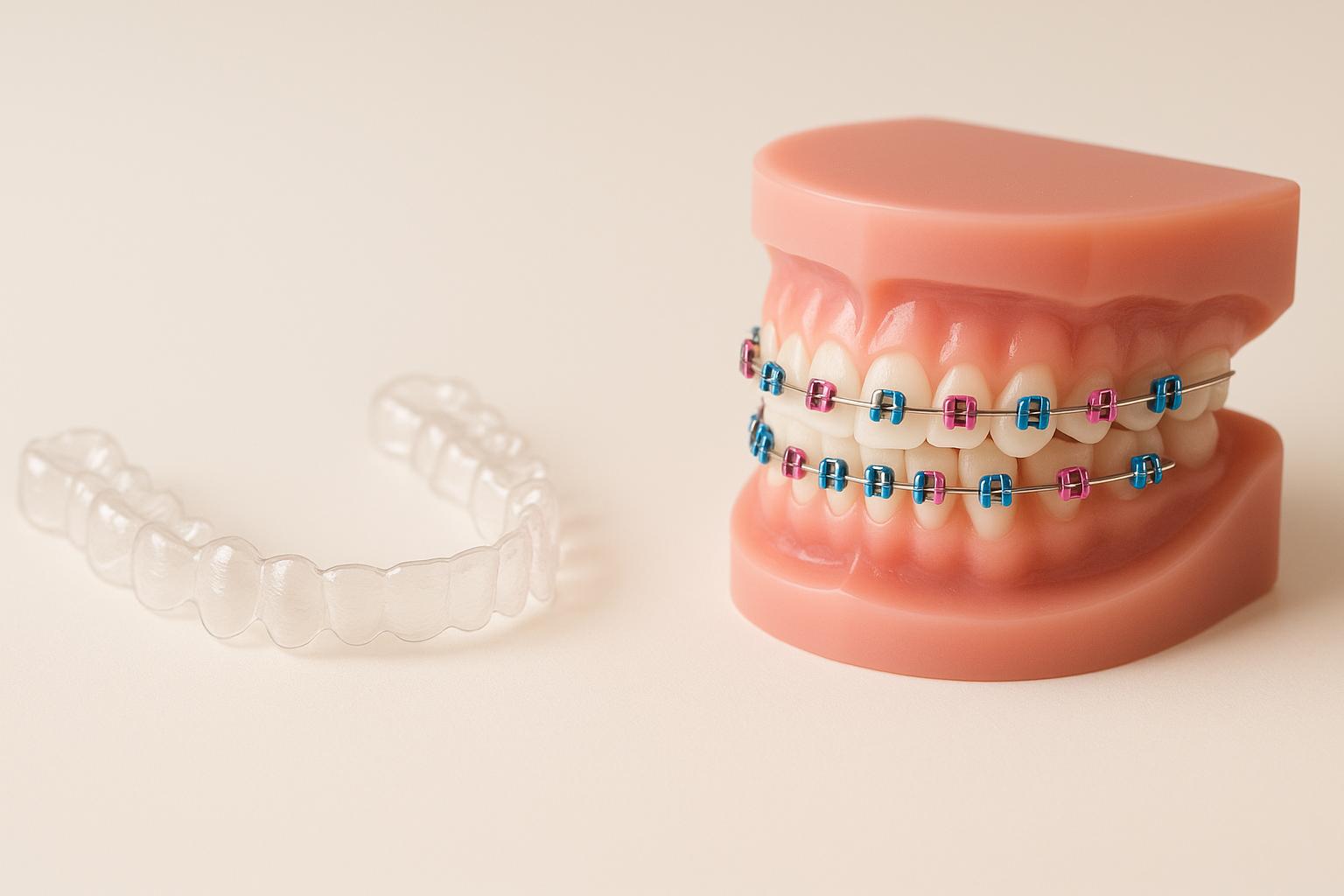
Choosing between Invisalign and braces depends on your dental needs, budget, and lifestyle. Invisalign is nearly invisible and removable, making it a discreet and flexible option for minor alignment issues. Braces, however, are fixed and better suited for complex dental problems, offering consistent results without requiring daily compliance. Here’s a quick breakdown of the key differences:
- Appearance: Invisalign is clear and subtle, while braces are more noticeable but can include ceramic options for a less visible look.
- Comfort: Invisalign aligners are smooth and removable, while braces can cause irritation but are effective over time.
- Treatment Duration: Invisalign works faster for mild cases, whereas braces handle severe issues with more precision.
- Cost: Invisalign is generally more expensive; braces are often more affordable.
- Lifestyle Impact: Invisalign allows more freedom with eating and cleaning but requires discipline. Braces, although fixed, need dietary adjustments and extra cleaning care.
Quick Comparison
| Factor | Invisalign | Braces |
|---|---|---|
| Appearance | Clear, nearly invisible | Visible (metal or ceramic options) |
| Comfort | Smooth, removable, less irritation | Fixed, potential irritation |
| Treatment Duration | Shorter for mild cases | Longer but handles complex issues |
| Cost | Higher | Lower |
| Lifestyle Impact | Flexible with meals, requires discipline | Dietary restrictions, more cleaning effort |
Consult your orthodontist to find the best solution tailored to your dental needs.
Invisalign vs Braces: Tips from a Board Certified Orthodontist
1. How They Look
When deciding between Invisalign and braces, their appearance often plays a big role. After all, how your orthodontic treatment looks can impact your confidence in both social and professional settings.
Invisalign: Subtle and Clear
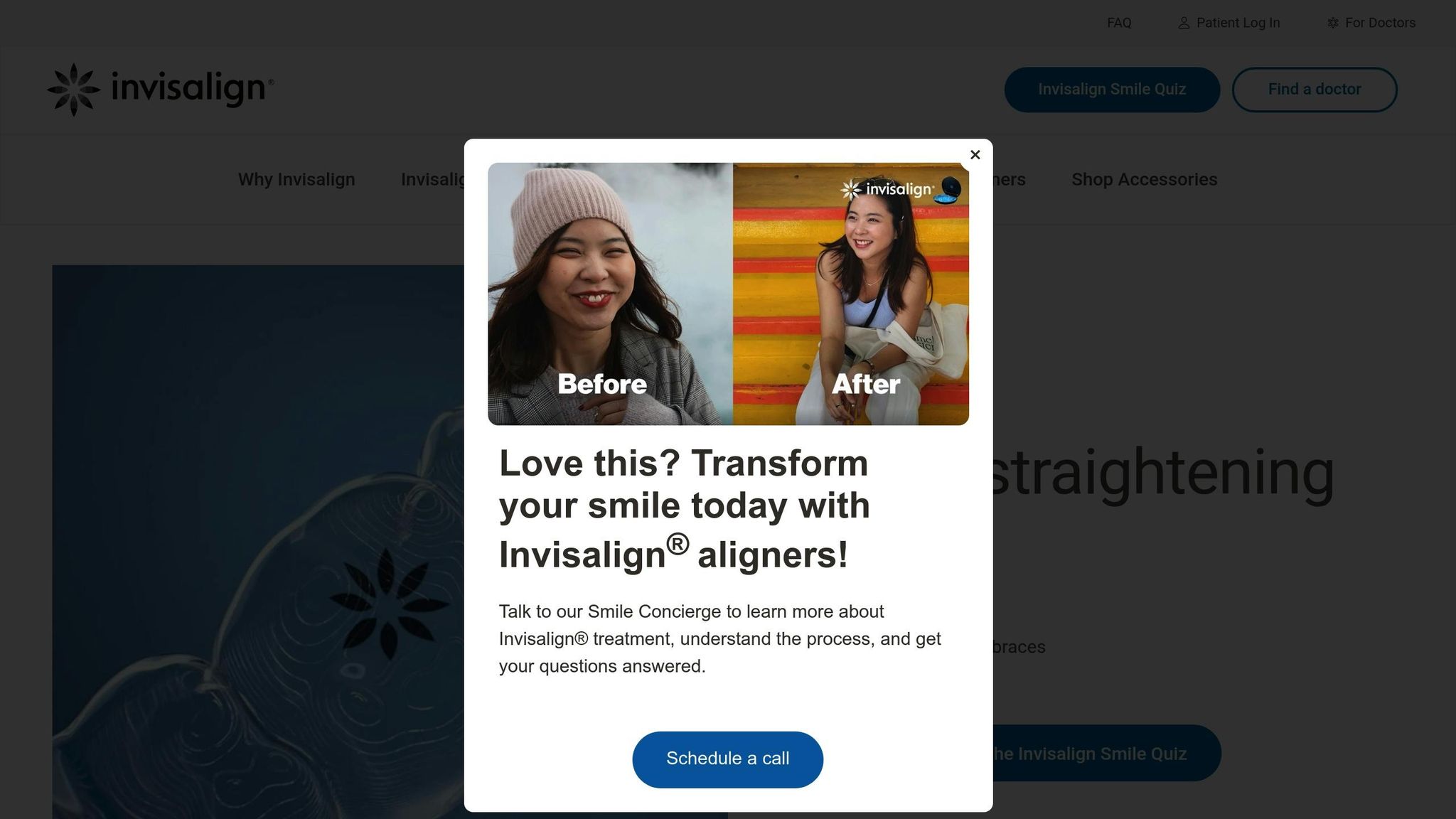
Invisalign aligners are crafted from clear plastic and designed to fit snugly over your teeth, making them a discreet option for straightening your smile. Even if your treatment requires extras like SmartForce Attachments or clear elastics for more complex adjustments, the aligners remain nearly invisible.
"Invisalign aligners provide a discreet way to achieve a perfect smile, which is particularly appealing to our teen and adult patients." – Dr. Steve Darley, leading orthodontist [1]
This low-key design is especially appealing for adults working in professional environments and teenagers who might feel self-conscious about their appearance during treatment.
Braces: Traditional and Noticeable
Metal braces, on the other hand, are hard to miss. The brackets and wires attached to your teeth create a metallic look that can draw attention, which might affect your confidence when smiling or speaking in public.
For those looking for a less noticeable option, ceramic braces provide an alternative. These use tooth-coloured or clear brackets that blend with your teeth, making them less obvious than metal braces. While still more noticeable than Invisalign, ceramic braces offer a compromise for those who want the effectiveness of traditional braces with a subtler appearance.
"Unlike metal braces, Invisalign aligners are smooth and virtually invisible, reducing irritation and boosting patient confidence." – West Family Orthodontics [2]
2. Comfort and Cleaning
Daily comfort and easy oral care are essential parts of your orthodontic journey. Both Invisalign and traditional braces have unique characteristics that can shape your experience. One of the key differences lies in how each option fits into your daily routine, particularly when it comes to comfort and maintaining oral hygiene.
Invisalign: Smooth and Removable
Invisalign aligners are designed with comfort in mind, thanks to their smooth plastic material. The aligners are carefully trimmed to minimise irritation to your lips, cheeks, and tongue.
"Many adults find aligners gentler on lips and cheeks. Braces can cause initial rubbing (wax helps)." – Access Dental Care [4]
They work by applying gentle, consistent pressure to your teeth. While some discomfort is normal, especially during the first few days of switching to a new set of aligners, it’s generally mild compared to braces.
"With Invisalign, gentle pressure is exerted on the teeth via a retainer. This means that, while not entirely avoidable, the pain is much less than those with braces experience." – Dentistry in Canterbury [5]
You might notice slight side effects at first, like a temporary lisp or extra saliva, but these usually fade within a couple of weeks as your mouth adjusts.
When it comes to cleaning, Invisalign makes things simple. Since the aligners are removable, you can stick to your normal brushing and flossing routine without any extra steps. This helps lower the risk of plaque buildup and keeps your teeth and gums healthy throughout your treatment.
Braces: Fixed with Special Care Needed
Traditional braces, on the other hand, require a little more effort to manage. Because they’re fixed in place, the brackets and wires can sometimes cause irritation inside your mouth. This is especially noticeable in the early days, though most people adjust over time. However, the discomfort can return after tightening appointments or if a wire or bracket breaks.
"Traditional braces may cause initial irritation from brackets and wires against soft tissues, typically resolving as patients adapt. Invisalign aligners generally cause less soft tissue irritation but may create mild pressure sensations when transitioning to new aligners." – Smile Lounge [3]
The discomfort with braces is often more intense compared to Invisalign, particularly during the first few weeks of wearing them and after adjustments.
Cleaning your teeth with braces can be a bit tricky. The brackets and wires create small spaces where food and plaque can get trapped, making thorough cleaning more challenging. To keep your teeth healthy, you might need to use tools like interdental brushes, floss threaders, or water flossers. Without careful cleaning, there’s a higher risk of plaque buildup, cavities, and gum problems during treatment.
While both options have their pros and cons, understanding these differences can help you choose the one that best suits your lifestyle and preferences.
3. Treatment Length and Results
When deciding between Invisalign and braces, it’s important to understand how treatment duration and outcomes differ. The right choice depends on your specific dental needs and the complexity of your alignment issues.
Invisalign: Best for Simpler Alignment Issues
Invisalign is often a quicker option for those with mild to moderate alignment concerns. These clear aligners are ideal for cases like minor crowding, small gaps, or slight bite misalignments. However, their effectiveness hinges on wearing them consistently every day – any lapse in compliance can extend the treatment period.
Invisalign tends to work well for:
- Slightly overlapping teeth (minor crowding)
- Small gaps between teeth
- Minimal bite issues, such as mild overbites or underbites
- Minor alignment shifts after previous orthodontic work
However, Invisalign may not be the best choice for severe crowding, significant bite problems, or teeth that need major rotations.
For more complex cases, braces might be the better option.
Braces: Tackling Complex Dental Issues
Braces are a reliable solution for more challenging orthodontic problems. Since they’re fixed in place, braces provide continuous pressure to move teeth into alignment. This makes them particularly effective for:
- Severe crowding with significant overlap
- Larger gaps that need extensive adjustments
- Complex bite issues, including pronounced overbites, underbites, and crossbites
- Teeth with significant rotations
- Vertical alignment problems requiring repositioning
Because braces are not removable, treatment progress doesn’t depend on daily compliance. Your orthodontist can make regular adjustments during appointments, which helps keep the timeline on track, even for complicated cases.
Speak with your orthodontist to find out which option aligns best with your needs and goals.
sbb-itb-2be92ed
4. Cost Differences
When deciding on orthodontic treatment, understanding the cost differences is just as important as evaluating comfort and outcomes. In Australia, the price of orthodontic care can vary widely. Factors such as the type of appliance, the complexity of your dental needs, the length of treatment, the clinic’s location, and the orthodontist’s experience all play a role in determining the final cost [6][7][8][9].
Invisalign: A More Expensive Option
Invisalign tends to be the pricier choice. The costs depend on the complexity of the case – simpler treatments are on the lower end, while more challenging cases can significantly increase the expense [6][7][8][9]. Additionally, clinics in larger cities like Sydney or Melbourne often charge more compared to those in regional areas.
Braces: A Budget-Friendly Alternative
Metal braces are usually the more affordable option [6][7][8][9]. The total cost can also depend on the treatment duration, with braces often being a cost-effective solution for addressing more intricate dental issues. It’s worth keeping in mind that while upfront costs may be lower, it’s the long-term value and effectiveness of the treatment that truly matter.
5. Daily Life Impact
After weighing factors like appearance, comfort, treatment duration, and cost, it’s important to think about how each option fits into your day-to-day life. Choosing between Invisalign and braces can affect simple routines – like eating, socialising, or even work. These daily details can often be the deciding factor when paired with earlier considerations.
Invisalign: Flexibility for Meals and Special Moments
One of Invisalign’s biggest perks is its removability, offering flexibility during meals or special occasions. You won’t have to worry about food getting stuck or the look of metal brackets.
Studies suggest that Invisalign’s discreet design can boost self-esteem and ease social anxiety [26–28]. This added confidence can make a noticeable difference in both personal and professional interactions.
In work settings, Invisalign’s nearly invisible aligners allow for natural communication, helping you feel more comfortable smiling or speaking freely [10]. However, this convenience comes with responsibility. Aligners need to be worn for most of the day – only removed for meals, drinking (except water), and brushing. Adhering to this routine is crucial for successful results.
Braces: Fixed and Food-Sensitive
Traditional braces bring their own set of lifestyle adjustments. Since they’re fixed, they require dietary changes to avoid damaging the brackets or wires. Hard, sticky, or chewy foods – like nuts, caramel, gum, or crusty bread – are usually off-limits. Even foods like apples or corn often need to be cut into smaller, more manageable pieces.
Braces are also more noticeable, which can sometimes impact confidence in social settings [27,28]. On the practical side, maintaining oral hygiene becomes a bit more involved. Tools like interdental brushes, floss threaders, or water flossers are essential to keep your teeth and braces clean.
That said, many patients quickly adapt to life with braces. A key advantage is that progress doesn’t depend on remembering to wear them – they’re always working, no matter what.
Making Your Decision
When deciding between Invisalign and traditional braces, several factors – appearance, comfort, treatment complexity, cost, and how they fit into your daily life – play a role in shaping the right choice for you. Let’s break these down to help you make an informed decision.
If maintaining a polished, professional look or feeling confident in social settings is a priority, Invisalign’s nearly invisible aligners might appeal more than the noticeable wires and brackets of traditional braces. For comfort and convenience, Invisalign’s removable design makes eating and cleaning easier, while traditional braces offer a more hands-off experience, as they stay in place and don’t require daily compliance.
The nature of your dental needs is another key consideration. Invisalign works well for minor alignment issues and often has shorter treatment times. On the other hand, braces are better suited for tackling more complex bite and alignment problems, offering precise control over tooth movement.
Cost is another factor to weigh, as orthodontic treatments are a significant financial commitment. Traditional braces tend to have a lower upfront cost compared to Invisalign. Be sure to check your private health insurance to see what orthodontic benefits are covered, as these can vary widely.
Finally, think about how each option fits into your routine. Invisalign demands discipline, requiring you to wear the aligners for 20–22 hours a day. Braces, while fixed, come with dietary restrictions and require more effort in cleaning and maintenance.
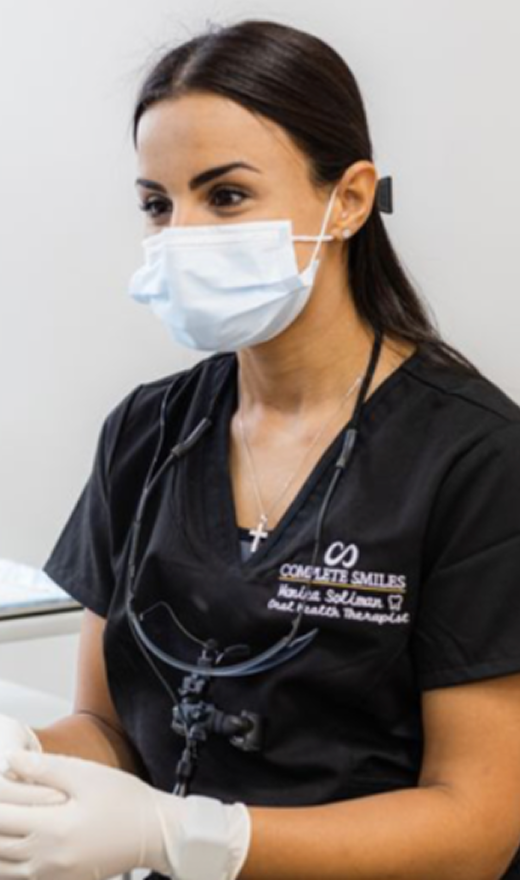
To make the best decision, consult a qualified orthodontist who can evaluate your unique dental condition, including tooth alignment, bite issues, and jaw structure. Clinics like Complete Smiles Bella Vista (https://completesmilesbv.com.au) can create a personalised treatment plan tailored to your needs.
Both Invisalign and traditional braces are proven to help achieve straighter, healthier smiles. The right choice is the one that aligns with your dental goals, budget, and lifestyle.
FAQs
What should I consider when deciding between Invisalign and braces for orthodontic treatment?
When deciding between Invisalign and braces, it’s crucial to consider factors like how effective the treatment is, appearance, and how well it fits into your daily life. Traditional braces are typically the go-to for more complex dental issues because they allow for precise control over tooth adjustments. Invisalign, with its clear aligners, offers a more discreet option, but it demands commitment – aligners need to be worn for 20–22 hours a day to work properly.
Cost and treatment duration are also important points to think about. Braces may sometimes be the more budget-friendly choice, while Invisalign is often favoured by those who value a less noticeable treatment. To make the best decision for your unique situation, it’s a good idea to consult with an experienced dentist or orthodontist who can guide you based on your needs and goals.
What’s the difference between Invisalign and braces when it comes to maintenance and daily lifestyle?
Invisalign aligners are designed to be removable, which adds a level of convenience when it comes to eating, brushing, and flossing. While they do require regular cleaning – both the aligners themselves and your teeth – they generally offer more freedom with food choices compared to traditional braces.
On the other hand, braces are fixed in place, which can make maintaining oral hygiene a bit more challenging and often means avoiding certain foods. They also need regular adjustments, usually every six weeks. For those who value flexibility and ease in their daily routines, Invisalign can be a less intrusive option that fits more seamlessly into a busy lifestyle.
When might braces be a better choice than Invisalign for orthodontic treatment?
Braces tend to be the go-to choice for tackling more complex orthodontic challenges, such as severe crowding, noticeable gaps, or major bite issues. Since they’re fixed in place, braces allow for constant, precise adjustments, making them particularly effective for handling intricate tooth movements.
When a higher level of control is required to achieve specific results, braces often deliver a more dependable solution. They’re especially well-suited for severe cases where Invisalign’s removable aligners may not provide the same level of effectiveness.
Related Blog Posts
- Invisalign vs Traditional Braces: A Complete Comparison
- Types of Braces and Their Costs Explained
- What Are Lingual Braces?
- 5 Factors Affecting Orthodontic Treatment Feasibility
Important Notice: Any surgical or invasive procedure carries risks. Before proceeding, you should seek a second opinion from an appropriately qualified health practitioner.
Individual results may vary. The information provided in this article is for educational purposes only and does not constitute medical advice.
Checkout Related Blogs



Get in touch with us
For more information, call us now to start feeling better. Or fill the form below to make appointment
The Latest News from Complete Smiles
How to Clean Clear Plastic Retainers
Checklist for Choosing Wearable Dental Devices
Checklist for Choosing Cloud AI Platforms in Dentistry
Complete Smiles Bella VistaAccepts All Major Health Funds, Including