





Future of Cosmetic Dentistry: Green Materials
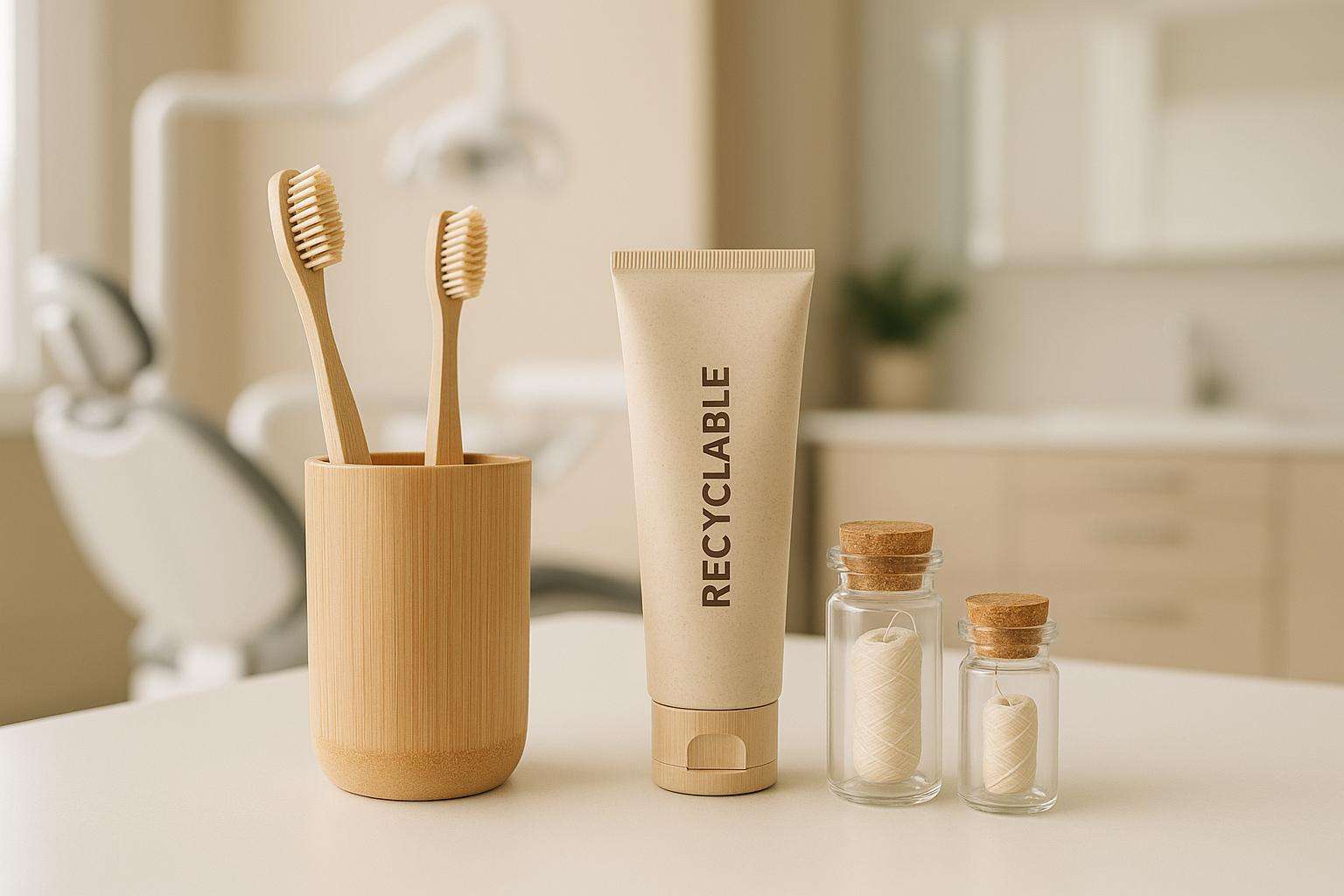
Cosmetic dentistry in Australia is shifting towards eco-friendly materials and practices, balancing patient care with reduced environmental impact. This movement aligns with the country’s goals to lower emissions and promote sustainable healthcare. Here’s what you need to know:
- Green materials: Mercury-free and BPA-free options, biocompatible ceramics, and hydroxyapatite-based products are replacing traditional materials.
- Waste reduction: Biodegradable and recyclable options are cutting down on dental waste.
- Advanced technologies: Digital X-rays, 3D printing, and intraoral scanners help reduce waste and improve precision.
- Carbon footprint: Transport and energy use are key contributors to emissions, but clinics are adopting energy-efficient equipment and digital workflows to address this.
- Patient demand: Australians are increasingly choosing practices that offer safer, eco-friendly treatments.
The shift to green dentistry offers safer options for patients while helping clinics reduce waste, emissions, and costs over time.
Biomimetic Dentistry – What Actually Is It? – PDP135
Advances in Green Cosmetic Dental Materials
The dental industry is stepping up its game with eco-friendly, patient-safe cosmetic materials. These developments are part of a broader movement towards sustainable and environmentally conscious dental care.
Mercury-Free and BPA-Free Alternatives
Today’s composite fillings are crafted with BPA-free resins and non-mercury amalgams, offering durability on par with traditional materials [5][10]. Additionally, ceramics and bioglass have become the go-to for crowns, fillings, and veneers, combining strength, biocompatibility, and aesthetic appeal [7].
The rise of biodegradable products further highlights the industry’s commitment to greener solutions, paving the way for more sustainable dental care.
Biodegradable and Recyclable Options
Eco-conscious dentistry isn’t just about chemical safety – it’s also about cutting down on waste. Biodegradable and recyclable materials are gaining traction as a way to reduce the environmental footprint of dental practices. These materials, made from renewable and non-toxic sources, are designed to degrade naturally while still meeting the rigorous performance standards of traditional options [6][10].
However, there’s a catch. Biodegradable materials sometimes fall short in mechanical strength compared to their traditional counterparts, which can limit their use in specific applications [9]. Despite this, the field is evolving rapidly, with promising potential to reshape the future of dentistry [9].
Hydroxyapatite-Based Products
Hydroxyapatite (HA) is one of the most exciting breakthroughs in sustainable cosmetic dentistry. As enamel is made up of 96% inorganic hydroxyapatite crystals [13], HA-based products are naturally compatible with tooth structures, making them ideal for restoration and remineralisation.
Interestingly, eggshell waste has emerged as a rich source of high-quality, biodegradable hydroxyapatite [12]. Additionally, plant-based synthesis methods are providing a non-toxic and cost-effective green alternative [12].
The effectiveness of HA-based solutions is well-supported by research. A 2017 study by Sharma et al. showed that hydroxyapatite nanoparticles (HANPs) outperform casein phosphopeptide–amorphous calcium phosphate (CPP–AC) in remineralising early-stage caries, boosting enamel’s calcium and phosphorus content [13]. Innovations like ionic substitutions with zinc, silver, or fluoride enhance these particles further, improving enamel repair, antimicrobial properties, and even osseointegration for implants [11][13].
Beyond traditional restorations, hydroxyapatite nanoparticles are now found in toothpaste, mouthwashes, and other dental products aimed at remineralisation and cavity prevention [13]. These advancements align with the growing demand for eco-friendly whitening solutions, such as biodegradable whitening strips and vegan-friendly formulas free from harsh chemicals [8]. With the dental equipment market projected to hit A$12.71 billion by 2025, the push for sustainable innovation is only set to grow [7].
Applications of Green Materials in Cosmetic Dentistry
Recent advancements in materials have brought eco-friendly practices to the forefront of cosmetic dentistry. From veneers to implants and teeth whitening, sustainable approaches are reshaping how treatments are performed. These green materials not only offer safer options for patients but also help minimise environmental impact.
Green Porcelain Veneers and Crowns
Porcelain veneers and crowns are now crafted using biocompatible ceramics and zirconia, which reduce risks of allergies and toxicity for patients [17]. Impressively, these materials form bonds up to five times stronger than natural enamel, with a lifespan of 10–15 years [14][16].
The integration of digital tools, such as 3D scanning, 3D printing, and CEREC technology, has further revolutionised the process. These innovations ensure precise, custom restorations that can often be completed in a single visit. Additionally, they support techniques for ultra-thin veneers while significantly cutting down on material waste [5][14][15].
The push for sustainability is also making waves in implantology.
Green Dental Implants
Zirconia implants have emerged as an eco-conscious alternative to traditional titanium implants. Producing zirconia implants generates about one-third less emissions compared to titanium, which has a carbon footprint of 85 kg CO₂-e per implant [18]. Despite this, zirconia implants maintain comparable five-year survival rates (96% versus 97%), avoid the release of metal ions, bond effectively with bone apatite, and reduce plaque build-up [18].
In Australia, many dental clinics are adopting sustainable practices to further reduce their environmental footprint. For instance, switching to compostable blister packs and bulk-sterile kits has cut packaging waste by up to 60% in some practices [18]. Digital workflows, including the use of intra-oral scanners and 3D-printed surgical guides, not only save time but also lessen dependency on disposable items. While zirconia implants currently cost 10–15% more than titanium options, the price difference is shrinking as demand for green alternatives grows [18].
Green Teeth Whitening and Restorative Treatments
Eco-friendly methods are also making their mark on cosmetic treatments like teeth whitening. Professionals are now offering formulations that prioritise both effectiveness and reduced sensitivity, while also being environmentally considerate [19]. In Australia, over 20% of individuals have whitened their teeth, though only about one-third opt for professional treatments [20].
"Using DIY kits poses health risks because the trays that come with the products are not custom-made, which means that they often don’t fit properly… The agent can come into contact with the gums and soft tissue, as well as ending up in the stomach… the last place the products actually end up is on the teeth." – Dr Mark Levi, Dentist and spokesman for the Australian Dental Association [20]
For restorative treatments, biocompatible materials are becoming the go-to choice. These materials deliver durable, high-quality results comparable to traditional options, without concerns over toxicity [17]. The use of digital dentistry further ensures precision and reduces waste during the process. Additionally, alternative whitening options, such as professional cleanings, whitening toothpastes, and natural methods, are gaining popularity. However, patients are advised to avoid DIY solutions like baking soda, charcoal, or fruit extracts, as these can erode tooth enamel [19].
Comparing Standard and Green Dental Materials
Building on earlier discussions about eco-friendly advancements in dentistry, this section takes a closer look at how traditional materials compare to sustainable alternatives. Understanding the differences between these two options can help patients and dental practices make informed choices. Both types of materials deliver effective results, but they differ significantly in terms of environmental impact, safety, and long-term costs.
Research shows that dental services contribute to emissions in three primary areas: 64.5% from travel, 19% from procurement, and 15.3% from energy use [21]. This highlights how material choices can influence a practice’s overall environmental footprint.
Green dental materials are designed to perform just as well as traditional ones while minimising risks to the environment and human health. For instance, BPA-free composite resins eliminate the risk of hormone disruption, and mercury-free amalgams reduce environmental contamination without compromising effectiveness [10].
In Australia, the sustainable dentistry market was valued at approximately AUD $300 million in 2023 and is growing at a rate of 8–10% annually [23]. This growth reflects increasing awareness of environmental issues and the potential cost advantages of eco-friendly practices. Digital dentistry tools, for example, reduce material waste while maintaining precision in creating custom restorations. One standout example is Sustainable Smiles, an Australian dental practice that implemented water-saving devices, cutting water usage by 40% without sacrificing patient care quality [3].
Comparison Table: Standard vs. Green Materials
| Aspect | Standard Materials | Green Materials | Key Difference |
|---|---|---|---|
| Environmental Impact | Higher carbon footprint and non-biodegradable waste | Lower environmental footprint with biodegradable components | Reduces overall environmental impact |
| Safety Profile | May include BPA, mercury, or other harmful substances | BPA-free, mercury-free, and more biocompatible | Minimises health risks |
| Durability | Reliable performance | Comparable durability | Equal reliability in dental treatments |
| Initial Cost | Standard pricing | Slightly higher due to production costs | Modest upfront premium with long-term benefits |
| Long-term Costs | Higher operational expenses | Efficiency and waste reduction lower costs by ~30% [3] | Potential for significant long-term savings |
| Waste Generation | Significant waste, potential chemical leaching | Biodegradable materials and sustainable packaging | Reduces waste and environmental harm |
| Patient Response | Generally accepted as standard | Increasingly popular among eco-conscious patients | Enhances reputation and patient loyalty |
These comparisons highlight the growing appeal of sustainable practices in Australian dentistry. Green materials prove that prioritising the environment doesn’t mean sacrificing clinical outcomes. For example, bioactive glass not only matches the durability of traditional amalgams but also promotes healing [22].
For Australian dental practices, adopting green materials is both an environmental responsibility and a smart business move. With more patients seeking sustainable healthcare options, practices that offer eco-friendly choices may see increased interest and stronger patient loyalty.
sbb-itb-2be92ed
Future of Green Cosmetic Dentistry
The cosmetic dentistry field is experiencing a significant shift, driven by new technologies and sustainable materials. These advancements not only improve patient care but also help minimise the environmental footprint of dental practices.
New Developments in Regenerative Dental Materials
Regenerative dentistry is changing how dental care is approached by focusing on repairing and regenerating damaged or lost dental tissues rather than simply replacing them. This is achieved through techniques like stem cell therapy, tissue engineering, and the use of bioactive materials [24]. It’s a move away from traditional restorative methods, offering a more natural and effective solution.
The global dental regeneration market, valued at USD $5.48 billion in 2024, is expected to grow to USD $9.78 billion by 2034, with an annual growth rate of 6.0% [27]. This growth is largely driven by the need to address severe conditions like periodontitis.
Stem cell therapies are at the forefront of this transformation. Dental pulp stem cells (DPSCs) are being used for pulp and dentin regeneration, while periodontal ligament stem cells (PDLSCs) are aiding in periodontal repair [24].
Sustainable biomaterials are also becoming viable alternatives. For example, cellulose-based materials provide a biodegradable option to traditional polymers and maintain excellent compatibility with human tissues [25]. Research by Miao et al. highlights soybean oil (SBO)-epoxidised acrylate as a new resin for creating biocompatible scaffolds. This material not only outperforms conventional options like polylactic acid (PLA) and polycaprolactone (PCL) in terms of biocompatibility but is also easier to manufacture [26]. Additionally, advancements in 3D bioprinting, especially with oil-based hydrogels, are enabling the creation of customised scaffolds tailored to individual patients. These innovations reduce risks such as infections and graft rejections commonly associated with traditional methods [26].
These breakthroughs in biomaterials are paving the way for integrating cutting-edge digital technologies into dentistry.
Trends in Digital Dentistry for Green Practices
Digital dentistry is combining innovation with sustainability to reshape dental care. For instance, intraoral scanners and digital impressions eliminate the need for traditional impression materials, significantly reducing plastic waste. Meanwhile, 3D printing using biodegradable resins ensures that only the required amount of material is used, with any leftover naturally decomposing [28][29].
The transition from film-based radiographs to digital X-ray systems is another step forward. This shift not only reduces hazardous chemical waste but also offers better image quality and lowers radiation exposure for patients [29]. On top of this, artificial intelligence is playing a growing role in diagnostics, promoting preventive care models that focus on early intervention. Virtual consultations are also helping to cut down on emissions by reducing the need for patient travel, which is a notable contributor to the carbon footprint of dental services [21].
These digital advancements are enabling dental practices to adopt more sustainable methods and are laying the groundwork for comprehensive green operations.
Role of Dental Clinics in Promoting Green Practices
Dental clinics are now central to the push for greener cosmetic dentistry, building on innovations in materials and digital technology. In Australia, clinics like Complete Smiles Bella Vista are leading the charge by incorporating digital workflows, sustainable materials, and advanced waste management systems.
Energy efficiency is another focus area. Clinics are adopting LED lighting and high-efficiency vacuum systems to reduce energy consumption [4]. Additionally, amalgam separators are being used to capture mercury before it enters the sewage system, with specialised recycling companies ensuring its safe disposal [22].
Educating patients is equally important. By explaining the environmental and health benefits of sustainable materials, clinics can encourage patients to choose these eco-friendly options. This, in turn, creates a positive cycle where increased demand drives further innovation and adoption of green practices within the industry.
Conclusion
Cosmetic dentistry is steadily embracing sustainable practices that prioritise both patient care and environmental responsibility. As Prof. Ihsane Ben Yahya, FDI President, explains:
"Dentists and dental teams can play an active role in reducing the environmental impact of dentistry, while safeguarding optimal patient care. This online Toolkit for Sustainable Dentistry is a step towards helping dental practices adopt measures to reduce their carbon footprint." [30]
Green dentistry is reshaping the field, offering benefits like safer treatments with biocompatible materials, reduced exposure to harmful substances, and a more holistic approach to oral health [1]. These materials not only deliver outstanding aesthetic results but also support long-term oral health without sacrificing quality or durability.
Emerging technologies such as digital X-rays, LED lighting, and water-saving systems are helping reduce the environmental footprint of dental practices [22][4]. These advancements allow dental services to maintain high standards of care while minimising their impact on the planet.
Sustainable dentistry also proves to be economically savvy in the long run, offering cost savings alongside its environmental advantages [10]. With more patients seeking out practices that reflect their commitment to sustainability [10], this shift creates a win-win scenario – financially sound and environmentally conscious.
In Australia, the adoption of green protocols is on the rise. From energy-efficient equipment to the use of regenerative materials, dental practices are paving the way for a new, eco-friendly model of care. As the FDI highlights:
"The prevention of oral diseases and the promotion of health should be recognised as the most sustainable way to ensure optimal, accessible and affordable oral health with minimum impact on the environment." [2]
This growing movement signals a promising future where dental care is not only effective but also aligned with the principles of sustainability.
FAQs
What are the advantages of using hydroxyapatite in cosmetic dentistry over traditional materials?
Hydroxyapatite brings several important advantages to cosmetic dentistry when compared to more traditional materials. One standout feature is its ability to blend seamlessly with tooth enamel, encouraging remineralisation and aiding in the restoration of tooth structure. This not only helps reduce sensitivity but also enhances the natural brightness of teeth.
What’s more, hydroxyapatite is highly compatible with the body, promoting the natural repair of teeth. Its antimicrobial properties also play a role in cavity prevention and enamel protection, making it a reliable option for maintaining oral health over the long term.
What impact do biodegradable and recyclable materials have on the durability and effectiveness of cosmetic dental treatments?
Cosmetic dentistry is taking a greener turn with the use of biodegradable and recyclable materials, aiming to combine sustainability with the durability and effectiveness patients expect. Studies indicate that materials such as bioplastics, biodegradable ceramics, and recyclable metals can match – or even outshine – traditional options in certain cases.
These eco-conscious materials are designed to be both sturdy and long-lasting while significantly reducing their environmental footprint. By cutting down on waste and encouraging recycling, they offer a practical solution for environmentally aware dental care. As technology evolves, these sustainable options are becoming a dependable choice, aligning perfectly with Australia’s increasing emphasis on eco-friendly healthcare practices.
How are dental clinics in Australia embracing sustainability and reducing their environmental impact?
Sustainability in Australian Dental Clinics
Across Australia, dental clinics are stepping up their efforts to embrace more environmentally conscious practices without compromising the quality of care they provide. These changes involve initiatives like reducing waste by increasing recycling efforts, moving towards digital systems to cut down on paper use, opting for environmentally friendly materials, and collaborating with suppliers who share a commitment to sustainability.
The Australian Dental Association plays a key role in this shift, offering clinics valuable resources and guidelines. These cover areas such as improving energy efficiency, cutting down waste, and selecting sustainable materials. This growing focus highlights how the dental industry is balancing its responsibility to the planet with its dedication to patient care.
Related Blog Posts
- What Are Biocompatible Dental Materials?
- Energy-Efficient Dental Materials: Overview
- Eco-Friendly vs. Traditional Dental Materials
- ISO Standards for Dental Materials
Important Notice: Any surgical or invasive procedure carries risks. Before proceeding, you should seek a second opinion from an appropriately qualified health practitioner.
Individual results may vary. The information provided in this article is for educational purposes only and does not constitute medical advice.
Checkout Related Blogs




Get in touch with us
For more information, call us now to start feeling better. Or fill the form below to make appointment
The Latest News from Complete Smiles
How to Clean Clear Plastic Retainers
Checklist for Choosing Wearable Dental Devices
Checklist for Choosing Cloud AI Platforms in Dentistry

Complete Smiles Bella VistaAccepts All Major Health Funds, Including





