





VR in Dentistry: What Patients Should Know
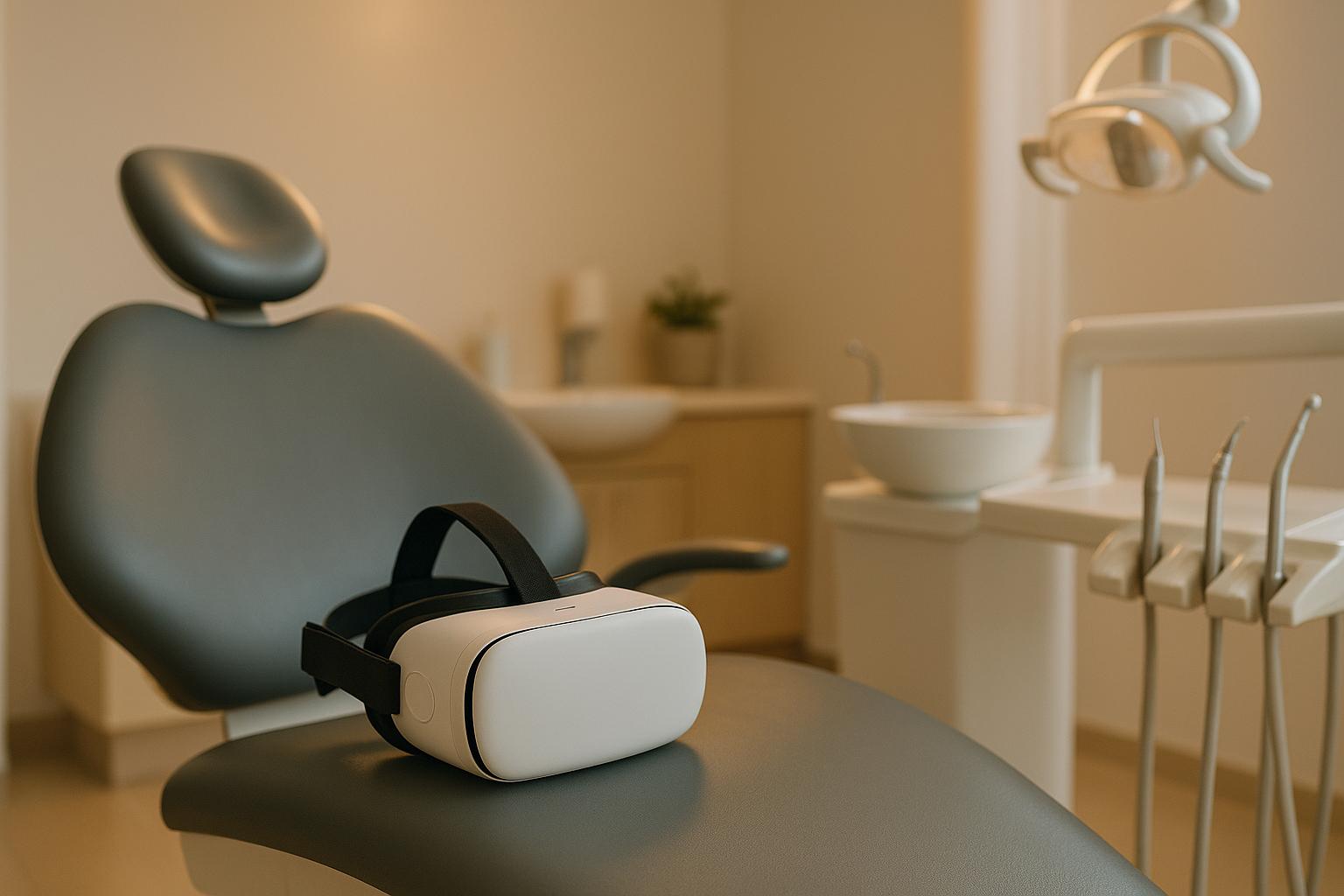
Virtual reality (VR) is changing how Australians experience dental care. Using lightweight headsets, VR immerses patients in calming environments like beaches or forests, reducing anxiety during dental procedures. It also helps dentists explain treatments with 3D models, making complex procedures easier to understand. Studies show that over 90% of patients are willing to use VR again, and it’s being adopted in clinics across major cities like Sydney, Melbourne, and Brisbane. While not suitable for everyone, such as those prone to motion sickness or claustrophobia, VR offers a modern, non-invasive way to improve comfort during dental visits. Costs vary, so check with your clinic about availability and pricing.
Using Virtual Reality in Dental Practice
How Virtual Reality Works in Dental Clinics
This section dives into how virtual reality (VR) is used to enhance dental visits and improve patient comfort.
VR Equipment Used in Dental Offices
Dental clinics rely on specialised VR systems designed to meet high standards of cleanliness and reliability. These systems connect to computers or tablets running dedicated dental software. The setup creates an immersive experience by combining visuals with integrated audio. Patients can enjoy calming virtual environments – like tranquil nature scenes – while also hearing important dental instructions. The software often includes tailored content for relaxation or education, ensuring it meets individual patient needs.
When Dentists Use VR During Your Visit
VR can be introduced at different stages of your dental visit to help reduce stress and discomfort. Dentists might use it during initial consultations, routine procedures, or even while administering local anaesthetic. It’s also common for VR to be offered during waiting periods to keep patients relaxed. Some clinics take it a step further by using VR as a teaching tool, allowing patients to explore 3D models of their teeth or treatment plans in an interactive way.
Which Patients Can Use VR
VR is generally suitable for older children and adults, though the exact age range depends on the clinic. However, it’s not ideal for everyone. Patients who experience severe motion sickness, epilepsy, vestibular issues, claustrophobia, or cognitive challenges should discuss their options with their dentist. Most VR systems are designed to accommodate glasses and other vision needs, making them accessible to a wide range of individuals.
Benefits of Virtual Reality for Dental Patients
Virtual reality (VR) is making waves in dental care, offering a fresh way to improve how patients understand and experience treatments.
Better Understanding of Dental Procedures
With VR technology, dentists can provide 3D visualisations of your dental anatomy and treatment plans, giving you a much clearer picture of what’s happening inside your mouth [2]. Instead of relying on verbal explanations or flat 2D images, you can virtually explore your own mouth, seeing exactly where the issues lie and how they’ll be addressed [2]. Some dentists even use VR to simulate treatments, walking you through the process step by step [2]. This hands-on approach not only helps you make informed decisions but also reduces the uncertainty that often comes with dental visits.
More Comfortable Dental Visits
VR doesn’t just stop at education – it’s also about making your experience at the dentist more comfortable. By improving communication and helping you feel more prepared, VR ensures you’re more at ease during procedures [3]. This interactive way of understanding treatments helps build trust and collaboration with your dentist, ultimately leading to a more satisfying visit.
sbb-itb-2be92ed
What Australian Patients Need to Know
Here’s what you should know about experiencing VR in dental care.
What Happens During a VR Dental Visit
A VR dental appointment usually begins with an introduction to the technology. You’ll be given a hygienic, lightweight headset designed to be comfortable and easy to wear. In some clinics, the technology may be used during consultations to show a digital model of your teeth, helping your dentist explain any issues and discuss treatment options.
During procedures, VR often serves as a distraction tool. Patients are immersed in soothing virtual environments that help reduce the awareness of sounds and sensations associated with dental work. The system adjusts to your movements, and the duration and intensity of the VR experience are tailored to match your comfort level and the type of procedure. If you ever feel overwhelmed, let your dentist know – they can adjust the settings to ensure a more relaxing experience.
Possible Side Effects and Limits
While VR is generally safe for most people, there are a few things to keep in mind. Some patients might experience mild motion sickness or dizziness, but these effects usually disappear quickly once the headset is removed. If you’re prone to motion sickness, mention it to your dentist beforehand.
Occasionally, patients report slight eye strain after extended VR use, similar to what happens after long periods of screen time. Although most headsets are designed to be lightweight and comfortable, younger children – especially those under 12 – might find them too bulky or distracting. Dentists typically assess whether VR is a good fit for younger patients on a case-by-case basis.
If you have sensory sensitivities, claustrophobia, significant vision impairments, or certain neurological conditions, it’s important to discuss these with your dental team. They can often adapt the experience or recommend alternative ways to keep you comfortable during your visit.
Cost and Where to Find VR Dentistry in Australia
Since VR-assisted dentistry is still a relatively new offering in Australia, pricing details aren’t always standardised. In many cases, the cost of the VR component is included in the overall dental treatment rather than being listed as a separate fee. As for private health insurance, it’s unclear whether additional coverage is provided for these technology-based services. If you’re unsure, it’s best to ask your dental clinic and health fund directly about costs and coverage.
VR technology is more commonly available in major cities like Sydney, Melbourne, and Brisbane, where advanced tools and specialised training are more accessible. Some regional practices are also beginning to explore VR-enhanced care, though availability can vary. When searching for clinics that offer VR treatments, don’t hesitate to ask about the team’s experience with the technology and how it’s used to make visits more comfortable for patients.
The Future of VR in Australian Dentistry
Virtual reality (VR) is poised to bring notable advancements to dental care across Australia. While its primary use today revolves around easing patient anxiety, ongoing research is exploring how VR can play a more active role in clinical treatments. These developments hint at exciting changes that could reshape the dental experience.
New VR Dental Technology on the Horizon
Researchers are working on creating more immersive and interactive VR systems tailored to dentistry. Some of the areas being explored include advanced visual tools and interactive features that could transform how patients and practitioners engage with dental procedures. There’s also interest in using artificial intelligence to customise virtual environments for individual patients, making the experience more personal. However, these technologies are still in the experimental phase and will require thorough testing before they can be widely adopted.
Expanding VR Access in Australian Dental Clinics
The integration of VR into dental practices is expected to grow steadily. Larger clinics in metropolitan areas, which often have better access to cutting-edge technology, are likely to adopt these systems first. Over time, as the technology becomes more affordable, regional dental centres could follow suit. Factors like improved digital training programs, creative financing options, and continued investment in Australia’s digital infrastructure will play a key role in making VR more accessible across the country.
VR’s Role in Patient-Centred Dental Care
Currently, VR is primarily used to reduce patient anxiety, but its potential extends far beyond that. In the future, VR could play a significant role in enhancing patient education by making treatment options clearer and more understandable. This shift towards greater patient engagement aligns with a broader focus on personalised care. As these technologies evolve, it will be crucial to establish robust guidelines and protocols to ensure their safe and effective use in clinical settings. VR’s journey in dentistry is just beginning, and its potential to make dental care more engaging and patient-focused is immense.
Conclusion
Virtual reality is making waves in Australian dental practices, offering a fresh way to ease patient anxiety while improving understanding of dental treatments. If you’re curious about how it might enhance your experience, have a chat with your dentist about the VR options they offer. While not every clinic has adopted this technology yet, those that have can tailor it to suit individual preferences. During your visit, you can explore which virtual settings might work best for you and whether VR aligns with your treatment plan.
The potential for VR in Australian dentistry is immense. Globally, the AR and VR dentistry market is projected to hit US$3.5 billion (around AU$5.5 billion) by 2030 [1]. Closer to home, institutions like the University of Queensland are already weaving VR into their dental training programs, ensuring the next generation of professionals is well-equipped to use these advancements [1]. Beyond reducing stress, VR also helps patients better understand their treatments, making it a win-win for both comfort and education.
So, at your next appointment, don’t hesitate to ask your dental team about VR. They can guide you on whether it’s suitable for your treatment. As this technology becomes more widespread across Australia, it’s set to make dental care more personalised, comfortable, and effective – marking a new chapter in patient-centred dentistry.
FAQs
How does virtual reality make dental visits less stressful?
Virtual reality (VR) has the potential to make dental appointments far less stressful by offering patients a welcome distraction during procedures. By placing them in soothing virtual environments, VR takes their attention away from the dental work, helping to ease anxiety and discomfort.
Studies reveal that VR can dramatically reduce stress and even the perception of pain for people of all ages. This makes it an effective way to create a more pleasant experience at the dentist, keeping patients relaxed and making the process easier for everyone involved.
Are there any health conditions or side effects that could make virtual reality unsuitable during dental treatments?
While virtual reality (VR) can be a useful addition to dental care, it’s not the right choice for everyone. For instance, people with a history of seizures, epilepsy, or other neurological conditions should steer clear of VR, as it might trigger adverse symptoms. Similarly, those who experience dizziness, nausea, eye strain, or migraines could find these issues becoming more severe with VR.
Other potential side effects include blurred vision, feeling disoriented, or even balance problems, especially after extended use. If you have any existing health conditions, it’s a good idea to talk to your dentist beforehand to see if VR is a safe option for you.
What should I look for in an Australian dental clinic that uses virtual reality (VR)?
When choosing a dental clinic in Australia that uses virtual reality (VR), it’s worth looking into their experience with incorporating VR into patient care. Clinics that utilise VR effectively often use it for purposes like pain management or treatment planning, aiming to create a more comfortable and tailored experience for patients.
Make sure the clinic adheres to Australian dental standards and guidelines, using VR as part of evidence-based practices rather than as a marketing gimmick. A trustworthy clinic will focus on patient care and provide transparent information about how VR is integrated to support your dental health.
Related Blog Posts
- AR in Dental Care: Patient Education Tools
- 5 Benefits of AI in Laser Dental Treatments
- How AI Improves Remote Dental Care
- Video Conferencing Tools for Teledentistry
Important Notice: Any surgical or invasive procedure carries risks. Before proceeding, you should seek a second opinion from an appropriately qualified health practitioner.
Individual results may vary. The information provided in this article is for educational purposes only and does not constitute medical advice.
Checkout Related Blogs




Get in touch with us
For more information, call us now to start feeling better. Or fill the form below to make appointment
The Latest News from Complete Smiles
How to Clean Clear Plastic Retainers
Checklist for Choosing Wearable Dental Devices
Checklist for Choosing Cloud AI Platforms in Dentistry

Complete Smiles Bella VistaAccepts All Major Health Funds, Including





