





Surface Modifications vs. Bioactive Coatings
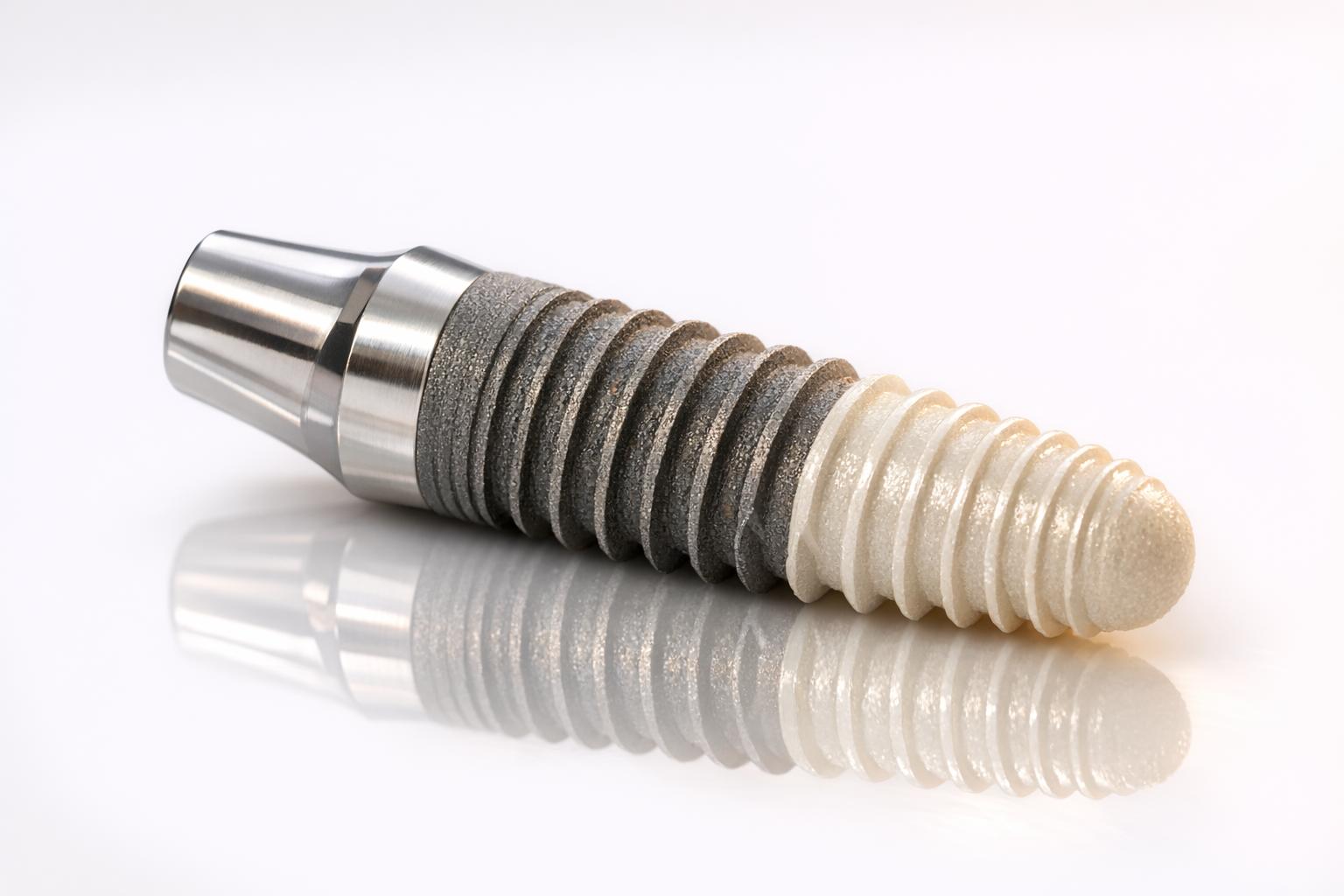
Dental implants are reliable, but 5–11% fail due to poor bonding with bone. The key to success lies in how the implant surface interacts with bone. There are two main methods to improve this:
- Surface Modifications: These change the implant’s structure (e.g., sandblasting, acid etching) to create a rough texture for stronger attachment.
- Bioactive Coatings: These add materials like hydroxyapatite or growth factors to actively stimulate bone growth and healing.
Both approaches aim to improve osseointegration, but they work differently. Surface modifications focus on mechanical stability, while bioactive coatings encourage biological bonding. Your choice depends on factors like bone quality and healing needs.
Quick Comparison
| Feature | Surface Modifications | Bioactive Coatings |
|---|---|---|
| Method | Physical/Mechanical | Chemical/Biological |
| Goal | Strong mechanical attachment | Faster bone healing |
| Materials | Titanium, zirconia | Hydroxyapatite, growth factors |
| Healing Speed | Standard (3–6 months) | Faster (1–3 months) |
| Cost | Lower | Higher |
| Main Use | Healthy bone cases | Poor bone quality or quick healing needed |
Each method has strengths and risks. Surface modifications are simpler and durable, while bioactive coatings are better for patients with specific challenges, like poor bone quality or higher infection risk. Always consult a dental professional to find the best solution for your needs.
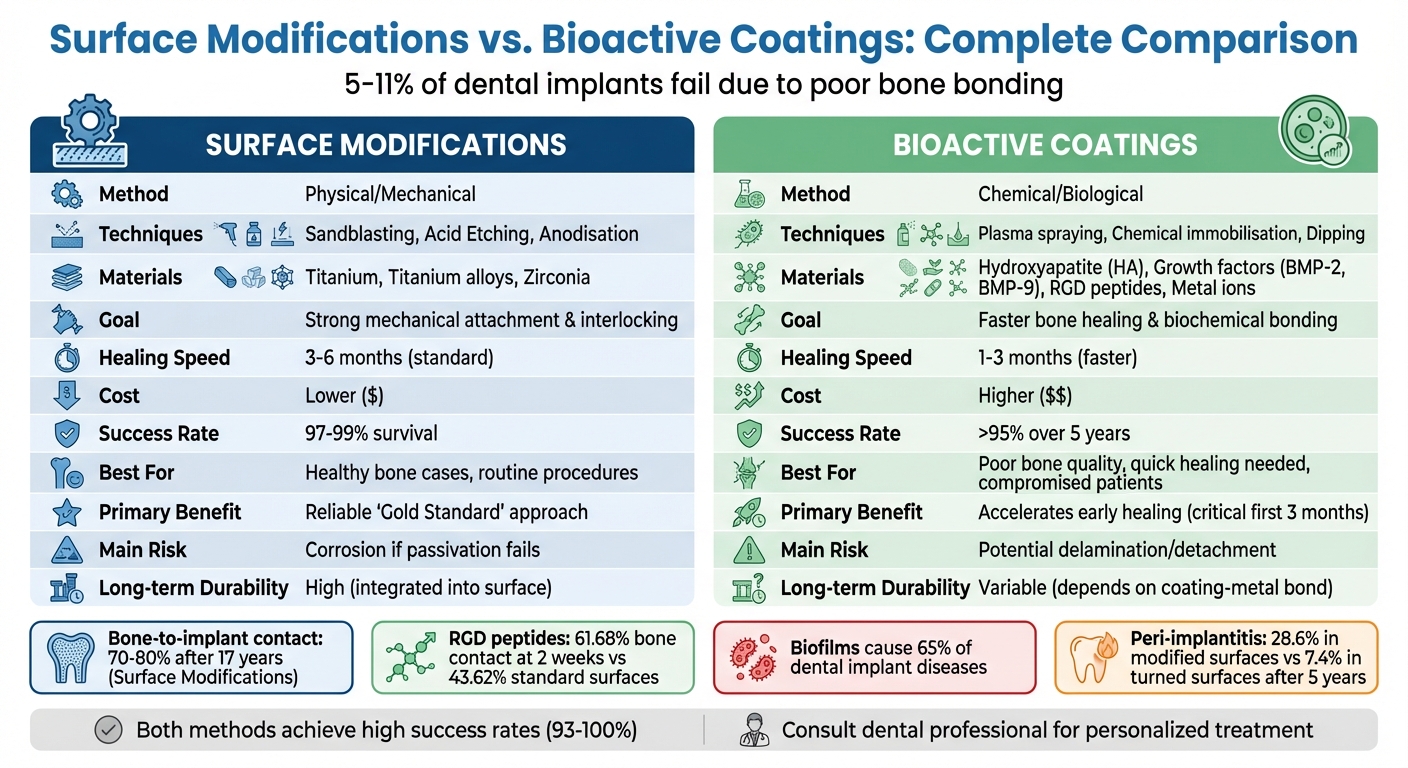
Surface Modifications vs Bioactive Coatings for Dental Implants Comparison
The HAnano Surface Coating Process
What Are Surface Modifications?
Surface modifications refer to techniques that change the physical structure and chemical properties of titanium implants, making them more compatible with bone tissue. Titanium, by nature, is inert, which means it doesn’t easily bond with bone cells [3]. These modifications address that limitation by altering the implant itself, encouraging bone cells to attach and grow.
Unlike bioactive coatings that add a separate layer on top of the implant, surface modifications work by directly changing the implant material. This approach improves durability and reduces the risk of failure over time [3][6]. Below are some of the key techniques used in this process.
Common Techniques
Several methods are used to achieve the benefits of surface modifications:
- Sandblasting: This technique involves blasting ceramic particles, like aluminium oxide (Al₂O₃), onto the implant’s surface. The process creates a rough texture that enhances mechanical interlocking, allowing the bone to anchor more securely [3][6].
- Acid Etching: Here, the implant is submerged in acids such as HCl, H₂SO₄, or HF. This treatment forms tiny pits and grooves on the surface while also removing any contaminants from manufacturing. The increased surface area provides more space for bone cells to attach and grow [3][7]. When combined with sandblasting, this method produces both macro- and micro-roughness, further boosting stability and cell growth [7].
- Anodisation: This electrochemical process thickens the implant’s natural titanium dioxide (TiO₂) layer, creating a porous structure that resembles bone. By adjusting the voltage and electrolyte composition, manufacturers can control the size and depth of these pores to optimise bone integration [3]. Additionally, this method enhances the implant’s resistance to corrosion.
Main Benefits
These modifications offer several advantages. They significantly improve durability and attachment while minimising the risks associated with coating failures [3][6].
They are also more economical compared to some bioactive coating methods, yet still deliver excellent results for bone integration [3]. The roughened surfaces created by these techniques provide a strong mechanical grip, giving the bone a stable base to grow around the implant [3][7]. Studies have shown that in implants lasting up to 17 years, the bone-to-implant contact area can reach 70%–80% [6], highlighting the long-term success of these modifications.
What Are Bioactive Coatings?
Bioactive coatings take surface modifications a step further by actively interacting with biological processes at the cellular level. These coatings, applied to dental implants, are made of biologically active materials designed to stimulate specific cellular responses in surrounding tissues [5][2]. Unlike traditional methods that depend largely on mechanical interlocking, bioactive coatings create a biochemical bond with the bone [5].
The magic happens at the cellular level, where these coatings engage mesenchymal stem cells. These cells are precursors to osteoblasts – the very cells responsible for forming new bone. Through biochemical signals, the coatings encourage a chemical connection with the bone, boosting osseointegration.
"Biochemical surface modification strives to utilise current knowledge of the biology and biochemistry of cell function and differentiation." – Puleo and Nanci [5]
This strategy effectively addresses titanium’s natural inertness, actively supporting bone integration [3].
Materials Used
A range of materials is used to achieve these biological effects:
- Bioceramics: Materials like hydroxyapatite (HA) and calcium phosphate (CaP) imitate the natural composition of bone [5][3].
- Biomolecules: Growth factors such as Bone Morphogenetic Proteins (BMP-2 and BMP-9) play a key role in guiding mesenchymal stem cells to become osteoblasts. For example, BMP-2 can be released from porous titanium surfaces for over 35 days, ensuring sustained bone growth [2]. Type I collagen aids vascularisation and reduces inflammation, while synthetic peptides with the RGD (Arg-Gly-Asp) sequence improve osteoblast adhesion through integrin receptor interactions [5][8].
- Metal Ions: Incorporating ions like strontium (Sr²⁺), magnesium (Mg²⁺), and zinc (Zn²⁺) enhances bone cell attachment and activates bone-related signalling pathways. Some of these ions also provide antibacterial properties [2].
Main Benefits
Bioactive coatings offer a host of clinical advantages:
- Faster Healing: By enhancing bone remodelling, these coatings reduce the time required for restoration [5][2].
- Improved Bone Integration: They increase bone-to-implant contact and bone density, which is particularly beneficial for patients with poor bone quality. Studies on animals have shown that implants coated with Bone Morphogenetic Proteins deliver excellent results in terms of bone-to-implant contact [5].
- Multifunctionality: These coatings not only encourage bone growth but also release antimicrobial agents, lowering the risk of infection. This is a crucial benefit, as infections contribute to around 20.3% of implant failures [2]. Additionally, advanced coatings can influence the immune response, promoting an anti-inflammatory state in macrophages to support tissue repair and bone formation.
Main Differences Between Surface Modifications and Bioactive Coatings
Comparison Table
The key difference between surface modifications and bioactive coatings lies in how they interact with the surrounding tissue. Surface modifications focus on physically altering the implant’s structure, whereas bioactive coatings introduce chemical or biological agents to actively engage with host cells.
| Feature | Surface Modifications | Bioactive Coatings |
|---|---|---|
| Primary Method | Physical/Mechanical (subtractive or structural) | Chemical/Biological (additive) |
| Common Techniques | Sandblasting, acid etching, anodising, grinding | Plasma spraying, dipping, chemical immobilisation of molecules |
| Key Materials | Titanium, titanium alloys, zirconia | Hydroxyapatite, calcium-phosphate, peptides, growth factors |
| Interaction Type | Topographical/Structural | Biochemical/Biological |
| Main Goal | Increase surface roughness and enhance mechanical interlocking | Accelerate bone healing and improve bone-to-implant contact quality |
| Biocompatibility | Relies on a stable, naturally forming TiO₂ layer | Bio-functionalised to actively modulate tissue response |
How They Work
This table highlights the distinct ways these methods influence implant performance and integration.
Surface modifications physically reshape the titanium surface using techniques like sandblasting or acid etching. These methods create micro-topographical features that improve mechanical interlocking with surrounding tissue. Additionally, titanium naturally forms a thin oxide layer (1–5 nanometres thick) that is highly stable and contributes to its exceptional corrosion resistance. This layer ensures the material remains biologically inert and unchanged after implantation [8][3].
Bioactive coatings, on the other hand, offer chemical signals to actively stimulate bone cell activity. For example, implants coated with RGD peptides have shown a 61.68% ± 4.21% bone-to-implant contact rate compared to 43.62% ± 10.79% for uncoated surfaces, just two weeks after placement [1]. This enhancement in early osseointegration supports faster bone healing, making it particularly beneficial in the initial weeks post-surgery.
The choice between these approaches often depends on clinical goals. Surface modifications are ideal for achieving long-term mechanical stability, while bioactive coatings are preferred for promoting rapid osseointegration during the critical healing period of one to three months [1][5]. These distinct methods address different priorities in implant dentistry and orthopaedics.
sbb-itb-2be92ed
Clinical Uses and Evidence
When to Use Surface Modifications
Surface modifications are best suited for cases involving healthy bone, where they ensure strong mechanical anchorage [7][9]. Techniques like acid-etching and sandblasting are widely used to create a rough surface that promotes effective bone-implant contact and supports cell growth. This approach provides high mechanical strength and long-term stability, with survival rates reaching about 95% over a 10-year period [7][9].
When to Use Bioactive Coatings
Bioactive coatings are particularly useful in situations requiring faster healing or when bone quality is compromised. These coatings are most effective during the critical first three months after implant placement, as they help reduce healing time and lower the risk of infections [5][4]. A 2024 meta-analysis highlighted bone morphogenetic proteins (BMPs) as the most effective bioactive coating for enhancing bone-to-implant contact [5]. Additionally, bioactive surfaces play a crucial role in infection prevention, which is significant given that biofilms contribute to approximately 65% of dental diseases, including peri-implantitis [4]. These findings highlight the growing importance of bioactive coatings in clinical practice.
Research Findings
Comparative research has shed light on the unique benefits and limitations of surface modifications and bioactive coatings. Bioactive coatings, in particular, excel in early-stage osseointegration. For instance, a 2020 study by Germanier and colleagues compared standard SLA surfaces to RGD peptide-modified surfaces in a pig model. The RGD-coated implants achieved a bone-to-implant contact rate of 61.68% ± 4.21% at two weeks, significantly higher than the 43.62% ± 10.79% observed with standard SLA surfaces (p < 0.001) [1]. These results demonstrate how bioactive peptides can significantly enhance early bone regeneration.
However, long-term human clinical data remains limited. As Nansi López-Valverde from Universidad Alcalá de Henares explains:
"Surface modification of Ti implants by organic bioactive molecules seems to favour osseointegration in the early stages of healing, but long-term studies are necessary to corroborate the results" [5].
A 2024 meta-analysis found that surface-modified implants showed a notable improvement in bone-to-implant contact, with an overall mean difference of 7.29 compared to unmodified titanium [10]. While both surface modifications and bioactive coatings boast high success rates – ranging from 93% to 100% – there are important considerations. For instance, rougher modified surfaces may be more prone to biofilm accumulation. One clinical study reported a 28.6% incidence of peri-implantitis in modified surfaces compared to 7.4% in turned surfaces after five years [9]. With peri-implant diseases affecting roughly 30% of patients, these findings emphasise the need for a tailored approach when selecting implants, taking into account each patient’s specific needs [4].
Pros and Cons
Comparison Table
Choosing the right implant modification technique is essential for tailoring treatments to a patient’s specific needs. Surface modifications and bioactive coatings each have their strengths and limitations, which clinicians must carefully consider to determine the best approach for individual cases.
| Factor | Surface Modifications (e.g., SLA) | Bioactive Coatings (e.g., HA, Peptides) |
|---|---|---|
| Primary Benefit | Reliable, fast osseointegration; considered the "Gold Standard" [11] | Speeds up healing in patients with compromised bone [11] |
| Cost | Lower; uses standardised manufacturing processes | Higher; involves additional materials and complex processing |
| Complexity | Moderate; requires precise control of surface topography [11] | High; demands chemical and biological stability [11] |
| Long-term Durability | High; integrated into the implant surface [3] | Variable; depends on the bond between coating and metal [11] |
| Healing Speed | Standard (typically 3–6 months) | Faster; promotes early-stage healing |
| Main Risk | Risk of corrosion if passivation fails [11] | Potential for delamination or detachment [11] |
| Clinical Use | Commonly used for routine cases [11] | Ideal for patients with poor bone quality [11] |
| Success Rate | 97–99% survival rates [11] | Over 95% survival over 5 years (with high-quality coatings) [11] |
The table highlights the key differences, but how do these factors translate into real-world clinical outcomes?
Surface modifications are known for their simplicity and dependability, boasting survival rates of 97–99% [11]. Their integration into the implant surface ensures excellent long-term mechanical stability. However, because titanium is naturally bioinert, these surfaces don’t actively promote biological responses. This can result in a slower initial healing process compared to bioactive coatings.
Bioactive coatings, on the other hand, are designed to enhance early bone formation, especially within the critical first three months post-surgery. These coatings stimulate osteoblast activity, making them particularly useful for patients with compromised bone quality or situations requiring early functional loading. Some coatings also offer antibacterial properties, an important feature since biofilms are responsible for around 65% of dental implant-related diseases [4]. Despite these benefits, bioactive coatings come with challenges. The risk of delamination is a significant concern [11], and certain bioactive agents, like silver or copper, may become toxic at high concentrations, potentially harming surrounding tissues [10].
From a cost perspective, surface modifications are more economical due to their standardised manufacturing processes. Conversely, bioactive coatings involve higher production costs due to their complexity [11]. For cases involving healthy bone, the reliability and lower cost of surface modifications often outweigh the added risks and expense associated with bioactive coatings [11].
Conclusion
Surface modifications and bioactive coatings offer two distinct approaches to improving implant integration. Surface modifications focus on enhancing mechanical stability, while bioactive coatings actively encourage bone growth.
Clinical outcomes differ depending on the method used. Surface modifications have shown consistent and cost-effective success, with clinical studies reporting survival rates as high as 99%. On the other hand, bioactive coatings are particularly beneficial in more complex cases, especially in the critical early months after surgery, by accelerating healing. The choice between these approaches often depends on individual patient factors. For patients with healthy bone, surface modifications provide a dependable and economical option. However, those with compromised bone quality or systemic conditions, such as diabetes, may benefit more from the biological advantages offered by bioactive coatings.
It’s important to note that much of the research supporting bioactive coatings is derived from animal studies, so clinicians should carefully interpret these findings in the context of human applications. Every patient’s unique circumstances should guide the choice of implant technology.
For the best results, consult a dental professional to determine the most suitable option for your bone health, overall condition, and treatment goals. When matched to individual needs, both approaches play a critical role in creating a personalised treatment plan. Regular follow-ups and tailored case management remain essential for achieving long-term success with implants.
FAQs
How do surface modifications enhance the durability and performance of dental implants?
Surface adjustments enhance the lifespan of dental implants by refining the micro- and nano-level structure and chemistry of titanium surfaces. These tweaks boost mechanical strength, improve corrosion resistance, and increase hydrophilicity, making the implants better equipped to withstand wear and tear over time.
On top of that, these changes encourage stronger osseointegration, which is the process where the implant bonds with the surrounding bone. This leads to greater stability, extended durability, and improved performance, ultimately benefiting the patient with better long-term results.
What advantages do bioactive coatings provide for dental implant patients with poor bone quality?
Bioactive coatings provide notable advantages for patients with low bone quality by encouraging quicker bone growth and improving osseointegration. This results in better initial stability and a more secure, long-lasting fixation of dental implants.
For those with weakened bone health, these coatings create conditions that support the implant in bonding more effectively with the surrounding bone. This not only lowers the chance of complications but also enhances the overall success of the treatment.
What are the advantages of choosing surface modifications over bioactive coatings for dental implants?
Surface modifications are a popular choice for implants because they improve the micro-topography and chemical properties of the surface. This not only supports better osseointegration but also enhances antibacterial characteristics. Unlike bioactive coatings, they eliminate the risk of delamination while maintaining the implant’s mechanical strength.
Another advantage is that surface modifications are often more affordable and simpler to produce. This practicality makes them an appealing option for ensuring long-term stability and performance of implants.
Related Blog Posts
- Surface Roughness and Osseointegration: Key Insights
- How Hybrid Coatings Improve Osseointegration
- Surface Modifications for Better Osseointegration
- How Surface Modifications Improve Implant Biocompatibility
Important Notice: Any surgical or invasive procedure carries risks. Before proceeding, you should seek a second opinion from an appropriately qualified health practitioner.
Individual results may vary. The information provided in this article is for educational purposes only and does not constitute medical advice.
Checkout Related Blogs




Get in touch with us
For more information, call us now to start feeling better. Or fill the form below to make appointment
The Latest News from Complete Smiles
How to Clean Clear Plastic Retainers
Checklist for Choosing Wearable Dental Devices
Checklist for Choosing Cloud AI Platforms in Dentistry

Complete Smiles Bella VistaAccepts All Major Health Funds, Including





