




Sandblasting and Acid Etching for Titanium Implants
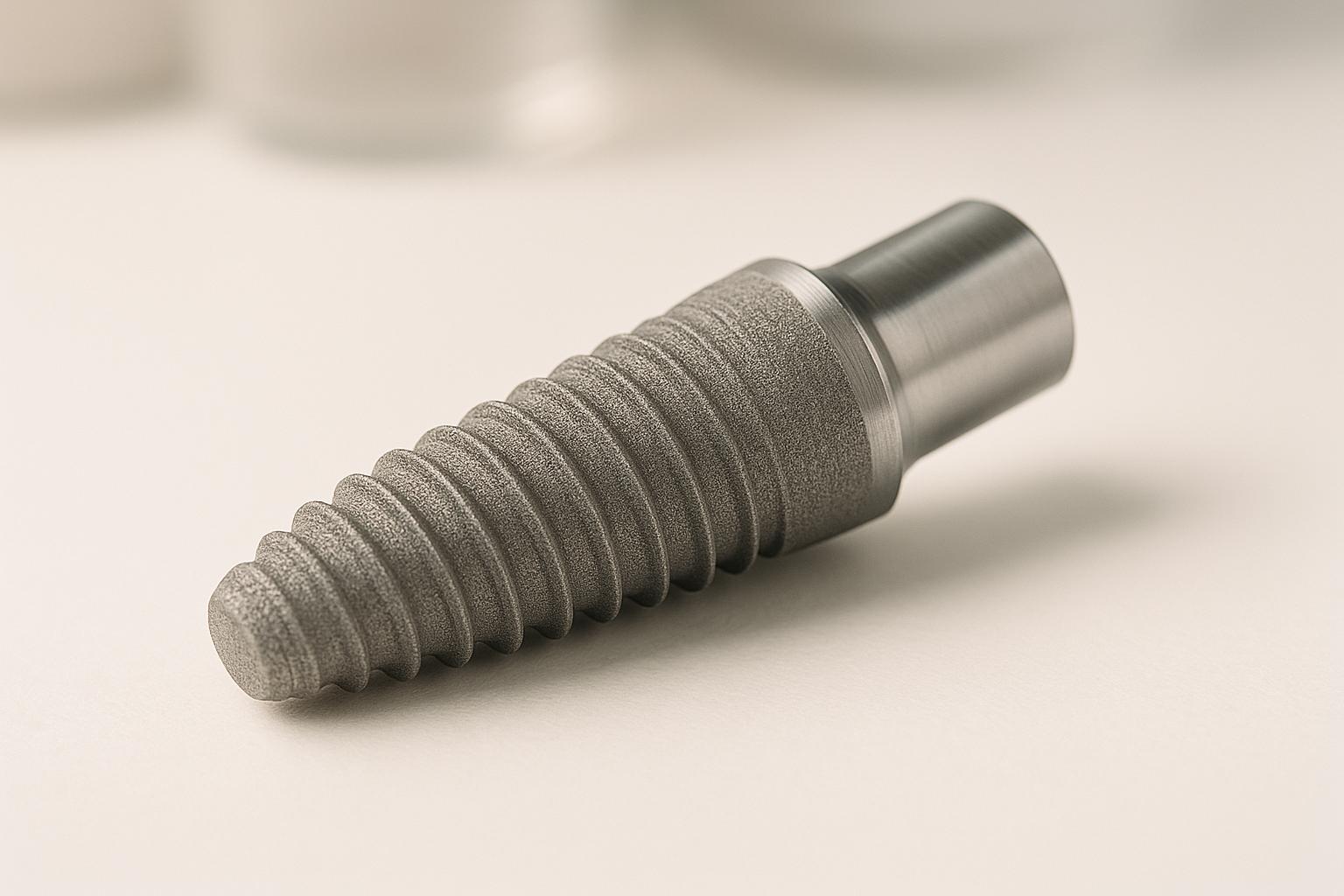
Titanium implants need surface modifications to improve how they bond with bone. Sandblasting and acid etching are two widely used techniques that create rough surfaces, boosting bone cell attachment and integration. When combined, these methods result in a Sandblasted, Large-grit, Acid-etched (SLA) surface, which improves implant stability and reduces healing time. Here’s a quick breakdown:
- Sandblasting: Uses high-pressure abrasive particles to create grooves on the titanium surface, increasing roughness and bone cell attachment.
- Acid Etching: Applies strong acids to form micro-pits, enhancing the implant’s ability to interact with bone tissue.
- Combined Effects: Sandblasting provides macro-roughness, while acid etching adds micro-texture, leading to better bone integration and long-term implant success.
Clinics in Australia, like Complete Smiles Bella Vista, use these techniques to ensure high-performance implants that meet strict quality standards.
Dental Implant Surface
The Sandblasting Process for Implant Surface Preparation
Sandblasting is a mechanical technique used to alter the surface of titanium implants. By propelling high-speed abrasive particles at the implant, this process creates a textured surface that encourages bone cells to attach and grow. This roughened surface also serves as a base for additional treatments, such as acid etching.
How Sandblasting Changes Titanium Implant Surfaces
In sandblasting, abrasive particles like aluminium oxide or titanium dioxide are directed at the titanium implant. When these particles collide with the surface, they carve out tiny grooves and indentations, removing minuscule amounts of material. The result? A surface covered with micro-peaks and valleys, offering more area for bone cells to latch onto.
This textured surface isn’t just cosmetic – it’s functional. The intricate topography, ranging from micro- to nano-scale, enhances the mechanical bond between the implant and the surrounding bone. This stronger connection lays the foundation for improved stability over time.
Key Factors in Sandblasting
For sandblasting to be effective, several factors need careful control:
- Abrasive material: Aluminium oxide particles, typically sized between 250–500 μm, are the go-to choice for dental implants[4][6]. The material and its size determine the roughness and depth of the surface changes.
- Pressure settings: Higher pressures, around 6 bar, create more pronounced textures but risk embedding particles too deeply into the titanium. Lower pressures, closer to 2 bar, offer more controlled results but may take longer to achieve the desired texture.
- Nozzle distance: Maintaining a consistent distance between the nozzle and the implant is crucial. Variations can lead to uneven surface roughness, which could affect the implant’s performance.
- Exposure time: Too short an exposure may not roughen the surface adequately, while excessive exposure risks over-roughening, potentially weakening the implant.
When these parameters are optimised, studies show that sandblasting can increase bone-to-implant contact by up to 50% compared to smooth surfaces[4].
Benefits and Challenges of Sandblasting
Sandblasting offers several benefits for preparing titanium implants. It creates a textured surface that encourages bone cells to respond positively, leading to better mechanical interlocking and enhanced stability right after placement. Additionally, sandblasted surfaces work well with further treatments like acid etching, which can improve osseointegration. Clinical studies even report survival rates exceeding 95% over 10 years for implants treated with this combination[4].
However, the process isn’t without its challenges. One significant issue is residual abrasive particles. While deeply embedded particles generally don’t interfere with bone cell growth, any loose particles must be removed to avoid potential inflammation[2]. Thorough cleaning, often involving ultrasonic methods and sometimes additional acid etching, is essential to address this.
Another challenge is the risk of over-roughening. If the process isn’t carefully controlled, it can compromise the implant’s structural integrity and hinder integration. This makes precise parameter management and post-treatment cleaning critical[2][3].
Despite these challenges, sandblasting remains a trusted method in implant surface preparation. When executed with precision and followed by proper cleaning, it reliably produces surfaces that support successful long-term integration.
The Acid Etching Process for Surface Properties
Acid etching takes a different approach compared to mechanical sandblasting. Instead of physically impacting titanium with abrasive particles, this method uses strong acids to chemically alter the implant’s surface on a microscopic level. The outcome is a carefully designed texture that improves how the implant interacts with surrounding bone tissue. This chemical process complements the groundwork laid by sandblasting.
How Acid Etching Works
The magic behind acid etching lies in its chemical reactions. Strong acids like hydrochloric acid (HCl) and sulfuric acid (H₂SO₄) are often used because they selectively dissolve titanium layers[2][9].
When these acids meet the titanium implant, they first target the titanium oxide layer that naturally forms on the surface. While this layer is useful in some contexts, acid etching modifies it to better support bone integration. By dissolving the oxide layer and partially etching the titanium metal, the process creates a pattern of tiny pits across the surface. These micropits are formed as the acids react with specific areas of the titanium. By tweaking factors like acid concentration, temperature, and exposure time, the depth and distribution of these features can be fine-tuned[2].
How Acid Etching Changes Surface Characteristics
Acid etching doesn’t just roughen the surface – it introduces micro- and nano-scale pores that transform how the implant interacts with biological tissues[2][9]. One key improvement is the development of a hydrophilic surface that attracts water molecules. This property is essential for biological integration, as it enhances protein adsorption from blood and other bodily fluids, laying the groundwork for bone cell attachment.
These microscopic and nanoscale features build on the roughness achieved through sandblasting, further boosting osseointegration. Studies have shown that acid-etched surfaces significantly improve cellular responses. For instance, research indicates a 25–40% increase in osteoblast proliferation on treated surfaces compared to untreated titanium[8]. Even more striking, some studies report a 4.5-fold rise in cell proliferation. The enhanced surface also promotes better osteoblast adhesion, proliferation, and differentiation, leading to stronger bone integration and quicker healing. Clinical data shows that acid-etched surfaces achieve bone–implant contact ratios exceeding 60% within 12 weeks, outperforming smoother surfaces[10].
Benefits and Challenges of Acid Etching
Acid etching offers several benefits when preparing implant surfaces. It delivers consistent, controlled micro-roughness that reliably supports osseointegration[2][9]. Unlike mechanical methods, this chemical process can handle intricate implant designs, ensuring uniform surface treatment even in complex areas like threads or curves.
One standout advantage is its cleaning effect. Acid etching removes contaminants and leftover particles from earlier treatments, such as sandblasting, lowering the risk of inflammation or infection that could disrupt integration[2]. Additionally, acid-etched surfaces have demonstrated antimicrobial properties. When combined with other surface modifications, they can achieve up to 99.45% antibacterial effectiveness against Staphylococcus aureus and 98.65% against Escherichia coli[8].
That said, acid etching comes with its own set of challenges. Achieving consistent results depends on precise control of parameters like acid concentration, temperature, and exposure time[2]. Even small deviations can lead to noticeable differences in surface characteristics. Over-etching, for example, can weaken the implant or create excessive roughness that might harbour bacteria[2].
Standardisation is crucial to address variability concerns. Post-etching storage is another critical factor – exposure to contaminants or improper drying can compromise the bioactivity of the surface. To maintain these enhanced properties, acid-etched implants are often stored in saline solutions or inert environments until they’re ready for use.
Quality control is essential throughout the process. Techniques like scanning electron microscopy and contact angle measurements help verify surface characteristics. Despite the challenges, when executed correctly, acid etching remains a reliable method for creating implant surfaces that support long-term success[2].
sbb-itb-2be92ed
Combining Sandblasting and Acid Etching for Better Results
Building on the strengths of individual treatments, combining sandblasting and acid etching significantly improves implant surface characteristics. Together, these methods create a titanium implant surface that outperforms either technique used alone. This approach, commonly known as the SLA (Sandblasted, Large-grit, Acid-etched) technique, has become the benchmark for enhancing osseointegration[7].
Benefits of Combining Sandblasting and Acid Etching
When these processes are integrated, sandblasting provides the essential macro-roughness, while acid etching adds micro-roughness. This combination results in a surface that greatly enhances cell adhesion and bone-to-implant contact. For instance, implants treated with the SLA method have demonstrated bone-to-implant contact (BIC) ratios of 60–70% within just weeks of placement – a notable improvement compared to the 30–50% seen in untreated surfaces[7]. Clinical studies further highlight the effectiveness, showing survival rates exceeding 95% at five years for SLA-treated implants[7][4].
The combined treatment also addresses the limitations of each method on its own. Animal studies back this up, with both SLA and Nanoblast Plus™ sandblasted-etched implants achieving BIC ratios above 60% and showing no signs of infection after 12 weeks[10]. This combination of high integration rates and minimal complications has made the technique widely accepted in both dental and orthopaedic fields. These results set a strong foundation for improved clinical outcomes and help shape best practices in implant procedures.
Best Practices for Combined Treatments
Achieving the best outcomes with these treatments requires careful sequencing and precise control of process parameters. Sandblasting should be performed at pressures of 2–6 bar using 250–500 μm aluminium oxide particles to create macro-roughness. Following this, acid etching with controlled mixtures of HCl and H₂SO₄ refines the surface and removes blasting residues[2][9]. This two-step process ensures a uniformly bioactive surface, addressing previous limitations.
Post-treatment storage is equally critical for maintaining surface bioactivity. Storing implants in saline solutions or inert gas atmospheres, while minimising exposure to air, helps preserve their bioactive properties[2].
To ensure optimal results, strict control over process parameters is essential. Sandblasting should be performed with 250–500 μm particles at 2–6 bar, followed by acid etching with precisely controlled acid mixtures. Quality checks, such as scanning electron microscopy and contact angle measurements, should be conducted regularly. Staying updated with clinical guidelines and the latest research ensures that these protocols remain effective and aligned with the goal of maximising patient outcomes[6].
In Australia, practices like Complete Smiles Bella Vista follow validated SLA protocols, adhering to local sterilisation and handling standards. Using metric measurements, complying with Australian regulatory guidelines, and educating patients about the advantages of these advanced surface treatments can further enhance clinical results.
The adoption of multi-step, multi-modal surface treatments continues to grow, with the combination of sandblasting and acid etching standing out as the most widely used and researched technique. Current research is focused on refining sequencing and processing parameters to further improve bone integration and reduce potential complications[6][4].
Clinical and Biological Benefits of Modified Titanium Surfaces
When titanium implants undergo surface modifications like sandblasting and acid etching, the results are more than skin-deep. These treatments improve the implant’s performance by enhancing both its biological compatibility and clinical reliability, paving the way for better patient outcomes and longer-lasting implants.
Improved Bone Integration and Healing
Modified titanium surfaces significantly improve how implants integrate with bone. The micro-roughness created by sandblasting and acid etching increases the surface area, offering more attachment points for bone cells. This enhanced texture allows for stronger mechanical interlocking between the implant and the surrounding bone.
To put this into perspective, plasma-sprayed titanium surfaces have a surface roughness of 3.43 ± 0.63 μm compared to just 0.15 ± 0.04 μm for machined surfaces[5]. This increased roughness plays a key role in boosting osseointegration and shortening healing times. These surface changes set the stage for better cellular activity and improved biological responses.
Better Cellular Responses
The changes in surface texture also enhance the implant’s wettability and surface energy, which improves protein adsorption and osteoblast attachment[2][3]. This protein layer acts as a scaffold for subsequent cellular processes, driving better tissue integration.
Research shows that osteoblast adhesion and differentiation are significantly improved on treated surfaces. Sandblasted and acid-etched implants encourage faster osteoblast proliferation, leading to quicker and more stable bone formation around the implant[5][7]. Additionally, the optimised surface texture facilitates cell migration and growth, contributing to better tissue integration and long-term stability.
Clinical Impact on Long-Term Implant Success
These cellular improvements directly translate to better clinical outcomes. Modified titanium surfaces enhance the implant’s ability to withstand daily mechanical stresses, ensuring long-term stability and durability. Studies have shown that implants with treated surfaces maintain their performance over many years, resulting in fewer complications and higher patient satisfaction[1][2]. Furthermore, the improved bone integration reduces the risk of aseptic loosening, a common cause of implant failure.
Clinical data supports the effectiveness of these modifications. Patients with treated implants experience lower failure rates and better functional outcomes compared to those with untreated surfaces[2][3].
| Surface Treatment | Surface Roughness (μm) | Clinical Impact |
|---|---|---|
| Machined | 0.15 ± 0.04 | Standard osseointegration; longer healing |
| Plasma-sprayed titanium | 3.43 ± 0.63 | Enhanced osseointegration; faster healing |
| Sandblasted/Acid-etched | Enhanced | Improved cell adhesion; faster healing |
| Hydroxyapatite coating | Variable | Shortest healing period; strong bone integration |
Advanced surface treatments also make early loading protocols more achievable. Faster bone integration allows for earlier placement of final restorations, reducing overall treatment time and helping patients return to their daily routines sooner[5].
Looking ahead, new trends in implant technology are combining enhanced osseointegration with features like antibacterial and corrosion-resistant coatings. Materials such as graphene and light-responsive coatings are being explored to further improve implant longevity and performance[4][8]. In Australia, clinics like Complete Smiles Bella Vista are already adopting these advanced techniques to deliver better outcomes and long-lasting success for their patients. These innovations continue to push the boundaries of implant technology, ensuring implants remain reliable for years to come.
Conclusion: Surface Modifications and Implant Success
Research highlights the importance of treatments like sandblasting and acid etching in enhancing implant performance. By creating a moderately rough surface – an improvement over traditional machined implants – these techniques have been shown to significantly boost bone integration and long-term clinical outcomes [1][2][9]. This evidence underscores their role as a cornerstone in successful dental implantology.
While other advanced surface treatments have been investigated, sandblasting and acid etching stand out for their consistent clinical advantages. For instance, a multicentre study comparing these treated implants with machined surfaces revealed faster bone healing, higher five-year survival rates, and fewer complications in the treated group [9]. For Australian dental professionals, choosing implants with these surface modifications aligns with evidence-based practices. Sandblasting and acid etching are widely considered the gold standard in achieving reliable results [2][9].
Looking to the future, advancements in implant technology are on the horizon. Combination approaches, such as multi-layered and smart coatings, are expected to further refine mechanical strength, biological compatibility, and antimicrobial properties [4][8]. In Australia, clinics like Complete Smiles Bella Vista (https://completesmilesbv.com.au) exemplify how cutting-edge surface modifications are becoming a routine part of dental practice.
FAQs
How do sandblasting and acid etching enhance the bond between titanium implants and bone?
Sandblasting and acid etching are two widely used techniques to enhance the surface of titanium implants, making them more suitable for osseointegration – the critical process where bone tissue fuses with the implant.
Sandblasting works by propelling tiny abrasive particles at high velocity onto the implant’s surface. This creates a rough texture, which helps the implant achieve a stronger mechanical bond with the bone. Acid etching complements this by removing any surface impurities and creating fine, microscopic grooves. These grooves encourage better cellular attachment and support bone growth. When combined, these methods significantly boost the stability and long-term performance of dental implants, ensuring a reliable and secure connection with the surrounding bone.
What challenges can arise from sandblasting and acid etching titanium implants, and how are they addressed?
Sandblasting and acid etching are common methods for improving the surface of titanium implants, helping them bond more effectively with bone tissue. However, these techniques come with potential challenges, such as contamination, inconsistent surface textures, or even changes to the implant’s structural strength.
To address these concerns, manufacturers adhere to rigorous protocols to maintain a clean and controlled environment during production. Additionally, advanced technologies are employed to create uniform surface modifications, enhancing the implant’s strength and compatibility with the body. These precautions ensure the process remains reliable and supports better osseointegration.
What are the benefits of sandblasting and acid etching for titanium implants compared to other surface treatments?
Sandblasting and acid etching are common methods used to alter the surface of titanium dental implants. These techniques create a textured surface, which improves the implant’s ability to connect with the surrounding bone tissue. This connection, known as osseointegration, plays a crucial role in the implant’s stability and overall success over time.
When compared to other surface treatment options, sandblasting and acid etching stand out for their effectiveness in encouraging bone growth. They help ensure the implant integrates smoothly with the jawbone, making them a go-to choice for dental professionals seeking dependable and lasting results.
Related Blog Posts
- Surface Roughness and Osseointegration: Key Insights
- Osseointegration and Titanium Surface Design
- Surface Modifications for Better Osseointegration
- Titanium Implant Surface Modifications for Osseointegration
Important Notice: Any surgical or invasive procedure carries risks. Before proceeding, you should seek a second opinion from an appropriately qualified health practitioner.
Individual results may vary. The information provided in this article is for educational purposes only and does not constitute medical advice.
Checkout Related Blogs



Get in touch with us
For more information, call us now to start feeling better. Or fill the form below to make appointment
The Latest News from Complete Smiles
How to Clean Clear Plastic Retainers
Checklist for Choosing Wearable Dental Devices
Checklist for Choosing Cloud AI Platforms in Dentistry
Complete Smiles Bella VistaAccepts All Major Health Funds, Including