





Pros and Cons of Dental Implants vs Dentures

When replacing missing teeth, your two main options are dental implants and dentures. Both have advantages and drawbacks, and the right choice depends on your oral health, lifestyle, and budget. Here’s a quick breakdown:
- Dental Implants: Surgically placed, permanent, and mimic natural teeth. They maintain jawbone health, offer excellent stability, and can last a lifetime. However, they are costly (around $3,000–$8,500 per tooth in Australia) and require a lengthy recovery period.
- Dentures: Non-surgical, removable, and more affordable ($1,100–$8,000 per arch). They are suitable for those with significant bone loss but may slip, cause gum irritation, and need replacement every 5–10 years.
Quick Comparison
| Factor | Dental Implants | Dentures |
|---|---|---|
| Stability | Fixed, no slipping | May shift or move |
| Bone Health | Prevents jawbone loss | Does not stimulate the jawbone |
| Durability | Can last a lifetime with care | Needs replacement every 5–10 years |
| Procedure | Surgical, requires healing time | Non-surgical, ready in weeks |
| Cost (Australia) | $3,000–$8,500 per tooth | $1,100–$8,000 per arch |
Key Takeaway: If you want a permanent, natural-feeling solution and can afford the cost and recovery time, implants are ideal. If you prefer a quicker, more affordable option without surgery, dentures are a better fit. Consult your dentist to decide based on your specific needs.
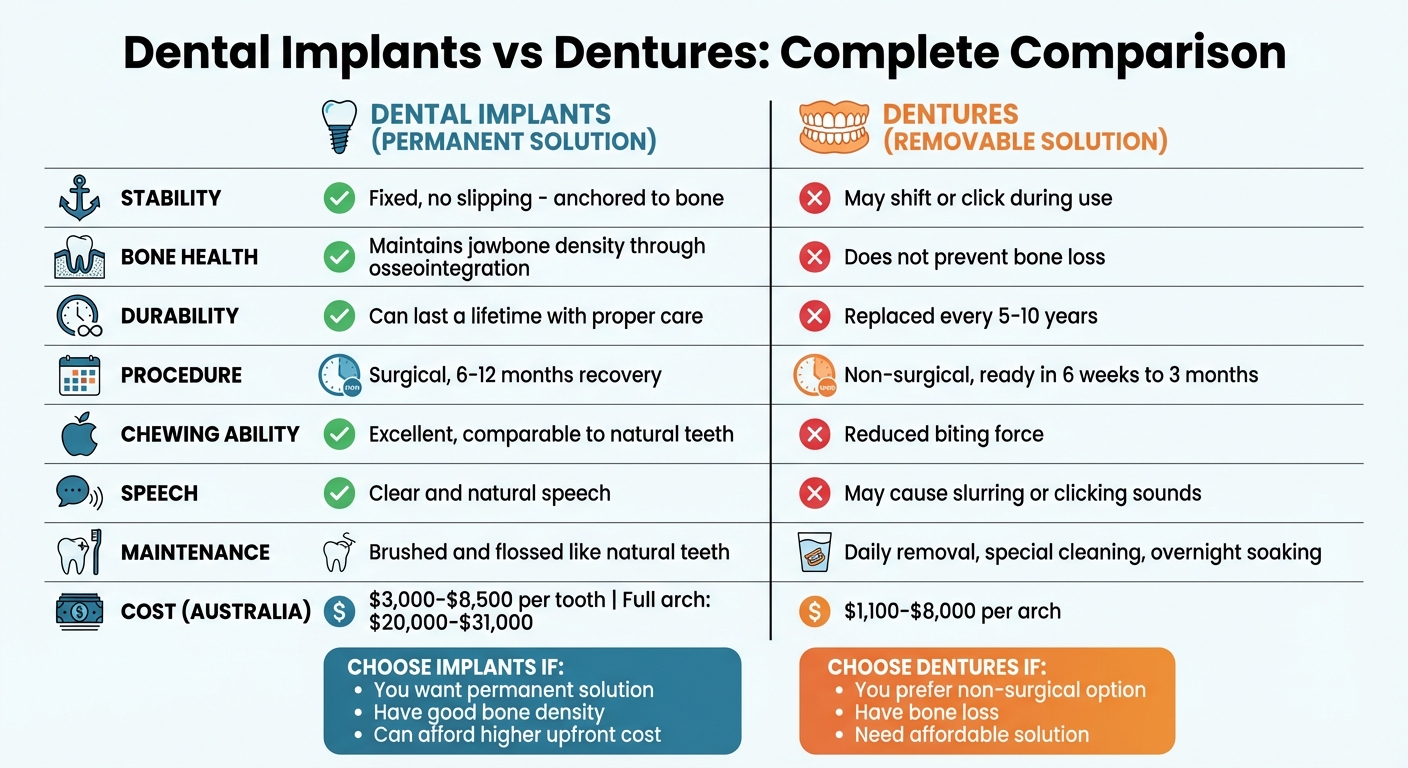
Dental Implants vs Dentures Comparison Chart
Dental Implants vs. Dentures
Pros and Cons of Dental Implants and Dentures
Dental implants and dentures each come with their own set of advantages and challenges, affecting how they function in daily life. Dental implants are surgically placed into the jawbone, offering exceptional stability. This makes them highly reliable for eating a variety of foods and maintaining clear speech, as they don’t slip or shift like dentures can [6]. However, the surgical nature of implants carries risks such as infection and nerve damage, and the recovery process can take anywhere from 3 to 12 months [6].
On the other hand, dentures are a non-invasive alternative that can be fitted in just a few weeks [6]. They are especially suitable for individuals with extensive bone loss who may not qualify for implants [7]. The downside is that dentures rely on suction or adhesives, which means they can move during use and may cause gum irritation [3]. Unlike implants, dentures do not prevent the bone loss that can alter facial structure over time [7]. While implants are designed to last a lifetime with proper care, dentures typically need to be replaced every 5 to 10 years [7].
Cost is another factor to consider. In Australia, dental implants range from $3,049 to $7,175 per tooth, whereas dentures cost between $1,500 and $8,000 per arch [5].
Comparison Table
| Factor | Dental Implants | Dentures |
|---|---|---|
| Stability | High; anchored to the bone, minimal slipping [9] | Variable; may shift or click during use [11] |
| Bone Health | Helps maintain jawbone density [4] | Does not prevent bone loss [6] |
| Durability | Can last a lifetime with proper care [2] | Typically replaced every 5–10 years [9] |
| Procedure Type | Involves surgery with a lengthy healing period [6] | Non-invasive, fitted quickly [9] |
| Chewing Ability | Excellent, comparable to natural teeth [6] | Reduced biting force [6] |
| Speech | Enables clear and natural speech [6] | May lead to slurring or clicking sounds [7] |
| Maintenance | Brushed and flossed like natural teeth [11] | Requires daily removal and special cleaning [5] |
| Comfort | Feels close to natural teeth [11] | May cause gum irritation initially [5] |
| Cost (Australia) | $3,049–$7,175 per tooth [5] | $1,500–$8,000 per arch [5] |
Main Differences Between Dental Implants and Dentures
Stability and Comfort
When it comes to stability, dental implants have the upper hand. They’re securely anchored to the jawbone, giving you the confidence to eat hard or sticky foods without worry [11]. This firm attachment ensures they stay in place while speaking or chewing. On the other hand, dentures are removable and rely on adhesives or suction to stay put. This can sometimes lead to shifting during meals or conversations. Dentures can also feel bulky, and if they loosen over time, they may irritate the gums, causing sores or ulcers. Plus, getting used to dentures can take a while, as they don’t always feel natural straight away [6]. These differences go beyond comfort, impacting oral health in significant ways, particularly bone health.
Impact on Bone Health
One of the biggest contrasts between dental implants and dentures is how they affect the jawbone. When a tooth is lost, the lack of root stimulation can lead to jawbone deterioration [6]. Dental implants address this issue through a process called osseointegration. Over three to six months, the titanium post of the implant fuses with the jawbone, stimulating bone growth and helping to maintain facial structure [8][4].
Dentures, however, don’t offer this benefit. They sit on the gums without stimulating the bone, which can lead to gradual bone loss. Over time, this can cause a "sunken" look in the face, altering your appearance [6]. This difference in bone preservation plays a key role in the long-term durability of these options.
Durability and Lifespan
When considering longevity, dental implants are built to last. The titanium post can remain intact for a lifetime with proper care, though the crown or bridge attached to it usually needs replacing every 10 to 15 years due to regular wear and tear [2][4].
Dentures, by contrast, typically need replacing or major adjustments every 5 to 10 years. Made from acrylic resin, they’re more prone to discolouration, wear, and damage from chewing. Additionally, because dentures don’t prevent bone loss, changes in the jaw’s shape over time can affect their fit, making replacements or adjustments more frequent [6].
sbb-itb-2be92ed
Cost, Procedure, and Maintenance
Cost and Affordability
The cost difference between dental implants and dentures in Australia is quite noticeable. A single dental implant typically costs around $5,500 per tooth, though prices can range from $3,000 to $8,500, depending on the provider and the complexity of the procedure [16, 17]. For those needing full-mouth restoration, All-on-4 implants for a single arch usually fall between $20,000 and $31,000 [16, 10]. On the other hand, conventional dentures are generally more affordable, with prices ranging from $1,100 to $8,000 [6, 15].
While implants may seem expensive upfront, they tend to offer better long-term value. Dentures, though initially cheaper, come with ongoing costs for replacements, adjustments, adhesives, cleaning solutions, and professional relining [3, 12]. For implants, additional procedures such as bone grafts or sinus lifts can add up to $11,500 to the total cost [13]. Some clinics may provide payment plans to help manage these expenses.
Let’s take a closer look at the procedures and recovery times for both options.
Procedure and Recovery Time
Getting dental implants involves multiple surgical steps and a recovery process that can span 6 to 12 months. The first step is usually the removal of damaged tooth roots, followed by the placement of a titanium post into the jawbone. This post needs time to bond with the bone – a process called osseointegration – which typically takes three to nine months [14]. Once the post is securely integrated, an abutment and crown are attached to complete the restoration [6].
In contrast, dentures are a non-surgical option and can be ready within 6 weeks to 3 months. The process involves taking impressions of your mouth and conducting a bite analysis to create a custom fit [15, 7].
Now, let’s explore the daily care routines for maintaining each option.
Maintenance and Daily Care
Caring for dental implants is straightforward and mirrors the routine for natural teeth. This includes regular brushing, flossing, and professional cleanings to keep the gum tissue healthy [12]. Since implants are fixed in place, there’s no need to remove or soak them for cleaning [10].
Dentures, however, require a more hands-on approach. After meals, they should be removed and rinsed. Daily brushing with non-abrasive cleansers is essential, and dentures need to be soaked overnight in water or a specialised cleaning solution [15, 4]. Additionally, it’s recommended to remove dentures while sleeping to let the gum tissue rest. Over time, you may also face recurring expenses for adhesives, cleaning supplies, and professional relining [5, 12].
Who Should Choose Dental Implants or Dentures?
Factors to Consider Before Choosing
Deciding between dental implants and dentures depends on several personal factors, including your oral health, medical history, budget, and lifestyle. Each option has its own set of requirements and benefits, so understanding these can help you make an informed choice.
One of the most important considerations is bone density. Dental implants need a healthy amount of jawbone for the implant to properly integrate. If significant bone loss has occurred, you might need a bone graft to make implants viable [7]. Dentures, on the other hand, can be fitted even if your jawbone has deteriorated [7].
Your overall health also plays a major role. Conditions like uncontrolled diabetes, autoimmune diseases, or treatments such as radiotherapy and certain osteoporosis medications can slow healing and increase the risk of implant failure [7]. Smoking is another factor – it raises the likelihood of gum disease and implant complications. Many dentists recommend quitting smoking before considering implants [8]. For those with health conditions that make surgery risky, dentures provide a non-invasive alternative that doesn’t require a recovery period [7].
Age and lifestyle can also guide your decision. Younger individuals often lean towards implants because they look and feel more like natural teeth and offer long-term durability. In contrast, older patients might prefer dentures since they avoid surgery and are easier to adapt to [4]. Implants, however, deliver better stability and stronger bite force compared to traditional dentures [7].
Before settling on a solution, consult your dentist for a detailed examination. This should include X-rays or 3D imaging to evaluate your bone structure and gum health [7]. It’s also worth considering the long-term commitment of each option. While dentures typically need replacement or adjustments every 5 to 10 years, implants can last much longer with proper care [7]. If you’re looking for a compromise, implant-retained dentures might be ideal. These involve 2 to 4 implants anchoring a removable denture, offering more stability than traditional dentures at a lower cost than full-mouth implants [4].
Conclusion
Deciding between dental implants and dentures isn’t a one-size-fits-all solution. Each option comes with its own set of benefits and limitations. Dental implants stand out for their stability, ability to preserve jawbone health, and potential to last a lifetime with proper care – making them a solid long-term investment, despite the higher initial cost [1]. On the other hand, dentures offer a less invasive and more budget-friendly alternative. However, they typically need replacement every 5 to 10 years and lack the jawbone stimulation provided by implants.
When weighing your options, key factors such as your oral health, budget, and lifestyle should guide your decision. If you have adequate jawbone density, are in good overall health, and want a permanent solution that mimics natural teeth, implants might be the right choice. Conversely, if you’d rather avoid surgery, have experienced significant bone loss, or need a faster, less invasive option, dentures could be a practical fit.
Ultimately, the best choice is the one that aligns with your unique health needs and lifestyle. A thorough consultation with your dentist is essential before making a decision. They can evaluate your jawbone using X-rays or CT scans, review your medical history, and recommend the option that best supports your long-term oral health [1]. For some, implant-retained dentures – secured with 2 to 4 implants – offer a middle ground, combining improved stability with a more accessible price point [4].
With the right professional guidance and a clear understanding of your priorities, you can select the option that restores your smile and fits seamlessly into your life. Both dental implants and dentures, when chosen wisely, can significantly improve your quality of life.
FAQs
What should I consider when deciding between dental implants and dentures?
Choosing between dental implants and dentures boils down to a mix of factors, including your oral health, lifestyle, and budget. If you have enough jawbone density, implants offer a lasting solution. However, dentures might be a better fit for those dealing with bone loss or medical conditions that make surgery less viable.
When it comes to cost and upkeep, the differences are worth noting. Dental implants come with a higher upfront price – often running into the thousands – but they’re built to last, help maintain jawbone health, and feel just like natural teeth. Dentures, while more affordable initially and quicker to get, often require frequent adjustments, rely on adhesives, and can lead to gradual bone loss over time.
Ultimately, the right choice depends on your individual situation. A consultation with a dental professional can provide clarity, helping you weigh your options based on your health, lifestyle, and long-term goals.
How do dental implants protect jawbone health compared to dentures?
Dental implants are surgically inserted into the jawbone, acting as a substitute for natural tooth roots. This placement allows them to stimulate the bone during chewing, which plays a key role in maintaining bone density and preventing bone loss. On the other hand, dentures simply rest on the gums without offering this stimulation, which over time can result in the jawbone gradually shrinking.
By helping to preserve the jawbone, dental implants contribute to long-term oral health and also maintain the natural contours of your face. This prevents the sunken look often linked to bone loss, keeping your facial structure intact.
Are there health conditions that might make dentures more suitable than dental implants?
In some situations, health conditions can make dentures a more suitable choice compared to dental implants. For instance, people with low jawbone density, advanced gum disease, or chronic conditions like diabetes – which can slow down the healing process – might find dentures to be a better alternative. Dentures are also ideal for those looking for a non-surgical, more budget-friendly way to replace missing teeth.
To make the best decision, it’s essential to consult your dentist. They’ll evaluate your oral health and medical history to recommend the option that fits your needs while prioritising comfort and functionality over the long term.
Related Blog Posts
- Dental Implants: Your Top 8 Questions Answered
- Pros and Cons of Dental Bridges and Dentures
- Cost Comparison: Implants, Bridges, and Dentures in 2025
- Dental Implants vs Bridges: Pros and Cons
Important Notice: Any surgical or invasive procedure carries risks. Before proceeding, you should seek a second opinion from an appropriately qualified health practitioner.
Individual results may vary. The information provided in this article is for educational purposes only and does not constitute medical advice.
Checkout Related Blogs




Get in touch with us
For more information, call us now to start feeling better. Or fill the form below to make appointment
The Latest News from Complete Smiles
How to Clean Clear Plastic Retainers
Checklist for Choosing Wearable Dental Devices
Checklist for Choosing Cloud AI Platforms in Dentistry

Complete Smiles Bella VistaAccepts All Major Health Funds, Including





