





Ultimate Guide To Periodontal Care

Gum disease is more common than you might think – 30% of Australian adults have moderate to severe periodontitis. It starts with plaque buildup, leading to gingivitis (reversible inflammation). Without care, it can progress to periodontitis, causing permanent damage to the bone and tissue supporting your teeth.
Here’s what you need to know:
- Early signs: Bleeding gums, redness, swelling, and bad breath.
- Risk factors: Smoking, poor oral hygiene, diabetes, genetics, hormonal changes, and certain medications.
- Prevention: Brush twice daily, floss, and visit the dentist regularly for cleanings.
- Health impact: Gum disease links to diabetes, heart disease, and respiratory issues.
Treatment ranges from professional cleanings to surgery for severe cases. Maintaining gum health with consistent care at home and regular dental visits is key to stopping or slowing progression. Healthy gums support not just your teeth but your overall well-being.
Gum Disease Treatment (2024) | Periodontist’s Comprehensive Guide Including Causes and Treatment
Understanding Gum Disease
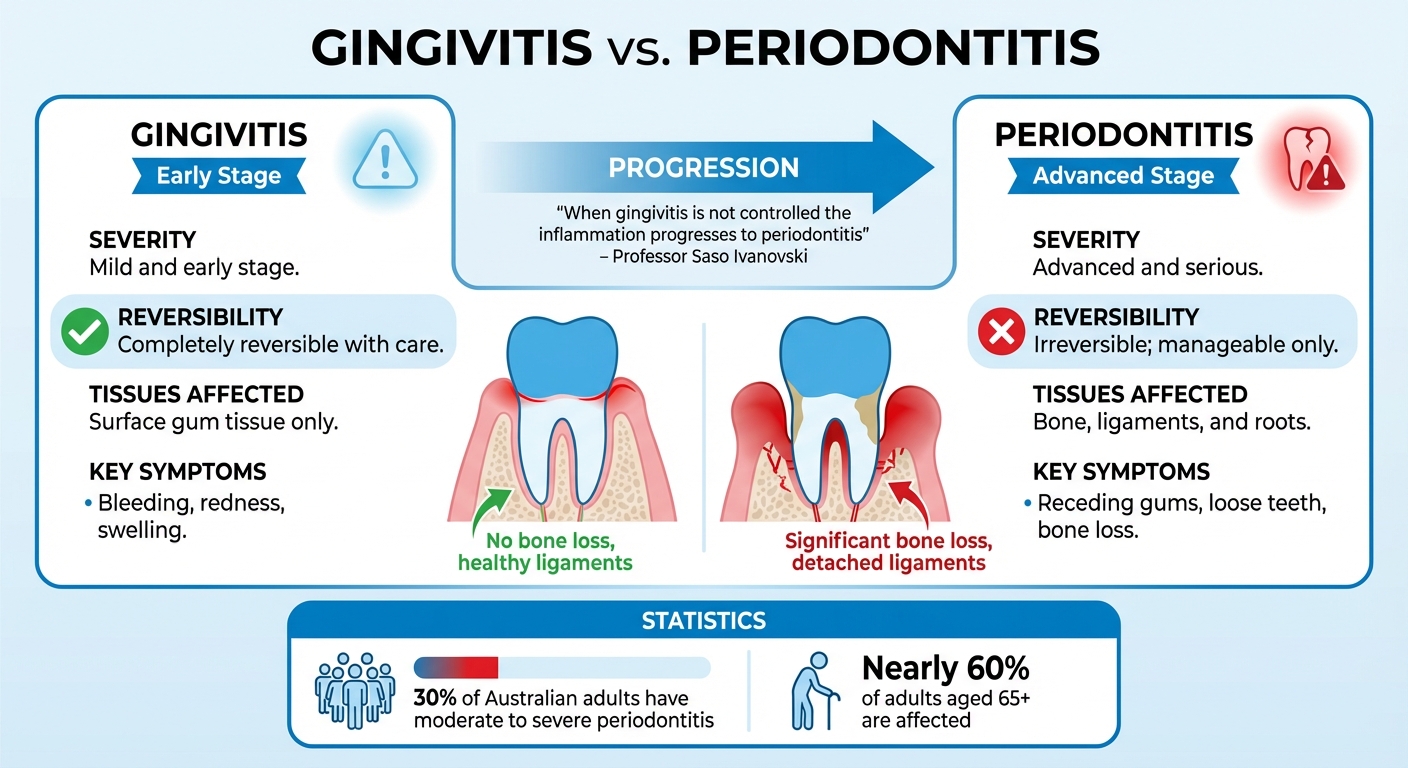
Gingivitis vs Periodontitis: Stages of Gum Disease Comparison
Gum disease starts when plaque – a sticky layer of bacteria – accumulates along the gumline. These bacteria thrive on sugars in your mouth, releasing toxins that irritate and inflame gum tissue [3][5]. Without regular brushing and flossing, plaque hardens into calculus, or tartar, which can only be removed by a dental professional [1][10]. Unlike cavities that damage the teeth themselves, gum disease affects the periodontium – the tissues supporting your teeth [5][3]. Once the disease progresses beyond its initial stage, the damage becomes permanent, though further deterioration can be controlled with proper care [1][5][9].
Causes and Risk Factors
While poor oral hygiene is the primary trigger for gum disease, several other factors can increase your vulnerability. Smoking is a leading cause, with studies showing smokers are far more likely to develop periodontitis [4]. Additionally, poorly managed diabetes creates a vicious cycle: gum disease can make blood sugar levels harder to regulate, while elevated blood sugar increases the likelihood of severe gum infections [2][5].
Genetics also play a part – if gum disease runs in your family, you may be more prone to it, even with good oral care [1][2][8]. Hormonal changes during puberty, pregnancy, or menopause can make gums more sensitive to bacterial irritation [1][2][8]. Some medications, such as antihypertensives and antihistamines, reduce saliva flow, impairing its natural ability to wash away bacteria [1][3]. Other risk factors include high stress, poor nutrition, and excessive alcohol consumption [1][3].
In rarer cases, systemic conditions like leukaemia, exposure to heavy metals, skin disorders such as erosive lichen planus, and deficiencies in vitamins like B3 (pellagra) or C (scurvy) can also lead to gum disease [3].
Symptoms and Stages
Early intervention can reverse gum disease in its initial stage, but the condition progresses through two key stages if left untreated.
Gingivitis is the mild, early phase. Common signs include red, swollen gums that bleed during brushing or flossing [1][6], often accompanied by bad breath. The good news? Gingivitis is entirely reversible with proper oral care [9]. In fact, inflammation can set in within just a few days if plaque isn’t removed [10].
"Gingivitis is the mildest and most common type of periodontal disease… When gingivitis is not controlled the inflammation progresses to periodontitis." – Professor Saso Ivanovski, Specialist Periodontist [6]
Without treatment, gingivitis can advance to periodontitis, a more severe stage where the infection spreads deeper. At this point, the inner gum layer pulls away from the teeth, forming periodontal pockets [2][8]. These pockets trap bacteria and debris, leading to the gradual destruction of the bone and ligaments that support the teeth [2][8]. Symptoms may include receding gums, loose or shifting teeth, and pus between the teeth and gums [3][9]. While the damage at this stage is permanent, treatments can help slow or stop further bone loss [1][2].
| Feature | Gingivitis | Periodontitis |
|---|---|---|
| Severity | Mild and early stage | Advanced and serious |
| Reversibility | Completely reversible with care | Irreversible; manageable only |
| Tissues Affected | Surface gum tissue only | Bone, ligaments, and roots |
| Key Symptoms | Bleeding, redness, swelling | Receding gums, loose teeth, bone loss |
In Australia, about 30% of adults over 15 experience moderate to severe periodontitis [3]. The risk increases with age, affecting nearly 60% of adults aged 65 and older [4].
Preventing Gum Disease
Keeping gum disease at bay requires a mix of daily care at home and regular visits to your dentist. Since plaque begins forming shortly after eating, your daily oral hygiene routine is the first line of defence. By staying consistent, you not only protect your gums but also promote overall oral health for the long haul.
Daily Oral Hygiene Practices
To keep your gums healthy, brush your teeth at least twice a day for two minutes each time. Use fluoride toothpaste and a soft-bristled toothbrush, angling it at 45 degrees towards the gums. Gentle, circular motions help remove bacteria along the gum line. Floss once a day, preferably before bed, to clear out plaque and food particles that brushing can’t reach. Don’t forget your tongue – clean it daily with a toothbrush or scraper to minimise bacteria buildup. An alcohol-free, antibacterial mouthwash can also help reduce bacteria without causing dryness. These habits are the foundation of good oral health and work hand-in-hand with professional care.
Professional Dental Cleanings
Even with diligent brushing and flossing, tartar can build up over time. That’s where professional cleanings come in. Most people benefit from a cleaning every six months, but if you’re prone to gum issues, you might need to visit every three to four months. This is because oral bacteria can quickly repopulate, increasing the risk of gum disease [11]. These appointments not only remove hardened plaque but also help your dentist spot early problems before they escalate. Pairing these cleanings with healthy habits gives your gums the best chance to thrive.
Lifestyle Factors
Making smart lifestyle choices can significantly improve gum health. For instance, quitting smoking is one of the best things you can do, as tobacco harms gum tissue and slows down healing. If you have diabetes, keeping your blood sugar levels stable is crucial, as gum disease and diabetes can worsen each other. A diet rich in Vitamin C supports gum healing, while cutting back on sugary snacks and drinks between meals helps your saliva naturally combat acids. Drinking fluoridated tap water also supports saliva production and strengthens your teeth.
| Practice | Recommended Frequency | Key Benefit |
|---|---|---|
| Brushing | Twice daily (2 mins) | Removes daily plaque and food debris |
| Flossing | Once daily | Cleans between teeth and under the gum line |
| Tongue Cleaning | Daily | Reduces bacteria on the tongue |
| Antibacterial Rinse | Daily | Lowers bacterial levels in the mouth |
| Professional Cleaning | Every 3–6 months | Removes tartar and detects early issues |
How Gum Disease Is Diagnosed
Spotting gum disease early is essential for preventing more severe issues down the track. Dentists rely on a combination of hands-on checks and imaging technology to get a clear picture of your gum health. These methods work together to catch problems early and ensure accurate diagnosis. Let’s break it down, starting with the clinical examination.
Clinical Examination
The first step involves your dentist closely inspecting your gums for signs of trouble. They’ll look for redness, swelling, or a purplish tint – healthy gums should be a pale pink. Using a periodontal probe, a thin tool marked with millimetre measurements, they measure the depth of the pockets between your teeth and gums. Ideally, these spaces should be between 1 and 3 mm deep and show no bleeding. If the depth exceeds 3 mm, it may indicate gum disease, and anything over 5 mm often requires more intensive care [12][9].
"Diagnosis relies on clinical signs such as gingival bleeding, periodontal pocketing, radiographic bone loss, and tooth mobility." – Noah S. Gasner and Ryan S. Schure, StatPearls [12]
Bleeding during probing is a major sign of active inflammation. Another key measurement is the Clinical Attachment Loss (CAL), which shows how much support has been lost around the tooth. CAL is classified as Mild (1–2 mm), Moderate (3–4 mm), or Severe (more than 5 mm) [12]. Dentists also check for tooth mobility and review your medical history, as certain factors can increase your risk. For example, smokers are 5 to 20 times more likely to develop gum disease, and conditions like diabetes can speed up its progression [12].
Imaging and X-Rays
Clinical exams only tell part of the story. X-rays provide a deeper look at what’s happening below the gum line. These images show the alveolar bone that holds your teeth in place, helping to detect bone loss that might not be visible during a physical check. By comparing current X-rays with older ones, dentists can track the progression of the disease and measure how much bone remains. This information helps them stage the severity of the damage, from Stage I (up to 15% bone loss) to Stage IV (over 60% bone loss) [12].
Regular X-rays during routine check-ups are vital for catching changes early, giving you the best chance to protect your teeth and gums.
sbb-itb-2be92ed
Treatment Options for Gum Disease
Once gum disease is diagnosed, your dentist will recommend treatment based on how advanced the condition is and your specific needs. Using clinical exams and X-rays, they’ll develop a step-by-step plan. This usually starts with improving oral hygiene and addressing risk factors like smoking and diabetes. Next comes professional deep cleaning, and for more severe cases, surgery may be necessary. The goal is to stop the disease from progressing and restore gum health. Interestingly, non-surgical treatments are effective in managing about 40% of cases [7].
Non-Surgical Treatments
For early to moderate gum disease, the go-to treatment is scaling and root planing. Scaling involves removing plaque and tartar from above and below the gum line using specialised tools, which may include ultrasonic devices [13][2]. After scaling, root planing smooths the root surfaces to help gums reattach and discourage bacteria from settling in. This process gives your gums the chance to heal [2]. In some cases, antimicrobial rinses or local antibiotics are used alongside these procedures to support recovery, though they aren’t a cure on their own [7][4].
Non-surgical treatments are straightforward, and you can usually get back to your daily routine right away. However, full recovery takes some time as the gums gradually heal and tighten [7][2]. If deep pockets or bone loss persist despite these efforts, surgical options may be the next step.
Surgical Treatments
When periodontal pockets remain deeper than 4 mm after non-surgical treatment or when there’s significant bone or tissue damage, surgery might be recommended [7][14]. One common procedure is pocket reduction surgery. This involves lifting the gums to clean out deep tartar and then suturing them back at a lower height to make future maintenance easier [9][2].
If bone loss has occurred, bone grafting can help. This procedure uses either your own bone or donor material to encourage new bone growth [9][2]. For exposed roots, gum grafting may be performed. This involves taking tissue – often from the roof of your mouth – and repositioning it to cover the roots, reducing sensitivity and protecting the tooth [9][2]. Another advanced technique is Guided Tissue Regeneration (GTR), where a special membrane is placed between the gum and bone graft to ensure that only bone, not soft tissue, fills the space [9].
Recovery from these surgical procedures typically takes about a week, and stitches are usually removed after seven days [14].
"The long-term success of treatment for periodontal disease is a partnership. It relies on your own efforts at home with optimal cleaning and those of the dental team."
– teeth.org.au [7]
Your dentist will reassess your gum health within 3–6 months. Lifestyle changes, like quitting smoking and managing diabetes, can also play a big role in improving treatment outcomes [7][14].
For tailored periodontal care in Australia, reach out to your local dental professional. Clinics like Complete Smiles Bella Vista (https://completesmilesbv.com.au) offer a range of preventative and restorative gum treatments.
Maintaining Healthy Gums Long-Term
After completing periodontal treatment, the focus shifts to maintaining the progress you’ve made. Consistent care is crucial to prevent setbacks and keep your gums healthy. Interestingly, about 40% of periodontal treatment cases can be managed successfully without additional surgery – provided regular maintenance is followed[7]. Long-term care is your best defence against recurrence.
Home Care Routines
A strong at-home routine is your first line of defence for gum health. Brush twice daily using fluoride toothpaste, and make flossing a daily habit. After brushing, avoid rinsing right away to allow the fluoride to work its magic. Don’t forget to replace your toothbrush every three months to ensure it remains effective.
Regular Dental Visits
Even with diligent home care, professional cleanings are necessary to remove tartar that at-home tools can’t tackle. If you’ve had periodontal issues in the past, your dentist might suggest more frequent visits – every three to six months – as part of a tailored care plan. These appointments are vital for keeping your gums in top shape.
Monitoring Risk Factors
Your overall health significantly impacts your gum health. For instance, managing diabetes effectively helps reduce inflammation and lowers the risk of infection. Quitting smoking is another game-changer, as tobacco restricts blood flow to the gums and hinders healing. On top of that, limit your intake of sugary foods and drinks, drink fluoridated water to strengthen enamel, and find ways to manage stress. A calmer mind can support a stronger immune system, helping it combat plaque buildup more effectively.
Conclusion
Taking care of your gums isn’t just about keeping a bright smile – it’s about protecting your health. Studies reveal that gum disease, if left untreated, can progress from gingivitis (which is reversible) to periodontitis, a more severe and irreversible condition. Alarmingly, about 30% of Australian adults face moderate to severe forms of this disease [1]. The good news? With early detection and consistent care, this progression can often be stopped or slowed significantly.
Managing gum health effectively requires a blend of daily habits and professional care. Regular brushing and flossing are key to removing soft plaque, but only a professional cleaning can tackle the hardened tartar that builds up over time [1][4]. Beyond oral health, gum disease has been linked to serious conditions like cardiovascular disease, diabetes, stroke, and respiratory infections [1][15][2]. This makes gum care a critical part of maintaining overall health.
Be alert for signs like bleeding gums, persistent bad breath, or receding gum lines, and consult a dental professional promptly [1][2][3]. Since periodontitis often develops without pain, waiting until discomfort sets in could mean irreversible damage has already occurred [6].
Stick to the basics: brush twice a day, floss daily, and schedule dental check-ups every six to 12 months [15][2]. If you smoke, quitting can make a huge difference, and for those with diabetes, managing blood glucose levels is crucial [15][3]. These simple yet powerful steps can protect your gums and contribute to your overall wellbeing. Healthy gums mean a healthier you!
FAQs
What are the signs of gingivitis and periodontitis, and how do they differ?
Gingivitis marks the early phase of gum disease, often showing up as red, swollen gums that may bleed during brushing or flossing. The main culprit? Plaque build-up. The good news is that with consistent oral hygiene and timely professional care, gingivitis can be turned around.
Periodontitis, on the other hand, represents a more serious progression of gum disease. Here, gums may recede, periodontal pockets (gaps between teeth and gums) can develop, and bone loss becomes a real concern. If ignored, it could lead to loose teeth or even tooth loss. Unlike gingivitis, periodontitis demands professional treatment to control and prevent further harm.
Spotting these signs? Don’t wait. Visit your dentist for a thorough evaluation and the right care plan.
What can I do to reduce my risk of gum disease?
Preventing gum disease begins with maintaining excellent oral hygiene. Make it a habit to brush your teeth twice a day using proper techniques, floss daily to clean between teeth, and rinse with water after meals to wash away plaque and bacteria that can cause gum irritation. Don’t skip regular dental check-ups and professional cleanings – these are key for removing tartar (hardened plaque) that brushing alone can’t tackle.
Your lifestyle choices matter too. Quitting smoking, managing conditions like diabetes, and cutting back on heavy alcohol consumption can make a big difference in keeping your gums healthy. Eating a balanced diet filled with nutrient-rich foods, especially those high in vitamins C and B3, provides extra support for gum health. By sticking to a solid oral care routine, seeking professional dental care, and adopting healthier habits, you can greatly lower your chances of developing gum disease.
Can advanced gum disease be treated without surgery?
Yes, non-surgical treatments can play a key role in managing advanced gum disease, particularly when combined with diligent oral hygiene and regular dental care. Procedures like deep cleaning – also known as scaling and root planing – are designed to remove plaque and tartar from beneath the gumline. This helps to ease inflammation and minimise the risk of further damage to the gums and surrounding structures.
To maximise the effectiveness of these treatments, it’s crucial to stick to regular dental check-ups and follow your dentist’s recommendations for at-home care. This might include proper brushing techniques, consistent flossing, and the use of specific oral care products they suggest. Acting early and maintaining these habits can greatly improve gum health and slow the progression of the disease.
Related Blog Posts
- 5 Early Signs of Gum Disease
- How to Prevent Gum Disease Naturally
- Scaling and Root Planing Techniques Explained
- How to Spot Gum Disease Early
Important Notice: Any surgical or invasive procedure carries risks. Before proceeding, you should seek a second opinion from an appropriately qualified health practitioner.
Individual results may vary. The information provided in this article is for educational purposes only and does not constitute medical advice.
Checkout Related Blogs




Get in touch with us
For more information, call us now to start feeling better. Or fill the form below to make appointment
The Latest News from Complete Smiles
How to Clean Clear Plastic Retainers
Checklist for Choosing Wearable Dental Devices
Checklist for Choosing Cloud AI Platforms in Dentistry

Complete Smiles Bella VistaAccepts All Major Health Funds, Including