





Osseointegration and Genetic Variability
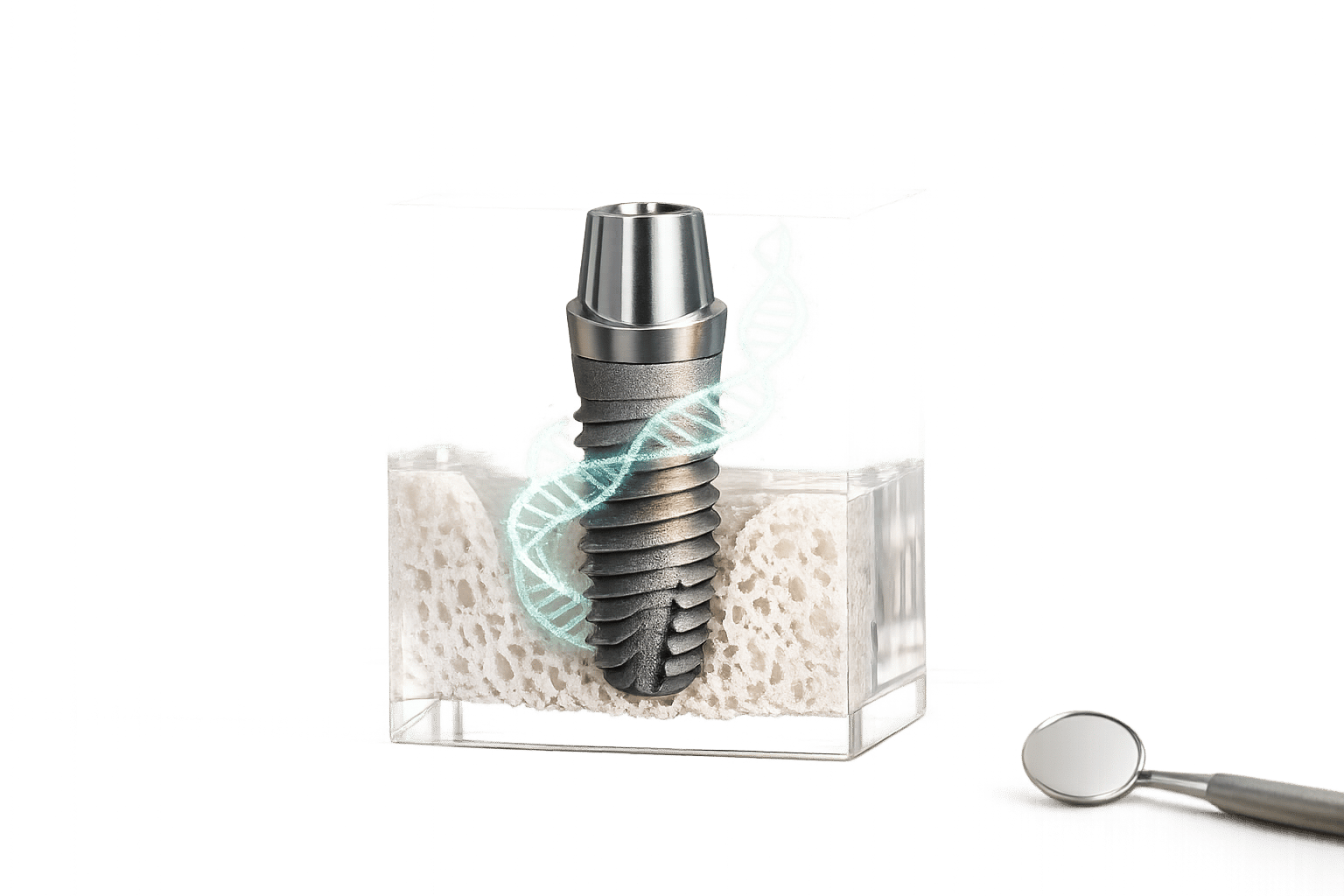
Dental implants work well for most people, with a success rate over 95% in healthy individuals. However, not everyone experiences the same outcomes. The key difference? Genetics. Your genetic makeup can influence how your body forms bone around the implant and handles inflammation, which are both critical for success.
Here’s what you need to know:
- Osseointegration: This is the process where your jawbone bonds with the implant, creating a stable foundation.
- Genetics and Implant Failure: Research shows that 58.6% of implant failures occur in just 32.1% of patients, often due to genetic predispositions.
- Key Genes: Genes like RUNX2 and Osteocalcin support bone growth, while IL-1β and TNF-α influence inflammation. Variations in these genes can increase the risk of complications.
- Genetic Testing: Pre-surgical tests can identify risks, helping dentists customise the dental implant procedure for better outcomes.
Understanding how your genes impact dental implants can lead to more personalised care, improving the chances of long-term success.
What Is Osseointegration?
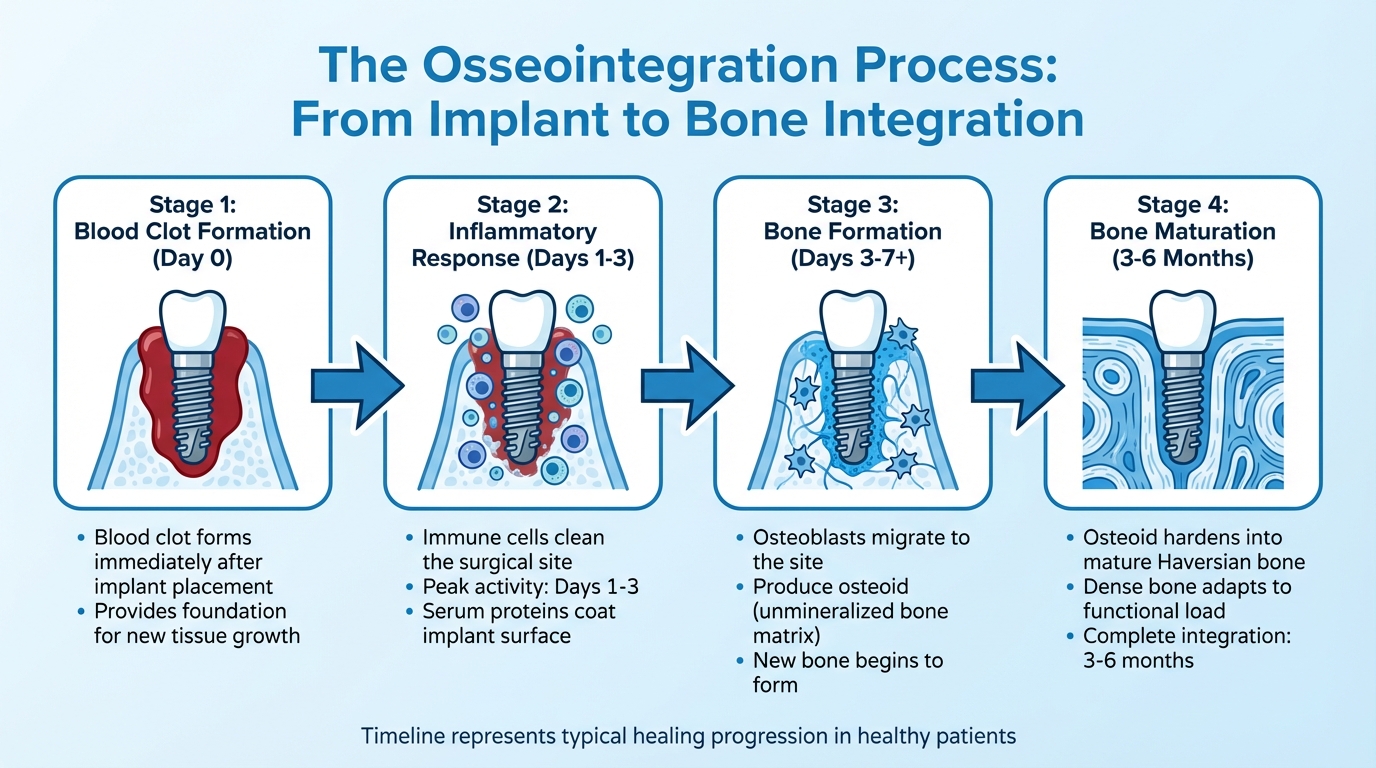
The 4 Stages of Dental Implant Osseointegration Timeline
Osseointegration is the natural process where living bone tissue bonds directly to the surface of a dental implant, without any connective tissue in between. This bond effectively turns the implant into a sturdy, functional substitute for a natural tooth root.
"A direct structural and functional connection between ordered living bone and the surface of the load-carrying implant." – Per-Ingvar Branemark, Professor [2]
Unlike traditional dentures or same-day dental implants that rest on the gums, an osseointegrated implant becomes part of the jawbone itself. This connection allows bite forces to transfer directly to the bone, helping to maintain its density and structure. This is crucial, as bone loss often occurs after a tooth is removed. Additionally, osseointegration forms a biological seal between the implant and surrounding soft tissues, creating a barrier against bacteria and toxins. When successful, this bond can last for decades, though the process of full integration typically takes three to six months [1].
The Osseointegration Process
The process of osseointegration unfolds in distinct stages. Right after an implant is placed, a blood clot forms around it, providing a foundation for new tissue growth. This triggers an inflammatory response, where immune cells arrive to clean the surgical site. Peak activity of these cells usually occurs between the first and third days post-surgery [2].
Before immune cells arrive, serum proteins coat the implant surface, forming a conditioning layer. Within a few days, osteoblasts – cells responsible for forming new bone – migrate to the site and start producing osteoid, an unmineralised bone matrix. Over the next three to six months, this initial bone hardens into dense, mature Haversian bone, adapting to the functional load placed on the implant [1]. While these biological stages are essential, other factors also influence the success of osseointegration.
Factors That Affect Osseointegration
Several elements impact whether an implant successfully integrates with the bone. The material of the implant is a primary factor. Pure titanium is widely regarded as the standard due to its excellent compatibility with bone tissue and its proven ability to promote bonding. Titanium alloys, such as Ti-6Al-4V, are stronger but may release aluminium or vanadium ions, which can interfere with osteoblast activity [7].
The texture of the implant surface also plays a role. Surfaces that are roughened through techniques like sandblasting or acid-etching increase the contact area for bone and improve mechanical interlocking. While these textured surfaces encourage osteoblast differentiation, they may reduce initial cell proliferation compared to smoother finishes [7]. Over time, titanium surfaces can undergo biological ageing, where hydrocarbon accumulation reduces their ability to attract bone cells. This issue can be addressed through UV photofunctionalisation, which restores the surface’s bone-attracting properties [7].
Patient health is another key factor. Conditions such as smoking, uncontrolled diabetes, and osteoporosis can hinder blood flow and bone healing, raising the risk of implant failure [1]. Surgical technique also matters – excessive heat during bone drilling can damage tissues and prevent proper integration. Beyond these, genetic differences between individuals can further influence how well an implant integrates, highlighting the complex interplay of factors that determine success.
sbb-itb-2be92ed
How Genetic Differences Affect Osseointegration
Your genetic makeup plays a crucial role in whether a dental implant successfully integrates with your jawbone. While implant design and surgical techniques are vital, studies show that implant failures often cluster in certain individuals, pointing to a genetic predisposition to complications [5][8].
On a molecular level, osseointegration – the process where the implant bonds with the bone – is influenced by genetic signals at the bone–implant interface [3]. Your genes determine how your immune system reacts to the implant and how effectively your body forms new bone. Even tiny genetic changes, like single nucleotide variations, can impact protein production, influencing inflammation and bone healing [6].
Genes That Influence Osseointegration
Specific gene families play leading roles in the osseointegration process. For example, osteogenic transcription factors like RUNX2 and Osterix (OSX) act as "master switches", guiding stem cells to become bone-building osteoblasts [4]. These osteoblasts then produce key bone matrix proteins, including Osteocalcin (OCN), Osteopontin (OPN), Alkaline Phosphatase (ALPL), and Type I Collagen (COL1A1) [3][4].
The immune response is equally important. Pro-inflammatory genes like IL-1α, IL-1β, IL-6, and TNF-α regulate the body’s reaction to the implant. While some inflammation is essential for healing, excessive activity of these genes is linked to peri-implantitis and early implant failure [3][8]. Bone remodelling is another critical factor: RANKL drives bone resorption, while OPG works to counteract it. An imbalance favouring RANKL can lead to accelerated bone loss around the implant [3][4].
Other genes contribute to healing and recovery. Growth factors like BMP-2, BMP-4, TGF-β1, and VEGF promote bone formation and the development of blood vessels to nourish the healing tissue [4]. Tissue remodelling and wound healing rely on matrix metalloproteinases (MMP-1 and MMP-8), but certain variations in these genes may increase the risk of implant failure [5].
How Gene Variations Affect Implant Success
Genetic variations can significantly affect clinical outcomes. For instance, patients with variant alleles in both IL-1α (C-889T) and IL-1β (C+3954T) are at a 1.95-fold higher risk of developing peri-implant disease compared to those without these variations [8]. Some variations have an even stronger impact – carrying the IL-1β C-511T (TT genotype) is associated with a 4.33-fold increased risk of marginal bone loss [8].
In the Chinese Han population, the OPG rs2073618 CC genotype and IL-16 rs4072111 T allele have been identified as risk factors for peri-implantitis [9]. Similarly, the IL-1β (+3954) T allele has been linked to early implant failure (p = 0.003) [6]. Interestingly, not all genetic variations increase risk. For example, the CD-14 (-159) polymorphism has been associated with a reduced likelihood of biological complications [6].
These genetic differences provide insight into why dental implant failure rates, estimated between 1.9% and 3.6% globally, are not evenly distributed among patients [5][8]. Identifying specific genetic risks can help tailor treatments and improve outcomes in the long run.
What Genetic Variability Means for Dental Implant Patients
Your genetic makeup can play a critical role in how dental implants are planned and managed. By looking beyond clinical factors like smoking or diabetes, genetic insights allow dental professionals to uncover underlying risks – such as variations in bone quality or immune response – making treatments more tailored to the individual.
Identifying Genetic Risk Factors
Genetic testing helps pinpoint specific single nucleotide polymorphisms (SNPs) that influence inflammation and bone metabolism, both of which are vital for successful osseointegration. This is particularly useful for patients with a history of repeated implant failures or aggressive gum disease.
These genetic markers remain constant throughout life and can be evaluated before surgery. For instance, the IL-1A (-889) T allele has been linked to a higher likelihood of early implant failure (Odds Ratio 3.9). Similarly, elevated levels of TNF-α and IL-1B in the bloodstream are associated with an even greater risk (OR 12.01) [5].
"Identifying the polymorphic variants that are related to implant losses would allow the development of protocols for prevention, which would reduce costs and complications for patients."
– Alejandra Bono [10]
This highlights why pre-surgical genetic screening is so important. By identifying these inherent risks, dental professionals can take proactive steps to improve outcomes, such as adjusting surgical techniques or selecting specific materials to enhance osseointegration.
Methods to Improve Osseointegration
Once genetic risks are identified, there are targeted ways to mitigate them and boost implant success. For patients with genetic markers tied to weak bone formation, dental professionals might opt for implants with bioactive coatings. Materials like Graphene Oxide, Strontium, or Magnesium have been shown to upregulate RUNX2 expression (Standardised Mean Difference of 2.58 compared to traditional surfaces) [3]. These coatings promote better bone integration, directly addressing genetic challenges.
For those with inflammation-related genetic markers (e.g., variations in IL-1β, IL-6, or TNF-α), it’s essential to monitor inflammatory markers in the peri-implant crevicular fluid closely. Increasing follow-up appointments and using biomimetic bioactive surfaces with micro- and nanoscale features can also help. These advanced materials actively guide the healing process, moving beyond the limitations of standard implant surfaces.
Customised Dental Care
The emerging field of implantogenomics combines genetic screening with advanced implant technologies to create highly personalised treatment plans. This approach tailors therapies to each patient’s unique biological profile [3].
"The emerging paradigm of implantogenomics aims to enable clinicians to perform personalised risk assessments and utilise advanced implant technologies to design individual, unique biological profile therapies and strategies."
– Jesus Alejandro Serrato-Pedrosa [3]
Dental clinics can incorporate genetic testing during the diagnostic phase, especially for patients with a history of multiple implant failures. For high-risk individuals, post-operative care may include more frequent maintenance visits and advanced implant designs with specialised coatings. Practices like Complete Smiles Bella Vista (https://completesmilesbv.com.au) exemplify this approach, offering tailored protocols that integrate genetic insights into their implant care services.
For patients with genetic markers linked to poor bone metabolism – such as imbalances in RANKL/OPG ratios or low RUNX2 expression – clinicians can prioritise implants that actively stimulate bone growth. This targeted care ensures that treatments address the patient’s specific biological needs rather than relying on a generic approach.
Conclusion
Osseointegration, the process where bone integrates with an implant, is guided by molecular and genetic signals at the bone–implant interface [3]. Your genetic profile plays a key role in shaping how your body reacts to dental implants, influencing aspects like bone growth and inflammation. While dental implants generally boast high success rates, genetic differences help explain why outcomes can vary from person to person. This understanding paves the way for more tailored treatment approaches.
The growing field of implantogenomics marks a move toward precision dentistry. By identifying genetic variations – especially in genes like IL-1A, IL-1B, and IL-4 – dental professionals can better predict which patients might face higher risks and adjust treatments to suit their needs [6].
Advanced implant technologies also offer solutions for those with genetic challenges. For example, implants with specially modified surfaces can enhance the activity of bone-forming genes like RUNX2, achieving a 2.58-fold increase in performance compared to conventional surfaces [3]. Similarly, for individuals with genetic markers linked to inflammation, combining bioactive coatings with closer monitoring could lead to better outcomes.
"The emerging paradigm of implantogenomics aims to enable clinicians to perform personalized risk assessments and utilize advanced implant technologies to design individual, unique biological profile therapies and strategies." – Frontiers in Physiology [3]
FAQs
Should I get genetic testing before dental implants?
Genetic testing isn’t a standard step before getting dental implants, but in some cases, it could offer useful insights. Studies suggest that certain genetic markers, especially those related to inflammation and bone metabolism, might play a role in how well implants integrate with bone (a process called osseointegration). That said, more traditional factors like bone quality, overall health, age, and lifestyle habits are still considered better indicators of implant success.
If you’ve experienced implant failures in the past or have specific health concerns, it might be worth discussing genetic testing with your dentist. They can help determine whether it’s relevant to your situation.
What can I do if I’ve had an implant fail before?
If a dental implant fails, understanding the reasons behind it is crucial for better results in the future. Factors like genetics and bone quality can play a big role. For example, genetic differences may affect how the body handles inflammation or bone healing, which can impact the implant’s success. Bone health issues, such as osteoporosis, could also be a contributing factor and may need to be addressed.
It’s important to see a dental specialist who can evaluate your specific case. They can create a tailored plan, often using advanced methods, to improve implant stability and increase the chances of success.
Can implant materials or coatings offset genetic risk?
Research indicates that while implant materials and surface coatings improve osseointegration, they can’t completely offset genetic risks. For example, treated titanium surfaces and biomaterials like porous tantalum are known to promote better bone integration and healing. Yet, genetic factors – such as specific gene polymorphisms – can still influence the success of implants. Although advanced materials play an important role, understanding a patient’s genetic makeup is essential for predicting outcomes and customising treatments for individuals with higher risk profiles.
Related Blog Posts
- Gene Therapy in Dental Implants: Overview
- How Hybrid Coatings Improve Osseointegration
- Surface Modifications for Better Osseointegration
- Bone Quality in Osseointegration: Research Insights
Important Notice: Any surgical or invasive procedure carries risks. Before proceeding, you should seek a second opinion from an appropriately qualified health practitioner.
Individual results may vary. The information provided in this article is for educational purposes only and does not constitute medical advice.
Checkout Related Blogs




Get in touch with us
For more information, call us now to start feeling better. Or fill the form below to make appointment
The Latest News from Complete Smiles
How to Clean Clear Plastic Retainers
Checklist for Choosing Wearable Dental Devices
Checklist for Choosing Cloud AI Platforms in Dentistry
Complete Smiles Bella VistaAccepts All Major Health Funds, Including





