





Orthodontic Planning: Setting Realistic Goals
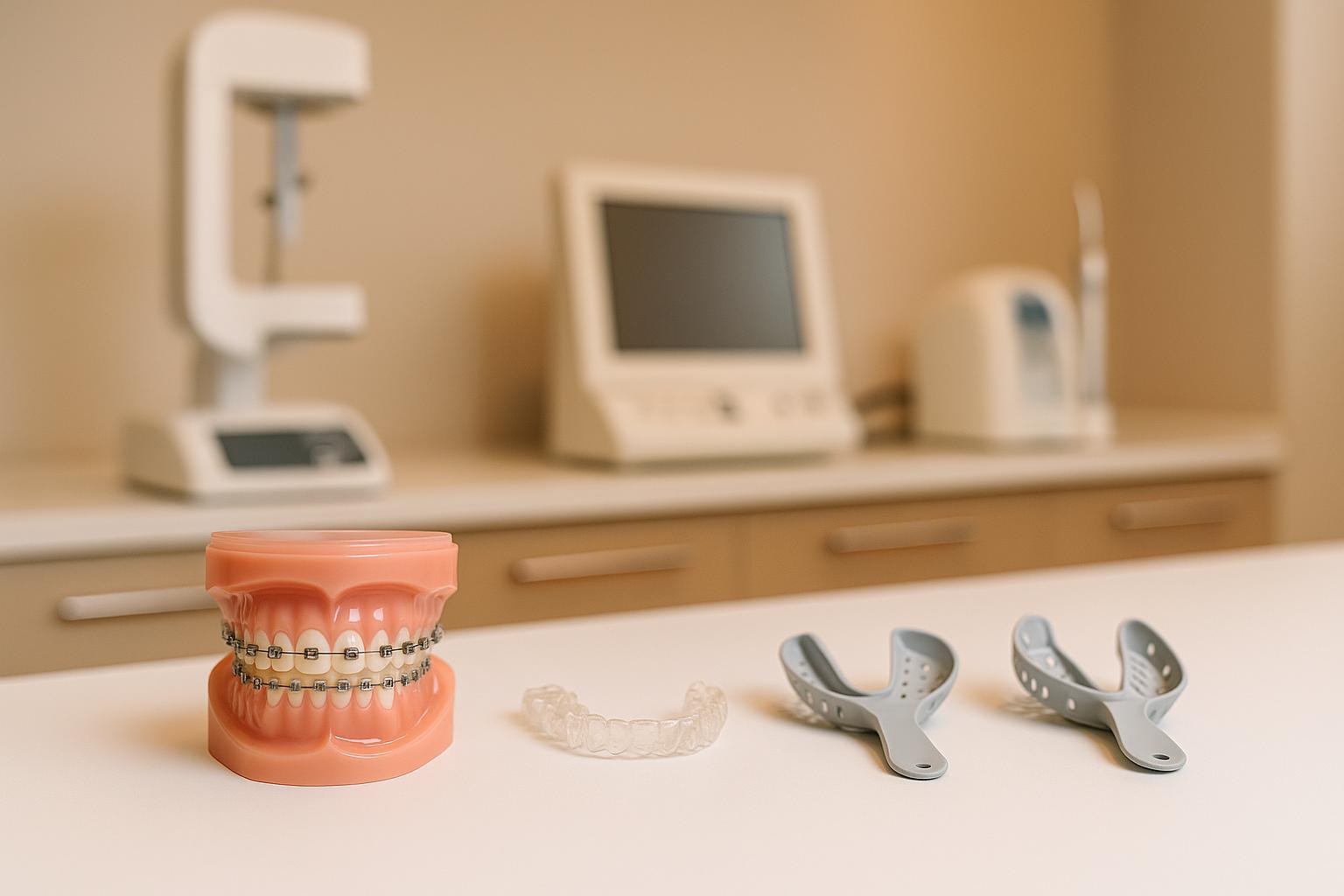
Orthodontic treatment isn’t just about straightening teeth – it’s about improving bite functionality, jaw alignment, and overall oral health while achieving facial balance. Setting clear, realistic goals is crucial to achieving long-term results that align with your needs and expectations. Here’s what you need to know:
- Short-term goals: Focus on initial alignment and spacing, often noticeable within the first 6–9 months.
- Long-term goals: Aim for a stable bite, enhanced facial symmetry, and retention to maintain results.
- Factors to consider: Age, jaw structure, gum health, and lifestyle all shape what’s achievable.
- Treatment duration: Braces typically take 18–24 months, while clear aligners may vary depending on compliance and complexity.
- Appliance options: Braces (metal or ceramic) offer precision, while clear aligners suit those seeking discretion.
A personalised treatment plan, created in collaboration with your orthodontist, ensures your goals align with clinical possibilities. Regular follow-ups and proper retention are key to preserving your results.
For Australian patients, clinics like Complete Smiles Bella Vista provide detailed diagnostics and transparent cost structures to guide the process. The right plan prioritises both functional improvements and a confident smile that lasts.
Orthodontic Treatment Planning: Comprehensive Diagnosis, Priorities, and Therapeutic Sequencing
What Orthodontic Treatment Aims to Achieve
Orthodontic care revolves around three main goals: improving function, promoting oral health, and enhancing appearance. It’s about more than just straight teeth – treatment aims to create a stable bite, support long-term oral health, and refine facial balance. A well-aligned bite makes activities like chewing, speaking, and jaw movement more comfortable, while reducing risks such as tooth wear, decay, and gum disease. Additionally, orthodontics aligns the teeth and jaws with the lips and overall facial structure, contributing to symmetry and boosting smile confidence.
Functionally, orthodontic treatment addresses misaligned bites (malocclusions) to ensure the upper and lower teeth meet properly. This alignment helps distribute chewing forces evenly, reducing the risk of abnormal wear, chipping, or fractures. For example, a deep overbite can cause excessive wear on the front teeth and strain the jaw joints. Correcting the bite and, if necessary, adjusting the jaw position can alleviate this strain. Similarly, fixing a crossbite balances chewing forces and lowers the chances of gum recession or facial asymmetry. Many patients also notice improved speech clarity and less jaw fatigue as their bite becomes more balanced.
From a health standpoint, straighter teeth are easier to clean, reducing the risk of plaque buildup, tooth decay, and gum disease. Resolving crowding or spacing issues eliminates hard-to-reach areas where plaque tends to accumulate. Proper alignment also prevents abnormal tooth wear, which can lead to sensitivity, fractures, or the need for restorative dental work later on. In practices that combine general, cosmetic, and orthodontic care – like Complete Smiles Bella Vista – treatment plans often integrate orthodontics with other dental services to maximise oral health benefits and long-term stability.
Aesthetically, orthodontics does more than straighten visible teeth. It improves the way teeth, jaws, and lips work together to shape the face. Adjusting protruding or retruded teeth can soften features like a buck-toothed or sunken appearance, while correcting jaw discrepancies – such as an underbite – can enhance facial symmetry and the profile. The alignment of the dental arches also affects how much of the teeth show when smiling and the overall fullness of the smile, contributing to a youthful, attractive look. These combined functional and aesthetic improvements often lead to a boost in self-confidence.
Orthodontic treatment aims to achieve both a well-functioning bite and an attractive facial appearance. Simply straightening the front teeth without addressing bite alignment or coordinating the upper and lower arches may improve a smile’s appearance in photos but leave underlying issues unresolved, increasing the risk of relapse. A comprehensive approach, on the other hand, addresses both arches, corrects the bite, and includes a retention phase to maintain the results over time.
Short-Term vs Long-Term Goals
Orthodontic treatment is typically broken into phases, with each phase focusing on specific objectives to ensure the best possible outcome.
Short-term goals focus on initial alignment, spacing, and bite correction. These are tracked using photographs, digital scans, and study models. Depending on the complexity of the case and the type of appliance used, treatment usually spans 12 to 24 months. Many patients notice visible improvements within the first few months, which can be motivating. This step-by-step approach ensures each goal is achievable and builds on the progress made in earlier phases.
Long-term goals aim to deliver stable, functional, and aesthetically pleasing results that last well beyond active treatment. Beyond straightening teeth and managing space, long-term objectives include achieving precise bite alignment, harmonising the upper and lower jaws, and supporting the facial profile and lip posture. To minimise the risk of relapse, retention plays a crucial role – this involves retainers and follow-up care to maintain the results. In more complex cases, achieving these goals may require a staged approach, collaboration with other specialists (such as periodontists or oral surgeons), or surgical orthodontics for some adult patients.
Research highlights that both patients and clinicians value improvements in bite function and facial aesthetics. However, patients often prioritise comfort, the appearance of appliances, and treatment duration. For instance, many adults prefer clear aligners for their discreet and comfortable design, even though fixed braces may offer similar results. In Australian practices, this balance is often achieved through shared decision-making. Orthodontists discuss the advantages and drawbacks of each option – covering treatment duration, costs in Australian dollars, and appliance visibility – so patients can make informed choices that suit their lifestyle. This collaborative approach helps set realistic expectations and often leads to greater satisfaction with the final results.
Factors That Influence Realistic Goal Setting
When planning orthodontic treatment, it’s crucial to consider both clinical factors and individual circumstances. This combined approach helps establish goals that are achievable within the limits of tooth movement and patient needs.
Clinical Considerations
Orthodontic outcomes are heavily influenced by the patient’s dental and skeletal structure.
Malocclusion type and severity are key starting points. For example, mild crowding in a healthy mouth can often be corrected to near-perfect alignment. On the other hand, severe skeletal malocclusions, like a pronounced Class III issue where the lower jaw is significantly forward, may require a combination of orthodontics and surgery. For adults with this condition, achieving a balanced facial profile and bite often involves jaw surgery. Without surgery, the focus shifts to improving function and appearance within the constraints of the jaw’s current position.
Jaw relationships and skeletal patterns also play a major role. In growing children, orthodontists can use appliances to guide jaw development. However, once growth is complete – usually by the late teens – orthodontics alone is limited to moving teeth within the existing jaw structure. For adults, more severe skeletal discrepancies may only be partially addressed with orthodontics or require surgical intervention for comprehensive correction.
Age and growth potential significantly shape treatment possibilities. In children and adolescents, orthodontists often time treatment to coincide with growth spurts, typically between ages 10 and 14 in Australia. This allows for jaw development adjustments that might eliminate the need for surgery later. For adults, whose skeletal growth has finished, treatment goals must account for fixed jaw size and position.
Periodontal and dental health set limits on how much teeth can be safely moved. Healthy gums and bone are essential for orthodontic success. If conditions like gum disease, bone loss, or tooth decay are present, these must be treated before orthodontic appliances are used. Moving teeth in compromised tissue increases the risks of root damage, further bone loss, or even tooth loss. In cases where periodontal support is reduced, orthodontists use gentler forces, slower movements, and adjust goals to prevent further complications.
Tooth and jaw anatomy can also restrict treatment options. Factors like short roots, thin bone, impacted teeth, or unusually shaped teeth may limit how far teeth can be shifted. Pre-existing dental work, such as crowns or implants, adds complexity since these don’t move like natural teeth. Additionally, previous orthodontic treatments may pose challenges, as relapse or unresolved issues from earlier phases can narrow current possibilities.
Patient-Specific Factors
Beyond clinical considerations, personal and lifestyle factors play a significant role in shaping realistic orthodontic goals.
Compliance is a cornerstone of successful treatment. Orthodontic results rely heavily on patients following instructions, like wearing elastics or aligners as prescribed. If adherence is likely to be an issue, orthodontists might recommend fixed appliances that require less daily involvement. In such cases, goals may focus on simpler improvements, like aligning front teeth, rather than achieving more complex bite corrections.
Lifestyle and daily commitments influence appliance choices and treatment plans. For instance, adults in professional environments often prefer clear aligners or tooth-coloured braces for their discreet appearance. Orthodontists take these preferences into account and may adjust treatment goals to accommodate busy schedules, especially if frequent appointments are difficult to manage alongside work or family obligations.
Financial resources are another practical consideration. Orthodontic treatment in Australia can be a significant investment. While private health insurance may cover part of the cost, out-of-pocket expenses can still be substantial. If comprehensive treatment, such as combining jaw surgery with orthodontics, isn’t financially feasible, orthodontists can propose phased or simplified plans. For example, initial treatment might prioritise aligning the upper front teeth, with the option to address more complex corrections later.
Time availability and treatment duration are also critical. The length of treatment depends on factors like the severity of the malocclusion and the type of tooth movement required. Most cases with fixed braces take 18–24 months, but more complex goals, such as correcting major bite issues, can extend this timeframe. Orthodontists typically schedule review visits every four to eight weeks, so patients need to consider whether their schedules can accommodate these regular appointments.
Aesthetic and cultural preferences often shape treatment priorities. Many patients value straight, white front teeth or a specific smile style influenced by social media or personal tastes. While orthodontists aim to meet these desires, they also prioritise functional goals like bite alignment and jaw health. For example, tipping front teeth too far forward to achieve a certain look can compromise gum health and increase the risk of relapse. In Australian practices, it’s common to combine orthodontic treatment with other dental services, such as teeth whitening or veneers, to address aesthetic concerns after functional goals are met.
Multidisciplinary needs can add complexity to treatment plans. Cases involving missing teeth, severe wear, or skeletal discrepancies often require collaboration with oral surgeons, periodontists, or restorative dentists. In these situations, orthodontists set staged goals – such as creating space for implants or preparing teeth for bridges – rather than promising a single-phase solution. This approach ensures that each specialist contributes to the overall outcome, balancing functional and aesthetic improvements effectively.
How Orthodontists and Patients Set Goals Together
Orthodontic treatment thrives on teamwork – a blend of the orthodontist’s expertise and the patient’s personal goals, lifestyle, and priorities. After conducting a thorough diagnostic assessment, the orthodontist collaborates with the patient to establish clear, achievable objectives. These goals often balance the patient’s desires for functional improvements and aesthetic enhancements, creating a treatment plan that’s tailored to their unique needs.
Initial Consultation and Diagnostic Assessment
The journey begins with an initial consultation where orthodontists gather essential details about the patient’s concerns and dental condition. Patients should come ready to talk about what bothers them – whether it’s crooked teeth, bite issues, or other functional problems. Practical factors like budget and time constraints are also discussed to ensure the treatment plan aligns with their lifestyle.
During the clinical examination, orthodontists evaluate the teeth, bite, jaw alignment, and facial symmetry. Tools like intraoral and extraoral photos, panoramic and cephalometric X-rays, and digital scans provide detailed insights into the dental and skeletal structure. In more complex cases, cone beam computed tomography (CBCT) may be used for a deeper look.
These diagnostic tools not only help pinpoint issues like crowding, spacing, or jaw misalignment but also serve as visual aids for patients. For instance, orthodontists may use digital previews – especially common with clear aligner systems – to show how the patient’s smile could look after treatment. Clinics like Complete Smiles Bella Vista often incorporate these tools to illustrate potential outcomes, making it easier for patients to visualise the benefits.
This phase sets the groundwork for defining both short-term goals (e.g., correcting a deep bite or aligning the front teeth) and long-term goals (e.g., achieving a functional bite and enhanced facial balance).
Reviewing Treatment Options
Once the diagnostic assessment is complete, orthodontists present various treatment options, outlining the pros, cons, and suitability of each approach based on the patient’s specific needs and goals. This collaborative decision-making process ensures the treatment plan reflects both clinical recommendations and the patient’s preferences.
Traditional braces, made of metal or ceramic, are highly effective for addressing complex issues like severe crowding, large gaps, or significant bite problems. While braces offer precise control over tooth movement, they are more noticeable and require regular adjustments every 4–8 weeks. Most treatments with braces last 18–24 months for moderate cases.
Clear aligners, such as Invisalign, are a popular choice due to their discreet appearance and easy removability, which simplifies oral hygiene. However, they demand strict compliance – patients need to wear them 20–22 hours a day for optimal results. Aligners may not be suitable for very complex cases or significant jaw misalignments.
For children, functional appliances are often used during growth spurts (typically between ages 10 and 14 in Australia) to guide jaw development and address structural issues early.
Patients are encouraged to ask questions to clarify their understanding and expectations, such as:
- "What are my primary orthodontic issues, and how will they influence my treatment?"
- "What treatment options are available, and which one do you recommend for my case?"
- "How long will the treatment take, and what factors could affect the timeline?"
- "What can I expect my smile and bite to look like after treatment?"
These conversations help patients feel informed and involved, setting the stage for realistic outcomes. Patients also learn the importance of their role in the process, from wearing aligners or elastics as instructed to maintaining excellent oral hygiene.
Setting Expectations and Understanding Limitations
A key part of goal-setting is understanding what orthodontic treatment can and cannot achieve. While orthodontic appliances can improve alignment and bite function, they cannot alter jaw size in adults without surgical intervention. For example, a patient with a pronounced skeletal Class III malocclusion might need orthognathic surgery to achieve a balanced facial profile, even if orthodontic treatment improves tooth alignment.
Other factors, such as previous dental work (crowns, bridges, implants, or missing teeth), can limit how much teeth can be moved. These cases may require collaboration with restorative dentists or periodontists to create a comprehensive plan. Age also plays a role; while children can benefit from treatments that leverage natural growth, adults are generally limited to adjustments within their existing framework.
Orthodontists use clear explanations and visual aids to help patients understand potential compromises. For instance, minor gaps or slight asymmetry might need to be accepted to achieve a stable, healthy bite. When a patient’s preferences conflict with clinical necessities, orthodontists explain the risks of rushing treatment, such as root damage or relapse, and may suggest a phased approach if appropriate.
The informed consent process ensures patients fully understand their diagnosis, treatment plan, and alternatives. Risks like root resorption, gum recession, decalcification, or relapse (if retainers aren’t worn) are discussed, along with expected outcomes. Patients are also informed about appliance types, estimated treatment durations, and the importance of diligent oral care.
Treatment timeframes are presented as ranges – such as 18–24 months for braces or shorter durations for aligners – with the understanding that individual results can vary. This transparency helps manage expectations and builds trust throughout the orthodontic journey.
sbb-itb-2be92ed
Creating a Personalised Treatment Plan
After agreeing on treatment goals and selecting an approach, the orthodontist and patient move on to creating a detailed plan. This personalised plan pulls together diagnostic information to outline the treatment journey – covering the chosen appliance, any preparatory procedures, and the expected duration [3][6]. In Australia, the plan also includes cost estimates in AUD, payment options, and the treatment timeline in months. This level of transparency helps patients weigh the clinical outcomes against the time and financial investment required [2][3]. Clinics like Complete Smiles Bella Vista often integrate orthodontic plans with other dental needs, such as preparing for implants or coordinating cosmetic treatments like veneers or whitening, ensuring a seamless approach to overall care.
During a follow-up consultation, the orthodontist presents the plan, explaining each step, expected milestones, potential challenges, and the importance of patient participation [3]. This collaborative process ensures the plan reflects both clinical recommendations and the patient’s preferences regarding appliance visibility, comfort, treatment length, and cost [1][4]. The treatment journey is typically divided into distinct phases, each with clearly defined objectives.
Phased Approach to Treatment
Orthodontic treatment often follows a phased structure, breaking the journey into manageable stages. Each phase has specific clinical goals, appointment schedules, and at-home care guidelines [3][5].
Phase 1: Initial Alignment and Levelling
This phase uses gentle forces to begin straightening teeth and levelling the arches. Patients often see noticeable improvements – such as reduced crowding – within three to six months, making daily oral care easier.
Phase 2: Bite Correction and Space Management
The focus shifts to correcting bite issues like overbites, underbites, and crossbites, as well as closing gaps. This phase may involve elastics, springs, or specific aligner adjustments. Since it targets more complex movements, it’s typically the longest phase. Consistent patient compliance is crucial to staying on track.
Phase 3: Finishing and Detailing
This stage refines the final alignment, focusing on tooth angulation, midline positioning, and overall smile aesthetics. Minor adjustments ensure everything is in place before moving on to retention.
Phase 4: Retention
After active treatment, retainers are fitted to maintain the teeth’s new positions and prevent relapse. Retention is vital because teeth and surrounding bone need time to stabilise. Patients are usually advised to wear removable retainers at night indefinitely to protect their results, with clear instructions provided for care and maintenance [6].
Setting Milestones and Treatment Timeframes
Orthodontists estimate treatment durations based on the complexity of the case. Mild to moderate issues generally take 12 to 18 months, while more complex bite problems may require 18 to 24 months or longer [2][5]. These estimates are communicated in plain language and documented, with factors like aligner wear compliance, accidental breakages, or missed appointments potentially affecting progress [2][3].
For example, patients might be told that crowding should improve within the first four to six months, bite correction will occur between months six and fifteen, and finishing touches will happen in the final three to six months [2][5]. Regular review visits – every 4–8 weeks for braces or 6–10 weeks for aligners – ensure progress aligns with the plan, allowing for timely adjustments [5][6]. Tools like 3D scans and treatment previews make the plan more tangible, helping patients visualise their progress [3].
Patients can track everyday milestones, such as easier flossing, less tooth overlap in photos, or better back-teeth contact. Orthodontists may set specific clinical checkpoints, like “spaces fully closed by month nine” or “upper and lower midlines aligned by the next review.” For aligner users, milestones might be tied to tray numbers, such as “by tray 10, your upper front teeth should be nearly straight.” This reinforces the importance of wearing aligners for 20 to 22 hours daily [2][6]. Before-and-after photos taken at key stages also help patients see their progress over a treatment spanning one to two years [3][5].
The choice of appliance plays a big role in shaping the treatment plan. Traditional braces, whether metal or ceramic, are often used for complex cases involving significant crowding or bite issues. These cases typically require 18 to 24 months, with adjustments every 4–8 weeks. Clear aligners, on the other hand, are preferred for mild to moderate misalignments or for adults seeking a discreet option. While aligner treatment can sometimes be shorter, its success depends heavily on patient compliance [2]. Both approaches outline the treatment phases, with aligner plans specifying tray sets and refinements [2][6].
Retention and Follow-Up Care
The retention phase ensures the teeth stay in their new positions. Without retainers, there’s a high risk of teeth gradually shifting back [6]. Retention options include fixed retainers – bonded behind the front teeth for continuous support – and removable retainers like Essix trays or Hawley plates, which are worn full-time initially and then switched to night-time use.
The choice of retainer depends on factors like the severity of the original misalignment, the patient’s age, oral hygiene habits, and the risk of relapse. For instance, a patient with severe crowding might need a fixed retainer on the lower teeth indefinitely, paired with a removable upper retainer for night-time wear. Patients are given clear instructions on retainer care and what to do if it becomes loose or damaged. Follow-up visits are scheduled at three, six, and twelve months post-treatment, and then annually if stability is maintained [3][6].
These reviews allow orthodontists to check retainer fit, monitor for early signs of relapse, and assess growth or wisdom tooth eruption in younger patients. If minor movement is detected, adjustments – like modifying or replacing a retainer – can be made before significant shifts occur [6].
For Australian patients who relocate or have changing circumstances, clinics like Complete Smiles Bella Vista can collaborate with general dentists to monitor orthodontic stability during routine check-ups. This teamwork helps catch potential issues early and ensures timely intervention.
Comparing Orthodontic Appliances
Choosing the right orthodontic appliance is a crucial step in achieving treatment goals. Each option comes with its own set of strengths, and understanding these can help patients make better decisions tailored to their individual needs. In Australian orthodontics, the most common options include metal braces, ceramic (clear) braces, clear aligners (like Invisalign), and lingual braces.
Here’s a quick comparison of these appliances, focusing on suitability, visibility, treatment time, cost, and maintenance:
| Appliance Type | Best Suited For | Visibility | Typical Duration | Estimated Cost (AUD) | Maintenance & Lifestyle |
|---|---|---|---|---|---|
| Metal braces | Suitable for mild to very complex cases, including crowding, rotations, and bite issues | Highly visible metal brackets and wires | Around 18–24 months | $6,000–$9,000 | Fixed full-time; requires thorough brushing, flossing, avoiding certain foods, and regular adjustments |
| Ceramic braces | Similar to metal braces but often chosen for a less noticeable appearance | Less visible due to tooth-coloured brackets (metal wire may still be visible) | Around 18–24 months | $7,000–$10,000 | Similar care to metal braces; brackets can stain or chip without proper care |
| Clear aligners (e.g. Invisalign) | Best for mild to moderate alignment issues and some bite corrections; depends on patient compliance | Nearly invisible trays | Usually 12–18+ months | $6,500–$11,000+ | Removable; must be worn 20–22 hours daily; easier to clean but requires discipline to avoid loss or improper wear |
| Lingual braces | Ideal for moderate to complex cases, especially for adults seeking a discreet fixed option | Hidden behind teeth and completely invisible from the front | Similar to or slightly longer than traditional braces | $9,000–$15,000+ | Fixed; more challenging to clean and adjust; may initially affect speech and comfort |
Key Features of Each Appliance
Metal Braces
Often considered the "gold standard", metal braces are highly effective for managing complex cases like severe crowding, significant rotations, and bite issues. They provide precise control over tooth movement, which is key for achieving long-term stability. However, they require consistent oral hygiene and regular adjustments.
Ceramic Braces
Ceramic braces work much like metal braces but are less noticeable due to their tooth-coloured brackets. They are a popular choice among image-conscious teens and adults. However, they are slightly more expensive and can stain or chip if not maintained properly.
Clear Aligners
Clear aligners have transformed orthodontics by offering a nearly invisible and removable option. They are great for mild to moderate cases but require strict compliance – wearing them for 20 to 22 hours daily is essential for success. While they simplify eating and cleaning, they demand a disciplined approach to ensure consistent use.
Lingual Braces
Lingual braces are an excellent choice for adults who want a fixed treatment that’s completely hidden. The brackets are placed on the inner side of the teeth, making them invisible from the outside. However, they come with a higher price tag and may initially cause discomfort or speech issues.
Factors to Consider
Case Complexity and Compliance
The complexity of your dental issue and your ability to stick to the treatment plan will heavily influence which appliance is best. For instance, severe crowding may respond better to metal braces, while an adult with mild spacing could benefit from the discretion and flexibility of aligners.
Digital Scans and 3D Planning
Australian orthodontic clinics often use advanced tools like digital scans and 3D modelling to help patients visualise their options. Clinics such as Complete Smiles Bella Vista provide detailed consultations to explain the pros and cons of each appliance, along with costs, visit frequency, and lifestyle considerations.
Costs and Insurance
The cost of orthodontic treatment varies depending on the complexity of the case, the provider’s location, and the chosen appliance. Many practices offer payment plans to make treatment more accessible. Additionally, some private health insurance extras policies include orthodontic benefits, so it’s worth checking with your fund to see what’s covered.
Maintenance Needs
Different appliances come with different maintenance requirements. Fixed treatments like metal, ceramic, and lingual braces need regular brushing, flossing, and dietary care, with adjustments every four to eight weeks. Clear aligners, on the other hand, require strict adherence to daily wear time and regular cleaning, with follow-ups every six to ten weeks. For those involved in contact sports, a mouthguard is essential for fixed braces, while aligners can be removed during games if stored properly.
Conclusion
Orthodontic planning is all about finding the right balance between your unique anatomy, lifestyle, and achievable results. Factors like age, jaw growth, gum health, the severity of crowding, and how consistently you follow the treatment plan all play a role in shaping both the outcome and the timeline. For instance, a teenager with moderate crowding might complete their treatment in 18 to 24 months. On the other hand, an adult dealing with a complex jaw issue might need a longer timeframe, possibly involving additional procedures. These considerations help create a treatment plan that prioritises both short-term progress and long-term stability.
The journey typically starts with short-term goals, like adjusting to your appliance and noticing early alignment changes. Over time, these build up to long-term benefits: a functional bite, easier-to-clean teeth, and a lower risk of wear and gum issues. While minor imperfections may remain, the goal is to achieve the best possible result within the limits of your anatomy, all while preserving your overall oral health.
Clear communication with your orthodontist is key. Discuss priorities like treatment duration, the appearance of appliances, budget considerations (in AUD), and lifestyle needs to develop a plan that works for you. Clinics like Complete Smiles Bella Vista offer integrated orthodontic and general dental care, ensuring a comprehensive approach to oral health.
When deciding on treatment options, the chosen appliance should reflect both clinical requirements and your personal preferences. Keep in mind that factors like the complexity of your case, how well you stick to the plan, or unexpected challenges could extend the treatment timeline. Regular check-ups – usually every four to eight weeks – allow your orthodontist to make any necessary adjustments to keep things on track.
Once the active phase of treatment is complete, wearing retainers as directed is crucial to prevent your teeth from shifting back. Follow-up visits will help monitor bite stability, retainer fit, and gum health, ensuring your results last for years to come.
Orthodontic treatment is more than just a cosmetic upgrade – it’s an investment in your long-term oral health. With thoughtful planning, open communication, and evidence-based care, you can expect more predictable results and greater satisfaction. Reach out to a registered orthodontist to start crafting a treatment plan tailored to you. By setting realistic goals and working together, your orthodontic journey becomes a well-coordinated step toward a healthier, more confident smile.
FAQs
How can I know if my orthodontic goals are achievable based on my age and dental health?
Determining whether your orthodontic goals are achievable involves several factors, such as your age, the health of your teeth and gums, and how complex the treatment might be. To get a clear picture, an orthodontist will conduct a detailed evaluation, which often includes X-rays, photographs, and dental impressions.
By discussing your specific goals, they can create a tailored treatment plan that highlights what’s realistically possible. While some adjustments may take more time or require additional care, your orthodontist will work closely with you throughout the process to help you achieve the best results.
How do braces and clear aligners differ in terms of treatment time and results?
Braces and clear aligners are both effective ways to straighten teeth, but they work quite differently. Braces use metal brackets and wires to gradually shift teeth into place. They’re often the go-to choice for more complex cases and usually involve a longer treatment period, typically lasting between 18 and 36 months.
On the other hand, clear aligners, like Invisalign, offer a more discreet option. These removable trays are ideal for mild to moderate orthodontic issues and come with the added benefit of easier cleaning and eating. Treatment with aligners is often quicker, ranging from about 6 to 18 months.
Ultimately, both options can deliver great results when used properly under your orthodontist’s guidance. Deciding between braces and aligners comes down to your dental needs, lifestyle, and personal preferences. A consultation with your orthodontist will help you figure out the best path to achieve the smile you’re after.
How do lifestyle and personal preferences impact the choice of orthodontic treatments?
Lifestyle and personal choices are key when deciding on orthodontic treatments. Things like daily routines, job demands, and appearance preferences often guide whether someone chooses traditional braces, clear aligners like Invisalign, or other orthodontic options.
For instance, people in public-facing roles might lean toward subtle options like clear aligners, while those with active lifestyles might prioritise sturdy solutions that can handle physical activities. Talking openly with your orthodontist about your specific needs and goals is essential to finding a treatment plan that fits your way of life and achieves the results you’re after.
Related Blog Posts
- Pre-Orthodontic Treatment Checklist: What to Know
- Ultimate Guide to Adult Braces: Challenges and Solutions
- 5 Factors Affecting Orthodontic Treatment Feasibility
- Patient Compliance in Orthodontics: Key Insights
Important Notice: Any surgical or invasive procedure carries risks. Before proceeding, you should seek a second opinion from an appropriately qualified health practitioner.
Individual results may vary. The information provided in this article is for educational purposes only and does not constitute medical advice.
Checkout Related Blogs




Get in touch with us
For more information, call us now to start feeling better. Or fill the form below to make appointment
The Latest News from Complete Smiles
How to Clean Clear Plastic Retainers
Checklist for Choosing Wearable Dental Devices
Checklist for Choosing Cloud AI Platforms in Dentistry

Complete Smiles Bella VistaAccepts All Major Health Funds, Including





