





Nanocomposites for Dental Stem Cells: Key Insights
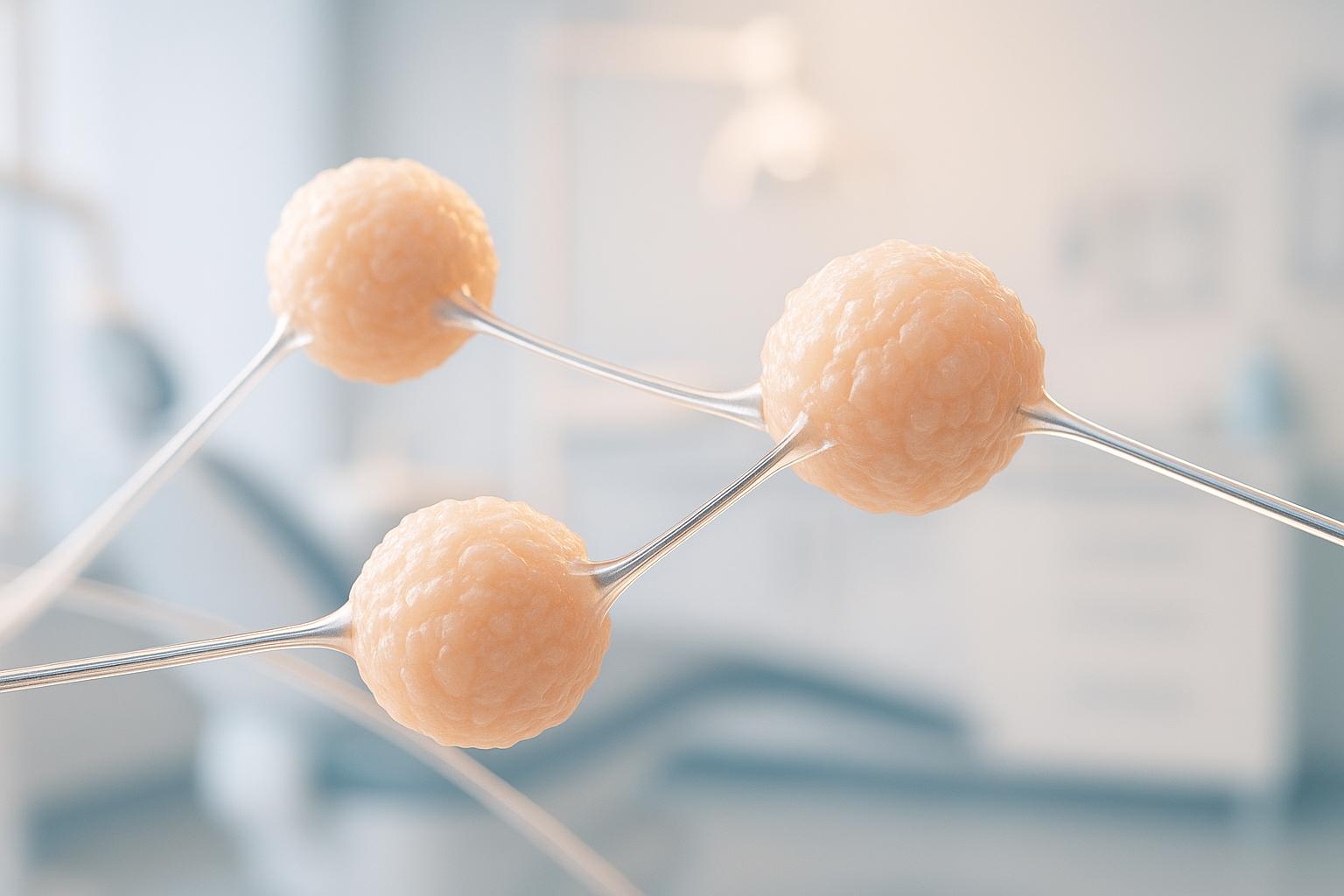
Nanocomposites are transforming dental tissue repair by supporting dental stem cell (DSC) regeneration. These materials mimic natural tissue structures, guide cell behaviour, and enable controlled delivery of growth factors. Compared to standard biomaterials and bioactive ceramics, nanocomposites offer better mechanical properties and bioactivity but come with higher costs and manufacturing challenges.
Key takeaways:
- Nanocomposites: Customisable scaffolds that enhance DSC adhesion, differentiation, and tissue regeneration.
- Standard biomaterials: Reliable and cost-effective but lack active regenerative properties.
- Bioactive ceramics/polymers: Actively guide regeneration but face stability challenges.
In Australia, nanocomposites are advancing through trials, while standard biomaterials remain widely used. Costs and regulatory processes will shape the adoption of these materials in dental care.
Tissue Engineering in Restorative Dentistry
1. Nanocomposites
Nanocomposites are cutting-edge materials that combine nanoscale particles with polymer matrices, creating scaffolds designed to support dental tissue regeneration. Operating at the nanometre scale, these materials interact directly with cellular components, making them highly effective in mimicking natural tissue structures.
Mechanisms of Action
Nanocomposites work by replicating the intricate structure of dental tissues, influencing cellular behaviour through mechanotransduction. This is the process where cells sense and respond to physical signals from their surroundings, which then impacts gene expression and cell activity.
The nanoscale surface roughness of these materials increases their surface area, improving protein adsorption and aiding the initial adhesion of cells. Additionally, they allow for the controlled release of bioactive molecules, establishing local gradients that guide stem cells into specific developmental pathways.
The mechanical properties of nanocomposites can be fine-tuned by varying the type, size, and concentration of nanoparticles. This flexibility allows researchers to match the scaffold’s stiffness to the target tissue, ensuring the right mechanical cues for optimal cellular behaviour.
These features enable nanocomposites to actively influence dental stem cell differentiation, making them a promising tool for regenerative dentistry.
Effects on Dental Stem Cell Differentiation
Nanocomposites play a key role in guiding dental stem cells into forming specific tissues. For example:
- Hydroxyapatite nanoparticles release calcium and phosphate ions, creating an environment conducive to hard tissue formation.
- Graphene-based nanocomposites improve electrical conductivity, which stimulates neural differentiation in dental pulp stem cells. These materials also support biocompatibility and enhance cell proliferation.
- Titanium dioxide nanoparticles incorporated into scaffolds encourage dentin formation by upregulating odontogenic markers like DSPP and ALP, which are critical for producing dentin-producing odontoblasts.
Another advantage is the controlled release of growth factors over time. Nanocomposites can sustain bioactivity for weeks or even months, which is crucial for dental tissue regeneration, as the process requires consistent cellular stimulation over extended periods.
Biocompatibility and Safety
For dental applications, nanocomposites undergo stringent biocompatibility testing to ensure they are safe for use. Cytotoxicity assays have shown that well-formulated nanocomposites maintain cell viability above 90% when tested with various dental stem cell types.
The materials are designed to break down into by-products the body can easily metabolise or eliminate. For instance, PLGA-based nanocomposites degrade into lactic and glycolic acids, while calcium phosphate nanoparticles dissolve to release ions that integrate into newly formed tissues.
Inflammatory responses are also minimal when nanocomposites are properly designed. In vitro studies consistently demonstrate that these materials produce inflammatory markers at levels comparable to negative controls, confirming their excellent tissue compatibility.
These robust safety profiles are critical as nanocomposites move closer to clinical use in Australia.
Clinical Translation Status in Australia
Nanocomposites are steadily advancing through preclinical stages in Australia, supported by their customisable properties and proven safety. The journey from lab research to clinical application is guided by the strict regulatory framework of the Therapeutic Goods Administration (TGA). Currently, several nanocomposite formulations are being tested, focusing on applications like periodontal regeneration and pulp tissue engineering.
To secure regulatory approval, developers must provide comprehensive evidence of safety, efficacy, and manufacturing quality. Australian research institutions are working closely with international collaborators to streamline the development process while adhering to local standards.
Additionally, Australian systems are evaluating the economic feasibility and production capabilities of these therapies. With the support of TGA guidelines and local research efforts, nanocomposite-based dental treatments are making steady progress toward becoming a reality for patients in Australia.
2. Standard Biomaterials
Standard biomaterials form the backbone of dental regenerative medicine. These include materials like collagen scaffolds, calcium phosphate ceramics, synthetic polymers such as polylactic acid (PLA), and natural polymers like chitosan and alginate. Unlike nanocomposites, these materials function at the microscale.
Mechanisms of Action
Standard biomaterials aid regeneration primarily through passive biocompatibility. For example:
- Collagen scaffolds provide natural protein signals that promote cell attachment.
- Calcium phosphate ceramics gradually dissolve, releasing ions that encourage mineralisation.
- Synthetic polymers like PLA and PGA break down over time, making room for new tissue growth.
A key factor in their effectiveness is pore structure. Larger pores (around 100–500 micrometres) allow cells to move in and nutrients to flow, while smaller pores (10–100 micrometres) help in forming capillaries. However, ensuring uniform pore distribution remains a challenge with conventional production techniques.
Effects on Dental Stem Cell Differentiation
These materials also influence dental stem cells by providing chemical signals and structural support:
- Collagen matrices are excellent for cell adhesion but don’t offer strong cues for directing cell differentiation.
- Calcium phosphate ceramics like hydroxyapatite and tricalcium phosphate promote the formation of hard tissues by upregulating osteogenic markers (e.g., ALP, osteocalcin), though at a slower rate compared to nanocomposites.
- Chitosan-based scaffolds combine antimicrobial properties with cell growth support, making them ideal for periodontal treatments where infection control is critical. However, they lack the mechanical strength needed for load-bearing areas unless reinforced.
- Alginate hydrogels are highly biocompatible and can encapsulate cells during gelation, making them a useful tool for delivering stem cells to treatment sites. Their mild crosslinking conditions help preserve cell viability, but their mechanical strength is lower compared to synthetic options.
The established safety and clinical reliability of these materials ensure their continued use in Australia, even as newer technologies are explored.
Biocompatibility and Safety
Standard biomaterials have a long history of safe clinical use. Here’s how they measure up:
- Collagen scaffolds, typically derived from bovine or porcine sources, undergo rigorous processing to remove pathogens and immunogens. Cross-linking treatments improve their mechanical stability and compatibility with human tissue.
- Synthetic polymers like PLA and PGA are TGA-approved and degrade into lactic acid and glycolic acid – substances the body can process easily, resulting in minimal inflammation.
- Calcium phosphate ceramics are highly compatible due to their resemblance to natural bone minerals. However, their brittleness can lead to particle formation, which may trigger foreign body reactions. Strict manufacturing controls help reduce this risk.
- Natural polymers such as chitosan and alginate are less likely to cause allergic reactions, though rare sensitivities can occur. The main concern lies in maintaining consistent purity and molecular weight during production.
Clinical Translation Status in Australia
Standard biomaterials remain widely used in Australia, thanks to their proven effectiveness. Collagen membranes and calcium phosphate-based bone graft substitutes are commonly employed in periodontal and implant procedures. Many of these products have TGA approval and are covered by private health insurance, making them accessible to patients.
Guided tissue regeneration with collagen barriers has become a standard approach for treating periodontal defects, delivering reliable results. Synthetic polymer-based products are still being assessed for their long-term safety and degradation profiles in dental applications. Meanwhile, Australian research institutions are actively conducting clinical trials to support regulatory approvals for these materials.
Their affordability and scalable production processes further contribute to their widespread clinical use, even as advanced nanocomposite technologies continue to emerge and undergo evaluation.
sbb-itb-2be92ed
3. Bioactive Ceramics and Polymers
Bioactive ceramics and polymers represent an exciting class of regenerative materials. They not only provide structural support but also actively guide cellular behaviour. Acting as a bridge between traditional biomaterials and advanced nanocomposite technologies, these materials encourage cellular responses through controlled interactions with the surrounding tissues. This dual functionality allows for precise mechanisms that influence cellular activity.
Mechanisms of Action
Bioactive ceramics, like bioactive glasses, have a unique ability to partially dissolve in the body, releasing ions such as silica, calcium, and phosphate. These ions play a key role in forming a surface layer that enhances protein adsorption and cell attachment. On the other hand, smart polymers are designed to respond to environmental changes, such as shifts in pH or temperature, enabling them to release growth factors over specific timeframes. When these polymers are combined with ceramics in composites, the polymer matrix provides mechanical stability, while the ceramic component delivers bioactive signals at the interface. This combination mirrors the adaptable mechanical and bioactive properties seen in nanocomposite scaffolds.
Effects on Dental Stem Cell Differentiation
Bioactive glass surfaces have been shown to encourage the expression of markers linked to odontogenic differentiation, outperforming more passive materials. Similarly, polymer scaffolds enriched with bioactive elements like calcium phosphate nanoparticles support the differentiation of dental stem cells. Injectable thermoresponsive hydrogels, which remain liquid at room temperature but solidify at body temperature, offer a minimally invasive method for delivering dental stem cells. These hydrogels provide structural support while gradually releasing bioactive molecules, making them a promising tool for targeted dental tissue regeneration.
Biocompatibility and Safety
Generally, bioactive ceramics and polymers exhibit favourable biocompatibility. Bioactive glasses usually trigger minimal inflammatory reactions, while polymers like PLGA break down into natural byproducts that the body can process. However, when these materials are combined into composites, their interactions require thorough preclinical testing to ensure they are safe and integrate effectively with host tissues. Rigorous manufacturing standards are also essential to maintain consistent composition and biological performance.
Clinical Translation Status in Australia
In Australia, bioactive ceramics and polymers are making their way into clinical practice. Some bioactive glass products have already received regulatory approval and are being used in periodontal regeneration. Bioactive polymer systems are also being actively studied, with clinical trials underway to establish their long-term safety and refine delivery methods. While initial costs can be higher, research suggests that improved patient outcomes may offset these expenses. The growing interest among Australian dental professionals in these technologies reflects a broader movement toward adopting cutting-edge regenerative strategies in clinical settings.
Advantages and Disadvantages
When it comes to regenerative materials in dental stem cell differentiation, each type has its own set of strengths and challenges. These differences are crucial in deciding which material works best for specific clinical needs. Below, we’ll break down the key features of these materials, building on earlier discussions about their properties and uses.
Nanocomposites stand out for their adjustable mechanical strength, improved bioactivity, and ability to deliver drugs in a controlled manner. Their nanoscale structure allows for precise property manipulation, which is a major plus. However, this level of sophistication comes with drawbacks: manufacturing is more complex, costs are higher, and there are still concerns about long-term safety, especially regarding potential tissue accumulation.
Standard biomaterials like collagen and hydroxyapatite are reliable and cost-effective options. They’ve been used extensively, offering proven biocompatibility and predictable results. Their regulatory approval processes are well-established, making them a go-to choice for routine applications. However, their passive nature means they primarily act as structural supports without actively promoting rapid tissue regeneration, which can slow down the healing process compared to more dynamic alternatives.
Bioactive ceramics and polymers bring a more active role to the table. They guide tissue regeneration by releasing therapeutic ions and responding to the healing environment. These materials create dynamic scaffolds that adapt to the body’s needs, which gives them an edge over passive materials. The downside? Achieving the right balance between bioactivity and mechanical stability is tricky, as higher bioactivity often leads to faster degradation, which might compromise long-term performance.
Here’s a quick comparison of these materials:
| Material Category | Key Advantages | Primary Disadvantages | Cost Considerations | Regulatory Status |
|---|---|---|---|---|
| Nanocomposites | Adjustable properties, improved bioactivity, controlled drug release | Complex manufacturing, safety concerns, higher costs | Premium pricing due to advanced processing | Regulatory frameworks still developing |
| Standard Biomaterials | Proven biocompatibility, predictable performance, low cost | Limited bioactivity, passive regeneration | Affordable for routine use | Well-established approval processes |
| Bioactive Ceramics & Polymers | Active tissue guidance, responsive to healing, ion release | Stability challenges, variable degradation rates | Moderate to high, depending on complexity | Mixed status; some products approved |
The choice of material often hinges on the clinical scenario. For instance:
- Standard biomaterials are ideal for emergency cases due to their reliability and affordability.
- Nanocomposites are better suited for complex reconstructions where precision is key.
- Bioactive ceramics and polymers work well for routine regeneration, offering a balance of activity and adaptability.
In terms of scalability, standard biomaterials are straightforward to produce and distribute. Nanocomposites, on the other hand, demand rigorous quality control due to their advanced design. Bioactive ceramics and polymers fall somewhere in between, with their scalability largely influenced by processing complexity.
In the Australian dental market, there’s growing interest in advanced regenerative materials, though adoption rates differ significantly. Urban specialist centres tend to embrace these innovations faster than regional practices. Cost remains a major factor, especially for treatments not covered by private health insurance. This highlights the importance of aligning material properties with practical clinical needs to ensure both effectiveness and accessibility.
Conclusion
Nanocomposites offer exciting possibilities for guiding dental stem cell differentiation, while conventional biomaterials remain reliable for standard dental care. This mix of capabilities highlights the importance of selecting materials based on specific clinical goals.
With their adjustable mechanical properties and ability to deliver drugs in a controlled manner, nanocomposites are well-suited for more complex cases. However, their high production costs and technical challenges may limit their use to specialised treatments.
Meanwhile, bioactive ceramics and polymers present a middle ground. They enhance regenerative potential while being more accessible than advanced nanocomposites, making them a practical choice for broader applications.
In Australia, the future of dental tissue regeneration will rely on the practical integration of these materials. The adoption of nanocomposites will depend heavily on advancements in manufacturing and updates to TGA regulations that strike a balance between innovation and accessibility.
Cost will likely remain a key factor shaping how these materials are adopted. As production methods improve and economies of scale are achieved, nanocomposites could become more affordable, potentially expanding their use across diverse dental practices in Australia.
Rather than entirely replacing traditional materials, the future of dental stem cell differentiation may focus on tailoring material properties to meet specific clinical needs. Nanocomposites seem particularly suited for cases requiring precision and multifunctionality, while conventional biomaterials will continue to serve well for routine procedures. By aligning material choices with clinical demands, Australian dental practitioners can combine cutting-edge regenerative techniques with practical, cost-effective care.
FAQs
What are the costs and regulatory challenges of using nanocomposites in dental care in Australia?
Nanocomposites in dental care come with a price tag that reflects their complex production and the specialised materials required. These factors can influence both their cost and how readily they’re available for broader use in Australia.
On top of this, Australia’s stringent regulatory standards ensure that dental materials are thoroughly tested for safety and effectiveness. While this is essential for maintaining high-quality care, the rigorous approval processes can drive up development costs and slow down the time it takes for these materials to reach dental clinics.
Even with these hurdles, nanocomposites hold exciting potential, especially in dental stem cell therapies and regenerative treatments. Their possibilities continue to make them a focus of research and advancements in the field.
How do nanocomposites compare to traditional materials like biomaterials and bioactive ceramics in dental treatments?
Nanocomposites are gaining attention in dental care due to their impressive biocompatibility and safety, surpassing traditional options like biomaterials and bioactive ceramics. Studies show these materials excel at supporting cell adhesion and encouraging tissue regeneration, making them particularly useful for guiding dental stem cells towards differentiation.
A key ingredient often used in nanocomposites is hydroxyapatite. This component not only boosts bioactivity but also provides antibacterial benefits and enhances how well tissues integrate with the material. Unlike older materials, which often struggle with issues like limited durability and bioactivity, nanocomposites are specifically designed to overcome these challenges, offering a safer and more dependable solution for contemporary dental treatments.
What improvements are needed for nanocomposites to be widely used in dental procedures across Australia?
For nanocomposites to become a regular feature in dental procedures across Australia, a few key improvements are needed. First, lowering production costs is crucial to make these materials more affordable and widely available. Second, enhancing their biocompatibility will ensure they interact safely with human tissues. Finally, boosting their long-term stability is essential for dependable performance over the years.
Another important step is the development of scalable and efficient manufacturing methods. This would ensure consistent quality, safety, and effectiveness. Overcoming these hurdles could pave the way for nanocomposites to become a staple in everyday dental care, contributing to advancements in regenerative dentistry.
Related Blog Posts
- Nanomaterials in Dentistry: Wear Resistance Explained
- Nanocomposites for Pulp Regeneration: Key Features
- 5 Features of Next-Generation Composite Resins
- Antimicrobial Nanocomposites for Tooth Regeneration
Important Notice: Any surgical or invasive procedure carries risks. Before proceeding, you should seek a second opinion from an appropriately qualified health practitioner.
Individual results may vary. The information provided in this article is for educational purposes only and does not constitute medical advice.
Checkout Related Blogs




Get in touch with us
For more information, call us now to start feeling better. Or fill the form below to make appointment
The Latest News from Complete Smiles
How to Clean Clear Plastic Retainers
Checklist for Choosing Wearable Dental Devices
Checklist for Choosing Cloud AI Platforms in Dentistry

Complete Smiles Bella VistaAccepts All Major Health Funds, Including





