





How Nano-Hydroxyapatite Repairs Enamel
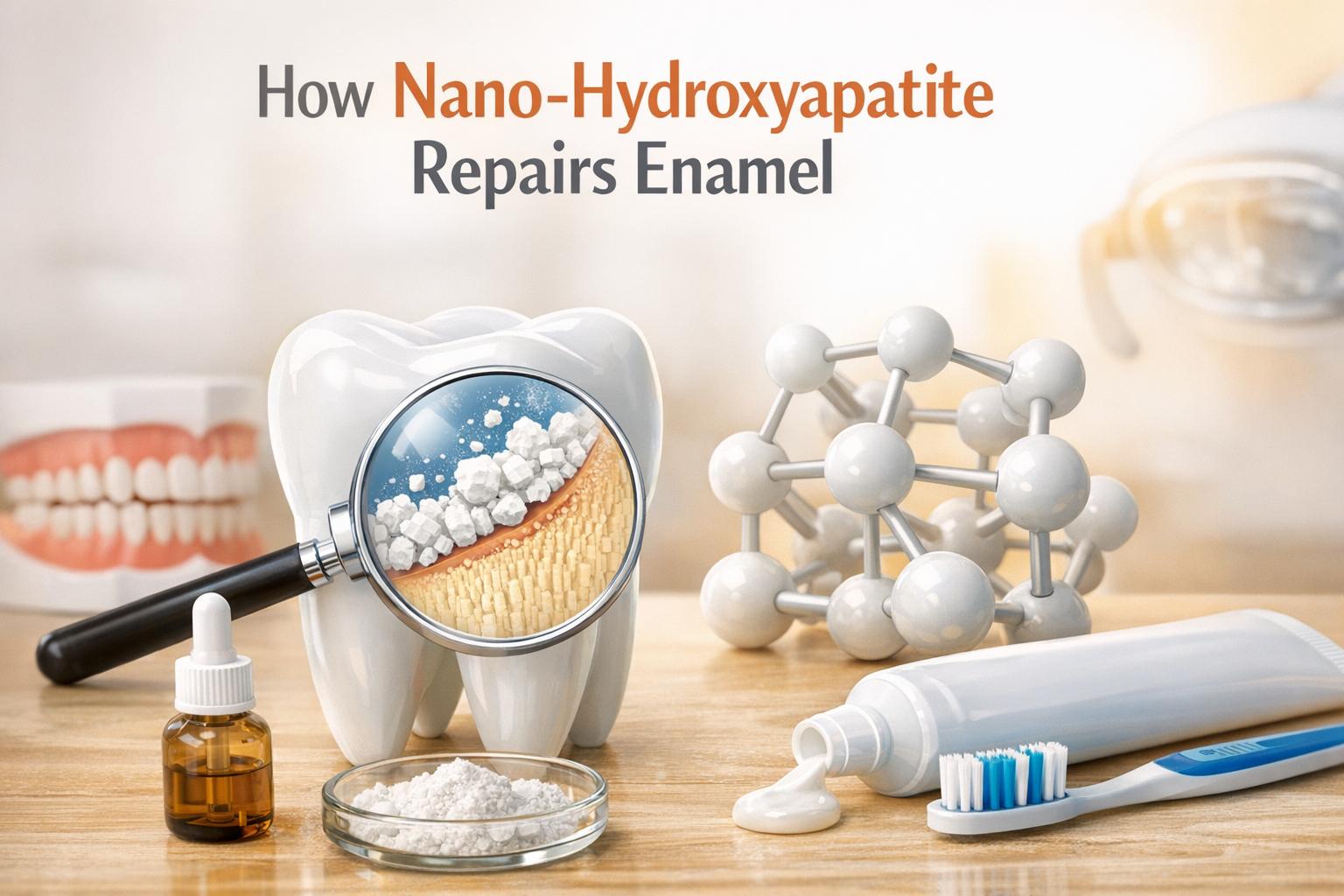
Nano-hydroxyapatite (nHA) is a synthetic material that mimics the mineral composition of your tooth enamel. It works by filling microscopic defects, bonding with damaged enamel, and restoring lost minerals. Unlike fluoride, which strengthens the tooth’s surface, nHA rebuilds enamel layers directly and integrates with the natural tooth structure. Key benefits include:
- Enamel Repair: nHA penetrates and fills micro-cracks caused by acid erosion.
- Sensitivity Relief: Seals exposed dentine tubules to reduce discomfort.
- Biocompatibility: Safe if swallowed, making it ideal for children.
- Whitening Effect: Smooths enamel imperfections for a brighter appearance.
nHA is commonly found in toothpastes (10–15%) and professional treatments (20–30%). It offers a safer alternative to fluoride with deeper penetration into enamel defects, making it a popular choice for modern dental care.
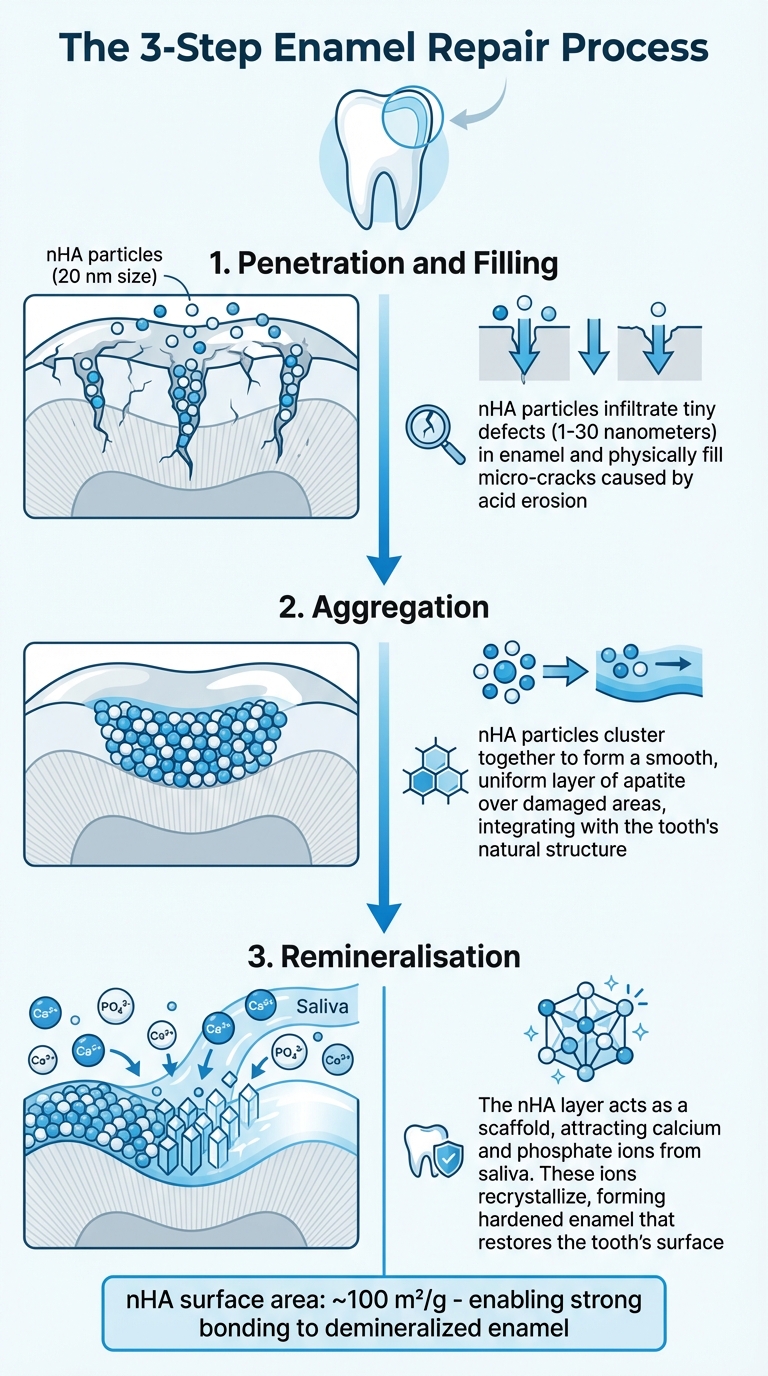
How Nano-Hydroxyapatite Repairs Tooth Enamel in 3 Steps
How Nano-Hydroxyapatite Repairs Enamel
How Nano-Hydroxyapatite Mimics Natural Enamel
The effectiveness of nano-hydroxyapatite (nHA) lies in its ability to replicate the structure of natural tooth enamel. Thanks to its nanoscale size, nHA closely resembles the architecture of enamel, making it an excellent material for repair.
What makes nHA particularly effective is its high surface energy, with a surface area of roughly 100 m²/g. This property allows it to strongly bond to demineralised enamel surfaces, filling in areas of damage. Unlike fluoride, which strengthens teeth by forming fluorapatite to slow down mineral loss, nHA takes a more direct approach. It replaces lost minerals by creating a new enamel layer that chemically integrates with the natural apatite crystals in teeth [2][3].
"Nano-HA with a size of 20 nm shares similar characteristics to the natural building blocks of enamel so that it may be used as an effective repair material and anticaries agent." – Li Li et al., Centre of Biopathways and Biomaterials [5]
This structural similarity allows nHA to seamlessly bond with damaged enamel, making it a promising tool for enamel repair.
The 3-Step Enamel Repair Process
The process of enamel repair using nHA works through three distinct phases:
- Penetration and Filling: nHA particles infiltrate tiny defects in the enamel, which are often between 1 and 30 nanometres in size [1][2]. These particles physically fill micro-cracks and holes caused by acid erosion, addressing the damage at a microscopic level.
- Aggregation: Inside the enamel, nHA particles cluster together to form a smooth, uniform layer of apatite over damaged areas [2][3]. This continuous layer not only strengthens the enamel but also integrates with the tooth’s natural structure, setting the stage for further repair.
- Remineralisation: The newly formed nHA layer acts as both a scaffold and a mineral source [1][2][6]. It attracts calcium and phosphate ions from saliva, promoting a supersaturated environment that prevents further demineralisation. Over time, these ions recrystallise, forming a hardened enamel layer that restores the tooth’s surface.
This step-by-step process highlights how nHA not only repairs damage but also helps protect teeth from future erosion.
Nano-Hydroxyapatite in Dental Products and Treatments
Nano-Hydroxyapatite Toothpastes
Nano-hydroxyapatite (nHA) is a key ingredient in toothpastes, typically included at concentrations of 10–15%. A 10% concentration is ideal for repairing early enamel damage, while 15% formulations are more effective at easing sensitivity [1].
The first nHA toothpaste was created in Japan in 1978 and later approved in 1993 as an anti-cavity agent [4]. This marked a significant step forward in dental care.
For best results, users should brush with nHA toothpaste for two minutes, twice a day. This routine allows the nanoparticles to bond with the enamel, promoting ongoing remineralisation [3].
In addition to daily oral care, professional treatments make use of even higher concentrations of nHA for targeted enamel repair.
Professional Treatments with Nano-Hydroxyapatite
Dentists often utilise nHA in concentrations ranging from 20% to 30% in serums and gels to treat enamel erosion, sensitivity, and early tooth decay [8]. For instance, a study conducted in October 2025 by PrevDent International BV in the Netherlands examined a 30% nHA serum. When applied daily for 2–3 minutes over a 10-day period to enamel surrounding orthodontic brackets, the serum significantly improved enamel hardness and reduced demineralisation compared to standard fluoride toothpaste [8].
Professional nHA treatments are particularly valuable after teeth whitening, as nearly 70% of patients report sensitivity following bleaching procedures [1]. Dentists also enhance restorative materials, such as glass ionomer cements, by incorporating nHA. This addition can increase the material’s compressive strength from 160 MPa to approximately 177–179 MPa [4].
These specialised treatments go beyond the capabilities of everyday toothpastes, providing focused enamel repair in clinical settings.
How Hydroxyapatite Toothpaste Rebuilds Enamel and Reduces Stains
sbb-itb-2be92ed
Nano-Hydroxyapatite vs. Fluoride
Nano-hydroxyapatite (nHA) works by rebuilding enamel, replacing lost calcium and phosphate, while fluoride strengthens teeth by attracting minerals to form fluorapatite, a protective acid-resistant layer [9][7].
One of the standout features of nHA is its ability to penetrate deeper into micro-defects in the enamel, addressing issues below the surface. In contrast, fluoride mainly works on the enamel’s outer layer. However, this surface-level action can sometimes create a dense barrier that prevents remineralising ions from reaching deeper areas of damage [9][2][10].
When it comes to safety, nHA is biocompatible and safe to swallow, making it a favourable option, especially for children. On the other hand, excessive fluoride ingestion during the development of teeth can lead to fluorosis, a condition that causes discolouration and damage [9][10][1]. Another benefit of nHA is its natural whitening effect. By filling in tiny surface imperfections, it reflects light more evenly, giving teeth a brighter appearance – a quality fluoride doesn’t inherently provide [9][2].
Comparison Table: Nano-Hydroxyapatite vs. Fluoride
| Feature | Nano-Hydroxyapatite (nHA) | Fluoride |
|---|---|---|
| Primary Function | Rebuilds enamel with natural minerals [9] | Forms acid-resistant fluorapatite [9] |
| Biocompatibility | High; mimics natural tooth structure [9][1] | Synthetic mineral interaction [9] |
| Safety | Non-toxic; safe if swallowed [9][10] | Risk of fluorosis with overuse [9][10] |
| Sensitivity Relief | High; penetrates deep into tubules [9][1] | Moderate; acts on the surface [9] |
| Whitening | Yes; fills and smooths surface defects [9][2] | No intrinsic whitening effect [9] |
| Availability | Found in premium products; less common [9] | Widely available in standard products [9] |
| ADA Approved | Not approved (as of 2025) [9] | Yes [9] |
These differences highlight the unique benefits of each option, helping you make an informed choice when considering enamel repair or protection.
Professional Dental Care for Enamel Health
While daily brushing with nano-hydroxyapatite (nHA) toothpastes helps maintain enamel, professional dental treatments take repair and protection to the next level. Dentists can use high-concentration nHA serums (30%) or gels (20–30%) that significantly enhance enamel microhardness compared to over-the-counter options [3][8]. These treatments are particularly valuable in clinical situations where enamel needs targeted support.
For example, nHA desensitising gels effectively address sensitivity caused by changes in enamel structure [1]. At-home products, typically formulated with 10% nHA, work well alongside professional treatments to extend their benefits.
Combining professional treatments with at-home care creates a powerful partnership. A 10-day regimen using a 30% nHA serum paired with fluoride toothpaste has been shown to dramatically reduce enamel demineralisation [8]. This approach is especially helpful for orthodontic patients. Applying high-concentration nHA serums around brackets can minimise white spot lesions and prevent mineral loss beneath the surface [8]. Such strategies highlight the growing importance of nHA in modern dentistry and enamel repair.
Advanced Dental Care at Complete Smiles Bella Vista
At Complete Smiles Bella Vista, Dr. James Hanna and his team provide cutting-edge enamel repair treatments tailored to each patient. Their use of advanced nHA applications aligns with the latest research and the shift towards precision dental care.
Patients dealing with sensitivity after cosmetic treatments like teeth whitening or those needing extra enamel protection during orthodontic procedures can benefit from these professional-grade solutions. By integrating state-of-the-art dental technology with evidence-based methods, Complete Smiles Bella Vista ensures patients receive care that prioritises enamel health and effective remineralisation strategies.
Conclusion
Nano-hydroxyapatite (nHA) is making waves in enamel repair by offering a bio-inspired approach that directly replaces lost minerals instead of just hardening the existing enamel. These nanoparticles, typically sized between 20–40 nm, mimic the natural components of enamel, allowing them to fill microscopic defects and restore the enamel’s structure effectively [5].
Research highlights that nHA creates a surface morphology remarkably similar to natural enamel [2]. Dr Erlind Pepla from Sapienza University of Rome emphasises this point:
"Nano-HA has significant remineralising effects on initial enamel lesions, certainly superior to conventional fluoride" [4].
This technology isn’t just limited to daily toothpaste. Nano-hydroxyapatite is also proving useful in addressing a variety of dental concerns. For instance, it helps alleviate post-whitening sensitivity, a condition that affects around 70% of patients [1]. Additionally, its biocompatibility and non-toxic properties make it a safe choice for children and those looking to avoid fluoride [3].
As dentistry increasingly embraces biomimetic, evidence-based solutions, nano-hydroxyapatite – particularly at an optimal 10% concentration – offers a versatile tool for both home care and clinical applications. Whether it’s reducing sensitivity, preventing decay, or maintaining enamel health, nHA provides a scientifically grounded way to strengthen and protect teeth. These advancements underscore nHA’s growing importance in modern enamel repair.
FAQs
What’s the difference between nano-hydroxyapatite and fluoride in repairing enamel?
Nano-hydroxyapatite (nano-HAp) and fluoride are both well-regarded for their ability to support enamel repair, but they take distinct approaches to achieving this. Nano-HAp closely resembles the natural structure of tooth enamel, allowing it to bond seamlessly to weakened areas. This process works on a microscopic level to rebuild and strengthen enamel, mimicking the way our teeth naturally function.
Fluoride, in contrast, supports the enamel by boosting the remineralisation process. It forms fluorapatite, a mineral that offers strong resistance to acid attacks, making it a trusted option for preventing tooth decay. With decades of safe and effective use, fluoride remains a staple in oral care.
While both options are effective, nano-HAp provides a more natural pathway to enamel repair. It’s an appealing choice for those looking for a fluoride-free alternative or enhanced enamel restoration.
Is nano-hydroxyapatite safe for children’s teeth?
Nano-hydroxyapatite is widely regarded as a safe ingredient for children’s dental care products. Its biocompatibility and ability to remineralise tooth enamel make it a gentle yet effective choice for strengthening young teeth. Since it closely resembles the natural structure of enamel, it works harmoniously with the body.
Although current research supports its safety and benefits, further standardised studies are necessary to fully understand its long-term effects in children. As always, it’s wise to check with your dentist before adding any new dental products to your child’s routine.
What are the advantages of using nano-hydroxyapatite toothpaste?
Nano-hydroxyapatite toothpaste comes with a range of benefits that support oral health. It aids in remineralising tooth enamel, repairing early enamel damage, and restoring the strength and smooth texture of weakened enamel. This makes it a great non-fluoride option for maintaining healthy teeth and promoting long-term dental care.
Because it mimics the natural structure of tooth enamel, nano-hydroxyapatite fills tiny cracks and imperfections, forming a protective layer to prevent further damage. It’s a gentle yet effective choice for anyone wanting to elevate their oral hygiene routine.
Related Blog Posts
- Nanomaterials in Dentistry: Wear Resistance Explained
- How Fluoride Prevents Tooth Decay
- Ultimate Guide to Toothpaste Ingredients
- How Nanotechnology Improves Dental Restoration Durability
Important Notice: Any surgical or invasive procedure carries risks. Before proceeding, you should seek a second opinion from an appropriately qualified health practitioner.
Individual results may vary. The information provided in this article is for educational purposes only and does not constitute medical advice.
Checkout Related Blogs




Get in touch with us
For more information, call us now to start feeling better. Or fill the form below to make appointment
The Latest News from Complete Smiles
How to Clean Clear Plastic Retainers
Checklist for Choosing Wearable Dental Devices
Checklist for Choosing Cloud AI Platforms in Dentistry
Complete Smiles Bella VistaAccepts All Major Health Funds, Including





