




How Nanostructured Coatings Improve Osseointegration
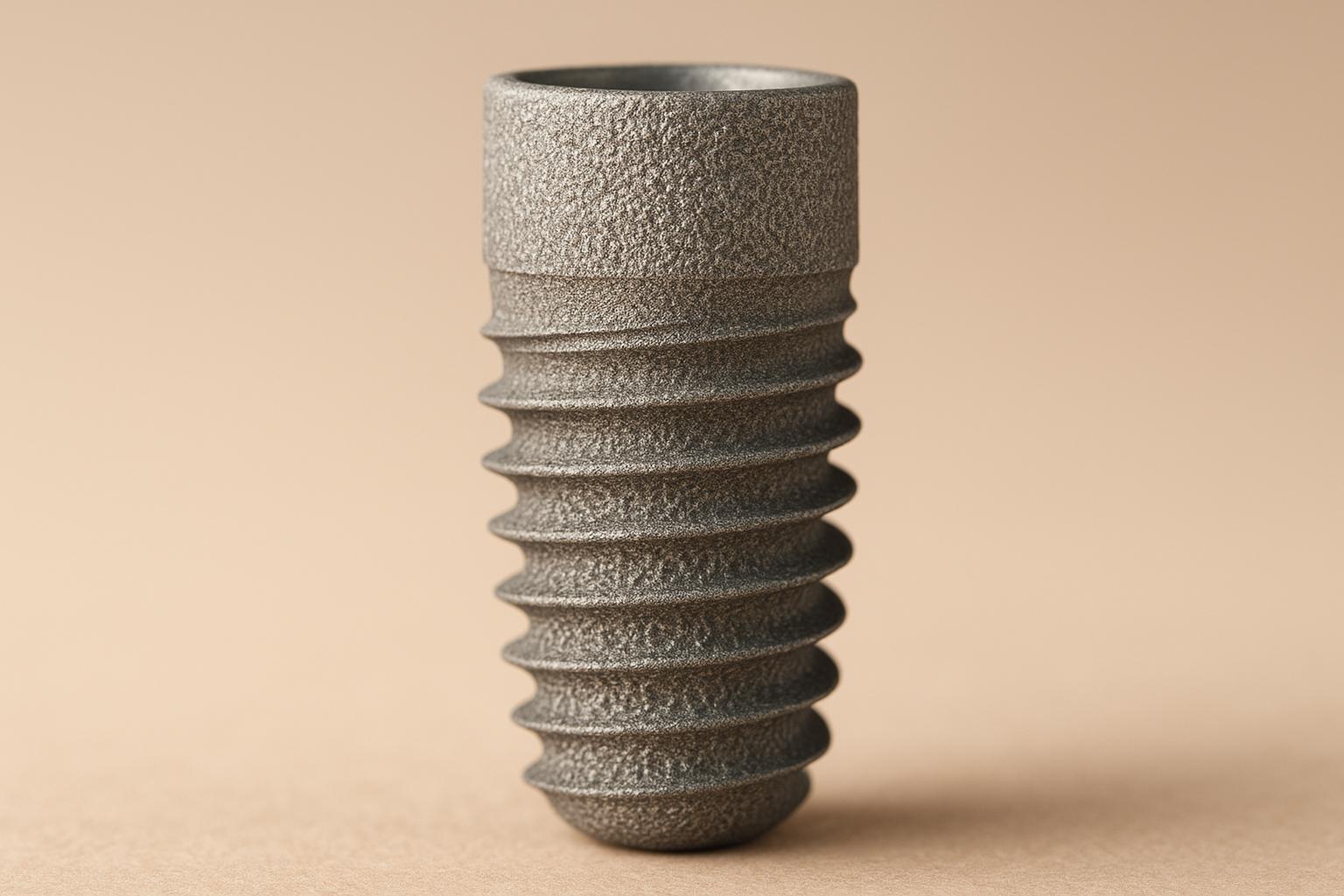
Nanostructured coatings are transforming dental implants by speeding up osseointegration – the process where implants bond with bone. These coatings create nanoscale surfaces that mimic natural cellular environments, improving cell adhesion, stem cell differentiation, and bone regeneration. Compared to traditional surfaces, they increase osteoblast adhesion by 51% and fibroblast adhesion by 235%, making healing faster and more effective.
Key points:
- Faster healing: Early bone formation is accelerated, particularly in the first 1–2 weeks.
- Improved integration: Ultrahydrophilic surfaces enhance water attraction, aiding initial bone growth.
- Material advancements: Nano-hydroxyapatite, bioactive glass, and carbon nanotube coatings improve durability and bone bonding.
- Clinical benefits: Ideal for patients with compromised bone conditions or those needing quicker implant stability.
While these coatings show promise, challenges like biofilm formation, coating stability, and manufacturing complexity remain. Future research focuses on multifunctional surfaces that combine bone integration, soft tissue healing, and infection prevention.
How Nanostructured Coatings Improve Osseointegration
The Science of Nanostructures
Nanostructured surfaces work on a nanoscale level, closely resembling natural cellular environments. This design encourages immediate cell adhesion, migration, and stem cell differentiation on the implant surface, which are key to successful integration with bone tissue[1][5].
Here’s how it works: nanostructured titanium surfaces play a pivotal role in encouraging bone marrow stem cells to differentiate, a process essential for forming new bone tissue[1]. They also enhance the activity of macrophages, which in turn boost BMP-2 production, speeding up bone regeneration[1].
The nanoscale architecture creates an environment that osteoblasts – bone-forming cells – find ideal. It allows these cells to attach, grow, and differentiate more effectively. This also changes the implant’s chemical reactivity, speeding up the interaction of ions and biomolecules on the surface[5]. Additionally, this chemical reactivity contributes to an ultrahydrophilic surface, which is especially important during the early stages of bone healing.
Animal studies back up these findings. Research involving Yucatan minipigs showed that nanostructured titanium implants achieved significantly higher bone–implant contact compared to traditional implants made with grit-blasting and acid-etching. These improvements were noticeable at both 4 and 12 weeks after placement[6]. Histological analysis confirmed that these nanostructured implants were not only non-irritating to surrounding tissues but also displayed superior biocompatibility[6].
Increased Hydrophilicity and Direct Bone Formation
Hydrophilicity, or the ability of a surface to attract water, is another critical factor in how quickly an implant integrates with bone. Ultrahydrophilic nanostructured surfaces are particularly effective during the first week of osseointegration, a crucial time for successful integration.
Studies have shown that ultrahydrophilic surfaces result in higher linear bone fill percentages compared to non-ultrahydrophilic ones during this early phase[1]. These surfaces enhance protein adsorption and cell attachment, creating the perfect environment for initial bone formation.
In comparative research, ultrahydrophilic nanostructured surfaces achieved the highest bone–implant contact in cancellous bone within just one week. They outperformed both non-ultrahydrophilic nanostructured surfaces and traditional microstructured surfaces[1]. This rapid integration is particularly beneficial for patients needing immediate implant placement and loading, as well as those with slower bone turnover rates[1].
To preserve these hydrophilic properties, some implant systems use wet-packaging in isotonic sodium chloride solution. This ensures the surface retains its water-attracting characteristics until the moment of placement[1]. Interestingly, while the benefits of ultrahydrophilic surfaces are most apparent in the early stages, these differences tend to level out by around 4 weeks post-placement[1]. This highlights the primary advantage of nanostructured coatings: they accelerate the critical early integration phase, giving the healing process a strong head start.
For Australian dental practices, these advancements mean shorter treatment times and fewer complications, paving the way for more efficient and reliable outcomes in implant dentistry.
Engineering Gradient Nanostructures for Superior Titanium Implant Integration #sciencefather
Common Materials and Techniques for Nanostructured Coatings
Nanostructured surfaces have shown great promise in improving osseointegration. Here, we dive into the materials and methods commonly used to create these advanced coatings.
Key Coating Materials
Dental implants benefit from various nanostructured coatings, each tailored to enhance osseointegration in unique ways.
Nano‐hydroxyapatite leads the pack as a widely used material. Its composition closely mirrors natural bone, encouraging biomineralisation and osteoinduction. However, it’s not without challenges – chemical instability and the risk of delamination from titanium surfaces can limit its durability[1][3][4].
Bioactive glass nanoparticles are gaining attention as a strong alternative. Made from calcium oxide (CaO), sodium oxide (Na₂O), and phosphorus pentoxide (P₂O₅), these coatings are more chemically stable and less prone to delamination. Their adaptability allows for specific applications, whether supporting bone integration or aiding soft tissue healing, making them a versatile option[4].
Carbon nanotubes, when combined with hydroxyapatite, bring impressive benefits. They boost fracture toughness by up to 56% and improve coating crystallinity, which enhances osteoconduction and reduces biodegradation. Research shows that titanium surfaces treated with these coatings can increase osteoblast adhesion by 51% and fibroblast adhesion by 235% compared to conventional surfaces[3].
Another noteworthy material is bioglass/ceria nanohybrid compositions. These can be customised to prioritise soft tissue integration, which is crucial for preventing implant-associated infections. By limiting biomineralisation when necessary, these coatings address a key issue in implant failures[4].
Here’s a quick comparison of these materials:
| Coating Material | Key Advantages | Limitations | Best Clinical Application |
|---|---|---|---|
| Nano‐hydroxyapatite | Encourages osteoinduction; biocompatible | Prone to instability and delamination | Standard osseointegration |
| Bioactive Glass | Stable; reduced delamination; versatile | Requires further clinical validation | Alternative to hydroxyapatite |
| Hydroxyapatite with Carbon Nanotubes | Stronger; higher crystallinity; durable | Complex production; higher costs | High-stress implant applications |
| Bioglass/Ceria Nanohybrid | Customisable for tissue-specific needs | Limited long-term data | Infection prevention; tissue-specific healing |
With these materials in mind, let’s move on to the techniques used to apply these coatings.
Surface Modification Techniques
Creating nanostructured coatings requires advanced techniques, each with distinct advantages and limitations.
Plasma spray techniques are a cost-effective way to apply coatings. However, achieving optimal osseointegration may be challenging due to issues like uneven coating density[3].
Acid etching is another popular method. It creates micro- and nanoscale surface irregularities on titanium, which improve initial osseointegration. Combined with wet-packaging, it also helps maintain the implant’s hydrophilicity[1].
For more precise control over thickness and composition, techniques like electrodeposition and ion-beam processing are used. While effective, these methods require specialised equipment and expertise[3].
Friction stir processing (FSP) is a solid-state technique that deposits hydroxyapatite coatings while promoting osteoblast infiltration. This method supports better bone integration and enhances implant durability[4].
The choice of technique depends on factors like microstructure quality, coating thickness, and cost. For instance, titanium implants with coatings just 10–15 nanometres thick show improved fracture toughness due to their nanometre-sized grains[3].
A growing trend in the field is single-step synthesis methods, which offer a simpler and more cost-effective alternative to traditional multi-step processes[4].
For practitioners in Australia, understanding these materials and techniques is crucial when selecting nanostructured implant systems. Factors like bone quality, load requirements, and infection risk will guide the choice of coating technology, ensuring successful osseointegration tailored to each patient’s needs.
sbb-itb-2be92ed
Research Evidence for Nanostructured Coatings
Studies consistently highlight that ultrahydrophilic nanostructured coatings significantly speed up early bone integration compared to traditional surfaces, with the most noticeable improvements occurring within the crucial first two weeks of healing [1].
Histological and Clinical Findings
The accelerated osseointegration seen with nanostructured coatings is largely driven by enhanced cellular responses. These coatings enable the controlled release of bioactive molecules, which stimulate beneficial biological and chemical interactions throughout the healing process [2]. Histological studies confirm that nanocoated titanium surfaces promote stronger cellular adhesion, directly contributing to faster integration.
Beyond biological advantages, these coatings also offer mechanical benefits. For instance, titanium nanocoatings, typically 10–15 nm thick, improve fracture toughness through nanograin reinforcement. Additionally, incorporating carbon nanotubes into hydroxyapatite coatings can enhance fracture toughness by as much as 56%, while also increasing crystallinity. This combination supports better osteoconduction and reduces biodegradation [3].
Nanoscale features, such as undercuts and pores, further encourage direct bone formation through contact osteogenesis. By creating multiple attachment points for cells, these coatings enhance overall osseoconductivity [2].
For Australian dental practitioners, maintaining surface hydrophilicity is a key consideration. Some hydrophilic implants are wet-packaged in isotonic sodium chloride solutions to preserve their optimal surface properties until placement [1].
These findings underscore the potential of nanostructured coatings, particularly in addressing complex clinical challenges.
Applications in Challenging Cases
The benefits of nanostructured coatings extend to more demanding clinical scenarios where conventional implants often struggle. One promising application is early implant loading. Research shows that nanoscale modifications can accelerate revascularisation and osseointegration by promoting angiogenesis around the implant site. This could enable earlier functional loading by shortening the typical 6–12 week osseointegration timeline, although much of the current evidence comes from in-vitro and in-situ studies, highlighting the need for further research [2].
Another potential advantage lies in infection prevention. Poor soft tissue integration is a common cause of implant-associated infections and implant failure [4]. Nanostructured coatings, such as bioglass/ceria nanohybrid compositions, can be customised to support soft tissue healing and prevent unwanted biomineralisation. This tissue-specific approach allows clinicians to choose coatings tailored for either hard tissue integration or a balanced enhancement of both hard and soft tissue healing [4].
For Australian clinicians, these advancements in accelerated integration are particularly relevant in complex cases. Patients with compromised bone quality or systemic conditions affecting bone metabolism may benefit significantly from the improved cellular adhesion and faster bone formation offered by nanostructured coatings. These features enhance initial implant stability, reducing the risk of failure during the early healing phase.
Despite these promising developments, several research gaps remain. The precise mechanisms through which ultrahydrophilic and nanostructured surfaces accelerate osseointegration are not yet fully understood and require further exploration [1]. Comparative studies examining ultrahydrophilic implants alongside other surface coatings, such as calcium phosphate and hydroxyapatite, could help identify the most effective combinations. Additionally, long-term clinical studies are essential to evaluate the durability and stability of these coatings across diverse patient populations.
For Australian dental practitioners, the evidence suggests that nanostructured implant systems provide distinct advantages during the critical early healing period. These benefits not only support their use in standard cases but also highlight their potential in more complex clinical scenarios.
Challenges and Future Directions
Current Limitations
Nanostructured coatings hold immense potential, but several hurdles are slowing their adoption in clinical settings. One of the biggest challenges is biofilm formation and bacterial colonisation, which are leading causes of implant-related infections and failures. While these coatings improve bone growth, their inability to provide effective soft tissue sealing leaves implants exposed to bacterial infiltration and subsequent infection[4].
Another issue is coating stability. For instance, hydroxyapatite coatings, known for aiding osseointegration, can degrade over time and release titanium particles, which may lead to complications like periimplantitis[1][4].
There’s also a time-sensitive limitation to consider. Research shows that the advantages of ultrahydrophilic implants diminish after four weeks, suggesting their benefits are largely confined to the critical early healing phase[1]. This raises questions about their long-term effectiveness.
On the manufacturing side, producing these advanced coatings isn’t straightforward. Current methods often struggle with balancing cost and complexity. For example, plasma spray techniques, while affordable, fall short in areas like porosity and osseointegration[3]. Creating multicomponent porous bioactive coatings remains a costly and intricate process, further complicating their widespread application[4].
Finally, the science behind their success still has gaps. The precise mechanisms that make ultrahydrophilic and nanostructured surfaces so effective are not fully understood. This lack of clarity makes it harder to refine designs or predict how they’ll perform in clinical settings[1]. These challenges highlight the need for innovative solutions and pave the way for future research.
Future Research and Developments
To overcome these obstacles, researchers are focusing on multifunctional bioactive surfaces. These next-generation coatings aim to address hard tissue integration, soft tissue healing, and infection prevention all at once. By tackling issues like coating instability and manufacturing inefficiencies, scientists are working on modular, single-step production techniques that simplify the process without compromising functionality[4].
A standout development is the rise of antimicrobial nano-architected coatings. For example, the pH-responsive CaO₂@ZIF-67-HA-ADH coating has shown strong antimicrobial effects within three days of implantation, while also promoting excellent bone integration by the fourth week[2]. Another promising approach involves titanium oxide nanotubes created through anodic oxidation, which can be layered with polymers that act as reservoirs for antibacterial and anti-inflammatory drugs[2]. These advancements represent a shift towards coatings that not only prevent bacterial growth but also actively support bone healing.
Gene delivery through nanostructured coatings is also gaining traction. Researchers have developed bioactive porous dental implants using layer-by-layer self-deposition techniques. These coatings incorporate magnesium-doped calcium phosphate nanoparticles with cell adhesion sequences and siRNA complexes to target specific genes. Similarly, titanium implants coated with gold nanoparticles carrying siRNA-CTSK have shown remarkable improvements in osseointegration by promoting both angiogenesis and bone regeneration[2].
However, a major challenge remains: translating these laboratory breakthroughs into clinical practice. Many promising results – such as enhanced osseointegration and faster revascularisation – are based on in-vitro or animal studies rather than human trials. Moving from animal models to human applications will require extensive safety testing, efficacy validation, and standardised protocols that extend beyond the typical four-week evaluation period[2].
For Australian dental practitioners, there’s a clear roadmap for future research. Long-term clinical trials are essential to confirm lab findings and assess the durability of these coatings across diverse patient groups. Comparative studies could help determine which coating combinations work best for specific clinical needs. Additionally, developing more cost-effective manufacturing methods will be key to making these advanced coatings a practical option for everyday use.
The path forward lies in addressing the complex balance of hard and soft tissue integration while preventing infections. Achieving this will demand ongoing innovation in materials science, manufacturing, and clinical testing, ensuring nanostructured coatings can meet the needs of both practitioners and patients.
Conclusion
Nanostructured coatings are transforming implant integration by tackling the crucial early phase of osseointegration. Research shows these advanced surfaces can speed up bone formation within the first one to two weeks after implantation – a critical window for successful integration. Ultrahydrophilic and nanostructured surfaces have demonstrated far better bone-implant contact and cell adhesion compared to traditional surfaces, making them a game-changer in implant technology[3].
The secret lies in how nanoscale modifications enhance the implant’s chemical reactivity. By improving interactions with ions and biomolecules, these surfaces create an environment that promotes bone formation. For patients requiring immediate implants or those with slower bone turnover, these advancements offer clear clinical benefits[1]. This progress opens the door to coatings with multiple functions.
Emerging research highlights the potential of nanostructured coatings to go beyond basic osseointegration. Materials like titanium oxide nanotubes and pH-responsive coatings are showing potential to deliver antimicrobial protection while fostering bone growth. Meanwhile, hydroxyapatite coatings reinforced with carbon nanotubes have been shown to boost fracture toughness by up to 56%, addressing concerns about mechanical stability[3]. These innovations suggest a future where implants not only integrate seamlessly but also reduce infection risks and enhance durability.
However, challenges remain before these technologies can become mainstream. Most promising results come from laboratory and animal studies, with long-term human trials still lacking. Additionally, manufacturing these coatings is complex and costly. Another limitation is that the benefits of ultrahydrophilic surfaces tend to diminish after four weeks, meaning their primary value lies in speeding up early healing rather than providing sustained long-term benefits[1]. Overcoming these hurdles is a key focus of ongoing research.
Looking ahead, the next wave of research aims to develop multifunctional coatings that support hard and soft tissue healing while offering antimicrobial protection. Areas of exploration include gene delivery systems, antimicrobial nano-architectures, and bioactive glass coatings. For dental practitioners in Australia, staying informed about these advancements and adopting an evidence-based approach will be vital for enhancing patient care in specific clinical contexts.
While nanostructured coatings have moved from theoretical ideas to practical applications, long-term clinical validation is still needed. Their ability to accelerate early osseointegration is especially beneficial for patients requiring rapid integration or those with compromised healing. As manufacturing processes become more efficient and additional clinical data emerges, these technologies are likely to become more accessible and refined, paving the way for their broader adoption in everyday dental practice.
FAQs
What role do nanostructured coatings play in improving osseointegration for dental implants?
Nanostructured coatings on dental implants play a crucial role in improving osseointegration by creating a surface that closely resembles the natural structure of bone. This design increases the implant’s surface area, enhancing its interaction with the surrounding bone tissue. The result? A faster and more stable integration process.
These coatings support the growth of bone cells, helping to form a strong connection between the implant and the jawbone. This not only accelerates the healing process but also ensures more reliable and durable outcomes for patients undergoing dental implant procedures.
What challenges are associated with using nanostructured coatings on dental implants, and how are they being managed?
Nanostructured coatings on dental implants bring notable advantages for improving osseointegration. However, they also come with a few challenges. For instance, uneven application of these coatings could potentially affect the implant’s stability or reduce its lifespan. Another concern lies in the need for more data on how these coatings hold up in the long run under different oral conditions.
To tackle these challenges, researchers are working on improving coating methods to achieve consistent application. They’re also investigating advanced materials that offer better compatibility with the human body. At the same time, ongoing clinical trials and studies are shedding light on how these coatings perform over time, aiming to make dental implants safer and more reliable for patients.
What makes nanostructured coatings effective for improving osseointegration in dental implants?
Nanostructured coatings improve the connection between implants and bone by closely imitating the microscopic structure of natural bone tissue. This textured surface encourages bone cells to grow and adhere more effectively, resulting in a stronger and more stable bond with the implant.
Materials like titanium dioxide and hydroxyapatite are commonly used for these coatings because they are biocompatible and support both cell attachment and bone regeneration. By enhancing the surface characteristics of implants, nanostructured coatings significantly contribute to the durability and success of dental implants over time.
Related Blog Posts
- How Hybrid Coatings Improve Osseointegration
- Surface Modifications for Better Osseointegration
- Titanium Implant Surface Modifications for Osseointegration
- How Nanostructuring Improves Implant Osseointegration
Important Notice: Any surgical or invasive procedure carries risks. Before proceeding, you should seek a second opinion from an appropriately qualified health practitioner.
Individual results may vary. The information provided in this article is for educational purposes only and does not constitute medical advice.
Checkout Related Blogs



Get in touch with us
For more information, call us now to start feeling better. Or fill the form below to make appointment
The Latest News from Complete Smiles
How to Clean Clear Plastic Retainers
Checklist for Choosing Wearable Dental Devices
Checklist for Choosing Cloud AI Platforms in Dentistry
Complete Smiles Bella VistaAccepts All Major Health Funds, Including