





How Diabetes Affects Oral Health: Thrush Explained

Living with diabetes can increase your risk of oral health issues, including oral thrush – a fungal infection caused by Candida albicans. High blood sugar levels, reduced saliva production, and a weakened immune system create the perfect conditions for this infection. Oral thrush can cause white patches, redness, and discomfort in the mouth, and if left untreated, it may lead to more serious complications. Here’s what you need to know:
- Causes: Elevated glucose in saliva feeds fungal growth.
- Symptoms: White patches, burning sensations, and changes in taste.
- Treatment: Antifungal medications like Miconazole or Nystatin, alongside better blood sugar control.
- Prevention: Maintain oral hygiene, stay hydrated, and manage blood glucose levels.
Managing your blood sugar and practising good oral care are key to preventing and treating thrush. Regular dental check-ups also play an important role in keeping your mouth healthy while managing diabetes.
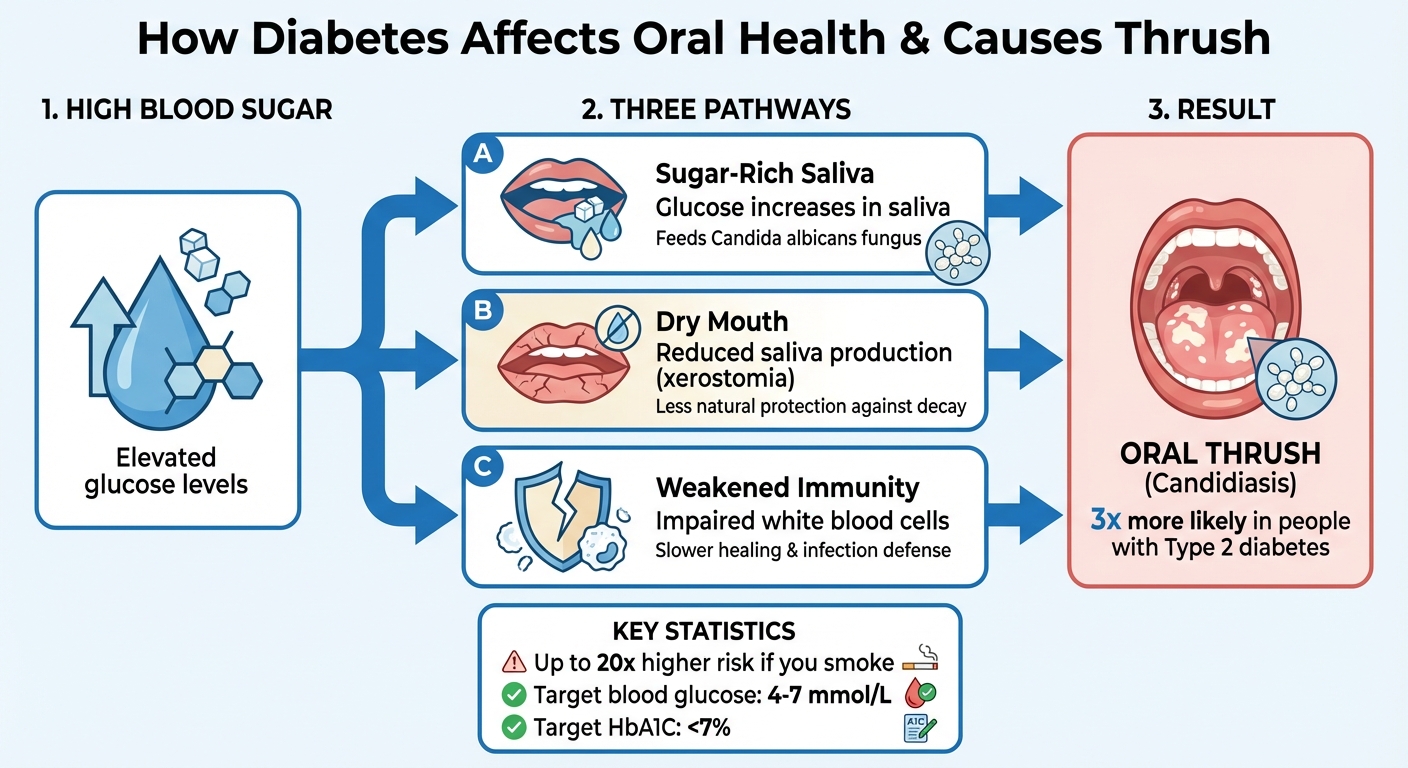
How Diabetes Leads to Oral Thrush: The Connection Explained
How Diabetes Affects Your Mouth
High blood sugar and saliva changes
When blood sugar levels rise, they also increase the sugar content in your saliva, providing an ideal environment for the growth of Candida albicans, the fungus that causes oral thrush. As Diabetes Australia explains:
High blood glucose levels cause increased glucose in saliva which can cause more Candida bacteria to live and grow [1].
This excess sugar fuels the growth of Candida and other harmful bacteria that form plaque, which can harden into tartar over time. The combination of sugar-rich saliva and weakened oral defences creates the perfect conditions for infections to thrive. On top of that, diabetes often reduces saliva flow, further compromising your mouth’s ability to protect itself.
Dry mouth and reduced saliva production
Diabetes can lead to reduced saliva production, a condition known as xerostomia. This is especially common in people with diabetic neuropathy. Saliva plays a crucial role in maintaining oral health, and when its production decreases, your mouth becomes more vulnerable. Diabetes Australia highlights this point:
Saliva helps to protect the teeth against decay, therefore, a decrease in saliva can cause a person to become more prone to decay [1].
Without enough saliva, food particles and acids aren’t effectively cleared away, and your saliva may feel thick or sticky instead of thin and watery. This can lead to cracked lips, mouth sores, or a rough tongue. These changes, combined with the high glucose levels in your saliva, create an environment where Candida can flourish.
Weakened immune system and slower healing
Diabetes doesn’t just affect saliva – it also weakens your immune system, making it harder for your body to fight infections. High blood sugar levels impair white blood cells, which are your body’s main defence against infections, while thickened blood vessels slow down the delivery of nutrients and the removal of waste from oral tissues. The Cleveland Clinic states:
Unmanaged diabetes weakens white blood cells, which are the body’s main defense against bacterial infections that can occur in the mouth [2].
This reduced blood flow means that any sores, ulcers, or infections in your mouth take much longer to heal. In fact, people with type 2 diabetes are 3 times more likely to develop gum and mouth problems compared to those without the condition [8]. With a weakened immune system and slower healing, conditions like oral thrush can take hold more easily and become more challenging to treat.
sbb-itb-2be92ed
Doctor explains ORAL THRUSH (Oral Candidiasis) | Symptoms, treatment, & prevention in adults/babies
What Is Oral Thrush?
Let’s take a closer look at oral thrush, particularly in the context of diabetes and its impact on periodontal health.
What causes oral thrush
Oral thrush, also known as oral candidiasis, occurs when Candida – primarily Candida albicans – grows excessively due to a disruption in the natural balance of microbes in the mouth [10]. In people with diabetes, elevated glucose levels create an ideal environment for Candida to thrive. As the Cleveland Clinic explains:
The fungus thrives on the high glucose levels in the saliva of people with unmanaged diabetes [2].
A combination of high glucose levels, reduced saliva production, and a weakened immune system makes it easier for Candida to overgrow. Additionally, smoking significantly increases the risk, with people who have diabetes and smoke being up to 20 times more likely to develop oral thrush compared to non-smokers [2].
Symptoms of oral thrush
The hallmark symptom of oral thrush is the presence of white patches on the tongue, inner cheeks, or throat [11]. When these patches are scraped, they may reveal red, inflamed areas that could bleed slightly [10]. Other signs to watch for include a persistent cottony or fuzzy sensation in the mouth, changes in taste (often described as metallic), and a burning feeling when eating or drinking. Cracks and redness at the corners of the mouth are also common [10]. If left untreated, these symptoms can escalate into more serious issues.
Risks of untreated oral thrush
Without proper treatment, oral thrush can linger and even spread to the oesophagus, causing difficulties with swallowing and speech. In rare cases, it can enter the bloodstream, potentially resulting in life-threatening sepsis [10]. Recurrence is common if blood sugar levels remain uncontrolled [10][7].
Treating Oral Thrush When You Have Diabetes
Diagnosis and Antifungal Treatments
Oral thrush can be a frustrating complication for those managing diabetes, but treatment is straightforward when caught early. Dentists typically diagnose the condition by identifying its hallmark white patches. From there, they focus on three main steps: confirming the diagnosis, managing blood glucose levels, and prescribing antifungal medication [12][13].
For mild cases, topical antifungals are often the go-to choice as they target the infection directly while minimising side effects [12][10]. Two commonly used medications are Miconazole and Nystatin. Miconazole comes in a convenient 50-mg muco-adhesive tablet, taken once daily for 7–14 days, which makes it easier to stick to the treatment plan. On the other hand, Nystatin requires four doses a day, which can be less convenient [12]. However, Miconazole may interact with certain medications like warfarin, whereas Nystatin does not have this issue [12].
For more severe cases, systemic antifungal treatments such as Fluconazole (100–200 mg daily) may be prescribed [12]. These work throughout the body but can cause side effects like headaches, nausea, or diarrhoea [12][10]. If the infection proves stubborn, stronger medications like Itraconazole or Posaconazole might be needed for up to four weeks [12].
Managing Blood Glucose Levels
Controlling blood glucose and managing gum health are critical parts of treating oral thrush, as high sugar levels provide an ideal environment for Candida to thrive [1][14]. Keeping your blood glucose in the range of 4–7 mmol/L can strengthen your immune system, making it easier to fight off infections and reducing the chances of thrush recurring after treatment [1][6]. If you’re unsure how to maintain stable levels, your GP or diabetes care team can offer guidance.
After managing a hypoglycaemic episode with quick-acting carbohydrates like juice or jellybeans, it’s a good idea to rinse your mouth with water. This simple step helps clear away lingering sugars that could encourage fungal growth [1][14].
Daily Oral Care Practices
In addition to medication and glucose control, maintaining good oral hygiene is vital to prevent thrush from coming back. Brush your teeth and gums twice a day for two minutes using a soft-bristled toothbrush and fluoride toothpaste. Don’t forget to clean between your teeth daily with floss or interdental brushes, and gently brush your tongue to remove microbial buildup [6].
For denture wearers, removing and cleaning dentures every night is essential [6][11]. Rinsing your mouth after meals can also help prevent fungal overgrowth. Drinking fluoridated tap water and chewing sugar-free gum can stimulate saliva production, which naturally helps protect against infections [1][14].
Avoid antiseptic mouthwashes during treatment, as they can disrupt the balance of healthy bacteria in your mouth. Instead, opt for a warm saltwater rinse. If you use inhaled corticosteroids for asthma, always rinse your mouth with water after each use to lower the risk of thrush [11].
Finally, regular dental check-ups are key to managing oral health. Many Australian dental practices, such as Complete Smiles Bella Vista, provide tailored care and preventive strategies to help keep oral thrush at bay. These visits can be an essential part of your overall diabetes management plan.
Preventing Oral Thrush
Regular Dental Visits and Coordinated Care
Regular dental check-ups are a key step in catching oral thrush early and keeping it at bay. Aim to visit your dentist every six months to monitor for early warning signs like creamy white patches or unusual redness before they escalate into discomfort [4][5][7]. Make sure your dentist is aware of your diabetes status, how well it’s managed, and any medications you’re on. This information helps them tailor their care to your specific needs [1][6]. If you’re using insulin, booking morning appointments might make it easier to maintain stable blood glucose levels during your visit [6].
Daily Habits to Lower Your Risk
Beyond dental visits, sticking to a consistent daily routine can greatly reduce your chances of developing thrush. Keeping your blood glucose levels between 4–7 mmol/L is especially important. As Carolien Koreneff, a Credentialled Diabetes Educator, explains:
Maintaining blood glucose levels within the recommended range (4–7 mmol/L) can reduce the risk of periodontitis to that of someone without diabetes [7].
Your daily oral care should include:
- Brushing twice a day for two minutes using a soft-bristled toothbrush and fluoride toothpaste, along with daily interdental cleaning.
- Gently brushing your tongue once a day to get rid of bacteria and fungi.
- Staying hydrated and chewing sugar-free gum to help combat dry mouth [1][6][14].
Managing Risk Factors
Addressing certain risk factors can also play a big role in preventing oral thrush:
- Denture Care: If you wear dentures, remove them every night and clean them thoroughly. Ensuring they fit properly can help prevent Candida buildup and irritation [3][4][15].
- Inhaled Corticosteroids: If you use inhaled corticosteroids for asthma or other respiratory conditions, rinse your mouth with water after each use to clear away any leftover medication [11].
- Smoking: Smoking can dramatically increase your risk of infection. In fact, people with diabetes who smoke are up to 20 times more likely to develop oral thrush and gum disease compared to non-smokers [2]. Seeking professional help to quit smoking and cutting down on dietary sugar can significantly boost your oral health.
- Self-Examination: Regularly check your mouth for any white patches, red sores, or unusual changes. Spotting these signs early allows for prompt professional care [1][6].
Conclusion
Managing thrush in diabetes hinges on three key practices: maintaining stable blood sugar levels, prioritising oral hygiene, and working closely with dental professionals.
As the CDC explains:
"By managing your diabetes, you manage more than your blood sugar. You’re helping to prevent gum disease and other infections in your mouth." [9]
At the heart of this is blood sugar control. Keeping glucose levels between 4–7 mmol/L and maintaining an HbA1C below 7% can significantly reduce the excess glucose in saliva that feeds Candida, bringing infection risks closer to those of individuals without diabetes [1].
Incorporating simple habits like managing oral ulcers with diabetes into your daily routine can make a big difference. Brush with fluoride toothpaste, clean between your teeth, stay hydrated, and care for dentures properly to discourage fungal growth. Regular dental check-ups add another layer of protection.
The Royal Dental Hospital of Melbourne reinforces this connection:
"Maintaining good oral health is an important part of managing diabetes. Keeping blood sugars within target levels is important for a healthy mouth." [6]
This relationship between diabetes management and oral health is a two-way street. Taking care of your mouth not only prevents infections but also supports better blood sugar control.
For tailored support, clinics like Complete Smiles Bella Vista provide specialised dental care for diabetes-related oral health issues, helping you maintain both a healthier mouth and overall well-being.
FAQs
What are the signs of oral thrush if I have diabetes?
If you’re living with diabetes, you might notice oral thrush showing up as creamy-white patches on your tongue, inner cheeks, the roof of your mouth, or even your throat. These patches can be uncomfortable, sometimes causing soreness, a slight bleeding when touched, or a cotton-like feeling in your mouth. You may also experience difficulty swallowing, changes in how things taste, or general irritation in the affected areas.
For people with diabetes, oral thrush is more common because elevated blood sugar levels and a dry mouth can create the perfect conditions for the fungus to grow. If you think you might have oral thrush, it’s a good idea to see a dentist or healthcare provider to get an accurate diagnosis and the right treatment.
How can I prevent oral thrush while managing diabetes?
To lower the chances of developing oral thrush, focus on keeping your blood glucose levels steady. This can be achieved by eating a balanced diet, staying physically active, and following your prescribed medications. Good oral hygiene is also key – brush your teeth twice daily with fluoride toothpaste, floss regularly, and gently clean your tongue. Make sure to stay hydrated, steer clear of smoking, and cut back on sugary foods and drinks. Regular visits to the dentist are crucial for catching and preventing oral health problems early. If you spot signs of thrush, such as white patches in your mouth or any discomfort, reach out to your dentist or healthcare provider without delay.
How does managing blood sugar levels help with oral thrush?
Keeping your blood sugar in check can play a major role in preventing oral thrush. When blood sugar levels are high, the amount of sugar in your saliva also rises, creating an ideal environment for Candida – the fungus behind thrush – to thrive. By managing your blood sugar, you help curb Candida’s growth and give your immune system a better chance to fend off infections.
For those living with diabetes, controlling blood glucose isn’t just vital for overall health – it’s also crucial for maintaining oral health and reducing the likelihood of issues like thrush.
Related Blog Posts
- 5 Tips for Managing Oral Ulcers with Diabetes
- How Diabetes Impacts Periodontal Health Over Time
- Dry Mouth and Diabetes: Causes and Solutions
- How Periodontal Therapy Supports Glycemic Control
Important Notice: Any surgical or invasive procedure carries risks. Before proceeding, you should seek a second opinion from an appropriately qualified health practitioner.
Individual results may vary. The information provided in this article is for educational purposes only and does not constitute medical advice.
Checkout Related Blogs




Get in touch with us
For more information, call us now to start feeling better. Or fill the form below to make appointment
The Latest News from Complete Smiles
How to Clean Clear Plastic Retainers
Checklist for Choosing Wearable Dental Devices
Checklist for Choosing Cloud AI Platforms in Dentistry

Complete Smiles Bella VistaAccepts All Major Health Funds, Including





