




How Behavioural Analytics Improves Dental Outcomes
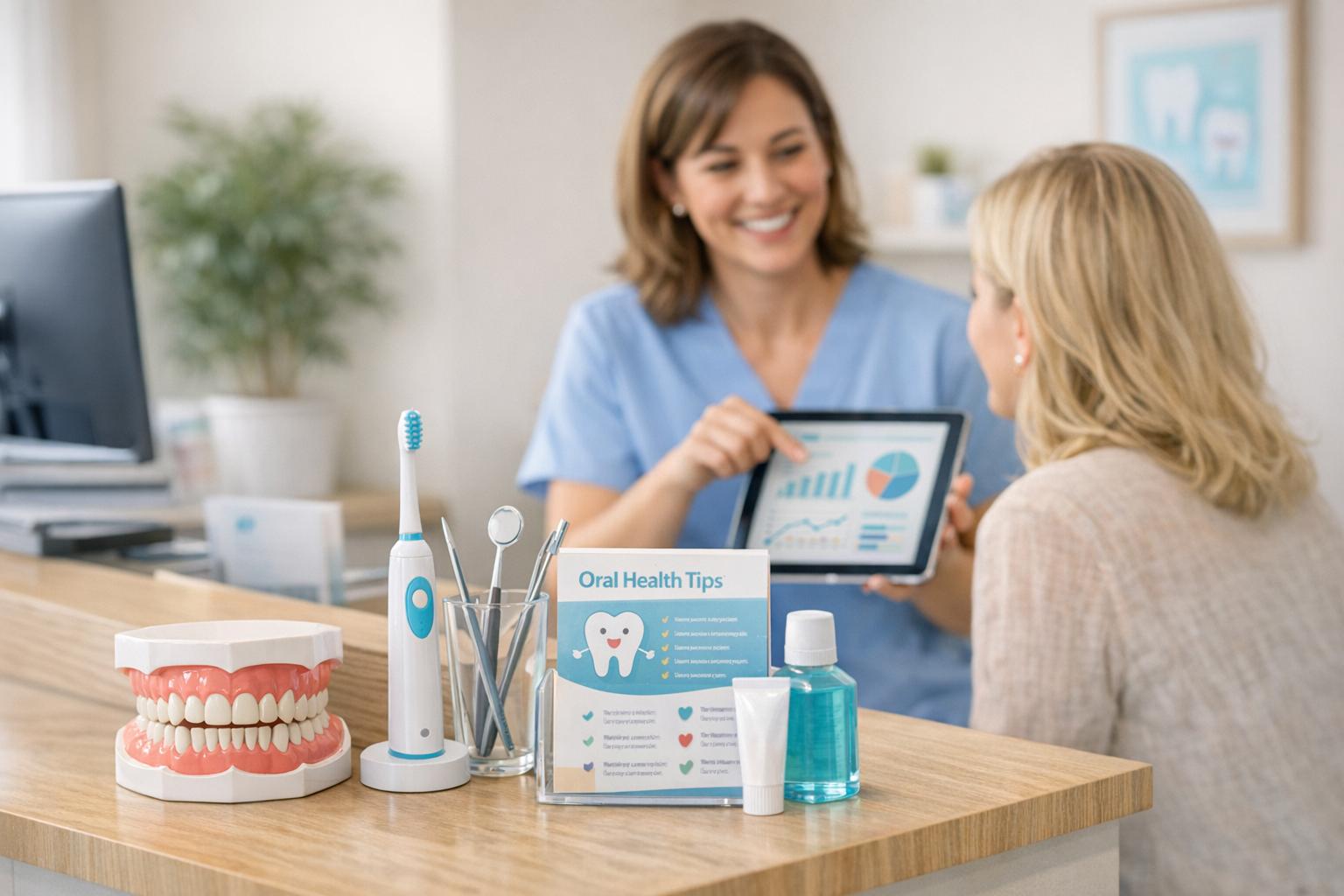
Better dental care starts with understanding behaviour. Behavioural analytics helps dental practices identify patterns in patient habits, such as missed appointments or poor oral hygiene, and uses this data to improve outcomes. Instead of relying on instructions alone, dentists can now personalise care by predicting behaviours, addressing barriers like anxiety or financial challenges, and supporting long-term habit changes.
Key Takeaways:
- Patient habits matter more than treatments: Daily routines, like brushing and diet, have a bigger impact on chronic dental issues than clinical procedures.
- Data-driven insights improve compliance: Tools like appointment tracking, plaque monitoring, and smart devices help identify gaps in patient care.
- AI enhances predictions: AI can flag patients likely to miss visits or struggle with treatment plans, allowing early intervention.
- Overcoming barriers: Addressing anxiety, cost concerns, and motivation helps patients stick to their care routines.
Quick Stats:
- 52% of Australian dental practices use data analytics and AI.
- 66 days is the average time needed to form a new oral health habit.
- Up to 92% of patients fail to follow appliance instructions, highlighting the need for better behavioural support.
Behavioural analytics transforms dental care into a partnership, helping patients and practitioners achieve better results through tailored strategies and predictive tools.
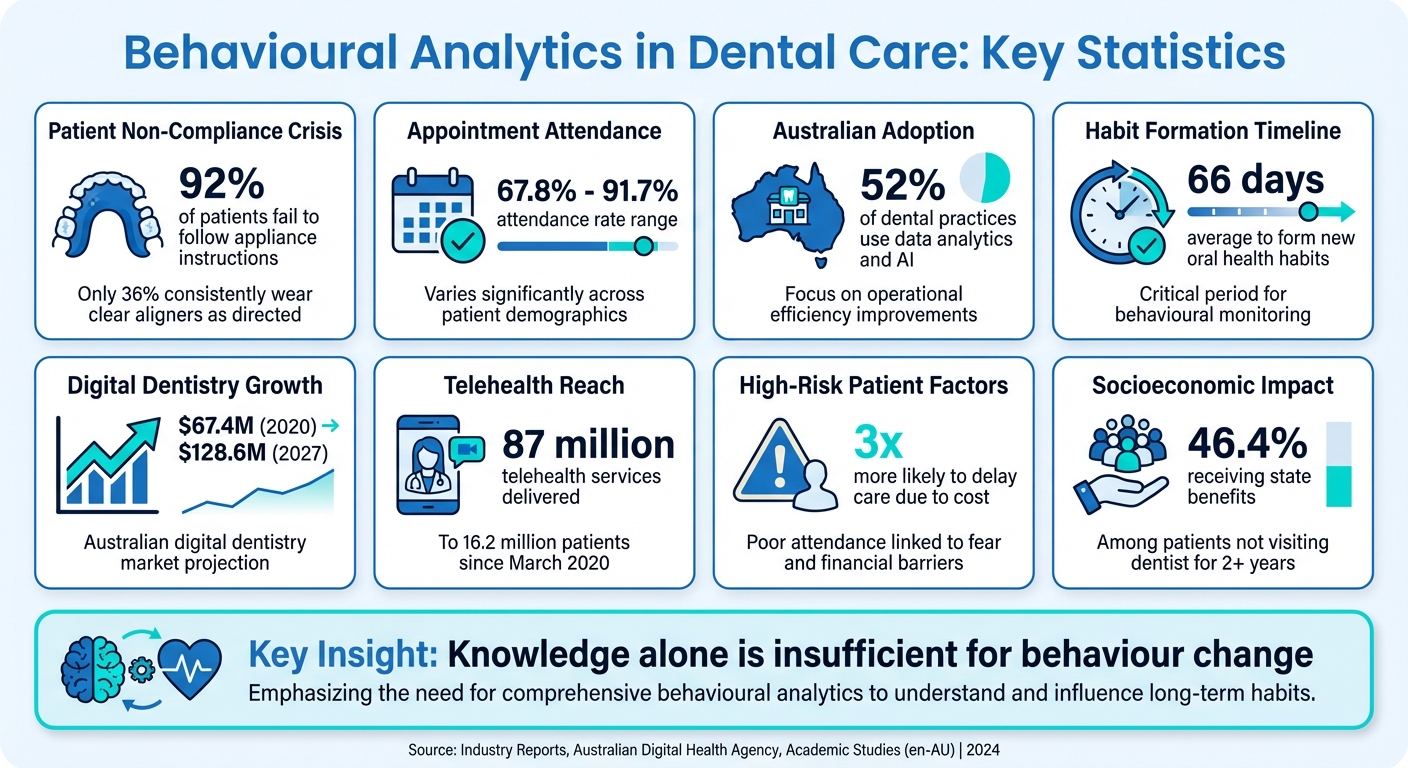
Behavioural Analytics in Australian Dental Care: Key Statistics and Impact
Common Behavioural Problems in Dental Care
Patient Non-Compliance: A Major Barrier to Treatment Success
Non-compliance in dental care often manifests in three ways: failing to wear prescribed appliances, skipping appointments, and neglecting home hygiene routines. Studies reveal that up to 92% of patients do not adhere to instructions for removable appliances, while only 36% consistently wear clear aligners as directed. Attendance at dental appointments varies between 67.8% and 91.7% [6].
When patients fail to follow these guidelines, it can severely impact clinical outcomes. Treatment may take longer, the risk of relapse – especially in orthodontics – rises, and periodontal conditions can worsen. Jean E. Suvan from UCL Eastman Dental Institute highlights this issue:
The value of treatment is significantly compromised without an efficient patient self-care routine to control plaque levels [3].
Even the most advanced dental procedures cannot achieve their full potential if patients neglect their responsibilities, such as maintaining oral hygiene or attending scheduled appointments. These compliance challenges point to deeper psychological and economic factors that need to be addressed.
Psychological and Economic Factors Affecting Compliance
Dental anxiety and fear are significant reasons behind non-compliance, often causing patients to avoid regular check-ups and treatments [2][5]. The fear isn’t always about pain – it can also stem from embarrassment over oral health issues or a lack of trust in dental professionals [2]. Compounding these issues is a low sense of self-efficacy, where patients doubt their ability to adopt and maintain new oral health habits.
Financial difficulties are another major barrier. The RETURN Trial, conducted in Cheshire and Merseyside, UK, between January and March 2020, involved 28 adults who had not visited a dentist for planned care in over two years. Among the participants, 46.4% were receiving state benefits, underscoring the link between economic disadvantage and reliance on emergency dental services [2]. A study published in BMC Oral Health further explains:
Low social position is tied more strongly to measures of disease management (missing and untreated teeth) than to indicators of oral disease per se [2].
This suggests that while oral disease affects people across all income levels, those with fewer financial resources face greater challenges in managing their conditions effectively.
Charlotte C. K. Chan from the Faculty of Dentistry at The University of Hong Kong sheds light on the complexity of addressing these issues:
Knowledge alone is unlikely to be sufficient in causing oral hygiene behavioural change. Other determinants of behavioural change must be explored by the dentist and be addressed appropriately [7].
Understanding these barriers is the first step toward implementing strategies, such as behavioural analytics, to improve patient compliance and overall dental care outcomes.
What is Behavioural Analytics in Dentistry?
Behavioural analytics in dentistry shifts the focus from simply recording events to understanding why patients behave the way they do. Instead of just noting that a patient missed an appointment or didn’t follow treatment recommendations, this approach digs deeper, using data patterns to predict future behaviours and intervene early [1][8].
For example, traditional reporting might show that a patient has developed a dental condition. Behavioural analytics, on the other hand, can identify the habits – or lack thereof – that contributed to the issue and assess whether the patient is likely to stick to a new treatment plan [1][8]. This method transforms the patient-practitioner relationship into more of a partnership. By tracking elements like capability, motivation, and opportunity for change, practitioners can offer tailored advice. Instead of generic guidance, they might highlight measurable progress – such as an improved plaque score – which serves as positive reinforcement [1]. This data-driven approach helps practices design personalised strategies that improve patient compliance and treatment outcomes.
How Behavioural Analytics Differs from Standard Reporting
Standard reporting looks at the past – things like completed treatments or missed appointments. Behavioural analytics, however, is forward-looking. It identifies patterns over time to predict future actions, allowing dental practices to take proactive measures before problems arise [1][4].
For instance, while traditional methods might simply document missed visits, behavioural analytics can identify which patients are likely to miss future appointments. Factors such as appointment history, communication habits, and engagement with digital tools are analysed. This allows practices to step in early – perhaps by sending personalised reminders or offering more flexible scheduling.
Behavioural analytics also tracks specific indicators of behaviour change, such as plaque scores, bleeding during brushing, and how often patients clean between their teeth [1]. Research shows it takes about 66 days of daily repetition for a new oral health habit to stick [1], and analytics tools can monitor progress during this critical period.
Albert Naffah, CEO of CommBank Health, highlights the growing interest in data-driven approaches:
Our research shows that many practices want data to play a bigger role in how they run their practices. External benchmarking was the top area of interest [4].
In fact, 52% of Australian dental practices are focusing on at least one initiative to improve operational efficiency, with analytics taking a central role [4]. These predictive insights rely on robust data sources, which are explored in the next section.
Main Data Sources for Behavioural Analytics in Dental Practices
Behavioural analytics relies on various data sources within a dental practice. Here’s a breakdown of the key contributors:
- Practice Management Software (PMS): Tracks appointment histories, treatment plans, and payment patterns, helping to identify trends like frequent cancellations or delays in accepting treatments.
- Patient Portals: Provide insights into patient engagement by tracking login frequency and completion of online forms, which can reveal treatment compliance.
- Clinical Data: Metrics like plaque scores, bleeding indices, and radiographic findings are essential. Digital radiography, now standard in Australian practices, offers detailed, low-radiation images that can be tracked over time. Intraoral scanners and CAD-CAM restoration files further enhance precision by documenting oral health at each visit.
- Smart Devices: Tools like electric toothbrushes connected to smartphone apps now monitor brushing habits, including duration, frequency, and technique. These provide real-time insights into home care that were previously based only on patient self-reporting.
This growing reliance on data reflects a broader trend in Australian dentistry. The digital dentistry market, valued at $67.4 million in 2020, is projected to reach $128.6 million by 2027 [9]. Additionally, since March 2020, 87 million telehealth services have been delivered to 16.2 million patients across Australia [9]. With such diverse data sources, maintaining strict privacy and consent standards is crucial.
Privacy and Consent Requirements in Australia
Using behavioural analytics in dentistry comes with significant responsibilities under Australian privacy laws. Dental practices must comply with the Privacy Act 1988 and the Australian Privacy Principles (APPs) when collecting and managing sensitive health information [11][12]. Health data can only be gathered if it’s reasonably necessary for the practice’s operations and if the patient has given consent – whether explicit or implied [11].
The Office of the Australian Information Commissioner explains:
With your patients’ consent, you can collect their health information when it is reasonably necessary for your activities [11].
Practices are required to provide a privacy notice at or before the time of data collection. This notice must explain why the data is being collected, how it will be used, and whether it will be shared with any third parties [11]. When using behavioural analytics tools – especially those powered by AI – this notice should clearly address these technologies and inform patients about how they can access or correct their data [11][13].
The Australian Dental Association underscores the importance of proper data management:
Any data should be obtained with appropriate permissions, privacy controls, checked for accuracy and relevance, only used for the stated purpose, and stored securely as per the OAIC guidelines [13].
Dental records must be retained for 7 to 10 years, depending on state and territory regulations [10]. Electronic records need secure backups and must be stored in a way that protects confidentiality while being easily retrievable when required by law [10]. For cloud-based analytics tools, choosing providers that store data within Australia ensures compliance with local legal standards [12].
To bolster security, practices should implement measures like multi-factor authentication (MFA), as health information is often a prime target for cybercriminals [12]. Regular risk assessments are also recommended to identify vulnerabilities and adopt protections such as data encryption [12].
Using Behavioural Analytics to Improve Patient Compliance
Behavioural analytics tackles the common challenges that often hinder patients from sticking to their treatment plans. By examining patterns in patient data, dental practices can shift from merely reacting to issues to actively preventing them. This approach allows for targeted strategies that address potential barriers before they disrupt care.
Reducing Missed Appointments and Improving Attendance
Missed appointments, or "Failure To Attend" (FTA), are one of the most common compliance issues in dental care. Behavioural analytics can help identify patients who are more likely to skip future visits by analysing demographic and clinical trends. Studies show that missed appointments are more frequent among males, individuals aged 26–44, non-concession card holders, and those from lower socioeconomic backgrounds [14].
While SMS reminders are commonly used, their success varies depending on the individual. This highlights the need for tailored communication strategies based on a patient’s specific risk factors [14]. Segmenting patient data and personalising outreach efforts can make these reminders more effective.
Urgent care visits also present a unique opportunity to engage patients. These moments, often referred to as "teachable moments", allow practices to introduce behavioural interventions when patients may be more open to change [2]. For example, the "RETURN" trial in Cheshire and Merseyside, England, involved 28 adults who had not visited a dentist for over two years. Despite coming from disadvantaged backgrounds and seeking care due to pain, 70.1% agreed to participate in a behavioural intervention [2].
One effective method is action and coping planning. This involves helping patients outline when and how they will attend appointments while creating "if-then" strategies to tackle obstacles like work commitments or transport issues [7]. Such interventions not only improve attendance but also pave the way for better at-home oral care.
Improving Home Care and Oral Hygiene Habits
At-home oral hygiene is another area where behavioural analytics can make a difference. Clinical metrics, such as plaque scores, combined with self-monitoring tools, can highlight the gap between what patients intend to do and what they actually achieve. This gap often results from poor planning [7].
The COM-B model is a helpful framework for diagnosing the root causes of non-compliance, focusing on three factors: Capability (physical or psychological skills), Opportunity (environmental or resource-based), and Motivation (desire and habits) [5][7]. For instance, a patient may want to floss but struggle with the manual dexterity required. In such cases, recommending alternatives like interdental brushes and demonstrating their use can address the issue directly.
Building new habits takes time – research shows it takes about 66 days of daily repetition for a behaviour to stick [1]. During this period, self-monitoring tools like disclosing agents (which highlight plaque) or apps that track brushing habits can provide immediate, visual feedback. This tangible reinforcement is often more effective than abstract warnings about long-term consequences like tooth loss.
Incorporating oral hygiene into an existing routine is another way to boost adherence. For example, placing floss or interdental brushes next to a toothbrush can serve as a daily visual cue. Rhiannon Jones, President of the British Society of Dental Hygiene and Therapy, highlights the importance of focusing on immediate benefits:
By emphasising the benefits patients may notice from changing their behaviour… the healthcare professional helps the behaviour become intrinsically rewarding rather than dependent on external feedback [1].
Short-term motivators like fresher breath, reduced bleeding, and a cleaner mouth often resonate more with patients than distant risks.
Supporting Behaviour Change in High-Risk Patients
While general strategies can improve compliance across the board, high-risk patients need more tailored approaches. These are individuals with severe periodontitis, chronic non-compliance, or dental anxiety. Behavioural analytics can pinpoint these patients by identifying patterns like infrequent visits, problem-focused care, or avoidance due to cost. Patients with poor attendance habits are three times more likely to delay care because of cost concerns and three times more likely to experience high levels of fear or distress about dental visits [15].
For these patients, addressing lifestyle factors – such as smoking, diet, and plaque control – is just as important as clinical treatment. Jean E. Suvan from the Unit of Periodontology at Eastman Dental Institute underscores this point:
The greatest impact dental professionals may potentially have on chronic disease management is through concentrating on lifestyle behaviours [3].
The OARS technique – Open questions, Affirmations, Reflective listening, and Summarising – can help build trust and uncover specific barriers faced by anxious patients [5]. Once these barriers are identified, coping plans can be developed. For example, a patient worried about costs might create a plan like: "If I’m concerned about payment, I’ll call the clinic to discuss a payment plan before my appointment" [7].
The "RETURN" study offers a practical example of this approach. Researchers provided a "barrier pack" containing six booklets addressing common issues like time, trust, cost, embarrassment, anxiety, and "pain-only" habits. Patients identified their main barrier, watched a related video, and worked with a dental nurse to set a goal for future visits [2]. This method successfully engaged individuals who had previously been unreceptive to traditional strategies.
sbb-itb-2be92ed
How AI-Powered Tools Improve Behavioural Analytics
AI is reshaping behavioural analytics in dental practices, moving beyond traditional data analysis to provide deeper insights into patient behaviour. Instead of manually sifting through appointment histories, communication patterns, or payment records, AI systems can efficiently identify trends that might otherwise go unnoticed. This shift allows practices to transition from merely reacting to problems to proactively supporting patients. By integrating AI-driven analysis, dental practices can naturally evolve toward more personalised patient care.
AI for Personalised Patient Support
AI has the ability to predict when patients might disengage from their dental care. For example, it can flag individuals at risk of leaving the practice, giving teams the chance to intervene early [17]. Kaitlin Stier, RDH, MPH, from New York University College of Dentistry, highlights how AI is transforming preventive dentistry:
AI is becoming a valuable asset in preventive dentistry, offering more than just diagnostic capabilities. By analysing patients’ medical and dental histories, AI can identify risk factors and predict disease progression, enabling oral health professionals to take proactive measures tailored to each patient. [16]
AI tools also help address patient anxiety. By analysing appointment notes and communication records, clinicians can adapt their approach – for instance, using visual aids to comfort paediatric patients or adjusting their communication style for individuals with special needs [16]. Platforms like Pearl’s Practice Intelligence go a step further by identifying gaps in case acceptance, matching radiographic findings with treatment plans [17].
Interestingly, a study revealed that 58.6% of dentists are highly open to adopting AI-based solutions, while 80.5% already use digital techniques in their daily practice. Even more promising, 53.6% of those surveyed reported little difficulty in using these tools, suggesting that AI is becoming easier to integrate into workflows [20].
Examples of AI Tools in Dental Practices
AI tools are already making their mark in Australian dental practices. Smart patient management systems now automate appointment scheduling by factoring in treatment urgency, patient habits, and provider availability. Many of these platforms also include chatbots to handle routine enquiries around the clock, significantly reducing administrative workloads [18].
AI-powered diagnostic tools are another game-changer. These systems analyse radiographs with incredible precision, detecting issues like bone decay that could be missed during manual reviews. The visual annotations they produce can also be shared with patients, fostering trust and improving acceptance of treatment plans [19].
Remote monitoring technology is extending care beyond clinic walls. AI-enabled smartphone apps can assess oral lesions or trauma remotely, helping clinicians triage cases while maintaining patient relationships between visits [18]. Wearable devices are also being used to track progress on home care routines, offering tailored feedback that encourages healthier habits [21].
Behavioural modification platforms add another layer of engagement. By gamifying feedback and offering customised educational materials, these systems motivate patients to stick to their care plans. They even optimise the timing of reminders to align with when patients are most likely to respond, moving beyond generic SMS notifications [18]. Subtle shifts in patient engagement can also be detected, allowing for timely and targeted interventions.
Limitations and Considerations of AI in Dental Practices
While AI offers plenty of benefits, it’s not without its challenges. For starters, the accuracy of AI insights relies heavily on the quality of the data it processes. This means dental practices must standardise how they record treatment notes, scheduling details, and billing information [17]. Variability in patient records and the high initial costs of implementing AI tools can also pose hurdles [21].
Another concern is automation bias, where practitioners may overly rely on AI recommendations without applying their own clinical judgement. The Dental Board of Australia has emphasised this point:
Regardless of what technology is used to advance healthcare, the practitioner remains responsible for delivering safe and quality care and for ensuring their own practice meets the professional obligations… Practitioners must apply human judgement to any output of AI. [13]
Privacy is another critical issue. Under the Privacy Act 1988 and the thirteen Australian Privacy Principles (APPs), dental practices must clearly inform patients about how their data will be used and obtain explicit consent before sharing it with AI systems [21]. Additionally, if AI models are trained on datasets that lack diversity, there’s a risk of biased outcomes that could disadvantage certain groups of patients [16][21].
Finally, trust is the cornerstone of any strong patient–clinician relationship. Over-reliance on technology can erode this trust if patients feel they’re being managed by algorithms rather than cared for by humans. AI should always serve as a supportive tool, enhancing care without replacing the empathy and personalised attention that patients value most [1].
Conclusion
The practical applications we’ve discussed highlight how behavioural analytics is reshaping dental care across Australia. These tools are transforming the way dental practices approach patient compliance and long-term oral health, moving from a traditional instructive model to a true partnership between clinicians and patients. This shift helps address psychological, financial, and situational barriers that often hinder progress.
Using frameworks like the COM-B and OARS models, dental practices can customise interventions to suit each patient’s unique needs. By identifying triggers, setting SMART goals, and emphasising intrinsic motivators – such as the satisfaction of a "fresher mouth feel" – clinicians can offer the consistent reinforcement necessary for patients to build lasting habits.
The Australian dental industry is also increasingly turning to data to guide decision-making. Albert Naffah, CEO of CommBank Health, points out:
Our research shows that many practices want data to play a bigger role in how they run their practices. External benchmarking was the top area of interest [4].
This aligns with the principles of Evidence-Based Dentistry, as defined by the Australian Dental Association: combining clinical expertise, scientific research, and the patient’s specific needs, circumstances, and values [22].
Behavioural analytics bridges the gap between clinical goals and patient behaviours by offering objective insights, reducing variability in care, and providing targeted support. These tools empower dental practices to deliver care that is both scientifically sound and psychologically effective. The result? Stronger relationships between patients and clinicians, better adherence to treatment plans, and improved oral health outcomes over the long term. These developments solidify the role of behavioural analytics as a cornerstone of modern dental practice.
FAQs
How can behavioural analytics improve patient compliance in dental care?
Behavioural analytics leverages data to gain deeper insights into patient habits surrounding oral health. By monitoring actions like how often or how long someone brushes their teeth – often through tools like smart toothbrushes – these systems deliver customised feedback, timely reminders, and tailored educational content.
This focused method encourages patients to stay motivated and actively involved in their dental care routines. As a result, it can improve consistency in oral hygiene practices and adherence to treatment plans. Over time, this not only boosts the success of dental treatments but also contributes to better overall oral health.
How can AI help reduce missed dental appointments?
AI uses machine learning to study electronic dental records and predict which patients might miss their appointments. By spotting trends in patient behaviour, dental practices can take proactive steps, such as adjusting schedules or sending tailored reminders, to minimise no-shows.
This not only boosts attendance but also keeps the practice running smoothly and ensures patients get the care they need, leading to better dental health outcomes overall.
How is patient privacy protected when using behavioural analytics in dental care?
Behavioural analytics tools enable dental practices to examine data like appointment trends and treatment adherence, helping to improve patient care and outcomes. However, since this involves handling sensitive health information, privacy remains a critical concern. Under the Australian Privacy Act 1988 and the Australian Privacy Principles (APPs), dental practices are required to manage personal health data responsibly and ensure patient consent is obtained.
To address privacy concerns, practices adopt stringent safeguards. For example, data is de-identified wherever feasible, allowing analytics to focus on broader trends rather than individual patient details. Strong security measures – such as encryption, controlled access, and regular system audits – are implemented to prevent unauthorised access to sensitive information. Furthermore, staff receive training on privacy laws and the ethical use of AI tools, ensuring that all activities align with Australian legal standards.
By integrating these precautions, dental practices can confidently leverage behavioural analytics to improve patient care while upholding the highest standards of privacy and data security.
Related Blog Posts
- AI Research in Oral Disease Detection: Key Findings
- AI in Dentistry: Predicting Periodontal Disease
- AI in Dentistry: Benefits of Personalised Oral Health Insights
- How Predictive Analytics Shapes Orthodontics
Important Notice: Any surgical or invasive procedure carries risks. Before proceeding, you should seek a second opinion from an appropriately qualified health practitioner.
Individual results may vary. The information provided in this article is for educational purposes only and does not constitute medical advice.
Checkout Related Blogs



Get in touch with us
For more information, call us now to start feeling better. Or fill the form below to make appointment
The Latest News from Complete Smiles
How to Clean Clear Plastic Retainers
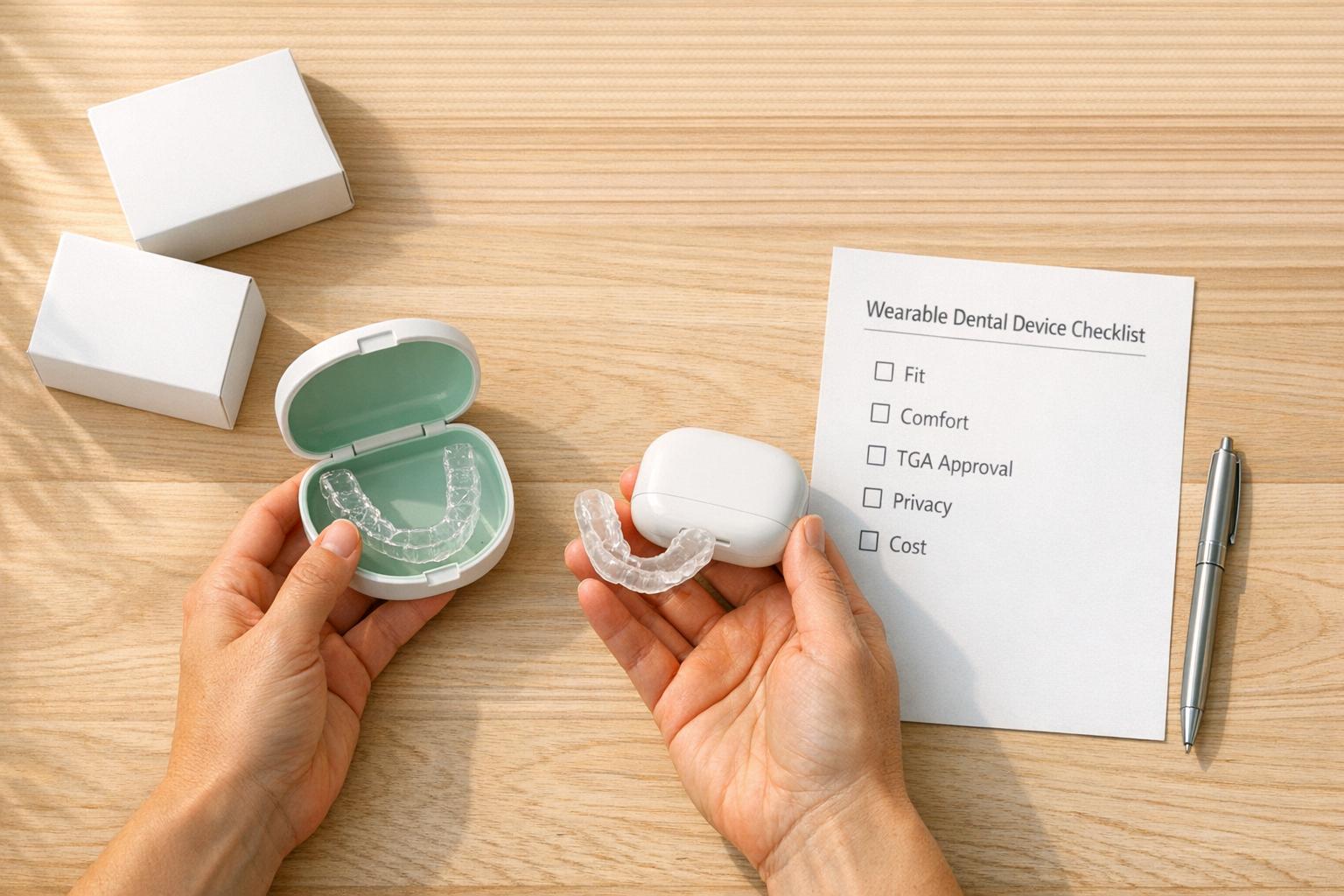
Checklist for Choosing Wearable Dental Devices
Checklist for Choosing Cloud AI Platforms in Dentistry
Complete Smiles Bella VistaAccepts All Major Health Funds, Including