





Dental Waste Impact on the Environment
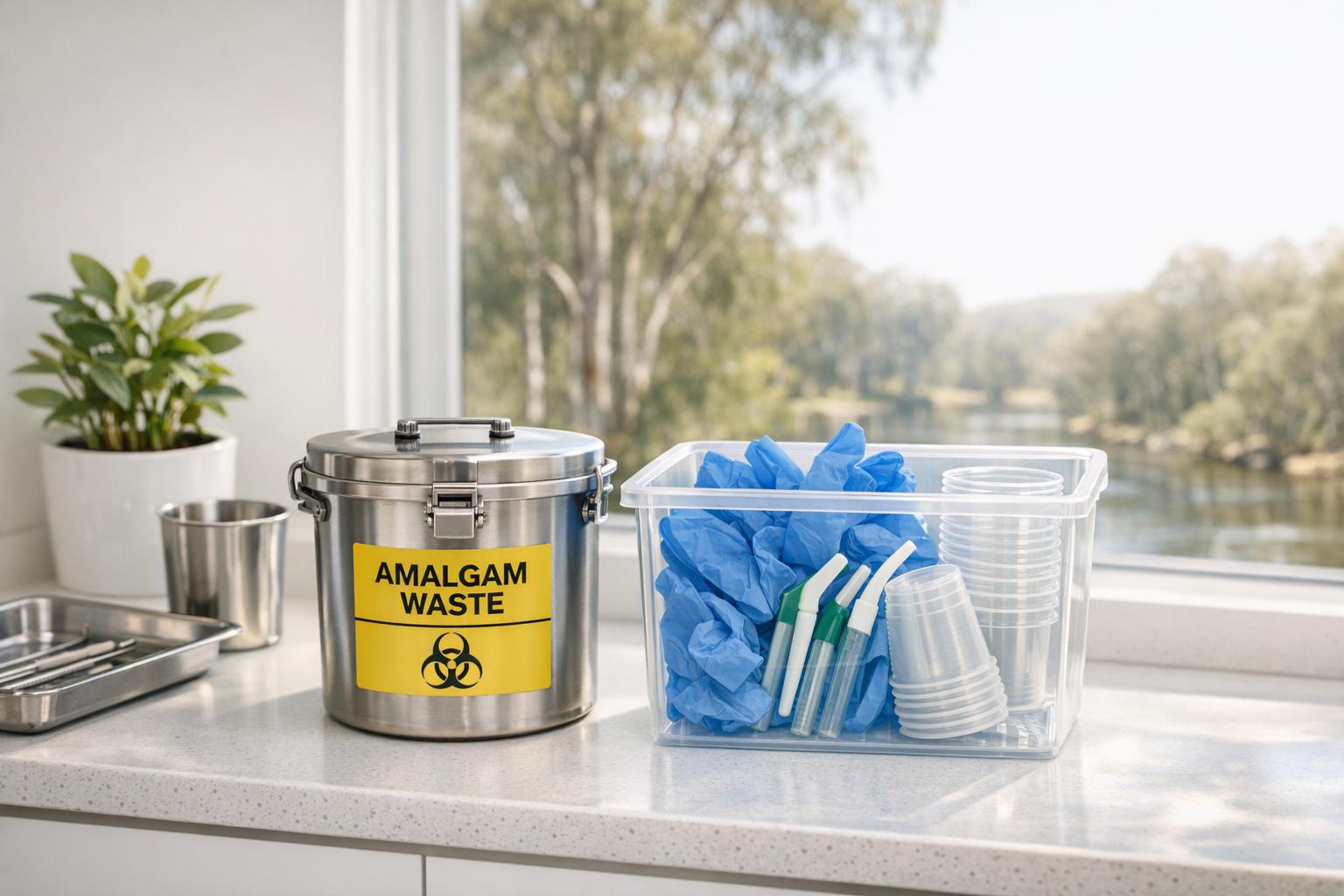
Dental waste is a growing concern due to its impact on health and pollution. Dental clinics generate hazardous materials like mercury, plastics, and chemical waste, which harm ecosystems and contribute to global warming. For example:
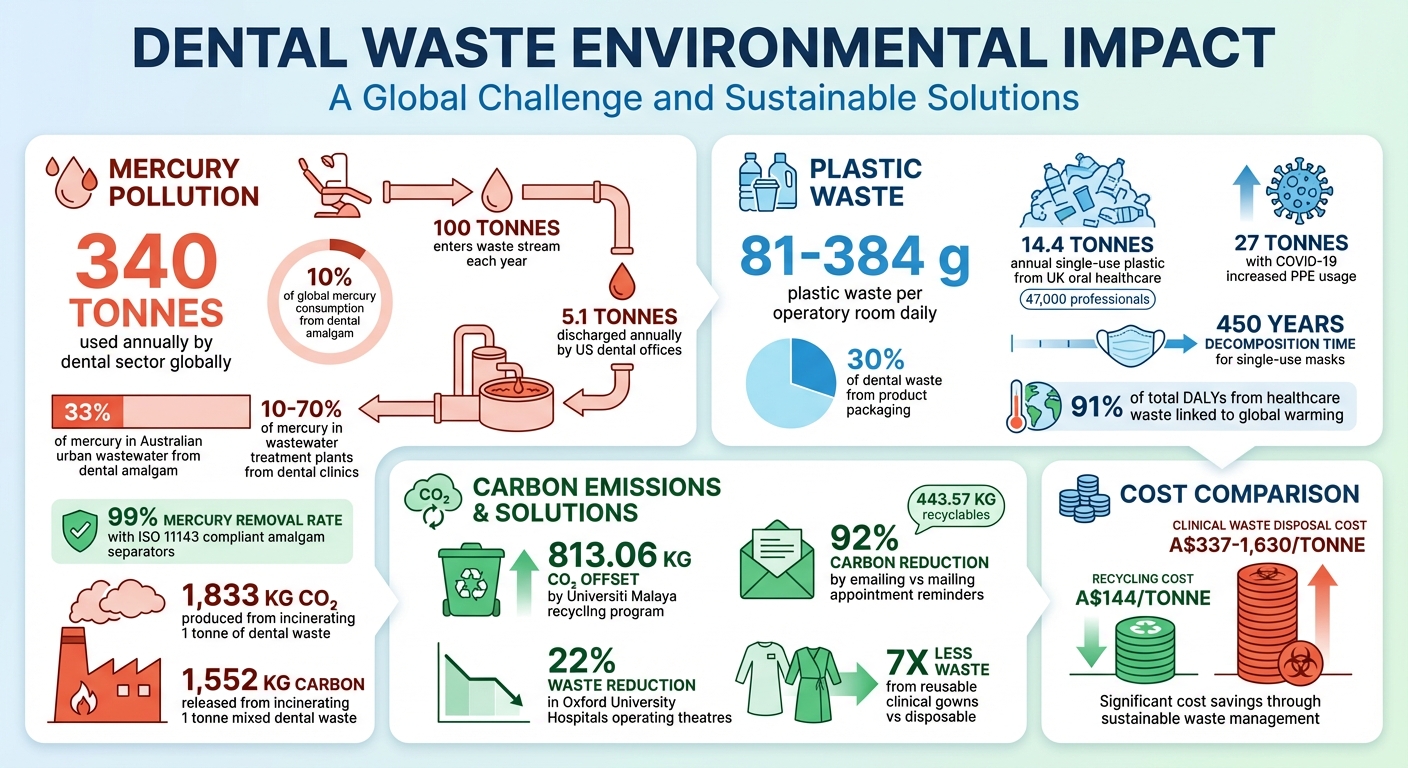
- Mercury: Dental amalgam releases mercury into water, soil, and air, with dental clinics contributing up to 10% of global mercury use.
- Plastic Waste: Single-use plastics from PPE, syringes, and barriers create long-lasting pollution, with some items taking up to 450 years to decompose.
- Carbon Emissions: Incinerating one tonne of dental waste produces nearly 1,833 kg of CO₂.
Reducing dental waste involves better waste segregation, using reusable materials, installing amalgam separators, and adopting recycling programs. Programs like those in Malaysia and Australia show that clear policies and education can reduce waste and emissions while saving costs. Addressing dental waste is essential for reducing pollution and protecting health.
Environmental Impact of Dental Waste: Key Statistics and Solutions
Mercury from Dental Amalgam: A Continuing Threat
How Mercury Enters the Environment
Mercury pollution is a problem that begins with production and continues all the way through disposal [11]. Dental amalgam, which contains 43% to 54% mercury by weight, is a major contributor to this issue [10][12].
Mercury finds its way into the environment through several pathways. Wastewater systems are a significant route, with mercury entering via clinical suction equipment and human waste. This happens because fillings wear down during chewing, releasing mercury through faeces. Another route is the atmosphere, which absorbs mercury from the incineration of medical waste and cremation of bodies with amalgam fillings [11][12][13]. Soil and groundwater are also affected, as amalgam scrap in landfills, burial sites, and mercury-laden sewage sludge used as fertiliser all contribute to contamination [12].
Interestingly, mercury sediment can remain trapped in dental clinic piping systems for years, slowly leaching into wastewater long after amalgam use has ceased [9][13]. On top of this, mercury is often diverted illegally into small-scale gold mining, where its environmental impact is devastating [12].
These varied pathways highlight the importance of accurately measuring mercury pollution.
Measuring Mercury Pollution
The environmental risks tied to mercury are immense. According to the United Nations Environment Programme (UNEP), the dental sector uses an estimated 340 tonnes of mercury annually, with 100 tonnes entering the waste stream each year. Over time, two-thirds of this mercury ends up in the environment [11][12].
"Mercury from dental amalgam contributes to 10% of overall global mercury consumption." – United Nations Environment Programme (UNEP) [11]
In the United States, dental offices are the largest contributors of mercury to sewage treatment plants, discharging around 5.1 tonnes annually [12]. In Australia, dental amalgam accounts for about 33% of mercury in urban wastewater [15]. Estimates suggest that 10% to 70% of mercury entering wastewater treatment plants originates from dental clinics [15].
Cremation is another growing concern. As cremation rates rise globally – projected to reach 78% in the United States by 2035 – the volatilisation of mercury from dental fillings during cremation is becoming a significant source of atmospheric pollution [12]. In Switzerland, for example, each cremation releases between 2 and 4 grams of mercury, contributing to global emissions estimated at 3,582 kg annually [12].
Reducing Mercury Contamination
To address mercury pollution, effective strategies are essential. One proven solution is the use of amalgam separators, which can prevent mercury from entering wastewater systems. When maintained properly and compliant with ISO 11143 standards, these devices can remove up to 99% of mercury from wastewater [10]. This is a major improvement compared to chair-side traps, which are only 68% effective, and vacuum filters, which manage just 40% efficiency [10].
Australia has taken steps to reduce mercury use by ratifying the Minamata Convention on Mercury in December 2021. Starting 1 January 2024, bulk mercury will be banned in dental practices, and amalgam can only be used in capsulated pre-dosed forms, minimising the risk of spills during mixing [14]. This aligns with Australian Dental Association guidelines [14].
Proper waste disposal is also critical. Amalgam waste should never be thrown in regular rubbish or biohazard bags destined for incineration, as this releases mercury directly into the atmosphere [10]. Instead, all amalgam waste – including used capsules, scrap, and captured particles – must be stored in airtight, mercury-resistant containers labelled "Amalgam Waste – For Recycling" and sent to licensed recycling facilities [16].
Additional measures include avoiding the disposal of amalgam-contaminated materials down sinks, regularly cleaning suction systems, and using high-volume evacuation and water-cooling during the removal or polishing of restorations to minimise mercury vapour and particle release [10][13].
sbb-itb-2be92ed
Plastic and Disposable Waste in Dental Clinics
Main Sources of Plastic Waste
Dental clinics produce a staggering amount of plastic waste every day. The biggest contributors? Items like personal protective equipment (PPE), infection barriers, packaging materials, and intraoral devices such as impression materials and suction tips [1]. On average, each operatory room generates between 81 g and 384 g of plastic waste daily [1].
Breaking it down further, the waste from a single patient adds up quickly. Patient aprons and bibs account for about 81 g, gloves range from 4 g to 56 g, impression materials add 13 g to 24 g, face masks weigh in at 3 g to 17 g, and suction tips contribute around 3 g [1]. In the UK, the combined efforts of 47,000 oral healthcare professionals result in an annual single-use plastic waste total of 14.4 tonnes – a figure that jumps to 27 tonnes when factoring in the increased PPE usage during COVID-19 [1]. The pandemic not only heightened awareness of hygiene but also nearly doubled the amount of plastic waste in some regions. Adding to the problem, roughly 30% of all dental waste comes from product packaging [7].
These numbers highlight just how much of a challenge plastic waste poses for the environment in the long run.
Long‑Term Effects of Disposable Materials
The environmental footprint of single-use plastics from dental clinics is enormous. These plastics pollute through several pathways: nano- and microparticles released during procedures, chemical leaching in landfills, and microplastics entering wastewater systems [1] [6]. For example, toxic additives like phthalates and bisphenol A (BPA) seep from plastics into soil and groundwater, disrupting ecosystems [6] [19]. Meanwhile, microplastics from dental procedures – particularly from grinding resin composites – often evade filtration systems, as dental amalgam separators and chairside filters can’t trap particles smaller than 100 μm [8] [6]. These particles flow into rivers and oceans, where marine animals ingest them, leading to a chain reaction of toxin accumulation throughout the food web.
Disposal methods only add to the issue. Incinerating one tonne of mixed dental waste releases approximately 1,552 kg of carbon and produces harmful pollutants like dioxins and hazardous ash [4]. The health impact of improper waste disposal is severe; global warming accounts for over 91% of the total disability-adjusted life years (DALYs) linked to healthcare waste [17]. Even items that seem harmless – like single-use masks – can linger in landfills for up to 450 years before breaking down [20].
Alternatives to Disposable Plastics
Tackling this environmental challenge requires a shift to more sustainable options. One effective approach is replacing disposable plastic items with steam-sterilisable metal alternatives. For example, metal air-water syringe tips, which can be autoclaved and reused, are a much greener option compared to single-use plastic tips that weigh 6.6 g and are incinerated after one use [18].
Reducing the use of plastic barriers is another step forward. Instead of covering surfaces with plastic, clinics can clean them using biodegradable detergents, reserving barriers for hard-to-clean areas like triplex buttons. Additionally, swapping out plastic items for eco-friendly alternatives – such as bamboo toothbrushes, compostable cups, and biodegradable interdental brushes – can significantly cut down non-biodegradable waste [19].
Reusable clinical gowns also make a huge difference. Compared to disposable versions, they generate seven times less waste and reduce energy, water, and carbon emissions by two to three times [4]. Recycling programs, like those implemented by the Oxford University Hospitals Trust, show what’s possible. By improving waste segregation, they reduced total waste collection by 22% in operating theatres [4]. Proper waste sorting is not just eco-friendly but also cost-effective – recycling costs around A$144 per tonne, whereas disposing of clinical waste can range from A$337 to A$1,630 per tonne [4].
Technology can further lighten the environmental load. For instance, sending appointment reminders via email instead of physical mail cuts the carbon footprint by 92% [18]. Better stock management also helps, ensuring consumables are used before they expire, reducing unnecessary waste [4]. Finally, switching to dry vacuum systems can save a considerable amount of water compared to traditional wet systems.
Disposal Methods and Their Consequences
Landfill, Incineration, and Wastewater Disposal
Dental clinics primarily rely on three disposal methods: incineration, landfilling, and wastewater disposal. Each comes with its own set of challenges.
Incineration is often the go-to for infectious waste and sharps, requiring temperatures above 1,100 °C for hazardous materials and around 850 °C for non-infectious ones [6]. However, burning dental amalgam can release toxic mercury vapour, along with pollutants like dioxins and furans, which contribute to air pollution and acidification [10].
Landfills pose different environmental risks. Hazardous materials like lead foils from X-rays and dental amalgam can leach toxins into the soil and groundwater [10][1]. Even modern resin-based materials aren’t harmless – they can release compounds such as Bisphenol-A (BPA), UDMA, and TEGDMA for up to a year, potentially contaminating water sources and harming aquatic life [1].
Wastewater disposal adds another layer of complexity. While amalgam separators are used in dental clinics, their efficiency varies widely – from 26.5% to 99.9% – allowing mercury, silver, and microplastics to sometimes slip into sewage systems [6]. Radiographic fixer, for instance, contains 8 to 12 g/L of silver [10].
"Healthcare waste that is incinerated or burned in open space may release dioxins, furans, and particulates."
– World Health Organisation (WHO) [5]
The environmental cost of these methods is staggering. Over 91% of the total human health impact from healthcare waste disposal – measured in disability-adjusted life years (DALYs) – is linked to global warming effects [2]. Additionally, incinerating just one tonne of clinical waste produces around 1,833 kg of CO₂-equivalent emissions [3]. These figures highlight the importance of addressing waste disposal practices carefully.
Importance of Waste Segregation
Proper waste segregation is a critical step in reducing these risks. While 75% to 90% of healthcare waste is non-hazardous [6], poor segregation often results in recyclable materials being wrongly categorised as biohazardous. This misclassification leads to unnecessary incineration, which is not only energy-intensive but also the most expensive disposal method [4]. On the flip side, hazardous materials like dental amalgam or lead foil mistakenly thrown in general waste can end up in landfills, where they may leach harmful toxins into the environment [6].
Segregation doesn’t just protect the environment – it also saves money. Incinerating clinical waste can cost between A$337 and A$1,630 per tonne, whereas recycling costs around A$144 per tonne, with the added potential to generate revenue [4]. A simple colour-coded bin system can make segregation easier – for example, yellow bags for infectious waste, red for recyclable contaminated materials, and clear or blue for domestic recyclables [6]. Separating sterilisation pouches into paper and plastic components before disposal is another effective way to divert waste from clinical streams, provided they aren’t soiled with bodily fluids [3].
"A poorly segregated waste bin… can contain various recyclable products, hard plastics and food waste, each of which could be segregated and disposed of separately which would be not only more environmentally sustainable but also more cost-effective."
– B. Duane [4]
Examples of Effective Waste Disposal
Real-world examples show that better waste management is achievable and impactful. From April 2023 to March 2024, the Faculty of Dentistry at Universiti Malaya in Kuala Lumpur, Malaysia, implemented a structured recycling program. They introduced 60 L and 120 L recycling bins across their clinics and provided pictorial guides to help staff separate sterilisation pouches into paper and plastic. Over 12 months, the faculty collected 443.57 kg of recyclables (53.9% plastic), offsetting approximately 813.06 kg of CO₂ emissions. Their efforts also halved clinical waste production, dropping from 1,919.3 kg in April 2022 to just 936.5 kg in April 2023 [3].
This example underscores the potential of targeted recycling programs to reduce clinical waste volumes significantly while delivering environmental benefits. Key factors for success include clear visual instructions, accessible recycling infrastructure, and consistent staff involvement – practices that can easily be adopted by any dental clinic.
Methods to Reduce Dental Waste
Waste Prevention Methods
Stopping waste before it starts is a smart move. One easy change? Go digital. For example, emailing appointment reminders instead of sending physical letters can slash carbon emissions by 92%. Similarly, emailing referral letters reduces emissions by 82% [18]. These changes not only save paper and ink but also cut down on transport-related emissions, all while maintaining high-quality patient care.
Another key area to focus on is stock management. By keeping track of inventory and using a first-in, first-out system, you can reduce waste from expired materials and limit the need for frequent, energy-heavy deliveries [23].
Switching out single-use plastics for reusable metal tools, like impression trays and matrix retainers, is another effective step [20]. Instead of covering every surface with plastic barriers, consider whether disinfectant wipes might do the job just as well. Additionally, installing water-saving fixtures can help reduce water waste, further lowering your practice’s overall environmental impact.
"Dentistry as a profession should integrate sustainable development goals into daily practice and support a shift to a green economy in the pursuit of healthy lives and well-being for all through all stages of life." – Australian Dental Association [22]
These strategies lay a solid foundation for more effective recycling and recovery efforts.
Recycling and Recovery Programs
Once waste prevention is in place, recycling becomes the next focus. A great example comes from the Faculty of Dentistry at Universiti Malaya in Kuala Lumpur. Between April 2023 and March 2024, researchers, including Aisyah Ahmad Fisal, led a recycling program where staff separated autoclavable sterilisation pouches (ASPs) into paper and plastic. Over 12 months, they collected 443.57 kg of recyclables – 204.55 kg of paper and 239.02 kg of plastic – preventing approximately 813.06 kg of CO₂ emissions [3].
Identifying plastics is crucial for efficient recycling. Dental clinics should check resin codes (1–7) on plastic items. Codes 1 (PET) and 2 (HDPE) are widely accepted in municipal recycling programs, but others, like code 4 (LDPE) and code 5 (PP), may need specialised recycling services [21]. In non-clinical areas, clinics can adopt simple household recycling methods. Items like rinsed tuna tins, glass bottles, and paper can be separated, as long as patient-identifying information is securely shredded [21]. For electronic waste, such as old printers, fluorescent bulbs, and batteries, clinics should use dedicated collection points instead of sending them to landfill [21].
Eco-Friendly Dentistry Policies
Strong policies are the backbone of sustainable dental practices. Proper waste segregation not only reduces carbon emissions but also cuts disposal costs significantly – from A$337–A$1,630 per tonne down to around A$144 per tonne [4]. These measures align with Australia’s commitment to the Minamata Convention on Mercury, ratified in December 2021, which requires practices to minimise amalgam waste through the use of amalgam separators [24].
Small policy tweaks can make a big difference. For example, printing double-sided by default and using A5 paper instead of A4 for internal notes can halve paper use [21]. Opt for eco-friendly patient giveaways [20]. In clinical areas, use lidless bins for hand-drying paper towels so they can be composted as green waste, provided they aren’t visibly soiled [20]. Additionally, working with suppliers to prioritise products with minimal plastic packaging or those offering take-back programs further strengthens a practice’s commitment to sustainability [23].
"The environmental impact of dental care delivery should be minimised without adversely affecting the safety and quality of dental treatment." – Australian Dental Association [24]
Regulations and Education for Better Dental Waste Management
Australian Regulations for Dental Waste
In Australia, dental waste regulations are managed at the state level but operate within a national framework. According to Schedule 7A of the Waste Reduction and Recycling (WRR) Regulation, clinical waste must be placed in yellow bags or containers clearly marked with a black biohazard symbol. Sharps, on the other hand, are required to be disposed of in puncture-resistant yellow containers that meet Australian Standards [25]. Infectious and hazardous dental waste must undergo incineration or autoclaving before being sent to landfill. Advanced incineration methods have proven to reduce landfill waste by up to 90% compared to traditional approaches [25][26].
Australia’s commitment to environmental responsibility is further demonstrated by its ratification of the Minamata Convention on Mercury on 7 December 2021. This agreement requires dental practices to minimise amalgam waste, mandating the use of amalgam separators [24]. Additionally, specific state policies reinforce these efforts. For instance, South Australia’s Environment Protection (Waste to Resources) Policy 2010 prohibited the disposal of e-waste – such as fluorescent bulbs and batteries – into landfills as of September 2013 [21].
These regulations not only ensure compliance but also highlight the importance of educating dental professionals about sustainable waste management.
Teaching Environmental Practices in Dental Schools
Dental schools play a key role in promoting sustainable practices, often using the ‘4Rs’ approach: Rethink, Reduce, Reuse, Recycle [7]. A practical example comes from James Cook University (JCU) Dental Clinic in Cairns, which conducted a study in August 2021 involving 50 dental chairs and fourth-year dental students. The study revealed that cellulose (100.8 g per appointment) and plastics were the largest waste contributors. It concluded that recycling non-contaminated sterile wrapping could save over 1,000 kg of CO₂e annually in a clinic with 100 students [7]. Such waste audits allow students to identify recyclable materials and better understand their impact on the environment.
Beyond universities, professional organisations also contribute to sustainability education. The FDI World Dental Federation offers a Massive Open Online Course (MOOC) on Sustainability in Dentistry, designed for dental teams and students [23]. Similarly, the Australian Dental Association (ADA) provides resources like the "How-to Guide for Australian Dental Practices", which covers waste management, energy efficiency, and sustainable procurement [22][23]. In 2022, ADA South Australia’s Environmental & Sustainability Committee created a "Waste and Recycling 101" guide. This guide includes practical tips, such as using REDcycle for soft plastics and setting up e-waste collection points in dental offices [21].
How Professional Organisations Can Help
Professional organisations extend the efforts of academic institutions by driving compliance and fostering accountability. For example, the ADA, in partnership with the Australian Dental Industry Association, is working on a Dental Sustainability Charter to encourage environmental responsibility across the sector [24]. Clinics can also benefit from waste management audits, which help them create cost-effective plans that align with state regulations, avoiding potential fines [25]. These audits complement earlier strategies for waste segregation, ensuring that every step of the waste management process meets strict standards.
Technological advancements are also playing a part. Real-time monitoring systems like Ace Waste Live™ track clinical waste from collection to final incineration, adding transparency to the process [25]. Additionally, regular monthly stock assessments help practice managers identify products nearing expiration, ensuring they are used in time and reducing unnecessary chemical waste [23].
{EP.80} Sustainability in Dentistry: Small Changes, Big Impact
Conclusion: Moving Toward Better Environmental Practices in Dentistry
Studies show that dental waste has a significant impact on the environment, contributing to mercury release, plastic pollution, and greenhouse gas emissions. In fact, over 91% of the health effects tied to healthcare waste disposal are linked to global warming [2][1].
One of the most effective and affordable solutions is proper waste segregation. For example, the Universiti Malaya Faculty of Dentistry successfully reduced CO₂ emissions and managed waste better through a structured segregation program [3].
"Proper waste segregation is necessary because the wide range of products that we use in dental practice each need to be disposed of in a way that minimises their impact on the environment and that limits the damage that they can cause to human health." – Sheryl Wilmott and Brett Duane [2]
Collaboration across the dental sector is key to driving progress. This includes practical steps like conducting regular waste audits, switching to reusable instruments, ensuring amalgam separators meet ISO standards for 95% efficiency, installing dry vacuum systems, managing stock rotation, and designating "waste champions" within the team to oversee sustainable practices [6][4]. Organisations such as the Australian Dental Association offer helpful resources, while international agreements like the Minamata Convention on Mercury set clear guidelines for responsible practices.
FAQs
Is dental amalgam still safe, and what happens to its mercury after disposal?
Dental amalgam has been used effectively for more than 150 years and is regarded as safe. The amount of mercury it releases is minimal, often less than what people are exposed to from other everyday sources. The Australian government endorses its safe use and advises against removing amalgam fillings unnecessarily.
To prevent harm to the environment, proper disposal of amalgam waste is crucial. Dental clinics often rely on tools like amalgam separators to manage mercury safely. These practices help protect ecosystems and ensure clinics meet environmental regulations.
What dental items can be recycled safely, and what must go in clinical waste?
Recyclable dental materials typically include non-contaminated items like paper, plastic, and specific types of packaging. However, anything classified as contaminated or infectious waste – such as human tissue, blood-stained gauze, or used gloves – needs to be handled as clinical waste. Separating these materials correctly is essential for both safety and responsible environmental practices.
How can a dental clinic reduce waste without compromising infection control?
Dental clinics can cut down on waste without sacrificing infection control by sticking to rigorous cleaning routines, using personal protective equipment (PPE) wisely, and reducing aerosol production during cleaning procedures. Separating clinical waste from general waste is a key step, alongside recycling efforts, to lessen the environmental footprint. Training staff on these methods is crucial for ensuring proper execution, allowing clinics to handle waste responsibly while maintaining high standards of safety and hygiene.
Related Blog Posts
- Reducing Dental Waste: Key Solutions
- Future of Cosmetic Dentistry: Green Materials
- Australian Rules for Dental Waste Disposal
- Guide to Sustainable Dental Waste Management
Important Notice: Any surgical or invasive procedure carries risks. Before proceeding, you should seek a second opinion from an appropriately qualified health practitioner.
Individual results may vary. The information provided in this article is for educational purposes only and does not constitute medical advice.
Checkout Related Blogs




Get in touch with us
For more information, call us now to start feeling better. Or fill the form below to make appointment
The Latest News from Complete Smiles
How to Clean Clear Plastic Retainers
Checklist for Choosing Wearable Dental Devices
Checklist for Choosing Cloud AI Platforms in Dentistry

Complete Smiles Bella VistaAccepts All Major Health Funds, Including





