





Dental Waste Disposal Rules in Australia
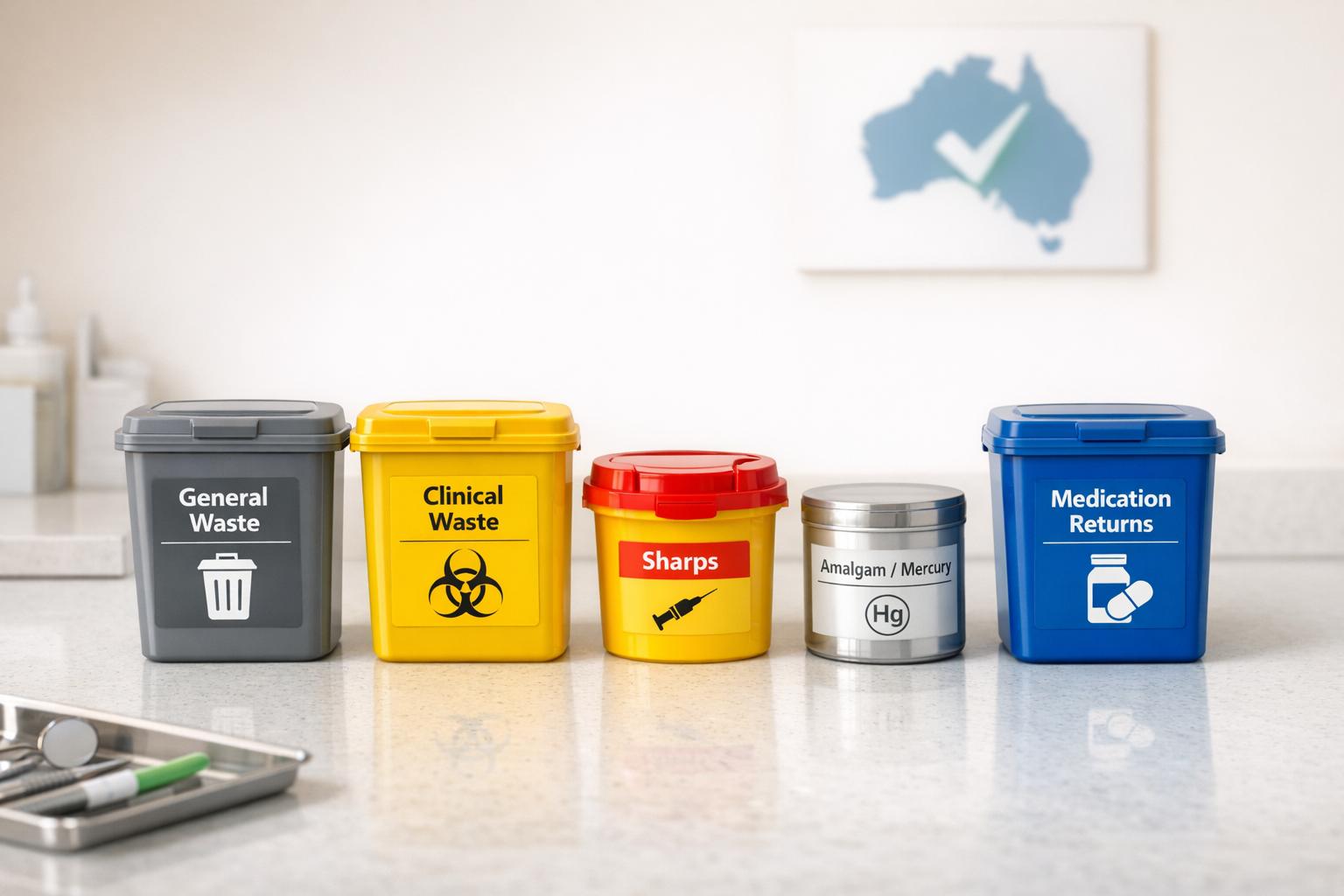
Proper dental waste disposal in Australia is critical to safeguard public health and reduce harm to the environment. Dental clinics must categorise waste into general, hazardous, and biomedical/infectious types and follow strict national and state-specific regulations. Key practices include:
- General Waste: Non-contaminated items like paper and food scraps go into standard waste bins.
- Hazardous Waste: Mercury amalgam, X-ray solutions, and disinfectants need specialised handling and recycling.
- Biomedical/Infectious Waste: Items like blood-stained gauze, needles, and extracted teeth must be disposed of in yellow biohazard bins or sharps containers.
- Mercury Management: Amalgam separators must meet ISO 11143 standards to prevent mercury from entering wastewater.
- Expired Medications: Use programs like NatRUM for safe disposal via pharmacies.
Compliance with standards such as AS/NZS 3816:1998 and EPA regulations is mandatory. Failure to comply can result in fines and legal action. Proper documentation, waste segregation, and using licensed disposal services are key to staying compliant. By following these practices, dental clinics can maintain safety and meet legal obligations.
Types of Dental Waste in Australia
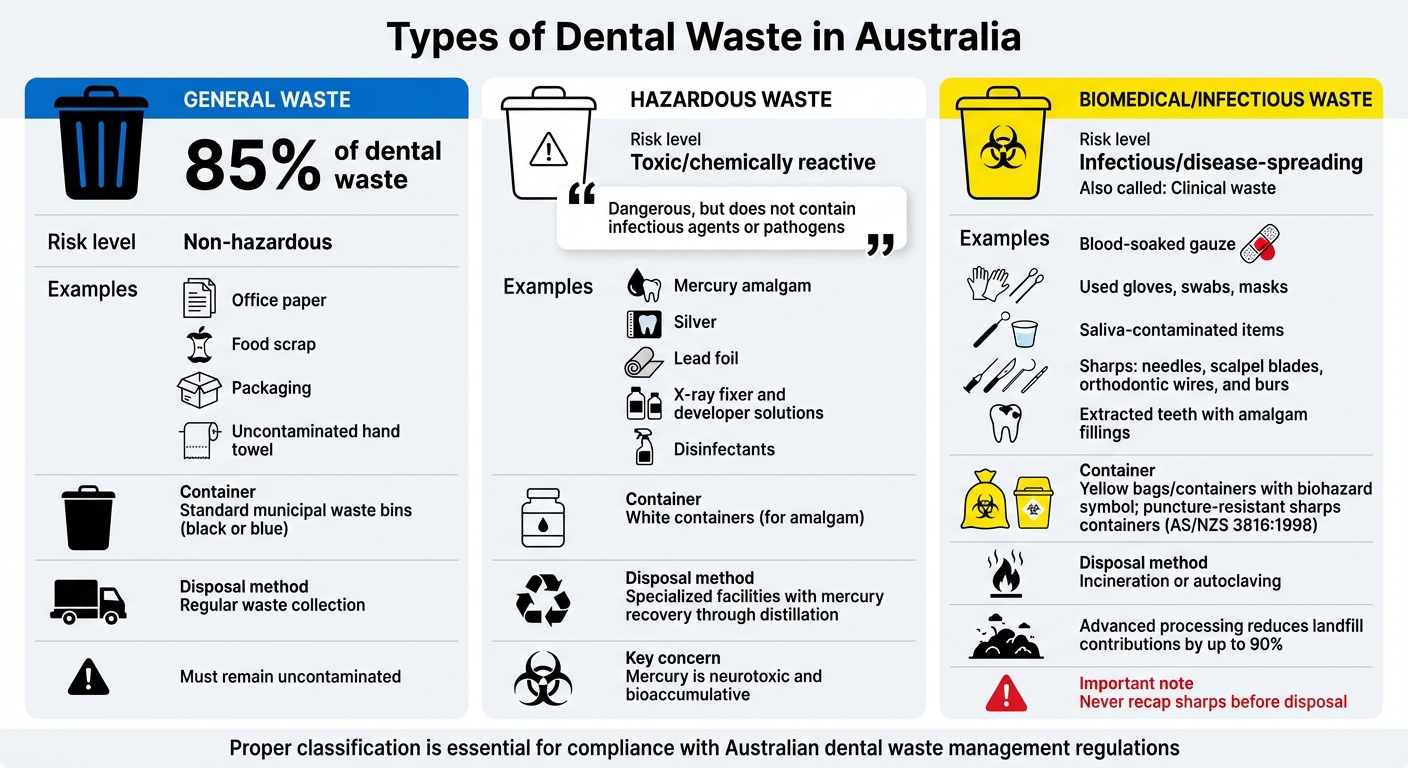
Types of Dental Waste in Australia: Classification and Disposal Guide
Dental practices in Australia are required to sort waste based on its risk level and composition. This classification dictates how waste is managed, stored, and ultimately disposed of. The main types include general waste, hazardous waste, and biomedical and infectious waste.
General Waste
General waste accounts for around 85% of dental waste[2] and is considered non-hazardous. It includes uncontaminated items like office paper, food scraps, packaging, and hand towels that haven’t been exposed to bodily fluids or chemicals. These materials are usually disposed of through standard municipal waste collection services in designated bins (commonly black or blue). However, it’s crucial that general waste remains uncontaminated – once materials are exposed to blood, saliva, or chemicals, they must be categorised and handled differently.
Hazardous Waste
Hazardous waste contains substances that are toxic, chemically reactive, or flammable. In dental practices, this includes materials like mercury amalgam, silver from radiographic processes, lead foil, X-ray fixer and developer solutions, and certain disinfectants.
"Hazardous waste is dangerous, but does not contain infectious agents or pathogens." – Ace Waste [3]
Mercury amalgam is a major concern due to its neurotoxic and bioaccumulative nature[4]. It must be collected in white containers and sent to specialised facilities where mercury is recovered through distillation. This method avoids incineration, which would release harmful emissions.
Biomedical and Infectious Waste
Often called clinical waste, this category includes materials that may spread infection or disease. Examples are blood-soaked gauze, used gloves, swabs, masks, saliva-contaminated items, sharps (like needles, scalpel blades, orthodontic wires, and burs), and human tissue such as extracted teeth.
"All clinical waste, and therefore dental waste, must be placed in labelled, yellow bags or containers with a clear, black biohazard symbol." – Ace Waste [3]
Sharps require disposal in puncture-resistant containers that meet Australian Standards (AS/NZS 3816:1998). They should never be recapped before disposal. Extracted teeth containing amalgam fillings must be cleaned and sent for mercury recovery instead of being disposed of as regular clinical waste. Advanced processing methods, such as incineration or autoclaving, can treat biomedical waste, reducing landfill contributions by up to 90%[3].
These waste classifications are essential for ensuring compliance with Australia’s strict dental waste management regulations.
Australian Regulations for Dental Waste Disposal
In Australia, dental waste management is shaped by both national guidelines and state-specific laws. The Australian Dental Association (ADA) provides professional standards for safe practices, while state Environmental Protection Authorities (EPAs) enforce legal requirements for handling hazardous and clinical waste. Together, these measures ensure proper management across all types of dental waste.
Australian Dental Association (ADA) Guidelines
The ADA outlines national standards through various Policy Statements. Key policies include infection control (Policy 6.1), dental amalgam safety (Policy 6.18), and environmental sustainability (Policy 6.21). One of their key recommendations is prioritising reusable, steam-sterilisable items over disposable alternatives wherever practical [8][9].
Environmental Protection Authority (EPA) Regulations
State EPAs categorise dental waste as either "industrial" or "priority" waste, requiring specific handling procedures. Licensed waste transporters collect clinical waste, which is treated at EPA-approved facilities before disposal. Common treatment methods, such as incineration or autoclaving, ensure the waste is rendered non-hazardous.
"The disposal methods for medical waste are legislated and expensive, and must be collected for disposal by a licensed waste transporter." – Australian Dental Association [8]
State and Territory-Specific Rules
While the ADA provides a national framework, each state applies its own regulations. For example:
- Victoria: The Environment Protection Act 2017 and Environment Protection Regulations 2021 classify infectious waste as "Category A" priority waste [7].
- Queensland: The Waste Reduction and Recycling (WRR) Regulation includes Schedule 7A, which specifies labelling and containment requirements for dental waste [3].
- South Australia: Operating under the Environment Protection Act 1993, South Australia banned landfill disposal of e-waste (such as fluorescent bulbs and batteries) in September 2013 [1][8].
Most states use a standardised colour-coding system for waste segregation: yellow for clinical waste, red or yellow for sharps, and white for amalgam waste. These regulations also include detailed protocols for managing mercury and amalgam waste, ensuring safe and environmentally responsible disposal.
Mercury and Amalgam Waste Disposal
Managing mercury contamination is a crucial part of dental waste management, given its severe environmental risks. To put it into perspective, just one gram of mercury can pollute up to one billion litres of water [11]. Once mercury enters aquatic ecosystems, bacteria convert it into methylmercury – a toxic compound that builds up in fish and shellfish [14]. Here’s a closer look at how to handle mercury and amalgam waste responsibly.
Amalgam Separators
The Australian Dental Association strongly advises using amalgam separators that meet ISO 11143 standards. These devices are designed to trap mercury particles before they can enter wastewater systems, achieving at least 95% removal efficiency [12][14][15]. By preventing mercury from reaching sewage systems, separators play a key role in protecting the environment. In fact, the Australian government estimates that widespread adoption of these separators could prevent 1,300 kilograms of mercury from being released annually [13].
To keep separators functioning effectively:
- Perform monthly maintenance and replace cartridges as per the manufacturer’s guidelines.
- Use only neutral pH cleaners (pH 6–8) for vacuum lines [14][15].
- Avoid bleach or any oxidising cleaners with chlorine or iodine, as these can dissolve solid mercury, releasing it into the environment.
Proper Disposal of Amalgam Waste
After mercury is captured by separators, correct handling and disposal of amalgam waste are essential. All waste, including scrap material from mixing, removed fillings, chairside sludge, and used capsules, should be stored in airtight, leak-proof, mercury-resistant containers. These containers must be white-coded and clearly labelled: "Amalgam Waste – For Recycling" [6][12].
To ensure safe disposal:
- Never rinse amalgam waste down sinks or dispose of it in regular bins or landfill [12].
- Use an EPA-licensed hazardous waste disposal service to collect amalgam-specific waste [12].
This closed-loop recycling system ensures that mercury is purified and reused, reducing the need for new mercury extraction and minimising environmental harm [11].
Safe Disposal of Expired Materials and Medications
Properly managing expired materials is a crucial part of dental waste compliance. Beyond clinical and amalgam waste, expired dental materials require careful handling to avoid harming the environment and to meet regulatory standards. These materials typically fall into two categories: pharmaceutical waste (like expired anaesthetics and medications) and chemical waste (including composites, adhesives, disinfectants, and x-ray solutions) [6][2]. While hazardous healthcare waste makes up a smaller proportion, its impact can be significant if not handled correctly.
Expired Dental Materials
Materials like expired composites, adhesives, and resins must be disposed of carefully. They should be collected in clearly labelled, non-reactive, tamper-proof, and impact-resistant chemical waste containers. These containers should identify the material and highlight any hazards [2][18]. Importantly, these substances must never be poured down sinks or thrown into general waste bins, as they can leach harmful chemicals into the environment. Instead, authorised hazardous waste disposal services should handle them, often through incineration to ensure safe destruction [6][2].
Expired Medications
Handling expired medications requires just as much diligence. In Australia, the National Return and Disposal of Unwanted Medicines (NatRUM) program offers a free and accessible solution. Community pharmacies participating in this program provide yellow ‘Return of Unwanted Medicines’ (RUM) bins, allowing for the safe return of expired medications, including certain local anaesthetics. These are then incinerated or returned to suppliers, ensuring proper disposal in line with both state and national guidelines [6][16][17].
The Therapeutic Goods Administration (TGA) stresses the importance of responsible disposal:
"Disposing of [medicines] incorrectly can harm the environment… Don’t put strong pain relievers in domestic garbage bins or flush them down the sink or toilet, as it is dangerous to others and harmful to the environment." – Therapeutic Goods Administration (TGA) [17]
Alarmingly, an audit revealed that 44% of medicines returned through the program were still within their expiry dates, equating to roughly $2.05 million in wasted public funds annually [16]. For dental practices, partnering with licensed biohazard and chemical waste disposal companies ensures compliance with Environmental Protection Authority regulations and helps maintain responsible waste management practices [6][16].
sbb-itb-2be92ed
Waste Reduction and Recycling in Dental Practices
Dental practices have a unique opportunity to minimise their environmental impact by focusing on waste reduction and recycling. While adhering to Australia’s strict disposal regulations is essential, going beyond compliance can significantly reduce the volume of hazardous waste. The Australian Dental Association highlights the importance of this approach:
"The environmental impact of dental care delivery should be minimised without adversely affecting the safety and quality of dental treatment" [19].
Reducing Single-Use Items
One of the most effective ways to cut down on waste is by limiting the use of single-use items. Where infection control allows, switching from disposable to reusable materials can make a big difference. For example, replacing plastic products with steam-sterilisable alternatives like metal impression trays and matrix retainers is a practical step [8]. Similarly, surfaces that can be wiped clean eliminate the need for plastic barriers, and for areas requiring coverage, using "cut to size" plastic barriers helps reduce excess waste [8].
The impact of such changes is significant, especially when you consider that single-use surgical masks can take up to 450 years to decompose in landfills [8]. Beyond this, adopting digital records and sending receipts via email can also reduce paper consumption [1].
Recycling Dental Materials
Recycling within dental practices begins with proper waste segregation. Using colour-coded bins can simplify the process [6][20]. For example, uncontaminated paper and cardboard can go into recycling bins, while compostable paper towels used for hand drying can often be placed in organic/green bins [6][8].
Recycling metals is another important area. Precious metals from crowns and bridges can be sent to refineries, and old X-ray films can be de-identified and donated to organisations like the Red Cross, where the silver is reclaimed [8]. Additionally, the Australian Dental Sustainability Initiative collaborates with manufacturers to recycle PMMA (acrylic) by-products from dental milling. These materials are repurposed into durable PVC products, keeping approximately 10,000 discs out of landfills each month [21].
For items that are harder to recycle, programs like the TerraCycle Oral Care Program provide a solution. This free initiative, available to Australian dental practices, accepts items such as empty toothpaste tubes, manual toothbrushes, and dental floss containers [8].
Compliance Requirements and Penalties
Proper waste segregation and disposal aren’t just best practices – they’re legal obligations. Compliance with documentation and record-keeping requirements plays a critical role in avoiding potential legal and environmental risks. Dental practices need to be fully aware of their responsibilities and the consequences of failing to meet them.
Documentation and Record-Keeping
Keeping accurate and detailed records is a must for staying compliant. In Victoria, dental waste falls under "reportable priority waste" as defined by the Environment Protection Regulations 2021. This means dental practices are required to notify the EPA for every waste transaction, creating a transparent audit trail for regulators [10].
The Australian Dental Association highlights that recent legislative updates have tightened infection control and record-keeping standards for dental practitioners, particularly in New South Wales. For instance, the Health Practitioner Regulation (New South Wales) Regulation 2025, effective from 1 September 2025, mandates specific documentation standards. These include retention periods, secure storage, and detailed records of waste management activities such as collection dates, types of waste, and the licensed disposal companies involved [22]. Additionally, all waste containers must display the appropriate symbols, and any accidental spills must be recorded [6].
The EPA Victoria stresses that it’s the generator’s responsibility to ensure waste is sent only to facilities licensed for the specific waste types. As they put it: "It is the responsibility of the waste generator to ensure that all waste types are only sent to treatment facilities that have a permission for those specific waste types" [10]. These records not only ensure compliance but also serve as the backbone for regulatory enforcement.
Penalties for Non-Compliance
Failing to meet documentation and handling requirements comes with serious repercussions. Non-compliance can result in hefty financial penalties and even legal proceedings [3]. Under the Environment Protection Act 2017 (Vic), dental practices are legally obligated to manage, transport, and dispose of industrial waste responsibly. Breaching these obligations can lead to regulatory action and fines [10].
Improper waste segregation can also draw unwanted regulatory scrutiny. During audits, a lack of proper documentation can raise red flags, leading to intensified oversight and enforcement measures [6].
Conclusion
Following waste management protocols is essential for dental practices to protect public health and minimise environmental harm. By adhering to these guidelines, dental facilities can maintain safety standards and demonstrate their commitment to responsible practices.
Australian dental practices must focus on proper waste segregation, use of colour-coded bins, and ensuring hazardous materials – like mercury and infectious waste – are managed by licensed professionals. As Quick Denture Repair states:
"Proper health waste management in a dental clinic is crucial to prevent infections, ensure environmental safety, and comply with local regulations" [6].
Mercury from amalgam waste is particularly concerning due to its potential to bioaccumulate, posing long-term environmental risks [4]. Additionally, advanced incineration methods can reduce landfill waste by as much as 90% [3], showcasing how compliance supports sustainability.
State-specific EPA rules and the Australian Standard AS/NZS 3816:1998 are in place to protect staff, patients, and the community from hazards like needle-stick injuries, infectious diseases, and environmental contamination [3][5]. Key steps such as waste segregation at the source, comprehensive documentation, and ongoing staff training are critical for meeting compliance requirements [6].
Failing to comply can result in fines and legal repercussions. On the other hand, effective waste management not only leads to safer workplaces and cleaner waterways but also reflects a practice’s dedication to environmental stewardship. Proper dental waste disposal plays a crucial role in safeguarding both human health and the environment [3].
FAQs
What bin should each type of dental waste go in?
Proper dental waste management requires sorting waste into specific colour-coded bins to ensure safety and compliance with Australian regulations:
- Yellow biohazard bags: For infectious and biohazard waste.
- Puncture-resistant sharps containers: Specifically for sharps like needles and scalpel blades.
- Designated containers for amalgam waste: These must include the use of amalgam separators to safely manage mercury-containing materials.
- Regular waste bins: For general, non-hazardous waste.
This organised segregation not only meets regulatory standards but also promotes a clean and safe working environment.
Are dental clinics required to use amalgam separators in Australia?
While Australian regulations don’t mandate the use of amalgam separators in dental clinics, their voluntary adoption is highly encouraged. These devices play a key role in reducing mercury waste, helping to minimise its impact on the environment.
How should expired dental medicines and chemicals be disposed of?
Expired dental medicines and chemicals should always be taken to a community pharmacy involved in the Return Unwanted Medicines (RUM) Program for safe disposal. These substances are usually destroyed through high-temperature incineration. Never throw them in household rubbish or pour them down the sink, as this can lead to environmental damage and safety hazards.
Related Blog Posts
- Reducing Dental Waste: Key Solutions
- Australian Rules for Dental Waste Disposal
- Guide to Sustainable Dental Waste Management
- Dental Waste Impact on the Environment
Important Notice: Any surgical or invasive procedure carries risks. Before proceeding, you should seek a second opinion from an appropriately qualified health practitioner.
Individual results may vary. The information provided in this article is for educational purposes only and does not constitute medical advice.
Checkout Related Blogs




Get in touch with us
For more information, call us now to start feeling better. Or fill the form below to make appointment
The Latest News from Complete Smiles
How to Clean Clear Plastic Retainers
Checklist for Choosing Wearable Dental Devices
Checklist for Choosing Cloud AI Platforms in Dentistry

Complete Smiles Bella VistaAccepts All Major Health Funds, Including





