





How Custom Mouthguards Prevent Sports Dental Injuries
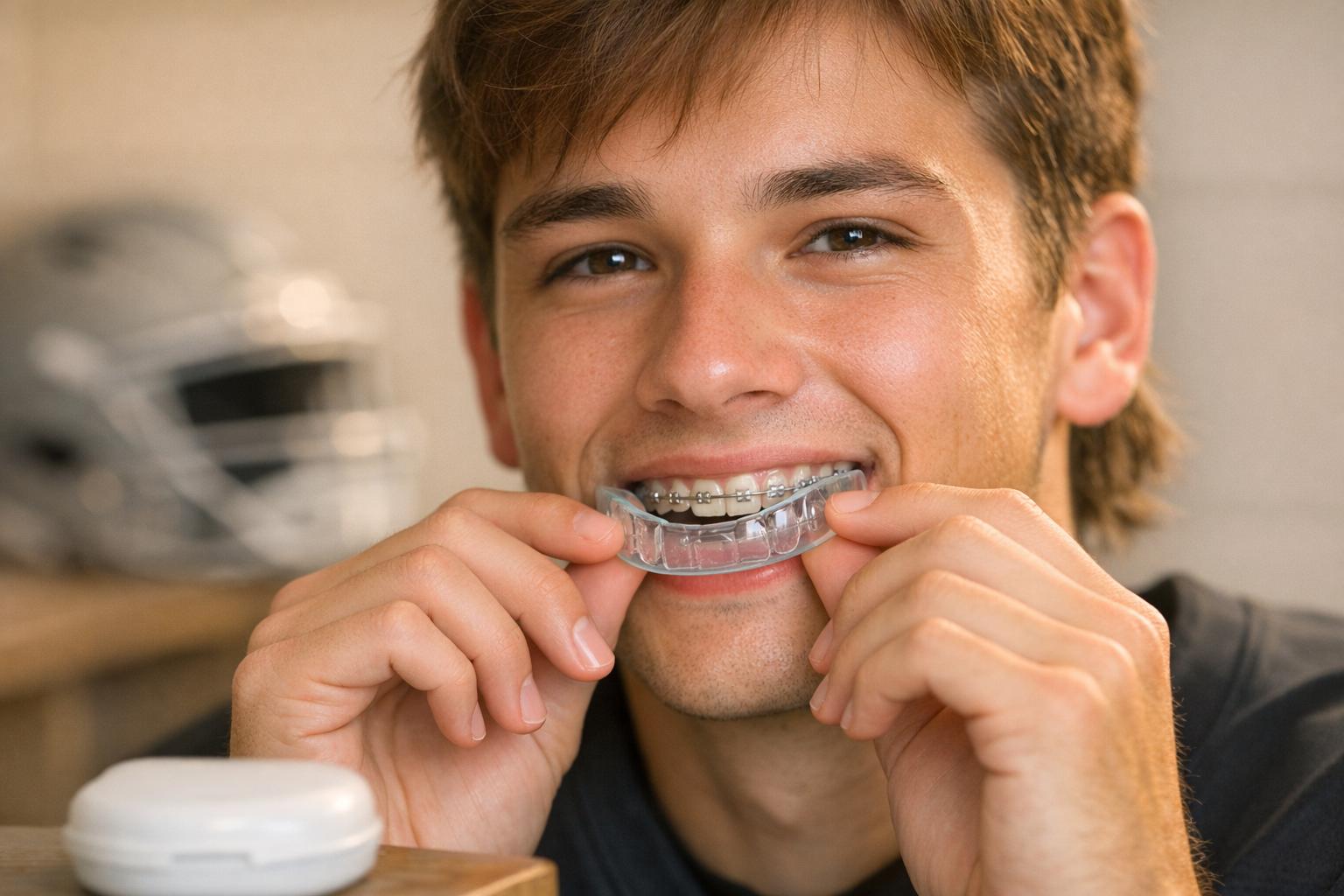
Did you know? Sports account for nearly 40% of dental injuries in Australia, yet only 36% of kids aged 5–17 wear mouthguards during play. A custom-fitted mouthguard can save you thousands in dental repairs while offering better protection and comfort compared to generic options.
Why Choose Custom Mouthguards?
- Superior Protection: Absorbs impact and evenly distributes force to reduce dental and jaw injuries.
- Comfortable Fit: Designed from precise impressions or 3D scans of your teeth for a snug, secure fit.
- Durable Material: Made from medical-grade thermoplastic for long-lasting use.
- Cost-Efficient: Costs $200–$400 but prevents injuries that can cost 20x more to treat.
- Sports-Ready: Essential for both contact (rugby, AFL, boxing) and non-contact sports (basketball, netball, cycling).
Key Benefits:
- Protects teeth, gums, lips, and jaw.
- Compatible with braces and dental work.
- Allows natural breathing and speaking during play.
- Covered partially by many private health insurance plans.
Custom mouthguards are a smart, practical investment for athletes of all ages. Whether you’re on the rugby field or cycling track, they’re your best defence against costly dental injuries.
How Custom Mouthguards Prevent Dental Injuries
Impact Absorption and Force Distribution
Custom mouthguards are designed to absorb shocks and soften the blow of impacts. Made from high-quality EVA (ethylene-vinyl acetate) and typically 3–4mm thick, these mouthguards act as a cushion, reducing the energy that reaches your teeth during collisions [5]. This protective layer helps minimise the risk of damage.
What makes custom mouthguards stand out is their ability to evenly distribute force across your entire dental arch. Unlike generic guards, which often focus protection only on the front teeth, custom options ensure consistent thickness and coverage. This even distribution not only protects individual teeth but also helps stabilise the jaw, lowering the chance of fractures. Additionally, their design extends protection to the surrounding tissues, offering a more comprehensive safeguard.
"A custom guard does more than just cover up your teeth – it’s engineered to be your mouth’s personal bodyguard. When you take a hit, the guard’s precise fit helps spread the force across your entire mouth rather than concentrating it in one spot." – Dr. Elmer Lee, Dentist, Dental Paradiso [2]
Protection for Gums, Lips, and Jaw
Custom mouthguards go beyond protecting just your teeth – they also shield the soft tissues in your mouth. Because they are tailored to fit precisely, they create a protective barrier that extends from your front teeth to your molars. This coverage helps prevent injuries to your gums, lips, and cheeks, which can happen when your teeth come into contact with these areas during impact.
For athletes with braces, custom mouthguards provide an added layer of protection, safeguarding both the teeth and orthodontic appliances. By covering the gums and supporting bone structures, these guards also help reduce the risk of jaw injuries and other soft tissue damage.
"A properly fitted mouthguard protects your teeth, gums, lips, cheeks and jaw by absorbing and dispersing the shock of impact during sport." – Dr. Ren Sun, Dentist, Pacific Smiles Dental [6]
sbb-itb-2be92ed
Protect Your Smile: Why Athletes Need Custom Mouthguards
Custom Mouthguards vs Generic Options
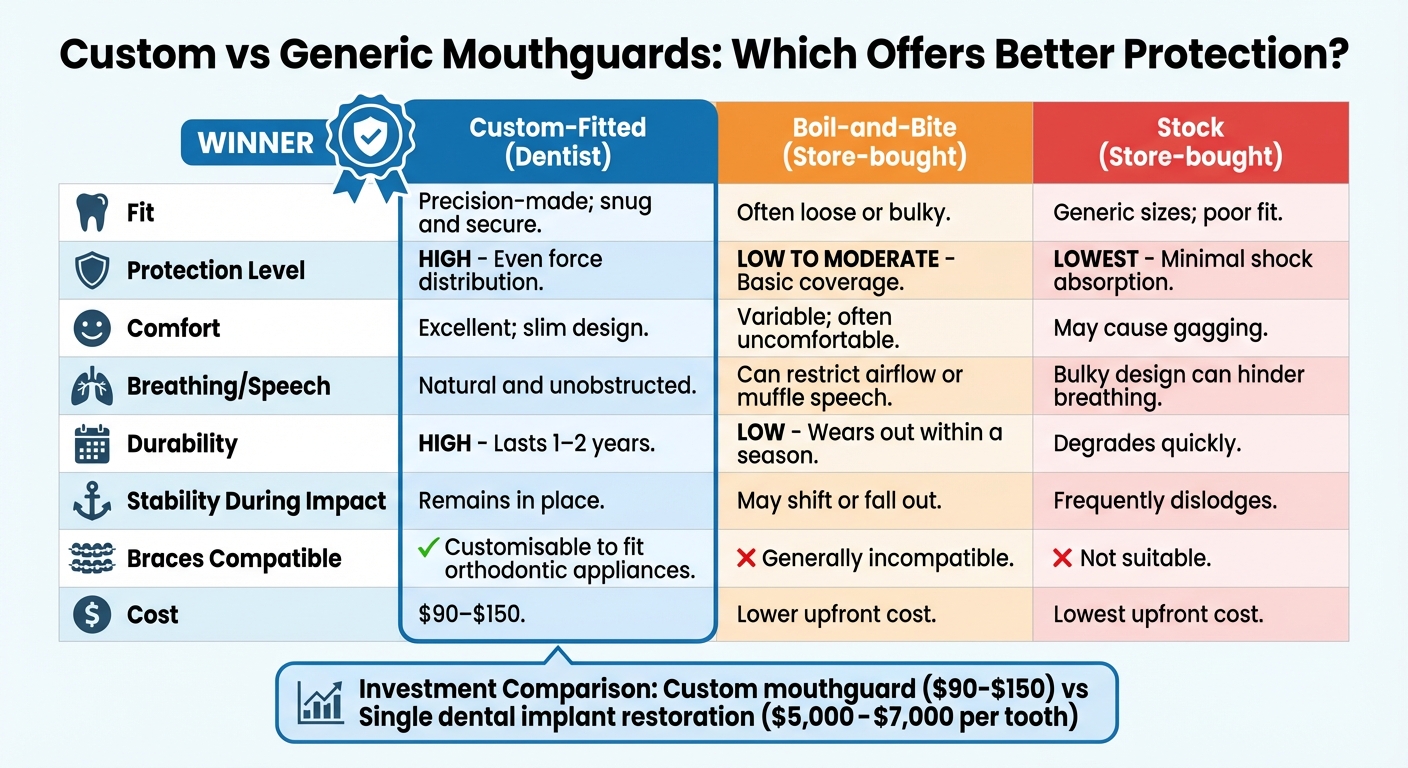
Custom vs Generic Mouthguards Comparison Chart
When it comes to protection and comfort, custom mouthguards far surpass generic alternatives. Let’s break down the differences.
Generic mouthguards might seem appealing due to their lower price, but they fall short in providing adequate protection. Stock mouthguards, which come in pre-formed sizes, are often bulky, uncomfortable, and prone to dislodging during play. Athletes wearing these may need to clench their jaw to keep them in place, which can be distracting and impractical. Boil-and-bite mouthguards, while slightly better, allow for some moulding to your teeth but still provide only basic coverage. They tend to lose their shape quickly, often needing replacement within the same season.
The AFL Health & Fitness Recommendations strongly advise against boil-and-bite options, noting:
"’Boil and bite’ type mouthguards are not recommended for any level of play as they can dislodge during play and block the airway." [8]
Custom-fitted mouthguards, on the other hand, address these issues head-on. Designed specifically for the unique shape of your teeth and gums, they stay securely in place without requiring constant jaw clenching. Made from multi-layered thermoplastic material, usually at least 4 mm thick, they distribute impact forces evenly across the jaw. This ensures excellent protection without compromising comfort or performance [6].
The comparison below highlights the key differences between custom and generic mouthguards:
Comparison Table: Custom vs Generic Mouthguards
| Feature | Custom-Fitted (Dentist) | Boil-and-Bite (Store-bought) | Stock (Store-bought) |
|---|---|---|---|
| Fit | Precision-made; snug and secure | Often loose or bulky | Generic sizes; poor fit |
| Protection | High; even force distribution | Low to moderate; basic coverage | Lowest; minimal shock absorption |
| Comfort | Excellent; slim design | Variable; often uncomfortable | May cause gagging |
| Breathing/Speech | Natural and unobstructed | Can restrict airflow or muffle speech | Bulky design can hinder breathing |
| Durability | High; lasts 1–2 years | Low; wears out within a season | Degrades quickly |
| Stability | Remains in place during impact | May shift or fall out | Frequently dislodges |
| Braces Compatibility | Customisable to fit orthodontic appliances | Generally incompatible | Not suitable |
| Cost | Approximately $90–$150 [9] | Lower upfront cost | Lowest upfront cost |
While custom mouthguards may have a higher initial cost, they are a smart investment when you consider the potential consequences of dental injuries. A single dental implant restoration can cost anywhere from $5,000 to $7,000 per tooth [9]. Additionally, many Australian private health insurance plans provide partial coverage for custom mouthguards under "dental extras" policies [8].
In short, the precision, durability, and protection offered by custom mouthguards make them a practical choice for athletes aiming to avoid costly dental trauma.
Sports That Require Custom Mouthguards
Different sports come with varying risks of dental injuries. Recognising these sport-specific hazards highlights why custom mouthguards are a must-have for athletes, ensuring they stay protected while performing.
High-Risk Contact Sports
Contact sports are at the top of the list when it comes to dental injury risks. For example, rugby players face dental trauma rates exceeding 33%. This has led many Australian clubs to adopt strict "No Mouthguard, No Play" rules, following guidelines from the Australian Dental Association and Sports Medicine Australia [3][4]. Sports where mouthguards are either mandatory or highly recommended include:
- AFL
- Rugby League and Rugby Union
- Boxing
- Hockey (both ice and field)
- Martial arts (like MMA and karate)
- Lacrosse
- Wrestling
In football, wearing a mouthguard can reduce the likelihood of dental injuries by up to 200 times [10]. The Australian Dental Association reinforces this, stating:
"A sports mouthguard can protect you from serious sporting injuries, such as broken jaws, fractured, cracked or knocked-out teeth, cut lips and tongues." [3]
While contact sports are the obvious culprits for dental injuries, non-contact sports can also pose serious risks.
Non-Contact Sports with Dental Injury Risks
Non-contact sports might seem safer, but they often lead to unexpected dental injuries. For example, basketball has a staggering dental trauma rate of up to 41%, often caused by accidental elbows, collisions, or falls during high-speed gameplay [4]. Wheel sports like cycling, skateboarding, and scooter riding account for nearly 44% of dental injuries [7]. Other activities where custom mouthguards are advisable include:
- Netball
- Soccer
- Cricket (especially for batters or close fielders)
- BMX riding
- Skiing
- Surfing
Injuries don’t just happen during games – training sessions are equally risky [3][7]. Whether you’re competing or practising, a custom mouthguard is a simple yet crucial way to protect your teeth, no matter the sport. Both contact and non-contact sports make a strong case for prioritising mouthguard use across all skill levels. If you are a new patient looking to discuss protective options, you may be eligible for our gap-free new patient pack.
Getting a Custom Mouthguard in Australia
Getting a professionally fitted mouthguard in Australia is a straightforward process that typically involves just two dental appointments. These custom mouthguards are designed to fit your teeth perfectly, offering the best protection for your specific sport.
The Fitting Process
The journey begins with a consultation where your dentist evaluates your dental structure and the level of protection needed for your sport. For example, a boxer requires a thicker, more durable mouthguard compared to a netball player [12] [13]. During this session, the dentist takes precise impressions of your teeth, either using traditional putty or advanced digital 3D scanning vs. impressions [11] [13] [15].
Once the impressions are taken, a technician creates a plaster model of your teeth and uses medical-grade thermoplastic to craft the mouthguard. This process usually takes about five business days to a week [11] [12] [14] [15]. At your follow-up appointment, the dentist ensures the mouthguard fits comfortably, checking for proper retention, coverage, and ease of breathing, speaking, and swallowing. Any necessary adjustments are made during this visit [5] [11] [13]. From start to finish, the entire process is typically completed within a week.
In Australia, custom mouthguards cost between $120 and $400. Many private health insurance providers offer rebates under general dental cover, and children under 17 might qualify for free mouthguards through the Child Dental Benefits Schedule (CDBS) [4] [5] [11] [14] [15] [17].
Selecting a Dental Clinic
Choosing the right dental clinic is essential for getting a mouthguard that fits well and offers the necessary protection. Look for clinics that cater to both your sport and specific dental needs, especially if you have braces, crowns, or other dental work [6] [16]. Clinics equipped with digital intraoral scanning technology provide a more comfortable and precise alternative to traditional impression methods [5] [18]. Some clinics even offer customisation options, like team colours, to suit your preferences [15] [18].
Make sure the clinic includes a final fitting session to confirm the mouthguard’s comfort and functionality. If it feels loose or causes discomfort, adjustments should be made on the spot [15] [16] [17]. For advanced care, practices like Complete Smiles Bella Vista (https://completesmilesbv.com.au) provide personalised treatment plans and cutting-edge dental services. Additionally, check whether the clinic is a "No Gap" provider or accepts CDBS, as this can help minimise your out-of-pocket expenses [4] [17].
Conclusion
Custom mouthguards provide an affordable way to avoid expensive dental repairs. With around 40% of dental injuries linked to sports, the cost of treating a knocked-out tooth can be up to 20 times higher than investing in a custom mouthguard [2] [5]. These mouthguards are designed to absorb impact, stabilise the jaw, and protect soft tissues effectively.
"Custom mouthguards aren’t just another piece of gear. They’re your personal defence system, precisely engineered to let you play confidently." – Dr. Elmer Lee, Dentist [2]
Custom-made options significantly reduce the risk of dental and jaw injuries – by over 80% compared to generic versions [1]. They offer a secure fit, allowing normal breathing and speaking, and are built with durable materials that can last multiple seasons if cared for properly.
Key Takeaways
Custom mouthguards provide tailored protection for athletes, ensuring a precise fit for your mouth and specific sport. To maintain their effectiveness, proper care is essential. Replace your mouthguard every 12 months – or every season for children – and clean it with cool, soapy water after each use. Store it in a ventilated case and bring it to your regular dental check-ups for inspection [4].
Whether you’re into rugby, basketball, netball, or any sport with a risk of dental injuries, a custom mouthguard is a must-have. With prices ranging from $200 to $400 [5], it’s a wise investment in safeguarding your smile and overall oral health.
FAQs
How do I know if my mouthguard fits properly?
A well-fitting mouthguard should sit snugly and comfortably over your teeth, providing protection without causing irritation or making it hard to breathe or talk. It needs to cover all your upper teeth securely, leaving no gaps or loose areas, and shouldn’t feel overly bulky or uncomfortable. If your mouthguard is more than 12 months old or doesn’t fit properly anymore, it’s a good idea to schedule a dental check-up to ensure it’s still doing its job effectively.
Can I wear a custom mouthguard with braces or a retainer?
Yes, you can absolutely wear a custom mouthguard with braces or a retainer. In fact, a custom-made mouthguard is the best option for ensuring both protection and comfort during sports or physical activities. These mouthguards are specifically designed to fit over braces or retainers, providing a secure fit while also protecting your teeth and orthodontic appliances.
What should I do if I take a hit while wearing a mouthguard?
If you get hit while wearing a mouthguard, take it out carefully and check for any signs of damage, like cracks or tears. Look over your mouth for injuries, including cuts, swelling, or chipped teeth. It’s a good idea to see a dentist quickly to evaluate any harm and make sure the mouthguard still fits properly. If it’s damaged, replace it to keep your protection effective.
Related Blog Posts
- 5 Tips for Caring for Dental Restorations
- How Wearables Help Prevent Dental Issues
- Fixed vs Removable Retainers: Key Differences
- Ultimate Guide to Custom Mouthguards for Kids
Important Notice: Any surgical or invasive procedure carries risks. Before proceeding, you should seek a second opinion from an appropriately qualified health practitioner.
Individual results may vary. The information provided in this article is for educational purposes only and does not constitute medical advice.
Checkout Related Blogs




Get in touch with us
For more information, call us now to start feeling better. Or fill the form below to make appointment
The Latest News from Complete Smiles
How to Clean Clear Plastic Retainers
Checklist for Choosing Wearable Dental Devices
Checklist for Choosing Cloud AI Platforms in Dentistry

Complete Smiles Bella VistaAccepts All Major Health Funds, Including





