





Best Treatment Options for Diabetic Periodontitis
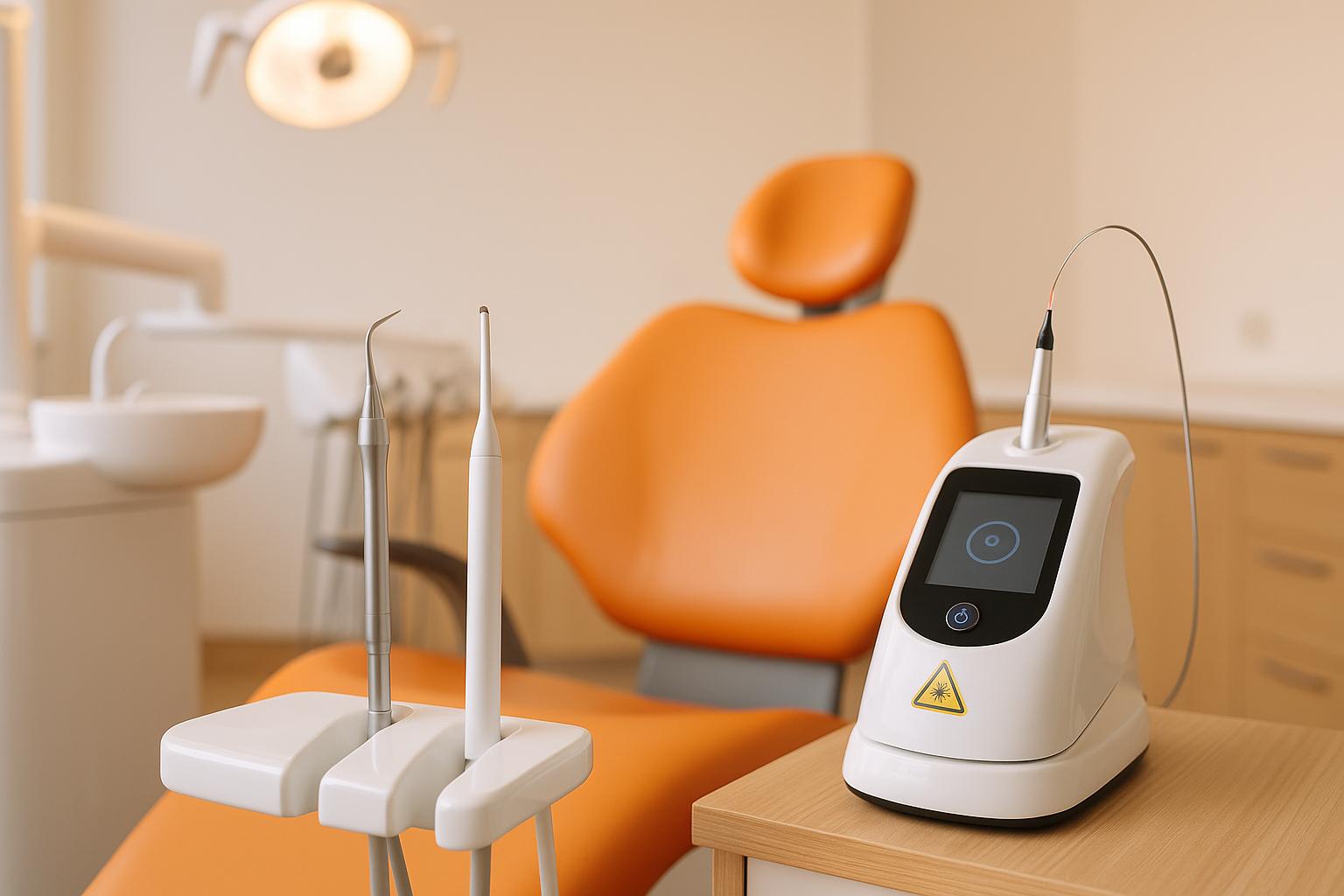
Managing diabetic periodontitis is key to controlling both oral health and blood sugar levels. Treatments like Scaling and Root Planing (SRP) and laser therapy not only improve gum health but also help lower HbA1c levels, making them important for diabetes management. Here’s what you need to know:
- Scaling and Root Planing (SRP): A deep cleaning method that removes plaque and tartar, improving gum health and reducing HbA1c by 0.4–0.5%. It’s affordable (AUD $300–$600 per quadrant) and widely accessible.
- Laser Therapy: A precise, less invasive option that targets bacteria and promotes healing. When combined with SRP, it can enhance results, but it’s more expensive and less available.
- Other Options: Antibiotic therapy and periodontal surgery are used for severe cases but come with risks like antibiotic resistance or longer recovery times.
For most patients, SRP is the go-to starting point due to its balance of effectiveness, cost, and availability. Advanced treatments like laser therapy can be added for better outcomes, especially when managing diabetes alongside gum disease. Regular dental visits and close collaboration with your healthcare team are essential to improving both oral and overall health.
Diabetes Clinical Management & Periodontal Care for Diabetic Patients & Individuals Experiencing Hom
1. Scaling and Root Planing (SRP)
Scaling and Root Planing (SRP) is a deep cleaning procedure designed to remove plaque and tartar from below the gumline while smoothing root surfaces to encourage gum reattachment and healing [1][3]. For people with diabetes, SRP plays a crucial role in managing both infection and inflammation – two factors that can significantly affect blood sugar levels.
Effectiveness
Research strongly supports the benefits of SRP for diabetic patients. Meta-analyses involving 2,443 participants have shown that SRP can reduce HbA1c levels by 0.43 percentage points within three to four months [3]. Beyond improving blood sugar levels, SRP significantly enhances periodontal health. Studies have reported reductions in probing pocket depths and clinical attachment loss, often exceeding 50% within six months [4]. The positive effects seem to last, with HbA1c reductions growing from 0.30% at six months to 0.50% at 12 months [3].
Suitability for Diabetic Patients
SRP is particularly well-suited for diabetic patients, who often experience slower healing [1]. Its non-surgical nature minimises the risk of complications, making it a safer option compared to invasive procedures [2]. However, maintaining stable blood sugar levels before and after the procedure is crucial to reducing infection risks and ensuring proper healing. Many experts recommend that diabetic patients schedule periodontal maintenance visits every three to four months after SRP, compared to the standard six-month interval for non-diabetic individuals [1]. This tailored approach, combined with SRP’s effectiveness, makes it a valuable tool in diabetic care.
Cost and Accessibility
SRP is not only effective but also affordable in Australia. The cost typically ranges from $300 to $600 per quadrant, and private health insurance often helps reduce out-of-pocket expenses. Clinics like Complete Smiles Bella Vista accept all major health funds, making it easier for patients to access this essential treatment. In metropolitan areas such as Sydney, SRP is widely available, with many general dental practitioners offering the procedure. Public dental services may also provide reduced fees for eligible patients, though longer wait times are common. With a combination of affordability and accessibility, SRP remains a practical solution for diabetic patients seeking periodontal care.
2. Laser Therapy and Advanced Treatments
Laser therapy has brought a new level of precision to periodontal care. By using concentrated light energy, it effectively removes infected tissue and reduces bacterial loads, which can speed up the healing process. Other advanced treatments, such as targeted antibiotics (topical or oral) and periodontal surgery, are often used for more severe cases involving significant tissue or bone loss [1]. These options can be tailored to each patient or combined, depending on the progression of periodontitis and the individual’s overall health. Together, they enhance traditional methods by offering greater accuracy and shorter recovery periods.
Effectiveness
One of the standout benefits of laser therapy is its ability to target bacteria that traditional cleaning methods might miss. The concentrated light energy not only reduces bacterial presence but also encourages tissue regeneration. This is especially beneficial for diabetic patients, who often experience slower healing responses [1]. When paired with other periodontal treatments, laser therapy has been linked to improvements in health metrics like HbA1c levels, which are crucial for diabetic care. While research specifically focusing on laser therapy alone is still developing, studies show that comprehensive periodontal treatments can produce results comparable to some diabetes medications [2][4]. Additionally, the minimally invasive nature of laser therapy means less tissue removal, reduced bleeding, and faster recovery, making it a less daunting option for many patients.
Suitability for Diabetic Patients
For individuals with diabetes, who are prone to slower healing and higher infection risks, laser therapy offers several advantages. It reduces bleeding, swelling, and discomfort during treatment [1]. By lowering bacterial loads and promoting quicker tissue recovery, it becomes an effective tool in managing periodontitis for this group. Furthermore, the reduced trauma to surrounding tissues can help minimise overall stress on the body, which is especially important for those with compromised immune systems.
Cost and Accessibility
Advanced treatments like laser therapy often come with higher costs compared to traditional methods like scaling and root planing. In Australia, prices can vary depending on the provider, location, and the complexity of the treatment. Patients in metropolitan areas generally have better access to these cutting-edge options, as urban dental practices are more likely to invest in the latest technology. However, insurance coverage for laser therapy can differ, so it’s essential for patients to confirm what their policy includes.
Accessibility can be a challenge, particularly in rural or remote areas where fewer practices offer laser treatment. Specialised clinics, such as Complete Smiles Bella Vista, are more likely to provide comprehensive care with advanced options like laser therapy [1]. For patients who need to travel to access these services, the potential benefits – like reduced recovery times and less post-treatment discomfort – could outweigh the inconvenience and cost. Ultimately, while the upfront expense may be higher, the long-term advantages make it a worthwhile consideration for many.
sbb-itb-2be92ed
3. Complete Smiles Bella Vista‘s Gum Disease Treatments

At Complete Smiles Bella Vista, Dr. James Hanna and his team specialise in managing diabetic periodontitis through a range of periodontal treatments. These include scaling and root planing (SRP), antibiotic therapy, laser therapy, and surgical interventions. Each treatment is customised to address the unique challenges diabetic patients face, such as a higher risk of infection and slower healing times. Dr. Hanna stresses the importance of early intervention and recommends regular periodontal check-ups – ideally twice a year – to keep periodontitis under control. The clinic also offers dental implants for patients with well-managed diabetes who have experienced tooth loss due to advanced gum disease [1].
Effectiveness
Research supports the effectiveness of combining SRP with laser therapy, showing notable improvements in periodontal probing and attachment levels when used together [4]. Additionally, treating gum disease has been linked to reductions in HbA1c levels by approximately 0.4–0.5% within three to six months. This improvement is on par with the effects of some oral diabetes medications [2][3]. These results highlight the clinic’s dedication to evidence-based care in managing diabetic periodontitis.
Suitability for Diabetic Patients
Complete Smiles Bella Vista tailors its approach to meet the specific needs of diabetic patients, addressing slower healing times and other challenges. Treatments like SRP and laser therapy are generally suitable for most diabetic individuals, including those with type 2 diabetes. However, advanced procedures such as periodontal surgery or dental implants require a thorough evaluation of the patient’s glycaemic control and overall health [1]. The clinic also incorporates specialised care protocols, such as more frequent monitoring and pre- and post-treatment measures, to enhance healing and reduce complications. Laser therapy, in particular, is a game-changer for diabetic patients – it’s minimally invasive, reduces bleeding and swelling, speeds up recovery, and effectively targets harmful bacteria [1][4].
Cost and Accessibility
To make periodontal care more accessible, Complete Smiles Bella Vista provides gap-free check-ups for new patients with private health insurance. Many private health insurance plans in Australia also offer rebates for periodontal treatments, which can help offset costs. For more extensive procedures, the clinic offers flexible payment plans, with options available for amounts up to AUD $70,000 (subject to financial approval). Conveniently located in Bella Vista, part of the greater Sydney area, the clinic ensures comprehensive care. Their services include regular maintenance appointments, oral hygiene education, and collaboration with patients’ medical providers, providing diabetic patients with ongoing support for long-term oral health [1].
Advantages and Disadvantages
This section builds on the earlier analysis of individual treatments by comparing their strengths and limitations, helping diabetic patients make informed choices about their periodontal care. Each treatment option comes with its own set of benefits and challenges, which should be carefully considered based on individual circumstances.
Scaling and root planing (SRP) stands out as an affordable, non-surgical deep cleaning method that not only improves gum health but also helps manage blood sugar levels. For diabetic patients, however, slower healing may mean multiple sessions are required to achieve the desired results.
Laser therapy offers a minimally invasive alternative, particularly helpful for patients with delayed wound healing. It reduces bleeding and swelling and may even speed up recovery. When combined with SRP, it has been shown to reduce HbA1c levels by 22.5%, compared to 13.8% with SRP alone. The downside? Laser therapy is more expensive and not as widely available.
Antibiotic therapy can be a valuable addition, especially in severe cases of periodontitis. It targets harmful bacteria directly, enhancing the overall effectiveness of treatment. However, its use is limited by concerns over antibiotic resistance and potential side effects, making it unsuitable for routine application.
Periodontal surgery is typically reserved for advanced cases where less invasive methods have failed. While it can restore damaged gum and bone tissue, it is invasive, comes with a higher risk of complications, and requires a longer recovery time – factors that are particularly critical for diabetic patients. Careful pre- and post-operative management is essential.
| Treatment Option | Advantages | Disadvantages |
|---|---|---|
| Scaling & Root Planing | Non-surgical, cost-effective, improves HbA1c levels (~0.4–0.5%) | May require multiple sessions; slower healing in diabetics |
| Laser Therapy | Minimally invasive, faster healing; greater HbA1c reduction with SRP (22.5% vs 13.8%) | Higher cost and limited availability |
| Antibiotic Therapy | Enhances infection control; effective as an adjunct in severe cases | Risk of antibiotic resistance and potential side effects |
| Periodontal Surgery | Effective for advanced disease; restores gum and bone health | Invasive, with higher complication risks and longer recovery |
Treatment costs vary significantly, with laser therapy and surgical procedures generally being more expensive. However, private health insurance may cover some of these expenses, making them more accessible for certain patients.
The effectiveness of each treatment also depends on individual circumstances. Diabetic patients with well-controlled blood sugar levels tend to see better outcomes across all treatments. In contrast, poorly managed diabetes increases the risk of complications and treatment failure. Combining treatments often yields better results than relying on a single approach.
Patient suitability is another key factor. While most diabetic patients can safely undergo SRP and laser therapy, surgical procedures require a more thorough evaluation of their blood sugar control and overall health. Collaboration between dental professionals and the patient’s medical team is crucial to ensure safe and effective care while minimising risks.
Conclusion
The analysis highlights that scaling and root planing (SRP) remains the primary treatment for diabetic periodontitis, delivering measurable improvements in periodontal health and reductions in HbA1c levels by around 0.4-0.5% [2][3][5]. For most diabetic patients in Australia, SRP strikes the ideal balance between affordability, accessibility, and clinical effectiveness. This reinforces the importance of tailoring periodontal care to suit the specific needs of each individual.
Adjunctive therapies, such as combining SRP with diode laser treatment, can lead to up to a 22.5% reduction in HbA1c levels compared to 13.8% with SRP alone [4]. While these advanced treatments may come with higher costs, their potential benefits make them a worthwhile consideration for eligible patients who have access to such options.
The evidence clearly supports early intervention and personalised treatment plans. Patients with well-managed diabetes tend to see better outcomes across all periodontal treatments, whereas those with poor glycaemic control face greater risks of complications and treatment challenges. This underscores the need for close collaboration between dental professionals and medical teams to optimise care.
In practice, starting with SRP and maintaining regular follow-ups is often the most practical approach due to its accessibility, affordability, and availability of health fund rebates. Many local dental practices now offer these services, ensuring that care is within reach for a wide range of patients. Advanced treatments, such as laser therapy or periodontal surgery, should be considered only when conservative methods fail to achieve the desired results.
Long-term studies further validate these strategies, showing that diabetic patients who receive appropriate periodontal care experience sustained improvements in both oral health and glycaemic control for at least 12 months after treatment [2][3]. This dual benefit positions periodontal therapy as not just a dental solution but a critical part of managing diabetes overall.
An integrated care approach – beginning with SRP and progressing to advanced therapies as needed – aligns with the principles of evidence-based, patient-focused treatment. Diabetic patients are encouraged to seek out skilled providers who understand the complexities of treating periodontal disease in the context of diabetes and who can work collaboratively with their broader healthcare team to deliver comprehensive care.
FAQs
How does diabetic periodontitis affect blood sugar levels, and why is managing both conditions important?
Diabetic periodontitis creates a challenging loop between gum health and blood sugar levels. Severe gum infections, like periodontitis, can trigger increased inflammation in the body. This inflammation may worsen insulin resistance, making it more difficult to manage blood glucose levels. On the flip side, elevated blood sugar can speed up the progression of gum disease, deepening the problem.
Addressing these conditions together is crucial to breaking this cycle. Regular dental care – such as professional cleanings and periodontal treatments – paired with effective blood sugar management can help minimise complications and support better overall health. A team effort between your dentist and healthcare provider plays a vital role in achieving the best results.
What are the pros and cons of combining Scaling and Root Planing (SRP) with laser therapy for managing diabetic periodontitis?
Scaling and Root Planing (SRP) is a common treatment for periodontitis, aimed at cleaning plaque and tartar from below the gumline while smoothing the roots of your teeth. When combined with laser therapy, this approach may deliver additional benefits, such as reducing bacteria more effectively, promoting quicker healing, and reducing gum pocket depth.
That said, the role of laser therapy in managing diabetic periodontitis is still under investigation, and its long-term outcomes remain uncertain. Some potential downsides include higher treatment costs and the requirement for specialised tools and trained professionals. It’s a good idea to talk with your dentist to explore whether this option aligns with your specific needs.
Why do people with diabetes need more frequent periodontal check-ups?
People living with diabetes often need more frequent periodontal check-ups due to their increased risk of gum disease and the potential for quicker progression of periodontitis. High blood sugar levels can weaken the immune system, making it tougher for the body to fight off infections, including those that affect the gums.
Regular dental visits play a vital role in keeping gum health in check. These appointments allow dentists to catch issues early, address them promptly, and help reduce the chance of complications. This kind of proactive care supports not just oral health, but overall wellbeing for individuals managing diabetes.
Related Blog Posts
- Best Practices for Periodontal Care in Cardiac Patients
- How Diabetes Impacts Periodontal Health Over Time
- Diabetes and Periodontitis: Oral Microbiome Changes
- Gingivitis and Diabetes: How They Connect
Important Notice: Any surgical or invasive procedure carries risks. Before proceeding, you should seek a second opinion from an appropriately qualified health practitioner.
Individual results may vary. The information provided in this article is for educational purposes only and does not constitute medical advice.
Checkout Related Blogs




Get in touch with us
For more information, call us now to start feeling better. Or fill the form below to make appointment
The Latest News from Complete Smiles
How to Clean Clear Plastic Retainers
Checklist for Choosing Wearable Dental Devices
Checklist for Choosing Cloud AI Platforms in Dentistry

Complete Smiles Bella VistaAccepts All Major Health Funds, Including





