




7 Non-Drug Ways to Ease Root Canal Pain

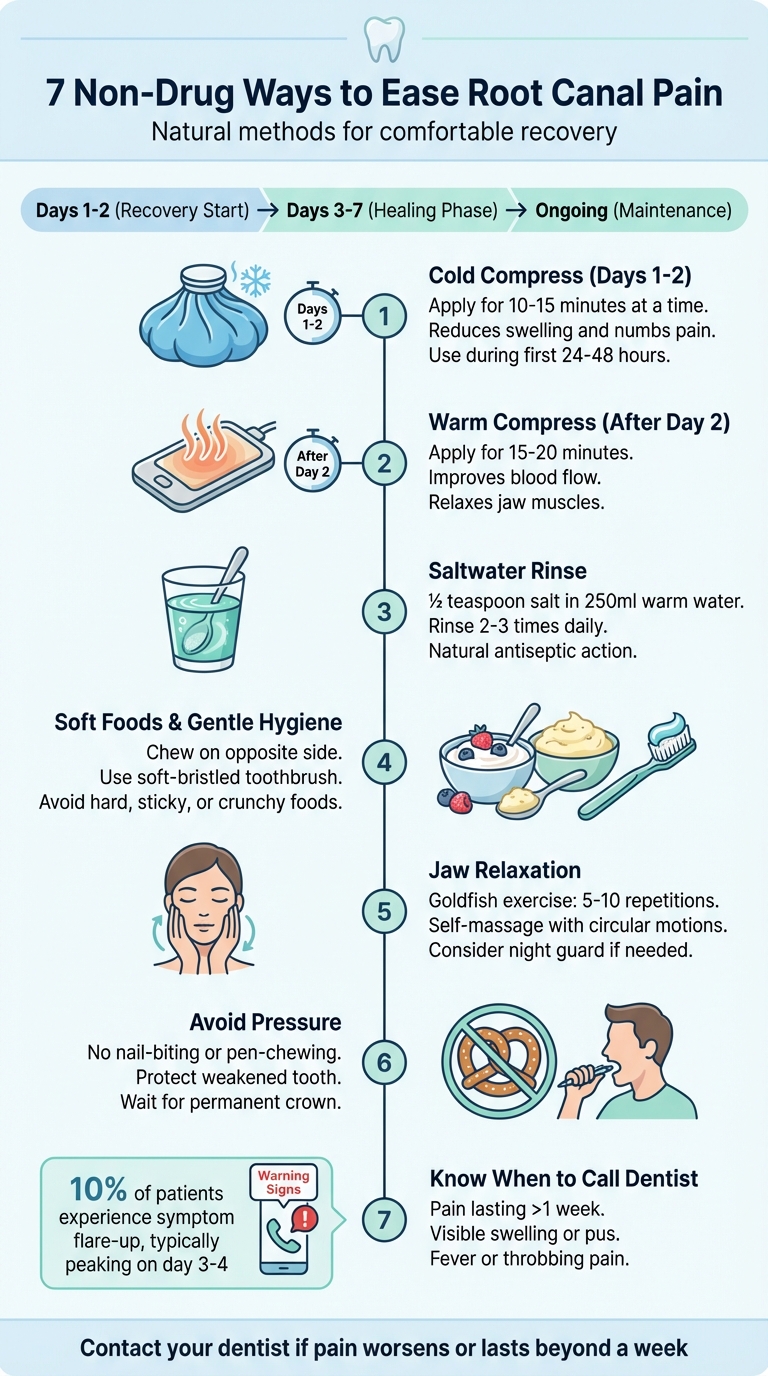
Root canal recovery can be uncomfortable, but you can manage pain without relying solely on medication. Here are seven effective methods to ease discomfort after the procedure:
- Cold Compress: Apply to your cheek during the first 1–2 days to reduce swelling and numb pain.
- Warm Compress: After swelling subsides, use gentle heat to relax muscles and improve blood flow.
- Saltwater Rinse: A natural antiseptic that soothes gums and keeps the area clean.
- Soft Foods & Gentle Hygiene: Stick to soft foods like yoghurt or mashed potatoes and brush carefully around the treated area.
- Jaw Relaxation: Try exercises or self-massage to relieve jaw tension from holding your mouth open during the procedure.
- Avoid Pressure: Chew on the opposite side and avoid hard or sticky foods to protect the treated tooth.
- Know When to Call a Dentist: Persistent pain, swelling, or unusual symptoms like pus or fever may indicate complications.
These steps can help you recover smoothly, but always contact your dentist if pain worsens or lasts beyond a week.
7 Non-Drug Methods to Ease Root Canal Pain Recovery
5 Root Canal Recovery Tips To Heal FAST!
1. Apply a Cold Compress to Your Cheek
Using a cold compress on the outside of your cheek can help alleviate discomfort after a root canal. The cool temperature works to reduce swelling in the tissues around the treated tooth and provides a numbing effect for mild pain – especially useful within the first 24 to 48 hours when sensitivity and swelling are at their peak. To avoid skin irritation or ice burns, wrap ice or an ice pack in a clean towel before applying it to your skin. Hold the compress against your cheek for 10–15 minutes at a time, then remove it to let your skin return to its normal temperature. You can repeat this process throughout the day as needed.
According to South Melbourne Dental Smiles, "Cold temperatures can help reduce mild pain and discomfort during the healing process after a root canal procedure." The cooling effect helps by constricting blood vessels, which not only reduces swelling but also provides temporary pain relief as the anaesthetic wears off. Additionally, eating soft, cold foods like ice cream may soothe internal inflammation. However, remember that cold therapy is meant to complement any pain relief medication your dentist has prescribed – not replace it. If swelling or pain continues for several days, it’s important to reach out to your dentist.
Next, learn how applying warmth can further support your recovery once the initial swelling has gone down.
2. Use a Warm Compress After Initial Swelling
After the first few days, when the initial swelling around your treated tooth starts to go down, it’s time to switch from cold compresses to warm ones. Warm compresses are especially helpful once the acute inflammation has settled. The heat encourages better blood flow and helps relax the jaw muscles, which can ease any lingering discomfort as your recovery progresses.
To use a warm compress, take a clean cloth, soak it in warm (not hot) water, and wring out the excess. Alternatively, you can use a heating pad wrapped in a towel. Gently press it against your cheek for 15–20 minutes at a time. Be careful to avoid high temperatures, as they might irritate the area or cause more discomfort. You can repeat this process every 15–20 minutes throughout the day to maximise relief.
"The dentist may also suggest other treatments such as warm compresses, ice packs, and over-the-counter pain relievers." – South Melbourne Dental Smiles [6]
If your symptoms persist or if the pain worsens, reach out to your dentist for guidance [3][5][6]. You can also combine this method with a warm saltwater rinse to support the healing process.
3. Rinse with Warm Saltwater
Using a warm saltwater rinse is an easy and effective way to aid your recovery after root canal therapy. This simple solution acts as a natural antiseptic, helping to cleanse your mouth of bacteria and other microbes that might cause infection [10][11]. It also helps soothe inflammation by drawing out excess fluid from the gum tissues around the treated tooth [11].
To make the rinse, dissolve half a teaspoon of salt in about 250 millilitres (8 ounces) of warm water, stirring until fully mixed [10][11]. Make sure the water is warm, not hot, and wait until the anaesthesia has completely worn off to avoid accidentally injuring yourself [10].
Gently swish a small amount of the solution around the treated area for 30 seconds. Avoid vigorous swishing, as it could disturb the healing site or any temporary filling. Spit the solution out when you’re done – don’t swallow it. Repeat this process two to three times a day, especially after meals, to keep food particles from irritating the area [10][11]. Stick to this routine for at least the first week after your procedure [10].
If you find the saltwater rinse too harsh or notice it causing excessive dryness, speak with your dentist about alternatives like alcohol-free mouthwashes or herbal rinses. Be mindful not to overuse saltwater, as it can dry out the tissues [11]. Pair this practice with gentle oral care and a soft food diet to support a smoother recovery.
4. Maintain Gentle Oral Hygiene and Eat Soft Foods
Beyond compresses and rinses, taking care of your mouth and choosing the right foods play a big role in your recovery. To keep things clean without causing harm, brush gently with a soft-bristled toothbrush, using light, circular motions. Be careful around the treated area, and when flossing, slide the floss out to the side instead of pulling it upward to avoid disturbing any temporary fillings. Dr. Chris Darby, a biological dentist at Lifetime Dental, recommends this technique to protect the area during healing [12].
Wait until the numbness wears off before eating or brushing to avoid accidental biting [4][8]. Once sensation returns, stick to soft foods that won’t put pressure on the treated tooth. Good options include mashed potatoes, yoghurt, scrambled eggs, pasta, smoothies, and shredded proteins. These choices are gentle on your mouth and promote healing without straining the affected area.
| Recommended Soft Foods | Foods to Avoid |
|---|---|
| Mashed potatoes / Sweet potatoes | Crunchy foods (chips, crackers, popcorn) |
| Yoghurt and cottage cheese | Hard or chewy foods (nuts, raw carrots) |
| Soups and broths | Sticky foods (toffee, caramel, gum) |
| Scrambled eggs | Very hot or very cold beverages (initially) |
| Applesauce or puréed fruits | Sugary snacks (lollies, biscuits) |
When eating, try to chew on the opposite side of your mouth for a few days to keep pressure off the treated tooth [3][5]. Continue brushing after meals and flossing at least once a day, but be especially cautious near the procedure site [7]. By combining gentle oral care with smart food choices, you can help your mouth heal properly and reduce the risk of infection.
sbb-itb-2be92ed
5. Practice Jaw Relaxation and Stress Reduction
After a root canal, it’s common for your jaw to feel sore from being held open for an extended period during the procedure [14][7]. This tension can make the recovery process a bit uncomfortable, but incorporating relaxation techniques and gentle exercises can ease the strain and support healing. These simple steps can help reduce jaw discomfort and improve mobility.
One helpful exercise is the goldfish exercise, which can enhance jaw flexibility. To do this, place your tongue on the roof of your mouth, just behind your front teeth. Then, position one finger on your TMJ joint (located just in front of your ear) and another on your chin. Slowly lower your jaw halfway in a controlled motion, then close it. Repeat this motion 5 to 10 times [13]. This gentle movement helps loosen stiffness without putting unnecessary pressure on the treated tooth.
Another effective method is self-massage, which focuses on deeper muscle relaxation. Using firm yet gentle pressure, make slow circular motions along your jaw joint, temples, and upper neck. This technique not only releases tension but also improves blood circulation in tight areas [13]. For extra relief, you can apply a warm compress to the area. Alternatively, try mixing one drop of peppermint oil with a teaspoon of coconut or olive oil and gently massaging it into your jawline [13].
"Most often, pain and other symptoms from TMJ dysfunction may be managed with nonsurgical treatments." – Jennifer Steinhoff, MD, Medical Expert Board [13]
If you’re prone to clenching or grinding your teeth – especially while sleeping – a custom night guard can protect the treated tooth and reduce strain [13]. During the day, try keeping your tongue on the roof of your mouth to naturally separate your teeth, which can prevent unconscious clenching. When sleeping, elevate your head to minimise blood pooling and reduce any throbbing sensations [14][8][9].
6. Avoid Pressure and Harmful Habits
Protecting your tooth from extra pressure is just as important as managing pain after a root canal. Since the procedure leaves the tooth weaker and more prone to fractures, even everyday habits can pose a risk during the healing phase [15].
Steer clear of hard or sticky foods – they can crack the tooth or dislodge temporary fillings. Instead, stick to softer foods until your permanent crown is securely in place.
"The tooth is more prone to fractures following a root canal. Fractures leave the tooth vulnerable, which may require additional treatment or extraction." – Bond Street Dental [15]
Habits like nail-biting or chewing on pens are also a no-go. These actions put concentrated pressure on the weakened tooth, increasing the likelihood of damage. In fact, teeth without a permanent crown are six times more likely to require extraction [2].
To be safe, chew on the opposite side of your mouth until your permanent crown is fitted. And don’t put off your follow-up appointment – it’s key to protecting your tooth for the long haul [7][5]. Taking these precautions will help your tooth heal properly and keep it safe as you recover.
7. Know When to Contact Your Dentist
After a root canal, it’s normal to feel some mild discomfort, but certain symptoms should prompt you to reach out to your dentist. If pain persists or worsens beyond a week, it’s time to schedule a check-up. Most people recover within this timeframe, so ongoing discomfort is a sign that something might need attention. Additionally, if your bite feels uneven, your temporary filling makes it difficult to close your mouth, or you experience severe, throbbing pain that doesn’t ease with standard pain relief, don’t wait – contact your dentist right away [3][7].
Keep an eye out for specific warning signs like swelling. This could appear in your gums, jaw, or even your face, and if it becomes visible or worsens, it’s worth getting it checked [1][7]. Another red flag is a pimple-like bump on your gums that oozes pus, or the sudden onset of a fever – both of which could indicate an infection [1][7].
"If your tooth hurts more after treatment – especially if the pain throbs – call your provider." – Cleveland Clinic [7]
For those in the Bella Vista area, Complete Smiles Bella Vista offers thorough post-treatment care to ensure your recovery goes smoothly (https://completesmilesbv.com.au). Don’t forget to attend your follow-up appointment for the permanent crown. This step is crucial to protect your tooth and avoid future issues [7].
Conclusion
Simple at-home care can go a long way in managing post-root canal discomfort, especially when paired with professional advice. Techniques like cold compresses, saltwater rinses, sticking to soft foods, and practising stress relief can help minimise swelling and sensitivity. Interestingly, studies reveal that around 10% of patients experience a flare-up of symptoms, typically peaking on the third or fourth day after the procedure[16].
However, while these non-medication methods are great for easing mild discomfort, they won’t address more serious issues like missed canals or recurring infections. If your pain persists for more than a week or intensifies, it’s crucial to reach out to your dentist without delay. Ignoring prolonged symptoms could jeopardise the tooth, making it harder – or even impossible – to save[1][5].
At Complete Smiles Bella Vista, comprehensive root canal therapy and aftercare are provided in accordance with Australian dental standards. Under the leadership of Dr. James Hanna, the clinic is committed to offering personalised care using advanced techniques. To learn more, visit their website at https://completesmilesbv.com.au.
FAQs
How long should I use a cold compress to relieve pain after a root canal?
To alleviate swelling and soothe discomfort following a root canal, try placing a cold compress on the outside of your cheek near the treated area. Keep it there for 15–20 minutes, then give your skin a break for at least the same amount of time before reapplying. You can repeat this as often as needed during the first 6–8 hours after the procedure. This simple method may help reduce inflammation and provide relief.
When should I see my dentist after a root canal?
If you’re dealing with severe or worsening pain, noticeable swelling, or signs of infection like pus around the tooth or a fever, it’s time to contact your dentist. Also, if the discomfort persists for more than a few days or feels out of the ordinary, don’t hesitate to seek professional advice. Getting timely care can prevent complications and support proper recovery.
Why should you avoid eating hard or sticky foods after a root canal?
After undergoing a root canal, the treated tooth tends to be more delicate, often with a temporary filling in place. Eating hard or sticky foods can put this tooth at risk – potentially damaging the filling, dislodging it, or even causing the tooth to crack. These issues can lead to complications like re-infection or further structural damage.
To help your tooth heal properly and avoid these problems, it’s best to stick with softer foods until your dentist gives you the green light to return to your regular diet.
Related Blog Posts
- 5 Common Root Canal Myths Debunked
- 5 Pain Relief Tips for Kids’ Dental Emergencies
- Acupuncture vs. Relaxation: Pain Relief in Dentistry
- 7 Tips for Braces Pain Relief
Important Notice: Any surgical or invasive procedure carries risks. Before proceeding, you should seek a second opinion from an appropriately qualified health practitioner.
Individual results may vary. The information provided in this article is for educational purposes only and does not constitute medical advice.
Checkout Related Blogs



Get in touch with us
For more information, call us now to start feeling better. Or fill the form below to make appointment
The Latest News from Complete Smiles
How to Clean Clear Plastic Retainers
Checklist for Choosing Wearable Dental Devices
Checklist for Choosing Cloud AI Platforms in Dentistry
Complete Smiles Bella VistaAccepts All Major Health Funds, Including