





Dental Fluorosis: Causes and Risk Factors

Dental fluorosis affects the appearance of tooth enamel, caused by excessive fluoride intake during early childhood (birth to 8 years). It results in white spots, lines, or in severe cases, enamel chipping. While mostly cosmetic, prevention is key to avoiding overexposure to fluoride.
Key Points:
- Risk Period: From birth to 8 years, when permanent teeth are forming.
- Main Causes: Swallowing fluoridated toothpaste, high fluoride levels in drinking water, and fluoride supplements.
- Prevention Tips:
- Use a rice-sized smear of toothpaste for kids under 3; pea-sized for ages 3–6.
- Supervise brushing to ensure kids spit out toothpaste.
- Test private water sources for fluoride levels.
- Treatment: Professional options include whitening, microabrasion, veneers, or crowns for severe cases.
Fluorosis is entirely preventable with proper fluoride management during childhood. If you notice white spots or have concerns, consult your dentist for guidance.
Fluoride and Kids’ Teeth: Safety, Myths, and Cavity Prevention Explained
What Causes Dental Fluorosis?
Dental fluorosis happens when too much fluoride disrupts the work of ameloblasts during the formation of permanent teeth. These specialised cells are responsible for creating and mineralising enamel [8][9]. When exposed to excessive fluoride, their normal processes are thrown off balance, affecting calcium signalling and mitochondrial function [9]. This disruption leads to enamel that is porous and weaker than it should be.
Instead of forming solid enamel, the excess fluoride creates porous enamel. While fluoride usually strengthens teeth by forming acid-resistant fluoroapatite, an overdose during development causes "hypomineralised" enamel, where the matrix doesn’t fully mature [9][10]. Mild cases show up as white spots, while severe cases result in chipping and pitting [8][3].
"The enamel is still intact at eruption, but can be quickly worn away by brittleness and porosity in the case of severe fluorosis. This can also lead to chipping of the enamel." – Curaprox [8]
Globally, about 25% of people have some level of fluorosis [8]. In the United States, the condition affects roughly 23% of the population [3]. To avoid fluorosis, the recommended upper limit for fluoride intake is 0.1 milligrams per kilogram of body weight per day [8].
Excess Fluoride During Tooth Formation
The risk of fluorosis is limited to the time when enamel is forming – typically from birth to around age 8 – when permanent teeth (except wisdom teeth) are developing [3][12]. Different teeth have different vulnerable periods. For instance, the permanent front teeth are most at risk between 15 and 30 months of age [13].
"Enamel fluorosis occurs only when primary and permanent teeth are developing. Once teeth erupt, they cannot develop enamel fluorosis." – American Dental Association [13]
Once a tooth has erupted and its enamel is fully mineralised, fluoride exposure no longer poses a risk of fluorosis [10]. This makes it a concern solely during childhood development, not something adults need to worry about for themselves. However, during this developmental phase, multiple sources of fluoride exposure can increase the risk.
Common Sources of Excess Fluoride
During this critical window, even small excesses from various fluoride sources can lead to fluorosis. Swallowed toothpaste is a major factor – children often swallow up to half of the toothpaste they use [11]. This can result in fluoride intake that exceeds safe limits by 2 to 3 times [11]. Studies show that children using fluoridated toothpaste in areas with high fluoride levels are about twice as likely to develop fluorosis compared to those who don’t [11].
Drinking water is another contributor, whether due to naturally high fluoride levels in groundwater or fluoridated municipal water supplies. The U.S. Department of Health and Human Services recommends a fluoride level of 0.7 milligrams per litre (mg/L) in drinking water [3]. But in some parts of India, fluoride concentrations average 2.37 mg/L, with some areas reaching as high as 9.22 mg/L [3]. In Australia, families relying on private wells should have their water tested, as natural fluoride levels can exceed recommended limits.
Infant formula prepared with fluoridated water can also expose babies to excessive fluoride. Similarly, fluoride drops or tablets prescribed to children in areas without fluoridated water may lead to overexposure if other sources of fluoride go unnoticed. Mouth rinses and gels, especially when used by children under 6, are often swallowed instead of spat out, adding to systemic fluoride intake rather than providing the intended topical benefits.
Risk Factors for Dental Fluorosis
Understanding which factors make children more susceptible to dental fluorosis is essential for parents and carers aiming to protect their little ones during the critical years of tooth development.
Age and Tooth Development Period
Children from birth to 8 years old are the most at risk of developing fluorosis. This is because their permanent teeth are still forming beneath the gums during this time [1]. Once the enamel fully hardens and the teeth erupt, the risk of fluorosis disappears.
"By about age 8, the enamel of permanent teeth is fully formed. Older children, teens, and adults cannot get dental fluorosis." – CDC [1]
Fluoride levels in drinking water also play a key role in determining risk.
Fluoride Levels in Drinking Water
Exposure to fluoride concentrations exceeding 1.5 mg/L (or 1.5 ppm) can significantly increase the likelihood of visible enamel changes [2]. In Australia, community water fluoridation typically keeps fluoride levels between 0.6 and 1.1 mg/L – well within the safe range to minimise fluorosis risk [16]. However, families relying on bore water or private wells should have their water tested, as natural fluoride levels can vary widely.
A 2007 survey conducted in New South Wales revealed that nearly 25% of children in fluoridated areas showed some signs of fluorosis, with 3.3% experiencing moderate cases [16]. Despite this, the National Health and Medical Research Council affirms that current fluoridation practices in Australia do not cause major health concerns [14]. The World Health Organization, however, warns that fluoride levels above 1.5 mg/L increase the risk of fluorosis [15].
Beyond water, behaviour and dietary habits also influence fluoride exposure.
Behaviour and Environmental Factors
Fluoride exposure from multiple sources during the tooth development years can amplify the risk of fluorosis [17]. For example, young children often swallow toothpaste, which adds to their fluoride intake [1]. In areas with fluoridated water, using fluoride tablets or drops may unnecessarily increase exposure [4].
Dietary sources also contribute to overall fluoride levels. Foods and drinks like tea, vegetables, and grains naturally contain fluoride. In some regions, fluoridated milk or salt further adds to the total fluoride intake [5]. To avoid severe fluorosis, children aged 0 to 8 years should limit their daily fluoride intake to no more than 0.20 mg per kilogram of body weight [18]. Notably, studies show that using fluoridated tap water to prepare infant formula at standard water fluoride levels does not significantly increase the risk of fluorosis [4].
"The biggest risk factor for dental fluorosis is inappropriate use of fluoridated toothpaste in young children, not the use of fluoridated water to reconstitute infant formula." – Department of Health, Victoria [4]
sbb-itb-2be92ed
How to Prevent Dental Fluorosis
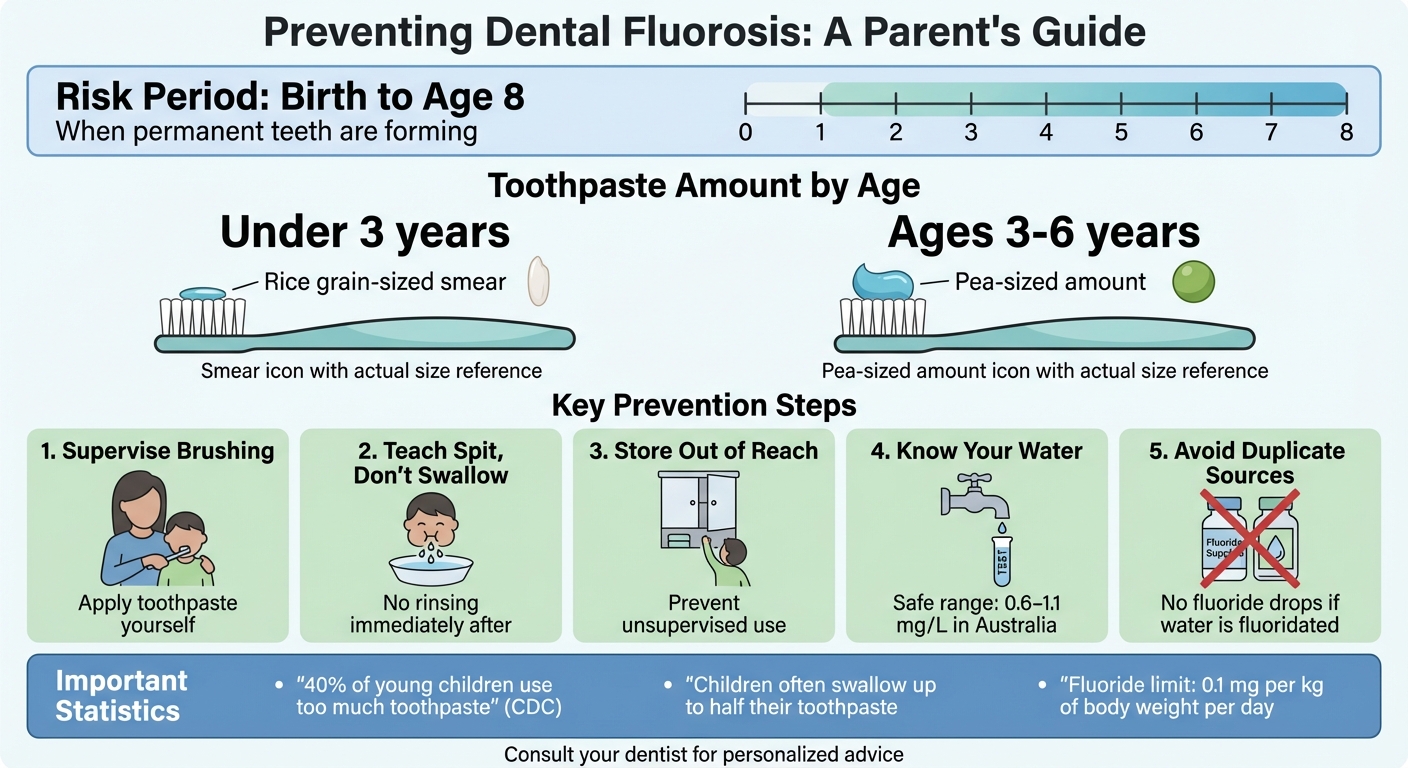
How to Prevent Dental Fluorosis in Children: Age-Based Toothpaste Guide and Safety Tips
Preventing dental fluorosis involves carefully managing fluoride exposure during the critical years of tooth development, from birth to around eight years old. The goal is to strike a balance between fluoride’s cavity-fighting benefits and the potential for cosmetic changes in enamel.
Track Total Fluoride Exposure
Fluoride comes from a variety of sources, including drinking water, toothpaste, certain foods, and sometimes supplements. Among these, swallowing too much fluoridated toothpaste is a leading cause of dental fluorosis in young children [4]. According to a CDC study, about 40% of young children use too much toothpaste and may ingest it [19]. To reduce this risk, monitor all fluoride sources. If your tap water is already fluoridated, avoid giving children fluoride drops or tablets, as this can increase their overall fluoride intake significantly [4][7]. Keeping an eye on these sources and limiting overexposure is crucial, alongside supervising brushing habits.
Supervise Children’s Toothbrushing
The amount of toothpaste used during brushing plays a big role in preventing fluorosis. For children under three, use just a smear or grain-of-rice-sized amount of toothpaste. From ages three to six, a pea-sized amount is recommended [19][21]. Parents should apply the toothpaste themselves to ensure the correct amount is used. It’s also important to teach children to swish and spit after brushing, rather than swallowing or rinsing with water immediately [19][7]. To avoid unsupervised use, store toothpaste out of reach, such as in a high cabinet [6][17].
Know Your Water’s Fluoride Level
Understanding the fluoride concentration in your drinking water is another key step. Contact your local water authority to find out the fluoride levels in your area. This information helps you decide whether additional fluoride sources are necessary or should be limited. In Australia, the recommended fluoride concentration in drinking water is between 0.6 and 1.1 mg/L, a range that supports cavity prevention while minimising the risk of fluorosis [6][2]. If your water supply exceeds this safe range, consider having it tested and treated with appropriate filtration methods. For families preparing infant formula, it’s generally safe to use fluoridated tap water at standard levels. However, if you’re concerned, alternating with fluoride-free water or using ready-to-feed formula can help reduce fluoride intake [4][3].
Professional Dental Care for Fluorosis
When fluorosis is present, professional dental care becomes an important step in addressing the condition.
Diagnosis and Management by Your Dentist
Dentists identify fluorosis through a thorough visual examination. Using dental mirrors, proper lighting, and sometimes magnification tools, they look for the tell-tale white spots that are evenly spread across multiple teeth [2]. This symmetrical pattern is a key characteristic of fluorosis, helping to distinguish it from other conditions like early tooth decay or molar-incisor hypomineralisation [2]. A history of fluoride exposure during critical stages of tooth development further supports the diagnosis.
"A diagnosis of dental fluorosis is contingent on a positive fluoride history within the critical window of tooth development and a visual intraoral examination." – StatPearls [2]
To determine the severity of fluorosis, dentists rely on standardised grading systems such as the Dean Modified Fluorosis Index or the Thylstrup Fejerskov Index. These systems classify cases from "questionable", where white flecks are barely noticeable, to severe cases marked by brown stains and enamel pitting [2]. Regular dental check-ups during childhood allow dentists to monitor tooth development and provide tailored advice on managing fluoride exposure from water, toothpaste, and other sources before permanent teeth fully form [1][2]. This evaluation helps guide decisions on whether cosmetic or restorative treatments are needed.
Cosmetic Treatment Options
Once fluorosis is diagnosed, treatment options vary depending on its severity. Mild cases often require no intervention, as the white spots are subtle and do not affect tooth function. For more noticeable cases, professional treatments can address both appearance and structure. Options include:
- Professional whitening to even out tooth colour.
- Microabrasion, which removes a thin layer (about 0.5 mm) of enamel to reduce surface discoloration.
- Dental bonding to cover specific spots or pits.
- Porcelain veneers to conceal the front surface of affected teeth.
- Crowns to restore both the look and function of teeth with significant structural damage [2][3][20].
For those seeking advanced cosmetic solutions, clinics like Complete Smiles Bella Vista (https://completesmilesbv.com.au) specialise in treatments such as porcelain veneers and teeth whitening. Your dentist will help you choose the best option based on the condition’s severity and your personal aesthetic preferences.
Conclusion
Dental fluorosis develops only during childhood, as permanent teeth are forming up until about the age of eight [1][2]. The primary cause is excessive fluoride intake during this critical time, often linked to improper use of fluoridated toothpaste [4]. Understanding this is essential for implementing effective preventive measures.
Striking the right balance between fluoride’s cavity-fighting benefits and managing exposure is crucial for protecting children’s enamel. The Australian Dental Association emphasises that controlling additional fluoride sources – like toothpaste and supplements – is a better approach than altering community water fluoridation [6]. Fluoridated water continues to be a safe and effective public health measure, reducing tooth decay in children and adolescents by 26% to 44% [6].
Prevention starts with simple steps: use the correct amount of toothpaste for your child’s age and supervise their brushing to avoid excessive fluoride ingestion [1][4][7]. Teaching children to spit out toothpaste instead of swallowing it also lowers the risk of fluorosis [1][7]. Additionally, being aware of the fluoride levels in your local water supply can help manage overall exposure.
If you notice white spots on your child’s teeth or have concerns about fluoride intake, it’s a good idea to consult a dentist. They can evaluate your child’s specific risk factors, such as fluoride levels in your area and their individual risk of tooth decay, and provide personalised recommendations.
For professional advice and treatment options, you can visit Complete Smiles Bella Vista (https://completesmilesbv.com.au). Their team offers tailored evaluations and evidence-based care to address your concerns.
FAQs
How can I tell if my child might develop dental fluorosis?
Dental fluorosis happens only when a child’s permanent teeth are still developing, usually up to around age 8. It occurs when a child consumes more fluoride than their tooth enamel can handle. Common risk factors include swallowing too much fluoride toothpaste, using unprescribed fluoride supplements, or drinking water with high fluoride levels. While infant formula prepared with fluoridated water is generally safe, it can add to the total fluoride intake.
To understand your child’s risk, take into account their age, how much fluoride they’re exposed to (from water, toothpaste, or supplements), and whether you notice white streaks or spots on their teeth. If you’re unsure or spot any changes, it’s a good idea to schedule a dental visit. A dentist can check for signs of fluorosis, review your child’s fluoride intake, and offer advice on safe fluoride use. Families in Bella Vista can turn to Complete Smiles Bella Vista for specialised paediatric dental care.
How should fluoridated toothpaste be used safely with young children?
When your child’s first tooth makes its debut, it’s time to begin brushing twice a day using a soft-bristled toothbrush. For little ones under 18 months, stick to water only – no toothpaste just yet. At this stage, their enamel is still developing, and swallowing fluoride can increase the risk of dental fluorosis.
From 18 months to 6 years, you can introduce a low-fluoride toothpaste (around 1,000 ppm). Use just a pea-sized amount – this strikes the right balance between protecting against cavities and limiting the amount they might accidentally swallow.
Supervision is key during brushing. Encourage your child to spit out the toothpaste rather than swallow it. As soon as two teeth start touching, it’s time to add flossing to the routine. Your dentist can guide you on how to do this properly. Regular dental check-ups are also important to ensure your child is using the right techniques and fluoride levels.
In Australia, improper use of fluoridated toothpaste is a common, yet avoidable, cause of dental fluorosis in children. By supervising brushing and sticking to the recommended amounts, you can help protect your child’s teeth while minimising risks.
How can I check if the fluoride levels in my drinking water are safe?
To ensure your drinking water contains safe levels of fluoride, take a look at your water bill or get in touch with your local water supplier. In Australia, fluoride levels between 0.6 and 1.1 mg/L (ppm) are recommended as both safe and effective in reducing the risk of tooth decay.
If you’re still uncertain or want more advice, your dentist can provide insights into fluoride levels and how they affect your dental health.
Related Blog Posts
- Fluoride Varnish in Preventive Dentistry
- How Fluoride Prevents Tooth Decay
- How to Choose Toothpaste for Kids
- How Fluoride Prevents Tooth Decay in Seniors
Important Notice: Any surgical or invasive procedure carries risks. Before proceeding, you should seek a second opinion from an appropriately qualified health practitioner.
Individual results may vary. The information provided in this article is for educational purposes only and does not constitute medical advice.
Checkout Related Blogs




Get in touch with us
For more information, call us now to start feeling better. Or fill the form below to make appointment
The Latest News from Complete Smiles
How to Clean Clear Plastic Retainers
Checklist for Choosing Wearable Dental Devices
Checklist for Choosing Cloud AI Platforms in Dentistry

Complete Smiles Bella VistaAccepts All Major Health Funds, Including





