





How to Teach Kids Proper Brushing Techniques
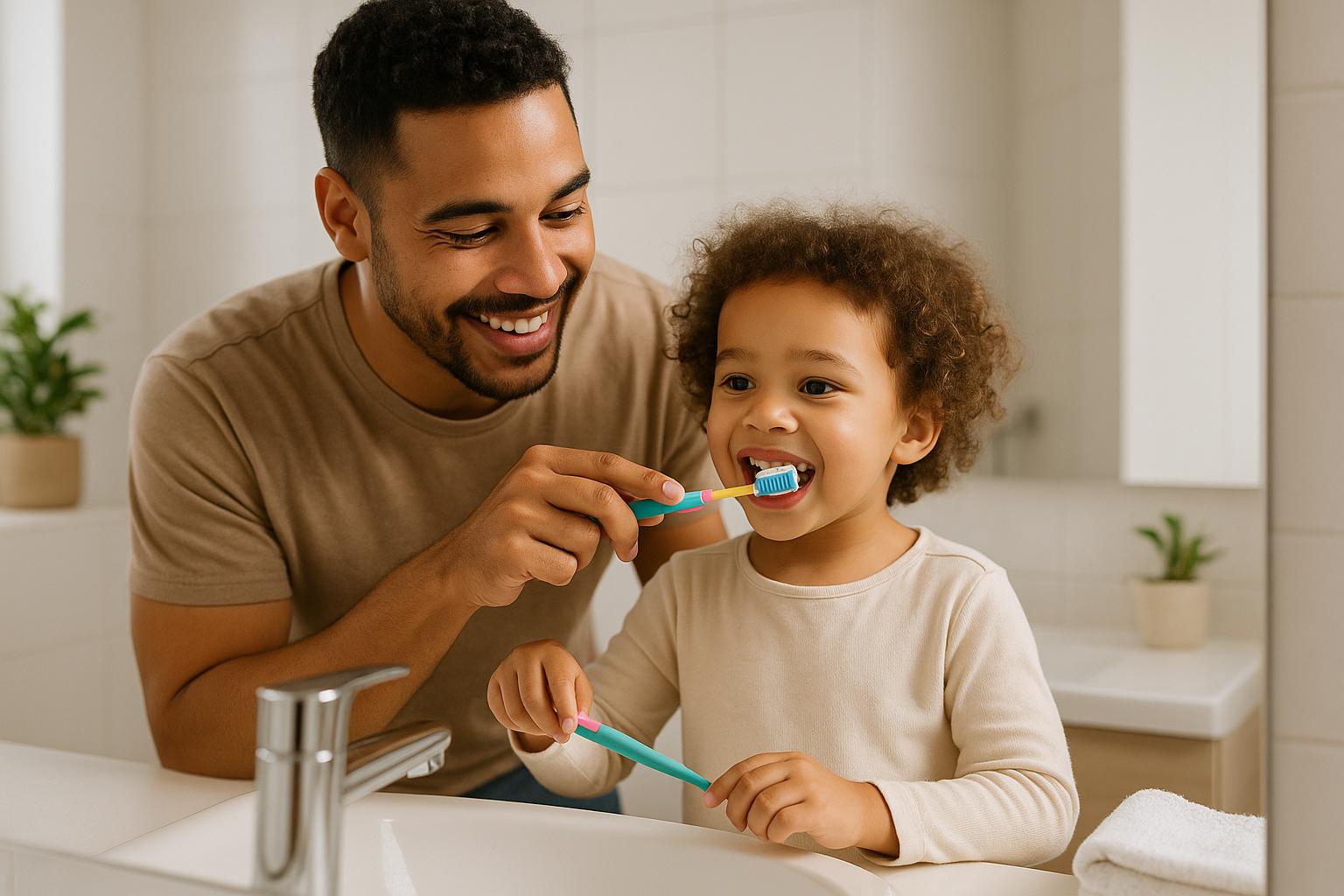
Getting kids to brush their teeth correctly is essential for their oral health and overall well-being. Tooth decay affects over 40% of Australian children aged 5–10, yet it’s largely preventable with the right habits. Start brushing as soon as their first tooth appears and focus on making it a fun, consistent part of their day. Here’s a quick guide to help:
- Choose the right tools: Use a small, soft-bristled toothbrush and low-fluoride toothpaste. For kids under 3, use a smear of toothpaste; for older children, a pea-sized amount works best.
- Teach proper technique: Hold the toothbrush at a 45-degree angle, use small circular motions, and brush all surfaces for two minutes. Don’t forget the tongue!
- Make brushing fun: Use timers, apps, games, or rewards to keep kids engaged. Let them pick their toothbrush and toothpaste for added excitement.
- Floss early: Start flossing as soon as teeth touch, and assist until they’re able to do it independently.
- Regular check-ups: Visit the dentist every 6–12 months to reinforce habits and address concerns.
How to Brush Your Teeth Properly – For Kids
Picking the Right Tools for Kids
Choosing the right tools for brushing can turn toothpaste time into an enjoyable and consistent part of your child’s daily routine.
Finding a Toothbrush Designed for Children
A toothbrush designed specifically for kids is key. Look for one with a small head, soft bristles, and an ergonomic handle. The small head helps reach every corner of the mouth, including those tricky back molars, while soft bristles protect delicate gums and developing enamel. For toddlers, a toothbrush with a larger handle and playful designs featuring their favourite characters can make brushing feel like less of a chore and more of a game.
Electric toothbrushes made for children are becoming a go-to choice for many Australian families. A 2023 study by Modern Mint Dental Care found that kids using electric toothbrushes were more likely to brush for the full two minutes compared to those using manual brushes [8]. These brushes, priced between $20 and $50 AUD, often come with built-in timers and interactive designs to keep kids engaged [1].
| Toothbrush Type | Price Range (AUD) | Key Benefits |
|---|---|---|
| Manual Toothbrush | $2 – $10 | Affordable, easy to use, variety of designs |
| Electric Toothbrush | $20 – $50 | Built-in timer, better cleaning, engaging for kids |
Once you’ve got the right toothbrush, it’s time to pair it with the right toothpaste.
Picking the Right Toothpaste
In Australia, low-fluoride toothpaste is recommended for children. It provides cavity protection while reducing the risk of dental fluorosis, a condition caused by too much fluoride during tooth development [3][4][6]. Always check toothpaste packaging for age recommendations and ensure it meets Australian standards.
The amount of toothpaste matters just as much as the type. For kids under three, use a smear – about the size of a grain of rice – of low-fluoride toothpaste. Once they turn three, increase it to a pea-sized amount [2][4][6]. If your child is hesitant about using toothpaste, start brushing without it and gradually introduce a small amount in a flavour they like. Flavours like strawberry or bubblegum are often more appealing to kids than the usual mint options [3][7].
With the right toothbrush and toothpaste in hand, you can make brushing even more effective – and fun – by using timers or apps.
Using Timers or Apps for Brushing
Timers and brushing apps can make the recommended two-minute brushing time fly by. These tools provide visual or audio cues to guide kids through each section of their mouth, turning a routine task into an engaging activity [5][7].
The Brush DJ app, for example, plays two minutes of music from your device, while the Disney Magic Timer app features beloved characters to motivate kids to brush longer [5][7]. Both apps are easy to find and widely used.
Physical timers, like a sand timer or playing a favourite two-minute song, can also do the trick. Many electric toothbrushes for kids include built-in timers that signal when it’s time to move to a different section of the mouth. These tools not only ensure thorough cleaning but also make brushing more enjoyable.
Interestingly, a 2022 survey by Raising Children Network found that 78% of parents saw better brushing compliance when their kids chose their own toothbrush and toothpaste [6]. Giving children a sense of control – whether it’s picking a toothbrush, toothpaste, or brushing app – can significantly boost their enthusiasm for the task.
For tailored advice on toothbrushes, toothpaste, and brushing techniques suited to your child’s needs, consider consulting a dental professional. Clinics like Complete Smiles Bella Vista can offer expert guidance to help maintain your child’s oral health.
Step-by-Step Guide to Correct Brushing Methods
Teaching kids how to brush properly is all about using the right tools and clear, easy-to-follow steps.
How to Position the Toothbrush
Show children how to hold their toothbrush at a 45-degree angle to the gum line[2][4]. This angle ensures the bristles clean both the teeth and the gum line effectively.
For younger kids, you can guide their hand to demonstrate the angle. Most children develop the motor skills needed to manage this on their own by around age 8[3]. To make it fun and memorable, tell them to imagine they’re gently "tickling" their gums with the bristles. Once they’ve got the positioning down, focus on teaching the proper brushing motions.
Learning Proper Brushing Motions
With the toothbrush in the correct position, encourage using small circular motions on the inner and outer tooth surfaces. For the chewing surfaces, a back-and-forth motion works best. Divide the mouth into four sections (upper left, upper right, lower left, lower right) and spend 30 seconds brushing each one[2][6].
Research shows that brushing for the full two minutes significantly reduces plaque and cavities compared to shorter brushing sessions[9]. A timer or a fun song can help kids stick to the recommended time.
Cleaning the Tongue and Gums
The tongue often harbours bacteria that can lead to bad breath and other oral health issues[2]. Teach kids to gently brush their tongue using circular motions, moving from the back to the front.
When it comes to the gums, show them how to use soft, gentle strokes along the gum line where the teeth meet the gums[3]. Remind them not to brush too hard, as this can irritate the gums.
Flossing for Complete Oral Hygiene
Flossing becomes important as soon as a child’s teeth start touching, which usually happens as their primary teeth come in[3]. Flossing helps remove plaque and food particles from between teeth – areas a toothbrush can’t reach[3].
At first, you’ll need to assist with flossing. Use about 45 centimetres of floss, wrapping most of it around your middle fingers, leaving about 2.5 centimetres to work with. Gently slide the floss between the teeth using a back-and-forth motion, curving it around each tooth and moving it up and down along the surface.
As kids grow and their coordination improves, they can begin flossing on their own with your supervision. Floss picks or child-friendly water flossers can make the process easier and more enjoyable.
Helping your child master these techniques now sets them up for a lifetime of good oral hygiene habits.
sbb-itb-2be92ed
Making Brushing Fun for Kids
Turning daily brushing into an enjoyable routine can help kids develop lifelong oral care habits. When brushing feels like a positive experience, children are more likely to stick with it. Here’s how you can make brushing feel less like a chore and more like an exciting part of the day.
Brushing Together as a Family
Brushing as a family is not just practical – it’s a chance to bond. Setting aside time for everyone to brush together helps model good habits. Kids naturally imitate their parents, so seeing mum and dad brushing with enthusiasm can encourage them to do the same.
Make it interactive by brushing together in front of the mirror. You could even turn it into a light-hearted competition – who can brush the best or remember to clean their tongue? This shared activity makes brushing feel like a group effort rather than a task they’re being forced to do alone.
Adding Games and Rewards
Incorporating games and small rewards can make brushing more exciting. A reward chart works wonders – give your child a sticker for every morning and evening brushing session. Once they’ve filled the chart for a week, let them choose a special activity for the weekend.
Games are another fantastic way to make the two-minute brushing time fly by. Try the "tooth fairy inspection game" where you pretend to be the tooth fairy checking how clean their teeth are, or the "zoo animal brushing game" where different sections of their mouth represent animals that need cleaning.
Small rewards, like Australian coins, can also be motivating. For example, you could offer a 20-cent piece for a full week of consistent brushing. The aim is to celebrate the habit without creating big expectations.
Letting Kids Choose Their Tools
Giving kids the power to choose their brushing tools can make a huge difference. Let them pick out their own toothbrush – whether it features their favourite character, comes in a fun colour, or has playful designs. This sense of ownership makes them more excited to use it.
The same goes for toothpaste flavours. Many kids prefer fruity options like bubblegum or strawberry over the standard mint. As long as the toothpaste has the right fluoride level for their age, letting them choose their favourite flavour can make brushing more enjoyable.
You can even let them pick out a special brushing cup or a towel just for brushing time. If they’re interested, consider an electric toothbrush with fun features like music or timers to keep them engaged. When kids feel like they’re in charge of their tools, they’re more likely to embrace the habit with enthusiasm.
Solving Common Brushing Problems
Even when brushing becomes enjoyable, challenges can still crop up. Here’s how to tackle them effectively.
Handling Resistance to Brushing
If your child resists brushing, it might stem from reasons like disliking the toothpaste flavour, sensory sensitivities, boredom, or wanting more independence [3]. A great way to address this is by using the "your turn, my turn" method: let your child take the first go to encourage independence, then follow up to ensure a thorough clean. For toothpaste suggestions, check the earlier section. If sensory sensitivities are an issue, experiment with different toothbrush styles to find one that feels more comfortable. Keep an eye out for signs like red gums, plaque build-up, or persistent bad breath [2]. If these appear, offer gentle guidance without criticism to help them improve their technique. Tackling these small hurdles can go a long way in building healthy brushing habits.
If the resistance continues, it might be time to explore using an electric toothbrush.
Starting with Electric Toothbrushes
Electric toothbrushes can be a game-changer if brushing remains a struggle. These are best introduced once your child is familiar with manual brushing, usually around age 3 or older [3]. Show them how it works and supervise their first few uses to ensure they apply light pressure along the gum line. Electric brushes are particularly useful for kids with limited motor skills or sensory sensitivities, as they make the cleaning process easier. That said, some children might initially find the vibrations uncomfortable. To ease them into it, introduce the electric toothbrush gradually.
| Manual Toothbrush | Electric Toothbrush |
|---|---|
| Requires more hand coordination | Easier for kids with limited motor skills |
| Lower upfront cost | Higher cost but may clean more effectively |
| Ideal to start with | Introduce after mastering manual brushing |
| Child controls the motion | Brush provides cleaning motion automatically |
Both options work well – it’s all about transitioning when your child is ready [3].
The Role of Dental Check-Ups
Regular dental visits are key to reinforcing good brushing habits and solving ongoing issues. The Australian Dental Association recommends check-ups every 6 to 12 months, or as advised by your dentist [3]. During these visits, dentists assess oral hygiene, demonstrate proper brushing and flossing techniques, and offer advice tailored to your child’s needs. Dentists can also motivate kids by praising their efforts and teaching them fun ways to improve their routine. Clinics like Complete Smiles Bella Vista specialise in personalising oral health education for children, helping parents with practical advice and demonstrations. These check-ups are especially helpful when dealing with persistent resistance or technique issues, as dentists can recommend specific products or new strategies to improve your child’s oral care routine.
Conclusion: Building Lifelong Healthy Habits
Teaching children the right way to brush their teeth is just the starting point – the ultimate aim is to help them establish habits that safeguard their oral health for years to come. Parents and caregivers play a vital role in this journey, acting as both instructors and role models who show that oral hygiene is a non-negotiable part of everyday life.
Creating lifelong healthy habits revolves around three key elements: consistency, education, and professional guidance. Consistency means brushing twice a day for two minutes, using the correct technique to clean all tooth surfaces. This should start as soon as the first tooth appears, with parents supervising until at least the age of 7. These small, repeated actions lay the groundwork for strong oral hygiene routines.
Education is equally important. When children understand why they need to brush – not just how – it becomes more than just a daily task; it becomes a meaningful habit. Regular dental check-ups also play a crucial role here, reinforcing proper techniques and encouraging cooperation. Together, these practices help children stay committed to their oral health as they grow.
Of course, building these habits takes time and patience. For families needing extra support, paediatric dental services and personalised advice from clinics like Complete Smiles Bella Vista (https://completesmilesbv.com.au) can make all the difference, offering tailored solutions to overcome any challenges.
Each brushing session is more than just a moment in the day – it’s an investment in a lifetime of healthy smiles.
FAQs
When is the right time to introduce an electric toothbrush for my child, and how can I make the transition easy?
You can start using an electric toothbrush for your child when they’re around 3 years old, provided they can use it safely under your supervision. Many electric toothbrushes are specifically designed for kids, featuring smaller brush heads and softer bristles that are gentle on their growing teeth and gums.
To help your child adjust, begin by letting them hold and explore the toothbrush while it’s switched off. This gives them a chance to get familiar with its shape and texture. Once they seem comfortable, show them how it works and guide them as they practise brushing. Opting for a toothbrush with fun elements – like bright colours, playful designs, or built-in timers – can make the experience more enjoyable and keep them engaged. Always keep an eye on them while they brush to ensure they’re cleaning properly and staying safe.
How can I make tooth brushing more enjoyable for my kids?
Getting kids to enjoy brushing their teeth can go a long way in helping them build healthy habits. One idea is to play a fun, two-minute song while they brush – this not only makes the process more enjoyable but also ensures they brush for the right amount of time. Let them pick out a toothbrush and toothpaste featuring their favourite colours or beloved characters; a personal touch can make all the difference.
Brushing together as a family is another great approach. It turns the routine into a bonding activity and shows them that you’re leading by example. To keep them motivated, try introducing a simple reward system, like a sticker chart, to celebrate their effort and consistency. Small incentives can make a big impact!
How can I help my child overcome resistance to brushing and build a healthy oral hygiene routine?
Encouraging your child to brush their teeth regularly can be tricky, but with a little creativity and patience, you can turn it into a positive routine. Start by making the process enjoyable – choose a bright, playful toothbrush, a toothpaste with a flavour they love, or even play their favourite song to act as a timer while they brush.
Leading by example is another great approach. Brushing your teeth alongside your child not only shows them how it’s done but also makes it feel like a shared activity. Kids often mimic what they see, so your enthusiasm can be contagious.
Help them understand why brushing is important by explaining it in simple terms. For example, you could talk about getting rid of "sugar bugs" or keeping their smile shiny and bright. To keep them motivated, consider using small rewards like stickers or a star chart to celebrate their consistency.
If your child continues to resist, it might be helpful to consult a dentist. They can offer professional advice and strategies tailored to your child’s specific needs.
Related Blog Posts
- Toothbrushing Tips for Kids by Age
- How Often Kids Need Dental Check-Ups
- Checklist for Baby Teeth Care: Ages 0-5
- Ultimate Guide to Toothbrushing Mistakes
Important Notice: Any surgical or invasive procedure carries risks. Before proceeding, you should seek a second opinion from an appropriately qualified health practitioner.
Individual results may vary. The information provided in this article is for educational purposes only and does not constitute medical advice.
Checkout Related Blogs




Get in touch with us
For more information, call us now to start feeling better. Or fill the form below to make appointment
The Latest News from Complete Smiles
How to Clean Clear Plastic Retainers
Checklist for Choosing Wearable Dental Devices
Checklist for Choosing Cloud AI Platforms in Dentistry

Complete Smiles Bella VistaAccepts All Major Health Funds, Including





