





Chemical Vapor Deposition for Dental Implants
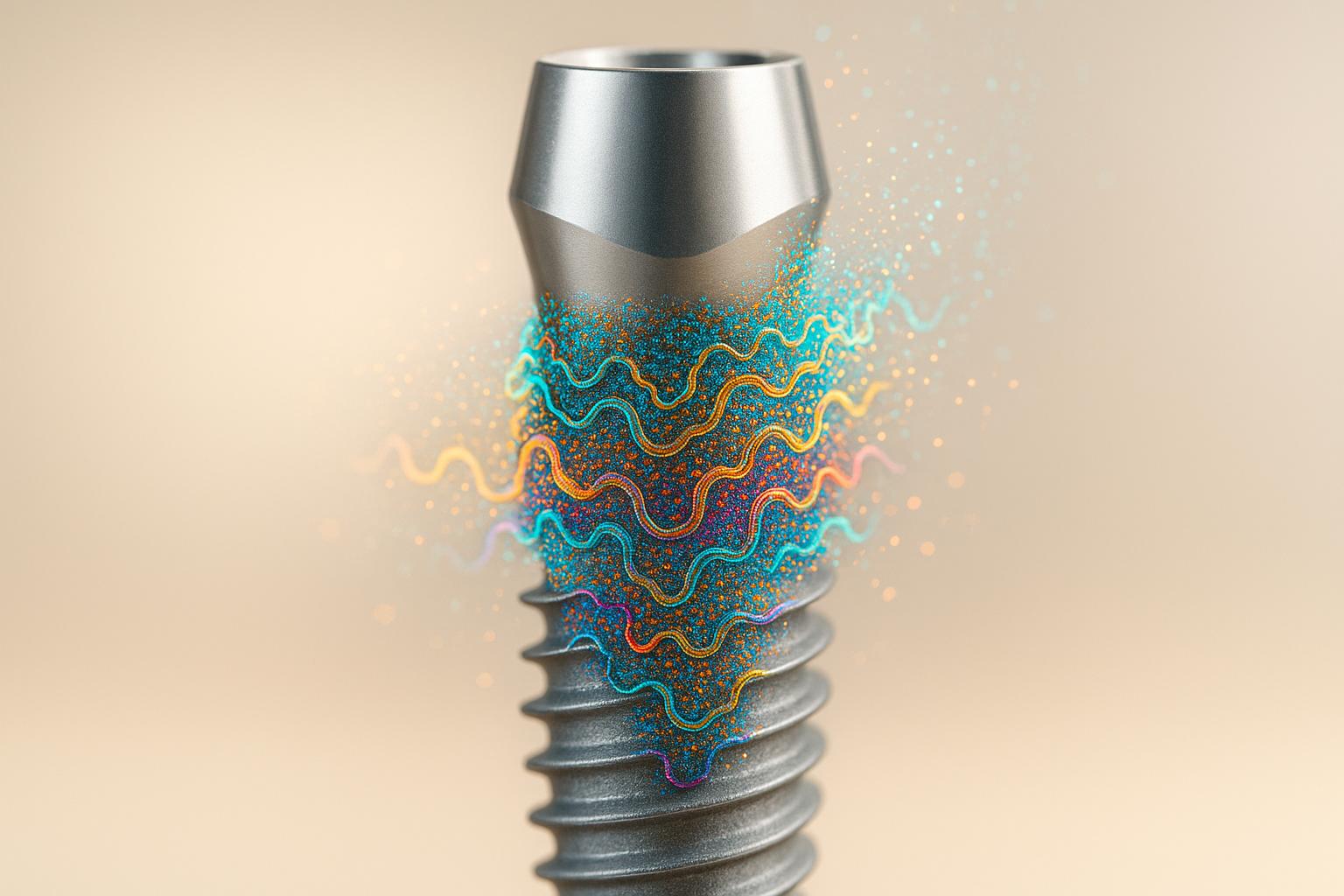
Chemical Vapor Deposition (CVD) is a precise method for coating dental implants, improving their surface properties and performance. It enhances osseointegration (bone bonding), durability, and bacterial resistance, making implants more effective and long-lasting. Compared to other methods like Plasma Spraying and Physical Vapor Deposition (PVD), CVD provides uniform coatings even on complex implant shapes, such as threads and internal geometries.
Key Points:
- Why CVD? Ensures even coating, reduces bacterial adhesion, and improves bone integration.
- How it Works: Uses high temperatures (900–1,200°C) to deposit pure coatings from gaseous precursors.
- Coating Types: Includes diamond-like carbon (DLC), calcium phosphate, and metal-ceramic coatings for durability and biological compatibility.
- Limitations: High costs, long processing times, and potential effects on implant materials due to high heat.
Quick Comparison:
| Method | Temperature | Coating Uniformity | Cost | Key Benefit | Drawback |
|---|---|---|---|---|---|
| CVD | 900–1,200°C | Excellent | Very High | Works on complex geometries | High heat may affect materials |
| PVD | Up to 450°C | Good | High | Strong adhesion, antibacterial | Limited to line-of-sight surfaces |
| Plasma Spray | Very high | Variable | Moderate | Cost-effective, FDA-approved | Coating inconsistencies over time |
CVD is advancing dental implant technology in Australia, with clinics combining it with 3D imaging and computer-guided surgery for better outcomes. However, its adoption depends on balancing cost and clinical needs.
What is Physical Vapor Deposition (PVD)?
How Chemical Vapor Deposition Works
Chemical Vapor Deposition (CVD) is a technique that transforms gaseous chemicals into pure, uniform solid coatings – ideal for improving the surfaces of dental implants.
The process relies on high temperatures to trigger chemical reactions and thermal decomposition. Gaseous precursor chemicals are introduced into a heated reaction chamber, where they break down and form new compounds. These compounds then deposit evenly onto the implant surface, creating coatings with exceptional purity and consistency, even on complex implant geometries.
The CVD Process Step by Step
CVD for dental implants follows a carefully controlled sequence to ensure high-quality, uniform coatings.
The process begins with preparation and cleaning, which are critical for success. Implants are meticulously cleaned to remove any contaminants. Once cleaned, they are placed into the CVD reactor chamber, which is sealed and evacuated to create a controlled environment.
Next comes gas introduction and heating. Once the chamber reaches the required vacuum level, precursor gases are introduced at precise flow rates. The chamber is then heated to temperatures between 900°C and 1,200°C, with uniform heat distribution to ensure consistent coating across all surfaces.
During chemical decomposition and deposition, the high temperatures cause the precursor gases to decompose into reactive species. These reactive particles migrate to the implant surfaces, where they undergo chemical reactions to form the desired coatings. The deposition continues until the coating reaches the desired thickness, after which the process transitions to the final stage.
Cooling and finishing round out the process. The chamber is gradually cooled under controlled conditions to prevent thermal shock or defects in the coating. The implants are then removed and undergo quality inspections to verify coating thickness, uniformity, and adhesion.
Implant Materials Compatible with CVD
CVD works particularly well with titanium and titanium alloys, which are the most common materials for dental implants. Grade 2 commercially pure titanium and Ti-6Al-4V alloy are widely used due to their compatibility with the process.
Although the high temperatures involved in CVD can alter the microstructure of titanium, careful control of processing parameters ensures the mechanical properties of the implants remain intact. In some cases, the heat treatment can even enhance the surface hardness of titanium implants by promoting controlled oxidation.
Zirconia implants, being ceramic, pose unique challenges for CVD due to their different thermal expansion properties. Specialised CVD processes operating at lower temperatures (600°C to 800°C) have been developed to address these challenges. However, zirconia applications are less common in clinical settings.
The surface texture of the implant material also plays a role in CVD’s effectiveness. Rough or textured surfaces, often used to encourage osseointegration, are particularly suited to CVD. The process preserves the original texture while adding the benefits of the coating. Additionally, matching the thermal expansion properties of the substrate and coating is crucial for long-term durability. Gradient coatings, which transition gradually from the substrate to the final coating, can help reduce thermal stress and improve adhesion.
CVD for Complex Implant Shapes
One of CVD’s standout features is its ability to produce uniform coatings on intricate implant designs. Unlike directional methods like Physical Vapor Deposition (PVD), CVD gases can flow into narrow spaces, internal threads, and textured surfaces, ensuring even coverage throughout.
For dental implants, thread coating uniformity is a major advantage. The gaseous precursors can reach the root and flank surfaces of implant threads, ensuring consistent coating even in hard-to-reach areas. This uniformity supports a consistent biological response across the entire implant surface.
CVD also excels at coating porous and textured surfaces. Many modern implants feature roughened surfaces to promote better bone integration. CVD can coat these complex textures without compromising their beneficial properties.
When it comes to internal geometries, such as hollow implants or intricate abutment connections, CVD proves highly effective. By fine-tuning parameters like gas flow and residence time, uniform coatings can be achieved even in enclosed or hard-to-access spaces.
For multi-component implant systems, CVD offers the advantage of coating multiple parts – such as implant bodies, abutments, and screws – in a single process. This ensures consistent coatings across all components, enhancing compatibility and performance.
Lastly, CVD’s flexibility allows for customised coating solutions tailored to specific implant designs. Adjustments to gas flow, temperature, and processing time can accommodate even the most complex geometries, making CVD a valuable tool in the evolution of dental implant technology.
Types of CVD Coatings for Dental Implants
Chemical Vapour Deposition (CVD) technology allows for the application of specialised coatings to dental implants, each tailored to address specific clinical needs. These coatings enhance implant performance by reducing wear, minimising bacterial colonisation, and promoting quicker bone integration.
Diamond-Like Carbon Coatings
Diamond-like carbon (DLC) coatings are known for their exceptional hardness, wear resistance, and smooth, chemically inert surfaces. These properties help reduce bacterial adhesion and biofilm formation, which are critical in lowering infection rates and the risk of peri-implantitis[1][2].
Research shows that CVD-applied diamond nanoparticles on titanium surfaces significantly increase hardness and adhesion compared to uncoated surfaces[1]. Additionally, DLC coatings produce less wear debris during regular use, which helps maintain healthy tissue around the implant. Their low friction properties also ensure smoother interactions with surrounding tissues and prosthetic components[1][3].
Calcium Phosphate and Bio-Ceramic Coatings
Some CVD coatings are designed to enhance biological integration. Calcium phosphate (CaP) and bio-ceramic coatings focus on promoting bone growth and improving osseointegration – the process where bone tissue bonds directly to the implant’s surface[1][2].
Compared to traditional plasma spraying, CVD-deposited calcium phosphate coatings offer better control over thickness and uniformity. This precision allows for optimised dissolution rates, enabling the coating to deliver biological benefits within a specific timeframe, thereby supporting osseointegration[1].
Bio-ceramic nanostructured coatings have shown encouraging results in animal studies. For instance, CaP-O bio-ceramic coatings applied via CVD have been found to increase the percentage of bone-implant contact and accelerate early bone healing[2]. These advancements contribute to a more stable integration of the implant.
A particularly interesting development involves graphene coatings produced through CVD. These coatings have been shown to stimulate dental pulp stem cells to deposit mineralised matrix without the need for additional chemical inducers[1]. This breakthrough suggests potential for enhanced regenerative outcomes and more natural bone formation around implants.
Metal-Ceramic and Nanocomposite Coatings
Metal-ceramic and nanocomposite coatings combine the mechanical strength of metals with the biocompatibility of ceramics, offering a dual advantage for durability and biological performance. These hybrid coatings address the demand for both toughness and enhanced tissue integration in a single solution[1].
Unlike single-material coatings that may excel in one area but fall short in another, metal-ceramic combinations bring together the strengths of both materials. With CVD, these coatings can be engineered with nanostructured surfaces that boost both mechanical and biological properties. Such tailored surfaces encourage cellular responses while maintaining structural integrity[1].
| Coating Type | Primary Benefits | Clinical Impact |
|---|---|---|
| Diamond-Like Carbon (DLC) | High hardness, antibacterial properties | Reduced wear and lower infection risk |
| Calcium Phosphate/Bio-Ceramic | Enhanced osseointegration, controlled dissolution | Faster healing and improved bone bonding |
| Metal-Ceramic/Nanocomposite | Combined strength and biocompatibility | Durable surfaces supporting tissue integration |
The shift toward multi-layered and composite coatings highlights the dental industry’s move away from traditional plasma-sprayed coatings. These advanced surface modifications offer better uniformity and durability, which are essential for the complex shapes of modern implants.
Nanocomposite coatings, in particular, can be customised to address specific clinical needs – whether it’s rapid osseointegration, long-term wear resistance, or enhanced antibacterial properties. This adaptability makes them especially valuable for challenging cases or patients with unique risk factors.
sbb-itb-2be92ed
Benefits and Drawbacks of CVD for Dental Implants
Chemical Vapour Deposition (CVD) technology plays a crucial role in the production of dental implants, offering a mix of advantages and challenges. These factors are essential to consider when selecting implant coatings that adhere to Australia’s dental standards.
Advantages of CVD Technology
One of CVD’s standout features is its precision and uniformity. The technology ensures consistent coatings, which are vital for promoting faster osseointegration and reducing the risk of coating failure, even on implants with intricate shapes. This reliability is particularly important for ensuring long-term success.
Another key benefit lies in its antibacterial properties, especially when using diamond-like carbon coatings. These surfaces are highly effective at minimising bacterial colonisation, which lowers the risk of peri-implantitis – a common cause of implant failure. The smooth, inert surfaces created by CVD make it challenging for bacteria to form biofilms.
CVD also supports multi-functional coatings, allowing a single layer to address multiple clinical needs. For instance, a CVD coating can enhance wear resistance, provide antibacterial protection, and improve bone integration simultaneously, reducing the need for additional treatments or layers.
The durability of CVD coatings is another strong point. Thanks to the robust chemical bonds formed during the process, these coatings resist wear and delamination, even under the stresses of daily chewing.
While these benefits are impressive, it’s important to weigh them against some of the challenges associated with the technology.
Limitations of CVD Application
One major challenge is the high processing temperatures required, which can alter the metallurgical properties of titanium implants. This may impact their mechanical strength and fatigue resistance, raising concerns in certain applications.
Another limitation is the cost of equipment. Implementing CVD technology requires a significant investment in specialised systems, such as vacuum chambers and advanced gas-handling setups. This often restricts its use to high-volume manufacturing facilities.
CVD processes can also be time-consuming, with coating times ranging from two to eight hours depending on the material and thickness. This extended processing time can slow down production and increase costs.
In some cases, limited control over coating thickness can pose a challenge, particularly when extremely thin coatings (less than 100 nanometres) are required. Achieving this level of precision can be difficult with certain materials.
Lastly, the use of toxic or flammable gases in many CVD processes adds an extra layer of complexity. Specialised ventilation systems and strict safety protocols are necessary, further driving up operational costs.
To better understand how CVD compares to other coating technologies, the following table highlights key differences.
CVD vs Other Coating Technologies Comparison
| Technology | Coating Uniformity | Temperature Requirements | Equipment Cost | Processing Time | Clinical Performance |
|---|---|---|---|---|---|
| CVD | Excellent | High (400-1,000°C) | Very High | 2-8 hours | Superior osseointegration |
| PVD | Good | Moderate (150-500°C) | High | 1-4 hours | Good wear resistance |
| Plasma Spraying | Variable | Low (ambient) | Moderate | 30-60 minutes | Adequate but inconsistent |
PVD offers a faster process at lower temperatures but lacks the uniformity CVD provides, especially on complex surfaces. Additionally, PVD coatings are thinner and may not deliver the same biological benefits as CVD bio-ceramic coatings.
Plasma spraying, on the other hand, is cost-effective and quick. However, its quality is inconsistent, with issues like porosity and weak adhesion zones that can lead to coating failure over time.
The choice between these technologies often comes down to a cost-benefit analysis. For premium dental implants where performance is a top priority, CVD coatings are worth the higher costs. However, for more standard applications, simpler methods like plasma spraying may offer better value.
Long-term clinical studies continue to highlight the advantages of CVD-coated implants, particularly in cases involving compromised bone quality or high aesthetic demands. These factors make CVD coatings a valuable option in advanced dental practices.
Ultimately, selecting the right coating technology depends on balancing clinical needs, cost considerations, and manufacturing capabilities. While CVD represents a high-end solution, its benefits justify the investment in scenarios where superior performance is required.
Clinical Use and Australian Applications
Chemical Vapour Deposition (CVD) technology is making its way into Australian dental clinics as practitioners adopt protocols backed by research and ensure compliance with regulatory standards. This growing interest has sparked focused studies on the clinical performance of implants with CVD coatings.
Clinical Evidence for CVD-Coated Implants
Studies on dental implants featuring CVD coatings reveal encouraging outcomes, particularly in cell adhesion and bone formation. These coatings also show potential in reducing bacterial build-up. That said, more comprehensive clinical trials are needed to verify these advantages in everyday dental practice.
Meeting Australian Dental Standards
In Australia, the Therapeutic Goods Administration (TGA) oversees the evaluation and approval of dental implants, including those with advanced coatings like CVD. These implants undergo rigorous testing for biocompatibility, such as cytotoxicity and sensitisation assessments.
Dental professionals must follow guidelines set by the Australian Health Practitioner Regulation Agency (AHPRA) when selecting and placing these cutting-edge implants. Additionally, organisations like the Australian Dental Association provide protocols to ensure safe and effective use of innovative implant technologies. This robust regulatory framework supports the adoption of CVD technology in modern dental care across the country.
Advanced Dental Practices in Australia
Many dental clinics in Australia, such as Complete Smiles Bella Vista, are now combining CVD-coated implants with 3D imaging and computer-guided surgery. This integration enhances the precision and success of implant placement. The use of CVD technology within clinical workflows highlights the Australian dental sector’s commitment to blending advanced surface treatments with proven surgical techniques.
Summary and Key Points
Chemical Vapour Deposition (CVD) is gaining attention in dental implant technology as a method that could address multiple challenges associated with implant performance and patient outcomes. This advanced coating technique modifies implant surfaces with precision, aiming to improve how implants integrate with bone.
Main Benefits of CVD for Dental Implants
CVD offers several advantages for dental implants:
- Improved osseointegration: The enhanced surface properties encourage better and more stable integration between the implant and bone.
- Durability for high-stress areas: CVD-coated surfaces exhibit excellent wear resistance, making them suitable for posterior regions that endure significant chewing forces.
- Reduced bacterial buildup: Diamond-like carbon coatings provide hard, smooth surfaces that minimise bacterial adhesion, potentially lowering the risk of peri-implantitis, a condition that can jeopardise implant longevity.
- Uniform coverage: Unlike traditional methods, CVD achieves consistent coatings even on complex implant geometries, such as threaded surfaces and internal connections.
These benefits highlight CVD’s potential to influence the next wave of advancements in dental implant technology.
Future Developments in Dental Materials
Building on the strengths of CVD, researchers are exploring ways to further refine implant coatings. For instance, multi-layered systems are being studied to combine different materials for tailored properties. An example includes a bioactive inner layer to promote bone growth, coupled with an antimicrobial outer layer to combat infection.
There’s also growing interest in personalised coatings, where CVD parameters could be customised based on a patient’s specific needs. This approach might lead to better outcomes for individuals with unique oral health conditions.
Another exciting area of development is the integration of CVD with digital dentistry. Future systems could enable real-time monitoring during the coating process, potentially improving coverage while reducing both processing time and costs. Additionally, researchers are investigating innovative materials like bioactive glass coatings, which release beneficial ions, and “smart” coatings that respond to changes in the oral environment. These advancements aim to enhance implant longevity and simplify post-operative care.
Australian dental practices stand to benefit significantly from these innovations. With oversight from the Therapeutic Goods Administration (TGA) and adherence to professional standards, CVD technologies will likely undergo rigorous evaluation before becoming part of clinical practice. This ensures that patients receive safe, effective, and cutting-edge treatments.
FAQs
How does Chemical Vapor Deposition (CVD) enhance the durability and performance of dental implants?
Chemical Vapor Deposition (CVD) plays a key role in boosting the durability and effectiveness of dental implants. By adding a high-purity, uniform coating to the implant surface, this technique improves how well the implant interacts with surrounding bone tissue. It also increases resistance to wear and corrosion, which are common challenges in dental applications.
Unlike many other coating methods, CVD provides a stronger and more stable surface. This added stability reduces the chances of the implant degrading over time, ensuring it performs well for longer. For patients, this means a dependable solution that not only enhances functionality but also extends the lifespan of their dental implants.
What are the risks associated with chemical vapour deposition (CVD) in dental implants, and how are they addressed?
While chemical vapour deposition (CVD) brings notable advantages to dental implants, it’s not without its challenges. One key issue is the high temperatures involved, which can restrict the types of materials suitable for implant surfaces. Another concern is the potential for toxic by-products, as well as inconsistencies in the coating quality due to variations in process parameters. These factors can also drive up costs, as the deposition process often takes longer.
To address these challenges, dental professionals and manufacturers take proactive steps. They fine-tune process conditions, enforce strict safety measures, and ensure proper handling and disposal of by-products. These efforts are essential to maintaining the safety, quality, and reliability of CVD-coated dental implants, ensuring they meet the rigorous standards required for patient care.
How does chemical vapour deposition (CVD) create a uniform coating on dental implants, and why is this beneficial?
The chemical vapour deposition (CVD) process creates a thin, high-purity coating on dental implants, ensuring it adheres evenly to every part of the implant, no matter how complex the surface. This includes both the inner and outer areas, providing consistent and thorough coverage.
Such precision is critical in dental applications because it enhances essential surface properties like osseointegration, biocompatibility, and resistance to bacterial growth. These enhancements play a key role in improving the long-term performance and durability of dental implants, leading to better results for patients.
Related Blog Posts
- Electrochemical Deposition for Titanium Implants
- Electrochemical Deposition for Implant Coatings
- How Hybrid Coatings Improve Osseointegration
- Surface Modifications for Better Osseointegration
Important Notice: Any surgical or invasive procedure carries risks. Before proceeding, you should seek a second opinion from an appropriately qualified health practitioner.
Individual results may vary. The information provided in this article is for educational purposes only and does not constitute medical advice.
Checkout Related Blogs




Get in touch with us
For more information, call us now to start feeling better. Or fill the form below to make appointment
The Latest News from Complete Smiles
How to Clean Clear Plastic Retainers
Checklist for Choosing Wearable Dental Devices
Checklist for Choosing Cloud AI Platforms in Dentistry

Complete Smiles Bella VistaAccepts All Major Health Funds, Including





