





What Is Digital Guided Implant Surgery?
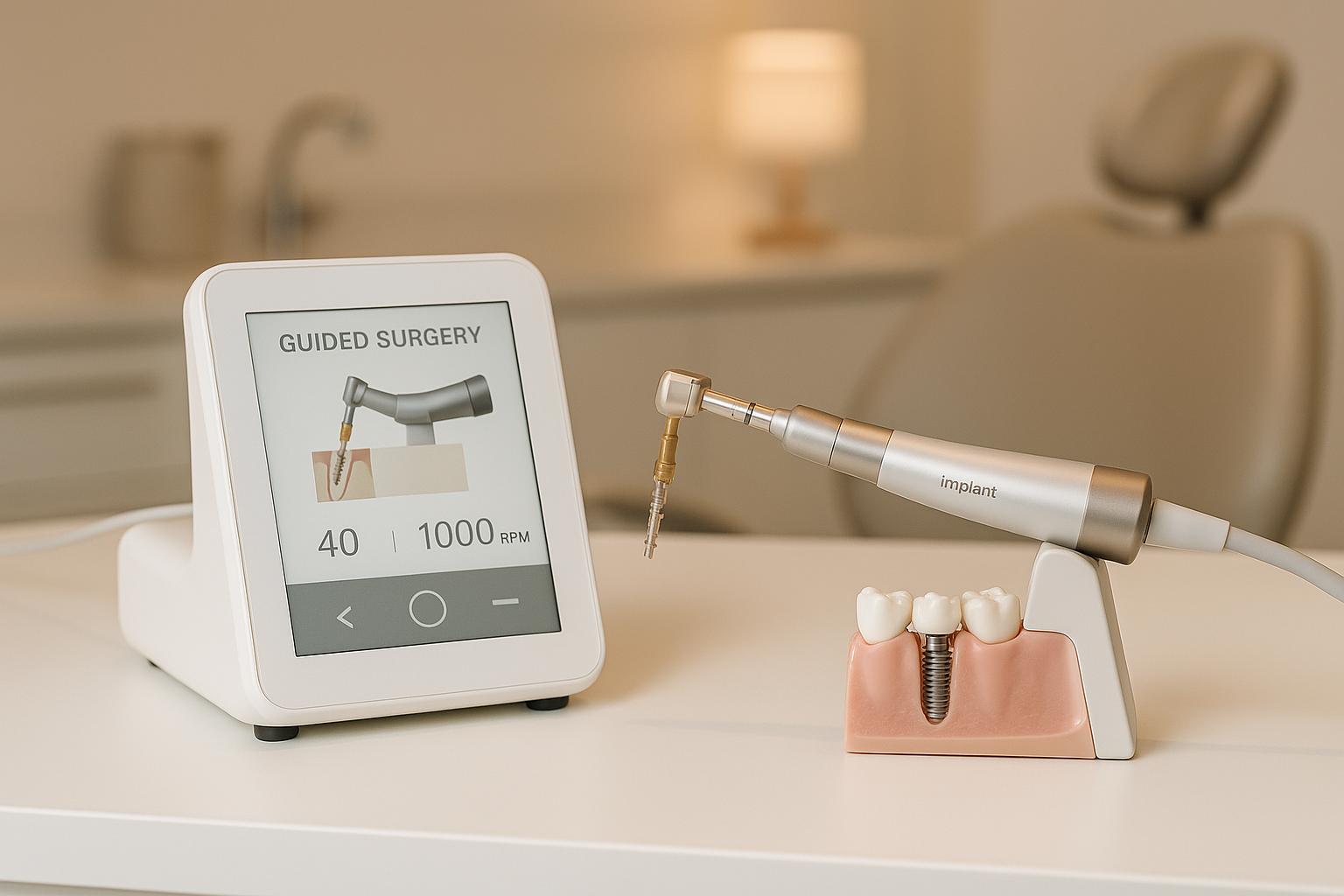
Digital guided implant surgery uses advanced 3D imaging, specialised software, and custom-made surgical guides to improve the accuracy of dental implant placement. By pre-planning every detail of the procedure, this method reduces risks, shortens surgery times, and enhances patient recovery.
Key Points:
- 3D Imaging: Cone Beam CT scans and intraoral scanners provide detailed views of jaw structures.
- Custom Surgical Guides: These guides ensure precise drilling for implant placement.
- Advantages: Shorter procedures, reduced tissue disruption, and better implant positioning.
- Limitations: Higher costs, limited access in rural areas, and suitability depends on patient anatomy.
This technique is becoming a standard option in Australian dental clinics, reflecting the push for safer, more precise, and patient-focused care. While not suitable for everyone, it’s a step forward in dental implant technology.
[Master Course – SURGERY] Understanding the digital guided implant surgery workflow
How Digital Guided Implant Surgery Works
Digital guided implant surgery transforms traditional methods into a precise, computer-assisted process. It unfolds in three key stages, each building on the last, starting with advanced imaging and ending with accurate implant placement.
3D Imaging and Treatment Planning
The process begins with cone beam computed tomography (CBCT) scans, which capture highly detailed 3D images of the jaw. Unlike standard two-dimensional X-rays, CBCT scans provide a complete view of bone density, nerve pathways, sinus cavities, and tooth roots.
Additionally, intraoral scanners map the exact shape of the teeth and gums, creating a digital model that complements the CBCT data. Together, these technologies offer a full picture of the patient’s oral structure.
Dentists then use specialised planning software to merge these digital files. This software allows them to assess the jaw from every angle, measure bone thickness, and identify critical anatomical features. It also highlights potential risks, helping to determine the ideal implant size and placement.
The planning phase incorporates the final restoration design, such as crowns, bridges, or dentures. By digitally placing these restorations on the planned implant sites, dentists ensure that the surgical positioning aligns with both functional and aesthetic goals. This reverse-engineering approach starts with the desired outcome and works back to define the best implant placement.
Creating the Surgical Guide
Once the treatment plan is finalised, the data is sent to a dental lab or facility equipped with computer-aided design and manufacturing (CAD/CAM) technology. Using these digital files, a custom surgical guide is crafted to match the patient’s unique anatomy.
Made from biocompatible plastic, the guide features precisely positioned holes that align with the planned implant sites. These holes are designed to guide the drilling angle, depth, and position exactly as outlined in the digital plan.
Depending on the clinical scenario, different types of guides are used:
- Tooth-supported guides: Rest on existing teeth, providing stability when natural teeth are present.
- Tissue-supported guides: Sit directly on the gums, ideal for areas with missing teeth.
- Bone-supported guides: Require a small incision and rest on the underlying bone for maximum accuracy.
The CAD/CAM process ensures the guide is manufactured with precision, including built-in safeguards like depth stops for safe and accurate drilling. Once the guide is ready, the process moves to the implant placement stage.
Placing the Implant
During surgery, the custom guide fits snugly in place, ensuring that instruments align perfectly with the planned implant sites. This precise fit eliminates much of the guesswork involved in traditional freehand techniques.
Using guided drilling methods, the dentist follows the guide’s openings to control the position, angle, and depth of each implant. This level of accuracy reduces the need for large incisions, often allowing for flapless surgery. With minimal tissue disruption, patients typically experience faster recovery times.
In some cases, this guided precision also allows for immediate loading – where a temporary crown or bridge is attached on the same day as the implant placement. However, this option depends on factors like bone quality and overall oral health.
Throughout the procedure, the surgical guide acts as a reliable reference point, ensuring every step aligns with the original treatment plan. This systematic approach not only shortens surgery times but also improves predictability, offering better outcomes compared to traditional methods.
Benefits of Digital Guided Implant Surgery
Digital guided implant surgery combines computer-assisted planning with precise execution, resulting in more consistent and reliable outcomes. By leveraging advanced technology, this method enhances accuracy and predictability in implant placement, ultimately improving treatment results.
Greater Accuracy and Predictable Results
Using computer-guided techniques significantly reduces the margin for error compared to manual, freehand methods. Digital planning before surgery maps out critical anatomical structures, ensuring implants and restorations are positioned in the most optimal way. During the procedure, the digital workflow allows for on-the-spot verification, enabling adjustments to align with the planned treatment. This level of precision not only improves technical accuracy but also contributes to better patient outcomes.
Patient Benefits
For patients, digital guided implant surgery offers a smoother experience. Minimally invasive techniques often mean shorter appointments and less trauma to surrounding tissues. This can lead to reduced post-operative discomfort and a quicker recovery. Additionally, pre-surgical planning provides patients with a clear understanding of the procedure, which can help ease anxiety and build confidence in the process.
Safety and Quality Standards
The structured nature of digital workflows enhances safety in dental procedures. By identifying potential challenges during the planning phase, the risk of complications – such as improper implant placement or damage to surrounding structures – is minimised. Furthermore, digital documentation improves communication and coordination among specialists, aligning with Australia’s quality assurance and regulatory standards. This systematic approach supports safer and more efficient dental practices.
sbb-itb-2be92ed
Limitations and Important Considerations
While digital guided implant surgery offers precise results and several advantages, it’s not without its challenges. A few key factors can influence its accessibility and suitability for patients.
Cost and Access to Technology
One of the biggest hurdles is the financial investment needed for this approach. The procedure relies on advanced tools like 3D imaging systems, specialised planning software, and 3D-printed guides – all of which come with hefty price tags. On top of that, ongoing licensing fees for the software can drive up the overall cost, often making the treatment more expensive than traditional implant methods.
For patients in rural or remote areas, accessing this technology can be even harder. These services are typically concentrated in metropolitan centres, meaning patients may need to travel long distances for treatment. This geographical disparity can limit options for those outside major cities.
Patient Suitability
Digital guided implant surgery isn’t the right fit for everyone. Successful outcomes depend heavily on careful patient selection during the planning phase. Patients need to meet certain criteria, such as having adequate bone volume, sufficient mouth opening, and reliable reference points for the procedure. For those with significant bone loss, additional preparatory procedures may be necessary. Similarly, patients on certain medications, like blood thinners, require customised plans developed in coordination with their doctors.
Training and Expertise
This technique isn’t something every dentist can adopt overnight. It demands a deeper level of expertise compared to traditional implant methods. With the technology constantly evolving, practitioners need to stay up-to-date through ongoing training to ensure they’re equipped to handle the complexities of the procedure and deliver the best outcomes for their patients.
Conclusion
Digital guided implant surgery has reshaped the way dental professionals approach implant placement, offering greater accuracy and consistency in outcomes. By combining advanced imaging, computer-aided planning, and precise manufacturing, this technology creates a controlled surgical process that benefits both dentists and their patients.
Key Takeaways
This approach leverages 3D imaging and computer-assisted planning to optimise implant positioning. The results? Shorter surgical times, less invasive procedures, and outcomes that are more predictable – all of which improve patient comfort and recovery. It also helps patients better understand the procedure through detailed digital treatment plans.
That said, its success hinges on selecting appropriate cases and ensuring practitioners are well-trained. Not every patient is a candidate for this method, and dentists need specialised skills to use the technology effectively. Additionally, the higher costs and limited availability in certain parts of Australia remain challenges that the industry is working to overcome.
The Future of Dental Implant Technology
While the current benefits are clear, the future holds even more exciting possibilities. Advances in artificial intelligence and 3D imaging are making treatment planning faster and more precise. Higher-resolution scans with reduced radiation exposure are improving both patient safety and practitioner efficiency.
On the manufacturing side, improvements in 3D printing are driving down the cost of producing surgical guides. As these technologies become more accessible, particularly in regional parts of Australia, more dental practices may adopt digital guided surgery, expanding its reach.
Another promising development is the integration of real-time navigation systems. These tools could provide live feedback during procedures, taking the precision of digital guidance to the next level. With time, such technologies may become as common in implant dentistry as digital radiography is in general practice, further transforming the field.
FAQs
What are the benefits of digital guided implant surgery compared to traditional methods?
Digital guided implant surgery stands out for its ability to improve recovery and enhance patient comfort compared to traditional methods. By leveraging precise digital planning and 3D imaging, this technique creates a customised surgical guide, enabling minimally invasive procedures. This means smaller incisions and less disturbance to surrounding tissues.
The benefits? Patients often recover within just 24 to 48 hours and typically report only mild discomfort lasting a day or two. On the other hand, traditional implant methods often require more extensive tissue manipulation, leading to longer healing times and increased post-operative discomfort. Thanks to its focus on precision and efficiency, digital guided implant surgery offers a smoother and more comfortable experience for patients.
Who is a good candidate for digital guided implant surgery?
Digital guided implant surgery works best for those who have enough jawbone volume and density, which can be assessed using advanced 3D imaging like CBCT scans. It’s also important that candidates maintain good oral health and don’t have severe anatomical issues or conditions – like a limited ability to open their mouth – that could compromise the precision of the procedure.
Other considerations include age, medical history, and unique anatomical details. These factors are thoroughly evaluated to ensure the procedure is safe and effective. A consultation with your dentist is the best way to find out if this cutting-edge approach is right for you.
Why does digital guided implant surgery cost more than traditional methods?
The increased cost of digital guided implant surgery stems from the cutting-edge technology and precision it delivers. By utilising tools like 3D imaging and computer-aided design, this technique allows for highly accurate implant placement, which helps lower the chances of complications and reduces the likelihood of needing follow-up procedures.
Additionally, this method is less invasive than traditional approaches, often resulting in quicker recovery times and more reliable outcomes. Although the initial price may be higher, the long-term advantages – such as enhanced appearance, lasting durability, and improved patient satisfaction – make it a worthwhile choice for maintaining your oral health.
Related Blog Posts
- Flapless Implant Surgery: Benefits and Process
- Advances in Gum Grafting Materials and Techniques
- Advances in Short Implant Techniques
- Principles of Digital Smile Design
Important Notice: Any surgical or invasive procedure carries risks. Before proceeding, you should seek a second opinion from an appropriately qualified health practitioner.
Individual results may vary. The information provided in this article is for educational purposes only and does not constitute medical advice.
Checkout Related Blogs




Get in touch with us
For more information, call us now to start feeling better. Or fill the form below to make appointment
The Latest News from Complete Smiles
How to Clean Clear Plastic Retainers
Checklist for Choosing Wearable Dental Devices
Checklist for Choosing Cloud AI Platforms in Dentistry

Complete Smiles Bella VistaAccepts All Major Health Funds, Including





