





Checklist: Evaluating Cost-Effectiveness of Dental Implants
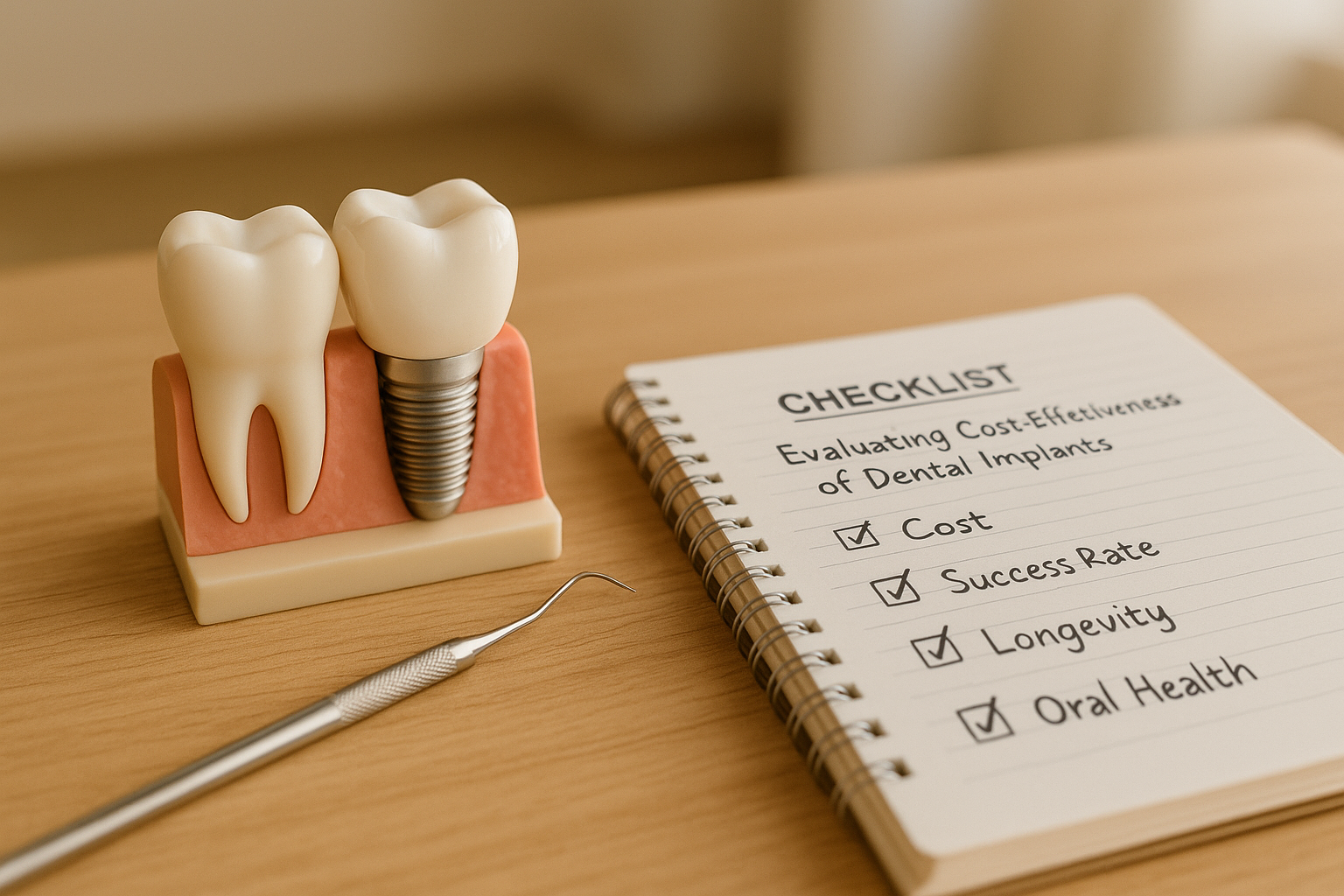
Dental implants can be expensive, but their long-term value depends on factors like durability, maintenance, and suitability for your needs. To determine cost-effectiveness, focus on these key areas:
- Material Choices: Titanium is reliable with extensive research, while zirconia and hybrid options offer aesthetic benefits but have higher upfront costs.
- Treatment Costs: Include consultation, surgery, anaesthesia, prosthetic components, and potential extras like bone grafting.
- Long-Term Expenses: Factor in maintenance, potential complications, and replacements over time.
- Funding Options: Explore private health insurance, Medicare, payment plans, or even superannuation for financial support.
- Personal Factors: Bone condition, gum health, lifestyle, and aesthetic priorities influence costs and outcomes.
In Australia, strict regulations by the TGA ensure quality implants, but costs vary by location and provider. Use a cost-effectiveness worksheet to compare options, including upfront and long-term expenses, clinical data, and personal priorities. This approach helps you make informed decisions tailored to your needs.
2023 UPDATE – How much do implants cost in Australia and does Insurance help? | Dr Helen Voronina
Define Your Treatment Goals and Options
Understanding your dental issue and the treatments available is crucial for evaluating cost-effectiveness. This step lays the groundwork for accurately comparing treatment expenses.
Identify Your Dental Requirements
Start by determining the scope of your dental needs. Are you looking to restore a single tooth, multiple teeth, or an entire arch? Your requirements will guide your choice between options like single implants, multiple implants or implant-supported bridges, and full-arch restorations. Be sure to factor in additional procedures, such as bone grafting, which may be necessary if bone density is insufficient and can add to the overall cost.
Review Treatment Options
Once you’ve assessed your needs, explore the treatment options available to you.
- Titanium Implants: These are a widely used and thoroughly researched choice for replacing teeth.
- Zirconia Implants: A metal-free alternative, ideal for those with sensitivities to metal.
- Hybrid Implants: These combine materials to balance aesthetics and functionality, though they often come with higher upfront costs that might pay off in the long run.
If implants aren’t the right fit, there are other options to consider:
- Conventional Removable Dentures: Known for being one of the most budget-friendly solutions for replacing missing teeth [1][2].
- Fixed Dental Bridges: These rely on neighbouring teeth for support and are suitable for replacing a small number of teeth without needing surgery.
- Removable Partial Dentures: Another alternative for those looking to replace a few missing teeth.
Set Key Comparison Measures
To make an informed decision, focus on measurable factors. Longevity is a critical one – implants generally last longer than conventional dentures. Maintenance is another consideration; implants require care similar to natural teeth, while removable dentures may need special cleaning and occasional adjustments.
Functionality is equally important. Implant-supported restorations often perform more like natural teeth, offering better comfort and efficiency for daily activities like eating. Comfort, ease of use, and improvements to quality of life should also weigh into your decision.
Take the time to document your priorities and the factors you care about most. These will serve as a guide for the detailed cost comparisons discussed later.
Compare Costs Accurately in Australia
Once you’ve defined your treatment goals and explored your options, it’s time to factor in the costs. In Australia, dental implant fees can vary significantly depending on the practice and location, so a careful comparison is essential.
Break Down All Costs
Request a detailed quote that outlines every expense involved. A thorough quote should cover:
- Initial consultation and any diagnostic imaging required for planning your treatment.
- Surgical fees, including additional procedures like bone grafting if needed.
- Anaesthesia charges, whether local or general.
- Prosthetic components, such as abutments, crowns, or temporary restorations used during healing.
- Laboratory fees, if custom-made restorations aren’t included in the prosthetic cost.
This breakdown helps you understand the full financial picture and plan accordingly.
Calculate Long-Term Expenses
Beyond the upfront costs, it’s important to consider long-term expenses:
- Budget for routine professional cleanings and any specialised implant maintenance.
- Keep in mind that implant-supported crowns may need replacement over time. Including the cost of future replacements in your financial plan is wise.
- Be prepared for potential costs related to complications. Although implant failures are rare, addressing issues like peri-implant tissue concerns can add to expenses.
- Think about procedures that might be needed later, such as gum grafting to maintain soft tissue health.
Check Funding and Payment Options
Managing dental implant costs also means exploring funding and payment methods. Here’s what to consider:
- Private health insurance: Coverage varies widely. Often, only part of the prosthetic costs is reimbursed, while surgical fees are usually excluded. Confirm the details with your insurer.
- Medicare benefits: Medicare typically offers limited coverage for dental implants, often restricted to cases involving specific medical conditions or trauma.
- Flexible payment plans: Many dental practices provide options like interest-free plans or discounts for upfront payments, which can help ease the financial burden.
- Accessing superannuation: In certain circumstances, you may be able to use superannuation funds on compassionate grounds to cover dental costs.
- Regional cost differences: Urban practices often charge more than regional providers. If you’re seeking treatment outside your local area, factor in travel and accommodation expenses.
Assess Clinical Evidence and Durability
When evaluating dental implant materials, it’s not just about cost. Understanding their clinical performance and long-term durability is equally important. While some materials show promise with durability, the overall body of evidence still has gaps.
Check Peer-Reviewed Studies
To assess implant materials, compare factors like survival rates, marginal bone loss, and complication profiles. Traditional titanium implants are well-documented, with decades of research supporting their performance. In contrast, newer materials such as zirconia and hybrid options have less long-term data available.
For hybrid materials, the evidence can be inconsistent depending on the type. For example, a systematic review found a 3-year survival rate of 36.3% (95% CI: 0.04%–87.7%) for resin-matrix-ceramic crowns, showing a broad range of outcomes [4]. This variability underlines the importance of careful evaluation when considering hybrid materials.
Metal-acrylic hybrid prostheses, often used in full-arch rehabilitations, show unique performance characteristics. However, many studies tend to focus on the prosthetic components rather than the implant materials themselves, making direct comparisons challenging.
For a clearer picture of long-term durability, look for studies with follow-ups extending 10 years or more. These can provide better insight into how complications affect overall cost-effectiveness over time.
Use Australian Data When Available
Local data is particularly useful when making decisions. A 20-year study from Adelaide Dental Hospital (1996–2015) reported an overall implant survival rate of 87.67%, covering various prosthetic types like single crowns, overdentures, and full-arch fixed prostheses [3]. While the study doesn’t detail specific materials, it offers a valuable glimpse into outcomes within Australia’s healthcare environment.
This dataset is especially relevant because it reflects local clinical practices, patient demographics, and healthcare systems. The Adelaide study remains one of Australia’s largest datasets on dental implants, spanning nearly two decades of public dental care.
If Australian-specific data isn’t available, consider studies from countries with similar healthcare systems, such as New Zealand, the United Kingdom, or Scandinavian nations. Their findings are often more applicable to Australian conditions than data from countries with vastly different healthcare environments.
Note Evidence Gaps
Hybrid materials are still evolving, and long-term studies remain limited, creating uncertainty about their durability compared to titanium implants.
Several critical gaps exist in the evidence for hybrid materials. Long-term studies beyond five years are rare, making it hard to predict their performance over the expected 15–20 year lifespan of dental implants. Additionally, much of the research focuses on laboratory testing rather than real-world clinical outcomes.
Materials like zirconia-titanium hybrids and composites are mentioned in current studies, but specific clinical data is sparse [5]. This lack of long-term evidence means you’ll need to weigh the potential benefits of these newer materials against the well-established track record of traditional options.
If long-term predictability is a key factor in your financial planning, materials with more comprehensive clinical evidence, like titanium, may provide greater peace of mind despite potentially higher initial costs. Balancing these factors is essential when determining the best value for your investment.
Material and Design Impact on Cost-Effectiveness
The design of an implant plays a crucial role in both its initial cost and the expenses tied to its long-term upkeep. By understanding the key differences between prosthesis designs, you can make better decisions about what suits your needs. This evaluation works hand-in-hand with the cost comparisons discussed earlier.
Prosthesis Design Options
When it comes to implants, you’ll typically encounter two main options: one-piece and two-piece designs. Each comes with its own cost and maintenance considerations.
- One-piece implants are often more affordable. They have fewer components, which simplifies the manufacturing and laboratory processes[6]. Plus, they don’t require abutment screws, which means there’s no risk of screw loosening – a common issue that can lead to additional maintenance needs[7].
- Two-piece implants, on the other hand, involve extra components like ceramic abutments and screws, which naturally drive up the cost[6]. However, their design comes with another potential drawback: the interface between components can sometimes form microgaps. These tiny separations can allow bacterial leakage, potentially leading to bone loss and compromising the implant’s long-term stability. Over time, this might require further interventions to address these issues.
To choose the most cost-effective option, it’s essential to discuss these design differences with your dental professional. They can help weigh the upfront costs against the potential for future maintenance, ensuring you make an informed decision.
sbb-itb-2be92ed
Personal Factors That Affect Cost-Effectiveness
When it comes to dental implants, your individual situation plays a major role in determining the overall value of the treatment. Beyond the initial costs, personal factors can significantly impact long-term outcomes and ongoing maintenance expenses.
Bone and Soft-Tissue Factors
The condition of your jawbone and surrounding tissues can heavily influence the complexity and cost of your treatment. If your jawbone lacks sufficient volume or density, you may need additional procedures like bone grafting. While this adds to the upfront expense, it significantly improves the chances of implant success. On the other hand, having an optimal bone structure can simplify the process and reduce costs.
Gum health is another key consideration. If you have gum disease or insufficient gum tissue, treatments like periodontal therapy or soft-tissue grafting may be necessary. Though these involve extra costs, they enhance the appearance and longevity of your implants.
The location of the missing teeth also matters. Replacing front teeth often requires more intricate procedures to achieve a natural look, making it more expensive compared to implants for back teeth.
Health and Lifestyle Factors
Your general health and lifestyle choices can directly affect the success and maintenance of implants. For example, smoking increases the likelihood of implant failure and can lead to higher maintenance costs over time.
Conditions like diabetes can also play a role. While well-managed diabetes doesn’t typically prevent implant success, it can slow healing and increase the risk of complications, requiring closer monitoring and more frequent follow-ups.
If you grind your teeth (bruxism), you may need a protective night guard to prevent damage. This condition can lead to faster wear on your implant crowns, meaning they might need replacing more often, which adds to long-term costs.
Good oral hygiene is critical. Poor care can lead to complications like peri-implantitis, which are costly to manage. On the flip side, maintaining excellent oral hygiene can extend the life of your implants and reduce the need for expensive interventions.
Aesthetic and Functional Requirements
Your expectations for appearance and function can also influence costs. Achieving a natural look, especially in visible areas like the front of the mouth, often requires premium materials and additional steps. For instance, ceramic abutments offer a more natural appearance than metal ones but come with a higher price tag.
Functional needs, such as those related to an active lifestyle or physically demanding work, might require sturdier implant designs or extra protective measures. These factors can affect both the initial treatment cost and the ongoing maintenance requirements.
The number of implants you need also plays a role. Full-mouth rehabilitation might reduce the per-implant cost due to economies of scale, but the overall expense is still substantial. This makes careful financial planning essential.
Timing preferences can further influence costs. Opting for immediate implant placement after tooth extraction might save time and money in some cases. However, it’s not always suitable, and delayed placement could involve additional visits or temporary solutions, increasing costs but potentially offering better outcomes in complex situations.
Ultimately, considering how these personal factors interact is crucial. For example, addressing both bone loss and aesthetic needs upfront may increase initial costs but can provide better long-term value. Skimping on necessary treatments to save money initially could lead to higher expenses and compromised results later on. Thoughtful evaluation of these factors helps ensure your investment delivers the best possible outcome.
Create a Cost-Effectiveness Worksheet
After evaluating costs and evidence, crafting a detailed worksheet can help you clearly compare the long-term cost-effectiveness of various dental implant options. This structured approach allows you to weigh the overall value of each option, looking well beyond the initial price tag.
Build a Comparison Table
Start by setting up a table with columns for each treatment option you’re considering. Include key financial and clinical factors like:
- Initial treatment costs: Break these down into consultation fees, surgical procedures, materials, and laboratory work.
- Expected lifespan: How long the treatment is likely to last.
- Annual maintenance expenses: Costs for routine upkeep or adjustments.
- Total cost over time: Combine all expenses over a set period to see the big picture.
- Clinical outcomes: Add details like success rates, patient satisfaction, and functional benefits.
To make your table even more comprehensive, include possible follow-up costs for complications or revisions, as well as quality-of-life factors. Think about comfort, chewing efficiency, speech clarity, and aesthetics – these can be just as important as the financial figures.
For a balanced view, compare these details with alternative options like bridges or dentures. This will help you understand how implants measure up in terms of both cost and benefits.
Test Different Scenarios
Once your table is ready, use it to explore how different scenarios might affect your decision. For example:
- Best-case scenario: Assumes everything goes smoothly with minimal complications.
- Worst-case scenario: Accounts for potential issues like revisions or higher maintenance costs.
- Realistic scenario: Based on typical outcomes and your personal situation.
Adjust the numbers to reflect your unique circumstances. If you have excellent oral hygiene, you might expect lower maintenance costs. On the other hand, certain health conditions could increase the risk of complications. You can also factor in inflation to ensure your long-term projections stay relevant. Document these scenarios and the assumptions behind them to keep your analysis clear and flexible.
Record Assumptions and Sources
Transparency is key when building your worksheet. Keep a detailed record of all assumptions and data sources, noting whether figures come from peer-reviewed studies, manufacturers, or practitioners. Include dates for your sources to ensure the information is up to date.
Make sure to also list personal assumptions, like your expectations for oral hygiene or additional procedures. These can heavily influence your calculations and may need revisiting as your circumstances change.
Consider adding a sensitivity analysis to your worksheet. This shows how changes in key variables – like success rates or maintenance costs – could impact your results. It’s a helpful way to test the robustness of your conclusions.
Lastly, keep a record of contact details for practitioners who provided quotes, along with the validity periods of those quotes. This detailed worksheet will not only guide your decision-making but also serve as a valuable resource when consulting with professionals or trusted advisors.
Australia-Specific Practical Factors
Australia’s robust regulatory framework plays a key role in maintaining the safety and quality of dental implants, which directly influences their cost and overall value. By enforcing strict standards, this system ensures that patients receive reliable and consistent care across the country.
Regulatory Oversight
The Therapeutic Goods Administration (TGA) only approves dental implants and components that meet stringent criteria for safety, performance, biocompatibility, durability, and clinical effectiveness [8]. Alongside the TGA, the Dental Board of Australia (DBA) and the Australian Health Practitioner Regulation Agency (AHPRA) oversee practitioner standards and implant approvals, guaranteeing high-quality treatment across Australia.
Conclusion: Making an Informed Decision
Understanding the cost-effectiveness of dental implants involves more than just comparing upfront treatment fees. The checklist provided in this article offers a step-by-step approach to thoroughly evaluate your options, helping you base your decisions on facts rather than assumptions.
To tailor your analysis, consider factors like your treatment goals, clinical evidence, material preferences, and personal health needs. Creating a detailed comparison that includes both immediate and long-term costs will help you identify the option that best fits your situation.
Australia’s strict regulatory standards ensure that approved implants meet high-quality benchmarks, allowing you to focus on finding the best value for your needs.
By relying on peer-reviewed research, Australian clinical data (when available), and transparent cost breakdowns, you can avoid common pitfalls such as being influenced by marketing claims or anecdotal advice. This evidence-based approach ensures your decision is grounded in reliable information.
Ultimately, cost-effectiveness is a personal matter. Your priorities, budget, and treatment goals will shape what "value" means to you. Completing the worksheet provided in this guide gives you a personalised reference point, making it easier to discuss your needs and preferences with your dental practitioner. This collaboration helps you choose the most suitable treatment plan.
Taking a systematic approach to your evaluation builds confidence in your final decision. By addressing each step of the checklist, you’ll gain a clear understanding of your investment, along with realistic expectations for outcomes, costs, and long-term care.
FAQs
What should I consider to determine if dental implant materials are cost-effective?
When considering the cost-effectiveness of dental implant materials, it’s essential to look at a few key factors. The type of material, such as titanium or zirconia, plays a major role in determining the implant’s strength, compatibility with the body, and long-term reliability. Titanium is known for its durability and excellent integration with bone, while zirconia is often chosen for its more natural, tooth-like appearance.
You’ll also want to think about the number of implants needed, the placement location (for instance, front teeth might require materials with a more aesthetic finish), and the complexity of the procedure itself. Don’t forget to factor in ongoing maintenance costs and the likelihood of future replacements, as these can add up over time and influence the overall value.
To make the best choice for your situation, it’s a good idea to consult a qualified dental professional who can provide tailored advice based on your specific needs. Balancing quality with cost ensures you’re investing in a solution that works for both your health and budget.
How do your health and lifestyle choices affect the success and cost of dental implants?
Your health and lifestyle choices have a big impact on the success and long-term costs of dental implants. Habits like smoking or drinking too much alcohol can slow down the healing process, increase the chances of implant failure, and lead to extra costs from complications or additional treatments.
On the flip side, practising good oral hygiene, visiting your dentist regularly, and focusing on overall health can significantly boost the lifespan of your implants. Taking proper care of them reduces the likelihood of expensive repairs or replacements, making your investment in oral health more affordable and long-lasting.
What’s the difference between one-piece and two-piece dental implants, and how does it impact cost and maintenance?
One-piece dental implants tend to be less expensive upfront because their design is simpler. They combine the implant and abutment into a single unit, which reduces the number of components. This simplicity often translates to lower maintenance requirements over time.
In contrast, two-piece implants feature a separate implant and abutment, making them more flexible for customisation and adjustments. However, this flexibility comes with a higher initial cost and might involve more upkeep, such as tightening or replacing parts. While one-piece implants are usually more budget-friendly and straightforward to maintain, two-piece options may offer advantages in the long run, depending on individual preferences and circumstances.
Related Blog Posts
- Dental Implants: Your Top 8 Questions Answered
- Recent Advances in Titanium Implant Surface Design
- Denture Costs in Australia: 2025 Guide
- Factors Affecting Long-Term Implant Success
Important Notice: Any surgical or invasive procedure carries risks. Before proceeding, you should seek a second opinion from an appropriately qualified health practitioner.
Individual results may vary. The information provided in this article is for educational purposes only and does not constitute medical advice.
Checkout Related Blogs




Get in touch with us
For more information, call us now to start feeling better. Or fill the form below to make appointment
The Latest News from Complete Smiles
How to Clean Clear Plastic Retainers
Checklist for Choosing Wearable Dental Devices
Checklist for Choosing Cloud AI Platforms in Dentistry

Complete Smiles Bella VistaAccepts All Major Health Funds, Including





