





How Oral Health Affects Preterm Birth Risk
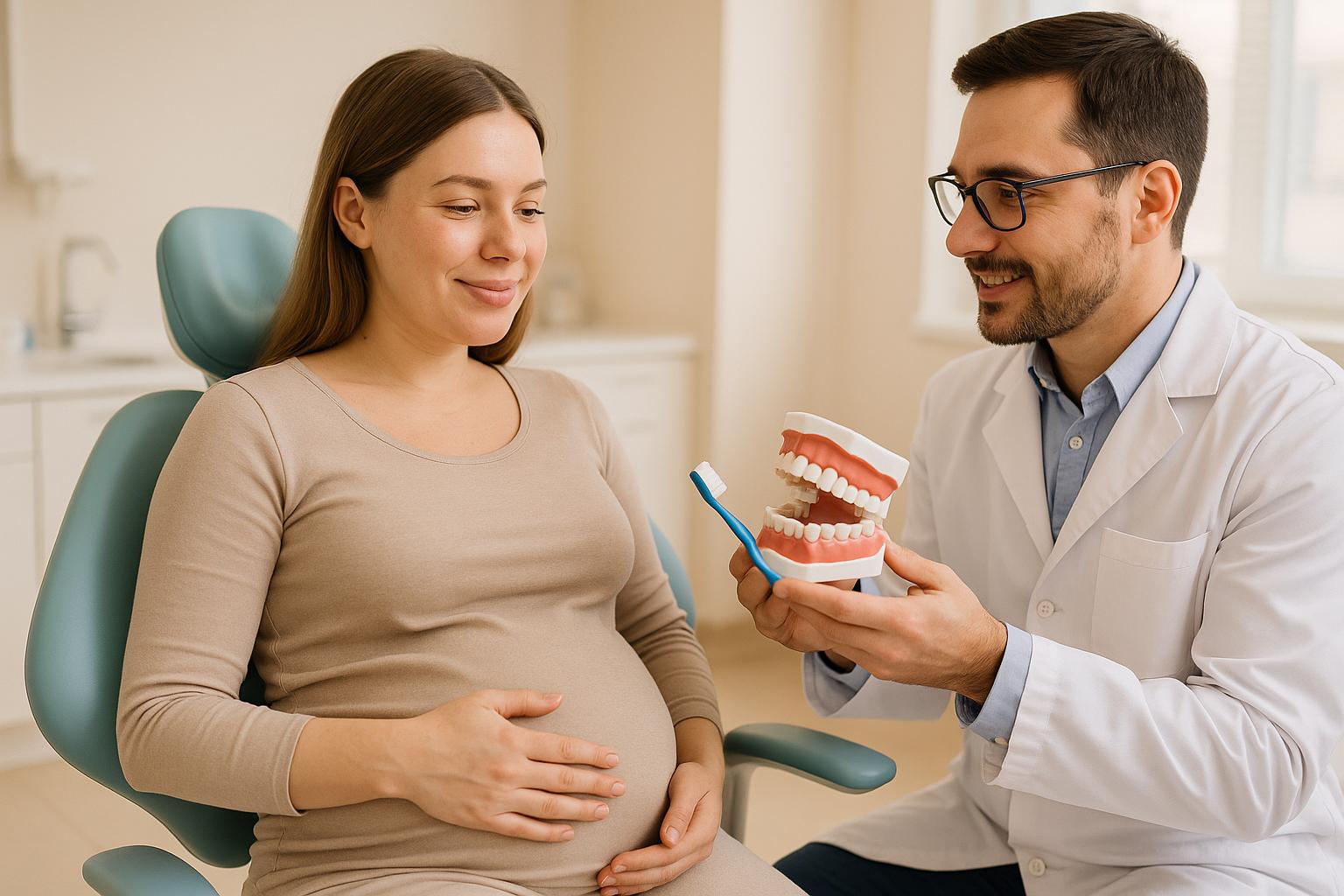
Did you know? Poor oral health during pregnancy can increase your risk of preterm birth by up to six times. The good news? Treating gum inflammation while pregnant can cut that risk by 50%.
Here’s what you need to know:
- Periodontal disease affects 40% of pregnant women, while gingivitis impacts up to 75%.
- Oral bacteria and inflammation can travel to the placenta, potentially triggering early labour.
- Regular dental check-ups, brushing twice daily with fluoride toothpaste, and flossing can help prevent these risks.
- Dental treatments, including cleanings and fillings, are safe during pregnancy.
Taking care of your teeth isn’t just about you – it’s also about giving your baby the healthiest start in life.
Gum Disease and Pregnancy
How Oral Health Problems Affect Pregnancy
Oral infections can spark inflammatory responses that increase the likelihood of pregnancy complications, highlighting the importance of maintaining good dental hygiene. Below, we explore how specific oral health issues contribute to preterm labour risks and the biological processes involved.
Gum Disease and Preterm Birth Risk
Periodontal disease impacts 10% to 60% of people worldwide [2], and pregnant women are especially vulnerable, with up to 90% experiencing some form of it during pregnancy [6]. Research from 1996 revealed that maternal periodontal disease could raise the risk of preterm, low-birth-weight births by seven times [6]. More recent studies suggest a moderate increase in preterm birth rates among women with periodontal disease, with severe cases presenting slightly higher risks compared to mild ones [2].
The culprits? Key bacteria like P. gingivalis, F. nucleatum, and other anaerobic gram-negative bacteria [3][6][7]. These pathogens set off a cascade of biological events that, if not addressed, can endanger both maternal and fetal health.
How Oral Infections Trigger Preterm Labour
Oral infections can lead to premature labour through three main pathways:
- Bacterial spread via the bloodstream, which can result in amniotic infections [6].
- Release of inflammatory substances like cytokines and prostaglandins, which can trigger uterine inflammation [6].
- Immune and genetic factors, which may make some women more susceptible [6].
Periodontal pathogens are linked to 25–40% of preterm birth cases [3][7]. Identifying these mechanisms underscores the need for early intervention to lower preterm birth risks.
Experts emphasise the significance of this connection. Quynh Anh Le from Sydney Dental School states:
"It’s important that women and health providers around the world know that taking good care of oral hygiene is not just for the health of the mother but also for her baby." [1]
Pregnancy also increases the risk of gingivitis and plaque accumulation, with pregnancy gingivitis affecting 30–100% of women globally [7]. By understanding these risks, expectant mothers can take active steps to safeguard their oral health, benefiting both themselves and their babies in the process.
Identifying and Managing Oral Health Problems During Pregnancy
Pregnancy triggers a whirlwind of changes in your body, and your oral health is no exception. Being aware of these changes and knowing how to handle them can safeguard both your wellbeing and your baby’s health.
Oral Health Changes During Pregnancy
Fluctuating hormone levels during pregnancy can significantly impact oral health. Higher levels of progesterone and oestrogen can weaken the tissues and bones that support your teeth, making gums more prone to inflammation and other issues [8]. Add to this the shifts in eating habits and the challenges of maintaining oral hygiene – often due to morning sickness – and the risk of dental problems rises. For instance, studies reveal that 60% to 75% of pregnant women develop gingivitis [5][8], while one in four women of childbearing age have untreated cavities [5]. Morning sickness also exposes teeth to stomach acid, which can erode enamel [8].
Here’s a quick look at common oral health issues during pregnancy:
| Oral Health Problem | Signs and Symptoms |
|---|---|
| Cavities | Small, damaged areas on the tooth surface [8] |
| Gingivitis | Red, swollen, tender, and bleeding gums [8] |
| Periodontal disease | Severe gum infection affecting the gums and bones; loose teeth [8] |
| Pregnancy tumours | Non-cancerous lumps on the gums, often red, raw, and easily bleeding [8] |
| Tooth erosion | Enamel damage caused by exposure to stomach acid [8] |
Watch out for warning signs like bad breath, loose teeth, mouth sores, lumps on the gums, receding gums, or toothaches. Early detection can prevent these issues from worsening. While pregnancy tumours can look concerning, they’re generally harmless and tend to disappear after childbirth [8].
Understanding these changes highlights the importance of safe dental care during pregnancy.
Safe Dental Treatments for Pregnant Women
Many expectant mothers worry about dental treatments, but professional care during pregnancy is not only safe – it’s essential. According to the American Dental Association:
"Regular and emergency dental care, including the use of local anesthetics and radiographs, is safe at any stage during pregnancy." [9]
Similarly, the American Pregnancy Association recommends:
"Preventive dental cleanings and annual exams during pregnancy are not only safe but are recommended." [10]
The second trimester is often the ideal time for dental work, as morning sickness usually subsides and the discomfort of late pregnancy hasn’t set in yet [10]. Here’s a breakdown of common treatments and their safety:
| Treatment | Safety During Pregnancy |
|---|---|
| Preventive dental cleanings | Safe and recommended |
| Dental X-rays | Safe with proper shielding |
| Local anaesthesia (lidocaine) | Safe |
| Antibiotics (penicillin, amoxicillin, clindamycin) | Generally safe |
| Fillings (mercury-free composite resin) | Safe |
Always inform your dentist about your pregnancy so they can tailor your care appropriately. For daily oral hygiene, use fluoride toothpaste approved by the ADA and floss once a day [10]. If morning sickness leads to vomiting, rinse your mouth with a solution of 1 teaspoon of baking soda in 1 cup of water to neutralise stomach acid [9][4]. Proper dental care not only addresses oral health problems but can also help lower the risk of preterm birth.
This approach sets the stage for regular dental check-ups to play a key role in maintaining oral health during pregnancy.
Why Regular Dental Check-ups Matter
Routine dental visits during pregnancy are crucial for both your oral health and your baby’s wellbeing. Professor Joerg Eberhard, Chair of Lifespan Oral Health at the University of Sydney School of Dentistry, emphasises:
"It’s important that women and health providers around the world know that taking good care of oral hygiene is not just for the health of the mother but also for her baby." [1]
However, access to dental care during pregnancy remains a challenge. Research shows that 56% of mothers didn’t receive dental care, 60% skipped teeth cleanings, and 59% missed out on oral health counselling during their most recent pregnancy [4]. Alarmingly, women who forgo dental care during pregnancy are 15% more likely to have a premature baby [11]. With approximately 40% of pregnant women experiencing some form of periodontal disease [4], regular check-ups are essential for early detection and treatment.
Healthcare providers should assess oral health during the first prenatal visit and recommend a dental exam if it’s been more than six months since the last one [4]. Integrating oral health into prenatal care ensures that issues like gum inflammation are addressed early, reducing the risk of complications such as premature birth [1].
Prevention Methods to Reduce Preterm Birth Risk
Taking care of your oral health during pregnancy is more than just about keeping your smile bright – it plays a key role in reducing the risk of complications for both you and your baby. By prioritising prevention, you can support both maternal and infant health.
Daily Oral Care During Pregnancy
A solid daily oral care routine can help lower the chances of pregnancy-related complications. According to the Committee on Health Care for Underserved Women from the American College of Obstetricians and Gynecologists:
"Optimal maternal oral hygiene during the perinatal period may decrease the amount of caries‐producing oral bacteria transmitted to the infant during common parenting behaviour, such as sharing spoons." [4]
Brush your teeth twice a day with fluoride toothpaste, giving extra attention to the gum line where bacteria tend to build up. Floss once daily to remove plaque and food particles that your toothbrush might miss. This is especially important as 60–75% of pregnant women experience gingivitis [12].
Morning sickness can make oral care tricky. If you vomit, rinse your mouth with water or a baking soda solution (1 teaspoon of baking soda dissolved in 250 mL of water) [4][8]. Wait at least 30 minutes before brushing to avoid damaging your enamel, which softens temporarily after exposure to stomach acid [13]. Adding a fluoride mouthwash to your routine can provide extra protection against cavities.
Beyond daily care, addressing dental issues before pregnancy can offer even more protection against complications.
Treating Oral Health Problems Before Pregnancy
Taking care of dental issues before conception builds on good daily habits and reduces risks linked to preterm birth. Research indicates that untreated periodontal disease, which is common among pregnant women [6], can significantly increase the risk of preterm and low-birth-weight deliveries.
Moneet Walia and Navdeep Saini stress the importance of early intervention:
"The promotion of the early detection and treatments of periodontal disease in young women before and during pregnancy will be beneficial especially for women at risk." [6]
It’s estimated that around 18% of preterm low-birth-weight cases are connected to periodontal disease [6]. This makes it essential for women, particularly those with risk factors like diabetes, a smoking history, or a family history of gum disease, to prioritise dental check-ups before trying to conceive. If it’s been more than six months since your last dental visit or if you’re dealing with any oral health issues [4], schedule an appointment. Addressing problems like cavities, gum inflammation, or infections early can help lower the risk of preterm labour.
Diet and Lifestyle Choices for Better Oral Health
Your diet and lifestyle choices during pregnancy also play a big role in maintaining oral health. What you eat impacts not only your teeth but also your baby’s development. Cutting back on sugary foods and drinks, which feed harmful bacteria [14][16], and focusing on nutrient-rich options like whole grains, fruits, vegetables, and lean proteins can make a difference [16].
Research involving Asian women found that diets rich in vegetables, fruits, and white rice during pregnancy were linked to a lower risk of preterm birth and healthier birth sizes [15]. Drinking fluoridated tap water, which is readily available in most parts of Australia, can further strengthen your teeth during pregnancy [16].
The Committee on Health Care for Underserved Women highlights:
"Pregnancy is a ‘teachable’ moment when women are motivated to adopt healthy behaviour." [4]
This makes pregnancy a great time to establish habits that can benefit you and your baby for years to come. Avoid smoking and limit alcohol consumption, as both can worsen gum disease and increase pregnancy risks. If you experience frequent heartburn, rinsing with the baking soda solution mentioned earlier can protect your teeth from acid damage.
Good oral health doesn’t just benefit you – it sets the stage for your child’s future dental wellbeing. One in four women of reproductive age has dental caries [14], and children of mothers with untreated cavities are more likely to develop them too [14]. By committing to excellent oral care, you’re not only protecting yourself but also giving your child a healthier start.
sbb-itb-2be92ed
Working Together: Dentists and Pregnancy Care Providers
When dental and pregnancy care providers join forces, it creates a seamless way to include oral health in prenatal care, leading to better outcomes for both mothers and their babies. Studies reveal that women referred to dentists by their prenatal care providers are 4.29 times more likely to visit a dentist during pregnancy [17].
Including Dental Care in Pregnancy Health Plans
Making dental care a regular part of pregnancy health plans could make a big difference in maternal and infant health. Yet, only 30% of pregnant women receive dental advice [17], and 59% miss out on oral health counselling [4]. This gap is concerning, given that periodontal diseases affect 40% of pregnant women worldwide [22], and 56% of mothers reported not receiving dental care during their last pregnancy [4].
Prenatal care providers can help by incorporating oral health into their routine check-ups. For example, during the first prenatal visit, they could ask a few screening questions or perform a simple oral exam [17]. Australian guidelines encourage healthcare professionals – such as midwives, GPs, and obstetricians – to discuss oral health during antenatal visits. They also recommend routine dental check-ups, as dental treatments are safe during pregnancy [21]. Bridging these gaps in care will require tackling financial and structural barriers that currently limit access.
Breaking Down Barriers to Dental Care
Despite the proven benefits of dental care during pregnancy, many women still face hurdles. In Australia, less than half of pregnant women visit the dentist, with cost being a major obstacle [20]. In south-western Sydney, for instance, although 59.3% of pregnant women reported dental issues, only 30.5% had recently visited a dentist, and just 10% received oral health information during pregnancy [23].
Creating clear referral systems between prenatal and dental care providers can help address these challenges. When obstetric providers give written referrals or make direct calls to dentists, it underscores the importance of oral health and simplifies the process for patients [4]. Additionally, women whose prenatal providers perform oral health checks are nearly four times more likely to visit a dentist during pregnancy. Training healthcare providers to recognise oral health issues and understand the safety of dental procedures during pregnancy can also make them more confident in discussing these matters with their patients [4].
Policy Changes to Improve Dental Access
Addressing these barriers also requires systemic policy changes. The 2023 Australian Senate’s interim report on dental services emphasised the importance of integrating antenatal care with dental care to manage oral health issues [21]. Expanding Medicare to cover pregnancy-related dental care could help remove financial obstacles, especially since 40% of Australian adults delay dental visits due to cost concerns [21].
Mandatory training programmes for prenatal care providers could ensure they are equipped with the knowledge to discuss oral health effectively. Currently, only 16%–21% of antenatal care providers talk about oral health or recommend dental visits to their patients [18]. Upgrading electronic medical record systems to include electronic referral options could further streamline care coordination and ensure follow-ups are completed [17].
Collaboration between physicians and dentists is vital to help women prioritise oral health during pregnancy and beyond [17]. Introducing funding initiatives, such as vouchers or subsidised dental care, could also help reduce financial barriers and encourage more pregnant women to seek the dental care they need [19].
Conclusion: Making Oral Health a Priority During Pregnancy
Taking care of your oral health during pregnancy isn’t just about maintaining a bright smile – it’s about safeguarding your baby’s health too. Poor oral health has been linked to an increased risk of preterm birth, as inflammation caused by gum disease can potentially trigger early labour. These risks highlight the importance of preventive measures to protect both mother and baby.
The good news? Many of these risks can be avoided. Research has shown that early intervention can make a huge difference:
"If gum inflammation is treated during pregnancy, the risk of a baby being born preterm is reduced by approximately 50 percent." – Professor Joerg Eberhard [1]
Even with these benefits, a concerning number of mothers-to-be miss out on essential dental care. Over half – 56% – do not visit a dentist during pregnancy, and 59% receive no oral health counselling. Yet, simple daily habits can have a big impact. Brushing twice a day with fluoride toothpaste, flossing daily, and cutting back on sugary snacks and drinks are all easy, effective steps. And don’t forget: regular dental check-ups, which are perfectly safe during pregnancy, are a must every six months.
Oral health during pregnancy also plays a role in protecting your baby after birth. By maintaining good dental hygiene, mothers can reduce the chances of passing cavity-causing bacteria to their babies, which lowers the risk of early childhood caries. Pregnancy is a perfect time to adopt healthy habits that benefit both you and your child.
With consistent daily routines and timely dental care, both mothers and babies stand to gain. This evidence underscores the need for a dual approach: personal commitment to oral hygiene and accessible, integrated dental care as part of prenatal health strategies. By prioritising oral health during pregnancy, you’re not only preventing complications but also giving your baby the healthiest possible start in life.
FAQs
Can poor oral health during pregnancy increase the risk of preterm birth?
Can Poor Oral Health Increase the Risk of Preterm Birth?
Yes, poor oral health – especially gum disease – can raise the chances of preterm birth. Studies reveal that pregnant women with gum disease are at a higher risk of going into early labour. This happens because the body’s inflammatory response to periodontal disease can release certain markers that might affect the pregnancy, potentially triggering preterm labour.
Issues like untreated gingivitis can make these risks even more concerning. That’s why regular dental check-ups during pregnancy are so important. By keeping up with good oral hygiene and addressing dental problems early, mothers can help safeguard their own health and their baby’s well-being.
What dental treatments are safe during pregnancy to help reduce the risk of preterm birth?
Maintaining oral health during pregnancy is crucial, as issues like gum disease can heighten the risk of preterm birth. Pregnant women can safely undergo routine dental check-ups, professional cleanings, and treatments for gum disease. If necessary, local anaesthetics like lidocaine are safe to use, and certain antibiotics, such as penicillin, can be prescribed without concern.
Dental X-rays are also considered safe during pregnancy, provided proper shielding is used. Regular dental visits not only help prevent oral infections but also contribute to the overall well-being of both mother and baby. If you’re expecting, discuss any concerns with your dentist and prioritise regular appointments to keep your oral health in check.
Why are regular dental check-ups important during pregnancy, and how can pregnant women overcome challenges in accessing dental care?
Why Regular Dental Check-Ups Matter During Pregnancy
Keeping up with dental check-ups while pregnant isn’t just about maintaining a bright smile – it’s about protecting both mum and baby. Research shows that oral health issues, like gum disease, can increase the risk of complications such as preterm birth and low birth weight. By addressing dental problems early and sticking to good oral hygiene habits, expectant mums can help minimise these risks and promote healthier outcomes for themselves and their babies.
However, pregnancy can bring its own set of challenges when it comes to dental care. Concerns about the safety of treatments, financial constraints, or difficulty finding accessible providers can make it harder to prioritise oral health. The good news? There are ways to navigate these hurdles. Pregnant women can seek accurate advice about safe dental treatments during pregnancy and look into support options like public dental programs or health insurance coverage. Connecting with a trusted dentist early on ensures care is tailored to their unique needs, offering peace of mind and better health for both mum and bub.
Related Blog Posts
- Best Foods for Healthy Teeth: Dentist Recommendations
- 5 Steps of Professional Dental Cleaning
- The Role of Vitamins in Oral Health
- Smoking and Dental Implants: Impact on Healing
Important Notice: Any surgical or invasive procedure carries risks. Before proceeding, you should seek a second opinion from an appropriately qualified health practitioner.
Individual results may vary. The information provided in this article is for educational purposes only and does not constitute medical advice.
Checkout Related Blogs




Get in touch with us
For more information, call us now to start feeling better. Or fill the form below to make appointment
The Latest News from Complete Smiles
How to Clean Clear Plastic Retainers
Checklist for Choosing Wearable Dental Devices
Checklist for Choosing Cloud AI Platforms in Dentistry

Complete Smiles Bella VistaAccepts All Major Health Funds, Including





