





5 Ways AI Shortens Orthodontic Treatment Time
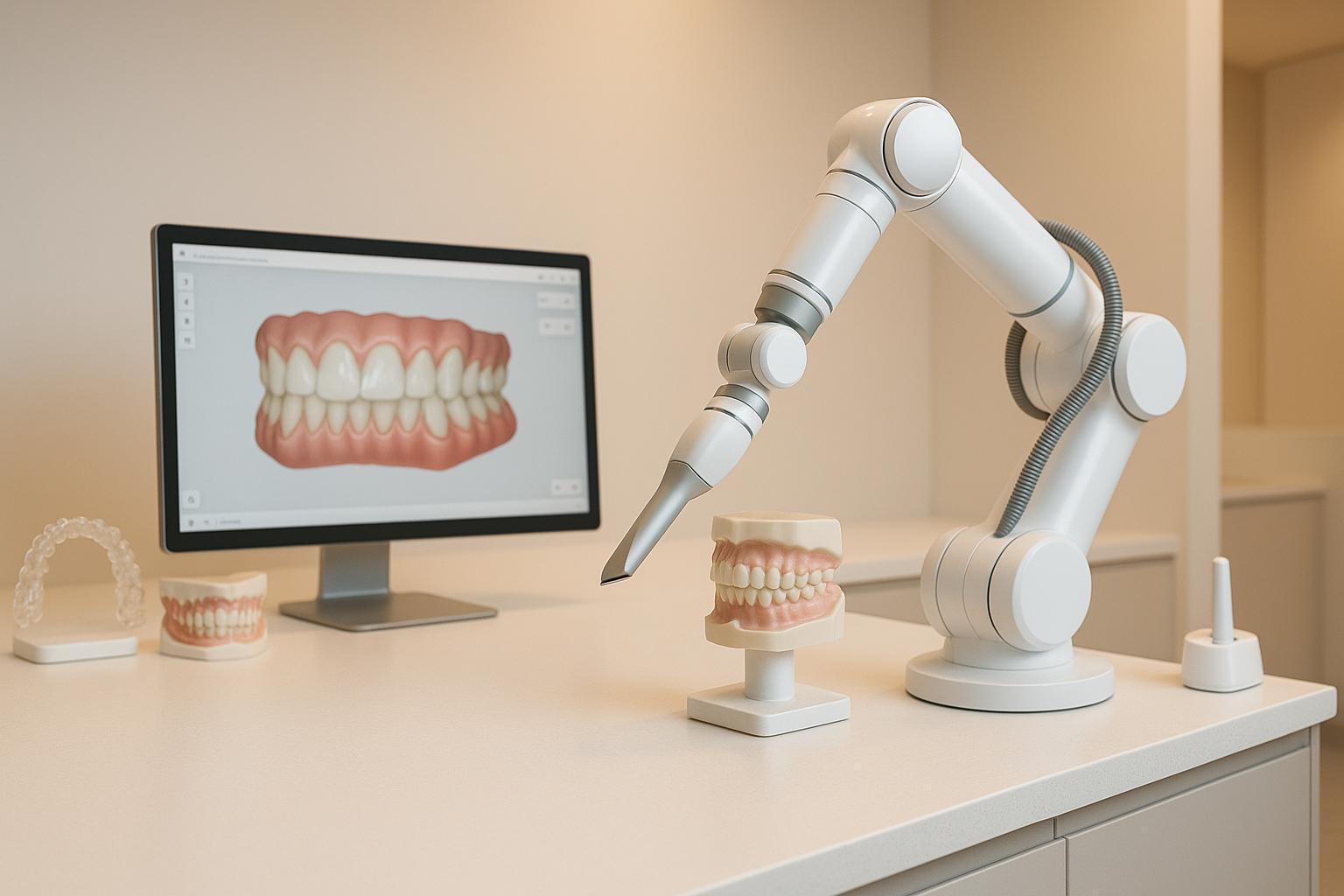
AI is transforming orthodontics in Australia, making treatments faster and more efficient. Here’s how:
- Automated Planning: AI analyses 3D scans and X-rays to create precise treatment plans in minutes, saving hours of manual work.
- Predictive Modelling: Machine learning predicts tooth movement with high accuracy, reducing delays and unnecessary adjustments.
- Real-Time Monitoring: Patients can send scans remotely, allowing orthodontists to track progress and make timely changes, reducing in-person visits.
- Advanced 3D Imaging: AI processes imaging data 80× faster, enabling quicker diagnoses and optimised treatment strategies.
- Efficient Workflows: AI reduces mid-treatment corrections and improves planning accuracy, cutting treatment times by an average of 4.3 months.
Clinics like Complete Smiles Bella Vista are already using these technologies to deliver faster, more precise care. Patients benefit from fewer appointments, shorter treatment durations, and improved convenience.
How AI Is Revolutionizing Orthodontics: The Truth About AI and Braces
1. Automated Treatment Planning
Orthodontic treatment has come a long way from the days of laborious manual calculations and measurements. The introduction of automation has revolutionised the process, particularly with advanced imaging analysis, drastically reducing the time needed for orthodontic care.
AI-powered tools now take on the heavy lifting by analysing 3D dental scans, panoramic X-rays, and intraoral photographs with incredible precision [1]. These sophisticated algorithms sift through patient data to detect patterns and measurements, generating highly detailed digital models of teeth and jaw structures. This enables orthodontists to achieve more accurate diagnoses and predict treatment outcomes with greater confidence.
The time savings are remarkable. Tasks that once took hours – like calculating tooth movements and determining force requirements – can now be completed in mere minutes. This not only frees up orthodontists to focus on patient care but also streamlines their workflow, making the entire process more efficient.
A standout example of this technology is the platform Opti-AI, which enhances treatment planning by offering dynamic simulations and indirect bonding for fixed appliances [4]. By modelling tooth movement and fine-tuning the forces applied, these systems craft treatment plans tailored to each patient’s unique dental structure. The result? Fewer mid-treatment adjustments and more predictable outcomes, giving patients and practitioners a smoother experience from start to finish.
2. Predictive Modelling for Tooth Movement
AI-powered predictive modelling has revolutionised orthodontics by making tooth movement planning more precise and efficient. Gone are the days of relying solely on manual estimations – this technology turns treatment planning into a data-driven process. By forecasting tooth movement with impressive precision, it allows for dynamic adjustments throughout the course of treatment.
Here’s how it works: after an initial automated treatment plan is created, predictive modelling takes over to refine it. Using machine learning algorithms trained on vast datasets – spanning historical and real-time patient information – these systems can forecast individual tooth movements with a high degree of accuracy. They analyse inputs like 3D scans, X-rays, and intraoral images to predict how teeth will respond to orthodontic forces. This means treatment plans can be adjusted as needed, ensuring optimal results [1][3].
By simulating tooth movement, AI systems help optimise the force applied by braces or aligners. This precision ensures each tooth follows its intended path, reducing unnecessary delays and minimising treatment stagnation [1][2]. In fact, studies highlight the effectiveness of these systems: one study involving 1,200 patients found that machine learning models predicted aligner displacement with 82% accuracy, leading to a 28% reduction in unscheduled follow-up visits [3].
The accuracy of these predictions comes from continuously updated data, including 3D scans, X-rays, and intraoral photographs collected throughout treatment [1][2]. This real-time data flow enables the AI to refine its forecasts and address potential issues before they become significant problems.
Orthodontists benefit from this predictive capability by being able to proactively manage potential complications. AI systems compare real-time progress against predicted outcomes, identifying deviations and prompting timely adjustments [1][3]. This proactive approach ensures treatments stay on track, avoiding the delays often seen with traditional methods.
For those in Australia seeking more efficient orthodontic care, clinics like Complete Smiles Bella Vista are leveraging these AI-driven platforms. Whether you’re considering Invisalign or traditional braces, these technologies can offer more precise, personalised treatment plans, leading to shorter treatment times and fewer visits [1][2].
3. Real-Time Monitoring and Remote Adjustments
Real-time monitoring has transformed orthodontic care, making it possible to track progress continuously without requiring frequent in-person visits. Tools like smart sensors, mobile apps, and cloud-based platforms now allow orthodontists to analyse tooth movement and appliance performance almost instantly. These tools integrate seamlessly with automated planning and predictive modelling, making treatments more efficient and precise.
After the initial diagnostic planning, AI plays a vital role in monitoring treatment progress. By processing digital images, sensor data, and 3D scans, AI-powered systems provide regular updates on how the treatment is unfolding. For instance, platforms like Dental Monitoring® enable patients to send weekly scans from the comfort of their homes. AI algorithms review these scans to identify any deviations from the treatment plan, check the fit of appliances, and flag potential issues. This steady stream of data allows orthodontists to make timely adjustments, ensuring treatments stay on course.
Smart sensors embedded in aligners or braces take this a step further by tracking wear time, bite pressure, and tooth movement patterns. These sensors compare real-time data against expected outcomes and send alerts when intervention might be required. This proactive approach helps maintain treatment accuracy and minimises delays.
Remote monitoring also adds a layer of convenience and precision, especially for Australian patients. By reducing the need for frequent in-person visits, it makes orthodontic care more accessible for busy professionals, students, and parents. Patients can stay engaged with their treatment by viewing real-time progress updates and securely communicating with their orthodontist through mobile apps.
In clinical settings, remote monitoring has proven its value by enabling early detection of potential issues and reducing unscheduled visits. Data collected – such as tooth movement patterns and appliance fit – empowers AI to recommend timely adjustments, keeping treatments on track and improving overall patient experience.
sbb-itb-2be92ed
4. Improved 3D Imaging and Analysis
AI technology has revolutionised 3D imaging in dentistry, making diagnostics faster and more precise. Unlike traditional imaging methods that rely on manual interpretation, AI-powered tools can process 3D scans, X-rays, and intraoral photos swiftly to create highly detailed digital models of a patient’s teeth and jaw.
One of the standout benefits is speed. Research shows that AI can cut analysis time by up to 80 times compared to manual methods[1]. This efficiency means patients can start their treatment much sooner, reducing wait times significantly.
AI also excels in identifying subtle dental issues that might go unnoticed during conventional exams. It can consistently detect early signs of malocclusion, root resorption, or impacted teeth with greater accuracy than manual evaluations[2]. This ensures that treatment plans are comprehensive, addressing all potential issues right from the beginning. This level of precision paves the way for smarter, AI-integrated treatment strategies.
Beyond diagnostics, AI-powered 3D imaging can simulate tooth movement, optimise force application, and adapt treatment plans in real time as new data comes in. This dynamic approach ensures teeth are moved efficiently, reducing delays and improving outcomes[1].
For patients in Australia, this means faster treatments with fewer appointments, saving time and minimising disruptions to daily life. Whether it’s a student juggling school or a professional balancing work, quicker treatment completion is a game-changer.
Clinics like Complete Smiles Bella Vista are already harnessing the benefits of AI-driven 3D imaging. By offering faster, more accurate diagnoses and personalised treatment plans, they’re setting a new standard for patient care and efficiency in dental practices.
5. Better Workflow Efficiency and Fewer Mid-Course Corrections
AI is reshaping orthodontic workflows by taking over repetitive tasks like data analysis, treatment planning, and progress tracking. By automating these processes, orthodontists can dedicate more time to providing high-quality care.
One standout advantage is AI’s ability to foresee potential treatment deviations early on. Instead of waiting for issues to arise, AI flags them before they become significant, allowing for timely interventions. This proactive approach helps prevent minor complications from snowballing into major setbacks that could require extensive corrections.
AI also plays a critical role in designing precise aligners and braces right from the start. With accurate movement simulations and optimised force application, the need for adjustments during treatment is greatly reduced, ensuring each phase of the process runs smoothly and efficiently.
The benefits of AI extend to patient communication as well. AI-powered apps provide real-time updates and 3D visualisations of treatment progress. This not only keeps patients informed but also encourages them to stick to their treatment plans. When patients clearly understand their progress, they’re more likely to follow instructions, which further minimises the need for mid-course corrections.
Clinics like Complete Smiles Bella Vista are already embracing these AI-driven workflows. The result? Faster, more efficient treatments with improved predictability. By reducing delays and enhancing precision, this technology is helping clinics deliver better outcomes while keeping the treatment process on track.
Comparison Table
When you compare traditional orthodontic workflows with AI-enhanced approaches, the differences in performance metrics are striking. Here’s a breakdown of the key metrics:
| Metric | Standard Workflow | AI-Improved Workflow | Improvement |
|---|---|---|---|
| Average Treatment Duration | 18–24 months | 13.7–19.7 months | 4.3 months shorter [1] |
| Number of Appointments | 18–24 visits | 13–17 visits | Up to 28% reduction [3] |
| Planning Accuracy | 70–80% | 90–95% | 15–25% improvement [1][3] |
| Analysis Speed | 2–3 hours | 5–10 minutes | Up to 80× faster [1] |
The reduction in treatment duration – by an average of 4.3 months – means patients spend significantly less time wearing braces or aligners [1]. This is a game-changer for individuals eager to complete their treatment sooner.
Appointment schedules also see a major shift. Traditional workflows often require monthly in-person visits, but AI-powered remote monitoring cuts these down by up to 28% [3]. This is particularly advantageous for patients in regional or remote areas, where travelling to appointments can be a challenge.
Another standout improvement is in planning accuracy. AI raises the accuracy rate from 70–80% to an impressive 90–95% [1][3]. This increased precision reduces the need for mid-treatment adjustments and gives patients a clearer idea of their treatment timeline.
Speed is another area where AI shines. Analysis that once took 2–3 hours can now be completed in just 5–10 minutes – an 80× improvement [1]. This not only accelerates treatment initiation but also allows for quicker responses to any necessary adjustments, enhancing the overall patient experience.
These metrics underscore how AI is revolutionising orthodontic care in Australian clinics. With technologies like advanced 3D imaging, predictive modelling, and remote monitoring, AI streamlines treatment processes, making shorter treatment times and improved patient outcomes a reality.
Conclusion
AI is reshaping orthodontics in Australia, driving progress across five critical areas: automated planning, predictive modelling, real-time monitoring, advanced 3D imaging, and streamlined workflows. These advancements are cutting treatment times by an average of 4.3 months without compromising clinical quality[1]. AI-powered diagnostics are up to 80 times faster, while remote monitoring achieves an impressive 82% accuracy, leading to a 28% drop in unplanned follow-up visits[1][3]. However, these achievements are only impactful when paired with the expertise of skilled orthodontists.
While AI delivers remarkable precision, it’s the combination of cutting-edge technology and professional oversight that ensures patient safety and optimal outcomes. This partnership between human expertise and AI innovation is key to unlocking the full potential of these advancements[1][3].
Across the country, clinics embracing AI are setting new benchmarks for orthodontic care – offering faster, more personalised, and predictable results. A prime example is Complete Smiles Bella Vista, where Dr. James Hanna exemplifies this trend with his dedication to tailored care and advanced techniques, reflecting the broader shift towards AI-enhanced, patient-focused treatment.
As AI continues to evolve, its role in orthodontics is expected to grow, further reducing treatment times and improving both outcomes and patient satisfaction. For those considering orthodontic care, choosing clinics that leverage AI-driven solutions means a smoother, more efficient, and convenient treatment experience.
FAQs
How does AI help speed up orthodontic treatment?
AI has become a game-changer in orthodontics, helping treatments progress more swiftly and efficiently. By simplifying workflows, it enables orthodontists to quickly review patient data and craft personalised treatment plans with impressive accuracy. This cuts down the time spent on planning and making adjustments.
Another powerful application of AI is predictive modelling, which estimates tooth movement and anticipates treatment outcomes. This means fewer appointments are needed, as adjustments are made with greater precision and effectiveness. In short, AI boosts both the pace and quality of orthodontic care while upholding excellent treatment standards.
How does predictive modelling improve the accuracy and efficiency of orthodontic treatments?
Predictive modelling leverages advanced algorithms to analyse patient data, enabling orthodontists to forecast treatment outcomes with greater accuracy. By pinpointing the most suitable treatment plans and tailoring care to each individual, it simplifies the process and helps reduce the overall duration of treatment.
This approach ensures that every intervention is customised to the patient’s unique needs, enhancing precision and efficiency while achieving better results in less time.
How does AI-powered real-time monitoring make orthodontic treatment more convenient and reduce the need for frequent visits?
AI-powered real-time monitoring lets orthodontists keep an eye on your treatment progress from afar. Whether you’re using aligners or braces, this technology ensures they’re doing their job without needing frequent in-person visits. It can spot potential problems early, allowing for quick adjustments and helping to avoid treatment delays.
For patients, this means fewer trips to the clinic, saving you both time and effort. Plus, knowing your progress is being closely watched – even between appointments – offers extra reassurance that your treatment is staying on course.
Related Blog Posts
- Benefits of AI in Orthodontic Progress Tracking
- AI in Orthodontics: Risk Assessment Explained
- AI in Orthodontics: Diagnosis and Treatment Planning
- How AI Predicts Orthodontic Treatment Outcomes
Important Notice: Any surgical or invasive procedure carries risks. Before proceeding, you should seek a second opinion from an appropriately qualified health practitioner.
Individual results may vary. The information provided in this article is for educational purposes only and does not constitute medical advice.
Checkout Related Blogs




Get in touch with us
For more information, call us now to start feeling better. Or fill the form below to make appointment
The Latest News from Complete Smiles
How to Clean Clear Plastic Retainers
Checklist for Choosing Wearable Dental Devices
Checklist for Choosing Cloud AI Platforms in Dentistry

Complete Smiles Bella VistaAccepts All Major Health Funds, Including





