





10 Foods for Strong Teeth and Gums
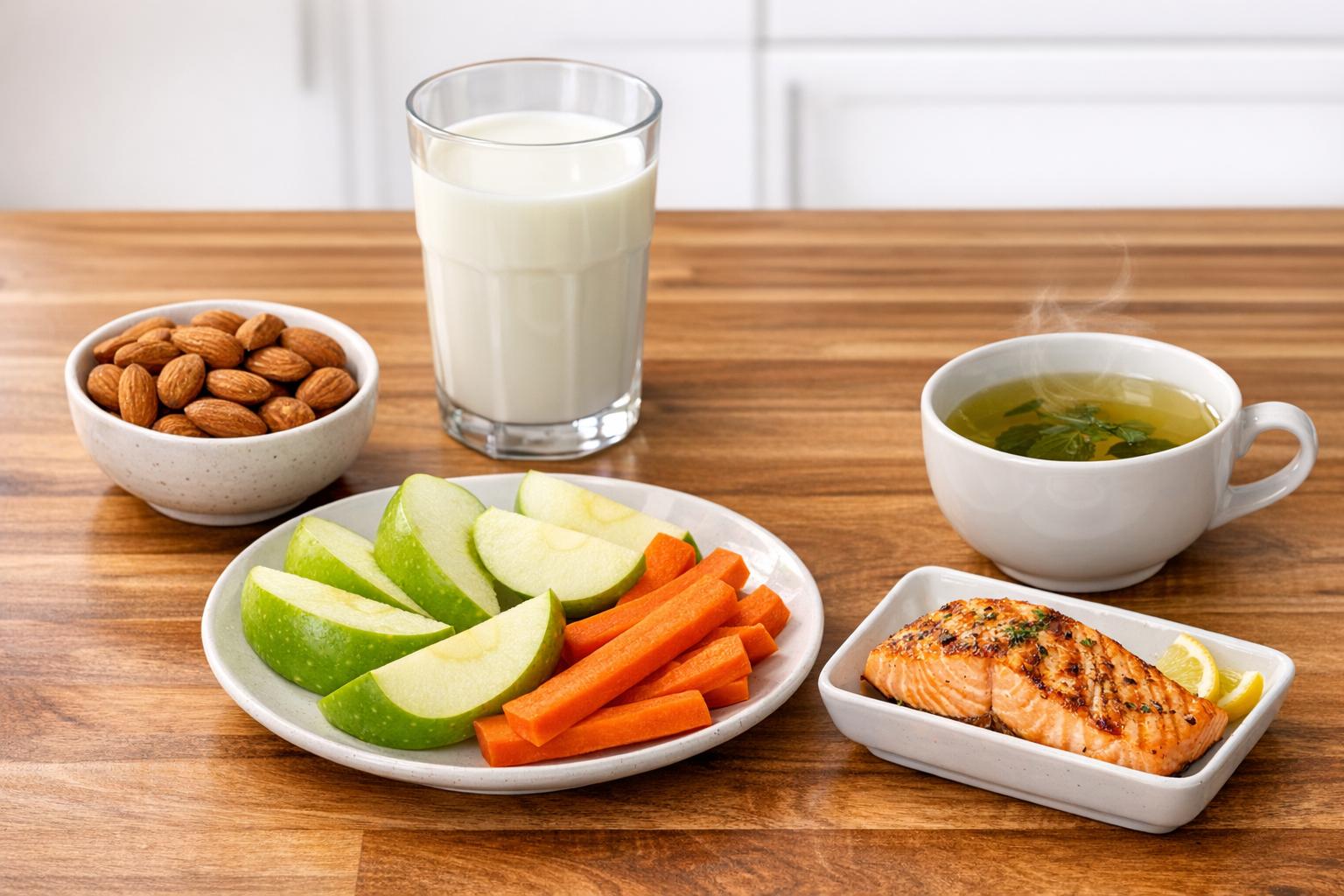
Taking care of your teeth and gums starts with what you eat. The right foods can strengthen enamel, fight bacteria, and support gum health. Here are 10 great options:
- Milk: High in calcium and phosphorus, it helps repair enamel and fights bacteria.
- Cheese: Boosts saliva, neutralises acid, and strengthens teeth.
- Yoghurt: Rich in calcium and probiotics to protect enamel and reduce plaque.
- Apples: Fibre-rich, they clean teeth and boost saliva production.
- Carrots: Full of Vitamin A and fibre, they clean teeth and promote gum health.
- Spinach: Packed with calcium, folic acid, and antioxidants for enamel and gum support.
- Almonds: Low-sugar, high-calcium snack that strengthens teeth and stimulates saliva.
- Salmon: Loaded with Vitamin D and omega-3s to absorb calcium and reduce inflammation.
- Green Tea: Antioxidants fight bacteria and reduce plaque.
- Water: Keeps you hydrated, boosts saliva, and rinses away bacteria.
These foods work together to protect your teeth and gums while complementing daily brushing and flossing. Add them to your diet for better oral health.
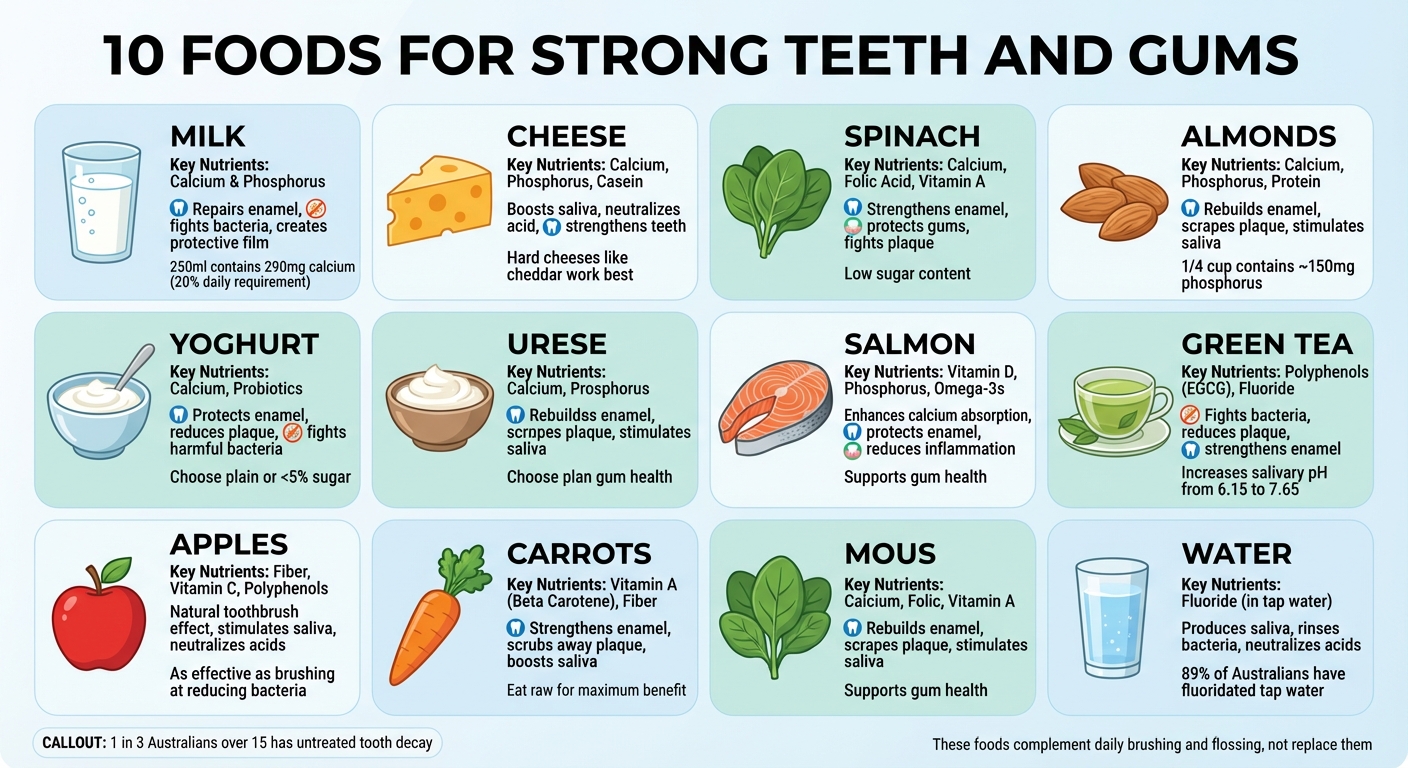
10 Foods That Strengthen Teeth and Gums With Key Nutrients
1. Milk
Packed with calcium and phosphorus for strong teeth and gums
Milk is a fantastic source of calcium and phosphorus, two nutrients that play a key role in enamel repair. These minerals work hand in hand to remineralise teeth, helping to restore enamel damaged by bacterial acids. Interestingly, without phosphorus, your body can’t fully absorb and use calcium to maintain the density of your teeth [9].
For a practical example, a 250ml glass of 2% milk contains 290mg of calcium, which is about 20% of your daily requirement [10]. Since 99% of the calcium in your body is stored in your bones and teeth, getting enough of it is critical. Studies show that adults who consume at least 1,000mg of calcium daily are less likely to lose teeth compared to those with lower calcium intake [10][11].
Fights oral bacteria and reduces plaque
Milk doesn’t just strengthen your teeth; it also protects them from harmful bacteria. Proteins in milk, particularly casein, create a shield-like layer over your enamel. This barrier makes it harder for harmful bacteria to stick to your teeth and reduces the risk of demineralisation [10][9]. Another milk protein, lactoferrin, actively inhibits bacteria from attaching to your teeth [10].
"Casein, in cahoots with calcium and phosphorus in your saliva, puts a protective film over teeth enamel, decreasing the risk of cavities and decay." – Keppel Dental [4]
Milk’s neutral pH also plays a role in reducing plaque build-up and protecting against acid erosion [1][10]. To get the most out of milk, opt for plain, unflavoured varieties to avoid added sugars that can fuel decay-causing bacteria. Organic or grass-fed milk is an even better choice, as it contains higher levels of Conjugated Linoleic Acid (CLA), known for its anti-inflammatory and plaque-reducing properties [4][10].
2. Cheese
Packed with calcium and phosphorus for strong teeth and gums
Cheese is an excellent source of calcium and phosphorus, two minerals that play a key role in repairing enamel and maintaining a strong jawbone. Hard cheeses like cheddar, parmesan, Swiss, and gruyère are especially rich in these essential nutrients [8][9][10].
Boosts saliva production to shield enamel
Chewing cheese does more than just deliver minerals – it also encourages saliva production, which helps neutralise acids in the mouth [4][5][8][14]. As Keppel Dental highlights:
"Following a sugary treat or drink with a sliver of cheese helps neutralise the acid pH of your mouth and stimulate saliva production. These are two of your mouth’s natural defences against tooth decay." [4]
Additionally, cheese contains casein, a protein that works with calcium and phosphorus to create a protective layer over enamel. This combination not only strengthens teeth but also raises the pH level in your mouth, reducing the risk of decay [13]. To give your teeth an extra layer of defence against acid erosion, try finishing your meal with a small piece of cheese.
3. Yoghurt
Packed with calcium and probiotics for healthier teeth and gums
Yoghurt is a powerhouse when it comes to oral health, offering a rich supply of calcium, phosphorus, and probiotics. These nutrients help fortify tooth enamel and reduce cavities by forming a protective layer of casein on your teeth [4][12]. But yoghurt’s benefits don’t stop there – its probiotics play a key role in keeping your mouth healthy.
As Alannah Flegg, Oral Health Therapist at Dental Fresh, explains:
"Probiotics may help decrease gingivitis and plaque; bacteria in fermented foods might suppress the growth of disease-causing bacteria in the oral cavity" [3].
Keeps harmful bacteria in check
Probiotics in yoghurt don’t just sit idly by – they actively compete with harmful bacteria, pushing out the culprits behind tooth decay and gum disease. This natural defence can lower your chances of developing cavities and gingivitis [1][3].
For the best results, opt for plain or sugar-free yoghurt with no more than 5% sugar, as added sugars can feed harmful bacteria. Enjoy it as a snack or pair it with vitamin D–rich options like eggs or salmon to help your body absorb calcium more effectively [2][4][7].
4. Apples
Packed with fibre and vitamins for healthier teeth and gums
Apples are more than just a tasty snack – they’re a natural ally for your dental health. Loaded with fibre, vitamin C, polyphenols, and antioxidants, apples offer multiple benefits for your teeth and gums. The dietary fibre in apples works like a natural toothbrush, scrubbing away plaque and lingering food particles as you chew. Meanwhile, vitamin C supports collagen production, which is vital for maintaining healthy gum tissue. The polyphenols and antioxidants in apples may also help reduce bacterial buildup and protect gums from inflammation. This combination of physical cleaning and nutrient-rich support makes apples a smart choice for your oral care routine.
Boosts saliva production to safeguard enamel
The satisfying crunch of an apple does more than curb your hunger – it also stimulates saliva production. This alkaline saliva helps neutralise the acids produced by dental plaque, offering a natural defence for your teeth. Susana Rubido from the Medical-Surgical Dentistry Research Group highlights this benefit:
"Apples have been commonly recommended as a means of cleaning the teeth after eating because they stimulate an alkaline saliva flow that neutralises the acids produced in dental plaque after carbohydrate ingestion." [15]
This increased saliva flow not only dilutes sugars but also helps wash away food debris. It plays a key role in maintaining the balance between enamel demineralisation and remineralisation. In fact, a clinical study found that chewing an apple reduced the viability of salivary bacteria as effectively as brushing your teeth (P < .001) [15].
Quick tip: After eating an apple, rinse your mouth with water and wait about 30 minutes before brushing to protect your enamel. For even better results, try eating apples at the end of a meal or pair them with cheese to help restore your mouth’s pH balance faster.
5. Carrots
Packed with Vitamin A and Fibre for Dental Health
Carrots are a fantastic choice when it comes to supporting your teeth and gums. They’re loaded with beta carotene, which the body converts into vitamin A. This vitamin plays a key role in strengthening tooth enamel and keeping gum tissue in top shape [6][1]. On top of that, raw carrots are a natural source of fibre, which works like a gentle toothbrush. As you chew, the fibrous texture helps scrub away plaque, bacteria, and leftover food particles [6][5][14]. This natural cleaning action can help reduce the risk of decay. Plus, their crunchy texture encourages an extra layer of cleaning by boosting saliva production.
Encourages Saliva Flow to Protect Enamel
Chewing raw carrots doesn’t just clean your teeth – it also gets your saliva flowing. Dr. Christine Wu from the UIC College of Dentistry highlights this benefit:
"Chewing raw carrots and other fibrous vegetables stimulates the gums and boosts saliva production." [6]
More saliva means acids are neutralised, food debris is washed away, and your enamel gets an added layer of protection. Saliva also plays a key role in maintaining the balance between demineralisation and remineralisation, which keeps teeth strong and healthy.
Tip: Munch on raw carrots at the end of your meal to maximise their natural cleaning and saliva-boosting benefits. Just remember, while carrots are a great addition to your dental care routine, they’re no substitute for regular brushing and flossing.
6. Spinach
Packed with nutrients for strong teeth and healthy gums
Spinach is a powerhouse when it comes to nutrients that benefit your oral health. It’s loaded with calcium, phosphorus, vitamin A, and folic acid – all of which play a role in strengthening enamel, keeping gums in good shape, and aiding cell repair. According to UIC College of Dentistry:
"Leafy salad greens contain lots of folic acid, a member of the B vitamin family, which promotes a healthy mouth and supports cell growth throughout the entire body."
In addition, antioxidants like vitamin C and beta carotene found in spinach work to shield your oral tissues from damage.
Helps fight plaque and supports enamel protection
Spinach’s fibrous texture does more than just add crunch – it helps scrub away plaque and food particles as you chew. Plus, it encourages saliva production, which helps neutralise harmful acids in your mouth. The folic acid in spinach is also a key player in protecting gum cells, lowering the risk of gum disease. As Keppel Dental highlights:
"Leafy greens also contain folic acid, a proven protector against periodontal disease. Folic acid supports the cells that make up the gums."
Another bonus? Spinach is naturally low in sugar, meaning it doesn’t feed the bacteria that lead to tooth decay. This makes it a perfect addition to your diet alongside other tooth-friendly foods.
Tip: To retain its nutrients, try eating spinach fresh or lightly steamed instead of overcooking it. Tossing raw spinach into your salad at the end of a meal can also help clean your teeth and stimulate saliva production.
sbb-itb-2be92ed
7. Almonds
Packed with calcium and protein for healthier teeth and gums
Almonds are a standout choice when it comes to foods that support strong teeth and gums. They’re loaded with calcium, a mineral crucial for rebuilding tooth enamel and keeping your jawbone sturdy. For instance, a 200ml glass of almond milk contains about 90mg of calcium [7]. Additionally, almonds are an excellent source of phosphorus, with roughly 150mg in just a quarter-cup serving [7]. Together, calcium and phosphorus play a key role in repairing and protecting enamel, which is the hardest substance in the human body [12].
As a high-protein, low-sugar snack, almonds offer a healthier alternative to processed carbs and sugary treats that can feed acid-producing bacteria [3][12]. The Harvard T.H. Chan School of Public Health highlights their benefits:
"Eating foods high in calcium and other nutrients such as cheese, milk, plain yogurt, calcium-fortified tofu, leafy greens, and almonds may help tooth health." [12]
Beyond their nutrient content, almonds also contribute to plaque control and saliva production, both essential for oral health.
Helps reduce plaque and oral bacteria
One of the lesser-known perks of almonds is their natural ability to help clean teeth. Their crunchy texture acts like a gentle scrubber, removing plaque and food debris as you chew [1]. Mount Lawley Dental explains:
"Almonds and nuts like Brazils, cashews and peanuts also help to scrape the teeth of food and plaque bacteria and to stimulate saliva." [1]
Because almonds are naturally low in sugar, they don’t fuel the acid-producing bacteria that can erode enamel, making them an ideal snack between meals.
Boosts saliva production to shield enamel
Chewing almonds encourages saliva production [1][6]. Saliva is your mouth’s natural defence mechanism, helping to neutralise harmful acids, wash away food particles, and maintain a healthy pH balance [1][6]. The calcium and phosphorus in almonds work alongside saliva to repair and strengthen enamel after acid exposure [1][7][12].
Tip: Swap sugary snacks for a handful of raw almonds to reduce acid attacks on your teeth [3][6]. If you wear braces or orthodontic appliances, avoid whole almonds as their hardness can cause damage [5][12]. For those with dry mouth, chewing almonds can also help stimulate the saliva your mouth needs [1].
8. Salmon
Packed with Vitamin D, Phosphorus, and Omega-3s for Strong Teeth
Salmon is a powerhouse of nutrients that support dental health. It’s loaded with vitamin D, which plays a key role in calcium absorption, along with phosphorus and omega-3 fatty acids, both of which help protect and strengthen tooth enamel. Without enough vitamin D, your teeth and gums can’t fully harness the benefits of calcium from your diet [5]. As Orthodontics Australia highlights:
"Fatty fish (such as salmon) is a fantastic source of vitamin D, allowing your teeth and gums to get the full disease-fighting benefits of calcium from the foods you eat." [5]
Phosphorus, found in abundance in salmon, works alongside calcium to safeguard and rebuild enamel. The University of Illinois Chicago College of Dentistry notes:
"Fatty fish (like salmon), and tofu are loaded with phosphorus, an important mineral for protecting tooth enamel." [16]
Beyond these minerals, salmon is also an excellent source of high-quality protein, providing essential amino acids for tissue repair and gum health. Together, these nutrients not only strengthen enamel but also help minimise gum inflammation.
Omega-3s: A Boost for Gum Health
The omega-3 fatty acids in salmon offer powerful anti-inflammatory properties, which can help lower the risk of gum disease [17]. On top of that, salmon contains vitamin B12, which may aid in preventing and managing gum-related issues [17].
Tip: To get the most out of salmon’s vitamin D, pair it with calcium-rich foods like leafy greens or dairy. Whether fresh or canned, salmon is a nutrient-packed choice for improving your oral health.
9. Green Tea
Packed with Antioxidants for Oral Health
Green tea is loaded with polyphenols, particularly EGCG, which work to neutralise free radicals that can harm oral cells. These antioxidants play a crucial role in protecting your teeth and gums by reducing inflammation, curbing the growth of harmful bacteria, and slowing down plaque build-up. Tarun Vyas, a Reader at the Department of Oral Medicine and Radiology, RR Dental College and Hospital, highlights its benefits:
"Green tea has been suggested to promote periodontal health by reducing inflammation, preventing the resorption of bones and restricting the growth of certain periodontal-related bacteria." [18]
The antioxidants in green tea also specifically target bacteria like Porphyromonas gingivalis and Prevotella intermedia, which are known to contribute to gum tissue damage. This makes green tea a natural ally in maintaining healthy gums and overall periodontal health.
Fighting Oral Bacteria and Reducing Plaque
Green tea doesn’t just stop at antioxidants – it actively works to reduce plaque and oral bacteria. Its polyphenols suppress acid production and block the enzyme glucosyl transferase, which is responsible for aiding plaque formation [18]. Studies show that using matcha as a mouthwash for 24 to 72 hours can significantly reduce dental plaque and gingival inflammation [19].
In one clinical trial involving children, rinsing with green tea increased salivary pH from 6.15 to 7.65 – a shift that could help lower the risk of cavities [18]. On top of that, green tea naturally contains fluoride, which strengthens enamel and supports remineralisation. Research indicates that fluoride from tea can reduce tooth decay by 26% to 44% in children and adolescents, and by about 27% in adults [4].
Pro Tip: Stick to unsweetened green tea and rinse your mouth with water afterward to avoid sugar-fuelled decay and tannin stains. Keep your intake to a maximum of five cups a day to minimise any potential interactions with medications [18][19].
10. Water
Helps Produce Saliva to Shield Enamel
Staying hydrated plays a key role in saliva production, as saliva is made up almost entirely of water. Saliva is crucial for neutralising acids and aiding enamel repair [4][5][20]. When you’re dehydrated, your saliva thickens, making it less effective at protecting your teeth. According to Orthodontics Australia:
"Optimum levels of water in your saliva are essential to the breakdown of food, neutralising bacterial acid… and preventing tooth decay." [5]
Saliva acts like your mouth’s natural defence system, countering acids from bacteria and helping to repair and strengthen enamel through remineralisation.
On top of that, water works to actively rinse away food particles and debris, keeping your mouth cleaner.
Reduces Oral Bacteria and Plaque
Drinking water helps wash away leftover food and sugars [2][4][5]. While it’s no replacement for brushing and flossing, staying hydrated supports saliva flow, which plays a role in reducing plaque buildup between meals. In Australia, around 89% of people have access to fluoridated tap water [7][8]. This is an extra bonus, as fluoride strengthens enamel and helps protect against acid damage.
Pro Tip: Opt for tap water instead of bottled water to take advantage of fluoride. After eating sugary or acidic foods, rinse your mouth with water to quickly balance pH levels and remove debris. If you use a reverse osmosis filtration system, make sure it retains fluoride to keep your enamel strong.
The Best Foods For Your Teeth & Gums
Conclusion
The ten foods we’ve discussed – milk, cheese, yoghurt, apples, carrots, spinach, almonds, salmon, green tea, and water – all play a role in supporting enamel repair and promoting gum health. These foods provide essential nutrients like calcium and phosphorus to help rebuild enamel, while vitamin C and folic acid contribute to healthy gum tissue. Crunchy fruits and vegetables naturally clean teeth, dairy products help neutralise harmful acids, and green tea offers polyphenols that combat bacteria responsible for cavities. Together, these benefits complement your regular dental care routine.
As Mount Lawley Dental explains:
"Good nutrition results in stronger teeth, healthier gums and a lower risk of oral diseases, while a poor diet can lead to problems like tooth decay, gum disease and other issues" [1].
While eating nutrient-rich foods is crucial, it’s equally important to have regular dental check-ups to catch early signs of decay or gum disease. Visiting your dentist every six months allows for preventive treatments, personalised advice, and early intervention. Considering that 1 in 3 Australians over 15 has untreated tooth decay [8], maintaining a routine of balanced eating, daily brushing, flossing, and professional care is essential for long-term oral health. Clinics like Complete Smiles Bella Vista work alongside these dietary habits to provide thorough and personalised dental care.
FAQs
How do these foods help protect and strengthen tooth enamel?
Foods like these play a key role in strengthening tooth enamel by supplying vital minerals such as calcium and phosphorus. During the process of remineralisation, these minerals are redeposited into the enamel, helping to repair and fortify it. Plus, they contain casein and other proteins that form a protective barrier over your teeth, guarding against acid erosion.
What’s more, these foods help maintain a healthier mouth environment by neutralising acids and increasing saliva production. Saliva naturally cleanses the teeth, while nutrients like vitamin D boost calcium absorption, further enhancing enamel strength. Adding these to your diet can make a noticeable difference in keeping your teeth strong and resilient.
Can combining certain foods improve their benefits for dental health?
Yes, pairing certain foods can boost their benefits for your teeth and gums.
Take calcium-rich dairy products like cheese, milk, or yoghurt. When eaten alongside an acidic or sugary snack, they can help shield your enamel. Dairy contains calcium and casein, which create a protective coating on teeth. Plus, its natural alkalinity raises the pH in your mouth and stimulates saliva production. This combination helps neutralise acids and supports enamel remineralisation.
Another powerful duo is vitamin-D-rich foods like salmon paired with calcium-rich options such as leafy greens or cheese. Vitamin D helps your body absorb calcium more effectively, making this pairing a great choice for strengthening enamel and supporting gum health.
Finally, consider crunchy fruits or veggies like apples, carrots, or celery paired with protein or healthy fats like nuts, seeds, or lean meats. These combos not only boost saliva flow but also provide minerals like magnesium and phosphorus, which are essential for protecting teeth.
By combining these foods, you can neutralise harmful acids, improve calcium absorption, and encourage saliva production – key factors for maintaining strong teeth and healthy gums.
Can eating certain foods replace brushing and flossing?
While eating foods packed with nutrients can help boost enamel strength and support gum health, they’re no replacement for solid dental hygiene habits. Brushing twice a day with fluoride toothpaste and flossing daily are non-negotiables for clearing away plaque and keeping your oral health in check.
Think of these foods as a bonus, not a stand-in. Pairing a well-rounded diet with consistent dental care is the winning formula for healthy teeth and gums.
Related Blog Posts
- Best Foods for Healthy Teeth: Dentist Recommendations
- Diet and Hydration for Saliva Health
- How to Prevent Gum Disease Naturally
- How Diet Impacts Oral Health
Important Notice: Any surgical or invasive procedure carries risks. Before proceeding, you should seek a second opinion from an appropriately qualified health practitioner.
Individual results may vary. The information provided in this article is for educational purposes only and does not constitute medical advice.
Checkout Related Blogs




Get in touch with us
For more information, call us now to start feeling better. Or fill the form below to make appointment
The Latest News from Complete Smiles
How to Clean Clear Plastic Retainers
Checklist for Choosing Wearable Dental Devices
Checklist for Choosing Cloud AI Platforms in Dentistry

Complete Smiles Bella VistaAccepts All Major Health Funds, Including





