





When to Choose Donor Tissue for Gum Grafting
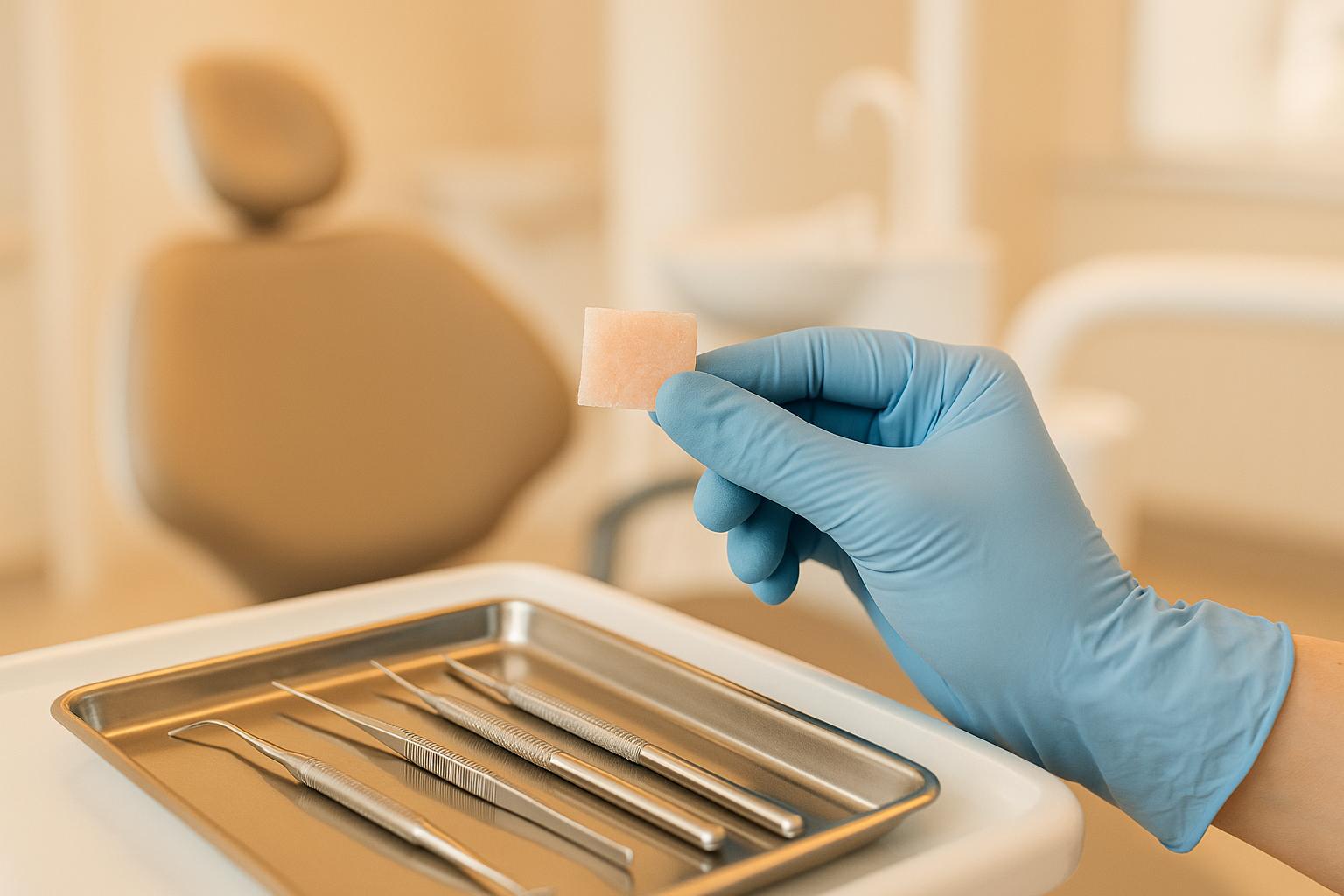
Gum grafting helps address gum recession, a condition where gums pull back, exposing tooth roots. This can lead to sensitivity, decay, and even tooth loss. For treatment, you can use either your own tissue or donor tissue. Donor tissue is ideal in cases of widespread gum recession, limited palate tissue, or when you want to avoid the discomfort of harvesting tissue from your mouth. It also suits patients with medical conditions or those seeking quicker recovery.
Key Points:
- Donor Tissue Benefits: Covers large areas, avoids a second surgical site, and reduces healing discomfort.
- Options: Includes allografts (human tissue), xenografts (animal tissue), and synthetic materials.
- Cost in Australia: Ranges from A$600 to A$3,500 per graft, depending on the method and extent of treatment.
Choosing between donor tissue and your own depends on factors like the extent of gum recession, medical history, and personal preferences. Consult a dental professional to determine the best option for your needs.
ALLOGRAFT (NO DONOR SITE) GUM GRAFT #22-26 (TUNNEL)-Dr Stephen R. John
When Donor Tissue is the Best Choice
While both donor and autologous tissues can restore gum health, donor tissue stands out in certain situations. Let’s explore when this option isn’t just helpful but often necessary.
Large or Multiple Areas of Recession
When gum recession spans multiple teeth or large sections of the mouth, donor tissue becomes a practical choice. Patients with extensive recession may not have enough palatal tissue for autografts, making donor grafts ideal for full-arch treatments [1][2]. For those undergoing full-mouth procedures, donor tissue avoids the need for repeated harvesting from the roof of the mouth, streamlining the process.
Reducing Surgical Discomfort
One of the standout benefits of donor tissue is that it eliminates the need for a second surgical site. Traditional autografts involve removing tissue from the palate, meaning two areas must heal. As Periodontal Associates explains, "Since donor grafts don’t require cutting into the roof of your mouth or surrounding gums, the procedure limits discomfort" [4]. This approach not only reduces pain but also speeds up recovery [4].
Medical or Physical Limitations
Sometimes, a patient’s own tissue isn’t a viable option. Donor tissue is often recommended when the palatal tissue is too thin or has been compromised by previous surgeries. As Periodontal Associates notes, "If they find that the tissue from your palate or surrounding gums is thin, that’s when your periodontist will recommend donor tissue" [4]. Additionally, conditions like autoimmune disorders, diabetes, or medications that hinder healing can make donor tissue a more reliable choice for predictable results.
Patient Lifestyle and Preferences
For patients prioritising convenience, donor tissue offers a less invasive procedure with a quicker recovery. The absence of a second surgical site simplifies the healing process, which many patients find appealing.
However, donor grafts may not be ideal for all cases. For example, they might be less effective for rotated teeth or areas with bone loss [1]. In such instances, using the patient’s own tissue could be the better option.
Types of Donor Tissue for Gum Grafting
When it comes to gum grafting, the type of donor tissue plays a significant role in the success of the procedure. Each option has its own characteristics, which affect how well it integrates with your existing gum tissue. Let’s take a closer look at the main donor tissue types available.
Allografts
Allografts are derived from human cadaver tissue and undergo rigorous sterilisation to ensure safety while maintaining their structure [2]. A major benefit of allografts is their compatibility with the human body. Since the tissue is from the same species, it integrates well with the patient’s gums [2]. Additionally, allografts act as a scaffold that supports new gum tissue growth. Some may even encourage regeneration due to bone morphogenetic proteins [9].
One popular example is AlloDerm™, a processed allograft often used in gum grafting. It eliminates the need to harvest tissue from the patient’s own mouth, reducing discomfort [6]. The cost for AlloDerm™ typically ranges from A$1,500 to A$3,000 per implant, though overall gum grafting expenses can vary [7].
Xenografts
Xenografts use tissue from other species, most commonly cows (bovine) or pigs (porcine). Like allografts, xenografts are thoroughly sterilised to remove any risk of animal-borne diseases [2]. These grafts also serve as a scaffold for gum tissue growth, but they tend to integrate more slowly compared to allografts [9]. For instance, porcine-derived grafts show good results but require more time to blend with the surrounding gum tissue [9]. Xenograft procedures generally cost between A$1,500 and A$3,500 per implant [7].
Synthetic Options
Synthetic grafts are lab-made materials designed to mimic biological tissue. They are often used when natural donor tissue isn’t an option. While synthetic grafts are free from disease risks and have an unlimited supply, they primarily serve as a scaffold for tissue growth and may not integrate as seamlessly as biological options [17, 19]. These grafts are less commonly used in gum grafting and are typically reserved for specific cases where natural options are unsuitable due to medical or personal reasons.
Here’s a quick comparison of these donor tissue types:
| Donor Tissue Type | Source | Key Advantages | Integration |
|---|---|---|---|
| Allografts | Human cadaver tissue | High compatibility, no need for patient donor site | Faster integration |
| Xenografts | Bovine or porcine tissue | Cost-effective, widely used | Slower integration |
| Synthetic | Lab-made materials | No disease risk, unlimited availability | Limited natural integration |
When deciding on a donor tissue type, factors like compatibility, cost, and personal preferences – including ethical or cultural considerations – should be discussed with your dental professional [8]. This ensures the most suitable choice for your specific needs.
Next, we’ll dive into how donor tissue compares with autografts to help you make an informed decision.
sbb-itb-2be92ed
Donor Tissue vs Patient’s Own Tissue: Pros and Cons
When it comes to gum grafting, a critical choice is whether to use autografts (your own tissue) or donor tissue. Autografts involve harvesting tissue from your mouth, typically from the roof (palate), which integrates seamlessly with your existing gum tissue. Donor tissue, on the other hand, is processed tissue sourced from tissue banks, eliminating the need for a second surgical site.
The primary distinction lies in the surgical approach. Autografts require an additional wound to harvest tissue, while donor grafts preserve your natural gum tissue and blood supply [2].
Side-by-Side Comparison: Donor Tissue vs Patient’s Own Tissue
Here’s a breakdown of the main differences to help guide your decision:
| Factor | Autograft (Your Own Tissue) | Donor Tissue |
|---|---|---|
| Surgical Sites | Two surgical sites required | Single surgical site |
| Recovery Discomfort | Higher due to palate harvesting [2] | Lower, no donor site healing [2] |
| Treatment Scope | Limited areas per session [5] | Can treat larger areas in one session [5] |
| Blood Supply | Two sources of blood supply [2] | Relies on existing blood supply |
| Gum Thickness | Increases gum thickness [5] | Preserves existing tissue [5] |
| Integration | Reliable, proven results [5] | Requires quality gum tissue [2] |
| Cost Range | From A$600 in Melbourne [10] | Generally higher cost [11] |
| Technique Sensitivity | Standard procedure | Requires advanced training [5] |
Patients using donor tissue often experience less pain and faster recovery, as they avoid the discomfort of palate healing. However, donor tissue may not be as effective in cases where teeth are angled, rotated, or affected by bone loss [5]. In such situations, autografts may offer more dependable results by increasing gum thickness and providing an additional blood supply [2].
These differences highlight the importance of tailoring the treatment to your unique needs.
How to Choose the Right Option
Deciding between the two options depends on your clinical profile and personal priorities.
Clinical factors play a significant role. Donor grafts require healthy existing gum tissue to be effective [2]. If your gums are thin or compromised, your periodontist may recommend autografts to improve gum thickness [5].
Pain tolerance and recovery preferences are also important. If you’re looking for a quicker recovery with minimal discomfort, donor tissue grafts might be the better choice. However, if you value the long-term reliability of autografts and don’t mind a longer recovery, they could be the way to go.
Lifestyle considerations can influence the decision too. For example, people with demanding schedules or musicians who play wind instruments might prefer donor tissue to avoid the temporary impact of palate surgery.
Cost is another factor to weigh. While donor tissue grafts are typically more expensive [11], their ability to treat multiple areas in one session could make them more cost-effective compared to having several autograft procedures.
Finally, practitioner expertise matters. Donor tissue grafting requires advanced skills and specialised training [5]. Your dentist will take your medical history, gum health, and personal preferences into account to recommend the best approach for your situation.
Common Questions About Donor Tissue
Understanding the safety measures, outcomes, and practicalities of donor tissue can help you make an informed decision about your treatment. Below, we address key questions regarding the safety, appearance, durability, and cost of donor tissue.
Is Donor Tissue Safe?
Yes, donor tissue is highly safe. In Australia, tissue banks follow strict safety protocols, ensuring all medically processed tissue is thoroughly screened and sterilised before use [13]. The sterilisation process eliminates all living cells, proteins, viruses, and bacteria, making the tissue safe for transplantation while keeping its structural properties intact [2][3]. A key benefit is that donor gum grafts do not require anti-rejection medications [2]. Additionally, the tissue banking industry in Australia operates under stringent regulatory standards, with multiple testing stages to confirm the reliability of donor tissue for gum grafting procedures.
How Does Donor Tissue Look and Feel?
Donor tissue integrates seamlessly with your natural gums after healing, providing a natural appearance [2]. It is carefully processed to blend in terms of both colour and texture, whether using allografts or xenografts [4]. The result is typically a significant improvement in aesthetics, as the graft reduces the visibility of exposed tooth roots and restores a more balanced smile. Within weeks, your cells repopulate the donor tissue scaffold, forming living, functional gum tissue.
What Are the Long-Term Results?
Donor tissue grafts have excellent long-term success rates, ranging from 85% to 95% when performed by skilled practitioners [12]. The durability of these grafts depends on factors like proper post-operative care and maintaining good oral hygiene, which help prevent infections and ensure gum health [12]. Regular follow-ups with your dental professional are essential for monitoring healing and addressing any issues early, helping the grafted tissue remain stable for years.
Cost Factors in Australia
In Australia, gum grafting costs range from $600 to $3,000, depending on the severity of gum recession, the number of teeth involved, and the expertise of the practitioner [14]. Donor tissue grafts can be more economical when treating multiple areas in one session. While Medicare does not cover these procedures, some private health insurance plans may provide partial coverage for medically necessary treatments [15]. Many dental clinics also offer payment plans, including interest-free options, to make the procedure more affordable and accessible.
Summary and Key Points
Donor tissue offers a practical solution for gum grafting, especially in situations where traditional autografts might not be the best option. Knowing when donor tissue makes sense can help you make a more informed choice about your treatment.
Why Donor Tissue Could Be a Better Fit
There are several situations where donor tissue stands out as the preferred option. For instance, if you’re dealing with gum recession across multiple teeth, donor grafts can cover larger areas in fewer sessions compared to autografts. Plus, since donor tissue eliminates the need for a second surgical site, it can reduce both the time spent in the chair and the level of post-procedure discomfort [16].
Donor tissue is also a great alternative when there isn’t enough healthy tissue in your own mouth to use for grafting. By using donor grafts, you not only avoid depleting your existing gum tissue but also maintain your blood supply, which can lead to better healing results [2][4].
Lifestyle factors often play a role too. If your schedule is packed or you have limited time for recovery, donor tissue grafts can be a more convenient option, as they typically require less downtime than procedures involving tissue harvesting from your own mouth.
These advantages make donor tissue an appealing choice, particularly when paired with a professional evaluation, which we’ll touch on in the next steps.
Next Steps for Patients
Your first step should be to consult a qualified dental professional. They can assess your gum recession, evaluate your overall oral health, and create a treatment plan tailored to your needs. During your consultation, discuss your medical history, lifestyle considerations, and any concerns you may have about comfort or recovery. This will help your dentist customise your treatment.
If you’re looking for a provider, Complete Smiles Bella Vista is one option to consider. They offer advanced gum grafting techniques with a focus on both safety and patient comfort. Their approach includes a thorough evaluation of your condition and evidence-based recommendations tailored to your situation.
It’s a good idea to come prepared with questions about the procedure, recovery process, and expected results. Having this information can help you feel more confident about your decision.
Lastly, don’t overlook the practical side of planning. Review your private health insurance to see what’s covered and explore payment options, including interest-free plans, to help manage the financial aspect of your treatment. Careful preparation can make the process smoother and less stressful.
FAQs
What should I know about the risks of using donor tissue for gum grafting?
Using donor tissue for gum grafting is a generally safe option, though like any medical procedure, it’s not entirely without risks. Some potential issues include graft failure, infection, bleeding, or slower-than-expected healing. While the chance of disease transmission is extremely rare, there’s also a slight possibility of the graft not integrating well with the surrounding tissue or being rejected.
These risks are significantly reduced when the procedure is carried out by a skilled dental professional and supported by proper post-operative care. If you’re thinking about using donor tissue for gum grafting, having an open conversation with your dentist can help address any concerns and guide you towards the best outcome.
Am I a good candidate for donor tissue gum grafting?
Determining whether donor tissue gum grafting is the right choice for you depends on a few key factors. Typically, this procedure is recommended for those dealing with noticeable gum recession, tooth sensitivity, or an increased risk of gum or bone loss. To be considered, you’ll need to be in good overall health, free of active gum disease, and dedicated to maintaining top-notch oral hygiene.
Donor tissue is often suggested when there isn’t enough healthy gum tissue available from your own mouth or when several areas need treatment. This method can also help minimise discomfort and speed up recovery compared to traditional grafting techniques. Your dentist will evaluate your situation and outline the most suitable options for your needs.
What are the differences between using donor tissue and my own tissue for gum grafting?
When it comes to gum grafting, both donor tissue and your own tissue are highly effective, boasting success rates of over 90%. Donor tissue is often the go-to option for more extensive cases or when multiple areas need treatment. One big advantage is that it spares you from having tissue harvested from your palate, making the procedure less invasive and potentially more comfortable.
On the other hand, using your own tissue – typically taken from the palate – is often considered the gold standard. It integrates seamlessly and offers predictable results. While both options deliver durable outcomes, tissue from your palate may offer slightly longer-lasting benefits. The right choice ultimately depends on your specific situation, the severity of gum recession, and your dentist’s guidance.
Related Blog Posts
- Flapless Implant Surgery: Benefits and Process
- Advances in Gum Grafting Materials and Techniques
- Soft Tissue Grafting: Indications Explained
- Suturing Protocols for Coronally Advanced Flaps
Important Notice: Any surgical or invasive procedure carries risks. Before proceeding, you should seek a second opinion from an appropriately qualified health practitioner.
Individual results may vary. The information provided in this article is for educational purposes only and does not constitute medical advice.
Checkout Related Blogs




Get in touch with us
For more information, call us now to start feeling better. Or fill the form below to make appointment
The Latest News from Complete Smiles
How to Clean Clear Plastic Retainers
Checklist for Choosing Wearable Dental Devices
Checklist for Choosing Cloud AI Platforms in Dentistry

Complete Smiles Bella VistaAccepts All Major Health Funds, Including





