




What to Do When Retainer Breaks
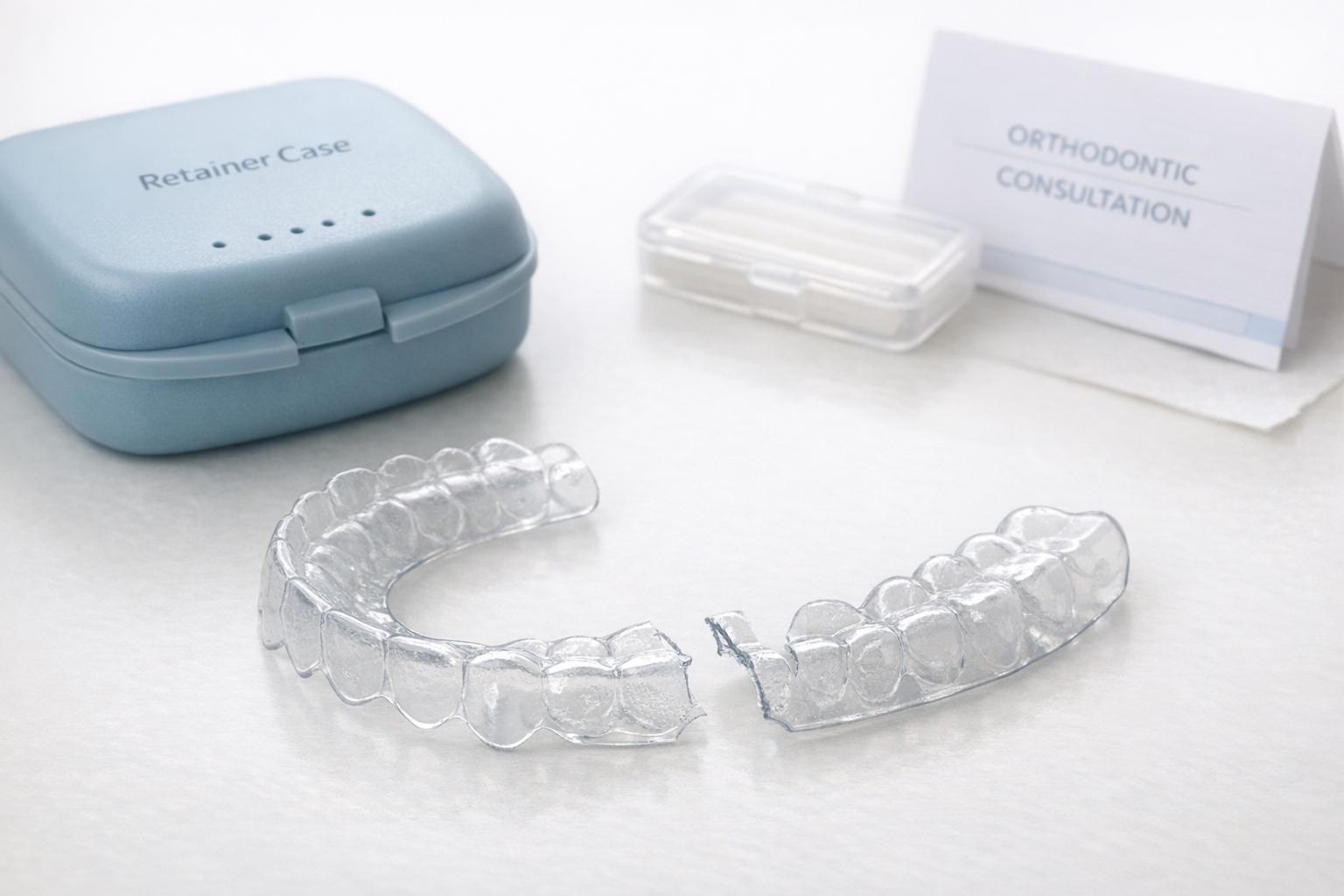
If your retainer breaks, act quickly to avoid tooth movement. Here’s what you need to do:
- Remove it carefully: For removable retainers, take it out gently to avoid injury. For fixed retainers, leave it in place and use orthodontic wax on sharp edges.
- Inspect and save the pieces: Gather all broken parts and store them securely. This helps your orthodontist assess if it can be repaired or replaced.
- Avoid DIY fixes: Don’t use glue or heat to repair it yourself – this can damage the retainer further.
- Contact your orthodontist: Book an appointment as soon as possible. Teeth can shift within days without proper retention.
While waiting for your appointment:
- Use orthodontic wax to cover sharp edges.
- If an old retainer fits, wear it temporarily (but don’t force it).
- Maintain oral hygiene with saltwater rinses and antibacterial mouthwash.
Most replacement retainers cost between A$150 and A$300. Prevent future damage by cleaning retainers daily, storing them in a protective case, and avoiding exposure to heat or hard foods.
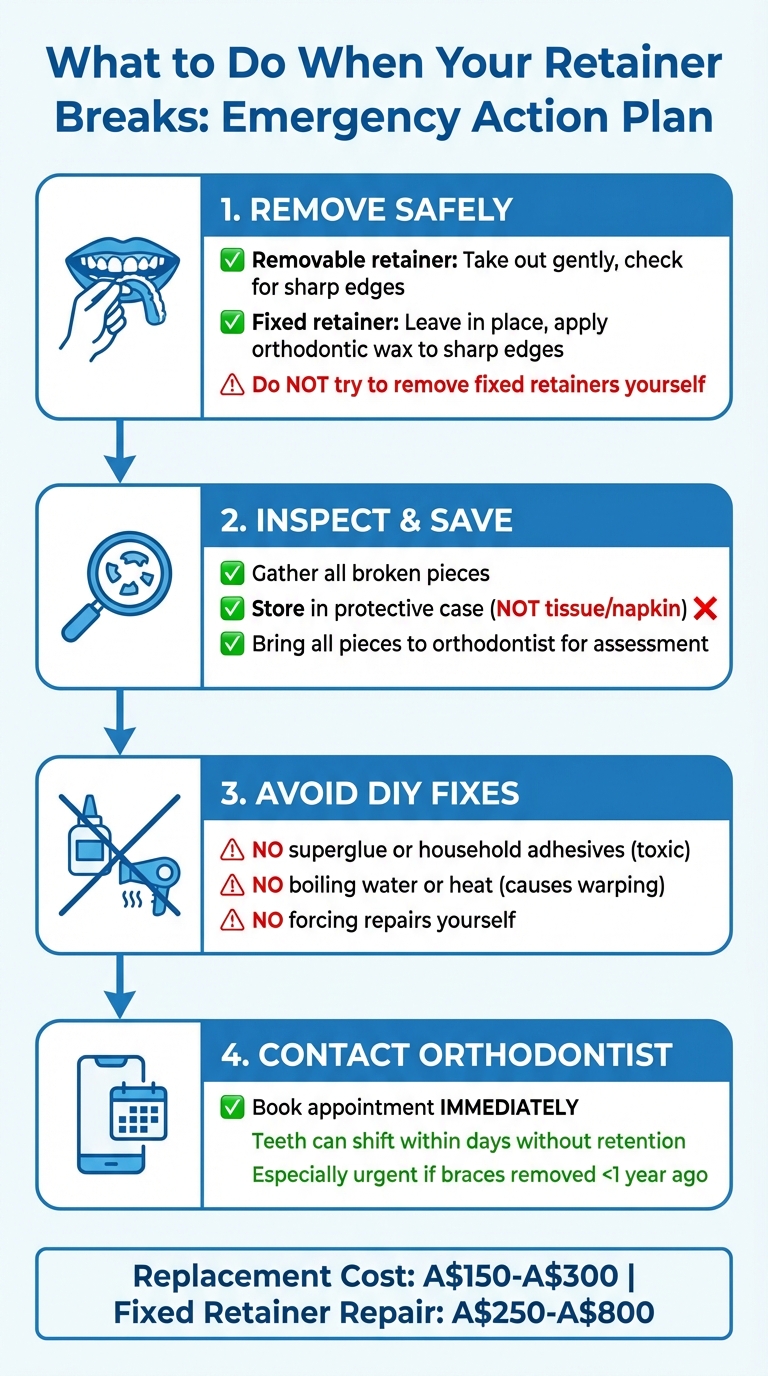
What to Do When Your Retainer Breaks: 4-Step Emergency Guide
Have you LOST or BROKEN your Orthodontic Retainer? | Dr. Jiten Vadukul | The Orthodontist
What to Do Right After Your Retainer Breaks
Your retainer is crucial for maintaining your smile, so knowing what to do when it breaks is important. Stay calm and take action right away. Quick and careful steps can prevent injuries and minimise the risk of your teeth shifting, which can happen in just a few days without proper retention. Here’s how to handle the situation until you can get professional help.
Remove the Retainer Safely
If you’re using a removable retainer, take it out gently. Check for any sharp edges using a clean finger or your tongue, as these could hurt your gums or cheeks. For fixed (bonded) retainers, leave the wire in place – trying to remove it yourself could damage your enamel. If a loose wire is causing irritation, apply a small amount of orthodontic wax to the sharp end to protect the inside of your mouth until you can see your orthodontist.
Once the retainer is out, move on to inspecting the damage.
Inspect and Save All Pieces
Look over the retainer to check for cracks, breaks, or missing parts. Gather every piece, including any detached brackets or wires, and store them in a clean, secure case. Avoid wrapping the pieces in a napkin or tissue, as they could easily be thrown away by mistake. Bringing all the parts to your orthodontist is essential – they’ll need to determine if the retainer can be repaired or if you’ll need a replacement. Keeping the pieces intact could even save you money, as some retainers can be repaired instead of replaced entirely.
Avoid DIY Repairs
"You shouldn’t mess with a broken retainer – get a new one or have it professionally fixed." – Colgate [2]
Resist the urge to fix the retainer yourself. Household glues like superglue are toxic and can ruin the retainer’s fit, and DIY repairs can create uneven pressure on your teeth. Similarly, don’t use boiling water to try and reshape broken pieces – heat can warp the material, making professional repair impossible. Instead, contact your orthodontist to schedule an appointment. Replacement removable retainers generally cost between $150 and $300 [1].
Temporary Measures Until You See Your Dentist
If you’re dealing with a broken or uncomfortable retainer, there are ways to manage the situation until you can see your dentist. These steps can help ease discomfort, protect your mouth, and minimise any further issues with your teeth.
Apply Orthodontic Wax to Sharp Edges
Orthodontic wax, also known as dental or ulcer wax, can be a lifesaver when sharp edges or wires from your retainer are causing irritation. Start by drying the area, then take a small piece of wax, roll it into a ball, and press it onto the sharp edge. This creates a barrier between the retainer and the sensitive areas of your cheeks, lips, or gums. If you’re dealing with a poking wire from a fixed retainer, you can carefully tuck the wire back into place before applying the wax. You can find orthodontic wax at most chemists.
Try Using an Older Retainer (If It Fits)
If you have a previous retainer that still fits comfortably, it might work as a temporary fix. However, forcing a retainer that doesn’t fit properly can do more harm than good. The Orthodontic Experts team advises:
"It’s strongly discouraged to attempt forcing a retainer that no longer fits comfortably into your mouth… forcing the retainer can cause more harm than good." [3]
If the old retainer feels loose or requires pressure to insert, skip it. Instead, consider using an over-the-counter mouthguard at night to help limit tooth movement until you can get professional care.
Maintain Proper Oral Hygiene
Keeping your teeth and gums clean is crucial while waiting for your dental appointment. Rinse your mouth with warm salt water to ease irritation, use an antibacterial mouthwash to remove debris, and stick to soft foods to avoid further damage. Maintaining good oral hygiene can help prevent gum infections and reduce the risk of complications while you wait for your retainer to be repaired.
Next, find out how dentists can repair or replace broken retainers to ensure a lasting solution.
How Dentists Repair or Replace Broken Retainers
When you take a broken retainer to your dentist or orthodontist, they’ll first check the extent of the damage. From there, they’ll decide whether it’s possible to fix it or if you’ll need a complete replacement. The solution largely depends on the type of retainer and how badly it’s damaged.
Fixing Removable Retainers
Removable retainers are tricky to repair if the damage is severe. Cracks, warping, or a poor fit usually mean it’s time for a replacement to avoid unwanted tooth movement [1][4]. The good news? If your orthodontist has recent records, they can often order a new one using digital scans or moulds. This could save you time and potentially reduce fitting costs [2]. As Colgate puts it:
"If your orthodontist can’t repair your broken retainer, your best option is to get a new retainer made as soon as possible" [2].
The cost for a replacement is generally comparable to the original price [1]. Now, what about fixed retainers?
Fixing Fixed Retainers
Fixed retainers are a bit more repair-friendly compared to their removable counterparts. If the wire is still intact but the composite has worn down or come loose from one or two teeth, your orthodontist can reapply the dental composite in just a few minutes [7]. If the wire has detached but hasn’t been lost, it can be cleaned and rebonded [7]. However, if the wire is broken or missing, you’ll need a completely new fixed retainer, which may take several visits to complete [7]. Costs for fixing or replacing fixed retainers typically range from A$250 to A$800 [7].
sbb-itb-2be92ed
When You Need to Contact Your Orthodontist
Knowing when to call your orthodontist about a broken retainer can save you from unnecessary stress and protect your smile. The urgency often depends on how recently your braces were removed and the type of damage you’re dealing with.
Problems That Need Urgent Care
Some retainer issues require immediate attention. For example, if sharp edges from broken plastic or a loose wire are cutting your cheeks, gums, or tongue, it’s time to call your orthodontist right away [4][5].
Fixed retainers are another matter that can’t wait. If a bonded wire detaches from even one tooth, it could lead to tooth movement or, worse, swallowing the loose wire [4][2]. This is especially critical if your braces were removed less than a year ago. During this period, your teeth are still settling, and even a few days without a properly functioning retainer can cause them to shift back toward their original positions [1].
Other warning signs that demand immediate care include a noticeable change in your bite, shifting teeth, or a removable retainer that no longer fits correctly. These indicate that your retainer isn’t doing its job, and delaying action increases the risk of undoing your orthodontic work [2][8].
Problems That Can Wait
Not every issue requires an emergency visit. Minor cosmetic damage, like small cracks or chips in a removable retainer, can often wait if the retainer still fits and functions properly [8]. Similarly, if your retainer feels slightly less snug but stays in place and you’re not noticing any tooth movement, you can schedule a regular appointment instead of rushing in [8].
If you’ve been wearing your retainer for several years, your teeth are usually more stable. In this case, while a broken retainer shouldn’t be ignored, it doesn’t carry the same urgency as it does for someone fresh out of braces [1]. The key is whether the retainer is still wearable and if you’re feeling any discomfort or noticing changes in your bite.
How to Prevent Your Retainer from Breaking
Preventing damage to your retainer is easier than you might think. By adopting a few good habits, you can avoid the two main causes of damage: heat exposure and physical distortion. Considering that replacing a broken retainer can set you back anywhere from A$150 to A$300, a little extra care can save you both time and money [1][11].
How to Clean and Care for Your Retainer
Daily cleaning is essential to keep your removable retainer in good shape. Use cool or lukewarm water (below 40°C) combined with a mild soap or a specialised cleaning solution. High temperatures from boiling water, dishwashers, or even leaving your retainer in a hot car can warp the plastic permanently [1][6][10]. Also, steer clear of regular toothpaste – it contains abrasive ingredients that can scratch the surface, creating tiny grooves where bacteria can thrive [6][9][10].
For a deeper clean, soak your retainer in white vinegar for 15 minutes once a week. This helps remove bacteria and mineral deposits [9].
If you wear a fixed retainer, make sure to brush it twice daily and use floss threaders or interdental brushes to clean around the wire. This ensures plaque doesn’t build up in hard-to-reach areas [6][10][11].
Store Your Retainer in a Protective Case
Proper storage is just as important as cleaning.
"Always use a retainer case – as soon as the retainer is out of the mouth, it must be stored in the retainer case." – Orthodontics Australia [1]
A sturdy, hard case protects your retainer from being crushed in your bag or pocket [1][11]. It also helps prevent accidental loss – a common mishap when retainers are wrapped in napkins or tissues during meals and then thrown away [1][6][11]. Keep the case out of reach of pets, especially dogs, who are often drawn to the scent and may chew through an unprotected retainer [1].
To keep your case hygienic, wash it daily with warm, soapy water. This prevents bacteria from accumulating and transferring to your retainer [6][10].
Habits to Avoid
There are a few habits you’ll want to avoid to extend the life of your retainer.
Never bite down on your retainer to force it into place – this uneven pressure can crack it. Always remove your retainer before eating, swimming, or playing contact sports [1][11]. For fixed retainers, avoid chewing on hard foods, ice, or non-food items like pens, and don’t pick at the wire with your fingernails or toothpicks.
Keep your retainer away from heat sources, including direct sunlight, hot water, and warm environments like a parked car. Avoid running it through a dishwasher or washing machine. When handling your retainer, always hold it by the edges to avoid unnecessary stress on the material. Lastly, steer clear of harsh chemicals like bleach or alcohol-based mouthwashes, as they can dry out or damage the appliance [9][10].
Summary: Managing a Broken Retainer
Dealing with a broken retainer calls for quick action. If you have a removable retainer, carefully take it out. For a fixed retainer with a wire that’s poking or causing discomfort, orthodontic wax can help cover sharp edges. Make sure to keep all the pieces safe in a protective case and reach out to your orthodontist promptly – teeth can start shifting in just a few days, especially if your treatment ended recently [1].
While waiting for your appointment, there are a few temporary measures you can take to protect your teeth. Using an over-the-counter mouthguard at night might help keep your teeth in place, and rinsing with warm salt water can ease any irritation [2][4]. Stick to soft foods to avoid putting extra pressure on your teeth or retainer until you can see a professional.
The repair process depends on the type of retainer. Removable retainers often require a new mould or scan for replacement, while fixed retainers usually involve removing the old bonding material and reattaching the wire. Costs for replacement typically range between A$150 and A$300 [1].
Preventing future damage is just as important. Always store your retainer in its case when not in use and clean it daily with cool water and mild soap. For fixed retainers, use floss threaders to clean around the wire and avoid biting into hard foods that could damage the appliance.
Avoid attempting DIY repairs – household glues and improvised fixes can lead to further issues, including unwanted tooth movement [2][3]. For urgent problems like severe pain or swelling, contact your orthodontist immediately. Minor cracks or issues can usually wait until your next scheduled visit.
FAQs
What should I do if my retainer breaks and I can’t visit my orthodontist straight away?
If your retainer breaks and you can’t get to your orthodontist straight away, there are a few things you can do to handle the situation carefully. If the retainer still fits well and isn’t causing any discomfort, you can keep wearing it. But if there are any sharp edges, use orthodontic wax to cover them and protect your mouth from cuts or irritation.
Stay away from DIY fixes like glue – these can be unsafe and might cause more harm to the retainer. If the retainer can’t be worn, store it securely in its case to prevent additional damage. Make sure to contact your orthodontist or dentist as soon as you can to organise a repair or replacement. Taking quick action will help keep your treatment on track and safeguard your smile.
Is it safe to wear an old retainer temporarily?
Wearing an old retainer that no longer fits properly can do more harm than good, even if it’s just for a short time. A poorly fitting retainer might cause discomfort, gum irritation, or even negatively impact the alignment of your teeth and jaw.
If your retainer feels tight or doesn’t sit as it should, it’s better to stop using it and reach out to your dentist or orthodontist. They can evaluate your situation and suggest the best course of action to maintain your oral health.
How can I stop my retainer from breaking?
To keep your retainer in top shape, treat it with care and store it correctly. After wearing it, give it a rinse and place it in a sturdy case. Avoid wrapping it in tissue – this common mistake often leads to it being accidentally thrown out. Keeping the case in a consistent spot, like on a bathroom shelf, can help you avoid misplacing it.
When it’s time to clean your retainer, use a soft toothbrush with mild soap or a white vinegar solution. Stay away from toothpaste, as it can scratch the surface, and never expose the retainer to hot water or heat, which can warp its material. Additionally, avoid chewing on hard foods or objects while wearing it, as this can lead to cracks or breaks.
Don’t skip your regular orthodontist check-ups, especially during the first year of wearing your retainer. These appointments are crucial for spotting any damage early and replacing the retainer if needed. By handling it gently, storing it properly, and keeping up with routine maintenance, you can make your retainer last much longer.
Related Blog Posts
- Common Problems with Fixed Retainers and Solutions
- Fixed vs Removable Retainers: Key Differences
- When to Replace Your Retainer: Key Indicators
- Ultimate Guide To Retainer Cleaning
Important Notice: Any surgical or invasive procedure carries risks. Before proceeding, you should seek a second opinion from an appropriately qualified health practitioner.
Individual results may vary. The information provided in this article is for educational purposes only and does not constitute medical advice.
Checkout Related Blogs



Get in touch with us
For more information, call us now to start feeling better. Or fill the form below to make appointment
The Latest News from Complete Smiles
How to Clean Clear Plastic Retainers
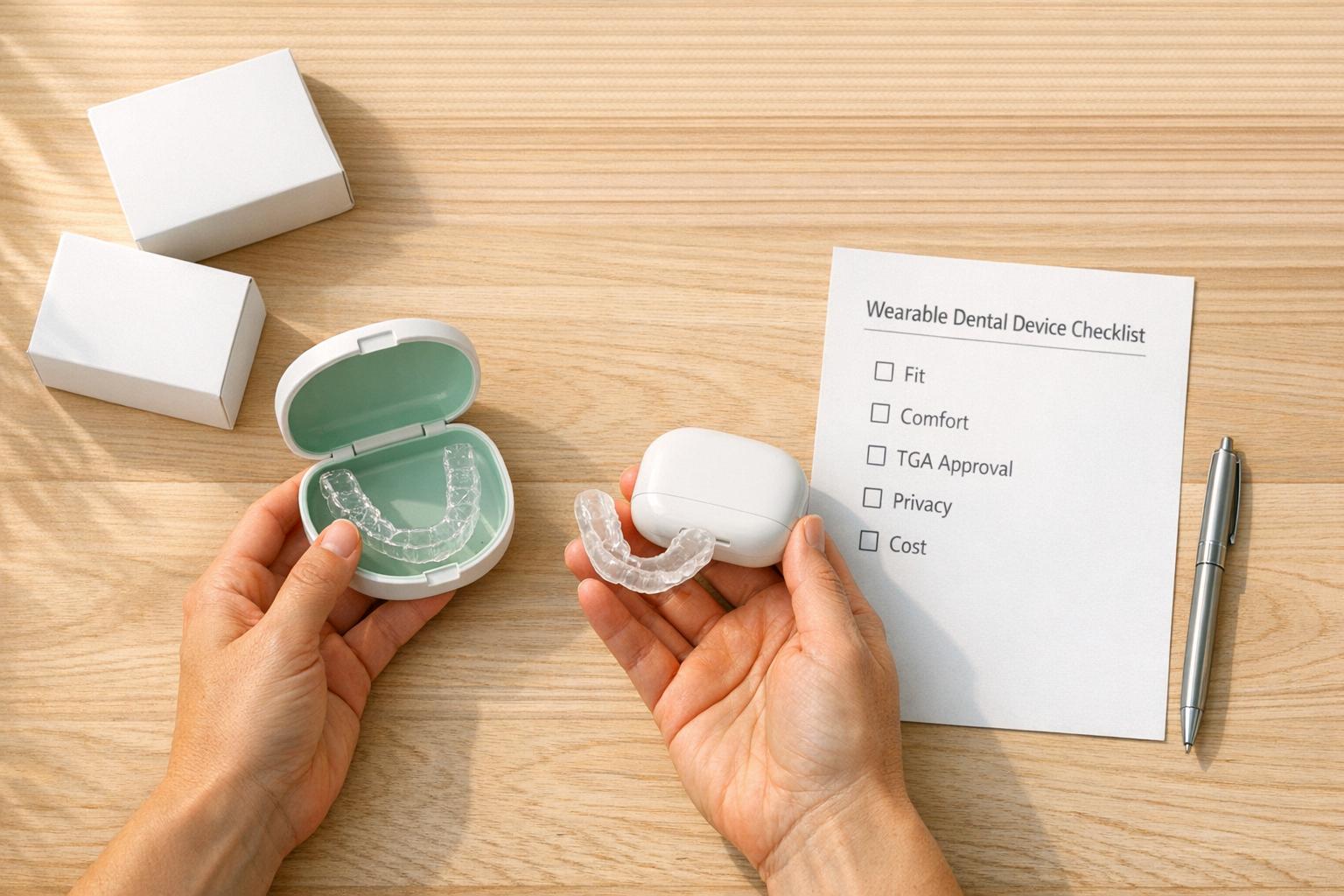
Checklist for Choosing Wearable Dental Devices
Checklist for Choosing Cloud AI Platforms in Dentistry

Complete Smiles Bella VistaAccepts All Major Health Funds, Including