





Top Strategies for Building Patient Trust

Building trust with patients is essential in dentistry. It improves treatment outcomes, reduces anxiety, and encourages long-term care commitment. Key strategies include:
- Effective Communication: Use clear, everyday language, ask open-ended questions, and actively listen to patients’ concerns.
- Address Anxiety: Acknowledge fears, offer tools like "stop signals", and explore options like music therapy or sedation for anxious patients.
- Transparency: Clearly explain diagnoses, treatment options, and costs. Provide itemised quotes and ensure informed consent.
- Personalised Care: Tailor treatments to individual needs, prioritise their main concerns, and consider their lifestyle for better compliance.
- Comfortable Environment: Create a welcoming clinic atmosphere, maintain cleanliness, and ensure friendly, consistent interactions.
- Education: Collaborate with patients on oral health habits and provide practical, actionable advice.
- Follow-Up: Check in after procedures, use the teach-back method, and gather feedback to improve care.
- Skill Maintenance: Stay updated with evidence-based practices and uphold ethical standards.
- Use Technology Wisely: Enhance understanding with tools like intraoral cameras but maintain personal connections.
- Cost Clarity: Address financial concerns upfront, provide flexible payment options, and inform patients about government support schemes.
Dentists who focus on clear communication, empathy, and transparency can build strong, lasting patient relationships while improving overall care outcomes.
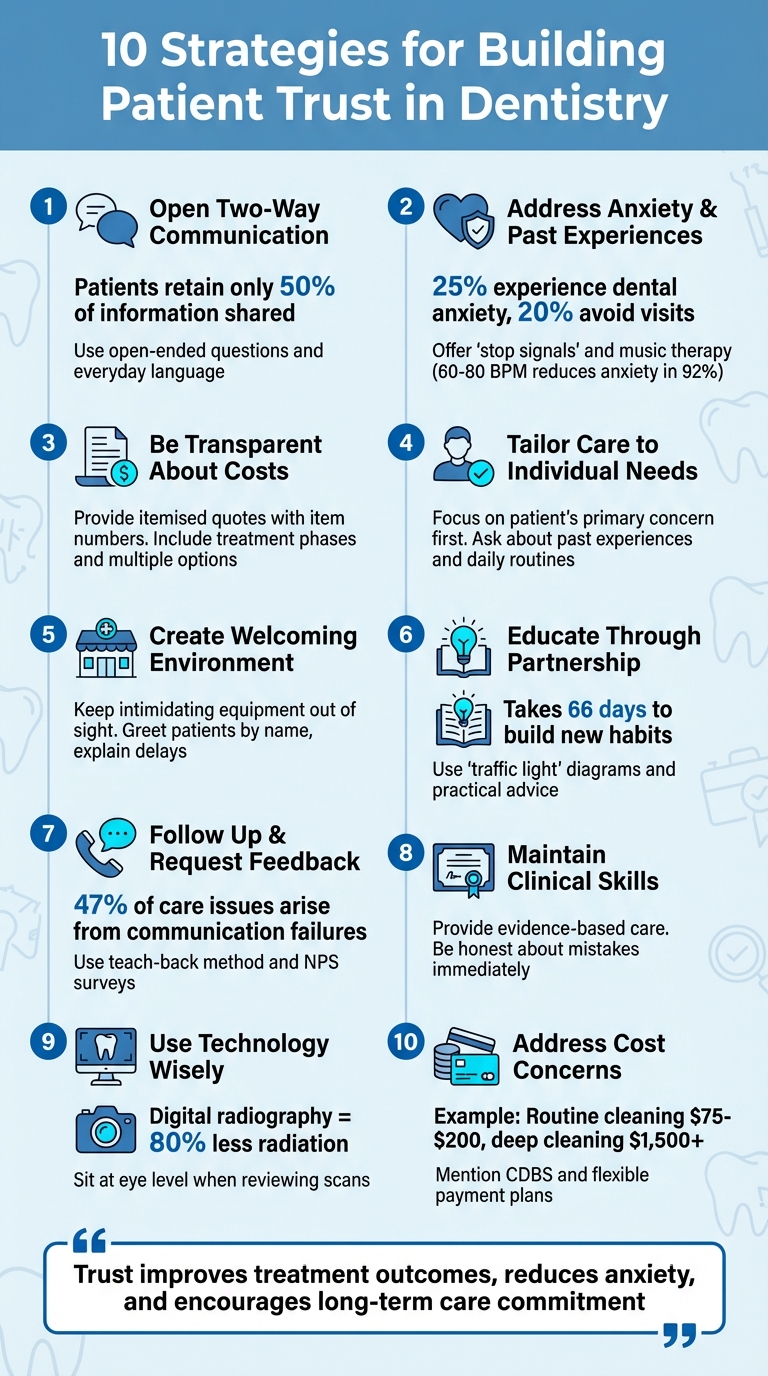
10 Key Strategies for Building Patient Trust in Dental Practice
Why Some Dentists Build Trust (and Others Don’t)
1. Create Open, Two-Way Communication
The first few minutes of a consultation – often called the "golden minutes" – are critical for building trust. In this short window, patients need to feel genuinely listened to, not interrupted [10][2][9]. These moments lay the foundation for effective communication techniques that follow.
Clear and open communication relies on a back-and-forth exchange of information, ensuring both sides understand each other. This is especially crucial when you consider that patients typically retain only about 50% of the information shared during an appointment [8][10]. Starting with open-ended questions like, "How can I help you today?" or "What’s your biggest concern about your dental health?" encourages patients to share more and shows that you’re invested in their perspective [2][8].
After asking these questions, pause briefly to give the patient time to respond. You can also use gentle prompts like, "Is there anything else you’d like to mention?" to uncover additional concerns they might have [8][10].
Using everyday language instead of technical terms can make a big difference too. For instance, say "germ" instead of "bacteria" or "not cancer" instead of "benign" [8]. When referring to teeth, avoid clinical numbering. Instead, describe their location, such as "the back molar on your right side" [11]. A dental nurse can also play a helpful role by reinforcing key points or easing patient anxiety through three-way conversations [10]. These small adjustments make communication more approachable and boost patient confidence.
Non-verbal cues and positioning matter just as much. Sitting at the patient’s level and using subtle gestures can help reduce the sense of hierarchy, especially when PPE hides facial expressions [8][10]. Together, these strategies ensure patients feel heard, valued, and truly cared for.
2. Address Pain, Anxiety, and Past Negative Experiences
Dental anxiety is more common than you might think – around 25% of people experience it, and 20% avoid dental visits altogether because of fear [12][13]. For those carrying the weight of negative past experiences, rebuilding trust starts with genuine acknowledgment of their concerns. It’s not about brushing off their worries; it’s about listening, validating, and showing them that their feelings are understood and respected [4]. This compassionate approach lays the groundwork for meaningful solutions.
One simple yet powerful tool to build trust is the "stop signal." Before starting any procedure, agree on a non-verbal cue – like raising a hand – that allows the patient to pause the treatment at any time [6][13][14]. And here’s the key: always honour it. This small act of giving control back to the patient can make a huge difference, especially for those who feel most anxious about losing control during treatment [14].
"The first appointment – the primary aim for this appointment is to establish rapport and trust in these patients. A lack of trust presenting as fear is likely the main reason for their dental anxiety." – Dr. Kaejenn Tchia [14]
For patients dealing with severe anxiety, consider using the first visit solely as a chance to connect and build rapport [14]. Start with an open-ended question like, "Can you tell us about your past dental care?" This encourages them to share their feelings and experiences [2]. Scheduling extra time for these appointments also helps – rushing through procedures can heighten anxiety, while a slower, more deliberate pace fosters calm [14].
There are practical ways to ease anxiety further. Music therapy, for example, can work wonders. Playing music with a tempo of 60–80 beats per minute has been shown to reduce anxiety in 92% of patients, and 90% even requested it again [12]. For more intense cases, sedation options like nitrous oxide, oral medications (e.g., 5mg Diazepam), or IV sedation can make treatment more manageable [6][12][14]. Morning appointments are another simple adjustment that can help, as they reduce the amount of time patients spend dreading their visit [13].
3. Be Transparent About Diagnosis, Treatment Options, and Costs
Trust is the cornerstone of any patient-dentist relationship, and nothing erodes it faster than a lack of transparency about diagnoses, treatments, or costs. According to the Australian Dental Association, dentists have an ethical and legal obligation to provide patients with all relevant information about their oral health. This includes discussing available treatment options and the limitations of current dental care to ensure informed consent is achieved [1].
One way to foster understanding is by simplifying complex clinical terms and using visual aids. For example, instead of saying "endodontic therapy", use "root canal treatment." Similarly, replace "periodontal scaling" with "deep cleaning" [15][7]. Tools like annotated X-rays (with labels and arrows) or intraoral scans (digital images of teeth) can help patients visualise their dental issues. When patients can see and understand their condition, abstract concepts become much easier to grasp, paving the way for meaningful conversations about their care [15].
"Dentists should provide all relevant information to patients, about their oral health and discuss treatment options including the limitations of modern professional dental care to ensure valid consent." – Australian Dental Association [1]
Equally important is financial transparency. Gaining financial consent before treatment begins is essential [16]. Offer written quotes that include item numbers from The Australian Schedule of Dental Services and Glossary so patients can check their potential rebates with private health insurers [16]. Breaking down costs into phases – such as urgent care, disease control, re-evaluation, definitive treatment, and maintenance – can make the financial aspect less overwhelming. Providing multiple options, such as ideal treatments, alternatives, or phased approaches, empowers patients to make decisions that suit their needs and budgets [15].
Documentation plays a crucial role in maintaining clarity and trust. Comprehensive treatment plans should outline clinical findings, diagnoses, treatment justifications, expected outcomes, and the agreed-upon fees [15][17]. This not only protects you in case of disputes but also allows patients to review the information at their convenience. If unforeseen complications arise during treatment, leading to additional costs, explain the situation immediately. Being upfront about uncertainties strengthens trust, while unexpected surprises can quickly damage it [16].
4. Tailor Care to Individual Patient Needs
Every person who walks into your practice brings their own story – unique medical histories, personal goals, past experiences, and daily routines. The Australian Commission on Safety and Quality in Health Care highlights the importance of effective clinical communication, describing it as "tailored, open, honest and respectful and there is an opportunity for clarification and feedback" [2]. This means stepping away from one-size-fits-all treatment plans and focusing on what truly matters to each individual. By doing so, you lay the foundation for addressing both immediate concerns and long-term health goals in future consultations.
Start by focusing on the primary reason the patient sought your care. If someone comes in worried about a chipped tooth, for example, prioritise that concern before diving into a broader assessment. This approach not only demonstrates that you’re paying attention but also helps build trust right from the start. Addressing the most pressing issue first creates a smooth path for deeper, personalised treatment discussions later.
Don’t just rely on standard forms for insights – dig a little deeper. For instance, you might say, "I noticed [medical condition] mentioned here – could you tell me more about it?" Open-ended questions like this can reveal important details that might influence your treatment plan. Similarly, asking about past experiences, such as "Have you tried interdental cleaning before? If so, what worked or didn’t work for you?" can uncover barriers to compliance that go beyond surface assumptions. Evidence suggests that adopting new oral health habits requires ongoing reinforcement, so tailoring advice to fit seamlessly into a patient’s daily life can dramatically improve outcomes [3].
Small gestures can make a big difference too. Adjusting to eye-level conversations, offering flexible appointment times, and following up personally show that you’re invested in their well-being [18][19]. Keeping track of personal details – like a patient’s favourite toothpaste or a recent life event – allows you to reference them during future visits, reinforcing that they’re more than just another name on your schedule. These thoughtful touches build trust and create a solid foundation for effective, ongoing communication.
"Working in partnership is critical. Being genuinely interested in our patients and listening to their current perceptions is vital for true engagement and progress." – Rhiannon Jones, President, British Society of Dental Hygiene and Therapy [3]
5. Create a Welcoming and Consistent Practice Environment
The atmosphere of your clinic plays a big role in shaping a patient’s experience. A clean, inviting waiting room, well-organised treatment areas, and a friendly, attentive team can leave a lasting impression on visitors [22]. On the flip side, cluttered spaces or visible equipment that might evoke fear can amplify dental anxiety – a concern that affects over a third of patients [6]. To ease this anxiety, keep potentially intimidating equipment out of sight until it’s absolutely needed.
Equally important is the consistency of interactions with patients. Simple gestures, like having staff greet patients by name, can go a long way in creating a welcoming environment. If there’s an unexpected delay, take the time to personally explain the situation and provide an estimated wait time [11]. These small acts of consideration can make a big difference.
"Dentists with the fewest complaints spend more time with each patient at each visit, get to know their patients well, listen actively, maintain a warm and friendly atmosphere, and are humorous, with a warm personality." – American Dental Association [7]
Beyond the basics, thoughtful additions can make your practice more inclusive and comfortable. For instance, having bariatric chairs and a play area with toys and books for children can cater to a wider range of patients [11][20]. Adding calming elements like soft background music or a hint of lavender in the air has also been shown to reduce patient anxiety [6].
Even small gestures can leave a big impact. Knock before entering treatment rooms to respect patient privacy, and personally escort patients to the front desk after their appointment [20]. These thoughtful touches not only enhance the professional image of your clinic but also build trust through consistent, positive interactions [5].
sbb-itb-2be92ed
6. Educate Patients About Oral Health and Self-Care
Patient education works best when it’s a partnership. Rhiannon Jones, President of the British Society of Dental Hygiene and Therapy, explains it well: "The older model of ‘instructing’ our patients simply doesn’t work… a paradigm shift is required" [3]. Instead of giving rigid instructions, focus on collaborative conversations that respect patients’ choices and encourage them to take charge of their oral health. This sets the groundwork for personalised, actionable advice.
Start with open dialogue and practical tips. Ask open-ended questions about their current habits, like, "Can you tell me about your home care routine? Daily habits make a big difference." This approach invites honest sharing. You could also ask them to demonstrate their brushing or flossing technique and provide constructive feedback. Visual aids, such as "traffic light" diagrams, can help explain oral health risks clearly and effectively.
To make education stick, connect it to everyday life. Research suggests it takes roughly 66 days to build a new habit, and brushing for 2 minutes twice daily is ideal [3]. For example, you could recommend keeping interdental brushes near a phone charger or suggest flossing during a TV break. Small changes, like spitting out toothpaste to maximise fluoride contact or using a timer for a 2-minute brush, can lead to noticeable improvements [23].
Finally, focus on the positives of good oral health – like fresher breath, a brighter smile, and healthier gums – rather than just warning about potential issues. Offer tailored resources such as care plans, models, or digital tools to make self-care manageable and encourage long-term commitment.
7. Follow Up After Treatment and Request Feedback
After thorough communication during the appointment, following up promptly after treatment reinforces the trust you’ve built. A simple phone call after a complex procedure can make a big difference. The American Dental Association highlights that "when you call a patient at home after an invasive procedure, you’ll be seen as a caring doctor and they may be more likely to refer you to family and friends based on your one-minute phone call" [11]. This small gesture not only shows you care but also encourages word-of-mouth referrals.
Before patients leave the practice, use the teach-back method to ensure they fully understand their recovery plan. Ask them to explain the instructions in their own words. This approach helps clear up any confusion and reduces the risk of complications. Studies show that 47% of care issues arise from communication failures [21]. Taking this extra step can significantly improve outcomes and patient satisfaction.
To gather feedback, leverage digital tools such as SMS surveys, emails, or QR codes. These methods make it easy for patients to share their thoughts immediately. One effective tool is the Net Promoter Score (NPS), which asks patients to rate how likely they are to recommend your practice on a scale from 0 to 10. With the dental industry’s average NPS at just 1 – compared to 27 in broader healthcare – there’s a clear opportunity to differentiate yourself [24].
When patients voice concerns or complaints, treat these moments as chances to build trust. The Australian Commission on Safety and Quality in Health Care stresses that effective communication should be tailored, transparent, and respectful, with room for clarification and feedback [2]. If an error occurs, address it openly and ensure any necessary specialist referrals are arranged promptly on their behalf [7].
Personalising follow-up interactions can also strengthen patient relationships. Keep notes on individual details in their chart and reference these during follow-up calls. Mentioning specifics, like a recent holiday they mentioned or a family milestone, shows genuine interest and helps patients feel valued beyond their medical care [18].
8. Maintain Clinical Skills and Ethical Standards
Staying sharp in your clinical skills and upholding ethical standards is crucial for building and maintaining patient trust. The Australian Dental Association underscores the importance of providing evidence-based dental care within a framework of patient-centred management: "All practitioners should provide evidence-based dental care in the context and provision of patient-centered management" [26]. This means making decisions grounded in solid evidence while keeping the patient’s needs and values at the forefront.
Evidence-based dentistry (EBD) combines clinical expertise, the latest scientific research, and patient preferences. A systematic approach to EBD involves defining a clinical question, searching for and evaluating relevant evidence, applying the findings to practice, and assessing the outcomes [26]. To support continuous learning, platforms like the Dental CE Academy offer up to 200 continuing education credits for free, making it easier for professionals to stay updated [25]. However, technical skills alone aren’t enough – ethical behaviour is equally critical.
While technical competence helps establish trust, how you handle mistakes can strengthen it even further. When errors happen, honesty is non-negotiable. The American Dental Association highlights that concealing mistakes or misrepresenting the cause of an injury breaches the ethical duty of honesty and fairness [7]. Instead, take immediate corrective action and communicate openly with your patient. Expressing genuine sympathy not only demonstrates compassion but can also reduce the likelihood of malpractice claims [7].
9. Use Technology to Support, Not Replace, Personal Connection
Technology should work alongside your personal interactions with patients, not take their place. Tools like intraoral cameras and digital radiography let you display magnified images on a screen, giving patients a clear view of what you see. This transparency helps them feel more involved in their care and decision-making process. Plus, digital radiography offers 80% less radiation exposure compared to traditional X-rays, making the experience safer and more comfortable for patients [27]. Outside the clinic, advancements in telehealth are also helping to strengthen patient engagement.
Since March 2020, millions of telehealth services have been provided across Australia, and the digital dentistry market is expected to nearly double by 2027 [27]. While these innovations offer incredible advantages, they only build trust when paired with genuine, human connections.
Take, for example, Dr Rebekah Browder’s approach in April 2024. Using Overjet AI and fastdesign.io™, she turned what seemed like a straightforward filling into a more comprehensive onlay treatment. By sharing a colour-coded AI analysis and involving the patient in shade matching, she boosted the patient’s confidence in the treatment plan [29].
When discussing digital scans or X-rays with patients, make an effort to sit at eye level instead of towering over them [30][32]. Use everyday language – say "cavity" instead of "caries" – to make the information easier to grasp [28][31]. Then, ask patients to explain what they’ve understood in their own words to ensure they fully comprehend the treatment plan [21]. This approach is especially useful when dealing with complex visuals, which can sometimes overwhelm patients.
Even as digital tools simplify administrative tasks, maintaining personal connections should remain your focus. Patient portals and automated systems can handle appointment reminders and digital payments efficiently [27]. For more involved cases, consider a follow-up phone call to add a personal touch [11]. By letting technology handle the data, you can dedicate more time to what truly matters – compassionate, face-to-face care.
10. Address Common Patient Concerns in Australia
In Australia, one of the biggest concerns for dental patients is cost transparency, especially with many facing significant gap payments. A widespread misconception is that health funds fully cover dental treatments. To build trust and ensure patients are fully informed, providing a written, itemised quotation before starting any treatment is crucial. This should include specific item numbers from The Australian Schedule of Dental Services and Glossary, enabling patients to contact their health funds directly to confirm their rebate amounts [16]. This kind of clarity not only informs patients but also builds trust by demonstrating fee transparency.
"Informed financial consent should be part of sound ethical professional practice." – Australian Dental Association [16]
Dentists should also explain that costs can increase with the complexity of procedures and outline any long-term maintenance expenses upfront. For instance, routine cleanings without insurance can range from $75 to $200, while more involved procedures like deep cleaning may cost $1,500 or more [33]. By sharing these details early on, patients can make well-informed decisions about their dental care.
Many practices offer flexible payment options for non-urgent treatments, allowing patients to spread out the costs in instalments [33]. Additionally, eligible patients can benefit from government support schemes like the Child Dental Benefits Schedule (CDBS) or the Cleft Lip and Cleft Palate Scheme [34]. If affordability becomes a concern, encouraging open discussions can help identify alternative treatments or solutions [16].
An example of a patient-centred approach is seen at Complete Smiles Bella Vista, where flexible payment plans are available. Addressing immediate concerns, such as pain, before presenting a detailed treatment plan shows respect for both the patient’s health and financial situation [2]. This approach reassures patients that their needs are the priority.
Conclusion
Earning and maintaining patient trust in Australian dentistry hinges on clear communication, openness, and a personalised approach to care. Simple steps like active listening, using straightforward language, and offering detailed, itemised cost breakdowns can go a long way in fostering strong, lasting relationships. Interestingly, it’s often miscommunication – not clinical mistakes – that leads to dental disputes and litigation [21].
But the advantages of trust go far beyond avoiding legal issues. Patients who feel confident in their dentist are far more likely to stick to treatment plans, which leads to improved oral health outcomes [35]. For dentists, trust translates into greater job satisfaction and less work-related stress [35]. The Australian Dental Association puts it perfectly: "Dentists and patients should work together, respectful of each other’s rights and responsibilities to achieve the best possible health outcomes" [1]. This highlights the importance of a flexible approach that continually strengthens both communication and clinical standards.
At its core, effective communication is a skill that directly influences patient outcomes and encourages better self-care [2]. Every interaction matters – from the first phone enquiry to follow-up appointments after treatment. These moments collectively shape the trust between a patient and their dental provider, placing communication at the heart of the care experience.
Trust isn’t static – it requires ongoing effort and attention. By recognising each patient’s individual needs, circumstances, and cultural background, dental practices can empower patients as active participants in their care [21]. When this is paired with honest discussions about the benefits and limitations of treatments, it creates an environment where trust can genuinely flourish.
FAQs
What are the best ways for dentists to communicate effectively and build trust with patients?
Building trust with patients begins with clear and empathetic communication. Dentists can establish confidence by truly listening to their patients, addressing their concerns, and explaining treatments in straightforward, non-technical terms. When patients feel heard and included in the decision-making process, their anxiety often decreases, and a stronger connection develops.
Here are some practical ways to achieve this:
- Start with what matters to the patient: Ask open-ended questions to uncover their main concerns, priorities, or fears.
- Explain the process clearly: Offer a step-by-step overview of what will happen during the appointment, and check in regularly to ensure they understand.
- Show genuine empathy: Use reassuring language like, “I know this might feel overwhelming,” and clearly describe how any discomfort will be managed.
- Personalise the conversation: Tailor discussions to the patient’s specific needs or preferences, whether they’re focused on cost, durability, or appearance.
By fostering a respectful and open atmosphere, dentists can build meaningful relationships that encourage trust and support better oral health over time.
How can dentists help patients feel less anxious about dental visits?
Dental anxiety is a common issue that often prevents people from getting the care they need. However, creating a supportive and calming environment can make all the difference in helping patients feel more comfortable.
Dentists can take several steps to ease anxiety. One of the most effective is clear communication – breaking down procedures into simple terms and encouraging patients to ask questions. A relaxing environment also plays a big role. Features like soft lighting, neutral colours, and calming music can help patients feel more at ease. Additionally, techniques such as gentle dentistry, the use of distraction tools like stress balls, and relaxation exercises such as guided breathing can significantly reduce stress levels. Providing pre-appointment details, such as what the visit will involve and how long it will take, can also help patients feel more prepared and in control.
Practices like Complete Smiles Bella Vista stand out by focusing on personalised care and using evidence-based methods to help patients overcome anxiety, ultimately improving their oral health.
Why is it important to be upfront about dental treatment costs when building trust with patients?
Being upfront about treatment costs empowers patients by keeping them informed and giving them a sense of control over their healthcare choices. It allows them to prepare for any out-of-pocket expenses, reducing the chances of surprise bills or confusion. Clear communication about costs also aligns with ethical and regulatory requirements for informed financial consent, which plays a key role in building trust and confidence in the care you provide.
Related Blog Posts
- Cultural Sensitivity in Dentistry: Key Challenges and Solutions
- Common Communication Mistakes in Dentistry
- How Empathy Improves Dental Patient Outcomes
- How to De-Escalate Tense Situations in Dental Clinics
Important Notice: Any surgical or invasive procedure carries risks. Before proceeding, you should seek a second opinion from an appropriately qualified health practitioner.
Individual results may vary. The information provided in this article is for educational purposes only and does not constitute medical advice.
Checkout Related Blogs




Get in touch with us
For more information, call us now to start feeling better. Or fill the form below to make appointment
The Latest News from Complete Smiles
How to Clean Clear Plastic Retainers
Checklist for Choosing Wearable Dental Devices
Checklist for Choosing Cloud AI Platforms in Dentistry

Complete Smiles Bella VistaAccepts All Major Health Funds, Including





